Natural Materials Home Decor: A Complete Guide

The right living room can feel finished and still feel cold. A lot of homeowners around Albany and the Capital Region know the feeling, the furniture is nice, the palette is current, but the space still doesn't feel grounded or lived in. Natural materials home decor changes that by bringing warmth, texture, and a sense of permanence into rooms that need to work hard every day.
That's why families often end up moving away from glossy, temporary-looking pieces and toward wood, wool, cotton, jute, stone, and clay. At a family-owned showroom like Tip Top Furniture & Mattresses in Freehold, NY, that shift usually starts with one good piece, then builds into a room that feels more personal and easier to live with. For a fuller look at how a home can feel more restorative, the article on loving your space as self-care is a useful place to begin.
Welcome Home to Natural, Timeless Style
A homeowner can spend weeks scrolling through rooms that look polished on a screen and still feel unsure once the box arrives. That usually happens when a space is full of finishes that photograph well but don't bring much character into everyday life. Natural materials solve that problem because they carry grain, fiber, weight, and variation, so the room feels collected instead of assembled.
In practice, that means a solid wood dining table doesn't just fill a room, it gives it a center. A wool throw over a sofa, a jute rug underfoot, or a linen curtain at the window brings softness without visual noise. For many households in Albany, Schenectady, Troy, and nearby towns, that balance matters more than chasing another passing style.
Tip Top Furniture & Mattresses has been helping local families since 1978, and that long view matters here. Natural decor isn't about making everything look rustic or unfinished, it's about choosing materials that can live through busy mornings, family dinners, and years of changing tastes. A good showroom visit helps because wood tones, fabric textures, and finish sheen all read differently in person.
The best natural rooms usually feel simple at first glance, then revealing on closer look. A few well-chosen materials do more than a pile of decorative objects ever can.
Why Natural Materials Are More Than Just a Look
Natural materials earn their place because they work in ways that synthetic-looking decor often can't. A handcrafted wood table can be touched, repaired, refinished, and handed down. Stone, clay, wool, and cotton each bring their own tactile qualities, and those qualities are part of why the room feels calm instead of staged.
That practical value lines up with the market. The global sustainable home decor market was valued at $331.0 billion in 2021 and is projected to reach $556.3 billion by 2031 according to Allied Market Research. That's a mainstream spending shift, not a niche preference, and it helps explain why natural finishes keep showing up in real homes rather than only in magazines.
Comfort, sustainability, and daily use
Natural materials also support a room in ways that go beyond appearance. Biophilic interiors can improve occupant comfort, and the physical feel of natural wood can reduce stress responses compared with synthetic surfaces, which is one reason a room with real wood feels more restful to many people. For homeowners, that means a finish choice can affect how a room feels at the end of a long day, not just how it looks when the blinds are open.
Sustainability matters too, but it needs to be practical. Natural materials are often chosen because they can require less energy and fewer chemicals to produce, and they tend to be more recyclable and biodegradable than plastic-based alternatives. That doesn't mean every natural product is automatically the right choice, but it does mean the material conversation starts with better fundamentals.
Practical rule: choose materials that can age well in the home you actually live in, not just in the room you wish you had.
A family shopping for an Amish oak dining table or a wool-upholstered chair is making a long-term decision. That choice supports durability, comfort, and a warmer visual language in the same purchase.
Your Guide to Popular Natural Materials
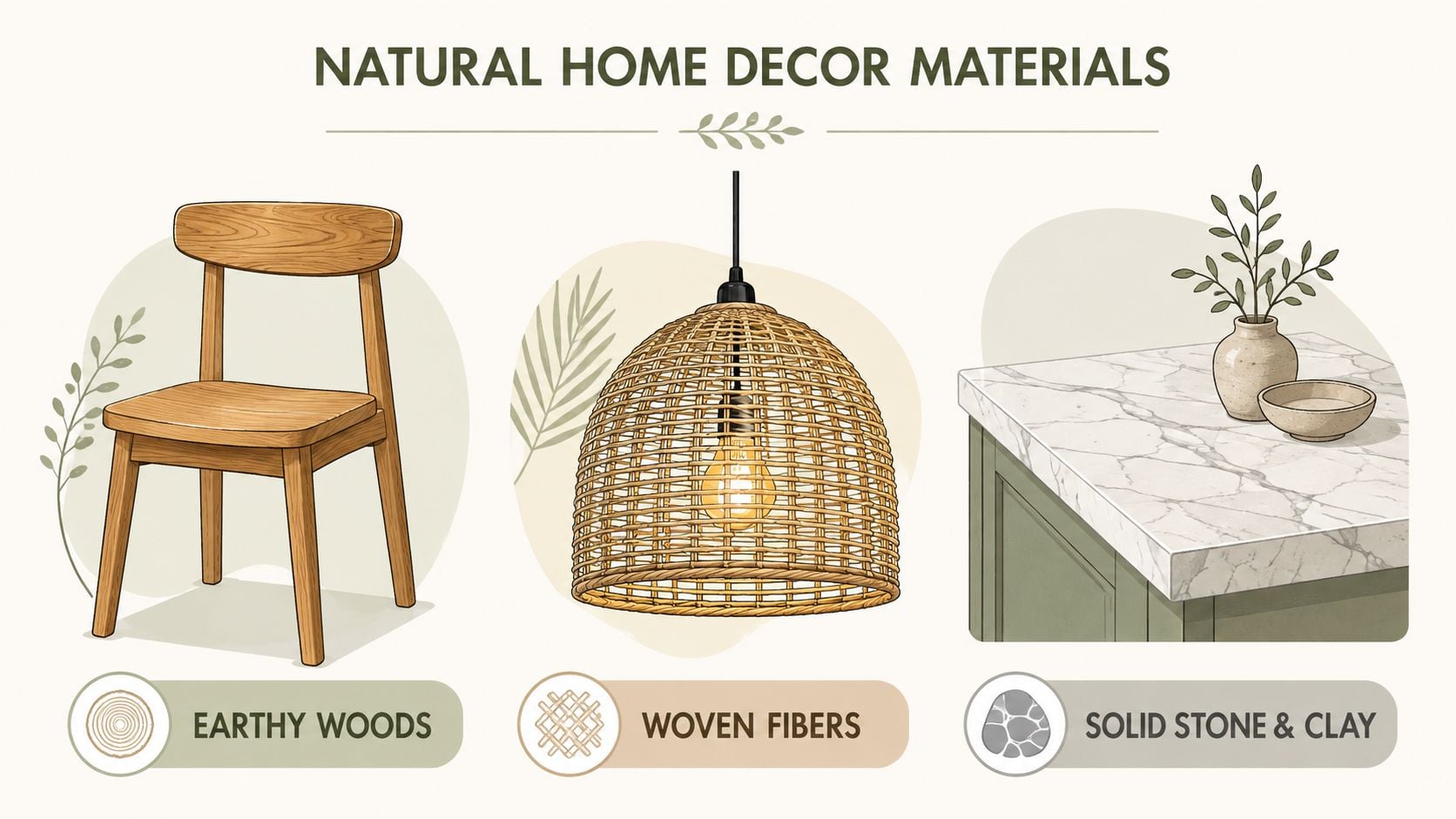
Natural decor works best when each material has a clear job. A room feels more settled when a strong wood base, a softer woven layer, and a grounded stone or clay accent are used with purpose instead of piled in at random.
Earthy woods that carry the room
Wood is usually the anchor because it gives a room structure. Oak feels straightforward and durable, cherry brings a deeper tone, and lighter woods can keep a space from feeling too heavy during darker months. For Amish furniture, that matters because the appeal is not only craftsmanship, it is choosing a piece that can serve as a daily-use anchor in a dining room, bedroom, or living area.
The job a piece has to do should guide the wood choice. Table tops, bed frames, and case pieces all need different levels of strength and finish protection, so the right surface depends on use as much as style. The guide to choosing the right hardwood for longevity and style helps with that decision because the best option is not always the darkest or most dramatic one.
Woven fibers that soften hard edges
Jute, linen, cotton, and wool do a different job. They break up hard lines from furniture and floors, and they add texture without needing bright color or heavy pattern. In a family room, a wool throw or cotton upholstery can keep the room from feeling too formal.
The industry survey summary shows how quickly sustainable materials have moved into regular design choices, and it also points to steady demand for products with clear sourcing. That same source notes that FSC-certified and reclaimed wood make up a meaningful share of sustainable furniture sales, which shows that buyers want proof of sourcing as much as they want style.
The houseplant decoration tips resource also fits this approach because greenery looks best when it supports the room's materials instead of competing with them. A plant near a wood table or woven chair can add movement without adding clutter.
Stone and clay for quiet contrast
Stone, plaster, and clay are useful when a room needs grounding. They work especially well on surfaces that should not feel fragile, like hearth surrounds, accent walls, or decorative objects with visual weight. Their strength is restraint, since they bring texture without asking for attention at every angle.
For homeowners furnishing from scratch, Tip Top's choosing the right hardwood for longevity and style guide pairs well with custom upholstery choices. Strong rooms usually mix a solid base with softer layers, and Custom Ordering helps match finish, fabric, and scale to one room instead of forcing the room around one purchase.
Styling Room by Room in Your Albany Capital Region Home

Natural decor works best when it's tied to the function of each room. A living room asks for comfort and durability, a dining room needs a strong focal point, and a bedroom needs softness with less visual clutter. That's where room-specific choices make the whole house feel more coherent.
Living rooms that feel settled, not staged
A living room usually benefits from one solid anchor piece, then a few supporting textures. A wood coffee table, a wool throw, and linen drapery can do more for a space than adding more decorative objects. The visual rhythm is calmer, and the room still feels finished.
A practical houseplant pairing can help too, especially when the goal is to bring in a little movement without adding clutter. The houseplant decoration tips resource is useful because greenery works best when it supports the room's materials instead of competing with them.
For layout help, the living room styling guide is a good companion to this approach. One well-made wood table, one or two textile layers, and a grounded rug can turn a room into a place where people want to sit.
Dining rooms that invite people to stay
A dining room is often the easiest place to commit to natural materials because the table does the heavy lifting. An Amish dining set can become the visual center, especially when the chairs and lighting stay visually quiet. That keeps the room from feeling overdesigned and gives family meals a more grounded setting.
The beauty of that approach is that it works whether the home leans traditional or more updated. A simpler chair silhouette can keep the set from feeling formal, while natural wood tone helps the room stay warm through winter and bright through summer.
Bedrooms that quiet the whole house
Bedrooms do best with softer fibers and fewer hard contrasts. A wooden bed frame, cotton bedding, and a jute area rug can create a room that feels steady without becoming plain. The biophilic bedroom design page ties into that idea well because the goal is rest, not decoration for decoration's sake.
The same logic works with mattresses. A natural-material bedroom often pairs well with a supportive sleep setup, and Tip Top Furniture & Mattresses also carries USA-made mattresses for homeowners who want the bedroom to feel comfortable from the frame down to the sleep surface.
Natural materials work best in bedrooms when the palette stays quiet and the textures do the talking.
How to Mix Natural Textures Like a Designer
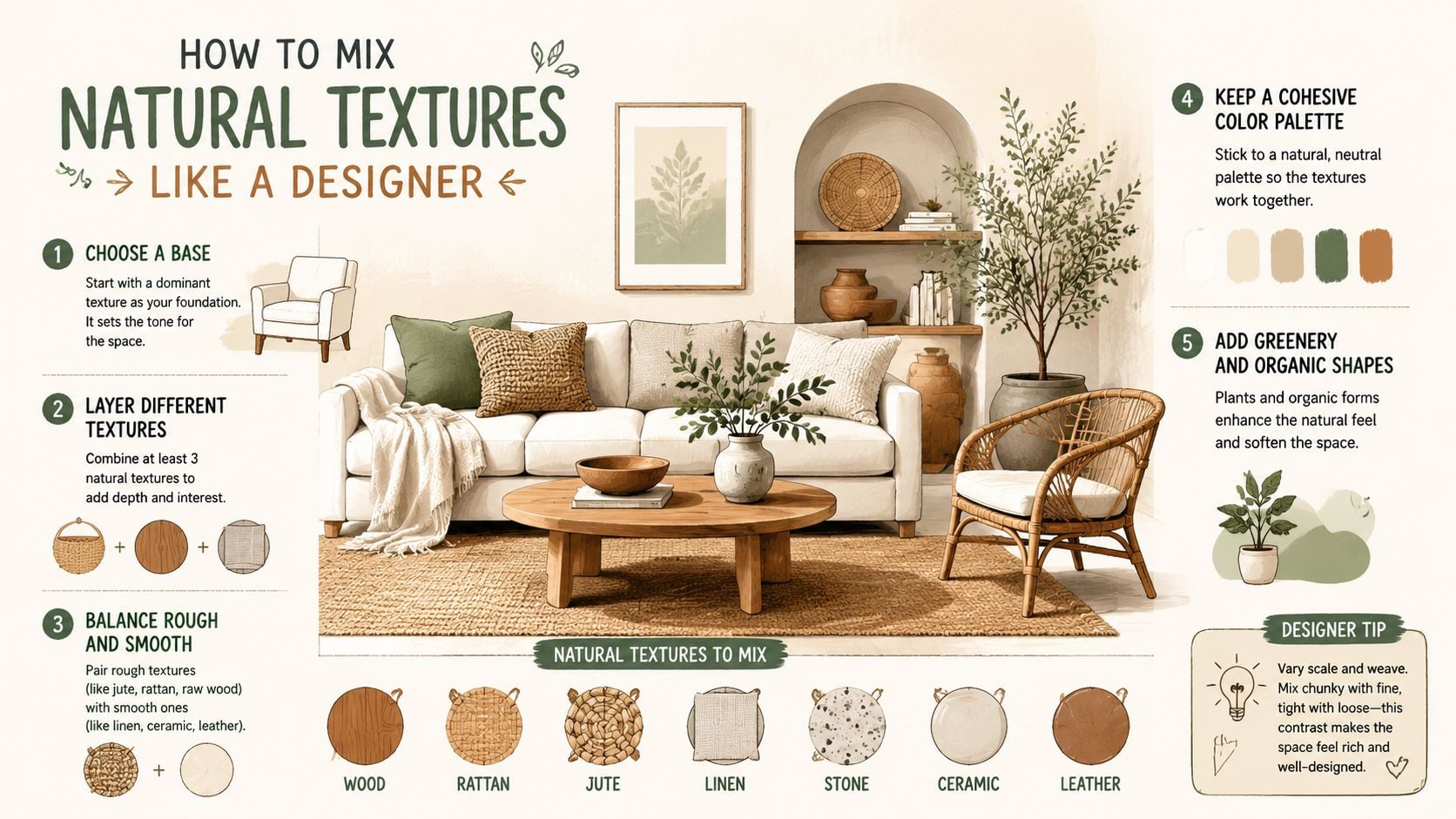
The fastest way to make a natural room look messy is to use too many equally strong textures at once. A better approach is to let one material lead, then give the others clear jobs. That rule holds up in dining rooms, living rooms, and bedrooms alike.
Start with one dominant material
A room usually reads best when one material sets the tone. A large wood dining table, a wooden bed frame, or a substantial sofa frame gives the eye a place to land. Once that anchor exists, the rest of the textures can support it instead of competing for attention.
The practical guideline from Homes & Gardens is simple, anchor the room with one dominant material, limit active textures to 2 to 3 per area, and pair coarse surfaces with finer ones for balance. That's a useful rule because it keeps the space layered without turning it into a sample board.
Pair rough with refined
Texture contrast is where natural decor starts to feel designed instead of themed. Raw stone looks stronger next to smooth wood. A tightly woven seagrass basket feels more intentional beside a softer wool rug. Even leather and linen can work together if one stays visually quiet.
Tip Top's Professional Design Services and Custom Ordering help here because matching wood tone, upholstery hand, and finish sheen is often the hardest part for homeowners to judge alone. That's especially true when a room has to coordinate with existing flooring, wall color, or nearby trim.
The goal isn't to show every natural material at once, it's to make a few of them work harder together.
Caring for Your Natural Furniture and Decor
Natural materials look their best when they're cared for in ways that respect the surface. Dusting, vacuuming, and gentle cleaning matter more than aggressive products. A matte finish, an oiled wood top, or a wool rug can last beautifully when maintenance stays simple and consistent.
For wood furniture, a soft cloth and light, regular dusting help protect the finish. Avoid soaking the surface, and keep hot mugs, wet planters, and abrasive cleaners off the top. For deeper upkeep, the how to care for wood furniture guide is a practical reference for protecting the look of a solid wood piece over time.
Rugs and stone need different handling
Wool and jute rugs should be vacuumed with care and spot-cleaned gently when spills happen. Harsh scrubbing can distort fibers or leave the area looking blotchy. Stone and clay surfaces usually want non-abrasive cleaners and quick wipe-downs, especially in homes where people use the space hard every day.
The hygroscopic behavior of unsealed wood and natural plasters is also worth understanding. Natural materials can absorb excess moisture when the air is humid and release it when it's dry, which helps support comfortable indoor relative humidity in the 40 to 60% range according to this material discussion. That makes finish choice important, since overly sealed surfaces can reduce the benefit.
For homeowners who want a deeper preservation reference, the article on natural wood preservation methods offers useful context on keeping wood looking good without treating it like a disposable surface. The larger lesson is simple, natural materials ask for attention, but they reward it with longer life and a better patina.
Begin Your Natural Design Journey at Tip Top Furniture
A good natural home doesn't need to be complicated. It needs the right materials, the right scale, and the patience to let a few quality pieces do the work. That's why homeowners across the Capital Region often look for a showroom that can handle furniture, mattresses, decor, flooring, and design support in one place.
Tip Top Furniture & Mattresses in Freehold, NY brings that one-stop approach together with local service, Complimentary Design Consultations, Flexible Financing, and a Clearance Corner for value-conscious projects. With heirloom-quality Amish furniture, USA-made options, and the ability to coordinate whole-room choices, the store can help turn a natural decor idea into a room that functions for daily life.
Whether the project starts with a dining table, a bedroom refresh, or a whole-house update, the family behind the showroom knows how much easier the process feels when the materials are chosen with care. Natural design works best when the pieces are built to last and selected with the home in mind.
Visit Tip Top Furniture & Mattresses in Freehold, NY to see natural materials in person, compare wood tones and fabrics, and talk through a room plan that fits your Albany-area home. Bring measurements, style ideas, or even a single problem piece, and let the team help shape a space that feels warm, practical, and built for years of use.