Your Guide to a Pressure Relief Mattress in Albany, NY


A lot of people in the Albany area have the same complaint. They're in bed long enough, they aren't staying up late, and yet they still wake up feeling sore in the shoulder, stiff through the hips, or tired in the lower back.
That often leads to self-blame. Maybe they slept wrong. Maybe they need a different pillow. Maybe getting older just feels like this. But many times, the problem isn't the sleeper. It's the mattress under them.
A pressure relief mattress is built to reduce strain where the body presses hardest into the bed. For many sleepers, that simple change can mean fewer wake-ups, less tossing around, and a more comfortable start to the day. For homeowners visiting from Albany, Schenectady, Troy, and across the Capital Region to shop in Freehold, that's often the point where mattress shopping stops feeling confusing and starts making sense.
Table of Contents
- Waking Up Tired and Sore? Your Mattress Might Be the Problem
- The Science of Comfort How Pressure Relief Mattresses Work
- Choosing Your Material Memory Foam Latex and Hybrid Options
- The Right Mattress for Your Sleep Style and Body Type
- Beyond the Bedroom Clinical Uses and Pressure Mapping
- Your Mattress Buying Checklist for Albany Shoppers
- Find Your Perfect Sleep at Tip Top Furniture and Mattresses
Waking Up Tired and Sore? Your Mattress Might Be the Problem
One common story goes like this. A sleeper goes to bed feeling fine, falls asleep on one side, then wakes up in the middle of the night rolling to the other because one shoulder feels jammed into the mattress. By morning, the hips are tight, the back feels cranky, and the whole night somehow didn't feel restful.
That pattern usually points to pressure points. Those are the spots where body weight bears down the most, often at the shoulders, hips, and lower back. If the mattress is too hard, those areas take too much force. If it's too soft in the wrong places, the body can dip out of alignment and create a different kind of ache.
For many households across Freehold and the greater Albany Capital Region, this is the moment when a mattress stops being “good enough.” A bed that once felt comfortable may have lost support, or it may never have matched the sleeper's body very well in the first place. The signs can be subtle at first, then hard to ignore.
A mattress should help the body settle in. It shouldn't make the sleeper fight for a comfortable position all night.
A pressure relief mattress addresses that issue directly. It cushions the heavier parts of the body while still supporting the rest of the frame. Instead of pushing back in a flat, unforgiving way, it allows the body to rest in a more natural posture.
Anyone wondering whether the bed has become the weak link can start with these signs it's time to replace a current mattress. That's often where people realize the soreness they've been brushing off has a very fixable cause.
The Science of Comfort How Pressure Relief Mattresses Work
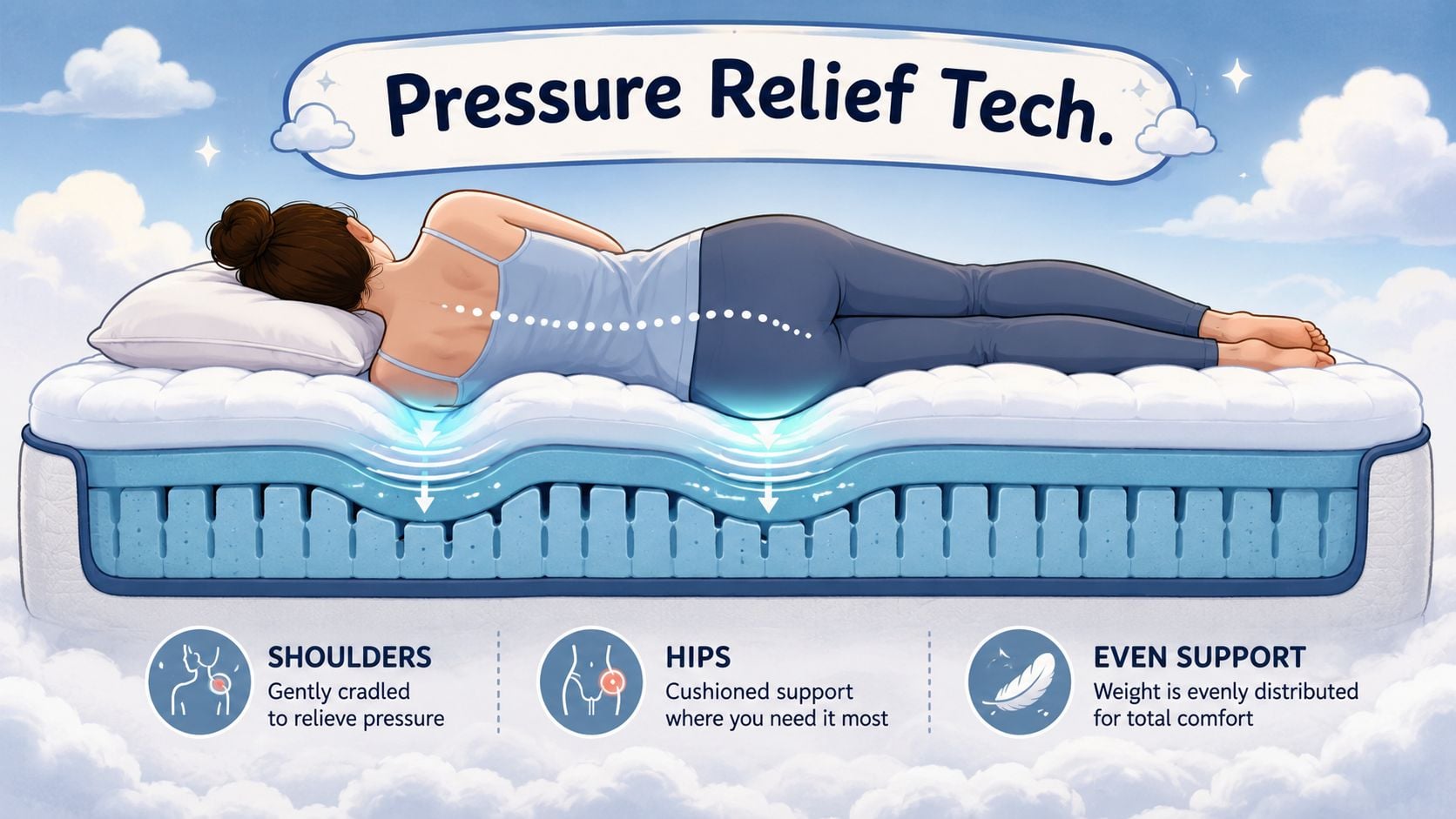
A pressure relief mattress works by spreading body weight across more of the sleep surface. That sounds simple, but it changes a lot about how the body feels in bed.
Think about pressing a hand into concrete versus pressing it into sand. On concrete, the force stays concentrated in a few small spots. On sand, the surface gives a little and distributes that force over a wider area. Mattresses work in a similar way.
Why pressure builds up in the first place
When a person lies down, the body doesn't press evenly into the bed. The shoulders and hips usually carry more load than the waist, legs, or upper torso. On a mattress with poor pressure relief, those heavier areas absorb too much force.
That's why some sleepers feel tingling, soreness, or a constant need to reposition. The body keeps trying to escape discomfort. Each adjustment can interrupt deeper rest, even if the sleeper doesn't fully remember waking up.
A better pressure relief mattress uses layers that compress where needed and resist where needed. The goal isn't to let the body sink without control. The goal is to balance cushioning and support.
What contouring really means
Contouring means the mattress responds to the shape of the body instead of forcing the body to adapt to a flat surface. It fills in gaps around the waist or lower back and softens impact under joints and curves.
That can help in a few practical ways:
- Less concentrated force: Shoulders and hips aren't taking the full hit of body weight.
- Better comfort for still sleepers: People who stay in one position for long stretches often notice pressure relief fastest.
- Reduced motion transfer: Softer comfort layers can absorb some movement, which helps when one partner shifts.
- More settled sleep posture: The body doesn't have to keep searching for a less painful angle.
Practical rule: If a mattress feels comfortable for two minutes but irritating after ten, pressure buildup is often part of the problem.
Some shoppers first learn about this through foam models. Others notice it in latex or hybrids with comfort layers on top. Anyone curious about how one popular material creates that body-hugging effect can read more about what a memory foam mattress is.
Choosing Your Material Memory Foam Latex and Hybrid Options
Not every pressure relief mattress feels the same. That's where many shoppers around Albany get tripped up. They know they want less pain and better support, but they aren't sure which material will feel right once they lie down.
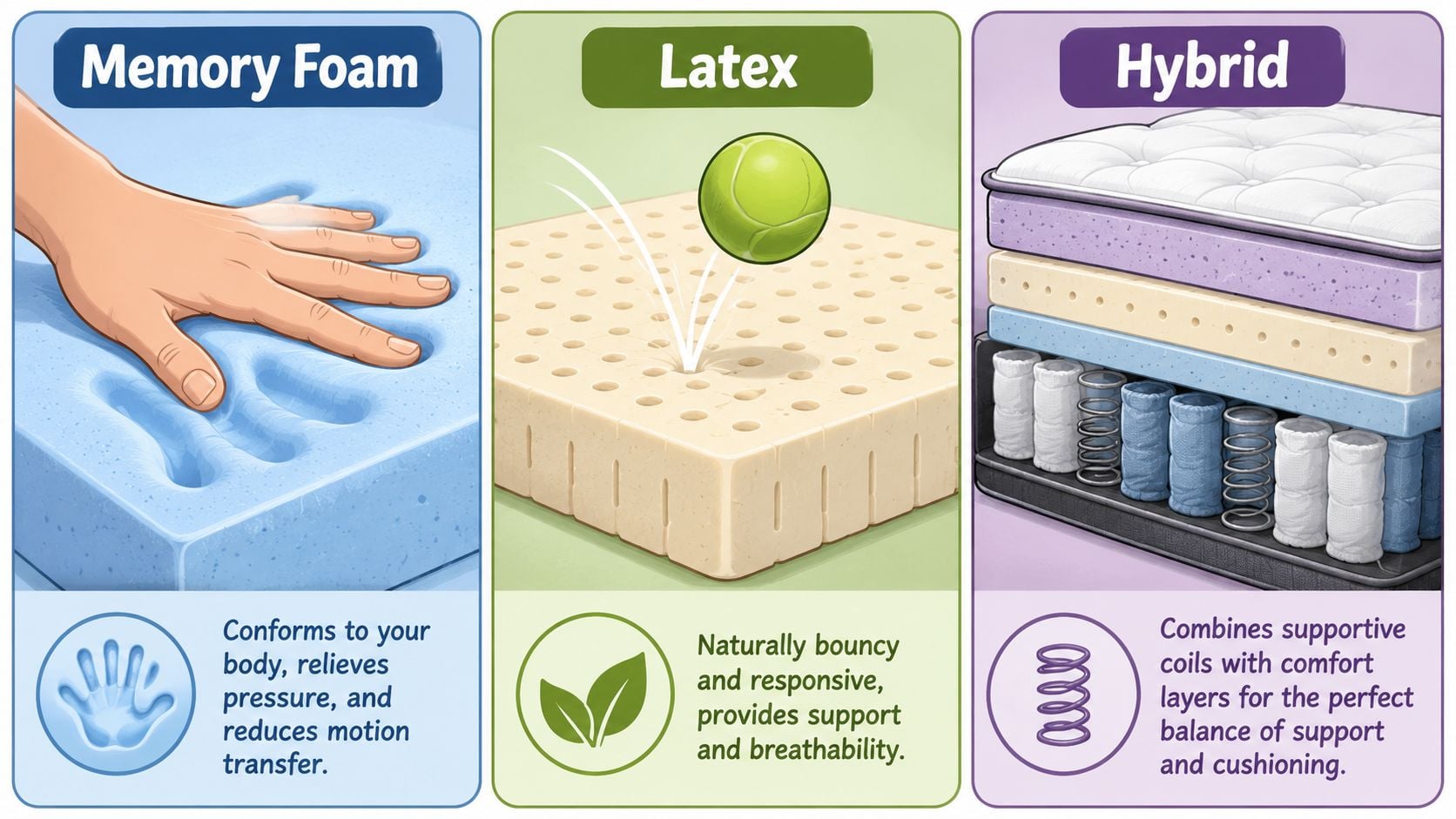
The three most common directions are memory foam, latex, and hybrid designs. Each one can offer pressure relief, but they do it in different ways.
Memory foam feel and who tends to like it
Memory foam is the material many people picture first when they hear “pressure relief.” It's known for close contouring and a cradling feel.
- Deep shaping around the body: Memory foam can cushion shoulders, hips, and other sharper contact points very well.
- Strong motion control: Couples often like that it can soften the feel of movement from the other side of the bed.
- Slower response: Some sleepers love that hugged feeling. Others feel it's harder to change positions on.
- Modern cooling upgrades: Many current models use gel-infused or open-cell foams to help with heat concerns that older foam beds were known for.
Some shoppers want that close, body-conforming comfort and nothing else feels quite the same.
Latex support and a quicker response
Latex has a different personality. It still relieves pressure, but it tends to feel more buoyant and responsive.
- Gentle contouring instead of a deep hug: The body gets cushioning, but usually with more lift.
- Easy movement: Sleepers who change positions often may find latex easier to move on.
- Durable feel: Many people associate latex with long-lasting support.
- Often chosen by sensitive sleepers: Some households look to latex for its naturally resilient feel and hypoallergenic appeal.
Latex can be a strong match for people who want pressure relief without feeling too “held” by the bed.
Hybrid construction for balanced comfort
A hybrid combines comfort layers on top with a coil support system underneath. For many shoppers, this is the middle ground that makes sense right away.
- Support from coils: The base gives structure and pushback.
- Comfort layers above: Foam or latex on top handles the pressure relief side.
- More familiar feel: People moving from a traditional mattress often adjust to hybrids quickly.
- A good fit for broad preferences: One partner may want cushioning while the other wants support. Hybrids often help bridge that gap.
For shoppers in Freehold and throughout the Capital Region, this category is also where a curated selection of USA-made mattresses often stands out. Build quality, materials, and long-term comfort matter more when the mattress gets used every night for years.
A short comparison can make the differences easier to see:
| Material | Pressure relief feel | Ease of movement | Typical overall feel |
|---|---|---|---|
| Memory foam | Deep contouring | Lower | Close, cradling |
| Latex | Gentle contouring | Higher | Responsive, buoyant |
| Hybrid | Balanced contouring | Moderate to high | Cushioned with support |
For anyone comparing coil-and-foam designs more closely, this guide on what a hybrid mattress is helps clarify what's happening inside the bed.
The Right Mattress for Your Sleep Style and Body Type
The mattress that feels wonderful to one person can feel wrong to another. That doesn't mean either sleeper is picky. It means the body has specific needs, and the mattress has to match them.
Sleep position and body type usually explain most of the difference.
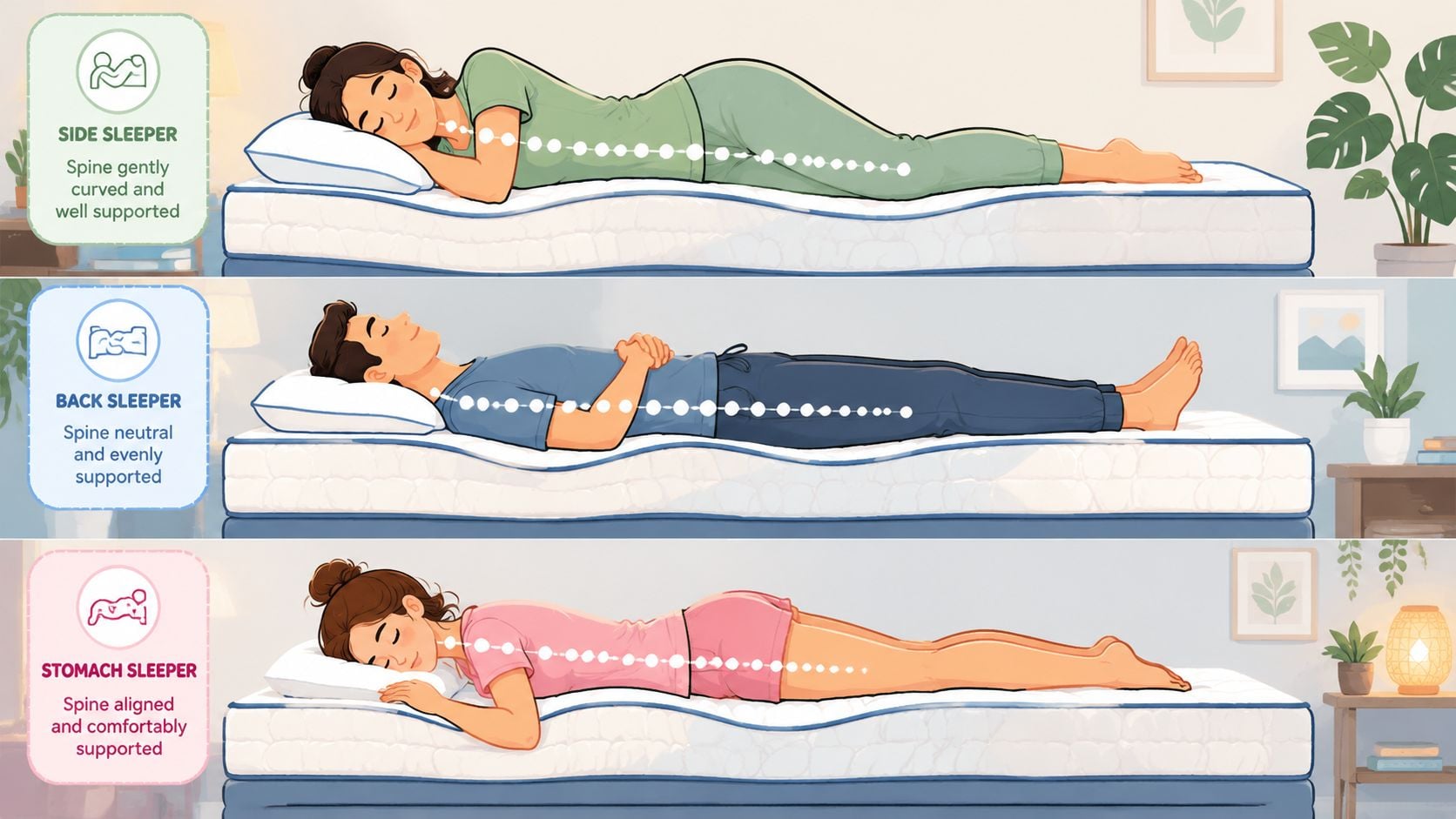
Sleep position changes what support feels right
A side sleeper needs different comfort than a stomach sleeper. That's because the body meets the mattress at different angles.
Side sleepers usually need more cushioning at the shoulders and hips. If the surface is too firm, those joints take too much pressure. If the mattress gives enough in those areas while still supporting the waist, the spine has a better chance of staying level.
Back sleepers often do well with a surface that supports the lower back without letting the hips sink too far. Too much softness can create a hammock effect. Too much firmness can leave the lumbar area unsupported.
Stomach sleepers usually need a firmer feel than side sleepers. If the middle of the body dips too much, the lower back can overarch. That can lead to morning stiffness even when the mattress initially feels plush.
The right mattress doesn't just feel soft or firm. It holds the spine in a more neutral position for that sleeper's usual posture.
A lot of people are combination sleepers, of course. They start on the side, end up on the back, and sometimes drift everywhere in between. In those cases, a balanced mattress often works better than chasing one extreme.
Body type changes how a mattress feels
Two people can lie on the same mattress and report completely different firmness. That's not imagination. A lighter body may stay closer to the surface, while a heavier body may engage more of the mattress layers.
A few practical examples help:
- Lighter sleepers: They may need a surface with enough give to feel the pressure relief at all.
- Average-build sleepers: They often have the widest range of workable options, depending on position.
- Heavier sleepers: They may need stronger support so the mattress doesn't feel overly soft or unsupportive through the middle.
In-store testing matters so much. A mattress label alone can't tell someone how it will feel to their frame. One “medium” can feel cushy to one person and firm to another.
For Albany and Troy shoppers trying to narrow the field before visiting a showroom, this article on which mattress is right for a body type is a useful starting point.
Beyond the Bedroom Clinical Uses and Pressure Mapping
Pressure relief didn't start as a lifestyle buzzword. It has roots in clinical care, where surface design can affect skin protection and patient comfort in a very serious way.
Where pressure relief technology first proved its value
The healthcare side of this topic matters because it shows the idea is grounded in real function, not just marketing language. Pressure-redistributing mattresses are a cornerstone of clinical care, proven to significantly reduce the incidence of pressure ulcers in at-risk patients by managing pressure, shear, and microclimate according to the Sleep Foundation's overview of pressure relief mattresses.
That doesn't mean every bedroom mattress is a medical device. It does mean the underlying concept of pressure redistribution has a strong practical basis. For readers interested in the care side of the subject, this overview of pressure injury care essentials gives additional context on why pressure management matters.
How pressure mapping helps real shoppers
In a retail setting, pressure mapping takes that same idea and makes it visible. A shopper lies on a mattress, and the system highlights where the body is carrying more force. That can be eye-opening, especially for people who've always assumed discomfort was “just normal.”
Instead of guessing, the shopper can compare how different models treat the shoulders, hips, and back. One mattress may light up the shoulder area with obvious pressure buildup. Another may show a more even distribution.
That kind of feedback helps turn vague comments like “this one feels okay” into something more specific. A store such as Tip Top Furniture & Mattresses uses a high-tech bed matching system to help connect body shape, sleep style, and pressure points with more suitable mattress options for shoppers coming from Freehold, Albany, and the wider Capital Region.
Your Mattress Buying Checklist for Albany Shoppers
A mattress can feel great under showroom lights and still be the wrong choice if the shopper rushes the process. A short checklist keeps things grounded.
What to do in the showroom
- Lie down long enough: A quick sit on the edge won't reveal much. Spend real time on the mattress in the usual sleep position. Let the body settle.
- Try the position that causes trouble at home: If the shoulder usually hurts while side sleeping, that's the position to test first.
- Notice pressure, not just softness: A plush feel can be appealing at first touch, but what matters is whether the body feels supported after a few minutes.
- Test with a partner if possible: Motion, space, and comfort feel different when both sleepers are on the bed.
A mattress test should answer one question clearly. Does the body relax into this bed, or does it start compensating?
What to ask before buying
- Ask about the comfort materials: Foam, latex, and hybrid builds each solve pressure differently.
- Discuss support needs openly: Back pain, hip pain, shoulder tenderness, hot sleeping, and restless sleep all affect the choice.
- Check what supports the mattress underneath: The right foundation or base helps the mattress perform as intended.
- Review warranty and return details carefully: A mattress is a long-term home purchase, not an impulse item.
- Ask about USA-made options: Many shoppers prefer to know where and how the mattress is built.
- Look at payment flexibility: A better mattress may be easier to manage with mattress financing and shopping guidance.
- Don't skip value sections: Clearance models can offer strong quality for shoppers who are open to what's available now.
A second practical step is to think beyond the mattress alone. Bedroom comfort also includes the bed frame, nearby storage, and the way the room works day to day. That's where a one-stop showroom serving the Albany Capital Region can be useful, especially for shoppers also comparing bedroom furniture options or checking current values in the clearance section.
Find Your Perfect Sleep at Tip Top Furniture and Mattresses
Buying a mattress online can make the process feel fast. It rarely makes it feel personal. Pressure relief is too individual for guesswork alone, especially when shoulders, hips, back support, and sleep position all influence the answer.
For many shoppers in Albany, Schenectady, Troy, and nearby communities, the advantage of traveling to a Freehold showroom is simple. They can lie on different builds, compare how each one feels, and talk through the details with someone who understands mattress fit instead of reading generic labels on a screen.

Why local mattress shopping still matters
A family-owned store that has served neighbors since 1978 brings a different pace to the process. There's room for questions. There's room to compare materials. There's room to talk about what's happening at 2 a.m. when the sleeper keeps waking up sore.
That becomes even more helpful when the store also offers a high-tech bed matching system, USA-made mattresses, and design services that have been available since 1984. Mattress shopping often connects to a larger bedroom update, whether that means replacing a worn bed, coordinating with other furniture, or planning a full room around comfort and function.
A practical next step for Capital Region shoppers
A little outside reading can help shoppers arrive with better questions. This guide on selecting the best pressure relief mattress offers a useful overview of support-surface thinking from the care side of the category.
For households furnishing more than just a sleep space, it also helps to know a local showroom can support the whole project. That may include custom furniture orders for a personalized bedroom setup, coordinating styles across the home, or exploring flexible financing options to spread out the investment.
A pressure relief mattress isn't about chasing a trend. It's about finding a surface that lets the body rest without fighting the bed all night.
For anyone ready to compare pressure relief mattresses in person, Tip Top Furniture & Mattresses offers a Freehold, NY showroom serving the Greater Albany Capital Region with personalized bed matching, USA-made mattress options, custom solutions, and flexible financing that can make a more comfortable bedroom easier to build.