Mattress Pressure Points a Guide to Pain-Free Sleep

Waking up with a sore shoulder, a numb arm, or an aching hip usually gets blamed on age, stress, or “sleeping funny.” Often, the mattress is part of the problem. When a bed doesn't spread body weight evenly, certain areas take too much force for too long, and that's where mattress pressure points start.
That matters for sleepers across the Capital Region. People in Albany, Schenectady, Troy, and the surrounding communities often spend weeks researching online, only to end up more confused about firmness, foam, coils, and whether a mattress is too soft or too hard. Ultimately, the question is simpler. Does the mattress support the body without creating painful pressure at the shoulders, hips, and other contact areas?
A useful companion to that conversation is this guide to restorative sleep, which looks at the broader habits that shape better rest. Mattress fit is one piece of that puzzle, but it's an important one.
For shoppers who want practical sleep advice instead of vague promises, local experience still matters. Since 1978, families visiting Freehold have looked for hands-on help, not just a product tag. For more sleep basics before diving into mattress selection, this article on natural and restful sleep techniques is a helpful starting point.
Introduction Waking Up to Better Sleep in the Capital Region
Morning discomfort usually follows a pattern. The shoulder that carried the body's weight all night feels tender. The hip feels bruised. A hand falls asleep. Then the sleeper starts tossing and turning just to get comfortable again.
That pattern points to mattress pressure points, which are areas where too much body weight pushes into too little surface area. Side sleepers tend to notice them first, but back and stomach sleepers can feel them too if the mattress doesn't support the body evenly.
People often expect pressure relief to be obvious only on a very plush bed. That isn't how it works. A mattress can feel soft at first touch and still create pressure buildup if the comfort layers are shallow, uneven, or already worn down.
Pressure relief and support have to work together. A bed that only feels soft can still leave the body fighting for a stable position all night.
That's where in-store guidance can close the gap between online advice and real sleep comfort. A mattress has to match body shape, sleep position, and how much someone compresses the surface. That's hard to judge from a product description alone.
What Exactly Are Mattress Pressure Points
A simple way to think about pressure points is to compare them to standing on one small object versus lying across a wide, padded surface. The body can tolerate weight well when that force is spread out. It gets uncomfortable fast when the same force concentrates on a few spots.
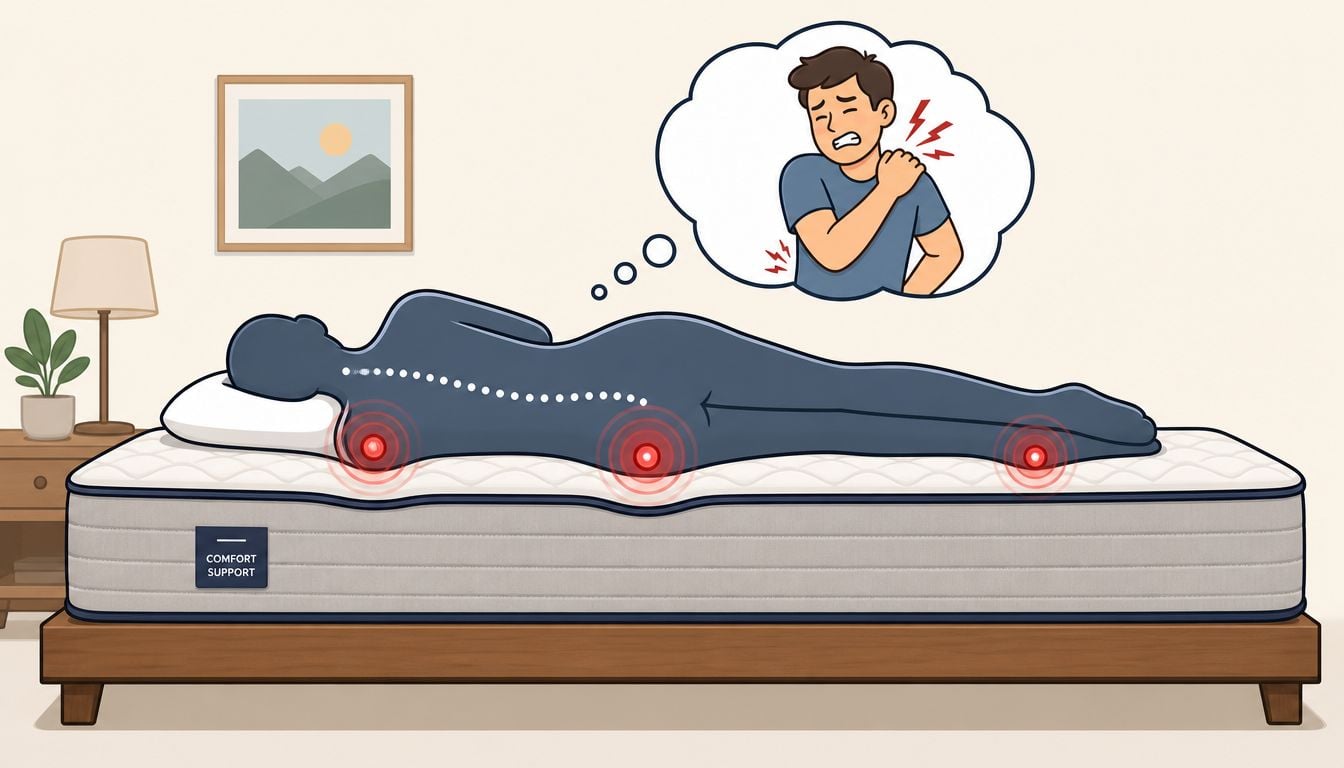
Where pressure usually builds
The most common trouble spots are:
- Shoulders because they jut outward and carry a lot of side-sleeping load
- Hips because they're one of the body's heaviest contact areas
- Knees especially when legs press together or the mattress feels hard
- Lower back when the bed doesn't fill the natural curve of the body
A mattress that's too firm often pushes back too aggressively against these areas. A mattress that's too soft can create a different problem. The body sinks too far, alignment drifts, and pressure shifts into new places.
The clinical benchmark most shoppers never hear about
There's a more precise way to understand pressure relief than just saying a bed “feels comfortable.” To be considered pressure reducing in a clinical sense, a mattress must keep pressure on bony prominences below 32 mmHg. Exceeding this threshold can restrict blood flow, leading to the numbness and tossing and turning that disrupts sleep, according to this discussion of the 32 mmHg pressure-reducing benchmark.
That single number explains why some mattresses feel fine for five minutes and miserable after an hour. The body can sense that circulation is being compromised long before a sleeper fully wakes up.
Practical rule: A mattress shouldn't just feel cushioned. It should let the shoulders and hips settle in without cutting off support underneath them.
Material choice plays a big role here. Memory foam, latex, hybrids, and traditional coil models all handle body contact differently. Shoppers who want a clearer picture of how contouring materials behave can start with this overview of what a memory foam mattress is.
Common Causes and Symptoms of Pressure Buildup
Pressure buildup usually announces itself before a mattress ever shows dramatic sagging. The body starts compensating first. Sleep becomes lighter, position changes get more frequent, and the morning feels less restorative than it should.
Symptoms that point to pressure buildup
A few signs show up again and again:
- Morning shoulder or hip soreness that fades after getting out of bed
- Numbness or tingling in an arm, hand, or leg after sleeping in one position
- Frequent tossing and turning because no position stays comfortable for long
- Stiffness on waking even when total sleep time seemed adequate
- Tender spots that feel almost bruised where the body pressed hardest into the bed
If pain has started extending beyond the mattress itself, some readers may also benefit from learning how hands-on care works in MedAmerica Rehab's pain relief therapy, especially when muscle irritation is already part of the picture.
Why the problem disrupts sleep quality
When body pressure stays too high at the shoulders and hips, sleep doesn't remain steady. When pressure at the shoulders and hips exceeds 40 mmHg, it can trigger micro-arousals from sleep approximately every 90 minutes, preventing you from reaching the deeper, more restorative sleep stages, according to this pressure and sleep disruption reference.
That helps explain a common complaint in the showroom. Someone says they're sleeping “enough hours” but still waking up tired. The issue isn't always time in bed. Sometimes the body keeps getting nudged out of deeper sleep because it's trying to escape localized pressure.
Common causes behind mattress pressure points
The source is usually one of these:
- Too firm a surface. The mattress doesn't allow the shoulders and hips to sink enough.
- Too soft a build. The body drops out of alignment and creates strain in new areas.
- Worn comfort layers. What once cushioned the body no longer rebounds evenly.
- Poor match for sleep position. A side sleeper often needs a different feel than a stomach sleeper.
- Body change over time. Weight shifts, injuries, and aging can change how a mattress feels.
The mattress doesn't need to be visibly ruined to be wrong for the sleeper. A mismatch can cause pressure problems long before the bed looks worn out.
Finding Your Perfect Pressure-Relieving Mattress in Upstate NY
Choosing a mattress for pressure relief isn't about chasing the softest model on the floor. It's about finding a surface that lets the body settle in where it needs to, while still keeping the spine supported. That balance looks different for side sleepers, back sleepers, stomach sleepers, and combination sleepers.

What tends to work by sleep position
A useful way to narrow the field is by starting with sleep posture.
| Sleep position | Usually needs | What often goes wrong |
|---|---|---|
| Side sleeping | More contouring at shoulders and hips | Surfaces that feel hard under the shoulder |
| Back sleeping | Even support under the lumbar area and hips | Beds that let the midsection sink too much |
| Stomach sleeping | Flatter, steadier support | Plush tops that bow the lower back |
| Combination sleeping | Easier movement with balanced cushioning | Beds that trap the body in one spot |
Side sleepers often need the most pressure relief because the body contacts the mattress across narrower zones. Back sleepers usually do better with a more balanced feel. Stomach sleepers need to be careful with overly plush comfort layers, which can put the torso too low.
How materials change the feel
Not all pressure-relieving materials solve the same problem in the same way.
Latex tends to feel buoyant and responsive. It contours, but it doesn't usually produce the deep, slow sink many people associate with traditional memory foam. In a study published in the Journal of Physical Therapy Science, latex mattresses reduced peak body contact pressure on the torso and buttocks by up to 35.1% compared to polyurethane foam mattresses, and showed a higher proportion of low-pressure regions at 96.1% versus 91.8%, as detailed in this latex mattress pressure distribution study.
Memory foam is often chosen when a sleeper wants closer body contouring and strong pressure reduction around sharper contact points.
Hybrid designs can be a smart middle ground, especially for shoppers who want both contouring and easier movement. The comfort layers handle pressure, while the support core helps prevent the “stuck” feeling some people dislike.
An emerging design detail worth noticing is the use of zoned microcoil comfort layers in some modern hybrids. Instead of relying only on foam, these layers can contour in a more breathable, spring-assisted way. That can appeal to sleepers who want pressure relief without a dense all-foam feel.
A mattress can be pressure relieving without feeling marshmallow-soft. Often, the right model feels balanced rather than dramatically plush.
Why build quality matters over time
Pressure relief isn't only about the first week. It's about whether the mattress keeps doing the same job after years of regular use. That's one reason construction standards matter.
For USA-made mattresses, the FTC's “all or virtually all” standard requires at least 95% of materials and labor to be domestic, and that standard is discussed in this overview of USA-made mattress requirements. In practice, many shoppers use that as one sign they're looking at more consistent foams and coil systems.
This is also where a curated local selection helps. Tip Top Furniture & Mattresses carries pressure-relief options for shoppers in Freehold, Albany, Schenectady, Troy, and the broader Capital Region who want to compare different feels in person instead of guessing from a spec sheet.
A few trade-offs worth knowing
Some choices solve one problem while creating another. That doesn't make them bad. It just means fit matters.
- Deep contouring can relieve shoulders and hips, but some sleepers find it harder to change positions.
- Highly responsive surfaces make movement easier, but may not cushion sensitive joints as much.
- Cooler, airier builds may feel more buoyant and less hugging.
- Extra-plush tops can feel great at first touch, but if the support underneath is weak, alignment suffers.
The right mattress should reduce pressure without asking the body to sacrifice posture.
How to Test for Pressure Points at Home and in Our Freehold Showroom
You wake up with a sore shoulder, roll out of bed, and assume you just slept wrong. Then it happens again the next morning, and again a few days later. That pattern usually points to pressure buildup, not bad luck.
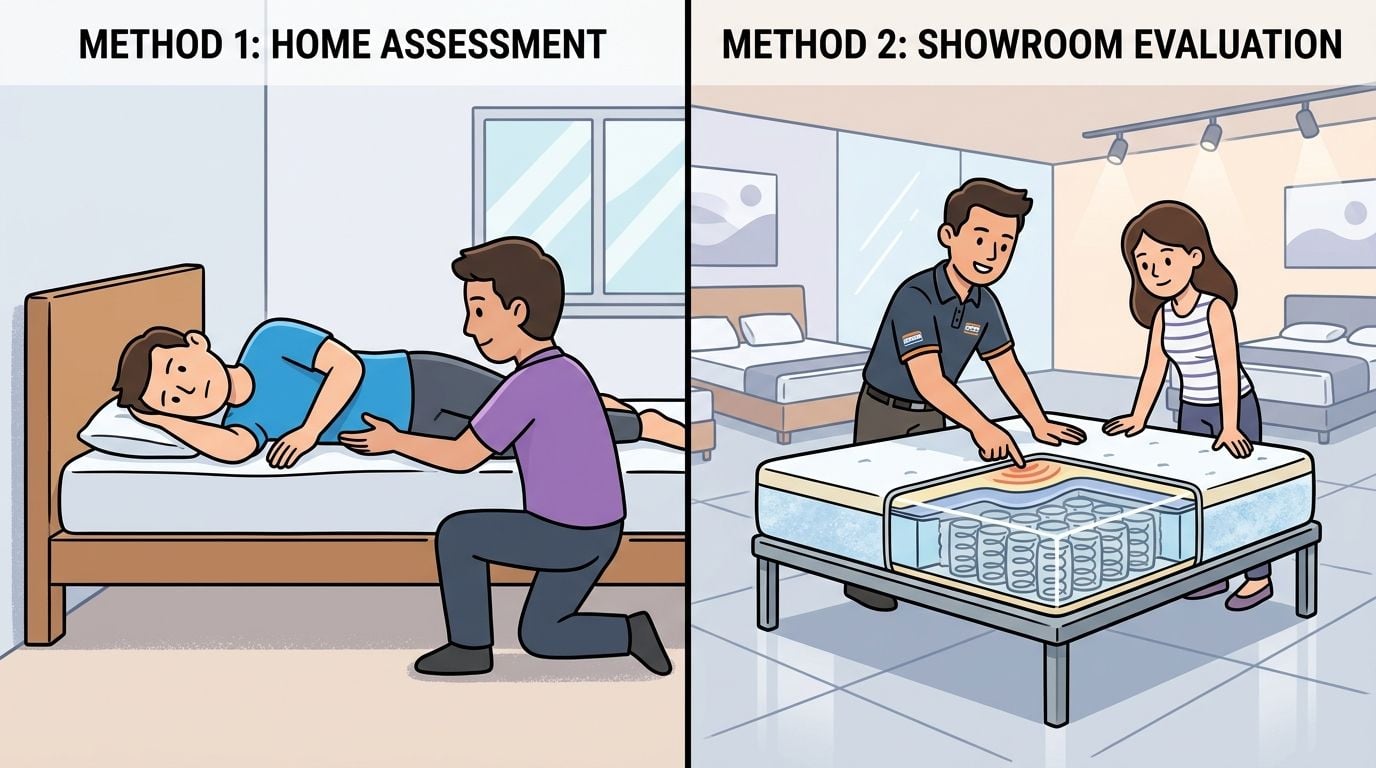
Online research can help you narrow the field, but pressure relief is still something the body has to feel. For shoppers around Albany, Troy, Schenectady, and the wider Capital Region, that is often the difference between guessing from reviews and getting a mattress that fits. At Tip Top in Freehold, we have seen for more than 45 years that a few simple checks, done the right way, tell you far more than a firmness label.
What to check at home first
Home testing is useful because it shows what your body is doing on your current bed, not what a product page says.
- The stay-still test. Lie in your usual sleep position for at least 10 to 15 minutes. If your shoulder, hip, ribs, or lower back starts asking for a position change early, the mattress may be creating pressure instead of relieving it.
- The hand check. Slide a hand under your lower back while lying naturally. A large gap can mean the mattress is not contouring enough. No space at all can mean you are sinking too far.
- The wake-up pattern check. Track where soreness shows up for several mornings in a row. Repeating pain in the same spot usually matters more than one rough night.
- The zone check. Lie in the center, then shift to another area you use often. If one section feels flatter, firmer, or less supportive, the comfort layers may be wearing unevenly.
These checks help you spot patterns. They do not tell you whether a different mattress will solve the problem well.
Why showroom testing gives better answers
A real mattress test takes time. Sit tests and quick hand presses miss what happens after the muscles relax and your weight settles into the bed.
In our Freehold showroom, the goal is simple. Get you into your normal sleep position and give the mattress enough time to show its strengths and weaknesses. Side sleepers often notice shoulder pressure first. Back sleepers usually feel trouble in the lower back or hips. Combination sleepers need to watch for both pressure relief and ease of movement, because a mattress can cushion well and still make turning feel like work.
For shoppers also considering position changes for back, hip, or leg comfort, this adjustable bed comparison shows how head and foot elevation can shift weight distribution in ways a flat setup cannot.
What to pay attention to during a real test
Ask better questions than “Is it soft?”
- Do your shoulders settle, or do they stay tense?
- Do your hips feel cushioned without dropping too far?
- Does your lower back feel supported after several minutes, not just the first minute?
- Can you roll and change positions without fighting the surface?
That last point matters more than many shoppers expect. Pressure relief should not come at the cost of mobility.
A good showroom visit also helps separate two problems that feel similar at home. One mattress can feel too firm and create sharp pressure at the shoulders and hips. Another can feel plush at first but let the body sag enough to create soreness later. The fix is different in each case, which is why in-person testing still has real value for Capital Region shoppers who want a clear answer before they buy.
Quick Remedies and When to Know Its Time for a New Mattress
Pressure-point trouble often starts in the gray area between “still usable” and “sleeping well.” In the showroom, I see plenty of Capital Region shoppers who are trying to decide whether they need a full replacement or just a smarter short-term fix. The answer depends on what's failing. Surface comfort can often be adjusted. Broken-down support usually cannot.
Remedies that can help right now
A few practical changes can reduce pressure and buy time if the mattress is still structurally sound.
- Add a quality topper. A good latex or memory foam topper can soften a mattress that feels too firm at the shoulders or hips, and it can sometimes extend the comfortable life of the bed for a while. It will not fix deep sagging or weak support.
- Adjust the sleep setup. The right pillow height can take pressure off the neck and shoulders. A pillow between the knees or under the legs can also reduce strain at the hips and lower back.
- Use an adjustable base. Raising the head or legs changes how body weight settles into the mattress, which can ease pressure in sensitive areas.
- Rotate the mattress if the model allows it. Uneven wear can create pressure hot spots, especially if one side of the bed gets more use.
These are useful fixes. They are not magic.
When quick fixes usually aren't help enough
Pressure buildup starts to point toward mattress replacement when the bed no longer holds the body in a consistent, supported position through the night. That is the part online research can miss. A mattress may sound right on paper and still be worn out, too soft in the wrong places, or wrong for your body.
Watch for signs like these:
- Visible sagging or body impressions
- Lumps or firmness changes from one area to another
- Morning pain that keeps coming back
- A bed that feels fine for a few minutes, then uncomfortable after real sleep time
- Little or no improvement after trying a topper
If that list sounds familiar, this guide to 7 signs it's time to replace your mattress can help you tell the difference between a temporary comfort problem and a mattress that has run its course.
One rule I give shoppers in Freehold is simple. If a mattress needs constant workarounds to feel acceptable, it is no longer doing its job well.
Budget matters too. Sometimes the right move is a short-term fix for a guest room or a mattress that only has minor firmness issues. If the support core is failing, spending more on add-ons usually just delays the decision. For Albany-area shoppers who want to sort that out in person, a local showroom visit can save a lot of trial and error. After 45 plus years helping people match the right feel with the right support, we can usually tell pretty quickly whether a topper makes sense or whether it is time to replace the mattress and sleep better for real.
Conclusion Your Best Sleep Is Waiting in Freehold
Mattress pressure points are common, but they aren't something sleepers have to accept. The right bed reduces concentrated force at the shoulders, hips, and other sensitive areas while still keeping the body supported. That's why comfort alone isn't enough. Fit matters.
For homeowners across Albany, Schenectady, Troy, Greene County, and the broader Capital Region, the most useful mattress advice is usually the kind that connects online research with real testing. A family-owned showroom with decades of experience can make that process much easier, especially when shoppers want honest guidance, flexible financing, and options that fit the rest of the home as well.
A better night's sleep often starts with finding out where the pressure is coming from, then trying the right solution in person.
For shoppers across Freehold, Albany, Schenectady, Troy, and the wider Capital Region, Tip Top Furniture & Mattresses offers a practical next step. Visit the Freehold showroom to test pressure-relief mattresses in person, explore USA-made options, ask about flexible financing, and compare sleep solutions alongside bedroom furniture, flooring, and custom-order pieces for a more coordinated home.