Albany Upholstered Sectional Sofa: Expert Buying Tips


A lot of homeowners around Albany and the Capital Region start in the same place. The old sofa isn't working anymore, the room feels chopped up, and the family wants one comfortable spot where everybody can sit without dragging in extra chairs from the kitchen.
That's where an upholstered sectional sofa usually enters the conversation. It gives a room a center of gravity. It handles movie nights, visiting relatives, naps, and everyday living better than most two-piece seating setups ever will.
That isn't a niche trend. The global sectional sofa market was estimated at USD 38.4 billion in 2024, accounting for 27.3% of the total sofa market, which shows just how mainstream sectionals have become in modern homes for flexibility and everyday use, according to sectional sofa market data.
Families shopping in older Greene County farmhouses, suburban Albany colonials, and compact Troy homes often run into the same problem. They know they want comfort, but they don't want to buy a sectional that swallows the room, blocks a doorway, or wears out too fast. They need straight answers, not showroom chatter.
An upholstered sectional sofa can be the smartest seat in the house. It can also be the most expensive mistake in the room if the shape, fabric, and scale are wrong.
Table of Contents
- Your Guide to Finding the Perfect Sectional
- Sectional Configurations and Styles
- Choosing Upholstery for Your Upstate New York Lifestyle
- Understanding Quality Construction Under the Cushions
- How to Measure for Your Sectional and Plan Your Room
- Customizing a Sectional at Our Freehold Showroom
- Smart Shopping and Bringing Your Sectional Home
Your Guide to Finding the Perfect Sectional
One family wants a sectional because the kids pile in every evening. Another wants one because the room is long and awkward, and a plain sofa leaves dead space. A third just wants one piece that looks finished instead of pieced together from a loveseat, chair, and ottoman bought years apart.
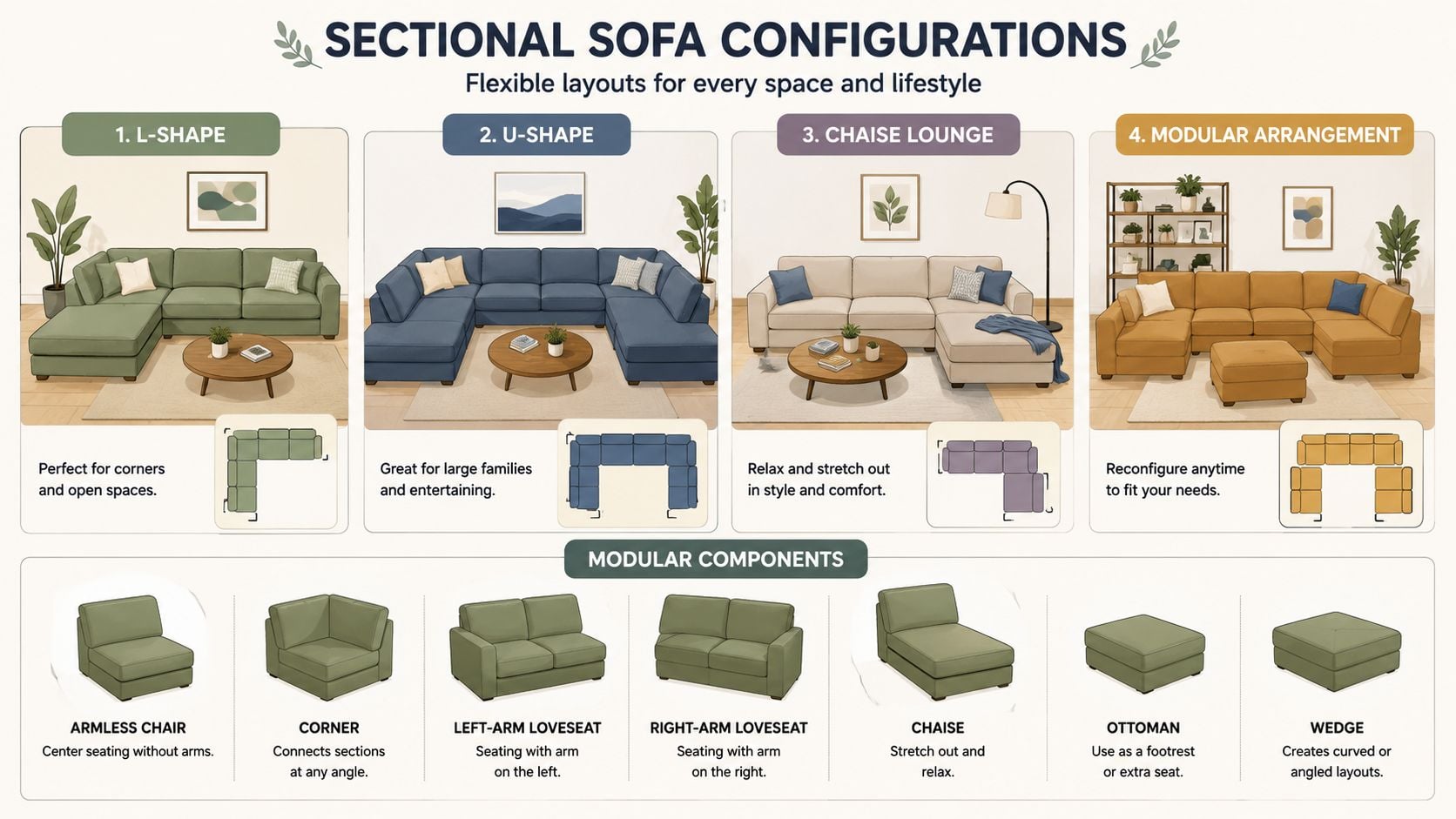
That's why sectionals have held their place for so long. They were built to solve a basic furniture problem. A sectional is a multi-piece seating system that gives more seating and better layout flexibility, with arrangements that commonly include L-shaped, U-shaped, and modular forms, as described in this sectional sofa overview.

In practical terms, that means an upholstered sectional sofa can do several jobs at once. It can define an open living area, soften a room with upholstered comfort, and seat more people without making the space feel like a waiting room.
A sectional has to fit real life
A good sectional choice starts with how the room gets used.
- Family rooms need durability: The sectional becomes the everyday landing spot.
- Open layouts need shape: A sectional can establish boundaries without adding walls.
- Older homes need care: Not every room in the Albany area is a clean rectangle, and that changes everything.
- Smaller homes need restraint: Bigger isn't better if the piece overwhelms the room.
A sectional should make a room feel calmer and easier to use. If it makes traffic harder, it's the wrong sectional.
A lot of shoppers focus too early on color. That's backwards. First comes configuration. Then scale. Then construction. Fabric and style come after those decisions, not before.
Confidence comes from planning
That's especially true around the Capital Region, where plenty of homes have narrow halls, offset windows, radiator locations, and entry paths that don't forgive a buying mistake. The right upholstered sectional sofa doesn't just look good on a sales floor. It has to work in the exact room where it will live.
Sectional Configurations and Styles
The shape should match the room before it matches anyone's decorating taste. That's the cleanest rule in sectional shopping.
The shapes that matter most
L-shaped sectionals are the workhorse. They fit corners well, define open spaces neatly, and usually make the most sense for everyday family living. In many Albany-area homes, this is the safest choice because it gives plenty of seating without turning the whole room into sofa.
U-shaped sectionals are for households that entertain often or need a lot of face-to-face seating. They work best in larger rooms where the sectional can float with breathing room around it. In a tight room, a U-shape can feel heavy fast.
Modular sectionals are made from separate units that can often be moved or rearranged. They're useful when a room may change over time or when a household wants flexibility for guests, game nights, or a future move.
Fixed sectionals keep their shape and don't rely on as many movable components. They often feel more unified, and in some rooms they sit better and stay put better.
For shoppers comparing layouts, this 5-piece sectional guide is useful because it breaks down how sectional arrangements affect everyday room flow.
Modular vs fixed is not a style question
A lot of marketing pushes modular as the answer for everybody. It isn't. A 2025 study found that 34% of sectional buyers struggle with fit, and one reason is that shoppers hear “modular” and assume it automatically solves room-planning problems. It doesn't. In tighter or non-rectangular rooms, fixed sectionals often offer better structural integrity and better value, while modular can be more useful where flexibility is the primary priority.
That matters in Upstate New York, where older homes often have quirks. Off-center fireplaces, narrow pass-throughs, and uneven wall runs don't always reward the most flexible-looking option. Sometimes the cleaner, fixed frame is the better answer.
A simple comparison helps:
| Configuration | Usually works best for | Main caution |
|---|---|---|
| L-shape | Corners, open living rooms, daily family use | Can dominate a small room if oversized |
| U-shape | Larger gathering spaces | Needs real floor space |
| Modular | Changing layouts, future moves, flexible seating | Pieces can shift and may not suit every tight room |
| Fixed | Stable layouts, older rooms, straightforward seating plans | Less adaptable after delivery |
Practical rule: If the room is quirky, don't assume modular is smarter. Sometimes a fixed sectional solves the room with less fuss.
Styling comes after fit. Once the shape is right, details like pillows, texture, and throws can soften the look. For anyone finishing the room, this guide on how to drape a faux fur throw offers simple ideas that work especially well on larger sectional silhouettes.
Choosing Upholstery for Your Upstate New York Lifestyle
Most sectional mistakes don't start with the frame. They start with the fabric.
A shopper sits on a beautiful sectional, runs a hand over the upholstery, likes the color, and stops there. That's not enough. An upholstered sectional sofa in a quiet formal room can wear one fabric. A sectional in a busy family room in Schenectady, Albany, or Greene County needs something tougher.
Fabric should match the household, not the showroom
The right fabric depends on traffic, pets, children, and habits.
Natural-looking fabrics can be handsome, warm, and inviting. They can also show wear sooner if the room gets hard daily use. Synthetics and performance-minded weaves usually make more sense for households where people heavily use the sofa instead of just looking at it.
Leather has its place too. It can wear beautifully, but it isn't automatically the right answer for every family, every budget, or every comfort preference. Some households want a softer, warmer upholstered feel that invites long evenings, not a more structured seat.
Here's the honest way to narrow it down:
- For children and pets: Choose durability first and texture second.
- For low-traffic rooms: More delicate fabrics can work if the room stays lightly used.
- For everyday lounging: Pick a fabric that feels good for long stretches, not just for a quick sit.
- For custom orders: Ask about fabric grade and expected wear, not just stain resistance.
Rub Count matters more than most shoppers realize
This is the detail too many retailers skip. Over 60% of consumers return upholstered furniture within two years due to fabric degradation, yet few retail guides explain that a fabric's Rub Count should be at least 15,000 for a sectional in a family home to withstand daily wear.
That single number tells shoppers more about practical durability than a vague promise like “family friendly” ever will. If the sectional is going into the room where the household watches television, snacks, naps, and hosts company, 15,000 double rubs is the minimum threshold worth taking seriously.
Don't buy fabric on color alone. Buy it on color, hand, and whether it can survive the way the room is actually used.
Shoppers who want a deeper explanation of performance fabric choices can review how to choose upholstery fabric before making a final decision.
Cleaning matters too, but cleaning only helps if the fabric was durable enough to begin with. For broader upkeep habits and upholstery care ideas, this article on enhancing office hygiene in Manchester gives a useful reminder that regular upholstery maintenance protects appearance over time.
Understanding Quality Construction Under the Cushions
A sectional can feel plush on day one and still be a disappointment by year three. The comfort layer gets attention. The hidden structure decides whether that comfort lasts.
What to ask about the frame
The frame is the backbone. If it's weak, nothing above it matters much.
Shoppers should ask what the frame is made from and how the joints are reinforced. A solid frame with proper joinery and corner reinforcement will hold shape better and resist the looseness and wobble that cheap upholstery often develops with use.
The questions worth asking are simple:
- What wood or engineered material is used in the frame
- How are the corners reinforced
- Are the arms and back built to handle daily pressure
- Does the sectional feel rigid and settled when someone sits down
A sofa shouldn't rack, twist, or feel hollow. If one person sits at one end and the whole sectional shivers, that tells the story.
For buyers who want a straightforward checklist, these things to look for in a new sofa or chair cover the basics without the usual sales gloss.
The seat support makes or breaks comfort
Under the cushions, the support system matters just as much as the frame. Different constructions create different feels. Some offer a firmer, more supportive sit. Others give more flex.
That's why shoppers should sit long enough to notice what happens after the first soft impression. Does the seat stay supportive, or does it collapse too quickly under weight? Does the sectional feel balanced across all seats, especially at corners and chaise sections?
A well-built upholstered sectional sofa should offer:
| Construction area | What shoppers want |
|---|---|
| Frame stability | No wobble, no creaking feel, no visible strain at the corners |
| Consistent support | Similar comfort across the full seating area |
| Cushion resilience | The seat should recover shape instead of looking tired immediately |
| Tight tailoring | Upholstery should look neat, not loose and sloppy from the start |
Good upholstery starts below the fabric. The prettiest sectional in the store won't age well if the structure underneath is weak.
That's also why many homeowners who care about longevity gravitate toward USA-made upholstery and other better-built furniture categories. The visible fabric sells the sofa. The hidden build quality decides whether it earns its floor space.
How to Measure for Your Sectional and Plan Your Room
More sectionals are rejected by bad measuring than by bad taste. That's the blunt truth.
Start with the room, not the sofa
Industry guidance recommends preserving 30 to 36 inches of walkway space around a sectional, and that one rule alone prevents a lot of cramped layouts, according to sectional measuring guidance. A sectional can be comfortable and still be too big. If people have to turn sideways to pass through the room, the scale is wrong.
Start with a floor plan and answer these questions:
Where is the traffic path
The room needs a natural route from doorway to doorway.What can't be blocked
Windows, radiators, floor vents, and sightlines matter.Which direction should the chaise or return face
The sectional should support movement, not interrupt it.How much visual weight can the room handle
A bulky sectional in a modest room can make the whole house feel smaller.
Shoppers who want to get precise before they buy should review how to measure a room for furniture. It helps turn rough guesses into real planning.
Check the path of delivery before falling in love
This is where many people get burned. The room may be large enough, but the sectional still has to get into the house. The same industry guidance says shoppers should check the diagonal depth of doorways, hallways, and stairwells against the largest sectional piece before purchase.
That last phrase matters most. Not the assembled footprint. The largest rigid component.
Use this checklist before ordering:
- Measure wall lengths: The sectional has to fit the room without crowding openings.
- Measure all entry points: Front door, side door, apartment hall, stair turn, and interior doors.
- Measure diagonal clearance: This is often the make-or-break dimension.
- Check window placement: If the sectional sits under a window, keep the back height in proportion.
- Mark it on the floor: Painter's tape on the floor shows the truth fast.
The smartest room plan is the one that survives both the tape outline and the delivery day.
An online room planner can remove much of the guesswork by letting homeowners test layout options to scale before they commit.
Customizing a Sectional at Our Freehold Showroom
The best sectional for a home often isn't the one sitting on the floor exactly as shown. It's the one adjusted to the room, the household, and the way the family lives.
Custom solves the almost-right problem
A lot of shoppers find a sectional that's close. The shape works, but the arm is too wide. The fabric looks good, but it won't hold up. The seat is comfortable, but the cushion feels softer than they want. That's where custom ordering makes sense.
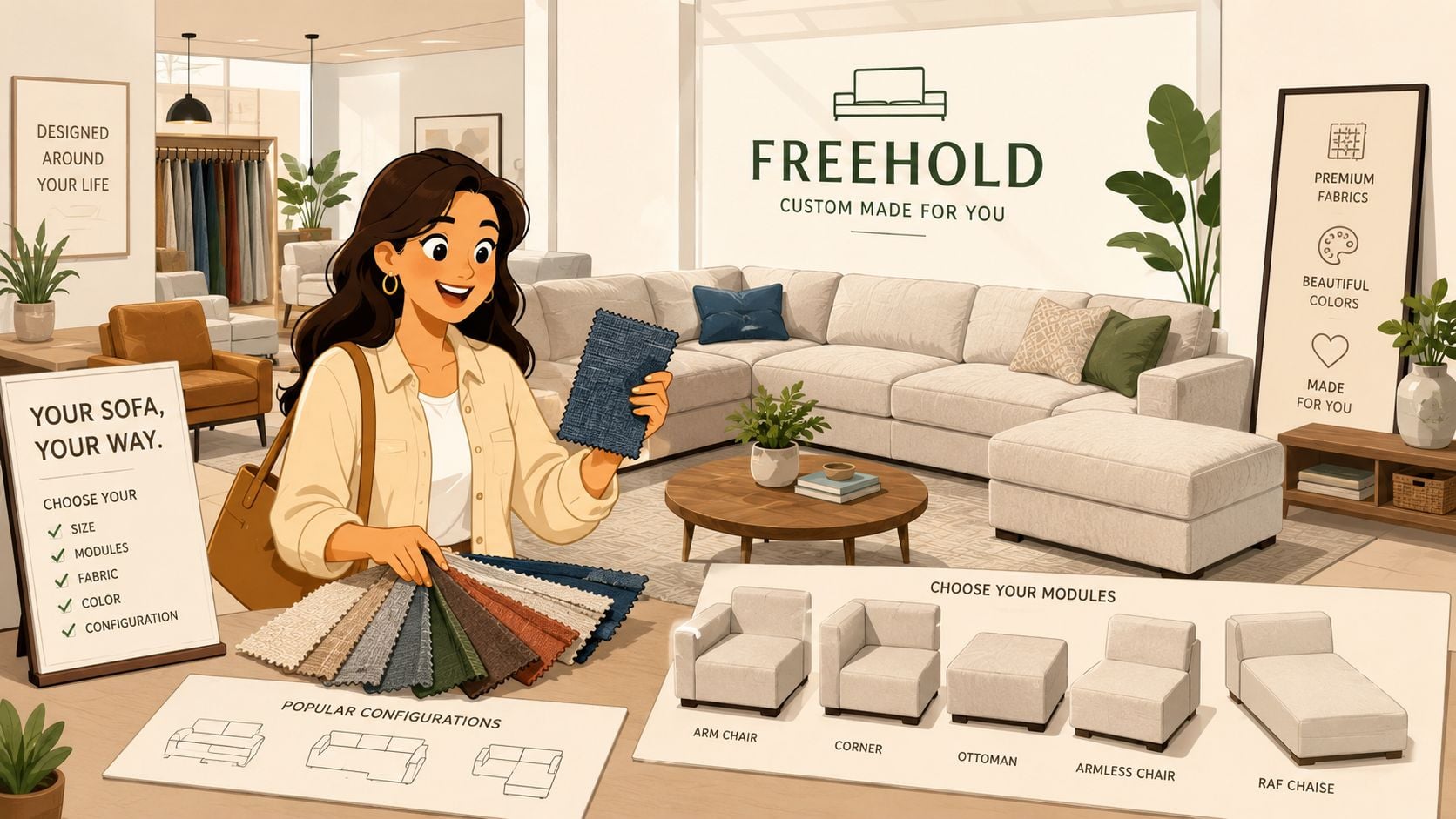
Custom ordering can help shoppers adjust:
- Configuration: left-facing, right-facing, chaise placement, or multi-piece layout
- Fabric selection: color, texture, and performance level
- Fabric grade: especially important for durability expectations
- Seat feel: firmer, softer, or more structured sit
- Detailing: leg style, silhouette, and overall look
That kind of flexibility matters in older Capital Region homes where an off-the-rack sectional may miss by just enough to become annoying every day.
For shoppers exploring those options, getting started with custom order is a practical first step.
Why expert help matters with custom upholstery
Custom upholstery isn't just “pick a swatch and wait.” The work behind it is more technical than many people realize. For custom upholstery, fabric must be calculated piece by piece, measuring the back, arms, and cushions for each section separately and adding extra for seams, which helps prevent dye-lot mismatches, according to sectional fabric measuring guidance.
That tells shoppers something important. Sectionals aren't simple rectangles. Each section has its own dimensions, and curves, chaise units, and separate cushions all affect material needs.
Custom works best when someone has already thought through the parts the customer can't see, including fabric continuity and how each module is built.
That's where a showroom consultation earns its keep. A custom sectional should solve problems, not create new ones. Good guidance keeps the final result cohesive, durable, and proportioned for the actual room instead of a generic floor display. Tip Top Furniture & Mattresses offers that kind of custom-order support from its Freehold showroom for homeowners across the Albany Capital Region.
Smart Shopping and Bringing Your Sectional Home
A smart sectional purchase isn't finished when the style is chosen. It's finished when the piece fits the budget, arrives cleanly, and works in the house without drama.
Buy on comfort, plan for logistics
Delivery deserves attention before the order is written up. Homeowners in the Greater Albany area should confirm access, room placement, and any stair or hallway complications early. A sectional is not a lamp table. Good delivery planning prevents damaged walls, failed entries, and ugly last-minute compromises.
This is also where local shopping has an advantage. The room, the roads, the homes, and the common layout problems in older Upstate houses are all familiar territory.
A few final buying rules keep the process on track:
- Sit long enough: Five seconds tells almost nothing.
- Ask how the back cushions wear: Loose and attached backs live differently.
- Check the return policy carefully: Upholstery terms matter.
- Confirm delivery details in writing: Especially for difficult entries or stairs.
Use budget tools without buying the wrong sofa
A sectional is a major purchase, but stretching for the wrong one is worse than waiting a bit longer for the right one. Financing can make sense when it helps a family buy the right quality level instead of settling for a short-term fix. For shoppers comparing payment options, furniture financing details can help clarify what's available.
Clearance can also be a smart path when timing and dimensions line up. Immediate-availability pieces can solve a real need fast, especially for buyers furnishing a new home or replacing a failed sofa without a long wait. For those opportunities, clearance furniture options are worth checking.
An upholstered sectional sofa should earn its place by doing three things well. It should fit the room, stand up to the household, and feel good enough to make people use it every day. If it misses one of those, keep shopping.
For homeowners furnishing a family room, updating an older Albany-area layout, or planning a custom living room from scratch, Tip Top Furniture & Mattresses offers sectional seating, custom-order help, financing options, and a Freehold, NY showroom that serves the Greater Albany Capital Region. A smart next step is to visit the showroom with room measurements or start with the online room planner before making a final decision.