Shop 7 Drawer Dressers: Quality & Style for Albany Homes


A lot of people start shopping for a dresser after the same moment. The closet is full, the top of the laundry basket has become a shelf, and every morning starts with opening three different storage spots to find one pair of socks.
That’s where 7 drawer dressers make sense. They’re large enough to bring order to a busy bedroom, but still familiar and easy to live with. For homeowners around Freehold, Albany, Schenectady, and the wider Capital Region, this style often hits the sweet spot between storage, footprint, and everyday usefulness.
At our local showroom, we’ve spent decades helping families sort out bedroom storage without overfurnishing the room. The right dresser isn’t just about style. It’s about fit, construction, and whether it will still work for your home years from now.
Why a 7-Drawer Dresser is the Ultimate Bedroom Organizer
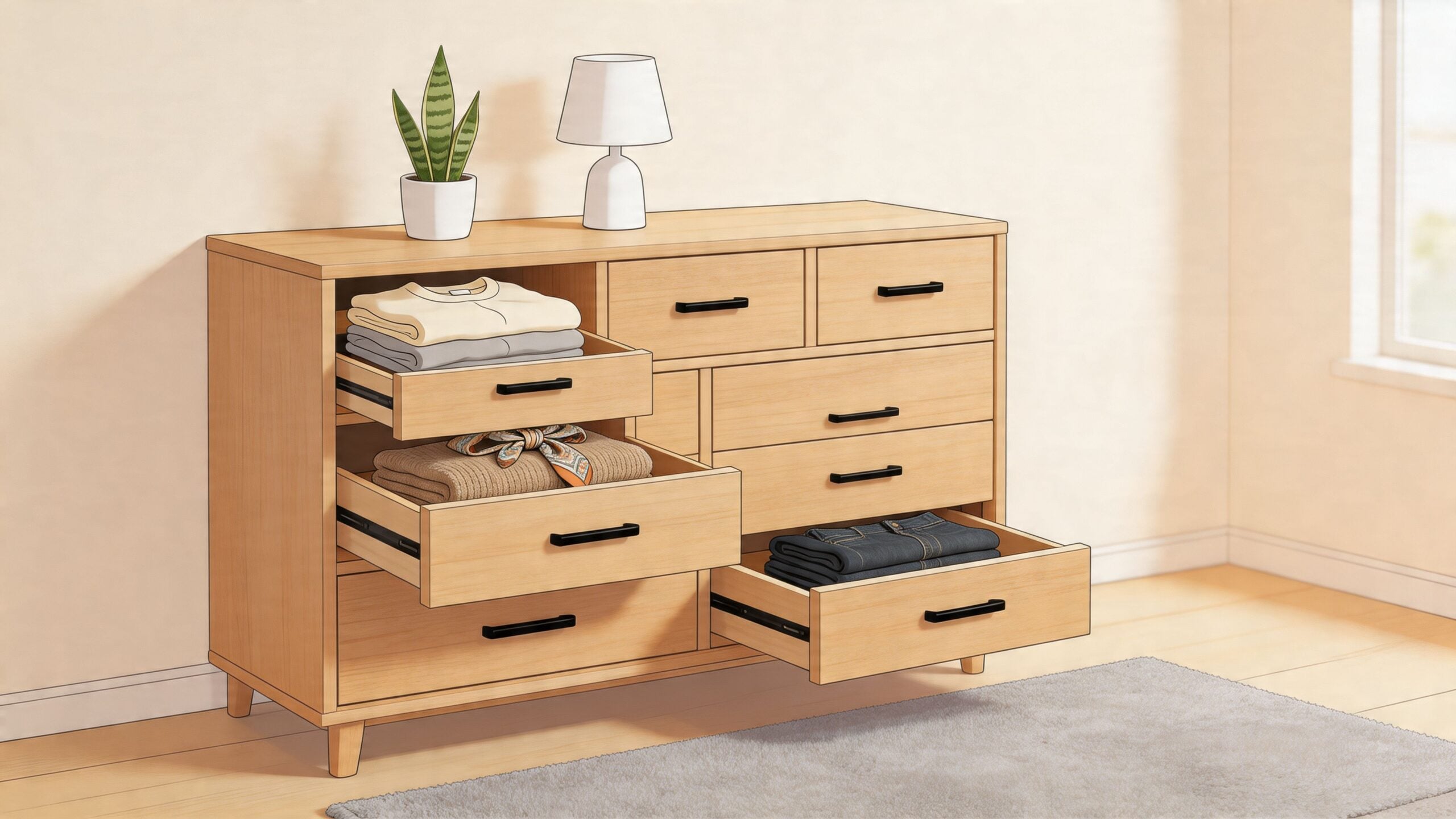
A 7 drawer dresser works because it matches the way real bedrooms collect clothing over time. You usually need a few smaller spaces for the items that disappear easily, like socks, undergarments, and accessories. You also need wider drawers for the bulky pieces that never fold into neat little stacks, like jeans, sweaters, and sweatshirts.
That layout has a long track record. The seven-drawer form grew out of earlier chests and became a familiar furniture pattern with two smaller top drawers over five larger drawers below, as noted in this history of chests of drawers. Good design tends to stick around for a reason. In furniture, the pieces that last are often the ones that solve an everyday problem without asking you to change your routine.
Why seven drawers feels so practical
Seven drawers gives you enough separation to sort clothing by use, but not so many compartments that the piece becomes hard to live with. A dresser should work like a well-planned kitchen. The tools you reach for every day belong in the easiest spots, and the larger storage areas handle the heavier load.
A layout like this is easy for many households to maintain:
- Top left drawer for socks, undergarments, or accessories
- Top right drawer for jewelry, watches, sleepwear, or daily essentials
- Center or upper full-width drawer for T-shirts or workout wear
- Lower drawers for jeans, sweaters, sweatshirts, or seasonal items
This format proves its versatility across many households. A single adult can keep daily clothing in one piece. A couple can divide storage by category instead of by person. Parents can give each drawer a job, which makes cleanup easier for everyone.
Practical rule: If each drawer can be named in a short phrase, the system usually lasts. If one drawer turns into "miscellaneous," clutter has already started.
Who benefits most from a 7 drawer dresser
This size fits several common situations:
- Growing families who need clearer separation for everyday clothes, school wear, and off-season items
- Couples who want one shared storage piece with better organization than a simpler case layout
- New movers who need one dependable bedroom anchor before adding matching pieces
- Guest room planners who want flexible storage for visitors without crowding the room
Some shoppers compare this format with a 6 drawer dresser if they want a simpler arrangement or have fewer categories to store. That can make sense in a tighter setup. But if the main frustration is piles of mixed clothing, the extra drawer often gives you the one additional zone that keeps the whole piece orderly.
What often confuses shoppers
People sometimes hear "7 drawer dresser" and assume it must be oversized. Drawer count does not tell you the full story. One seven-drawer piece may be wide and low for a primary bedroom, while another may be taller and narrower for a smaller space. The number tells you how storage is divided. It does not tell you the exact footprint.
The naming can also trip people up. Shoppers may say dresser, chest of drawers, or bureau and mean nearly the same kind of bedroom storage piece in casual conversation. For practical purposes, the better question is not what to call it. The better question is whether the drawer sizes match what you wear and how you put laundry away.
That is also where long-term planning matters. The right seven-drawer dresser should serve the room now and still make sense years from now if your wardrobe changes, a child takes over the room, or you decide to custom order an Amish piece that becomes a permanent part of the home. Before you commit, it helps to review a clear furniture measuring guide for room layout and delivery access, because a good organizer only stays useful if it fits your space and daily routine well.
A 7 drawer dresser is a storage workhorse. It works because it gives every category a home, and that simple habit makes a bedroom easier to use every day.
Measure Twice, Buy Once Planning Your Dresser Placement
A good dresser can still be the wrong purchase if it doesn’t fit the room correctly. That sounds obvious, but most delivery headaches happen because people measure the wall and stop there.
A dresser has to fit the house before it fits the bedroom. In older homes around Freehold and many Capital Region neighborhoods, that matters even more because stairwells, turns, and door casings can be tighter than expected.
Start with the wall, then measure the path
Measure the spot where the dresser will sit. Then keep going.
Check these areas before you commit:
The placement wall
Measure width, height, and depth. Leave room for baseboards, heat vents, and outlets.Drawer clearance
Make sure you can fully open the drawers without hitting the bed frame, a bench, or a nightstand.Walking space
The dresser shouldn’t make the bedroom feel pinched. You want enough room to move naturally, especially in front of the drawers.Doorways and hallways
Measure the bedroom door, the front entry, hallway width, and any sharp turns.Stairwells and landings
This is the one people forget. A dresser may fit the room perfectly and still be difficult to move upstairs.
Bring both room measurements and access measurements with you when you shop. That one habit prevents a lot of last-minute surprises.
Think about how the room works
Placement isn’t just about physical fit. It’s about how the room feels when you use it.
A dresser often works best on the longest uninterrupted wall. If the room has windows, a closet swing, or a bathroom door nearby, those elements should guide the layout. In tighter bedrooms, putting a dresser under artwork or across from the bed usually feels calmer than squeezing it into a corner.
If you’re planning a mirror above it, leave enough visual breathing room so the space doesn’t look crowded. If the dresser will hold a lamp, framed photos, or a jewelry box, factor in top surface use too.
Use a planning tool before delivery day
One of the easiest ways to avoid mistakes is to sketch the room to scale before buying. If you want a practical guide first, this how to measure furniture guide walks through the dimensions that matter before delivery.
For homeowners who want to see the layout more clearly, a free room planner can help you test whether a long dresser, mirror, bed, and nightstands all fit together without guessing. That’s especially useful if you’re furnishing a primary bedroom and trying to avoid a crowded feel.
A good plan usually answers three questions:
- Can the dresser get into the room
- Can the drawers open fully
- Does the room still feel balanced after it’s in place
If the answer to any one of those is no, keep looking. It’s much easier to solve on paper than on delivery day.
The Mark of Quality Materials and USA-Made Construction
A dresser can look great on delivery day and still disappoint you two winters later. In the Albany area, bedroom furniture has to handle dry heat, summer humidity, full drawers, and daily use. That is why the build itself deserves a closer look before you choose a finish or a hardware style.
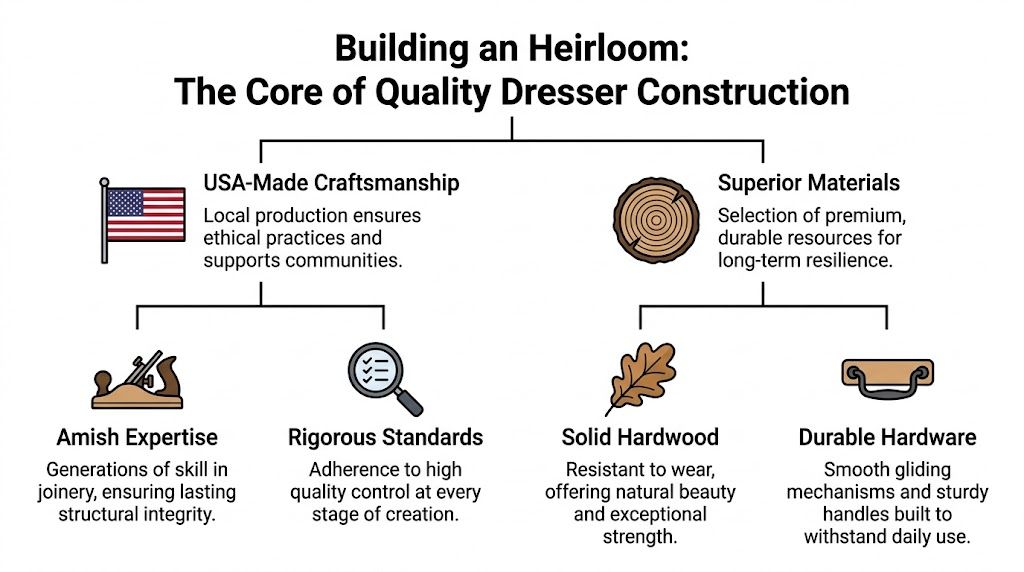
If you want a seven-drawer dresser that becomes part of your home for the long haul, focus on three things first. The materials. The joinery. The shop that built it.
Solid wood versus shortcut materials
The easiest way to understand dresser materials is to compare them to flooring. A real hardwood floor can be refinished, repaired, and lived with for years. A lower-grade substitute may look fine at first, but it usually gives you fewer options once wear shows up. Dressers follow the same pattern.
Many shoppers prefer solid hardwood for long-term bedroom furniture because it offers better repairability, a more natural grain pattern, and a feel that usually improves with age. Oak, cherry, and maple are common choices because they balance durability with a classic look that works in both traditional and cleaner, updated rooms.
Engineered materials are not all bad. Some are used responsibly in furniture. The key is knowing where they are used and why. If you want a helpful outside reference on understanding different material choices like MDF versus wood, this guide on MDF vs wood cabinet doors explains the tradeoffs clearly.
Here is the practical takeaway:
- Solid hardwood usually makes sense for buyers who want a dresser they can keep for many years, refinish later, or custom order in a specific stain.
- Engineered panels can be acceptable in some secondary parts, depending on how the piece is built.
- Thin panels and light fasteners tend to show problems sooner in heavily used bedrooms, especially in large drawers that hold jeans, sweatshirts, or extra bedding.
The joinery details that matter
Joinery is the hidden framework that keeps a dresser acting like a square, steady box instead of a collection of boards under tension. A good way to inspect it is to pull out the drawers and look at the corners, the drawer bottom, and the way the inside supports are fitted together.
In well-built 7 drawer dressers, dovetail drawer joinery is a strong sign of care. The interlocking shape helps the drawer corners stay together through years of opening, closing, and loading. Mortise-and-tenon construction inside the case serves a similar purpose. It helps the internal frame stay rigid, which supports smoother drawer alignment over time.
Those shop terms sound technical, but actual results are simple.
| Construction detail | What it means for you |
|---|---|
| Dovetail drawer corners | Better resistance to loosening at the joints |
| Mortise-and-tenon interior supports | A steadier cabinet and better drawer alignment |
| Solid wood drawer boxes | Better wear resistance in high-use storage |
| Quality slides and hardware | More consistent opening and closing over time |
A showroom floor does not test a dresser very hard. Daily life does.
Why USA-made and Amish construction stands out
Domestic construction often gives you something many shoppers do not realize they are missing until a problem shows up later. Clear information. You are more likely to know the wood species, the finish options, the builder, and whether replacement parts or matching pieces are available years from now.
That matters if you are trying to make a dresser a lasting part of your home rather than a temporary purchase. It matters even more if you plan to custom order a piece and want the stain, scale, and build quality to match the rest of your bedroom.
Many families start by comparing collections from USA-made furniture manufacturers because those lines usually make it easier to identify solid wood construction, Amish-built options, and pieces that can be ordered to suit the room instead of forced into it.
The strongest proof of quality is still what you can inspect with your own hands:
- Drawer joints you can see and feel
- A cabinet that stays firm when you press on it
- Smooth drawer movement with real weight inside
- Clearly identified wood species
- Hardware with substance, not a hollow feel
A seven-drawer dresser gets used too often to treat as disposable furniture. If it is going to anchor your bedroom for years, pay attention to the bones of the piece first. The finish color comes later.
Create Your Perfect Piece with Custom Ordering
A lot of shoppers assume they have only two choices. Buy the exact dresser on the floor, or keep searching until something close enough appears online.
Custom ordering opens up a better third option. You start with a strong design, then adjust the details so the piece fits your home instead of forcing your room to adapt to the furniture.
How the process usually works
A family from the Albany area might find a dresser shape they like, but the wood tone doesn’t work with their bed. Another shopper in Greene County might love the finish, but want different hardware because the room leans more transitional than farmhouse.
That’s where customization becomes useful, not complicated.
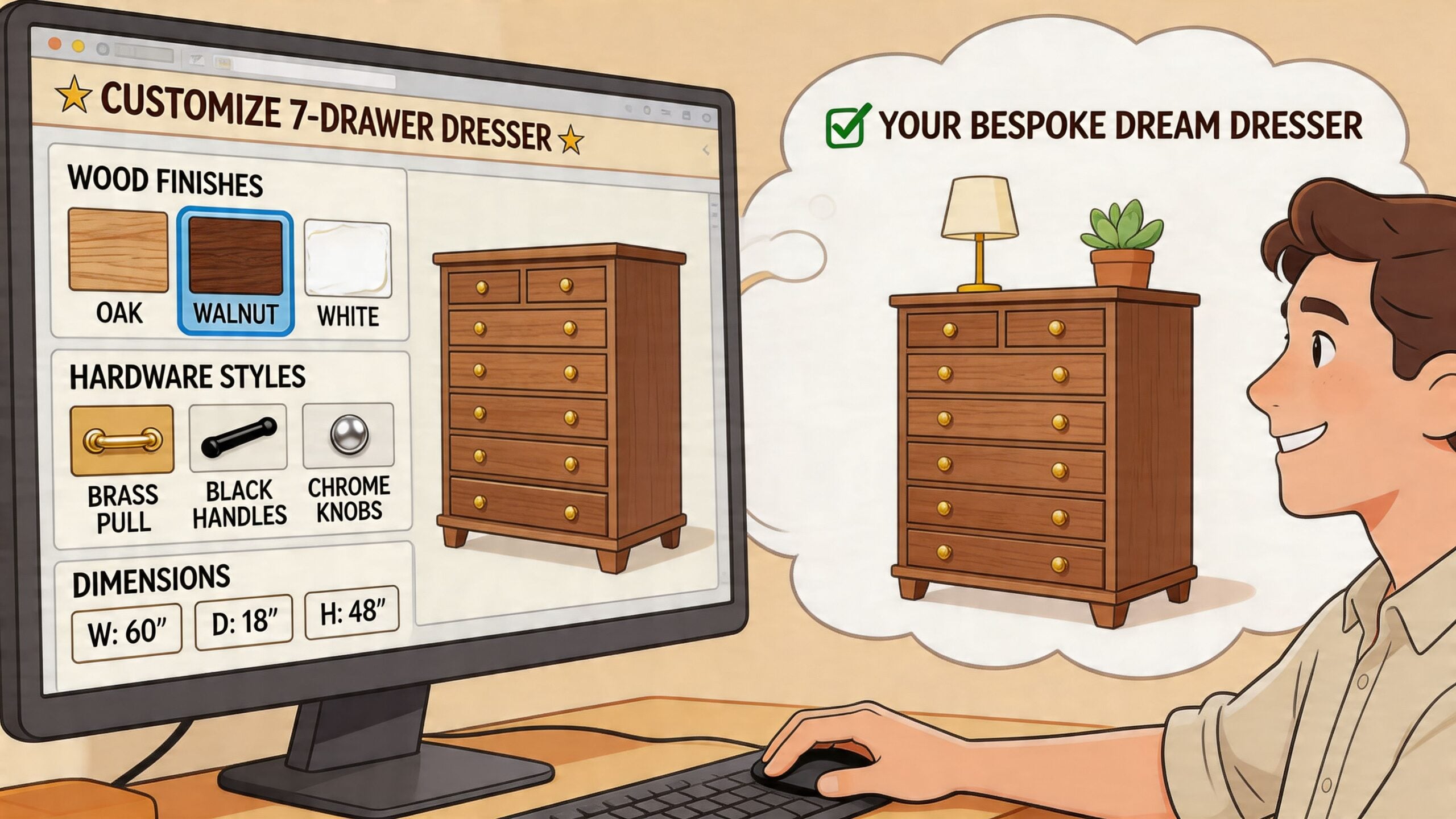
A typical custom order conversation usually includes:
- Wood species such as cherry, oak, or maple
- Finish choice to coordinate with flooring, bed frames, or nightstands
- Hardware selection so the dresser reads more classic, rustic, or clean-lined
- Size adjustments when room dimensions call for a better fit
Modern seven-drawer dressers handcrafted in the Amish tradition emphasize solid hardwood builds and offer custom options in wood type, finish, and size, and that category aligns with a market preference where Amish products are growing 15% annually, according to this seven-drawer dresser reference from Thos. Moser.
Why customization helps in real homes
Custom ordering matters most when you’re trying to solve a specific problem.
Maybe your bedroom already has a warm cherry bed and a standard brown stain will clash. Maybe your wall can handle a dresser, but only if the proportions stay clean and not overly bulky. Maybe you want the dresser to feel traditional now but flexible enough to move into a guest room later.
Those are good reasons to customize. They’re practical, not fancy.
Local insight: The best custom choices usually start with the room, not the catalog. Match the piece to your flooring, lighting, wall color, and daily routine first.
What to decide before you order
If you’re new to custom furniture, keep the decision list short. Start with the details that change the look and function most.
Ask yourself:
- Do I want a wood species with more visible grain, or a smoother, calmer look?
- Should the hardware stand out, or disappear into the design?
- Does my room need a dresser that feels visually lighter or more substantial?
- Am I matching existing furniture, or creating a fresh bedroom set around this one?
For shoppers who want to understand the steps before placing an order, this guide on getting started with a custom order gives a helpful overview of the process.
One practical example is Tip Top Furniture & Mattresses, which offers custom-order guidance for shoppers who want to choose wood type, finish, size, and related design details rather than settling for a single stock option. That’s useful when you want one dresser to serve as a long-term piece instead of a short-term compromise.
Custom doesn’t have to mean elaborate. Often it just means making a few smart decisions now so the dresser still feels right years later.
Long-Term Care and Smart Organization Strategies
A 7-drawer dresser lasts longer when you treat it like a working part of the room, not just a box for folded clothes. Your daily habits determine how well the finish holds up, how smoothly the drawers open, and whether the piece stays useful year after year.
Organization matters just as much. Many online guides stop at basic folding tips, but the objective is to make the dresser fit your routine and your room. That matters even more if you custom ordered an Amish piece and want it to serve your Albany-area home for the long haul, whether it stays in a primary bedroom now or moves to a guest room later.
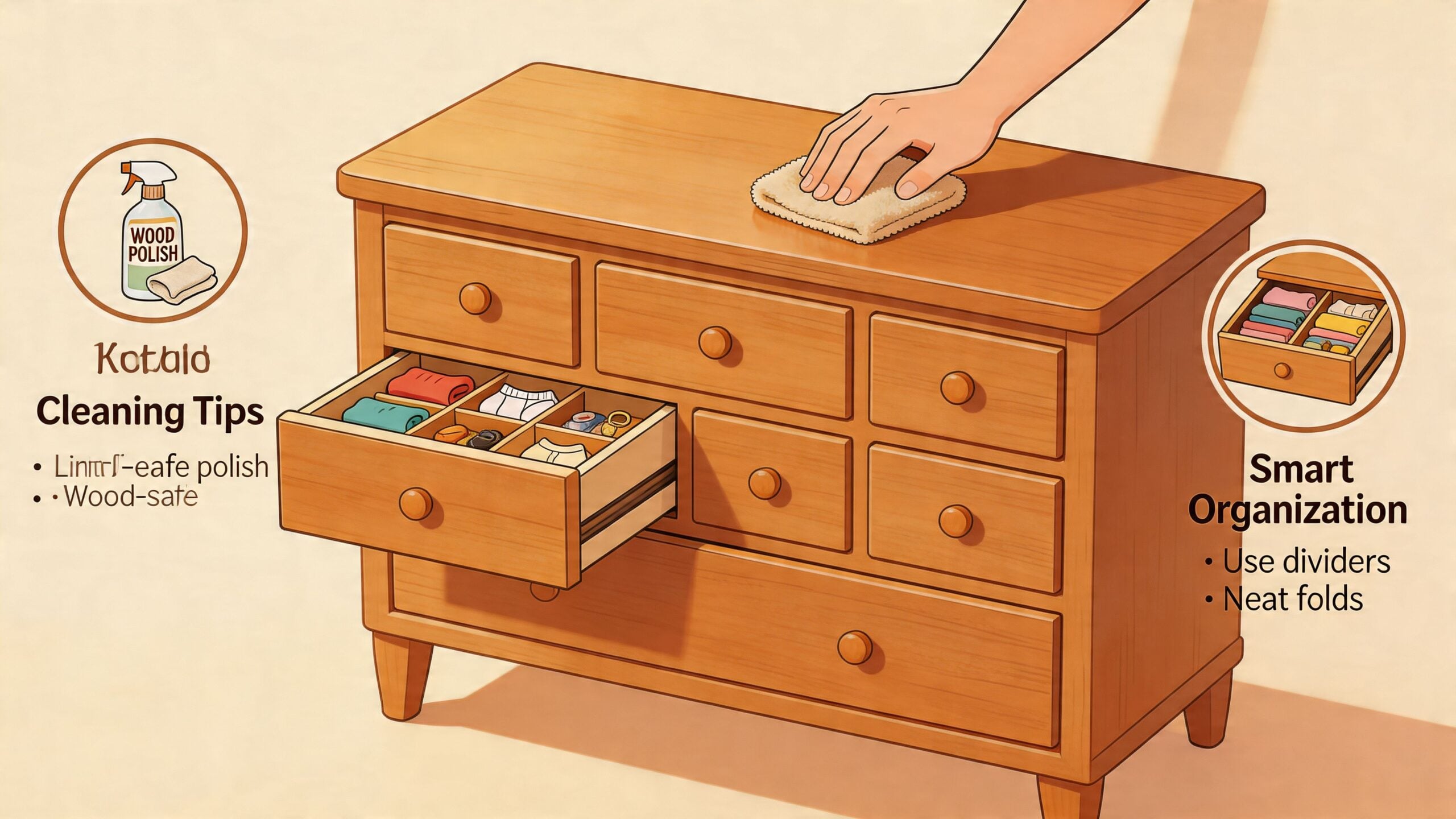
Easy care habits that help solid wood last
Solid wood furniture is a lot like hardwood flooring. It does best with steady, simple care, not constant treatment.
Use a soft cloth for dusting. Clean spills right away so moisture does not sit on the finish. Keep the dresser out of strong sun if you can, especially in bedrooms with bright afternoon exposure. In many Capital Region homes, that can make a real difference over time, particularly near south-facing windows.
Weight matters too. A drawer may close even when it is packed too full, but extra strain wears on slides, joints, and drawer boxes. If you want a practical reference for regular upkeep, this guide on how to care for wood furniture explains the basics clearly.
A drawer plan that works in real homes
The easiest system to maintain is based on use, not good intentions. Put the things you reach for most where your hands naturally go first.
A simple layout usually works well:
- Top drawers for smaller daily items such as socks, undergarments, belts, or sleepwear
- Middle drawers for T-shirts, leggings, workout wear, or folded tops
- Bottom drawers for sweaters, jeans, or off-season clothing
That pattern follows the same logic as kitchen storage. Everyday tools stay easy to reach. Heavier or bulkier items go lower, where they are easier to lift and less likely to make the piece feel top-heavy.
If you store delicate items, add a felt liner or small tray so they do not slide around. In a child’s or teen’s room, drawer dividers help keep categories clear without requiring perfect folding every time.
Put small, often-used items high and bulky items low. A dresser works better when it follows your week, not just your laundry day.
Smart organization for families and smaller bedrooms
Seven drawers give you enough separation to solve common storage problems without adding another chest or bin across the room. In a shared bedroom, that can mean assigning certain drawers by person and others by clothing type. In a smaller home, it can mean keeping only the current season in the dresser and rotating the rest to a closet or under-bed storage.
Here’s a practical starting point:
| Household need | Useful dresser strategy |
|---|---|
| Shared primary bedroom | Give each person a top drawer, then assign lower drawers by category |
| Child’s room | Separate pajamas, school clothes, play clothes, and backup basics |
| Guest room | Keep one or two upper drawers open for guests and use lower drawers for spare linens |
| Small bedroom | Store active-season clothing only, then rotate items every few months |
If drawers start sticking, check the load before assuming something is broken. Overfilled drawers, uneven weight, and fabric bunched at the back cause many of the problems homeowners notice first. A better drawer plan often fixes the issue before any repair is needed.
The Tip Top Advantage for Your Capital Region Home
A 7-drawer dresser often becomes one of the hardest-working pieces in the bedroom. It stores a lot, takes up real visual space, and usually stays in the home for years. Because of that, the buying experience matters almost as much as the dresser itself.
For Capital Region homeowners, local guidance gives you a clearer path from “this looks good online” to “this fits my room, my storage needs, and the way I live.” That is especially helpful if you are planning around window placement, older Albany-area room sizes, stairways, or a larger bedroom update that will happen in stages.
Why local service makes the choice easier
A showroom visit can answer questions that are hard to settle from a product photo alone. Will the drawers open comfortably near the bed? Does the finish work with the floor in the room? Is stock the better choice, or is custom ordering the smarter long-term move?
Local experience provides this deeper level of guidance. A family-owned store serving the region since 1978 brings practical perspective, especially for shoppers furnishing a new home a piece at a time or trying to make one dresser fit into a broader plan that will still make sense years from now.
When each path makes the most sense
Instead of handing you a long list of store services, a good local team helps you choose the right route for your situation.
If you are coordinating a full bedroom, design help can keep the dresser from feeling like an afterthought. If the room has tight dimensions or you want a certain wood and stain, custom ordering often pays off. If you need something sooner or want stronger value from current inventory, in-stock and clearance pieces deserve a close look. If you are furnishing more than one room, financing can help you buy the right piece now instead of replacing a temporary one later.
That kind of advice matters because a dresser does not stand alone. It works like a hub for the rest of the room. Its width affects wall space, its finish affects how the bed and nightstands read together, and its storage capacity affects whether you need other case pieces at all.
For homeowners interested in solid wood, made-to-order options, this guide to Amish furniture near me is a useful starting point.
A long-term view for Capital Region homes
A significant advantage is confidence after the delivery truck leaves. You are more likely to end up with a dresser that fits the room, suits your daily routine, and still feels right as the rest of the space comes together.
Tip Top Furniture & Mattresses adds to that process with free room planning tools and in-store guidance that help Albany-area shoppers place a dresser with fewer surprises. For a piece this visible and this useful, that extra planning can make the difference between “good enough” and a dresser that feels like it belongs in your home.