Art Deco Console Table: A Modern Homeowner’s Guide

A lot of homes in the Albany Capital Region have the same small problem. The front entry feels bare, or the wall behind the sofa looks unfinished, even though the main furniture is already in place.
That is where an art deco console table can do more than fill space. It can add structure, give you a landing spot for lighting or décor, and introduce a sense of polish that makes the whole room feel more intentional.
For many homeowners, the challenge is not loving the look. It is knowing what Art Deco means, how to spot the right features, and whether this kind of piece can work in a practical Upstate New York home instead of only in a formal city apartment or a vintage-inspired setting.
That confusion is understandable. Art Deco comes with a strong visual identity, but it is also one of the easiest historic styles to adapt when you understand its basics. It has glamour, yes, but it also has order. It has drama, but it is grounded in useful shapes.
An Elegant Solution for Your Upstate New York Home
A homeowner in the Capital Region might start with a familiar question. What belongs on that narrow wall between the front door and the living room, or in the empty strip behind a sofa that feels too open?
A console table is often the answer because it solves two problems at once. It gives the eye a stopping point, and it gives the room a usable surface without taking up much floor space.
An art deco console table is especially good at this job. It brings shape and rhythm to a room that feels flat. In a modest foyer, it can make the entrance feel composed. In a larger living room, it can make a seating area feel finished.
What makes this style so appealing in Upstate New York homes is its balance. It is decorative, but not fussy. It feels special, but it can still live comfortably next to practical pieces, natural wood floors, and the mixed old-and-new interiors many local homeowners prefer.
Some people hear “Art Deco” and think they need a penthouse or a formal townhouse. You do not. A well-chosen console can sit just as comfortably in a renovated farmhouse, a suburban colonial, or a city row home.
For homeowners who appreciate handcrafted furniture, American-made options often make this style easier to live with because you can adjust the scale, finish, and wood choice to suit the room. That is one reason many shoppers browsing Amish furniture near Albany, NY end up considering Art Deco-inspired forms even if they did not start there.
Tip: If a room feels empty but not large enough for another big case piece, a console table is often the smartest fix.
What Is an Art Deco Console Table
An art deco console table is a slim table, but the term means more than size or placement. It refers to a console shaped by the Art Deco movement, a design period that favored order, symmetry, strong outlines, and a polished sense of modern living.
Art Deco grew out of the early 20th century and became widely associated with the optimism and glamour of the 1920s and early 1930s. In furniture, that translated into pieces that looked architectural rather than heavily carved. The effect is easy to recognize once you know what sets it apart. An Art Deco console feels composed, balanced, and intentional.
Why it looks different from earlier furniture
Older European console tables often relied on scrolling curves, elaborate carving, and a more formal, decorative presence. Art Deco took a different path. It simplified the silhouette, sharpened the lines, and treated the table almost like a small piece of architecture for the wall.
A good way to understand that change is to compare a violin to a piano. Rococo has the curling, ornamental movement of the violin. Art Deco has the crisp, measured structure of the piano. Both can be beautiful, but they create very different moods in a room.
That shift defines the style's personality. Art Deco furniture aimed to look current, confident, and well organized.
Materials matter as much as shape
Art Deco consoles often feature glossy woods, glass, metal, stone, or mirrored details. Those materials helped the style feel modern in its own time, and they still help it work in homes that mix traditional architecture with cleaner furnishings.
For homeowners in the Albany Capital Region, this is often the part that makes the style click. You may love the drama of a vintage Paris or New York piece, but you may need a size, finish, or wood species that fits a real entry hall in Delmar, a townhouse in Albany, or a renovated farmhouse outside the city. That is where custom and USA-made options from our Freehold showroom fill an important gap. They give you the spirit of Art Deco without forcing you into the price, fragility, or odd proportions of an original antique, and without settling for a flat mass-market reproduction.
Metal details also play a big role in the look. If you are unsure how brass, chrome, or mixed finishes affect the overall feel, our guide to choosing furniture with metal accents can help.
How to tell it apart from nearby styles
People often confuse Art Deco with Rococo on one side and Mid-Century Modern on the other. The simplest way to sort them out is to focus on rhythm and form.
| Style | What you notice first | Overall feeling |
|---|---|---|
| Rococo | Curves, carving, asymmetry | Ornate and romantic |
| Art Deco | Symmetry, bold geometry, contrast | Glamorous and architectural |
| Mid-Century Modern | Simpler lines, less ornament, softer modernism | Casual and efficient |
From across the room, an art deco console table usually reads as crisp and balanced. Up close, the surface treatment adds the richness. That combination is why the style works so well in modern Upstate New York homes. It gives you a sense of occasion without making the room feel stiff.
Key takeaway: An Art Deco console table is a narrow table defined by geometry, symmetry, and polished materials. It brings historic character into a home in a way that can still feel practical and current.
Signature Features of Art Deco Design
An art deco console table has a way of catching your eye even before you notice the details. The outline feels orderly, the materials feel polished, and the whole piece reads almost like a small piece of architecture.
Geometry gives the style its backbone
Start with the silhouette.
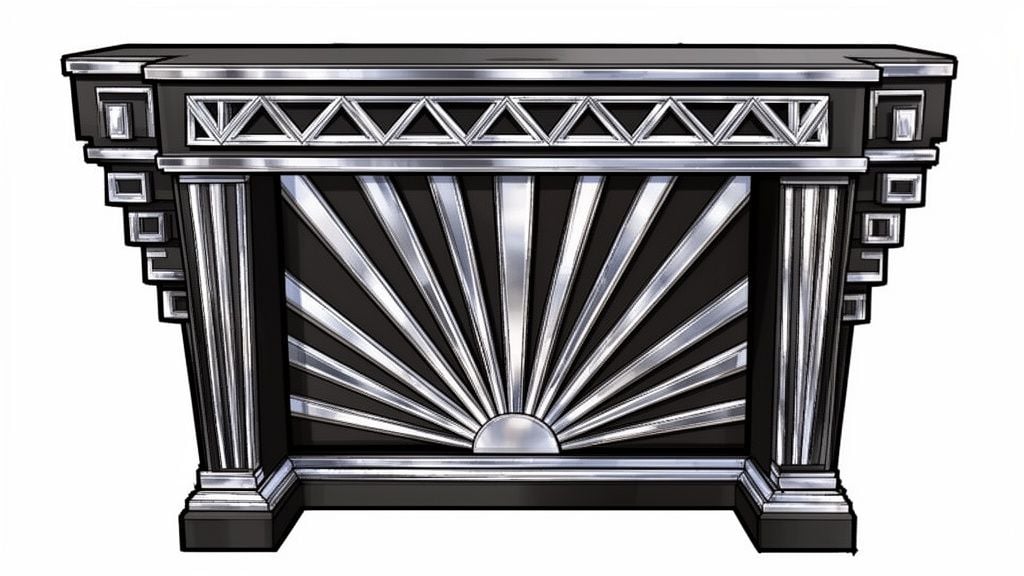
Art Deco design is built around symmetry, strong geometry, and repetition. You will often see stepped edges, rectangular frames, curved corners held in balance, or a sunburst pattern that radiates from a central point. The effect is disciplined rather than fussy. If Victorian furniture can feel like handwriting, Art Deco feels more like drafted lines on an architect's plan.
That structure is one reason the style fits so well in many Capital Region homes. A geometric console can bring character into a room with painted walls, simple trim, and modern lighting because the form is clear and easy to read.
Materials add the glamour
Once the shape draws you in, the surface does the rest. Art Deco is known for contrast. A table might pair a rich wood veneer with brass trim, a dark finish with a pale stone top, or a glossy case with mirrored panels that bounce light around the room.
In practical terms, those choices can help a room work better. A stone top handles daily use gracefully in an entry. A reflective finish can brighten a darker hallway during our long Upstate winters. Metal accents sharpen the outline of the piece so it does not disappear against the wall.
If you are comparing brass and chrome, or trying to decide how much shine fits your room, our guide to choosing furniture with metal accents can help you sort out the look.
This is also where better modern pieces stand apart from cheap reproductions. In our Freehold showroom, the strongest USA-made Art Deco-inspired consoles use real veneers, solid construction, and metal details with enough weight and finish to feel intentional. That gives homeowners a middle path between delicate, expensive vintage originals and flat mass-market versions.
Craftsmanship shows up in the small details
Good Art Deco design is precise. The lines need to meet cleanly, the finish needs to look even, and drawers or doors should feel crisp when you use them.
Joinery matters here. So does edge treatment. So does how the grain is laid out across the front. A bookmatched veneer, for example, works like a mirrored pattern in fabric. It creates order and drama at the same time.
A console table may look decorative, but it often ends up doing real work. Keys, mail, lamps, serving pieces, books, and seasonal décor all pass through it. For that reason, construction quality is not a background issue. It affects how the table looks after years of daily use.
A quick way to spot the style
If you are shopping in person or comparing pieces online, check for these signs:
- A balanced, symmetrical shape
- Clean geometry instead of flowing, carved ornament
- Strong contrast in finish, wood grain, stone, glass, or metal
- Polished surfaces that catch light
- An overall look that feels architectural and precisely crafted
A well-made Art Deco console should feel composed at first glance, then more interesting the closer you get. That balance is what gives the style staying power in modern homes.
Perfect Sizing and Placement in Your Home
A console table often gets chosen with the eye first and the tape measure second. In real homes around Albany, Saratoga, and the surrounding towns, that order usually causes the trouble.
Art Deco consoles are easier to place than many larger case pieces because they tend to stay shallow and visually tidy. Still, the right fit depends on what the table needs to do every day. An entry console handles keys, mail, and a lamp. A sofa-back console helps define a seating area. A wall console in a dining space may need enough surface for serving pieces during gatherings.
Start with the room, then the table
A good console should feel like it belongs to the architecture. In a narrow entry, that means keeping enough open walkway so no one clips a hip or catches a bag on the corner. In a living room, it means choosing a length that relates to the sofa or the wall behind it, rather than floating there like an afterthought.
Height matters too. Behind a sofa, a console usually looks best near the height of the sofa back, or slightly lower. In an entry, the top should sit at a comfortable level for setting down keys, gloves, or a handbag without feeling awkward.
Our advice in the Freehold showroom is simple. Measure first. Then shop.
If you want a more accurate starting point, use this guide on how to measure a room for furniture perfectly.
Where Art Deco works especially well
Art Deco consoles shine in places where you want structure without bulk. That makes them a smart choice for many Upstate New York homes, especially ones that mix older architecture with newer furnishings.
A few placements tend to work especially well:
- Entry halls: A shallow console adds function without making the space feel pinched.
- Behind sofas: The table gives the seating area a finished edge and creates a natural spot for lighting.
- Dining room walls: A console can act almost like a small sideboard for barware, serving trays, or seasonal décor.
- Under artwork or a mirror: The clean geometry of Deco design helps anchor the vertical piece above it.
This is also where custom sizing becomes valuable. Many local homes have quirks. Old plaster walls, radiator locations, tight landings, and unusual room widths can make standard dimensions feel close, but not quite right. A USA-made console from our Freehold showroom can bridge that gap. You get the refined look and solid construction people admire in vintage pieces, without the fragility, scarcity, or price of an original.
Common sizing mistakes
The most common problem is choosing a table that is too small for its wall. Art Deco has presence, so a console with enough length and visual weight usually looks more settled.
The second mistake is going too deep in a passage area. A console is supposed to help a space work better, not turn the hallway into an obstacle course.
The third is forgetting what will live on top of it. A pair of lamps, a tray for mail, or a large mirror all affect how substantial the table should be. Furniture sizing works a lot like framing a picture. If the frame is too slight, the whole composition feels off.
Painter's tape helps here. Mark the table's width and depth on the floor before you buy. That quick test can save you from a piece that looks perfect online and awkward at home.
Styling an Art Deco Table for Today's Lifestyles
The best-styled console tables look composed, not crowded. Art Deco helps because the style already likes order.
That does not mean everything has to look formal. In many Capital Region homes, the most successful setups mix Deco structure with relaxed, everyday accessories.
The well-arranged sofa back
Behind a sofa, an art deco console table can function almost like a bridge between seating zones.
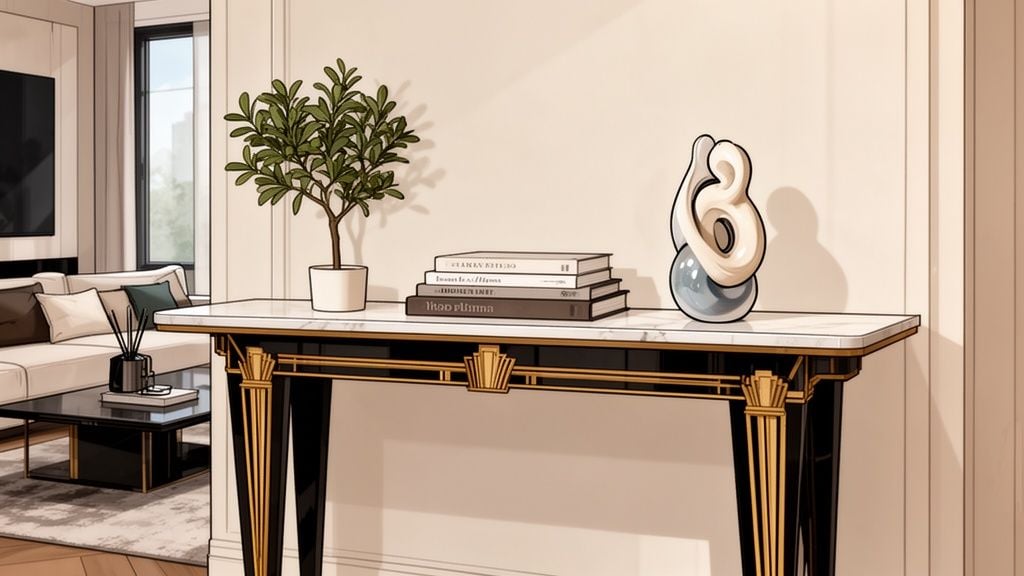
In an open-plan room, this placement gives the sofa a finished back side and creates a platform for lighting. A pair of matching lamps can emphasize the symmetry that Art Deco loves. Books and one sculptural object keep the middle from feeling empty.
This kind of arrangement works especially well in homes that mix traditional furniture with cleaner accents. The console acts as the sharper, more precise note in the room.
The rustic-modern mix
Many Upstate New York interiors are not pure Deco. They combine painted trim, wood floors, practical upholstery, and older architectural details.
That mix can still work beautifully. A dark console with geometric lines can sit under vintage artwork, beside a woven basket, or against warm-toned hardwood flooring without looking out of place. The contrast is often what makes the room interesting.
If you want ideas for arranging decorative objects with confidence, this piece on styling a coffee table so it looks balanced and lived-in applies many of the same principles.
Tip: A console looks stronger when you vary height. Pair a low stack of books with a taller lamp, vase, branch arrangement, or framed piece.
For additional visual inspiration, many homeowners enjoy browsing current room styling ideas from Architectural Digest’s interior design coverage.
Your Guide to Buying an Art Deco Console at Tip Top
Shopping for an art deco console table can be frustrating because the market often splits in two directions.
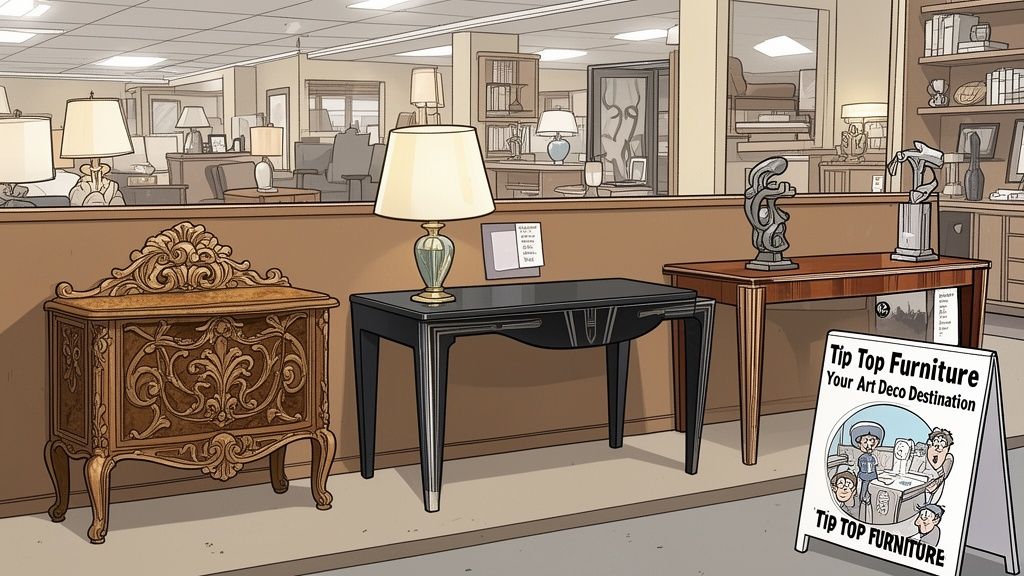
On one side, you find vintage originals with real character and real price tags. On the other, you find mass-market pieces that borrow the look but not always the quality.
Why local buyers often feel stuck
There is a documented gap for homeowners in Greene County and the Albany area who want custom, American-made Art Deco adaptations, while many online sources focus on vintage originals priced from $1,925+, according to Ruby Lane market observations on Art Deco console listings.
That gap explains why so many buyers feel they must compromise. They either chase an antique that may not fit the room, or they settle for a reproduction that looks right in photos but does not deliver the same substance in person.
For practical homeowners, the better path is often a custom or semi-custom piece that borrows the right Art Deco cues while fitting the dimensions and daily use of a modern home.
What makes a custom approach smart
A custom piece helps solve several common problems at once.
- Room size: Older pieces may be too deep, too delicate, or too long for present-day entryways and hallways.
- Material preferences: Some buyers love the Deco silhouette but want solid wood that feels warmer and more grounded.
- Local style: A home in the Capital Region may need a piece that nods to Art Deco without looking imported from a movie set.
Here, made-to-order furniture becomes useful. Instead of trying to force your room to suit the table, you shape the table to suit the room.
A good starting point is to look at a broad range of console and entry tables so you can compare silhouettes, storage features, and finishes before narrowing the design direction.
What to check before you buy
If you are comparing options, focus on these details:
- Construction quality: Check how the drawers are joined and how the base is built.
- Material honesty: Look for clear information about wood, veneers, glass, metal, and top surfaces.
- Scale: Confirm the exact width, depth, and height with your wall and traffic path.
- Finish: Decide whether you want high contrast and shine, or a softer interpretation of the style.
- Use case: Entry storage, behind-sofa display, and hallway accent tables do not all need the same features.
Buying advice: The right Art Deco-inspired console should feel designed for your room, not just fashionable on its own.
For homeowners who want to go beyond what is available on the floor, custom ordering can be the strongest option because it allows you to choose size, wood species, and finish with more precision. Flexible payment options can also make a larger room project easier to stage over time.
Caring for Your Heirloom-Quality Furniture
An art deco console table often combines multiple materials, and each one benefits from simple, consistent care.
That does not mean high maintenance. It means using the right habits from the start so the table keeps its finish and structure over time.
The long-term payoff is real. Chrome finishes can last 50+ years without corrosion when properly cared for, and Art Deco reproductions account for 12% of console sales in the $15 billion luxury furniture sector, where buyers value their durability and adaptability, according to Lee Wright Antiques’ history of console table design and market relevance.
Simple care habits that help
- Dust gently: Use a soft, dry cloth on wood, metal, and finished surfaces.
- Protect the top: Place felt pads under décor and use trays under items that may scratch or trap moisture.
- Clean spills quickly: This matters most on wood finishes and around decorative metal detailing.
- Use surface-appropriate cleaners: Marble, lacquer, wood, and chrome should not all be treated the same way.
- Keep sunlight in mind: Strong direct sun can be hard on many furniture finishes over time.
What to avoid
- Harsh abrasives: These can dull polished metal or scratch glossy finishes.
- Soaking wet cloths: Excess moisture is risky around wood joinery and veneer edges.
- Dragging objects: Lift lamps, bowls, and sculptures instead of sliding them.
- Ignoring hardware: A loose pull or wobble is easier to correct early.
A well-made console does not ask for constant attention. It asks for sensible use.
Bring Timeless Style to Your Capital Region Home
An art deco console table works because it solves a modern problem with an old design idea that still feels fresh. It adds presence without needing much space. It brings order to awkward walls and transition areas. It also gives a room personality in a way that many purely functional pieces do not.
That is why the style continues to appeal to homeowners who want more than trend furniture. Art Deco offers history, but it also offers discipline. The lines are deliberate. The materials are expressive. The best pieces feel elegant and useful at the same time.
In the Albany Capital Region, that balance matters. Homes here often mix eras, practical needs, and personal taste. A console table with Deco character can fit that reality beautifully, especially when the size, finish, and styling suit the way the room is used.
If you are drawn to the look, start with the basics. Measure the space well. Decide how the table needs to function. Then choose the level of boldness that feels right for your home.
For homeowners who want expert help turning that idea into a real room plan, Tip Top Furniture & Mattresses offers local guidance from a family-owned team serving Freehold, Albany, and the Greater Capital Region since 1978. Visit the Freehold showroom to explore furniture in person, ask about custom ordering, or use the online room planning tools to test your layout before you buy. If you are furnishing a larger space, ask about flexible financing and design support to make the whole project easier.