Dark Wood Headboard Guide: Styles, Care & Custom Options


A bedroom update often starts with a simple problem: the bed feels unfinished, the walls look bare, and lighter furniture doesn't provide enough visual weight. A dark wood headboard can solve that problem while adding warmth and structure, but the finish alone shouldn't determine the purchase. The wood species, core material, joinery, coatings, emissions documentation, and placement all influence how well the piece performs over time.
For homeowners in Freehold, Albany, Schenectady, Troy, and the wider Greater Albany Capital Region, the right choice may be a handcrafted hardwood design, a veneered panel with carefully engineered construction, or a custom piece coordinated with existing flooring and mattresses. The most attractive headboard is only a good investment when its appearance is supported by sound materials and practical care.
Why Dark Wood Headboards Remain a Timeless Choice
A homeowner refreshing a bedroom may first notice how a dark headboard changes the room's balance. Against a pale wall, walnut or smoked oak creates a grounded focal point. Beside natural bedding, it adds warmth without relying on ornate decoration. In a Freehold bedroom or an Albany-area home, the effect can feel both settled and personal, especially when the headboard is scaled correctly for the bed and surrounding nightstands.
That visual authority has a long furniture history. Walnut, mahogany, oak, and teak were valued for durability, visible grain, and visual permanence in European and early American furniture. Cabinetmakers developed veneers, polished surfaces, inlay, carving, and more refined joinery, helping dark woods become associated with wealth and skilled craftsmanship. Walnut was especially prominent in Queen Anne furniture, while mahogany became fashionable during the Chippendale and Federal periods. Historical context for dark wood bedroom furniture helps explain why the look still feels familiar.
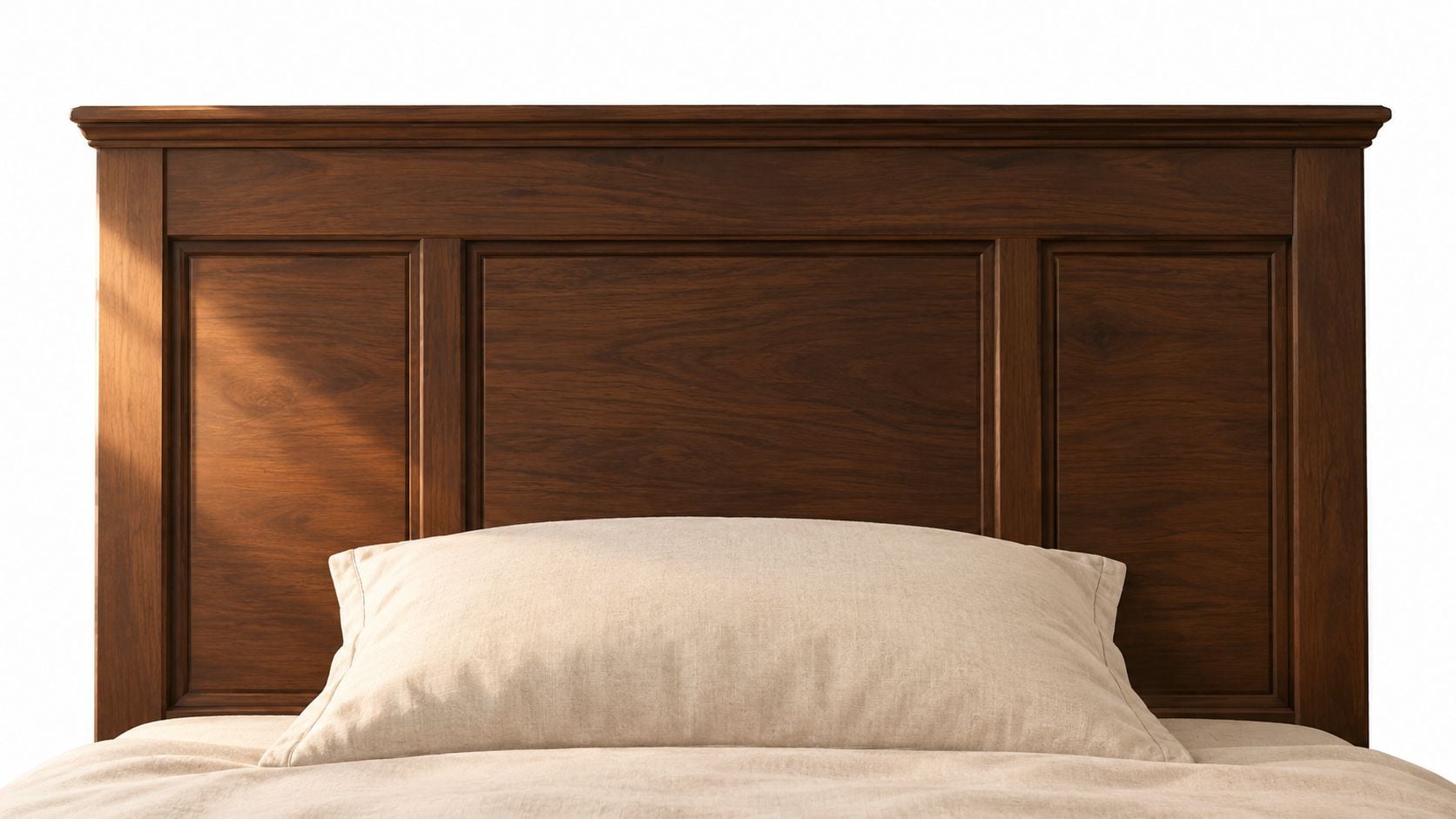
The look carries more than color
By the early nineteenth century, mahogany bedsteads and coordinated bedroom suites were linked with affluent interiors. American designer Duncan Phyfe incorporated dark wood, veneer, inlay, carving, and classical detailing into bedstead designs. Victorian bedrooms later emphasized coordinated suites containing bedsteads, wardrobes, dressing tables, washstands, and chests, often with dark finishes.
That history gives a dark wood headboard a useful design advantage. It can communicate stability and permanence without making the bedroom feel formal or old-fashioned. A simple panel profile can look contemporary, while carved details or turned elements can suggest traditional craftsmanship.
Modern finishes don't necessarily reveal the timber underneath. A dark appearance may come from naturally dark wood, stain, paint, veneer, or a protective topcoat. Walnut, smoked oak, espresso, and dark-stained oak remain common visual references, but each can differ in undertone, grain, sheen, and repairability.
Practical rule: Choose dark wood for the way it anchors the room, then verify the construction beneath the finish.
For a coordinated bedroom, the headboard should relate to the floor, dresser, nightstands, bedding, and wall color. A large, nearly black panel may overpower a small room, while a medium-brown walnut tone can provide depth with less visual heaviness. The decision becomes more durable when the buyer treats the headboard as furniture with a long life, not as a temporary accent.
Choosing the Right Wood Species and Finish
The same dark color can hide very different materials. A naturally dark walnut board, a stained oak frame, a painted panel, and a decorative laminate may appear similar under showroom lighting, yet they won't age, accept repairs, or respond to humidity in the same way.
Start with the underlying material
A buyer comparing samples should ask four direct questions:
- Wood species: Is the visible surface walnut, oak, mahogany, another hardwood, or a stained substitute?
- Core material: Is the headboard solid hardwood, veneer over plywood, veneer over composite board, or painted engineered wood?
- Finish system: Does the surface use stain and clear coat, paint, oil, or another protective treatment?
- Repair path: Can the finish be touched up, refinished, or custom-matched if the piece is moved later?
Solid hardwood offers visible grain and the possibility of future refinishing, but wide panels must be designed to accommodate movement. Veneer can provide a stable, carefully selected grain pattern over a properly engineered core, and it can be a sensible choice for broad panels. Composite construction isn't automatically poor quality, but its edge treatment, substrate specification, and emissions documentation deserve closer attention.
A rich brown finish can suit traditional, transitional, or contemporary rooms. Smoked oak often shows more pronounced grain, while espresso and painted-black finishes create a more uniform visual field. Walnut can bring varied natural figuring, which makes each piece feel less flat and more individual.
Match the finish to the household
A low-sheen surface tends to hide minor reflections, while a glossier coating emphasizes carved details and reflects more light. Oil finishes can create a soft, natural appearance with little surface buildup, while harder protective finishes are designed to resist moisture, acids, alcohol, heat, or abrasion. Finish guidance from Utah State University explains why the finish affects both beauty and protection.
The right choice depends on the room's use. A carefully maintained adult bedroom may suit a more natural finish, while a busy household may benefit from a more resistant coating. Appearance is only the beginning. The best dark wood headboard combines the desired undertone with a substrate and finish system that fit the home's conditions.
Construction Standards for Long-Term Durability
A durable dark wood headboard begins with preparation that happens before staining or assembly. Wood remains hygroscopic, so it absorbs and releases moisture as indoor conditions change. A headboard that ignores that behavior may develop joint opening, veneer stress, finish checking, or minor warping even when the original design looked substantial.
Specify properly dried material
For hardwood lumber used in furniture, cabinets, and millwork, the U.S. Forest Service reports typical drying to approximately 6–8% moisture content. The Forest Products Laboratory's wood-drying guidance also explains that wood continues responding to room humidity after installation.
That makes the following specifications useful before ordering:
- Confirm the material. Request solid hardwood or veneer-core construction, and ask which parts use each material.
- Ask about kiln drying. Proper drying supports dimensional stability, but it doesn't eliminate movement.
- Examine wide panels. Broad sections should be engineered rather than rigidly trapped across their width.
- Review the joinery. Floating panels or mechanically tolerant connections allow controlled movement.
- Check the installation method. A heavy headboard needs appropriate brackets, structural attachment, or a properly installed French cleat.
A guide to mortise and tenon joints can help buyers understand why traditional joinery matters. The joint itself isn't a guarantee of quality, but careful joinery reflects attention to load, alignment, and long-term movement.
Protect the headboard from unstable conditions
Room placement matters after delivery. A damp exterior wall can expose the back of the piece to unwanted moisture, while strong heat or rapidly changing humidity can increase stress on wood and finishes. Relatively stable indoor humidity is kinder to both solid wood and veneered construction.
The most useful conversation with a retailer or designer should include:
- the species and core material,
- the kiln-drying practice,
- the treatment of edges and rear surfaces,
- the movement strategy for wide panels,
- the recommended wall or bed-frame attachment.
A headboard built with movement in mind is more likely to remain quiet and aligned through seasonal changes in an Albany-area home. Sturdy construction isn't only about weight. It's about allowing the material to behave naturally without forcing that movement into visible damage.
Understanding Health, Emissions, and Finishes
A dark wood headboard can look finished and substantial while its hidden materials tell a different story. Because it sits behind sleepers, ask what lies beneath the color. Solid wood, plywood, veneer over composite board, and MDF have different emission profiles, and the coating can contribute to indoor-air concerns. A dark finish does not prove that the substrate has strong indoor-air performance.
Pressed-wood products such as MDF and particleboard generally emit more formaldehyde than solid wood. EPA guidance identifies standards of 0.05 ppm for hardwood plywood, 0.09 ppm for particleboard, and 0.11 ppm for medium-density fiberboard EPA guidance on composite wood formaldehyde standards. Indoor concentrations can still vary with temperature, humidity, and ventilation. Learn more about lower-emission material choices in this guide to sustainable wood furniture.
Ask for documentation, not assumptions
Before ordering, request clear answers about:
- Construction details: Is the piece solid hardwood, plywood, veneer over composite board, or MDF?
- Certification information: Which low-emission or emissions-compliance documents apply?
- Finish details: What coating system was used, and which cleaning products are permitted?
- Ventilation guidance: Should the headboard be aired out after delivery?
- Household considerations: Are children, allergy-sensitive occupants, or poorly ventilated rooms part of the decision?
A Danish environmental assessment found that furnishing scenarios with large furniture surface areas can push indoor formaldehyde above the WHO-recommended limit of 0.1 mg/m³. The environmental assessment discussed by EPFL shows why substrate selection and total surface area deserve attention in a bedroom.
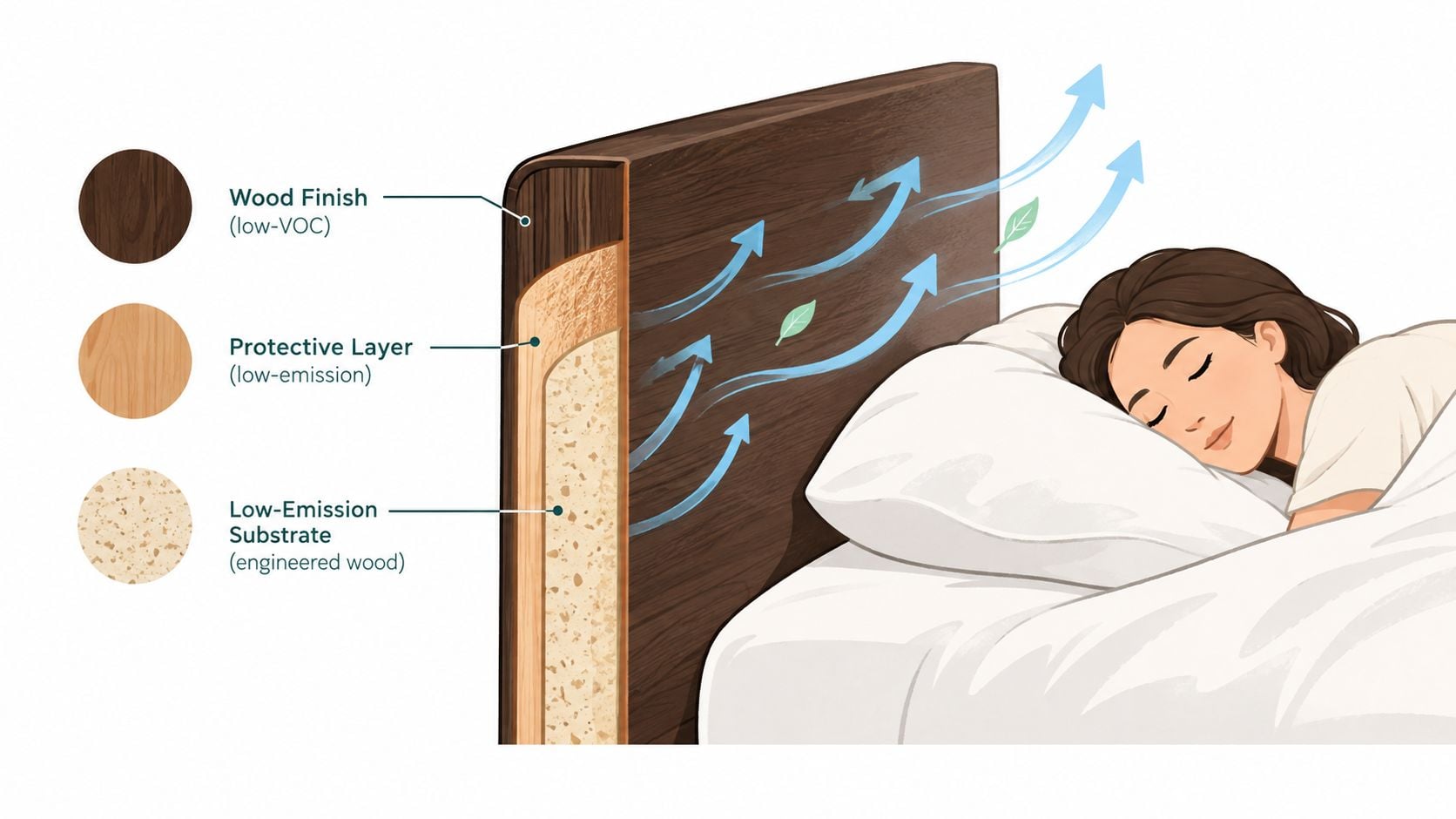
Finish chemistry also affects appearance
Finish chemistry affects more than sheen. Transparent coatings can leave wood vulnerable to ultraviolet color changes, while transparent paint reduced discoloration in experimental research. UV exposure shifted wood toward a darker, more yellowish appearance, and rougher surfaces discolored more strongly than smoother ones. Research on wood discoloration and surface treatment explains why consistent sanding and suitable coating selection matter.
Evaluate a headboard's finish for both emissions and appearance stability. Moisture content, ventilation, formaldehyde documentation, and UV sensitivity all belong in the buying conversation. Ask what the headboard is made of, which finish covers it, what records support the materials, and how the household should care for the surface.
Staging, Maintenance, and Care Tips
A dark wood headboard can make a bedroom feel complete, but placement determines whether it looks balanced or heavy. In a smaller room, a lower horizontal profile may preserve openness, while a taller panel can add architectural presence when the ceiling and wall color can support it. Pale bedding, textured fabrics, and thoughtfully spaced nightstands prevent the dark surface from becoming an isolated block.
Light is part of the design calculation. Experimental work has shown that UV exposure can alter wood's color, and the University of Kentucky recommends keeping wooden furniture away from direct sunlight, heat sources, and extreme moisture or dryness. Furniture-care guidance from the University of Kentucky also supports using a humidifier or dehumidifier when room conditions require it.
Build a simple care routine
- Manage sunlight: Avoid positioning the bed where one side of the headboard receives strong direct sun for long periods.
- Keep heat at a distance: Do not place the headboard directly beside heating registers or other direct heat sources.
- Dust gently: Use a soft, clean cloth rather than abrasive materials that can dull the sheen.
- Clean according to the finish: Follow the manufacturer's instructions instead of applying a household cleaner by habit.
- Watch the wall: Avoid placing the piece directly against a damp exterior wall.
- Protect the surface: Keep sharp hardware, rough bedding fixtures, and metal objects from rubbing against the finish.
Treat sheen as a maintenance decision
An oil finish may offer a natural bare-wood appearance with a soft sheen and limited surface buildup. A harder protective coating may provide more resistance to moisture, chemicals, heat, or abrasion. Neither choice is universally superior. The practical question is whether the household values a more tactile surface and potential repairability or stronger day-to-day resistance.
A dark finish can also reveal dust, fingerprints, and uneven fading more readily than a lighter surface. That doesn't make it impractical, but it rewards consistent care. The wood furniture care guide can help households establish cleaning habits suited to the material.
A protective finish reduces routine risk, but it doesn't make furniture immune to sunlight, moisture, or careless cleaning.
The strongest staging approach connects maintenance with room planning. Stable conditions protect the structure, controlled light protects the color, and surrounding textures soften the visual weight. That combination lets the headboard serve as a calm focal point rather than a demanding centerpiece.
The Value of Custom Ordering and Local Expertise
A ready-made headboard can solve an immediate furnishing need, but custom ordering earns its value when the room has unusual dimensions, existing woodwork, a distinctive floor, or a carefully developed color palette. The buyer can address the details that are difficult to change later, including species, finish undertone, overall width, height, mounting method, and relationship to the mattress.
Customization solves real bedroom problems
A custom conversation should begin with the room, not a catalog image. Useful information includes:
- bed size and mattress height,
- wall width and ceiling height,
- window and heating-register locations,
- existing floor and case-good finishes,
- preferred sheen and maintenance tolerance,
- need for wall mounting or bed-frame attachment.
This process can prevent a common mismatch: a beautiful dark panel that makes the room feel cramped because its scale, height, or undertone conflicts with the surroundings. Professional design services can also coordinate the headboard with flooring, window treatments, lighting, bedding, and nearby furniture.
Tip Top Furniture & Mattresses has provided professional design services since 1984 and has operated as a family-owned showroom in Freehold, NY, since 1978. The showroom serves homeowners throughout the Greater Albany Capital Region, including Albany, Schenectady, Troy, Greene County, and surrounding communities. Its one-stop selection includes bedroom furniture, décor, flooring, mattresses, and custom options, allowing a bedroom project to be considered as a complete room rather than a single purchase.
Look for craftsmanship that supports the finish
Amish furniture offers one route for buyers seeking solid wood, handcrafted construction, heirloom quality, and custom order options. A USA-made piece can also be selected around the household's preferred dimensions, wood type, and finish. These choices are most useful when the buyer wants the headboard to coordinate with existing furniture or remain adaptable after a future move.
The showroom's selection from over 50 trusted manufacturers creates room to compare construction approaches, while custom ordering can support a more exact match. Buyers can also coordinate a headboard with USA-made mattresses and personalized sleep recommendations, rather than treating the decorative and comfort decisions separately.
Consider the full project budget
A custom piece should be evaluated against its service and ownership benefits, not only its initial price. Delivery, installation guidance, finish documentation, future repairability, and the ability to coordinate flooring or adjacent furniture can affect the practical value. Flexible financing may also make a complete bedroom project easier to manage, while clearance selections can provide immediate availability for shoppers working within a tighter budget.
The custom furniture service gives homeowners a starting point for discussing size, style, wood, and finish choices. A local consultation is especially useful for customers who want to bring room measurements, flooring samples, or a sketch of the desired headboard.
Visit the historic Freehold showroom before ordering a large dark wood headboard, particularly when the project involves custom dimensions, Amish craftsmanship, a new mattress, or flooring coordination. Tip Top Furniture & Mattresses offers bedroom furniture, custom ordering, professional design services, USA-made mattresses, flooring, clearance selections, delivery, and flexible financing for homeowners across the Greater Albany Capital Region. Explore the options and speak with the local team at Tip Top Furniture & Mattresses.