Entryway Corner Bench: How to Choose and Style It


The front door opens, coats land on the nearest chair, and shoes spread across the floor before anyone has finished saying hello. In many Capital Region homes, especially older houses in Albany, Schenectady, Troy, and Greene County, the entryway corner is the only realistic place for seating. A well-chosen entryway corner bench can turn that forgotten angle into a useful landing zone, but only if it preserves the path through the door.
The practical question isn't whether a bench looks attractive. It's whether the piece fits the corner, clears the door swing, gives people a comfortable place to remove shoes, and works with hooks and a boot tray to control everyday clutter. The following approach treats the bench as part of the home's circulation plan, not as an isolated decoration.
Why Corner Benches Solve Entryway Challenges
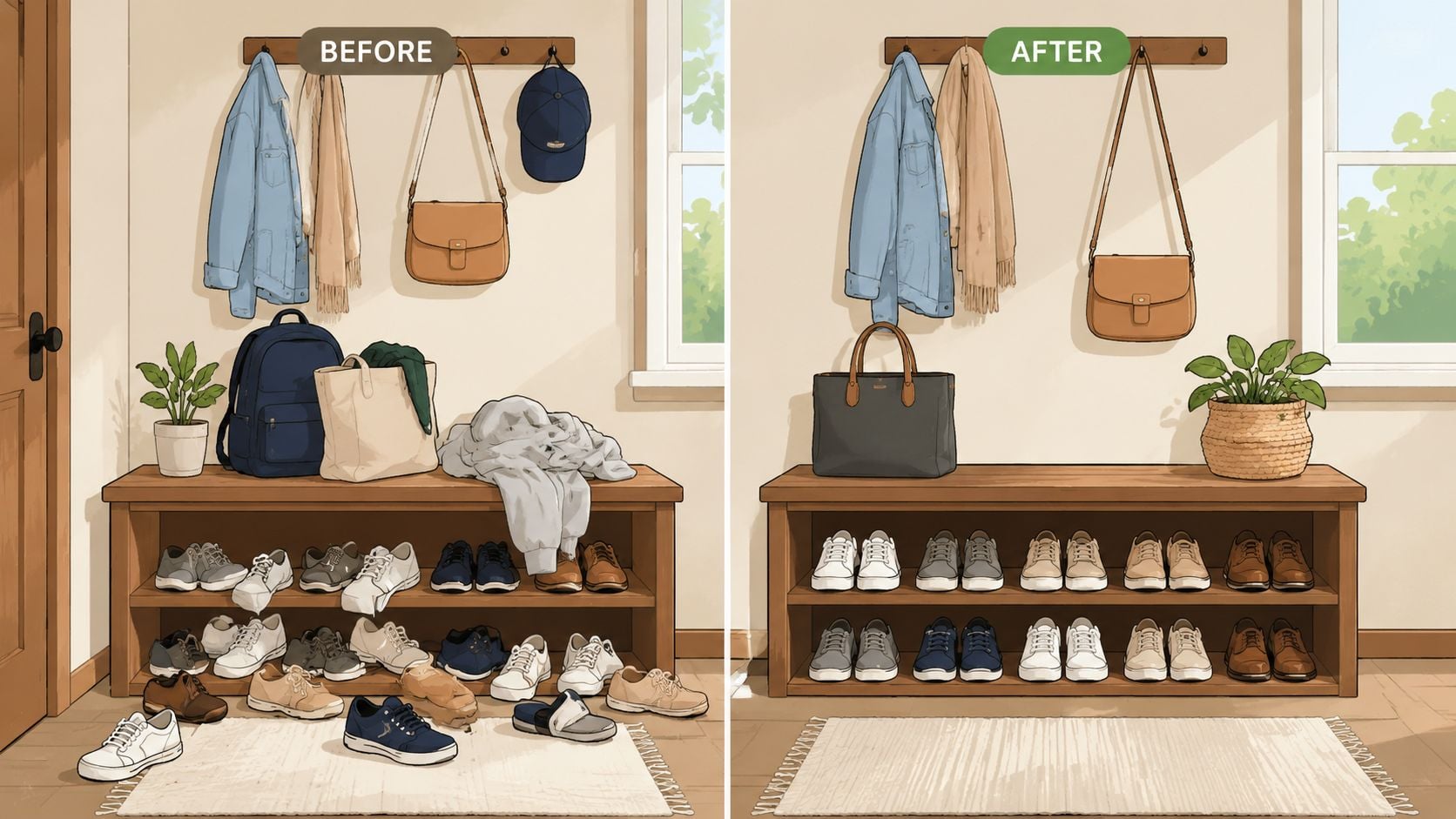
A front door can open directly toward the only usable wall, leaving little room for both seating and movement. Shoes collect along the baseboard, bags occupy the nearest surface, and wet boots have no defined place to land. A straight bench may provide a seat, but it can consume the wall needed for hooks or narrow the route into the home. A corner bench uses the difficult angle while keeping the main traffic path more open.
The layout still needs testing. Check the door swing, the route from the threshold to the rest of the house, and the space needed to sit without blocking someone walking past. In older Capital Region homes, walls may not be perfectly parallel, and a doorway may open into an area never designed as a formal foyer. A corner-oriented piece can fit those conditions more naturally than a long, rigid bench, provided its depth does not project into the walking line.
A long-standing space-saving idea
Corner furniture has long used room edges for practical purposes. Britannica notes that corner furniture was popular in the 18th and 19th centuries, reflecting a tradition of placing seating and storage where they interfere less with the center of a room (Britannica's overview of corner furniture). Modern entryway corner benches apply the same principle to daily routines, with options such as shoe storage, cushions, drawers, and compact profiles.
Market researchers track entryway furniture as a broad category that includes benches, cabinets, tables, and organizers. One study estimated the category at USD 4,827.93 million in 2023, projecting USD 6,680.96 million by 2030 at a 4.8% CAGR. That market context matters less than choosing a configuration that supports the way your household enters and leaves.
For daily use, build the corner around three connected functions:
- Seating: A stable place to remove shoes without standing in the doorway.
- Hanging space: Wall hooks or a coat rack for jackets and bags, positioned where they do not obstruct the door swing.
- Footwear control: A boot tray or defined storage zone below or beside the bench to contain wet and muddy footwear.
A bench alone will not keep clutter from returning. The hooks and footwear zone need to sit close enough to the seat that coats, bags, and shoes have an obvious destination. A practical mudroom organization approach can help connect those functions with seasonal gear while keeping the corner open.
The best corner bench is the one that supports circulation first. Its appearance matters, but a clear route, a workable door swing, and a complete three-part entry system determine whether the piece remains useful after the first week.
Measuring Your Space Before You Shop
A corner bench can fit the wall and still make the entryway fail. The front door may strike its edge, a closet door may lose opening room, or the remaining passage may become too narrow for someone carrying groceries. Measure the full movement path, not just the empty corner. The goal is a working three-part entry system, with the bench, hooks, and boot tray sharing space without competing for it.
Start with the seating geometry
A practical target is a seat height of 17 to 19 inches, a seat depth of 14 to 17 inches, and at least 36 inches of clearance in front of the seating zone (entryway bench measurement guidance). That arrangement keeps the knees near a 90-degree angle, making it easier to sit, remove shoes, and stand without pressing against the wall or nearby furniture.
Some standard benches measure approximately 17 to 20 inches high and 15 to 20 inches deep, a range associated with comfortable adult seating (standard bench dimensions). In a narrow entry, the shallow end is usually easier to live with. A deeper seat may feel comfortable in a foyer but become a collision point beside a door swing.
Seat depth matters as much as height. See our guide to bench seat depth before choosing a model, especially if the bench will sit near the entry door or a turning area.
Use the narrowest safe depth
For compact circulation areas, 12 to 15 inches is a safer depth target. Reserve 16 to 18 inches for layouts with genuine room around the bench. A bench near a door swing should generally remain under 14 inches deep (entryway bench ergonomics guidance).
Hallway width provides another useful check:
- Under 48 inches wide: Limit bench depth to about 12 to 14 inches.
- 48 to 60 inches wide: A depth of about 15 to 16 inches may work.
- Any narrow passage: Preserve a minimum of 36 inches of clear passage in front of the bench.
A 90-degree corner bench often uses about 36 inches along each wall. Diagonal or wider-entry versions may need approximately 42 by 42 inches, with depth commonly kept near 16 to 18 inches when circulation allows it (mudroom bench size guidance). Check the hook position as well. Coats and bags should hang within reach of the seat without narrowing the walking route.
Test the footprint before ordering
Use painter's tape to mark the seat, both returns, and any storage doors. Place typical shoes, bags, and baskets inside the outline, then test the room under normal conditions.
- Open the front door fully.
- Open any nearby closet or interior door.
- Walk through carrying a bag or laundry basket.
- Sit down and remove a pair of boots.
- Check whether drawers, lids, or baskets open without blocking the passage.
- Measure the corner again if the walls aren't parallel.
Under-bench clearance affects how easily footwear can be stored and retrieved. Allow at least 4.5 inches of vertical clearance, while 6 to 12 inches can reduce toe-stubbing and accommodate boots or baskets. The taped footprint exposes conflicts that a wall measurement misses, particularly when winter footwear, bags, hooks, and an open door occupy the same zone.
Choosing the Right Storage Configuration
Storage performance matters more than the number of compartments shown in a product photograph. The right configuration depends on whether the household values speed, visual calm, or detailed organization. A family that leaves the house in a hurry may use open cubbies every day, while a design-conscious household may prefer a lift-top compartment that keeps shoes out of sight.
Recent entryway coverage points toward hidden storage, clean lines, and softened or curved silhouettes in 2026, but concealed storage isn't automatically more functional (entryway design trends for 2026). It needs enough opening clearance, sensible ventilation, and a routine that encourages people to put items away.
Storage Type Comparison
| Storage Type | Best For | Trade-offs |
|---|---|---|
| Open cubbies | Fast-grab shoes, active households, and footwear that needs airflow | Items remain visible, and mismatched shoes can make the entry look busy |
| Lift-top bench | A calmer appearance and flexible storage for accessories or less frequently used items | The lid needs room to open, and contents can become a hidden pile |
| Drawer-based bench | Households that want assigned storage and stronger clutter control | Drawers add hardware and require clear space to pull out fully |
Open cubbies work well when residents need to leave quickly and return shoes to the same location without handling a lid or drawer. Lift-top storage creates a cleaner visual field, but it can conceal clutter rather than solve it. Drawers offer the most deliberate organization, especially when each person has a designated section, although they demand careful clearance planning.
A bench with cushion and storage can provide comfortable seating while supporting one of these configurations. The cushion adds softness, but the fabric should suit the conditions of the entry. Wet boots, salt, and muddy paws require a removable or cleanable cover rather than delicate upholstery that needs constant protection.
Practical rule: Choose open storage for speed, closed storage for visual control, and drawers when the household will maintain assigned spaces.
The bench still needs hooks above or beside it, plus a boot tray positioned where wet footwear can be removed without crossing the room. That three-part arrangement handles the actual arrival sequence: hang the coat, sit down, and contain the shoes.
Materials and Finishes That Last
An entryway corner bench has to tolerate repeated sitting, dropped bags, damp shoes, winter salt, and temperature changes near the door. Material selection should follow those conditions instead of starting with a color sample. A beautiful finish that requires delicate handling can become a daily frustration in a busy Upstate New York household.
Match the construction to the routine
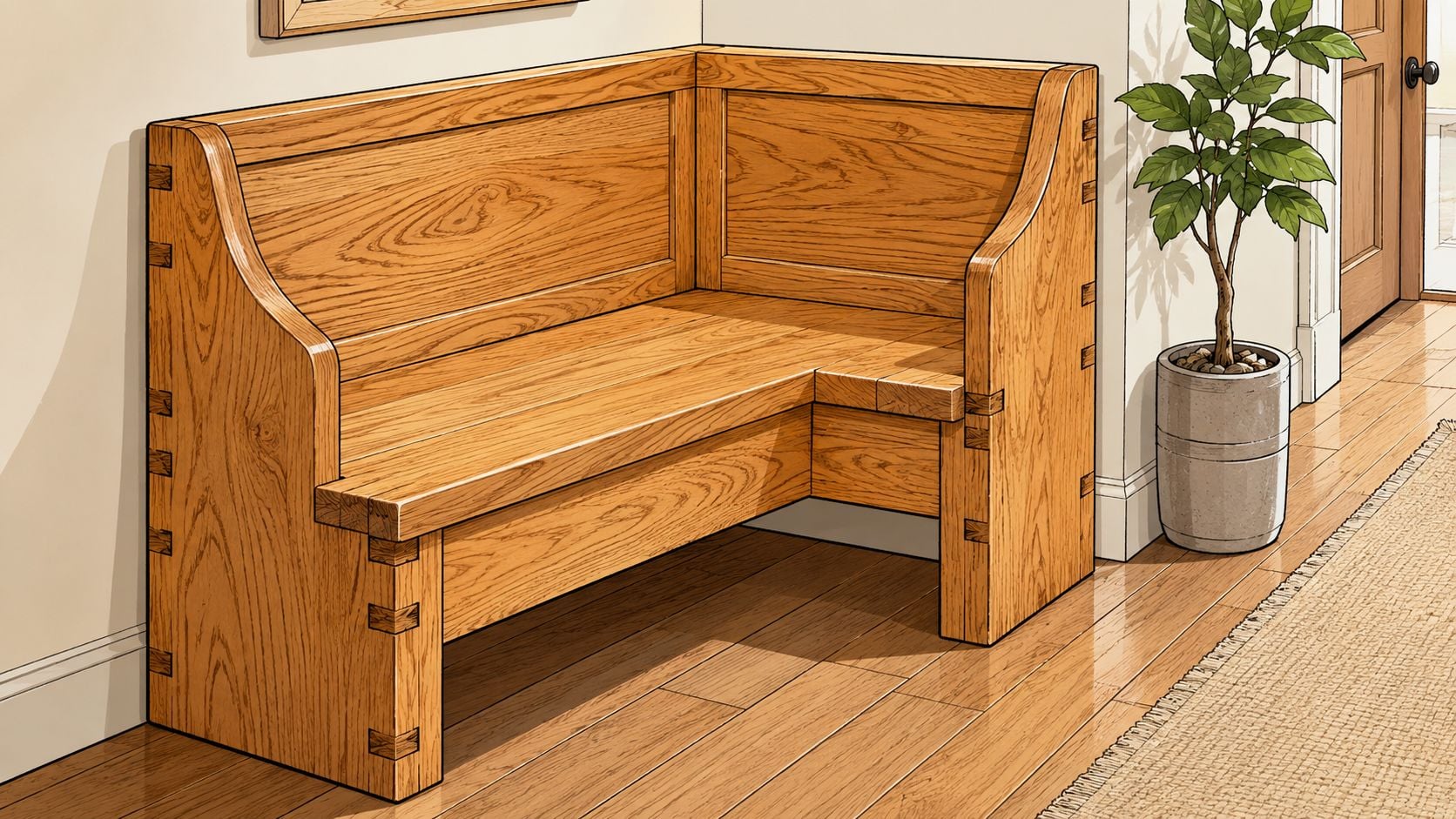
Solid wood is a strong choice for a hardworking entry because it can bring visual warmth, substantial construction, and a finish that coordinates with existing flooring. Amish furniture adds a distinct option for shoppers seeking USA-made, handcrafted, heirloom-quality solid wood with custom order possibilities. That investment makes particular sense when the bench needs to remain useful through changing décor or a growing household.
Engineered wood can offer a controlled finish and a more accessible price point. It may work well in a protected foyer, especially when the piece has durable surfaces and the household doesn't expect it to carry heavy daily abuse. Metal-framed designs suit industrial or modern interiors, but exposed metal can feel cold beside traditional wood flooring unless softened with a cushion or nearby textiles.
Upholstery changes both comfort and maintenance. A cushion makes shoe removal more pleasant and can introduce color, but entryway fabrics should be selected for routine cleaning. A removable cover, performance-oriented textile, or durable woven material is more practical than a fabric that shows every mark.
Coordinate the finish with the room
The bench doesn't need to match every finish exactly. It should relate to the floor, wall color, door, and nearby hardware.
- Warm wood floors: Oak, walnut, or a complementary stained wood can make the entry feel connected rather than assembled.
- Painted walls: A natural wood bench adds texture, while a painted bench can blend into the architecture.
- Dark doors or hardware: Repeating a dark accent in hooks or legs creates visual continuity.
- Busy flooring: Keep the bench finish quieter and let the floor remain the primary pattern.
Moisture deserves special attention. Residents should wipe wet footwear before placing it beneath the bench, use a boot tray, and follow the maker's care instructions rather than allowing standing water to reach wood components. A practical wood furniture care guide can help protect the finish over time.
Custom ordering is useful when standard proportions don't suit an irregular Capital Region foyer. A specialist can help coordinate wood type, finish, cushion fabric, and dimensions so the bench relates to existing flooring instead of forcing a full-room redesign.
Styling Your Entryway as a Complete System
A corner bench looks finished when the surrounding wall and floor support its purpose. Hooks should sit where coats can be reached without striking seated users, while a mirror helps residents check their appearance and makes the entry feel more deliberate. A nearby surface or small tray handles keys and mail, so the bench doesn't become the default drop zone.
The strongest arrangements separate arrival tasks by height. Shoes stay low, people sit at the bench, coats and bags hang above, and small belongings land on a shelf or console. This vertical organization keeps the floor clearer and prevents the bench from carrying every function at once.
Build around movement first
Placement should respect the path from the front door into the home. A rug can define the arrival zone, but it shouldn't buckle beneath the bench or narrow the passage. Lighting should illuminate the seating and storage area without creating glare in the mirror, and a soft accent such as a cushion or seasonal textile can add personality without occupying circulation space.
The door itself deserves attention. Homeowners replacing an entry door may want to review SuperiorPRO entry door options while planning the furniture layout, because the door swing, casing, and threshold influence how much usable wall and floor space remain.
For a Capital Region home with an uneven corner, custom ordering can solve details that styling alone can't fix. A return may follow a short wall, a specific finish may coordinate with flooring, and a cushion can soften a solid wood frame without adding visual bulk. Tip Top Furniture & Mattresses has offered professional design services since 1984, giving local homeowners a way to coordinate furniture, décor, and flooring decisions through one design conversation.
Keep the system seasonally usable
Winter requires more tolerance for boots, coats, and damp accessories than summer. A boot tray should remain accessible, while less-used footwear can move to a closet or closed compartment. In warmer months, the same bench can support lighter shoes, a basket for outdoor accessories, or a simple cushion and decorative accent.
A small tray, mirror, and restrained arrangement above the bench can finish the composition. Practical ideas for keeping that surface organized appear in these foyer table decorating ideas, even when the home uses a bench rather than a table.
Before buying, the free online room planner can help visualize the bench, hooks, rug, and nearby furniture at scale. That extra planning step is especially valuable when the entry opens directly into a living room, because the bench needs to look intentional from both spaces.
Custom Ordering and Next Steps
A standard piece works when the corner has ordinary proportions and the storage routine is straightforward. Custom ordering becomes more sensible when the walls are irregular, the door swing is tight, or the homeowner wants a specific wood, finish, cushion, or return length. The process can begin with a measured sketch, photographs of the entry, and a list of the items the bench must store.
A useful custom order starting guide helps organize those decisions before a consultation. Homeowners can bring measurements, taped-floor photos, and examples of finishes they already own. Professional designers can then help narrow the dimensions and coordinate the bench with hooks, flooring, lighting, and adjacent rooms.
There are several practical ways to move forward:
- Layout still uncertain: Use the free room planner to test circulation before shopping.
- Style and dimensions are clear: Schedule a complimentary design consultation for material and finish guidance.
- A custom piece is the priority: Discuss wood type, dimensions, upholstery, and finish with the design team.
- Immediate availability matters: Check the Clearance Corner for quality pieces at deep discounts.
- Budget needs flexibility: Ask about available financing and payment options, including special financing with a Synchrony Home Card, with store details applying.
Tip Top Furniture & Mattresses is a family-owned Freehold showroom serving Albany, Schenectady, Troy, Greene County, and the wider Greater Albany Capital Region. Its one-stop selection includes furniture, décor, flooring, USA-made mattresses, and Amish furniture from a network of 50+ trusted manufacturers, supported by local delivery and personalized service. The showroom has carried that family-owned legacy since 1978, giving homeowners a local place to evaluate construction and comfort before committing.
Tip Top Furniture & Mattresses can help Capital Region homeowners plan an entryway corner bench around real door swings, traffic lanes, storage needs, and finishes. Visit Tip Top Furniture & Mattresses at the Freehold, NY showroom to explore available pieces, custom options, flexible financing, design services, and Clearance Corner values, or start with the free room planner before scheduling a consultation.