What Is a Hybrid Mattress and Is It Right for You


A hybrid mattress combines a pocketed coil support core with at least 2 inches of foam or latex comfort layers, so it gives you spring-driven support with a softer, contouring surface. That construction is the simplest way to tell a true hybrid from a mattress that only borrows the name.
Walk into a showroom and the labels can blur together fast. One bed feels firm and springy, another feels cushioned but a little flat, and a third claims to be a hybrid even though the top barely has any padding at all. At Tip Top Furniture & Mattresses in Freehold, NY, families from Albany, Schenectady, Troy, and across the Capital Region often ask for the same clear answer: what's inside the mattress, and what does it mean for sleep?
Understanding What Makes a Mattress a True Hybrid
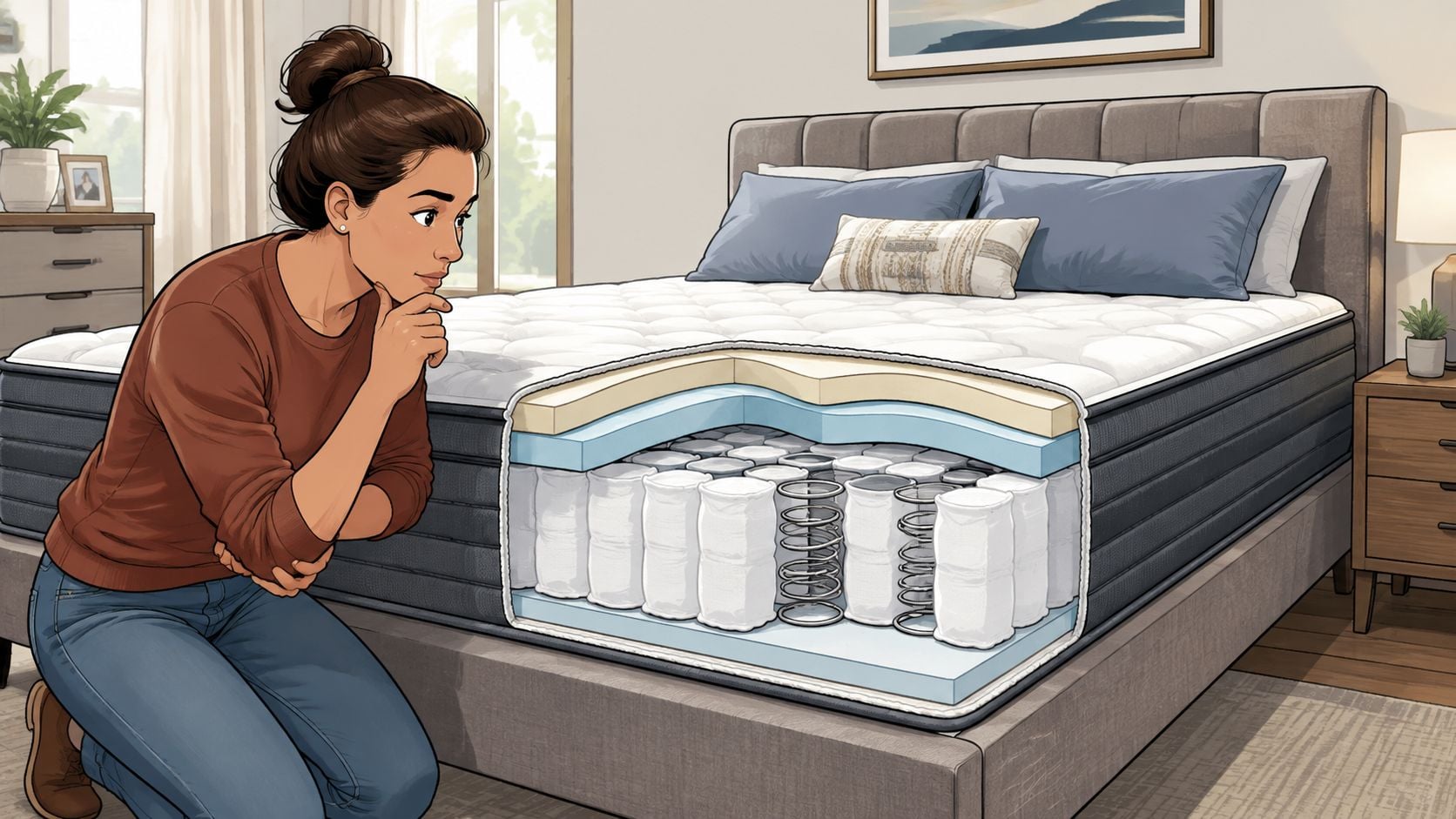
A shopper can stand beside two mattresses that both say hybrid and still end up with very different sleep experiences. That confusion is normal, because the word gets used loosely. The clearest starting point is simple, a true hybrid uses a pocketed coil core under a comfort layer that's thick enough to matter, usually at least 2 inches of foam, latex, or both.
That structure matters because it keeps the feel balanced. The coils create lift, bounce, and airflow, while the foam or latex softens pressure on the shoulders, hips, and lower back. In real terms, that's why a hybrid can feel more responsive than all-foam beds while still offering more contour than a traditional innerspring.
Practical rule: If the mattress feels mostly like springs with a thin pad on top, it may wear the hybrid label without behaving like a true hybrid.
For a quick local reference point, the What Is a Hybrid Mattress guide helps shoppers sort through the basic terminology before they lie down on anything in the showroom. A helpful outside comparison is the way a dual system works in Tucson heating answer from Covenant Aire, where two methods are combined to balance performance. The mattress version follows the same logic, one layer handles structure, another layer handles comfort.
A thin pillow top can fool the eye, but not the body. The easiest way to separate marketing from reality is to ask two questions: What kind of coil system is inside? and How thick is the comfort layer? If both answers are clear, the mattress is much easier to judge.
Inside the Layers of a Hybrid Mattress
A good hybrid feels simple from the outside and surprisingly structured from the inside. It's like a house. The cover is the roofline, the comfort layers are the rooms you live in, and the coil core is the foundation that keeps everything steady.
A typical build includes 5 to 7 distinct layers, and those layers do different jobs. A common layout starts with the cover, then a quilted or foam comfort layer, then a transition layer, then the pocketed coil support core, followed by edge reinforcement, a fire barrier, and a high-density base foam. The exact order can vary, but the function of each layer usually stays the same.
The upper layers do the feel work
The top layers shape how the mattress meets the body. Consumer-friendly testing notes that the average hybrid uses about 2 inches of memory foam, which is less than 20% of total mattress thickness, and many comfort systems run 2 to 4 inches deep. That's the part that cushions the shoulders and hips, softens first contact, and helps the bed feel less abrupt than a bare coil mattress.
A transition layer sits just below the comfort foam. Its job is easy to understand and easy to appreciate once someone lies down on it, it keeps sleepers from feeling spring tips through the top of the bed. Some stricter construction guides say that a mattress qualifies as a hybrid only when it uses a pocketed coil base topped by at least 2 inches of foam, latex, or both, which lines up with that layered feel. For a closer look at foam behavior, the memory foam mattress guide is useful context for comparing how upper layers change pressure relief.
A mattress can look plush on a showroom floor and still have very little usable comfort material inside. Specs tell the real story.
The middle and lower layers do the support work
Below the comfort zone, the coil core carries the load. Detailed layer breakdowns often put the support core at about 6 to 8 inches of coils, with some hybrids using 800 to 1,400+ individually wrapped coils. Pocketed coils move separately, so one side of the bed can respond without dragging the other side with it.
That coil structure is also why many hybrids feel more breathable. Air moves through the spaces between the coils, and that helps the mattress avoid the closed-in feel that some all-foam beds create. A common note from product spec sheets is that denser foam, often around 3 to 4 lb/ft³ or higher, is used when durability matters more, while latex comfort layers are often judged by ILD, where lower numbers feel softer.
For shoppers comparing edge support details, a helpful outside reference on foam corners and edge profiles shows how borders and supports change the usable surface. That same idea shows up in mattresses, especially for people who sit on the side of the bed or share the mattress with a partner. Strong edges make the whole build feel more consistent.
How Hybrids Compare to Innerspring and Memory Foam Beds
A hybrid sits between two familiar bed types, but not in a vague “best of both worlds” way. It does some jobs like an innerspring and some jobs like a memory foam bed, which is exactly why it appeals to shoppers who want balance instead of a one-note feel.
| Feature | Hybrid | Innerspring | Memory Foam |
|---|---|---|---|
| Support | Coil structure with foam contouring | Strong spring support, usually less contour | Deep body contour, less lift |
| Pressure Relief | Good, with a cushioned top layer | Limited unless a thick topper is added | Excellent, especially for shoulders and hips |
| Cooling | Usually better airflow than all-foam | Often breathable because of open coil design | Can sleep warmer depending on foam build |
| Motion Isolation | Good with pocketed coils | Often weaker with connected coils | Usually strongest |
| Feel | Responsive with some cushion | Bouncy and firm | Slow, enveloping, low bounce |
In practical terms, a hybrid often feels like the middle lane. It keeps enough spring response for easier movement, but the foam top adds enough softness to matter for pressure relief. An innerspring usually feels more direct and lively, while memory foam tends to feel more enveloping and less responsive.
The tradeoffs are real. Hybrids can be heavier and more expensive than basic coil beds because they use both support systems together. Memory foam usually isolates motion better, which can matter a lot for light sleepers. Innerspring beds can feel cooler and simpler, but they may not cushion pressure points as well on their own.
For shoppers comparing construction styles in more detail, the hybrid mattress vs innerspring guide gives a clean side-by-side framework. The key takeaway stays the same, hybrids are built for people who want lift plus contour, not just one or the other.
Who Benefits Most from Sleeping on a Hybrid
A hybrid isn't the perfect answer for everyone, but it fits a wide range of sleepers better than many people expect. The combination of coil support and foam comfort helps when a body needs both alignment and pressure relief in the same bed.
Sleep position changes the fit
Side sleepers often like hybrids because the comfort layer eases pressure at the shoulders and hips without letting the body sink too far. Back sleepers usually do well when the coil core keeps the midsection supported, and stomach sleepers often appreciate that same support because it helps the body stay flatter.
Combination sleepers are a strong match too. A responsive coil system makes it easier to turn over without feeling stuck, which matters when someone changes position several times a night. For a more body-specific comparison, the which mattress is right for your body type guide is a smart next read.
Real-world household needs matter too
Couples often like hybrids because pocketed coils reduce motion transfer better than older connected spring systems. That said, non-pocketed coils can feel bouncier and pass movement more easily, so the coil type matters. Hot sleepers also tend to appreciate the airflow under the comfort layers, especially when the top materials are breathable rather than dense and closed in.
Heavier sleepers often benefit from a well-built hybrid because the coil support can help resist sagging over time. Foam density matters there too, since lower-quality comfort foam can break down faster and change the feel of the bed earlier than expected.
Good fit, not good label: A hybrid makes the most sense when a sleeper wants support, some bounce, and pressure relief in one mattress.
Shoppers who prefer a deep, slow sinking sensation may still prefer all-foam. People who like a very firm, classic springy surface may still be happier with a traditional innerspring. The point is not to push every shopper toward hybrid construction, it's to match the bed to the body and the way the household sleeps.
Smart Shopping Tips for Your Next Hybrid Mattress
A smart hybrid purchase starts with the sleep position, not the price tag. Side sleepers usually need more cushioning in the top layer, while back and stomach sleepers often do better when the mattress keeps the spine from dipping too far. The best showroom test is simple, lie down the way you sleep at home and stay there long enough to feel the support settle in.
Edge support deserves attention too. Couples use the whole surface, and many people sit on the edge of the bed every day while getting dressed. A stronger border helps the mattress feel larger and more stable, and it usually holds up better to regular use.
Sleep trial terms and warranty terms matter as much as the feel on day one. A bed can feel fine for a few minutes in a showroom and still be wrong after a week at home. That's why buyers should ask about trial windows, return conditions, and what the warranty covers if the mattress starts to sag.
At the Freehold showroom, Tip Top Furniture & Mattresses helps shoppers compare mattress feel with bed-matching guidance, USA-made options, and a family-owned service style that's been part of the Greater Albany Capital Region since 1978. Flexible financing can also make a quality hybrid more accessible, especially for buyers who want to choose the right build instead of settling for the cheapest label. For a practical care accessory that can help protect a larger bed, the guide to mattress wrap for superking beds is a useful reference point.
A few buying checks make the choice easier:
- Verify the coil type: Pocketed coils are usually the sign of a more refined hybrid feel.
- Ask about comfort thickness: Thin padding can make a mattress act more like an innerspring with a topper.
- Test the edge: Sit down, shift around, and see whether the side collapses.
- Ask about financing: A better-built mattress can be easier to manage with flexible payment options.
Why the Hybrid Label Can Be Misleading
The word hybrid sounds precise, but in mattress retail it can be pretty loose. Some beds carry the label even when the foam layer is thin enough that the mattress behaves more like a basic innerspring with a soft cover on top. That's why the name alone can't tell the whole story.
The foam-to-coil ratio is set by the manufacturer, not by a strict universal rule. Consumer guidance notes that the balance is entirely up to the build, and some retailers also caution shoppers not to treat every foam-topped coil mattress as a true hybrid. A mattress with a foam support core, or one with very little comfort material, may not deliver the feel most shoppers expect from the term.
That's where specs matter more than slogans. Buyers should ask for the coil type, coil count, and comfort-layer thickness before making a decision. A mattress can be technically labeled hybrid and still feel too firm, too thin, or too close to a standard spring bed for a given sleeper's needs.
Tip Top's showroom approach is built around that kind of comparison, and the curated mattress floor helps reduce the guesswork that comes with vague labels. If a shopper knows what a pocketed coil core should feel like, and knows how much foam is on top, the label stops being the main selling point. The mattress itself becomes the deciding factor.
Finding Your Perfect Hybrid at Tip Top Furniture and Mattresses
A true hybrid is easy to recognize once the layers make sense. It has a pocketed coil core, meaningful comfort material on top, and a feel that combines bounce with pressure relief instead of leaning too far in one direction. Shoppers who understand that structure can shop more confidently, whether they want more support, more cushioning, or just a cooler-feeling bed.
The Tip Top hybrid mattress collection is a natural starting point for anyone comparing styles before visiting the showroom. The selection sits alongside other bedroom options, so it's easy to think through the mattress at the same time as the rest of the room.
For families in Freehold, Albany, Schenectady, Troy, and the surrounding Capital Region, the value is local guidance from a family-owned showroom that's been serving the area since 1978. Add flexible financing, custom order support, and a full furniture-and-flooring showroom under one roof, and the mattress search becomes part of a bigger home project instead of a standalone chore.
Visit Tip Top Furniture & Mattresses in Freehold, NY, to compare hybrid mattresses in person and see how the layers feel under real body weight and real sleep positions. If a hybrid is on your list, the team can help match support, comfort, and financing to your needs so you can choose with confidence.