Cheap Cabinet Pulls Guide How to Choose Install and Save


Old cabinet hardware has a way of making an entire room feel dated. A homeowner can put in fresh flooring, repaint the walls, or swap out a light fixture, then still look at the cabinets and feel like the room isn't finished. That problem shows up all over the Greater Albany Capital Region, from older kitchens in Albany to bath vanities in Troy and Schenectady.
Cheap cabinet pulls are often the fastest fix. They change the look at hand level, where people touch the room every day, and they can make older cabinets feel more intentional instead of tired. That's one reason drawer pulls remain such a large category. Drawer pulls make up a global market valued at $4.2 billion in 2025, a sign of how many homeowners are making budget-friendly visual upgrades through DIY work (drawer pull market data).
A good hardware swap also works especially well when cabinets need to coordinate with other wood pieces in the home. For anyone trying to make cabinets, dressers, or storage furniture feel more cohesive, this guide on buying chests, dressers, and cabinets helps frame what quality and proportion should look like across a room.
Introduction to Affordable Cabinet Hardware
Many homeowners start the same way. They've painted the kitchen, changed the faucet, maybe even updated the floor, and now the old knobs and pulls look like leftovers from another decade. Some are mismatched. Some wobble. Some are the wrong finish for the room.
Cheap cabinet pulls solve that problem when they're picked with care. “Cheap” doesn't have to mean flimsy or awkward. It usually means choosing a simple profile, buying in a larger pack, or selecting a finish that gives the room a clean update without forcing a full cabinet replacement.
Why the smallest detail changes the room
Cabinet hardware is one of those upgrades that's felt before it's studied. A pull that feels comfortable, looks straight, and matches the rest of the room helps cabinets seem newer even when the boxes and doors stay the same.
That's why budget-minded cabinet updates keep growing. Homeowners want a visible result without taking on a complete remodel, and hardware is one of the few projects that can be done in an afternoon with basic tools.
Practical rule: Cheap cabinet pulls work best when they solve two problems at once. They need to improve the look and fit the cabinet correctly.
For homeowners collecting ideas before touching a drill, this overview of DIY kitchen cabinet updates is a useful companion. It helps place hardware in the bigger picture of a low-disruption refresh.
What separates a smart budget buy from a bad one
The difference usually comes down to three things:
- Fit first: If the pull doesn't match the drawer size or hole spacing, the bargain disappears fast.
- Finish expectations: Some budget finishes look good on day one but don't hold up the same way in heavy-use kitchens.
- Installation quality: Even a basic pull looks expensive when it's straight, solid, and comfortable in the hand.
That's where many DIY projects in Freehold and the wider Capital Region either come together or go sideways. The hardware itself may be affordable, but greater savings come from avoiding rework.
Choosing the Right Size Style and Material
A lot of cabinet pull projects get expensive at the exact point homeowners expect them to stay cheap. They buy a style they like, bring it home, then realize the old hole spread does not match the new pull. In older kitchens around Freehold, NY, that retrofit problem shows up constantly.
Size comes first because it affects both appearance and labor. A pull can look good in the package and still be wrong for the drawer front already drilled in front of you. On wider drawers, long modern pulls often look better than short ones, but they also force a decision. Reuse the existing holes, add a backplate to hide them, or fill and drill for a new center-to-center measurement. The lowest-cost option is usually the one that matches the cabinet you already own, not the one that wins on the display wall.
Check the existing hole spread before you shop. That single measurement often decides whether the job stays DIY-friendly.
Style still matters, just after fit. Shaker doors and flat slab fronts usually handle simple bar pulls well. Cup pulls suit older homes, farmhouse kitchens, and mudroom cabinetry where a little visual weight helps. Ring pulls can look great on a hutch or vanity, but they are less comfortable on heavy kitchen drawers that get opened all day. Knobs are often the easiest budget choice for doors because one screw gives you more flexibility if old hardware placement is inconsistent.
For homeowners collecting ideas from larger room updates, it helps to explore Flascon Construction's designs and notice how hardware supports the cabinet lines instead of stealing attention. The same proportion issues come up on furniture projects too. This guide on adding doors to a bookcase is useful because door style, overlay, and hardware placement all need to work together.
Material is where cheap cabinet pulls separate into good buys and short-lived ones. In my experience, solid brass and stainless steel hold up best in busy kitchens, especially near sinks, dishwashers, and cooking areas where hands are wet and cleaning is frequent. Zinc alloy is common in lower-priced hardware and can be a fair choice for a guest bath, rental, or lighter-use space, but the finish quality matters more there. Better coatings last. Thin decorative finishes wear through faster on corners and contact points.
A cabinet hardware guide from a large home improvement retailer explains the basic trade-offs between brass, stainless steel, bronze, and zinc, including durability and maintenance differences for everyday use (cabinet hardware material guide).
A practical buying path looks like this:
- Permanent home kitchen: Choose a durable base material and a finish made for heavy handling.
- Rental unit: Zinc or other lower-cost pulls can make sense if the coating is decent and replacements are easy to get later.
- Guest bath or accent furniture: Lower-cost pieces usually perform fine because wear is lighter.
- Older cabinets with odd hole spacing: Put compatibility ahead of trend. Retrofit work can cost more than the pulls.
Cheap cabinet pulls work best when the savings come from smart sizing and realistic material choices, not from buying hardware that creates patching, repainting, or an extra trip back to the store.
Measuring Drilling and Installing Pulls
Saturday morning goes like this in a lot of Freehold homes. The new pulls are on the counter, the drill is charged, and the first drawer looks simple enough. Then the old holes do not match the new pull, one cabinet rail is slightly out of square, and a budget hardware update starts turning into patching and touch-up paint.
That is why measuring comes first. On retrofit work, cost benefits generally come from choosing pulls that fit the cabinets you already have, rather than forcing a style that creates extra labor.
Start with the cabinet that gives the most trouble
Begin with the widest drawer or the drawer with the oddest existing hole spread. If the pull looks right and fits cleanly there, the rest of the job usually falls into place faster.
For larger drawers, longer pulls usually feel better in the hand and look more balanced on the face. A common rule used in kitchen design is to size the pull at about one-third the width of the drawer front, as outlined in this cabinet hardware sizing guide. The bigger issue on older cabinets is compatibility. If your existing holes are an uncommon center-to-center size, a slightly smaller or larger pull that matches the spread can save hours of filling and repainting.
I tell homeowners to check function before style at this stage. Open the drawer from the middle. If the front flexes or twists, the pull may be too short or mounted too low.
A reliable install sequence
A steady install beats a fast one every time.
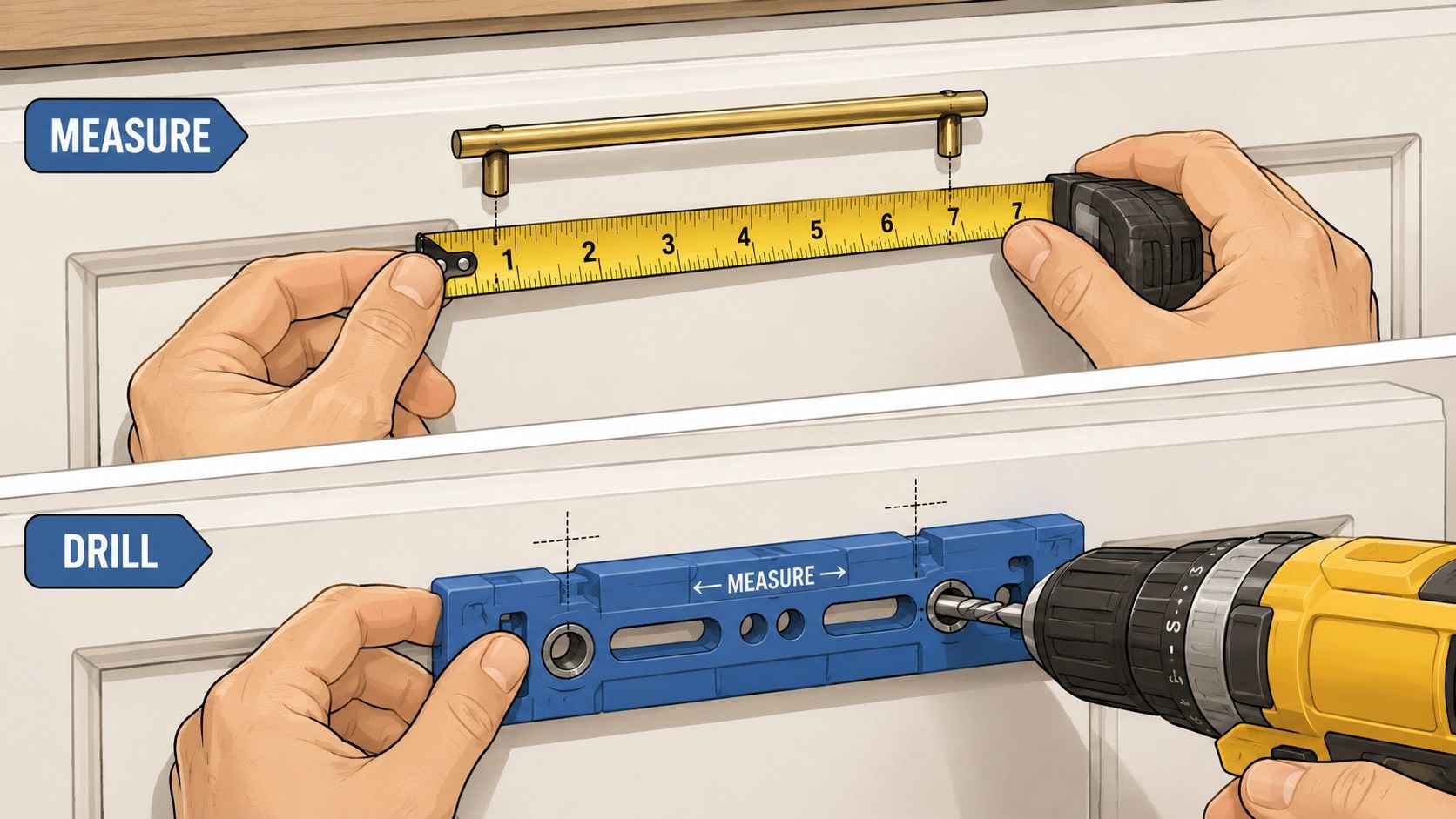
- Remove one old pull at a time. That gives you a live reference for placement.
- Measure every hole spread. Older kitchens often vary more than people expect, especially if doors and drawers were replaced over the years.
- Test one pull on the hardest piece first. Confirm clearance, grip, and coverage before opening every package.
- Use painter's tape and mark with a jig or template. That keeps lines visible and helps prevent chipped finish around the hole.
- Drill with backing behind the panel. A scrap block reduces breakout on the back side.
- Snug the screws by hand for the final turn. That lowers the chance of stripping the screw or crushing a painted drawer front.
A straight line of simple pulls looks custom. Crooked spacing makes even decent hardware look cheap.
Handling old holes without making the project worse
This is the part homeowners often underestimate. Existing hole spreads decide a lot of the project cost.
If the new pull matches the old center-to-center measurement, the job stays simple. If it does not, there are only a few practical options, and each has a trade-off:
- Reuse the existing spread when possible. This is usually the cheapest and cleanest path.
- Use a pull with a wider foot or add a backplate if the old mark needs light coverage.
- Fill and refinish the old holes only when the cabinet finish is easy to match or the visual change is worth the extra work.
- Switch some doors to knobs when one clean hole gives a better result than two patched ones.
For homeowners already repairing drawer boxes or rebuilding worn storage before changing hardware, this article on building drawers for cabinets is a useful reference because drawer construction affects where pulls feel strongest and look most centered.
Budget projects also benefit from treating installation decisions as part of the larger remodel plan. This guide to budget-friendly property makeovers is a good reminder that small finish choices can either protect the budget or inadvertently add rework.
Measure twice, test one pull, then commit. That approach keeps a low-cost cabinet pull upgrade looking intentional instead of improvised.
Money Saving Strategies for Cabinet Pulls
Saving money on cabinet pulls isn't about finding the absolute lowest sticker price. It's about matching the buying method to the project, the room, and the expected wear.
Where budget projects usually save the most
The clearest savings often come from buying in quantity. Bulk cabinet pull packs on Amazon start at $1.50 to $3.00 per unit, which gives homeowners in places like Upstate New York a practical way to update many cabinets at once (bulk budget pull pricing).
That kind of pricing works best when the project needs consistency more than uniqueness. A laundry room, rental kitchen, basement bar, or utility bath often benefits from buying one simple style in volume.
For homeowners trying to keep the whole renovation modest, this guide to budget-friendly property makeovers is useful because it treats hardware as part of a larger cost-control strategy instead of a separate impulse buy.
Comparison of Money-Saving Pull Strategies
| Strategy | Benefit | Estimated Savings per Pull |
|---|---|---|
| Bulk pack purchase | Best for full kitchens and repeated hardware sizes | $1.50 to $3.00 per unit starting range |
| Reuse existing hole spacing | Avoids patching, refinishing, and drilling new holes | Qualitative savings through less labor and fewer materials |
| Refinish old hardware | Keeps the original fit while changing the look | Qualitative savings when the base hardware is still solid |
| Mix premium focal pieces with budget secondary pulls | Lets visible areas carry more style while utility zones stay affordable | Qualitative savings by limiting higher-cost selections |
A smart mix usually beats a single tactic
The best budget result often comes from combining approaches rather than relying on one.
- Use bulk pulls in secondary spaces: Pantry runs, mudrooms, laundry cabinets, and rentals are good candidates.
- Spend effort where fit matters: Reusing old hole spacing can save more than chasing a different design.
- Refresh solid old hardware: If the shape works and the piece feels sturdy, refinishing may be better than replacing.
- Keep furniture in mind too: Homeowners updating built-ins often want nearby wood pieces to coordinate. This guide on how to refinish wood furniture can help create a more unified result.
A bargain only counts when the install lasts and the room still feels pulled together.
Exploring Tip Top's Local Options and Services
Homeowners in Freehold, Albany, Schenectady, Troy, and the surrounding Capital Region often need more than a package of hardware. They need help coordinating cabinets with flooring, furniture, wood finishes, and the overall tone of the room. That's where a local showroom can be more useful than scrolling through isolated product images.
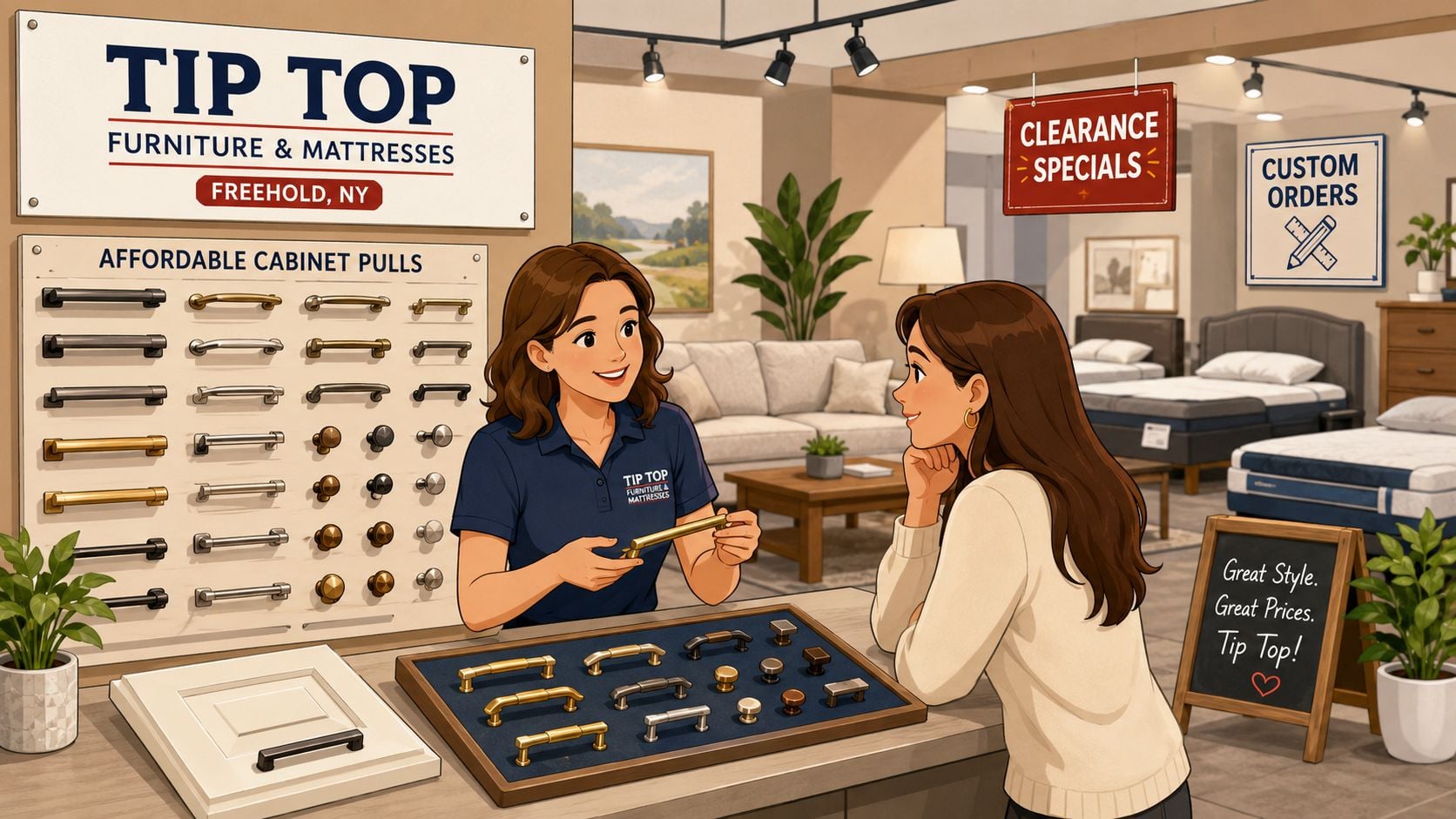
Tip Top Furniture & Mattresses has served the area since 1978, with professional design services available since 1984. That history matters because cabinet hardware rarely lives alone. It has to make sense with nearby case pieces, upholstery, flooring, and the way a family uses the room.
Why local guidance can prevent expensive redo work
A showroom-based approach helps with decisions that online listings don't solve well:
- Finish coordination: Matte, brushed, warm-toned, or cooler metal choices can be compared against wood and fabric in person.
- One-stop planning: Hardware changes often happen alongside furniture, décor, or flooring updates.
- Custom problem solving: Older homes in the Capital Region often need a more specific answer than a standard pack can provide.
For homeowners considering more built-in or heirloom-quality cabinet solutions, this page on custom Amish cabinets shows how custom ordering can help match wood species, finish, scale, and room character.
Services that support a broader room update
Tip Top's appeal isn't limited to furniture shopping. The showroom also offers access to 50+ trusted manufacturers, flexible financing, custom ordering, delivery support, a free online room planner, and a strong clearance selection. That makes it easier to handle a cabinet refresh as part of a larger home project instead of a disconnected purchase.
Some projects need cheap cabinet pulls. Others need a better room plan. The most cost-effective choice is the one that prevents buying twice.
That local, attentive approach is why many homeowners in Greene County and the wider Albany area still prefer working with a family-owned showroom when several room decisions need to come together at once.
Conclusion and Next Steps
Cheap cabinet pulls can absolutely be worth buying. The key is choosing them with the same care given to larger pieces in the room. Good results come from matching the pull to the drawer size, respecting old hole spacing, selecting a finish that suits the wear level, and taking time with the install.
For many homeowners, the biggest mistake isn't buying budget hardware. It's buying hardware that doesn't fit the cabinet, the room, or the project. A simple pull in the right size will outperform a trendier option that forces awkward drilling or feels undersized every day.
That's especially true in older homes around Freehold and across the Greater Albany Capital Region, where retrofit realities matter. A smart upgrade doesn't just look better. It saves time, prevents rework, and makes the room feel complete.
The next step is practical. Measure the existing holes, decide whether the project is a reuse-or-redrill job, and choose a pull style that fits the cabinet's scale. If the room is also getting new furniture, flooring, or storage pieces, it makes sense to plan those decisions together.
Tip Top Furniture & Mattresses has helped homeowners in Freehold, NY and the Greater Albany Capital Region create coordinated, comfortable spaces since 1978. For help tying cabinet updates into a bigger room refresh, visit Tip Top Furniture & Mattresses to explore custom options, flexible financing, clearance values, and local design guidance that makes the whole project easier.