Buying a Pillow: A Practical Guide for Better Sleep


A new mattress can feel like a fresh start, but keeping the old pillow may leave someone waking with a stiff neck, sore shoulders, or a headache. The pillow still determines how the head rests above the new sleep surface, so a mismatch can undermine an otherwise sensible mattress purchase.
Buying a pillow should start with the sleeper, not a brand name or a soft showroom display. Sleep position, shoulder width, mattress firmness, body heat, and material needs all affect the right choice. The global pillows market was estimated at USD 19.91 billion in 2025 and is projected to reach USD 33.43 billion by 2033, with a projected 6.6% CAGR from 2026 to 2033, according to Grand View Research's pillows market analysis. That scale reflects how seriously shoppers now treat comfort, support, and sleep quality.
Start With How You Actually Sleep

The first question is simple: what position does the sleeper use most often? Side sleepers need a pillow that fills the space between the mattress and the neck. Back sleepers need enough support to keep the head from tipping forward. Stomach sleepers generally need a thinner pillow, because too much height pushes the neck backward.
Mixed sleepers need a compromise rather than a pillow designed for only one position. A person who starts on the side and finishes on the back may need an adjustable fill or a medium loft that supports both positions without forcing the neck into either extreme.
Three inputs control the fit
- Sleep position: Side, back, stomach, or a combination determines the starting loft.
- Body size and shoulder width: A shorter, narrow-shouldered side sleeper and a taller, broad-shouldered side sleeper can require different effective heights even on the same mattress.
- Mattress firmness: A softer mattress lets the shoulder sink farther into the surface, reducing the gap the pillow must fill. A firmer mattress keeps the sleeper higher and can call for more loft.
The fit comes from the interaction of those inputs. A broad-shouldered side sleeper on a firm mattress may need a higher pillow than a narrow-shouldered side sleeper on a plush mattress. That's why position alone is an incomplete buying rule.
A quick test for the current pillow
Tonight, lie in the usual position on the actual mattress. A side sleeper should check whether the ear sits roughly over the shoulder instead of angling toward the mattress or ceiling. A back sleeper should make sure the chin isn't being pushed toward the chest, while a stomach sleeper should watch for pressure beneath the jaw.
Hand placement can reveal a gap. If a side sleeper repeatedly slides a hand beneath the pillow or neck, the pillow may be too low. Morning stiffness provides another clue, especially if discomfort eases after getting up or changes when sleeping away from home.
Practical rule: Effective loft is the height that remains under the head after the pillow compresses, not the height printed on the package.
Readers who want another perspective on alignment can review this guide to find the right pillow fit. For persistent neck discomfort, a dedicated cervical pillow for neck pain may be worth testing, but alignment still matters more than a medical-sounding label.
Match Loft, Size, and Fill to Your Sleep Profile
Loft should be selected after considering the sleeper's position, shoulders, and mattress. A useful starting range is under 3 inches for stomach sleepers, 3 to 5 inches for back sleepers, and above 5 inches for many side sleepers, particularly those with broader shoulders. These ranges are consistent with the fit guidance summarized by the Sleep Foundation's pillow research methodology, but the in-bed alignment check remains the final judge.
| Sleep Profile | Loft Range | Best Size | Recommended Fill |
|---|---|---|---|
| Stomach sleeper on a softer mattress | Under 3 inches | Standard | Soft synthetic or compressible down |
| Back sleeper with average shoulder width | 3 to 5 inches | Standard or queen | Latex, memory foam, or supportive synthetic |
| Side sleeper with average shoulder width | 3 to 5 inches | Queen | Adjustable foam, latex, or resilient synthetic |
| Broad-shouldered side sleeper on a firm mattress | Above 5 inches | Queen or king | Dense foam, latex, or adjustable fill |
| Combination sleeper | Adjustable medium range | Queen | Shredded foam, latex, or adjustable synthetic |
Choose the size for the way the bed is used
A standard pillow works well for a compact sleeping setup and suits sleepers who stay centered. A queen pillow gives more room for turning and often fits a partnered bed without crowding the sleeper. A king pillow makes sense for people who move widely during the night, have broader shoulders, or want a longer surface across a large mattress.
Size doesn't correct a poor loft. A king pillow that collapses too far can still leave a side sleeper unsupported, while a standard pillow with the right effective height can keep the neck aligned.
Understand the main fill families
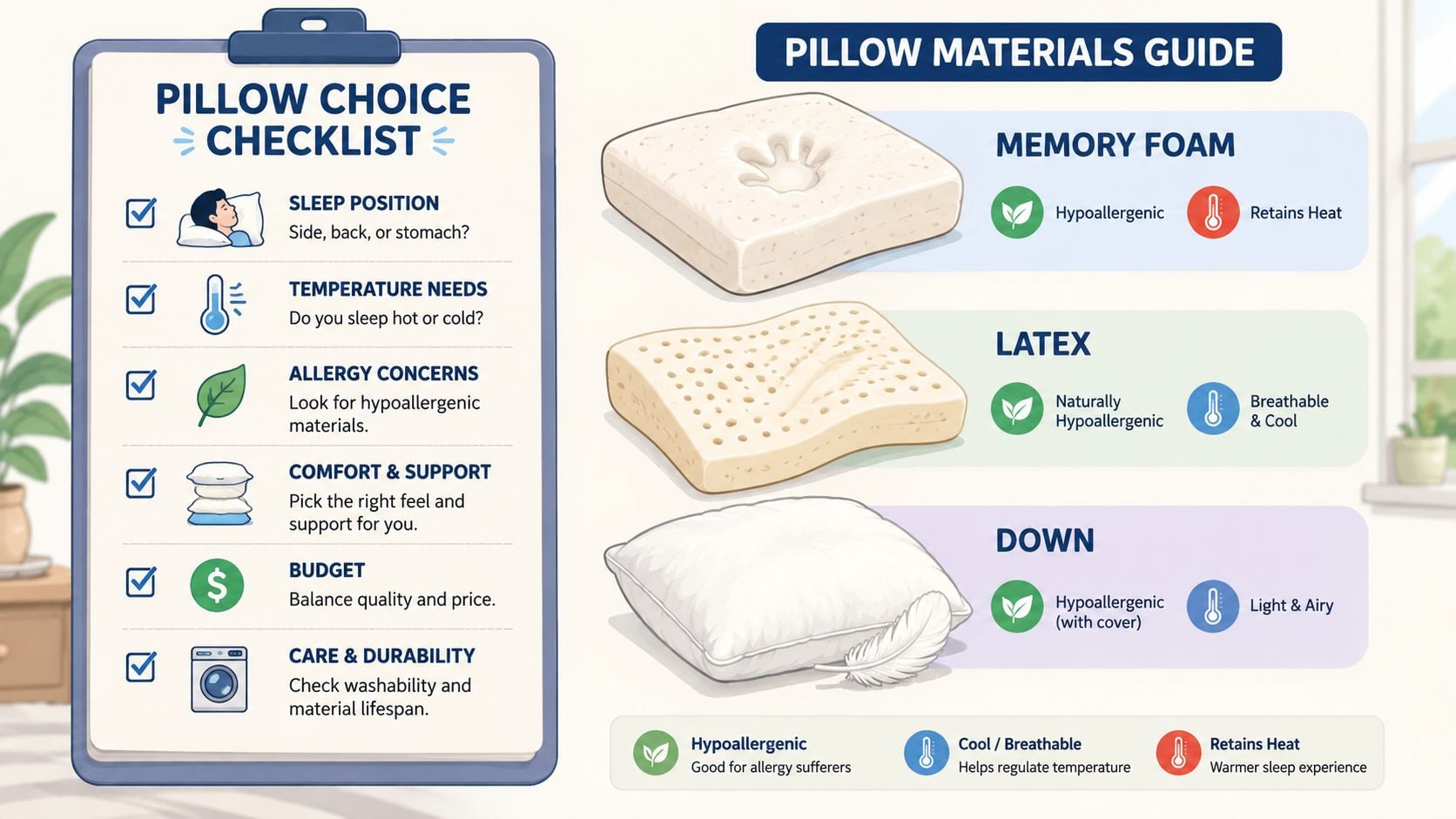
Down and feather feel soft, moldable, and easy to reshape. They suit sleepers who like a pliable pillow and don't need a rigid contour. Their support changes as the fill shifts, and heat and allergy preferences should be considered carefully.
Memory foam and latex provide more consistent structure. Memory foam conforms closely and can hold the head in place, while latex generally feels more buoyant and responsive. Both can deliver durable support, but a solid core may feel warmer or less adjustable than a loose fill.
Synthetic and poly-blend fills cover a wide range, from soft down-alternatives to firmer supportive constructions. They're often practical for households that prioritize washable care, predictable pricing, or allergy-conscious maintenance. Their feel depends heavily on fiber quality and construction, so the label alone isn't enough.
Fill and loft work together. A thin foam pillow won't feel like a thick foam pillow, and a high-loft synthetic pillow may compress more than its package suggests. Shoppers interested specifically in a thinner option can also review pillows for stomach sleepers before testing candidates in person.
Choose Materials for Allergies and Temperature
Marketing terms such as hypoallergenic and cooling need translation. Before buying a pillow, the shopper should ask what the cover and fill do, how they're cleaned, and which problem they're intended to address.
Separate the allergy concerns
Dust mite allergens, mold, and latex protein are different concerns. A tightly woven, zippered encasement can create a stronger barrier against dust mite exposure than a loose outer cover. Washable synthetic fills are practical because regular laundering is easier, while treated down may address some household concerns without offering the same cleaning simplicity.
Natural latex can be useful for shoppers seeking a resilient, supportive core, but anyone with a known latex sensitivity should ask about the material before purchase. A vague claim on the package shouldn't replace a direct question about the core, cover, and cleaning instructions.
The bedding fabric types guide can help shoppers compare cover construction and texture. For a broader look at how fabrics differ, readers can also review this resource on pillow fabric types compared.
Decode cooling claims
“Cooling” may refer to a phase-change cover, gel-infused foam, a ventilated core, or a moisture-wicking fabric. Those features don't all address heat in the same way. A breathable cover can improve surface comfort, while an enclosed dense foam core may still retain warmth for some sleepers.
Hot sleepers should ask:
- Is the cover removable? A washable cover can manage sweat and odor better than spot cleaning.
- Does air move through the core? Ventilation matters more than a decorative cooling label.
- What does the material feel like under pressure? A pillow can feel cool initially and warm later.
- Is the cooling feature washable or permanent? Care instructions reveal whether the feature is practical.
For asthma or confirmed dust mite sensitivity, a fully washable synthetic or latex core inside a mite-resistant cover is the sensible default. A mild seasonal sniffer can often choose treated down or a washable down-alternative, provided the cover and care instructions meet household needs.
Test Pillows the Right Way in the Showroom
A pillow that feels pleasant for half a minute on a shelf can fail at two in the morning. The meaningful test happens while lying in the normal sleep position, on a display bed that resembles the mattress at home.
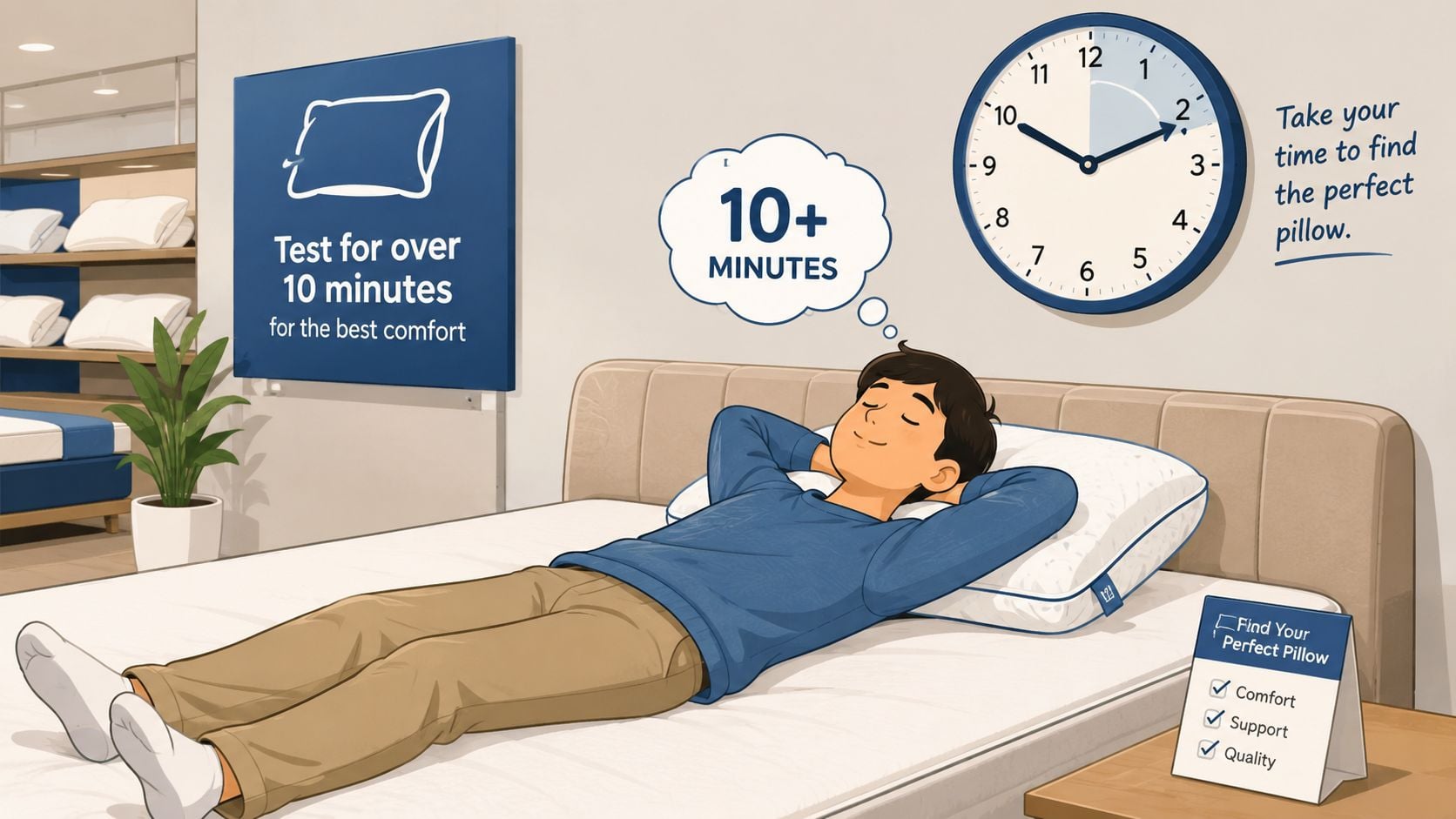
Consumer testing guidance recommends spending at least 10 minutes on each mattress in-store and checking back, side, stomach, edge, and motion support before buying, as outlined in the Consumer Reports mattress buying guide. The same patience makes sense when testing a pillow.
Use a proper showroom trial
- Bring the home details. A mattress model, firmness description, or a clear photo of the mattress tag can help staff select a comparable display bed.
- Lie down normally. Don't prop the head artificially or remain seated. Let the pillow carry the head as it will at night.
- Stay in position for the full trial. Early softness can change as the fill settles and the neck relaxes.
- Compare two finalists. Switching directly between them makes differences in height, pressure, and heat easier to identify.
- Record the details. Write down the make, fill, cover, and loft before leaving.
The alignment check should cover the ears over the shoulders, a relaxed shoulder line, and a neutral chin. Side sleepers should feel the neck supported without a hollow behind it. Stomach sleepers should avoid pressure under the jaw, while back sleepers should avoid a forced tuck.
A personal pillowcase can make the test more honest, especially for shoppers sensitive to fabric feel or heat. Staff can also swap lofts or fills while the sleeper remains on the bed. The mattress itself matters, so the mattress shopping guide belongs in the same decision process.
Evaluate Care, Longevity, and Return Policies
The true cost of a pillow isn't just the price at checkout. It's the cost of maintaining clean, supportive sleep over the pillow's useful life. A removable, fully machine-washable cover generally deserves preference over a pillow that can only be spot-cleaned, particularly in a warm or allergy-sensitive household.
Read the care label for the fill, not just the cover. Shredded memory foam usually can't be washed, while many synthetic fills and some down constructions require specific washing and drying methods. A separate protector adds another washable layer and can reduce the need to clean the inner pillow.
| Fill Type | Care Method | Typical Lifespan | Return/Warranty Notes |
|---|---|---|---|
| Down and feather | Fluff regularly and follow specialty cleaning instructions | Can last longer with careful maintenance | Check whether comfort returns are allowed after use |
| Memory foam | Wash the cover, protect the non-washable core | Often outlasts basic polyfill | Confirm trial conditions and whether impressions are covered |
| Shredded foam | Wash the cover and spot-clean the fill container | Often lasts longer than basic fiber fill | Ask whether fill adjustments or exchanges are permitted |
| Latex | Wash the cover and protect the core from moisture | Typically durable with proper care | Check coverage for material breakdown and return restrictions |
| Synthetic or poly-blend | Many versions allow washable care | Often shorter-lived than durable foam or latex | A clear exchange policy matters when loft changes after use |
Read the policy line by line
A useful return policy states the window, whether a minimum number of nights applies, and whether a comfort exchange is available. The warranty should also explain whether coverage is full or prorated. Prorated means the customer may pay part of the replacement cost based on the product's age rather than receiving a full replacement.
The return process itself is revealing. If the retailer explains the policy plainly and identifies what happens after the pillow has been opened, the shopper can make a more informed decision. For related bedroom care guidance, see these mattress maintenance and cleaning tips.
Local Tips for Buying at Our Freehold Showroom
For shoppers in Albany, Schenectady, Troy, Greene County, and the wider Capital Region, a guided pillow trial at the Freehold, NY showroom is more useful than guessing from a screen. The store has served local homeowners since 1978, and its professional design services have been available since 1984. That combination supports a practical, room-aware approach to sleep and furnishing decisions.

Bring the information that changes the recommendation
A shopper doesn't need to carry a mattress into the showroom, but the useful details should come along:
- Mattress identity: Bring the brand and model, or photograph the tag showing those details and the firmness information.
- Sleep pattern: Explain whether the sleeper is mainly on the side, back, stomach, or a combination.
- Body geometry: Mention broad shoulders, a narrow frame, or a noticeable gap between the neck and mattress.
- Comfort concerns: Describe neck or shoulder pain, pressure points, and whether heat disrupts sleep.
- Trial clothes: Wear comfortable clothing that makes it easy to lie down naturally.
Allow about thirty minutes for a careful comparison. The shopper should ask for the bed-matching system, then test two or three finalists side by side on a display surface selected to resemble the home mattress.
A sample pillowcase can help assess surface feel and temperature more accurately. The showroom can also discuss USA-made mattresses and sleep accessories, more than 50 trusted manufacturers, custom ordering for unusual sizes or lofts, and the Clearance Corner, where last-season models may offer immediate availability and full warranties.
Tip Top Furniture & Mattresses also provides furniture, décor, flooring, and custom options, creating the one-stop shopping convenience that helps families coordinate a bedroom project rather than treating the pillow as an isolated purchase. Flexible financing may be available on qualifying purchases, including Synchrony HOME promotions that can include no-interest financing for 6 months on purchases from $299 to $1,998.99, 12 months on purchases of $1,999 or more, and promotional financing of up to 60 months at some participating retailers, as described by Synchrony HOME financing information. Terms should be confirmed before purchase.
Call ahead so a sleep specialist is available to walk the floor with the shopper.
Putting It All Together and Replacing on Schedule
A sensible pillow decision follows a short sequence:
- Identify the dominant sleep position.
- Account for shoulder width and body size.
- Adjust loft for mattress firmness.
- Select fill based on support, heat, allergies, and care.
- Test the finalists lying down on a comparable mattress.
- Record the exact model, loft, fill, and policy.
Replacement should follow condition rather than habit alone. Permanent yellowing, odors that remain after laundering, visible clumping, and lost loft all point to a tired pillow. Neck or shoulder pain that disappears during travel is another strong clue. New overnight snoring after recovering from an illness or injury deserves attention, especially if the pillow changes the head position.
A practical baseline is 18 to 36 months for down-alternative and memory foam, 24 to 48 months for shredded foam and latex, and up to five years for high-quality down with regular fluffing. These are useful planning ranges, not guarantees. Mark the purchase date, rotate between two pillows so one can air out, and replace the protective cover annually.
Readers comparing coordinated bedding can also review these materials for pillow and blanket sets. The next step should be a real trial before neck pain makes the decision.
Tip Top Furniture & Mattresses offers guided pillow and mattress matching at its family-owned Freehold, NY showroom, serving Albany, Schenectady, Troy, Greene County, and the surrounding Capital Region. Bring the mattress details and book a side-by-side trial, then visit Tip Top Furniture & Mattresses to explore sleep accessories, USA-made mattresses, custom options, clearance values, financing, furniture, décor, and flooring in one place.