Best Carpet for High Traffic: Durable Choices for 2026


The giveaway is usually the traffic lane. It runs from the front door to the kitchen, across the family room, and up the stairs. In Albany-area homes, that path takes a beating from wet boots, road salt, pets, kids, and the steady rhythm of everyday life.
A lot of people don't replace carpet because they want something fancy. They replace it because the old one stopped working. It matted down, showed every footprint, and never looked fully clean again no matter how often it got vacuumed.
That's where smart carpet selection matters. If you're shopping for the best carpet for high traffic, you need more than a color sample and a soft sales pitch. You need to know which fibers hold up, which constructions resist crushing, and where it makes sense to spend more for a better long-term result in a Capital Region home.
Your Guide to Choosing the Best Carpet for High Traffic
Busy homes leave clues. You see them in the hallway that looks older than the rest of the house, in the stairs that wear out first, and in the family room where the carpet starts to flatten long before the room's furniture does.
That's common in Upstate New York. Snow, mud, and grit don't stay at the door for long. They get carried into the spots your family uses every day, and those spots expose weak carpet fast.
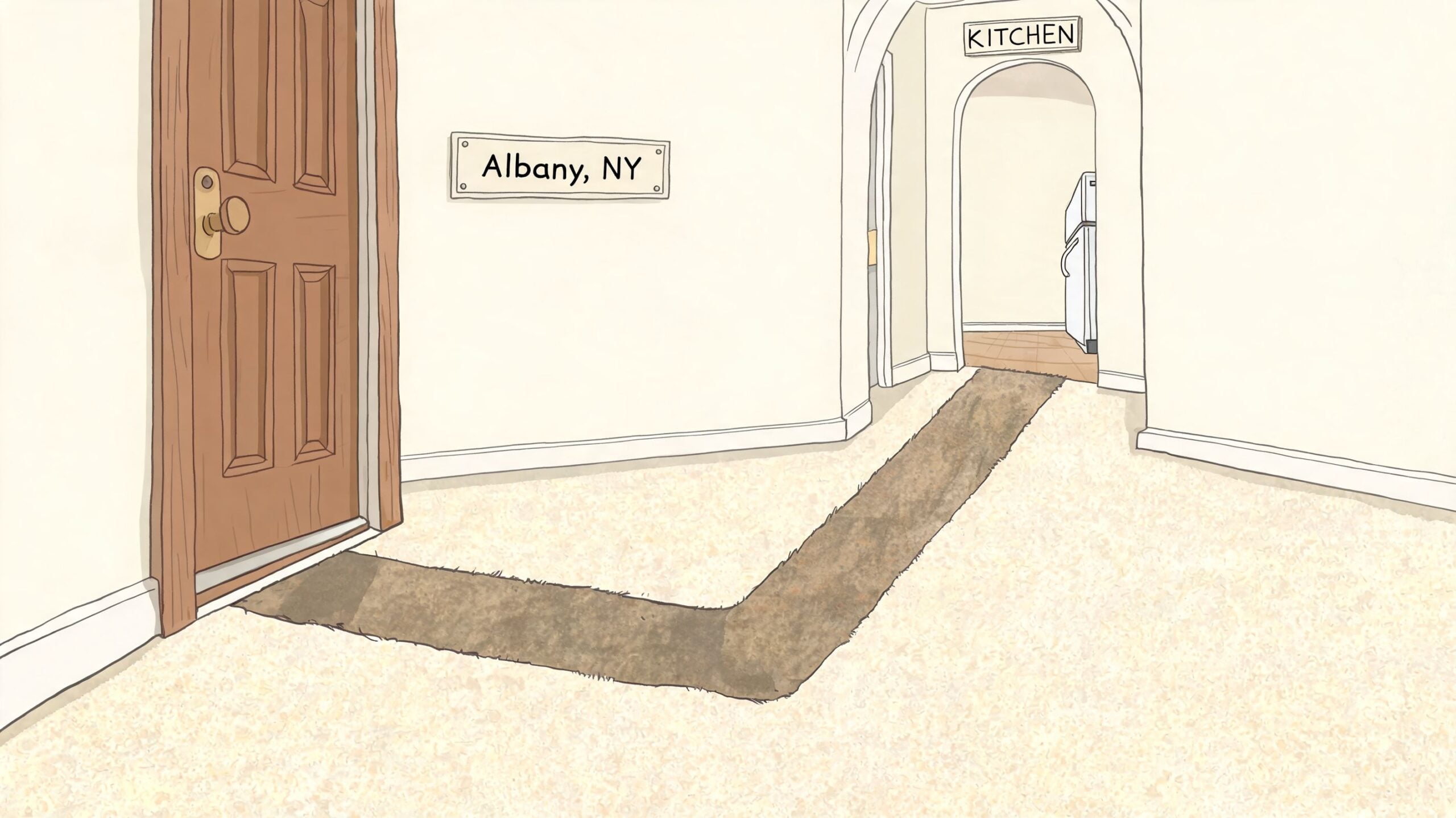
For homeowners around Albany, Schenectady, Troy, Greene County, and the surrounding towns, the right answer usually isn't the plushest carpet on the rack. It's the carpet that still looks good after real use. That means paying attention to fiber, pile, density, and where the carpet is going in the house.
Why this choice gets expensive when it's made wrong
A carpet can look great in a sample and still be a poor fit for a main hallway or stair runner area. That's one of the biggest mistakes homeowners make. They buy for softness first, then discover that softness and durability aren't always the same thing.
Practical rule: In a high-traffic area, carpet has to recover from pressure over and over again. If it can't, you'll see the wear pattern early.
Another mistake is treating every room the same. A bedroom can tolerate a different feel and construction than a front hall or family room. If you want a broader look at room-by-room options, high-traffic flooring choices for Albany homes can help you compare carpet with other surfaces.
What actually works in real homes
The best results usually come from matching the carpet to the way the room is used, not just to the paint color. For a household that entertains often, has children, or deals with pets and winter mess, practical features matter most:
- Resilient fiber that springs back instead of staying crushed
- Lower, tighter construction that doesn't show traffic lanes as quickly
- A forgiving color or pattern that hides daily use
- A realistic maintenance plan that keeps grit from grinding into the face of the carpet
That's the difference between carpet that looks nice on installation day and carpet that still earns its keep years later.
What Really Makes a Carpet Durable
Most carpet problems trace back to one thing. The buyer focused on surface feel and ignored construction.
Softness matters, but durability comes from what's underneath that first impression. If you want the best carpet for high traffic, look at four parts together: fiber type, pile construction, density, and backing. When those elements line up, the carpet has a much better chance of holding its shape in an active Albany-area household.
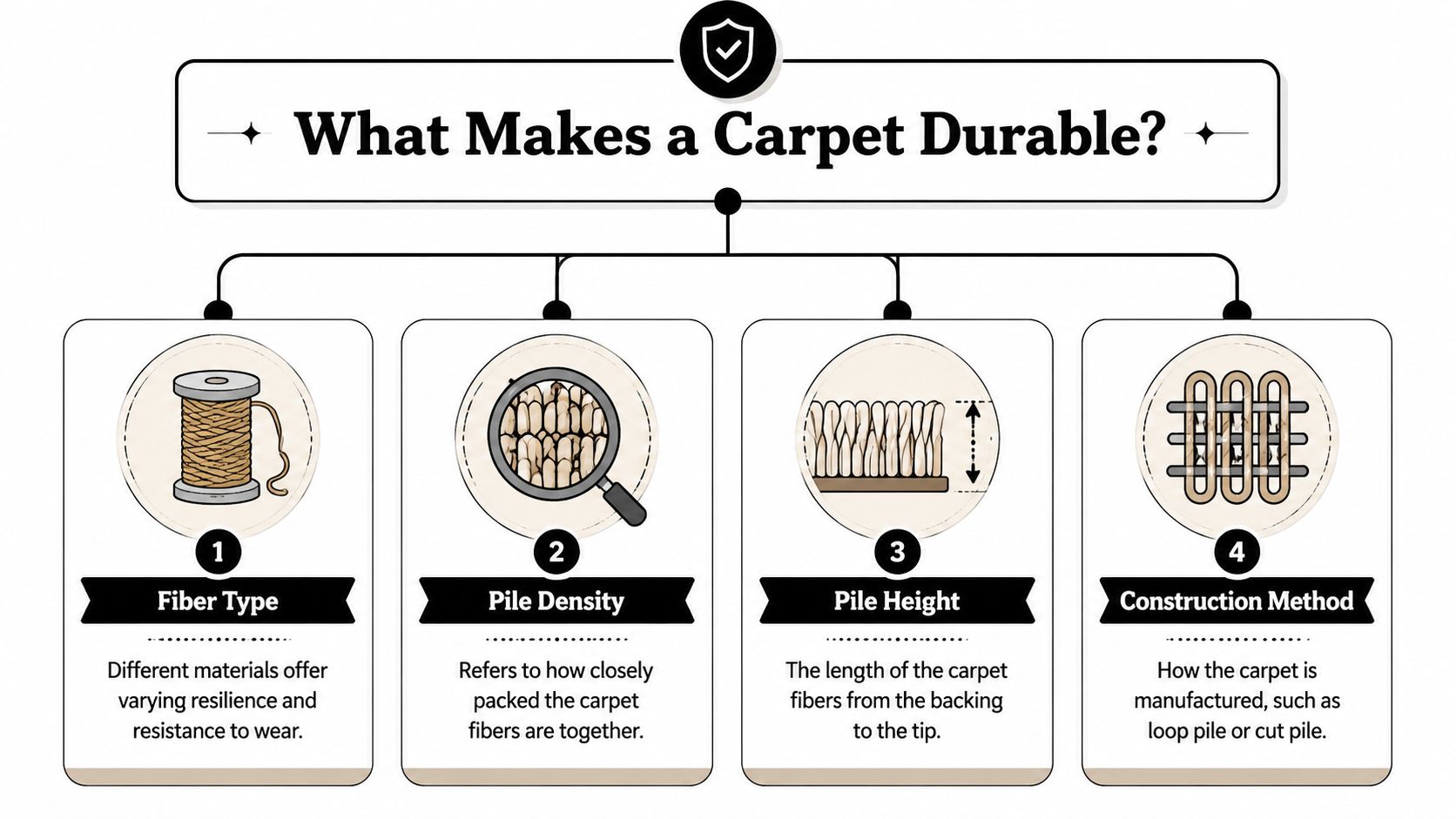
Fiber is the starting point
Fiber determines how the carpet responds to pressure, abrasion, and spills. Some fibers bounce back better. Others look good initially but lose their shape sooner in hard-used rooms.
That's why material can't be an afterthought. If the carpet is going in a main circulation path, the fiber has to do real work every day.
Pile construction changes how the carpet wears
Pile is the visible surface of the carpet. Homeowners often get tripped up at this stage, because plush styles can feel luxurious in the showroom.
In high-traffic areas, loop-pile and berber carpets outperform plush pile varieties in wear resistance, and flooring professionals also recommend hybrid constructions that combine cut fiber and loop elements because they resist matting while still offering visual appeal, according to this high-traffic carpet construction guidance.
A simple way to think about it is this:
- Low, tight loops act like a dense, compact surface. They don't collapse as easily.
- Tall, open plush fibers have more room to bend, lean, and stay flattened.
- Cut-and-loop styles can be a smart middle ground when you want durability without a strictly commercial look.
A hallway carpet doesn't fail because people walk on it. It fails because the construction can't recover after repeated pressure.
Density matters more than many shoppers realize
Density is how closely packed the yarns are. A carpet with tighter stitching gives the fibers support. They brace each other during foot traffic instead of folding over one by one.
Two carpets can look similar from a few feet away but perform very differently over time. A looser carpet often shows wear sooner, especially on stairs and in family rooms.
If you're comparing options in person, don't just run your hand across the top. Bend the sample and look at how tightly the yarns are set. For a broader primer on surface choices, textures, and room fit, flooring types and their pros and cons is a useful place to continue.
Backing supports the whole system
Backing doesn't get much attention because you don't see it once the carpet is installed. It still matters. The backing helps the carpet hold structure, stay stable, and perform properly with the cushion underneath.
Backing alone won't rescue a poor fiber or weak construction. But a well-built carpet is a system, not just a face yarn. The strongest results come when the visible surface and the hidden support layers are selected to work together.
Choosing the Best Carpet Material for Your Home
Material is where the decision gets practical fast. If two carpets look similar on the shelf, fiber often explains why one is a better fit for a busy home than the other.
For high-traffic residential use, the usual conversation comes down to nylon, triexta, wool, polyester, and polypropylene. Each has a place. The trick is matching the material to the room, the household, and your tolerance for maintenance.
Nylon is the performance pick
If you want the shortest answer to “what's the best carpet for high traffic,” nylon is usually it.
Nylon remains the gold standard for high-traffic residential and commercial applications and is consistently ranked by flooring professionals as the most durable synthetic fiber available. Those same professionals note that nylon resists matting and wear significantly longer than polyester, according to this guide to carpet for high-traffic areas.
In plain terms, nylon is the fiber people choose when they're tired of replacing carpet that gives up too early. It handles active households well, and it's a strong fit for hallways, stairs, living rooms, and homes with kids or pets.
Triexta, wool, polyester, and polypropylene each solve different problems
Triexta is often considered when stain resistance is a major concern. Wool appeals to homeowners who want a natural fiber with a refined look and feel. Polyester and polypropylene can make sense in lighter-use or budget-sensitive situations, but they aren't usually the first recommendation for the busiest parts of the house.
The trade-off is straightforward. Some fibers give you stronger wear performance. Others lower initial cost or offer a different look and feel. What matters is using the right one in the right room instead of expecting one carpet to do everything equally well.
| Fiber Type | Durability Rating | Stain Resistance | Typical Cost | Best For |
|---|---|---|---|---|
| Nylon | Most durable synthetic for high traffic | Naturally repels stains when properly treated | Higher than budget synthetics | Hallways, stairs, family rooms, busy homes |
| Triexta | Strong residential performance | Engineered specifically for stain resistance | Mid to upper range | Homes focused on spill resistance |
| Wool | Resilient natural fiber | Varies with care needs | Premium | Bedrooms, formal spaces, homeowners wanting natural materials |
| Polyester | Suitable for moderate traffic | Good fit where softness/value matter | Budget-friendly to mid range | Lower-traffic rooms, budget-conscious projects |
| Polypropylene | Suitable for moderate traffic | Practical in some settings | Budget-oriented | Select lower-demand spaces |
A better way to decide
Start with how the room is used. A stairway and upstairs hall need a different material choice than a guest bedroom. If you're trying to balance feel and function in private rooms, how to choose carpet for bedrooms can help narrow that down.
Here's the no-nonsense version:
- Choose nylon when durability is the priority.
- Choose triexta when stain concerns drive the decision.
- Choose wool when natural fiber and appearance matter more than a value-first approach.
- Choose polyester or polypropylene carefully, and mostly where traffic is moderate rather than constant.
If you have one shot to carpet a busy part of the house and don't want regrets, lean toward the fiber built for repeated use, not the one that just feels soft under fluorescent showroom lights.
Homeowners in the Capital Region often ask for one carpet that works everywhere. That can happen, but only if you accept compromise. In many homes, the smarter move is to prioritize the hardest-working areas first and make sure those spaces get the material that can handle them.
Matching Carpet to Your Albany Area Room and Budget
Room use changes everything. The carpet that works beautifully in a primary bedroom can be the wrong choice for a front hall that sees snow, slush, and a steady stream of foot traffic through most of the year.
That's especially true in the Greater Albany Capital Region, where seasonal mess isn't theoretical. It gets tracked in, ground down, and repeated.

Where to spend more
Some rooms punish carpet harder than others. Those are the places where cutting corners usually backfires.
- Hallways and stairs: Go low pile, dense construction, and practical color. These areas show crushing first.
- Living rooms and family rooms: Balance comfort with recovery. You still want a carpet that can handle repeated use around seating areas.
- Bedrooms: You can shift a bit more toward feel, especially in lower-traffic rooms.
- Finished basements or secondary spaces: Budget options may make more sense if traffic is lighter and expectations are realistic.
Medium-tone and multi-toned carpets are often the safer choice for Albany homes. They're practical, especially when winter grit and everyday soil are part of life. A solid very-light carpet can look sharp for a while, but it usually asks more of the homeowner than most families want to give.
What budget really means with carpet
Budget isn't only the purchase price. It's also how long the carpet stays acceptable in the room you installed it in.
A cheaper carpet in a high-traffic area can become expensive if it needs replacing sooner or starts looking tired long before the rest of the room does. For that reason, it helps to compare total project expectations, including padding, installation, and room use. If you want outside context on pricing ranges, this overview of average carpet installation costs is a useful planning reference.
Local reality: In an Upstate New York entry sequence, color and pattern do part of the maintenance job for you by hiding the daily evidence of weather and traffic.
When carpet may not be the right answer
Some homes need a mixed-flooring plan. A front entry, mudroom approach, or heavily used dining area may perform better with a hard-surface product, while adjacent living spaces stay softer and quieter with carpet.
That's often the most practical path. Instead of forcing one flooring type into every room, compare where each material works best. If you're weighing those choices, carpet versus hardwood flooring is a helpful side-by-side read.
For homeowners trying to stretch a project without settling for the wrong carpet, financing can also make the better-grade option easier to choose now rather than replacing a weaker product later.
Protecting Your Investment Stain Resistance and Maintenance
A durable carpet still needs help. The biggest enemy isn't always the visible stain. It's the grit buried deep in the pile that keeps grinding away at the fibers every time someone walks across the room.
That's why maintenance matters as much as material selection. Good carpet care isn't complicated, but it does need to be consistent.
The maintenance routine that actually works
For high-traffic carpet, vacuuming 2-3 times weekly, cleaning spots immediately, and scheduling annual professional deep cleaning can extend carpet life by a decade or more, according to this high-traffic carpet maintenance guidance.
That routine works because each part solves a different problem:
- Frequent vacuuming removes grit before it settles in and starts abrading the fibers.
- Immediate spot cleaning keeps spills from becoming permanent problems.
- Professional deep cleaning pulls out what household cleaning can leave behind.
If you want a practical outside guide on cleanup methods, this article on how to tackle carpet spills like a pro gives homeowners a useful starting point for common accidents.
Stain resistance isn't all the same
Some carpets rely on factory-applied protection. Others are chosen because the fiber itself handles staining more effectively. That's worth asking about when you shop, because the answer affects both upkeep and expectations.
A protected carpet still isn't a free pass. Spills left sitting too long are harder on any surface. The homeowners who stay happiest with carpet are usually the ones who treat accidents quickly and don't let traffic soil build up week after week.
Fast action beats strong chemicals. Blot first, use the manufacturer's guidance, and don't scrub the life out of the pile.
Simple habits that save carpet
Use entry mats. Take shoes off when possible. Keep a decent vacuum in service. None of that is glamorous, but it's what preserves appearance.
If the carpet is installed in the busiest parts of the house, maintenance isn't optional. It's part of the purchase.
The Tip Top Advantage Local Expertise for Your Flooring Project
Choosing carpet gets easier when you can compare samples in person, put your hand on different constructions, and talk through how the room is actually used. That's where local guidance helps. A photo online can't tell you whether a carpet will feel right underfoot or whether its pattern will work with the rest of the house.
For homeowners shopping from Albany, Schenectady, Troy, Greene County, and nearby communities, the Freehold showroom gives you a place to look at flooring as part of the whole room rather than as an isolated purchase.
Why coordinated planning matters
Flooring doesn't live by itself. It has to work with the sofa, the dining set, the wall color, the stair rail, and the light that hits the room at different times of day.
That's why some homeowners prefer to approach the project with a design plan instead of choosing carpet in a vacuum. Interior design consultation services can help tie flooring decisions to furniture, window treatments, and the broader look of the home.
This is also where a one-stop-shop model makes practical sense. Tip Top Furniture & Mattresses serves as one option for homeowners who want to coordinate flooring with furniture and décor in the same project, including access to custom ordering and a broad mix of home furnishings from a family-owned showroom in Freehold.
What local shoppers usually need help with
In real conversations, most homeowners aren't asking abstract design questions. They're trying to solve practical ones:
- Will this carpet show salt and dirt by February?
- Is this soft because it's good, or soft because it's loosely built?
- Can I match new flooring to existing furniture, or should I update both together?
- Should I custom order key pieces, or look for a quicker in-stock solution?
Those are the useful questions. They lead to better decisions than asking which sample feels nicest in a small swatch.
For some homes, custom furniture can be part of the refresh, especially when new flooring changes the whole tone of the room. For others, immediate-value shopping matters more, and browsing clearance inventory can make sense. If garment care is also part of a whole-home freshen-up before gatherings or seasonal changes, services like dry cleaning can fit into that broader prep work.
Good flooring choices come from seeing the room as a system. Traffic, furniture scale, color, maintenance habits, and budget all have to agree.
The biggest advantage of working locally is simple. You can ask better questions, compare real materials, and make a decision that fits the way your household lives.
If you're ready to find the right carpet for a busy Albany-area home, visit Tip Top Furniture & Mattresses in Freehold, NY to compare options in person and get practical guidance on flooring, furniture, and whole-room coordination. If you're planning a larger update, ask about design help, custom order options, flexible financing, and clearance pieces that can help bring the project together.