
How to Set Dining Table for Every Occasion Made Simple


The guests are due soon, the dining table is cleared, and a collection of forks, knives, glasses, and plates is waiting for direction. The good news is that how to set a dining table becomes much easier once the layout is treated as a practical system rather than a test of memorized etiquette.
A comfortable table tells guests where to sit, what to use first, and where to find a drink or piece of bread. The same principles work for a weeknight meal in Albany, a holiday gathering in Troy, or a relaxed dinner at a Freehold home. The setting can be simple or layered, but it should always support the meal.
Why a Well Set Table Still Matters Today
A family in the Greater Albany Capital Region might serve soup, salad, a main course, and dessert at one gathering, then order takeout for the next. In both situations, a thoughtful table helps the evening feel organized. Guests spend less time asking which fork belongs to which course, while the host can focus on food and conversation instead of correcting a crowded arrangement.
Modern place-setting rules grew from changes in formal dining rather than from an ancient universal custom. One historical account explains that the traditional table setting is only about 200 years old and was first associated mainly with wealthy households, as described in this history of table setting from House & Garden. Familiar traditions also developed during the 1860s and 1870s, when service à la russe, with dishes served course by course, replaced service à la française, where many dishes were placed on the table at the same time.
That history explains the central rule: utensils are arranged from the outside inward, in the order guests will use them. The arrangement isn't arbitrary. It reflects how food reaches the table and gives every diner a quiet visual guide.
Etiquette should serve the meal
Earlier dining customs looked very different. Historical descriptions note that medieval households had no forks, diners often brought their own knives and spoons, and napkins weren't standard. Individual cloth napkins became more common by the Renaissance and the 1700s, while flowers and candelabras became expected at finer gatherings by the 1800s, according to the Plainsman Museum's account of formal table setting.
The lesson for today's host is simple. A formal setting is a useful framework, not a rigid performance. A compact table with comfortable chairs may need a restrained arrangement, while a large solid-wood dining table can carry more visual detail without feeling crowded.
Before choosing tableware, the household should consider the room, the seating plan, and the meal itself. Helpful planning ideas appear in this guide to designing a dining room, while a broader look at table styles can help a host compare shapes and proportions through a Futonland table catalog.
The Spacing and Alignment Rules Every Host Should Know
Good table setting starts with the space between people. Plates and flatware can be beautiful, but guests won't feel comfortable if elbows collide or glasses sit too close to the table's edge.
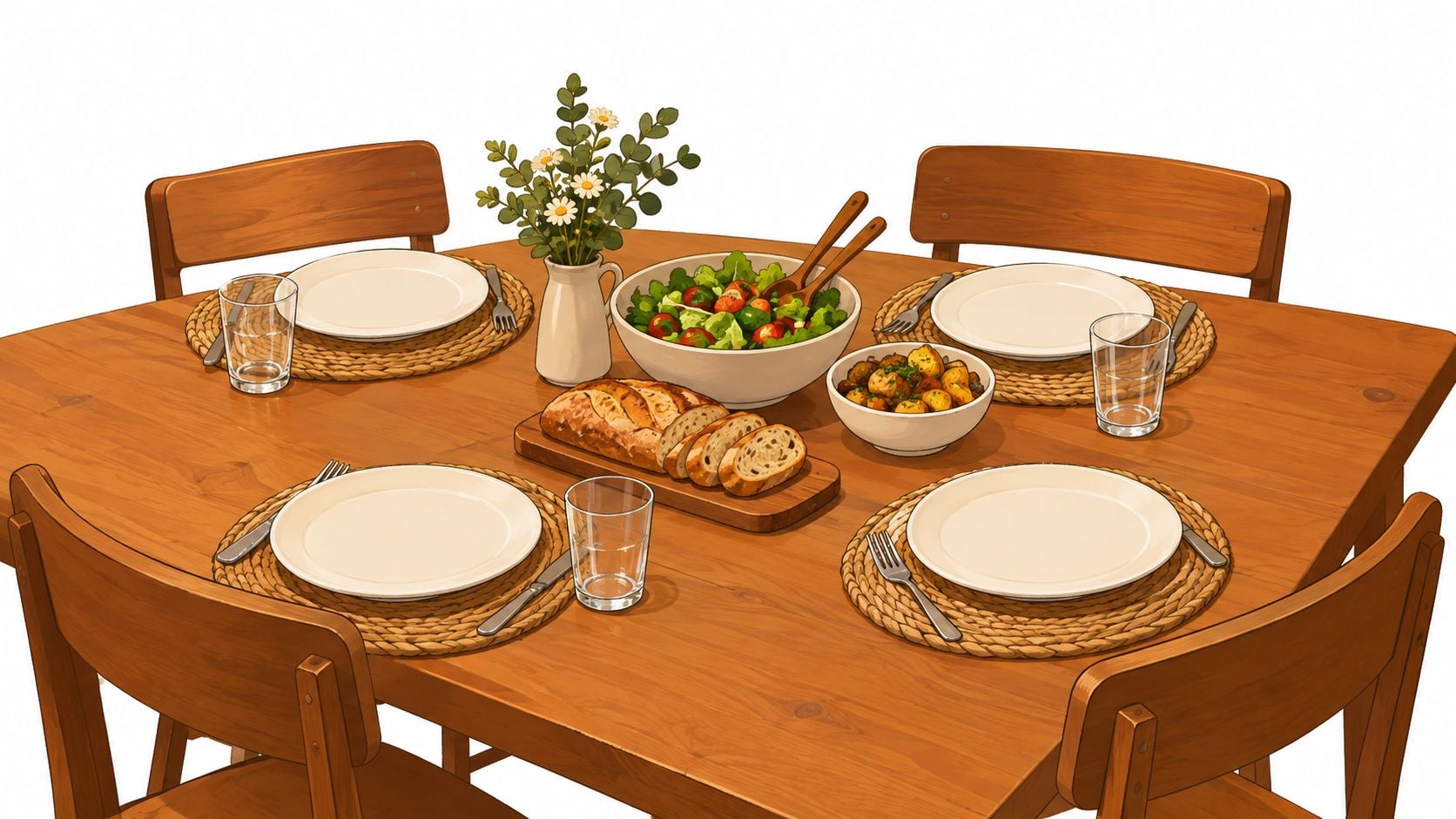
Plan for about 24 inches of table width per place setting, with at least 15 inches of elbow room between adjacent settings, according to ChefIn and Etiquette Scholar. The larger measurement works as a center-to-center planning guide, while the smaller figure acts as a minimum clearance threshold.
Establish one reference place
A reliable setup process looks like this:
- Mark the guest positions. Use chairs, placemats, or the table's natural shape to establish equal intervals.
- Place the plate. Keep it roughly 1 inch from the table edge, a placement recommended by ChefIn.
- Build one complete setting. Add the flatware, glassware, napkin, and any bread plate before copying the arrangement.
- Duplicate the reference place. Move around the table at equal intervals instead of setting each guest independently.
- Align the utensil bottoms. A shared baseline creates order and prevents cutlery from appearing to drift around the plate.
The plate should sit comfortably in front of the chair, not too near one neighbor and not so close to the edge that a guest must pull it inward. Utensils generally sit about 1 inch from the plate, according to Etiquette Scholar. Depending on the table size and the number of pieces, guidance allows roughly 0.5 to 1.5 inches between the plate and utensils, as summarized by The Spruce.
Avoid the common crowding errors
A table becomes awkward when settings are compressed below the elbow-room minimum, utensils overhang the table, or glassware blocks a diner's hand. Misaligned place settings also make an otherwise attractive table look accidental.
Practical rule: Set one place perfectly, then copy it. Equal spacing is easier to achieve through duplication than through repeated guesswork.
A compact Amish-made table, an extension table, and a round dining table may require different visual arrangements, but the same foundation applies. Comfort comes before decoration.
How to Set a Casual Dining Table for Everyday Meals
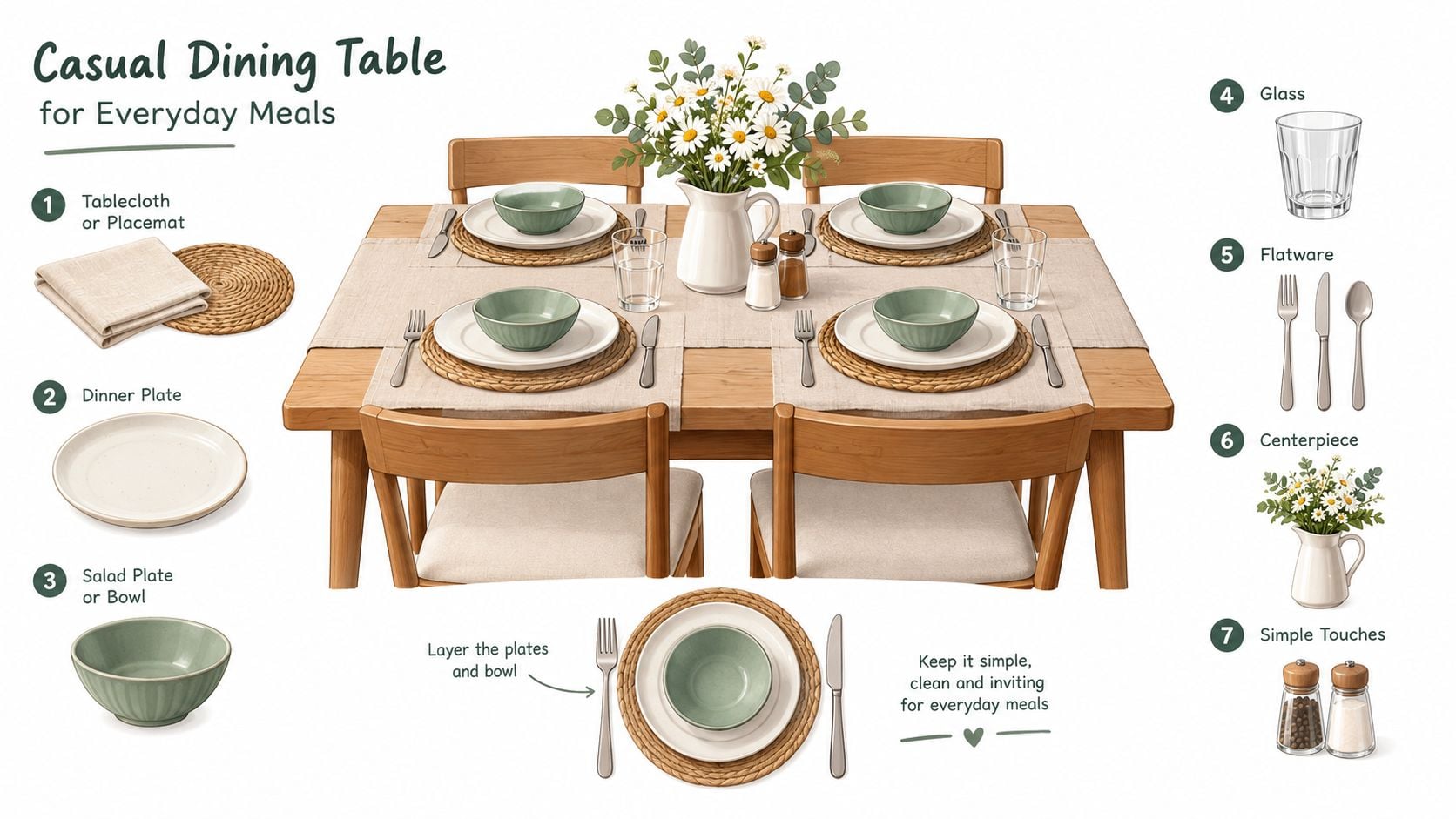
A casual table needs only the pieces the meal requires. For a typical dinner, place the dinner plate in front of each chair, set the fork to the left, and put the knife and spoon to the right. The knife blade faces inward toward the plate, as recommended by Wayfair's place-setting diagram.
The water glass belongs in the upper right, usually above the tip of the dinner knife at about a 45-degree angle, according to the same guide. Keep the bottom of the flatware aligned, and leave a small, consistent gap between the plate and utensils so nothing disappears beneath the rim.
What belongs on an everyday table
For most relaxed meals, the essential arrangement includes:
- Dinner plate: Center it at each seat, on a placemat if one is being used.
- Fork: Place it on the left of the plate.
- Dinner knife: Place it on the right, with the blade facing the plate.
- Spoon: Add it only when soup, cereal, dessert, or another spoon-served food is part of the meal.
- Water glass: Set it in the upper-right area of the place setting.
- Napkin: Put it on the plate, beneath the fork, or beside the plate where it won't interfere with service.
A soup-and-salad dinner may call for a bowl on top of the dinner plate and an additional fork or spoon. Pizza night usually needs only a plate, fork if desired, napkin, and water glass. Takeout can be served with plates and napkins while specialty utensils remain in the drawer.
The table shouldn't display tools for food that isn't being served. Leaving out unused pieces keeps the surface open and makes the setting feel intentional.
Let the furniture do some of the decorating
Simple stoneware, linen napkins, and a modest glass can complement a solid-wood surface without covering its character. That approach works especially well with Amish furniture, which is handcrafted in the USA, built from solid wood, and available through custom-order paths when a household needs a particular size or finish.
Outdoor hosting follows the same principle. A host planning an indoor-outdoor meal can find useful ideas in these patio furniture layout ideas, then bring the same clear circulation and guest comfort indoors.
How to Set a Formal Dining Table Without the Stress
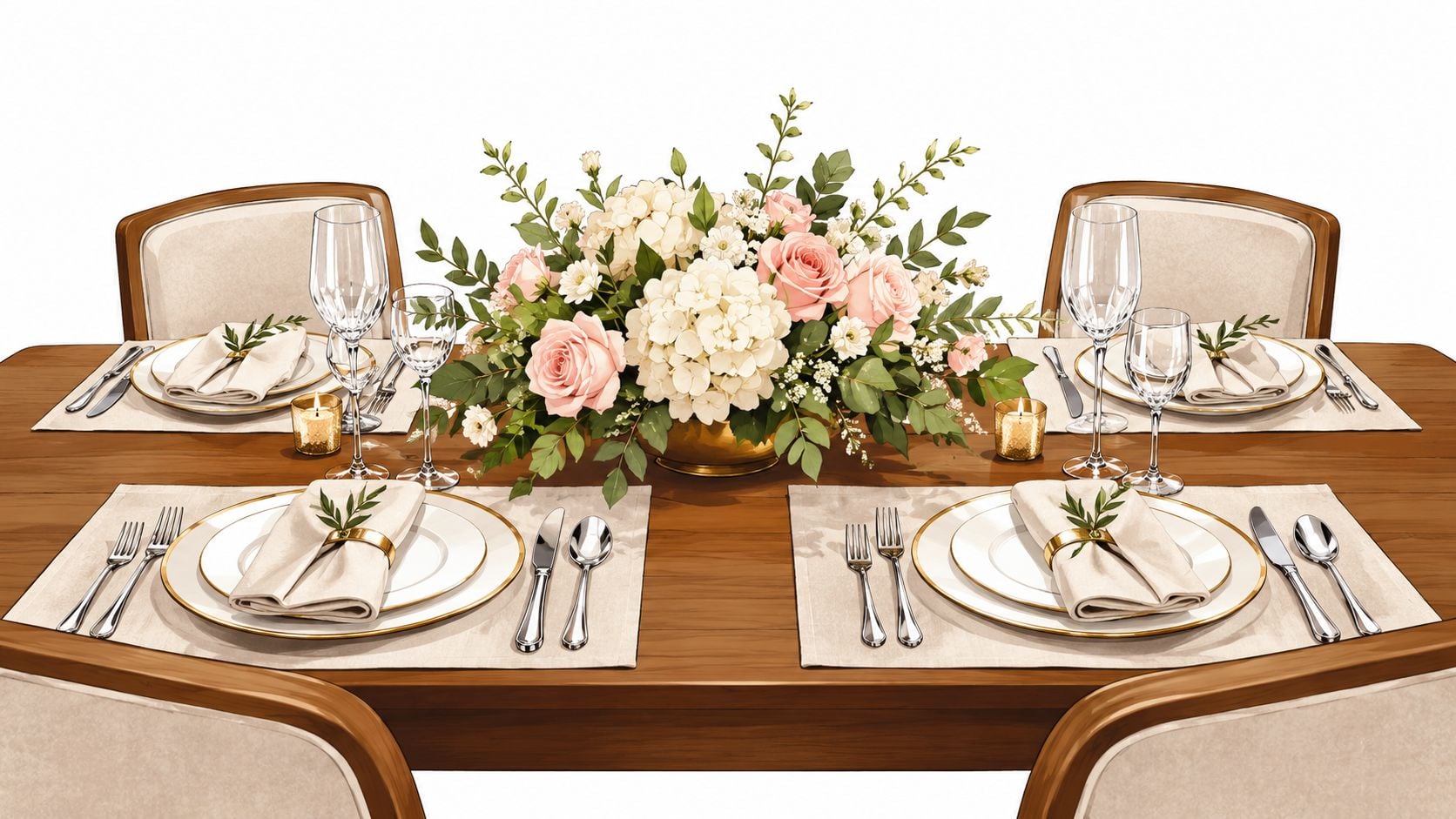
Formal service adds pieces according to the menu, not according to the size of the flatware drawer. Begin with the casual foundation, then add only the utensils required for each course.
The outside utensil belongs to the first course. The next utensil moves inward, and the piece closest to the plate belongs to the course served later. Forks generally remain on the left, while knives and spoons stay on the right. A bread plate sits in the upper left, and glassware gathers in the upper right.
Casual and formal arrangements side by side
| Setting Element | Casual Everyday | Formal Multi-Course |
|---|---|---|
| Plate | Dinner plate, with a bowl when needed | Dinner plate, with additional course pieces as required |
| Forks | One dinner fork | Forks arranged outside in, based on course order |
| Knives | Dinner knife, blade facing inward | Multiple knives only when the menu calls for them |
| Spoons | Omit unless needed | Add soup or dessert spoon when required |
| Bread plate | Usually omitted | Upper left of the setting |
| Water glass | Upper right | Closest to the diner in the glass group |
| Wine glasses | Usually omitted or brought later | Arranged outward from the water glass |
| Dessert utensils | Often brought with dessert | Included only when the meal plan calls for them |
Formal guidance emphasizes keeping visible utensils limited to the actual meal. One design source identifies a maximum of eight pieces of silverware as typical for multi-course formal service, with an oyster fork as the main exception, as explained by The Spruce. More pieces don't automatically make a table more elegant. They can create clutter and give guests more opportunities to choose incorrectly.
Arrange the glassware with purpose
The water glass sits closest to the diner. Wine glasses extend outward from it, following the order in which beverages will be served. This grouping keeps the upper-right corner organized and leaves the plate and flatware area clear.
A holiday dinner might require a starter fork, dinner fork, dinner knife, soup spoon, bread plate, water glass, and wine glasses. A formal meal with fewer courses needs fewer visible pieces. The host should remove anything that doesn't support the menu.
For additional holiday planning, the ultimate guide to hosting for the holidays can help connect the table arrangement with serving flow, seating, and room preparation.
Adapting Your Table for Special Occasions and Small Spaces
Modern entertaining rarely follows one fixed format. A holiday meal may combine family recipes from different cuisines, a birthday dinner may include only a starter and dessert, and a small open-plan dining area may need to function as both serving zone and conversation space.
The best setting responds to those conditions. Add a piece when it helps the guest. Omit it when it only fills space.
Use a simple decision test
- Serve courses at the table: Arrange utensils outside in, with each piece matching the meal's sequence.
- Let guests serve themselves: Keep the place setting restrained and leave clear room for serving bowls, platters, and shared utensils.
- Serve mixed cuisine: Choose the tools diners will need, even if the arrangement doesn't resemble a traditional Western formal setting.
- Offer bread: Add a bread plate in the upper-left area only when bread is part of the service.
- Serve dessert later: Bring dessert utensils with the course if the table is already full.
- Use a charger: Include one when it supports the visual layer or protects the table, but remove it if it reduces usable space.
- Work with a small table: Keep the center low and narrow, and avoid adding glasses or flatware before confirming that every guest still has comfortable elbow room.
A round table encourages conversation because no seat feels far from the center, but its curved edge makes even spacing especially important. A rectangular table offers clear linear alignment and often leaves a central lane for serving pieces. In either case, the guide to table shapes and seating arrangements can help households match furniture proportions with the room.
Keep the centerpiece movable
A centerpiece should be easy to lift when the main course arrives. A low bowl, compact floral arrangement, or collection of small objects can create a focal point without blocking sightlines.
In an open-plan Albany-area home, the table is part of the larger room composition. Coordinated chairs, flooring, lighting, and nearby storage can make the dining area feel settled, while a crowded tabletop can make the whole space feel smaller.
Finishing Touches That Make Your Dining Table Shine
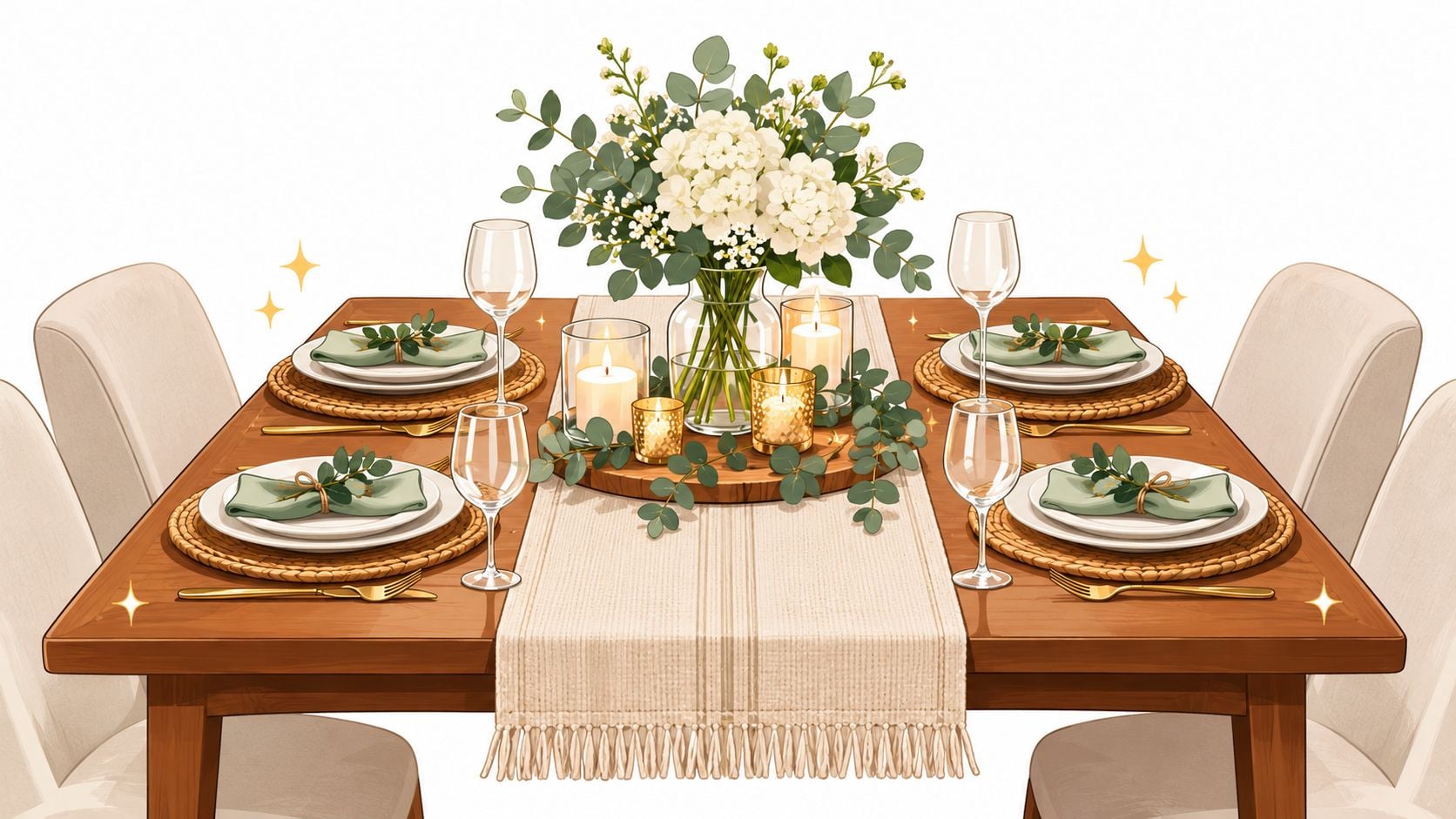
The final layer should support conversation, food, and the character of the room. A centerpiece belongs low enough for guests to see across the table, and it should leave clear access for serving dishes. Candles can add warmth, but they should never force a guest to reach around decoration.
Napkins bring softness to a wood table and can introduce color without competing with the grain. A runner offers another way to define the centerline, especially when the table has a simple finish. A neutral cream-colored table runner can work with formal china, everyday stoneware, or seasonal accents.
Make the room feel coordinated
A dining table looks more settled when its finish relates to the surrounding furniture and flooring. Tip Top Furniture & Mattresses offers dining furniture alongside décor and flooring, giving homeowners a way to coordinate the complete room rather than selecting each element in isolation. Its professional design services have been available since 1984, and the family-owned business has served the area since 1978.
Before guests arrive, check:
- Alignment: Are the plate centers and utensil bottoms consistent?
- Spacing: Does each guest have comfortable elbow room?
- Function: Are unused utensils and glasses off the table?
- Sightlines: Can diners see one another across the centerpiece?
- Service: Is there room for shared dishes or a clear path for the host?
Amish furniture handcrafted in the USA can give the dining room a durable foundation, while custom ordering allows a household to select the size, wood type, finish, and style that suit the space. A well-set table then adds the welcome. It doesn't need to compete with the furniture.
Tip Top Furniture & Mattresses offers dining furniture, Amish-made pieces, custom ordering, décor, flooring, professional design services, flexible financing, and clearance options for homeowners in Freehold and across Albany, Schenectady, Troy, Greene County, and the wider Capital Region. Visit Tip Top Furniture & Mattresses to plan a dining space that feels comfortable, coordinated, and ready for everyday meals or special gatherings.