Bohemian Style Furniture: A Guide for Albany Homes


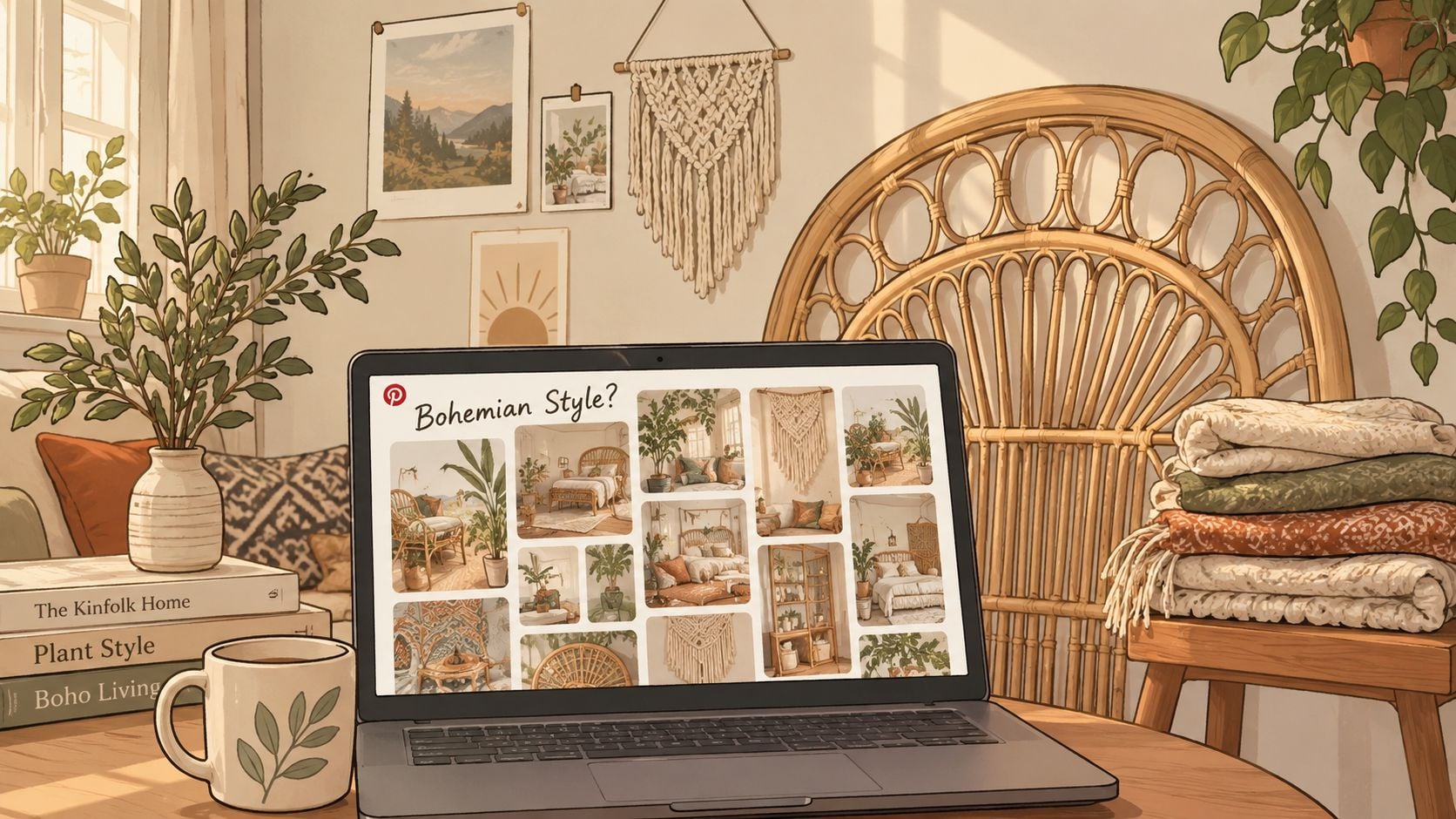
A half-finished Pinterest board, a thrifted rattan headboard on order, and a living room that still looks like several unrelated purchases can leave any Niskayuna homeowner wondering what bohemian style furniture means. The answer isn't just layered pillows, macramé, and houseplants. In a Capital Region home, successful boho design depends on choosing materials that look collected, feel comfortable, and withstand real seasonal living.
For homeowners in Albany, Schenectady, Troy, and nearby communities, that means balancing relaxed character with construction quality. Dry indoor heat, tracked-in winter moisture, strong southern sunlight, and freeze-thaw conditions expose weak furniture quickly. The most convincing boho rooms use a few durable anchors, then build personality through textiles, vintage accents, art, and natural textures.
What Bohemian Style Furniture Actually Means
Bohemian style furniture grew from a broader bohemian movement that took shape in 19th-century France. Design histories connect the interior identity to Parisian artists, writers, and performers who rejected conventional bourgeois taste, while other accounts describe nomadic artists and writers gathering objects during travel rather than decorating from matched sets. The style later experienced a major revival during the counterculture of the 1960s and 1970s, when its independence and layered informality resonated with the hippie movement. This history of boho style origins and evolution provides useful background on that long development.
That origin still explains the look today. Bohemian furniture is chosen for personality, texture, and story, not for showroom-perfect coordination. A solid wood console can sit beside a woven chair, a vintage cabinet, and an embroidered textile without requiring identical finishes. The room should feel gathered over time, even when the homeowner has planned it carefully.
The difference between boho character and fast furniture
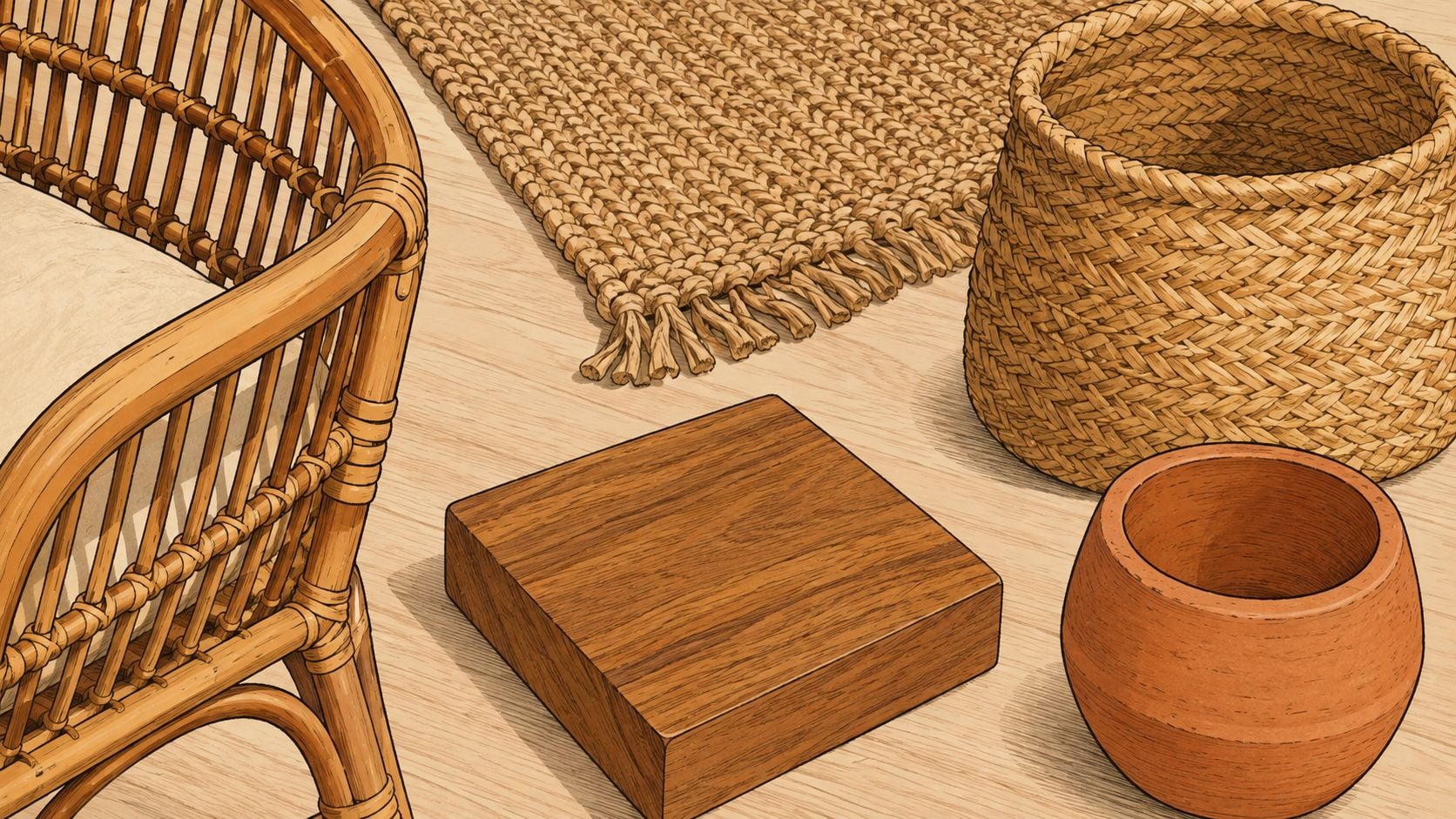
Authentic-looking boho pieces usually rely on real wood, cane, rattan, wicker, linen, cotton, jute, or seagrass. These materials provide the tactile warmth and visible variation that make the style feel lived-in. Mass-market “boho-chic” furniture often imitates those qualities with thin veneer, printed wood grain, plastic weave, or synthetic upholstery that can look convincing online but feel flat in person.
A practical definition helps shoppers make better decisions:
- Natural construction: Materials show grain, weave, knots, and other variations rather than appearing perfectly uniform.
- Collected silhouettes: Chairs, tables, beds, and cabinets can coordinate without forming a matched suite.
- Hand-finished character: Distressing, carving, woven panels, and irregular surfaces add visual depth.
- Flexible styling: The furniture works with vintage pieces, modern upholstery, pottery, books, and art.
Bohemian rooms can also carry spiritual or contemplative objects, but cultural references deserve thought rather than random decoration. Homeowners exploring that dimension may find HD Asian Art spiritual design tips helpful when considering symbolism and placement.
A useful starting point for Capital Region shoppers is the style trends guide for your home, then a closer look at construction. The relaxed appearance is intentional, but it shouldn't depend on furniture that won't survive everyday use.
The Five Hallmarks That Make a Room Feel Boho
A room doesn't need every bohemian accessory available. It needs a recognizable relationship between material, color, texture, shape, and layering. These five hallmarks give beginners a practical way to assess a space without chasing a rigid decorating formula.
Natural materials
Start with rattan, jute, sisal, teak, mango wood, cane, and unglazed ceramic. These materials introduce grain and irregularity, which separates boho furniture from chrome-heavy or engineered-composite rooms. A teak console, cane-front cabinet, or jute rug can establish the direction before any decorative object enters the room.
Natural materials also connect visually with plants, woven baskets, clay vessels, and wood flooring. A single stone accent can add a cooler counterpoint. For homeowners who want an unusual focal detail, it can be useful to browse sodalite stone accent furniture as an example of how geological texture can sit within an organic room.
An earthy color palette
Warm white, ivory, sand, terracotta, ochre, muted blue, and deep green create a calmer foundation than highly saturated color combinations. The goal isn't blandness. It's to let the room's variation come from materials and objects instead of making every surface compete.
A useful approach is to select one quiet base, one earthy middle tone, and one darker accent. A clay-colored cushion, faded blue textile, and deep green plant foliage can provide enough contrast without turning the room into a rainbow display.
Touch-driven texture
Boho rooms succeed through contrast under the hand and foot. Slubby linen beside smooth wood, nubby upholstery beside polished ceramic, and macramé near a rough-hewn shelf create depth even when the color palette stays restrained.
Good texture candidates include:
- Woven surfaces: Cane doors, rattan chair backs, and seagrass baskets.
- Soft layers: Linen, cotton, bouclé, kilim, and handwoven throws.
- Grounding materials: Jute, sisal, wool, clay, and visible wood grain.
Relaxed shapes
Boxy modern furniture can work in a boho room, but rounded and sculptural profiles usually make the direction clearer. Look for low-slung seating, arched mirrors, turned legs, carved details, curved headboards, and globally influenced silhouettes.
Collected layering
Layering brings the room together. A homeowner might place a smaller rug over a larger one, pair mismatched nightstands, build a gallery wall from textile art and framed photographs, and leave pottery or books visible rather than hiding every object.
Practical rule: Use one substantial piece to deliver several hallmarks at once. A carved teak console can provide shape, material, and texture before smaller accessories are added.
For more guidance on combining prints without visual chaos, the guide to mixing patterns and finding balance is a useful reference. The strongest boho rooms don't collect clutter indiscriminately. They repeat a few materials and tones while allowing individual pieces to remain distinctive.
Natural Materials and How They Hold Up in Upstate NY
Upstate homes demand more from natural materials than a climate-controlled showroom does. Forced-air heat dries indoor air through the heating season, entryways collect snowmelt and grit, and southern windows can expose furniture and rugs to strong light. Material choice matters more than decorative styling if a boho room needs to remain attractive for years.
The practical comparison
Rattan and cane are lightweight, sculptural, and visually open. They're excellent for chair backs, cabinet fronts, headboards, and occasional seating, but dry winter air can make woven elements more vulnerable to brittleness. Keeping indoor humidity steady, commonly around 35 to 45 percent, can help protect them, while direct sun should be avoided where possible.
Jute and sisal add a grounded, natural layer underfoot. They can tolerate regular use, but they're absorbent and stain-prone, so they aren't ideal directly inside a porch door where snow-melt slush arrives first. Reclaimed wood and teak are stronger choices for structural furniture, especially when properly kiln-dried. They bring patina and stability through seasonal changes, while softer pine can be more susceptible to dents and movement.
| Material | Aesthetic Role | Upstate Durability | Maintenance Need |
|---|---|---|---|
| Rattan and cane | Airy weave, sculptural texture | Good indoors, but sensitive to very dry air and direct sun | Dust regularly, wipe gently, maintain stable humidity |
| Jute and sisal | Grounding rugs and runners | Durable in dry rooms, less forgiving near wet entries | Vacuum, blot spills quickly, rotate periodically |
| Teak | Structural warmth and rich grain | Strong choice for furniture and covered outdoor use | Clean gently, condition when needed, avoid heating vents |
| Reclaimed wood | Collected, historical character | Strong when properly dried and finished | Dust, protect from heat, monitor finish |
| Linen | Relaxed upholstery and bedding | Comfortable and breathable, but wrinkles and marks | Rotate cushions, follow cleaning instructions |
| Ceramic and terracotta | Earthy accents and surface contrast | Generally stable through heating seasons | Dust, handle edges carefully |
For a more detailed look at combining organic surfaces, consult this guide to natural materials in home décor. The spending hierarchy is straightforward: invest first in wood frames, joinery, and quality caning, then add jute, linen, baskets, and smaller decorative pieces at a more accessible price level.
Styling Bohemian Furniture Room by Room
Bohemian design works best when every room has a clear anchor. Without one, layering becomes accumulation. With one, the surrounding textures and accessories have a visual home.
Living room
Choose a low-slung rattan, cane, or teak seating piece as the main direction. Add a chunky jute rug, then introduce kilim or Moroccan-inspired pillows in controlled colors. A carved-wood or stone-topped coffee table can balance the softness of woven upholstery, especially near a working fireplace.
A Capital Region living room also needs a practical path for winter traffic. Keep the most absorbent rug away from the wettest entry zone, and use washable or easily replaceable layers where boots and pets are likely to pass.
Bedroom
A reclaimed wood platform bed supplies the room's structure. Linen bedding softens the frame, while a woven headboard, caned bench, or cane-front nightstand brings in the signature texture without requiring a full matching set.
The highest-impact purchase is often the bed or dresser, not the decorative wall hanging. A well-built teak dresser can remain useful even if the room's color palette changes later.
Dining room
Pair a live-edge or turned-leg solid wood table with mismatched cane-back chairs. A jute runner can reinforce the natural direction, but it should be positioned where spills can be handled quickly. Keep the table's surface visible enough for daily use. Boho dining rooms should feel prepared for meals, not staged around them.
Entry and outdoor spaces
A carved console, seagrass planters, and a substantial mirror can make an entry feel collected while preserving a landing place for keys and winter accessories. For a covered porch, teak furniture is a more sensible choice than delicate indoor wicker because it handles outdoor exposure more reliably when maintained correctly.
One anchor piece per room prevents the style from becoming visually noisy:
- Living room: Rattan chair or teak sectional.
- Bedroom: Reclaimed wood bed or teak dresser.
- Dining room: Solid wood table.
- Entry: Carved console.
- Covered outdoor area: Teak swing or substantial woven seating.
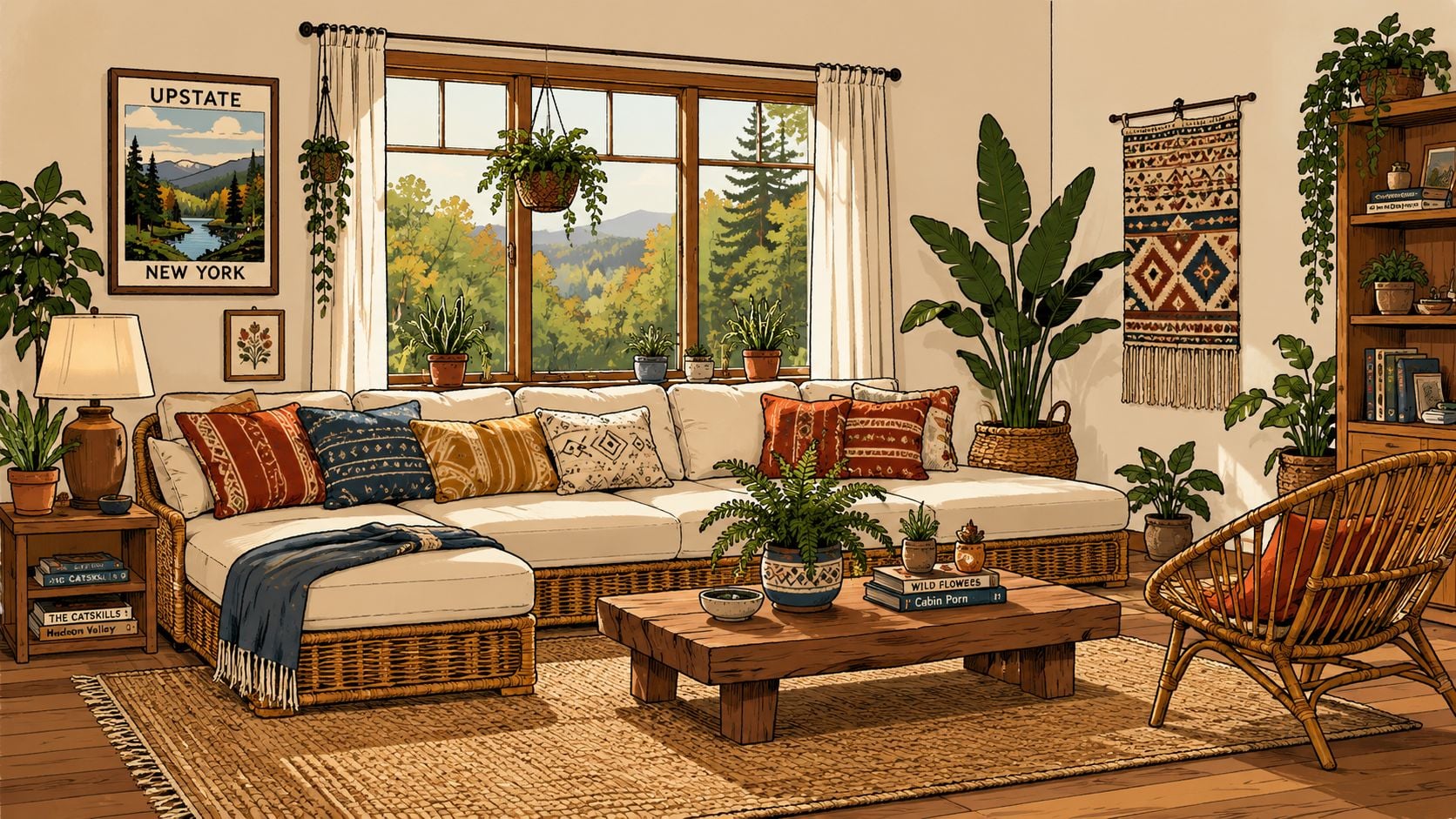
Plants add life, but placement still matters in winter. A homeowner considering a bonsai or similarly sculptural plant can review this guide to indoor bonsai and interior design before selecting a location with suitable light and protection from heat vents. A room-by-room layout can also be tested with the living room styling guide before furniture arrives.
Why 2026 Boho Is a Premium Look, Not a Budget One
Current trend coverage describes 2026 boho as more grounded and intentional, with fewer but more meaningful pieces, earthy palettes, and greater emphasis on rattan, cane, jute, clay, reclaimed wood, and other artisanal materials. The shift matters because those materials are being used as substantial furniture elements rather than disposable decorative signals. Recent coverage of the bohemian design direction connects the look with handcrafted and heirloom-like choices.
The market also shows that bohemian furnishings have moved well beyond a tiny niche. One forecast places the global bohemian boho décor market at $20.00 billion in 2025, projecting $30.07 billion by 2032 at a 6.0% CAGR. Another report estimates the North American bohemian home furnishings market at $9.5 billion in 2025 and the global market at $28.7 billion by 2033, with a projected 25.50% CAGR from 2025 to 2033. These forecasts should be read as separate market estimates, but together they indicate substantial commercial momentum. The market forecast source provides both projections.
| Element | 2018 Boho | 2026 Grounded Boho |
|---|---|---|
| Main materials | Lightweight woven accents and quick decorative updates | Solid teak, reclaimed wood, genuine cane, jute, and clay |
| Craftsmanship | Visual imitation often carried the style | Handcrafted detail and material authenticity carry more weight |
| Color direction | Brighter pattern mixing and higher visual energy | Earthy, muted, layered tones |
| Room planning | Many accessories and frequent swaps | Fewer meaningful pieces with stronger anchors |
| Ownership logic | Immediate style gratification | Durability, longevity, and potential usefulness over time |
The premium isn't automatically justified by a boho label. A higher price only makes sense when it reflects better joinery, durable wood, genuine weaving, repairability, or a finish that can be maintained. For Upstate buyers who keep furniture through changing trends, a solid piece can offer more practical value than several quick replacements.
Sourcing Bohemian Style Furniture Near Albany
Capital Region homeowners have several useful sourcing lanes, but each solves a different problem. The right choice depends on whether the priority is construction, vintage character, customization, or immediate availability.
Four practical sourcing paths
A showroom for structure and planning. Tip Top Furniture & Mattresses in Freehold serves homeowners throughout Albany, Schenectady, Troy, Greene County, and the wider Capital Region. Its collection includes solid-wood furniture, Amish furniture handcrafted in the USA, custom-order options, décor, flooring, mattresses, and pieces from 50+ trusted manufacturers. Professional design services have been available since 1984, while the family-owned business has served the region since 1978.
Antique and vintage dealers for authenticity. Albany-area searches around Central Avenue and Hudson can uncover vintage rattan, older teak, carved cabinets, and unusual objects with genuine age. These pieces reward careful inspection. Look for stable joints, intact cane, clean odors, and evidence that previous repairs were done properly.
Regional makers and consignment sources for individuality. Saratoga and the Berkshires edge can provide one-of-a-kind furniture and art that gives a room its collected quality. Measurements, condition, and delivery arrangements should be confirmed before purchase.
Online specialty sources for hard-to-find imports. Online buying expands the selection, but shipping creates risks. Inspect cartons before signing, photograph damage immediately, and check woven panels, corners, hardware, and finish consistency as soon as the piece arrives.
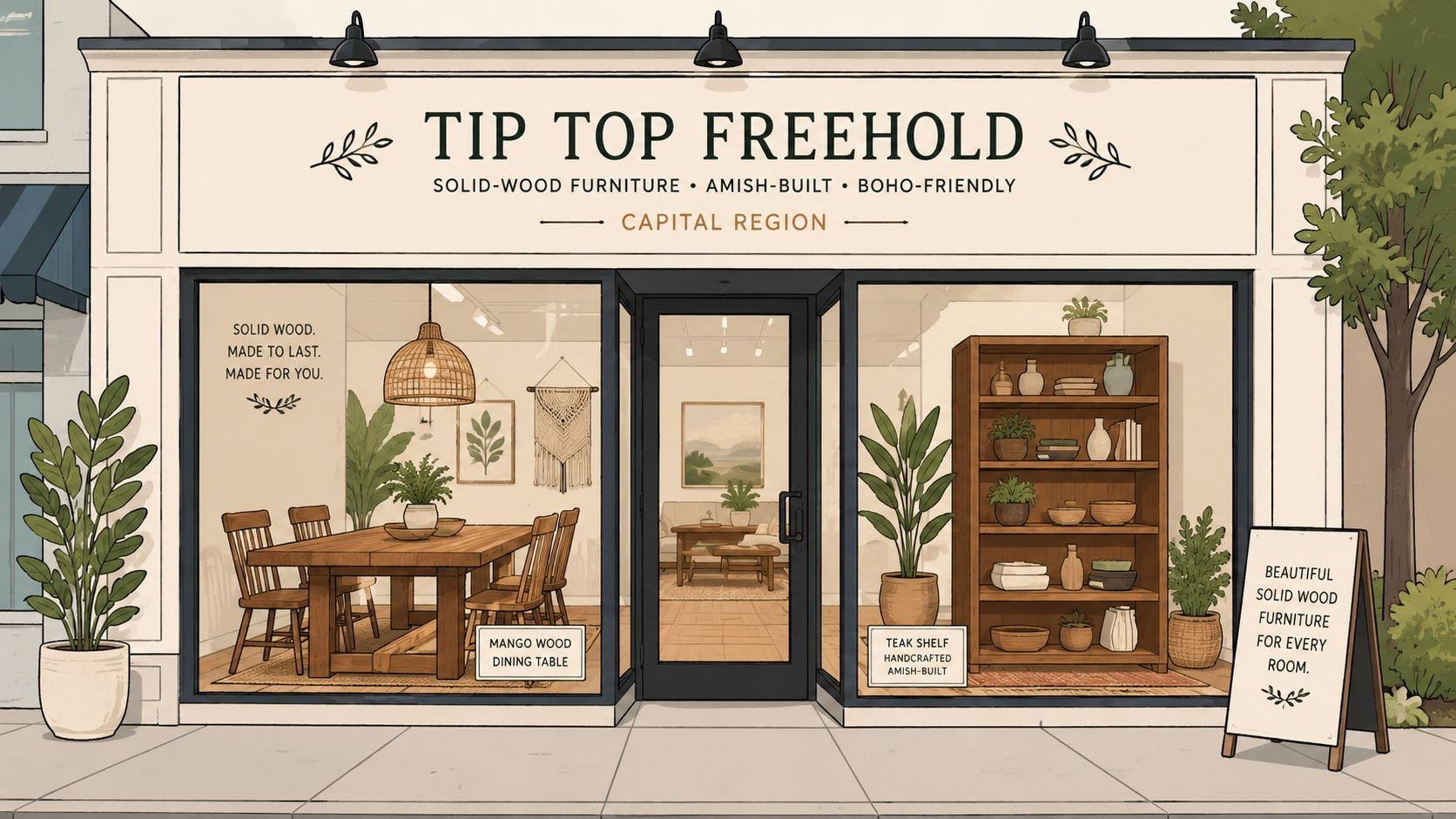
A showroom visit can shorten the sourcing process because homeowners can compare wood tones, upholstery, cane, and finish samples in person rather than judging texture from a screen. The Amish furniture near Albany guide is a useful starting point for shoppers who want solid wood and custom possibilities.
Custom ordering also addresses a common boho problem: the right silhouette in the wrong fabric, size, or finish. Tip Top can help shoppers select style, wood type, finish, size, and upholstery, including designs based on a picture or sketch. Delivery, flexible financing, a Clearance Corner, and one-stop coordination with flooring make the process more practical for homeowners furnishing several spaces.
Care, Maintenance, and Mixing Boho With Other Styles
Natural materials last longer when their care matches their environment. Rattan and cane should be dusted regularly and wiped with a slightly damp microfiber cloth when needed. In Albany-area winters, stable indoor humidity helps reduce the stress caused by dry forced-air heat, while direct placement over a heating vent should be avoided.
Jute rugs need frequent vacuuming, including attention to both sides when practical. Spills should be blotted quickly rather than scrubbed, and the rug should be rotated to distribute exposure from bright windows. Snowmelt and salt make jute a poor choice for the first few feet inside a busy entry.
Teak and reclaimed wood benefit from gentle cleaning and periodic conditioning appropriate to the manufacturer's finish. Some owners use Danish oil on suitable unfinished or oil-finished pieces, commonly at intervals of 6 to 12 months, but the existing finish must be confirmed first. Linen slipcovers should be washed according to their care label and rotated so the most-used cushions don't age alone.
Boho also mixes naturally with established Capital Region styles:
- Modern farmhouse: Add a rattan headboard or woven pendant to a room with a substantial farmhouse table.
- Traditional leather: Use kilim pillows and a textured throw to soften a leather Chesterfield.
- Craftsman architecture: Pair visible wood trim with a restrained macramé wall hanging and clay accents.
- Contemporary rooms: Introduce one carved wood cabinet or cane chair rather than rebuilding the entire space.
Three strong bohemian textures per room are usually enough. Beyond that, the room can lose hierarchy, making every object compete for attention.
Bringing the Boho Look Home With Confidence
The most durable boho rooms begin with material literacy. The five hallmarks remain simple: natural materials, earthy color, tactile texture, relaxed shape, and intentional layering. A rattan chair can anchor a living room, while a teak dresser can define a bedroom more effectively than a large collection of small accessories.
The 2026 grounded boho direction favors patient buyers who choose fewer, better-built pieces. A visit to the Tip Top Freehold showroom gives Capital Region homeowners the chance to compare solid wood, woven surfaces, upholstery, flooring, and décor in person, then discuss custom finishes or fabric instead of settling for an almost-right piece. Grounded boho isn't a passing decoration cycle. Furniture built from solid wood and natural fibers can continue to make sense as a home evolves.
Tip Top Furniture & Mattresses offers Amish and USA-made furniture, custom ordering, professional design services, flooring, mattresses, flexible financing, delivery, and a Clearance Corner for quality pieces at reduced prices. Visit Tip Top Furniture & Mattresses in Freehold to explore bohemian-friendly materials and create a durable, layered plan for a home in Albany or across the Capital Region.