Solid Wood vs Veneer: How to Choose the Right Furniture


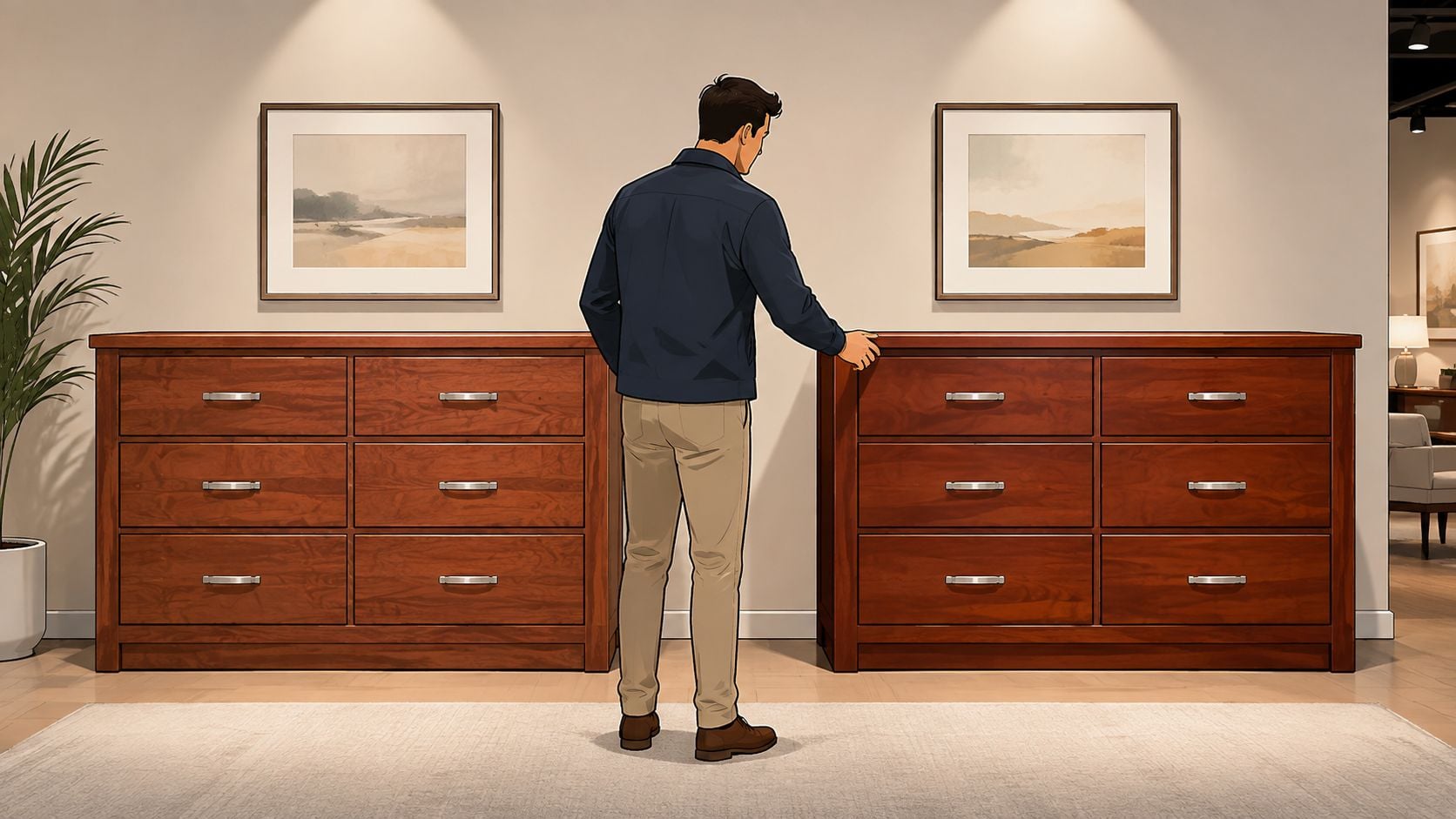
A shopper in an Albany-area home can stand between two dressers that look almost identical. Both may show a warm cherry finish, six drawers, and clean hardware. The difference sits beneath the finish: one may be solid wood, while the other uses genuine wood veneer over an engineered core.
That choice isn't a simple contest between “good” and “bad.” It's a matching problem involving room conditions, daily wear, repair expectations, budget, and how long the furniture should serve the household. Solid wood remains the right call for some pieces, while well-built veneer makes more sense for others, especially large panels that need to stay flat through New York's changing seasons.
The Choice Most Buyers Don't Realize They Are Making
A buyer pauses in front of two dressers at a furniture showroom. Under the same lights, the pieces appear nearly interchangeable. One carries a price tag of $1,895, while the other is marked at $2,850.
The visible difference is minimal. The quiet decision underneath is substantial. One dresser is solid cherry throughout. The other has a hardwood frame with a thin cherry veneer over a stable substrate.
What the price difference really buys
The solid dresser gives the owner more material to work with over time. Dents, scratches, and worn finish can often be addressed through repair and refinishing. That matters in a bedroom used by children, in a guest room that becomes a storage zone, or in a primary bedroom intended to keep the same furniture for decades.
The veneered dresser gives the buyer a real cherry surface with stronger dimensional stability across broad panels. Veneer furniture can keep a wide top or case side flatter than a large solid board, which is useful in homes exposed to winter heating and seasonal humidity changes.
Neither buyer has made a foolish choice. The first has paid for greater repairability and long-term service potential. The second has paid for an attractive real-wood surface, a stable construction, and a lower material requirement.
Showroom rule: The right question isn't “Which material wins?” It's “Which construction fits the job this piece must perform?”
Veneering has also never been merely a modern shortcut. Evidence of veneering and cross-grain lamination appears in ancient Egypt around 2600–3000 BC, and European cabinetmakers expanded decorative veneer work through the 18th century. Industrial production later changed the price and availability of veneer furniture, including a veneer factory in Germany in 1843 and plywood introduced into the United States in 1865. This history of veneering shows how a luxury craft developed into a widely used furniture material.
What Solid Wood and Veneer Actually Are
The easiest way to understand solid wood vs veneer is to look at what forms the visible surface and what supports it underneath.
Solid wood uses substantial pieces throughout
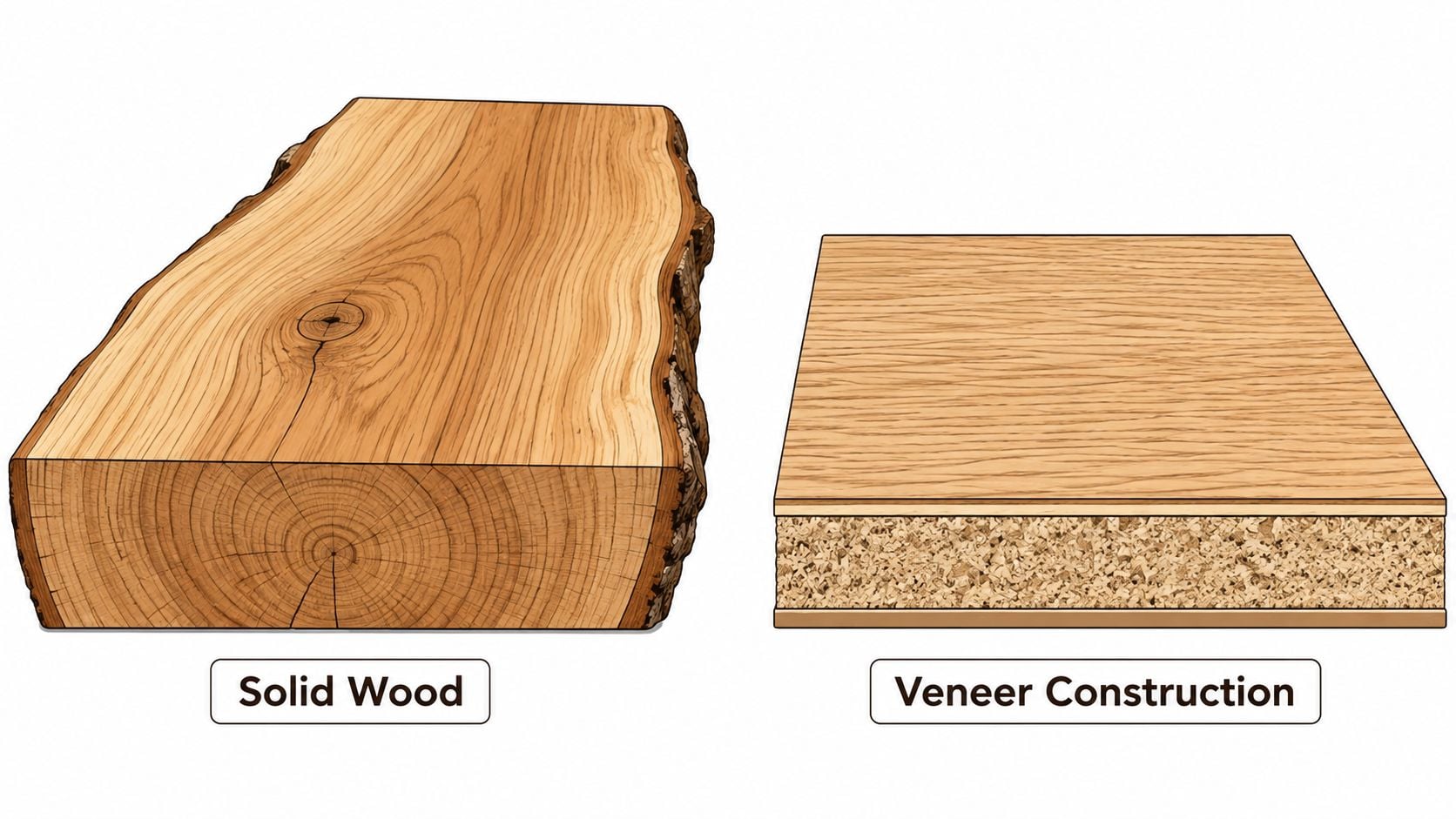
Solid wood furniture is made from boards cut from a tree. The visible top, legs, rails, edges, and other structural parts may use solid hardwood or softwood, although manufacturers can combine solid boards with other construction methods in a single piece.
A solid cherry dining table, for example, shows natural grain across the tabletop and can develop dents, marks, and color changes as one material. A solid oak bed frame gives the owner substantial wood in the rails and posts, where strength and future repairability matter.
Solid wood isn't perfectly motionless. Changes in humidity can cause natural lumber to expand and contract, so skilled construction must allow for that movement. This is one reason a wide solid panel requires more careful design than a narrow rail or turned leg.
Veneer combines real wood with a core
Wood veneer is a thin slice of genuine wood bonded to a core such as plywood, MDF, or particleboard. A common furniture veneer thickness is about 0.6 mm, and the industry-standard raw veneer thickness in the United States is about 1/42 inch, or 0.024 inch, according to this furniture veneer thickness guide.
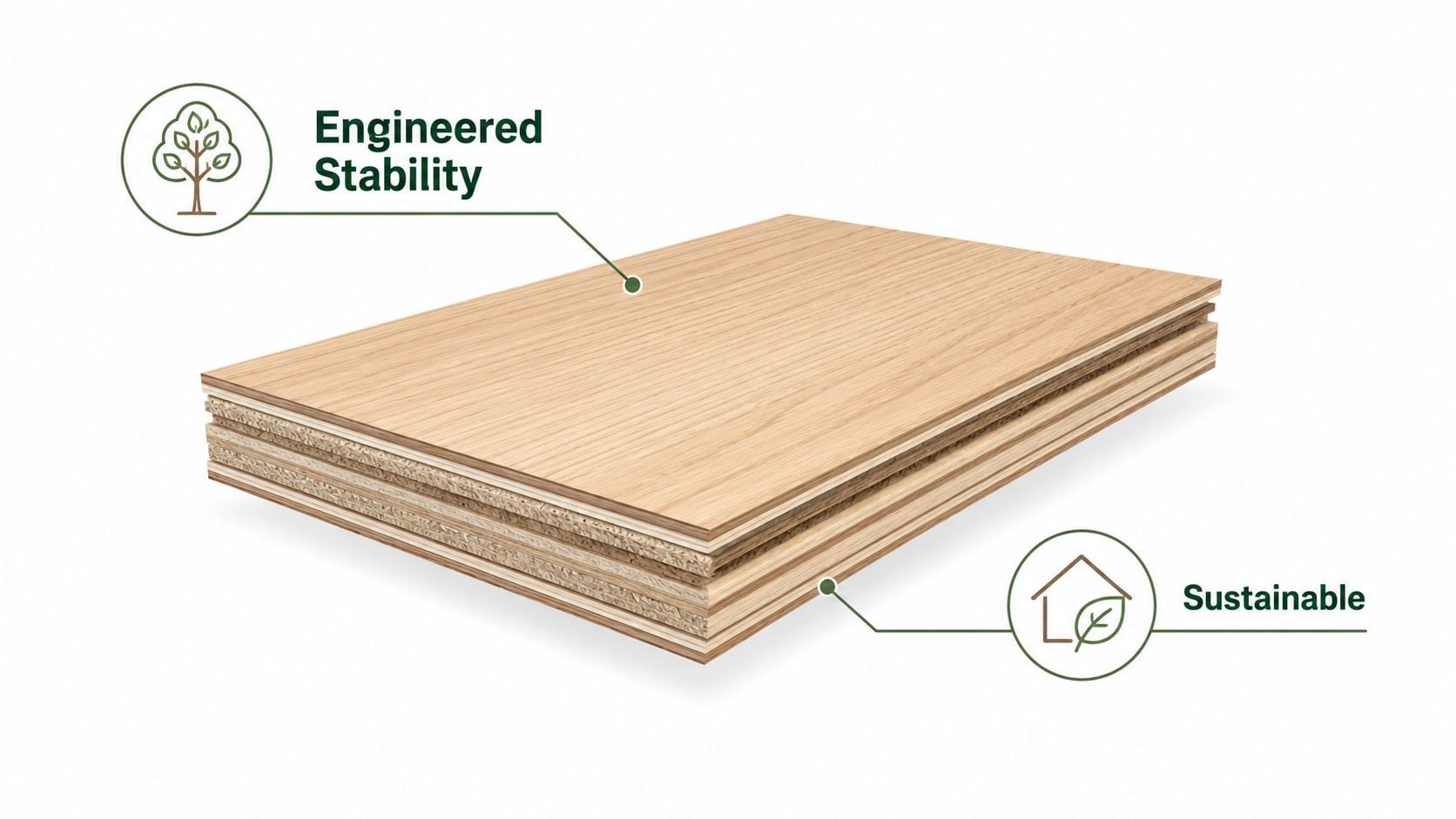
The surface is real wood, not a printed imitation. The core supplies much of the panel's stability, while the veneer provides the grain, species, and finish that shoppers see.
A veneered bedroom case, media console, or office desktop can therefore deliver the appearance of cherry, oak, walnut, or another desirable species without requiring a thick solid board across the entire panel. Buyers comparing bedroom construction can also review this explanation of wood furniture and hardwood selection before visiting a showroom.
For shoppers furnishing a bedroom, construction safety and finish selection deserve attention alongside appearance. A guide to non-toxic bed frame options can help households compare solid-wood designs and material priorities before making a purchase.
How They Compare on the Things Buyers Care About
| Criterion | Solid Wood | Veneer |
|---|---|---|
| Durability | Strong long-term performer with more material for future repairs | Quality veneer handles normal surface wear when protected from moisture and impact |
| Appearance | Continuous grain, natural variation, and visible edge character | Real wood surface with matched or book-matched grain possibilities |
| Stability | Natural movement can affect wide panels | Engineered cores generally keep broad panels flatter |
| Refinishing | Can usually be sanded and refinished more than once | Thin surface limits sanding and requires careful recoating or repair |
| Cost | Higher investment for comparable visual quality | Uses less hardwood and can reduce the cost of a similar appearance |
| Material efficiency | Requires more substantial hardwood per piece | Extends one log across more visible surfaces and furniture pieces |
The right choice depends on the room, budget, and household routine. A busy dining area may justify solid wood because the table will face years of meals, spills, and repairs. A bedroom case or media console may be better served by quality veneer, especially when a broad panel needs to remain flat.
Durability and repairability
Solid wood has the clear advantage for heavy use and long service. A dining table, children's dresser, or frequently used desk can collect dents and scratches. Solid lumber leaves more material for future sanding and refinishing, which matters when you plan to keep the furniture for decades.
Veneer is not automatically delicate. Furniture veneers around 0.6–1.0 mm can allow light sanding and offer better resistance to chipping and edge damage, as explained in this comparison of furniture veneer thicknesses. The limitation is depth. A deep gouge can expose the core, while repeated aggressive sanding can remove the decorative wood layer. Protect veneer from standing moisture, sharp impacts, and careless moving.
Appearance and stability
Solid wood shows continuous grain, natural variation, and the edge character many buyers want in Amish furniture and heirloom pieces. Those differences make each piece feel individual rather than perfectly uniform.
Veneer gives the maker greater control over grain matching. Book-matched panels and carefully selected sections of a log can create a consistent cabinet face or desktop. Its engineered core also moves less than solid lumber, giving veneer a practical advantage on wide surfaces that must stay flat through seasonal changes.
Cost and material efficiency
Solid wood generally costs more because the piece uses more substantial hardwood and requires construction that accommodates natural movement. Veneer can deliver the appearance of a costly species while using less of that species across the entire piece. For a household furnishing several rooms, that difference can redirect money toward better hardware, stronger construction, or a custom size.
Sustainability depends on the full life of the furniture. Veneer can spread one log across more visible surfaces, while solid wood can serve longer and provide more repair options. Industry reporting also discusses certified veneer sourcing and life-cycle assessment as part of the broader resource-efficiency conversation. The industry summary covers those market and sourcing topics without making them a substitute for inspecting the actual furniture.
Choose solid wood for pieces that will take repeated abuse or need multiple refinishing cycles. Choose veneer for stable wide panels, coordinated case goods, and rooms where appearance and budget need to work together. For another construction comparison, review solid wood versus particle board furniture before you decide which tradeoff fits your home.
How to Tell What You Are Looking At in the Showroom
A shopper can get a useful first impression in seconds, but a sales associate should confirm the exact construction before purchase. That matters most for floor samples, discounted pieces, and clearance items where a label may not tell the complete story.
Use the edge and underside test
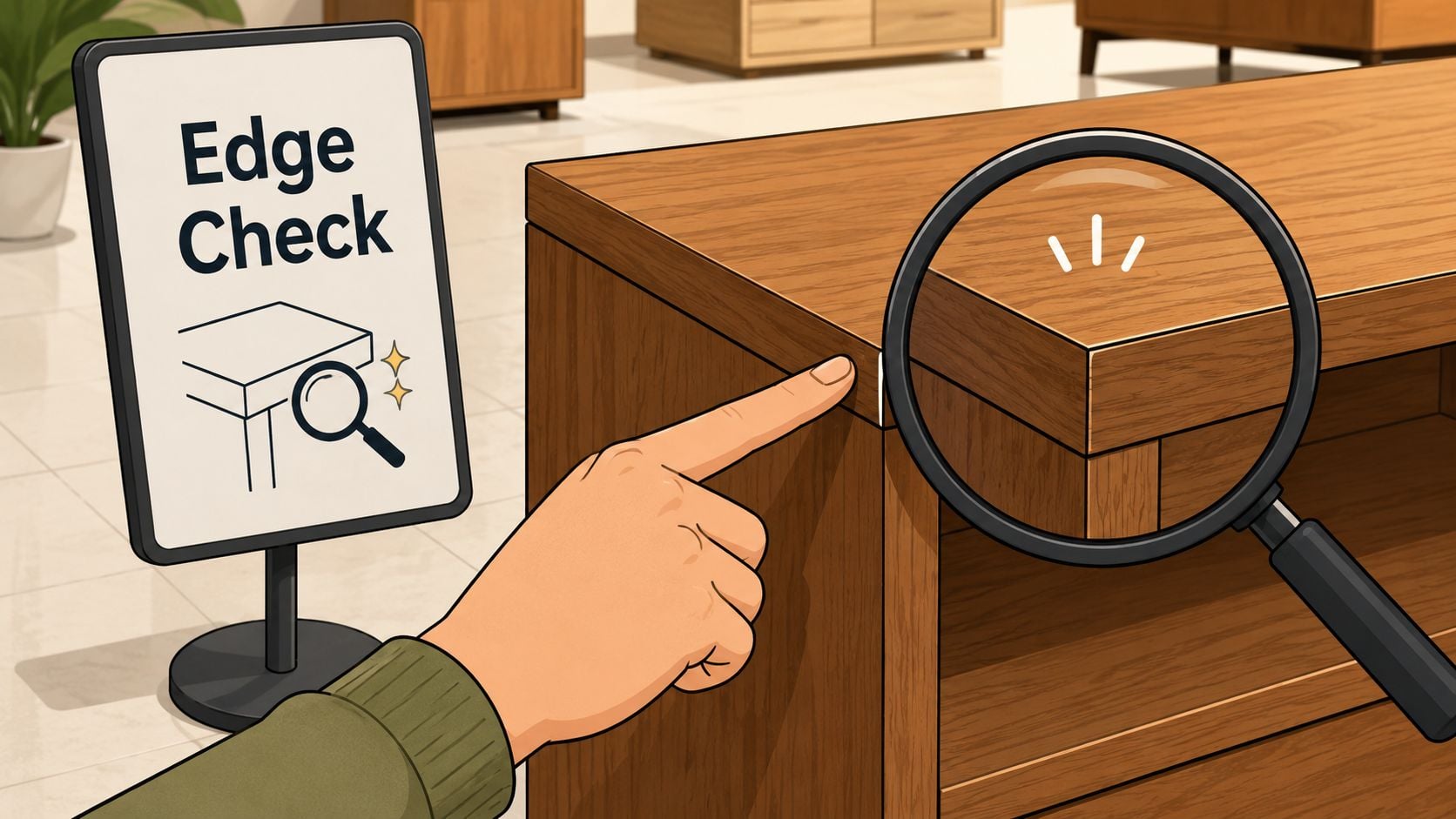
Start with the front edge or corner.
- Follow the grain: Solid wood usually carries grain continuously around an edge. Veneer may show a fine seam where the surface layer meets the edge.
- Inspect the underside: Look for plywood layers, MDF, particleboard, or a different material beneath the finished surface.
- Check the back panel: The back may reveal the core more clearly than the front.
- Run a fingernail gently: A raised transition can indicate a veneer edge or a separate applied strip.
- Look for repetition: Repeating grain patterns can suggest a veneer layout, although attractive veneer work may use carefully matched pieces.
Weight and sound can offer clues, but they aren't proof. A substantial veneered cabinet can feel heavy, while a smaller solid piece may be surprisingly manageable.
Ask for the construction of the specific piece
A showroom associate should be able to explain whether the item uses solid wood, hardwood solids, veneer, plywood, MDF, or a combination. The construction may differ between the frame, top, drawer fronts, and side panels.
Joinery provides another useful clue. A shopper comparing common wood joinery types can learn why drawer construction and frame connections matter, but joinery alone doesn't establish that every surface is solid wood.
Best Match for Each Room in Your Home
The right choice follows the room, household, and budget. A family furnishing a dining room in Freehold or Albany needs a different plan from someone setting up a home office or media wall.
| Room | Best Pick | Why | Budget Tier |
|---|---|---|---|
| Dining room | Solid wood for the main table | Handles daily contact and allows more repair options | Investment |
| Primary bedroom | Solid wood dresser or mixed construction | Suits long ownership and possible refinishing | Mid to investment |
| Children's room | Solid wood for high-contact pieces | Fits knocks, dents, and active use | Mid to investment |
| Living room | Veneer for wide consoles and wall units | Delivers a consistent look across large surfaces | Value to mid |
| Home office | Veneer desktop with a strong base | Keeps a broad work surface looking orderly | Value to mid |
| Kitchen or bathroom | Quality sealed veneer, used carefully | A practical choice for changing room conditions | Mid |
| Mudroom | Durable construction selected for exposure | Handles a demanding space better than bargain materials | Mid to investment |
Dining rooms and bedrooms deserve deeper investment
A dining table earns solid wood more often than almost any other furniture piece. Meals, homework, crafts, heat, and spills eventually test the finish. A solid wood dining table gives the household more repair latitude and supports long-term use, especially when the table will serve several generations of the same household.
Bedroom dressers also justify solid wood when the owner expects to keep them through moves, children growing up, or changing décor. Drawers and frames receive constant contact. A well-built piece can remain useful after the finish needs attention, making it a sensible place to spend more of the furniture budget.
Match broad furniture to the room
Large living-room consoles, wall units, and office desks benefit from veneer when buyers want a consistent appearance across a broad face. Choose this route for a media wall where the finish matters more than refinishing deep dents, or for a desk that needs to look composed through long workdays.
Kitchen, bathroom, and mudroom furniture demands closer inspection. Standing water, steam, grit, and unprotected edges shorten the life of any bargain piece. Choose a properly sealed veneered panel for controlled exposure, and keep splash-prone furniture away from direct water. For a mudroom, spend on durable finish quality and hardware rather than choosing solely by surface material.
Room use should guide the Tip Top decision. Amish custom lines make sense for a dining table or bedroom case piece that the household plans to keep and repair. House brands can put a well-matched veneer console or desktop within reach when the room needs broad surfaces and the budget has limits. Ask the showroom associate to compare the exact top, frame, drawer fronts, and side panels, then choose the construction that fits the room instead of paying for solid wood everywhere.
Why Veneer Earns a Second Look in 2026
Solid wood is not automatically the smarter purchase. That advice works for a dining table that must absorb years of family use, but it falls short for a wide media cabinet or a long office desktop exposed to changing indoor conditions.
New York homes experience seasonal shifts, heated winter air, and rooms with different humidity patterns. Veneered panels use a stable core that generally moves less than solid lumber, making them a strong choice for broad surfaces where a flat appearance matters more than the ability to remove deep dents through repeated sanding.
The material-efficiency case
A thin layer of real wood can display an attractive species across many pieces while reserving thicker hardwood for the parts that need it most. That approach can make distinctive grain patterns more accessible and reduce the amount of premium lumber required for every internal component.
Certification and life-cycle assessment are also becoming more important in furniture conversations. Buyers should ask what the core contains, how the wood was sourced, and whether the manufacturer provides construction information rather than assuming that “solid” or “veneer” tells the entire environmental story.
For a plain-language overview of core materials and construction, this guide to engineered wood furniture can help shoppers prepare for a showroom conversation.
The limitation remains clear
Veneer cannot match solid wood's refinishing depth. A deep scratch, chipped corner, or moisture-related failure may require a patch, replacement component, or professional repair rather than a full sanding and renewal.
The rule is straightforward:
- Choose solid wood for high-contact pieces, heirloom intentions, and furniture likely to need refinishing.
- Choose quality veneer for large panels, stable case goods, coordinated grain, and a carefully managed budget.
- Reject either material when construction quality, edge sealing, hardware, or joinery is poor.
Putting It Together for Your Home and Budget
A practical decision should take place before the sales tag becomes the deciding factor. The following four steps reduce the choice to the information a shopper can use during one showroom visit.
Start with the room
Rank the intended room by three conditions:
- Humidity exposure: A dry bedroom presents a different challenge from a bathroom, mudroom, or room beside a heat source.
- Traffic level: A formal console sees less abuse than a family dining table or child's dresser.
- Ownership horizon: Furniture expected to stay in the household for decades deserves more attention to repairability.
Set the budget around the priority
A budget should separate the piece's purchase price from its service expectations. A buyer furnishing a first apartment may sensibly choose a stable veneered bedroom collection. A household buying one dining table for long-term use may prefer to put more money into solid lumber and repair potential.
Tip Top Furniture & Mattresses offers both Amish custom lines and house-brand veneered collections, giving shoppers a way to compare heirloom construction with stable, value-focused case goods in person. Its custom ordering service can address wood type, size, finish, and design details, while flexible financing can make a larger room project easier to manage.
Choose only the top two criteria
Don't let every advantage compete equally. Select the two factors that matter most.
- Daily wear plus refinishing: Solid wood deserves priority.
- Flatness plus consistent appearance: Veneer usually leads.
- Budget plus visual coordination: Veneer can stretch the material further.
- Heirloom use plus repairability: Solid wood is the stronger investment.
Verify before paying
Finish the process with the edge and underside inspection. Then ask the associate to confirm the construction of the specific SKU, including the top, frame, drawer fronts, and side panels.
Amish furniture handcrafted in the USA can be a strong starting point for solid-wood heirloom pieces, especially when custom dimensions or finishes matter. Veneered collections can solve a different problem, particularly when a room needs broad case goods that remain stable without the cost of solid lumber throughout.
Your Next Step at Tip Top Furniture
Three kinds of shoppers can take three different starting points at the Freehold showroom.
A browser with a defined room and budget should begin in the Clearance Corner, inspect each candidate's edges and underside, and ask which components are solid or veneered. Clearance can provide immediate availability and quality at a lower price, but the construction still deserves verification.
A shopper comparing long-term quality should book a complimentary Design Consultation. Professional design services have been available since 1984, and the consultation can help compare Amish custom options, wood species, stain choices, veneer layouts, furniture, décor, and flooring as one coordinated project.
Someone replacing one statement piece should reserve a floor-model viewing and compare a solid wood dresser with a veneered counterpart side by side. The family-owned showroom has served Freehold, Greene County, and the wider Capital Region since 1978, with delivery, flexible financing, and products from more than 50 trusted manufacturers. Albany, Schenectady, Troy, and surrounding communities can reach the Freehold location for a quieter, no-pressure shopping pace.
Choose the path that fits the project, then make the showroom visit this week.
Tip Top Furniture & Mattresses helps Freehold and Greater Albany Capital Region homeowners compare solid wood, veneer, Amish furniture, mattresses, décor, and flooring in one local showroom. Visit Tip Top Furniture & Mattresses to explore Clearance, arrange a design consultation, review custom options, or apply for flexible financing.