A Buyer’s Guide to the Solid Wood Dining Table

The table usually gives out before the family does. One leg starts to wobble. The top collects scratches that won't blend in. Holiday dinners feel cramped, and weeknight homework spills onto the counter because the dining table no longer works the way it should.
That's why this purchase matters more than is often realized. A dining table isn't just another piece of furniture. It's where birthdays land, coffee cools, projects spread out, and neighbors stay longer than planned. In homes across Albany, Schenectady, Troy, and the surrounding Capital Region, the right table often becomes one of the few pieces people hope to keep for decades.
Your Next Family Heirloom Starts Here
A family often starts shopping for a new table after one frustrating moment. Maybe a chair catches on a tight corner. Maybe the finish has worn thin where the kids always sit. Maybe guests come over and someone ends up balancing a plate at the kitchen island because the table never really fit the room.
Those small annoyances add up. Over time, they turn a central gathering place into a compromise.
A solid wood dining table solves a different problem than fast furniture. It isn't only about style. It's about choosing a piece that can handle daily life now and still belong in the house years from now, or even in the next generation's house after that. Buyers who want that level of durability often start by learning which makers have a strong reputation for construction, wood quality, and long-term value, which is why this guide to the best solid wood furniture brands is a useful first stop.
A good dining table should feel dependable before anyone even sits down.
In the Albany area, that matters even more because homes vary so much. A farmhouse in Greene County needs something different from a townhouse near Troy or a compact dining area in Albany. Some families need a surface that can take heavy use every day. Others want a statement piece that anchors the whole room.
The best choice is usually the one that balances construction, wood species, size, and finish. When those four pieces line up, the table stops feeling like a short-term purchase and starts feeling like part of the home.
What Exactly Is a Solid Wood Dining Table
The term gets used loosely, and that creates confusion. Plenty of shoppers hear “wood table” and assume they're looking at the same thing across every showroom. They aren't.
A real solid wood dining table is made from solid planks of natural lumber. It isn't just wood-looking on the surface. That difference is the whole story for longevity, repairability, and value over time.
The three terms shoppers need to know
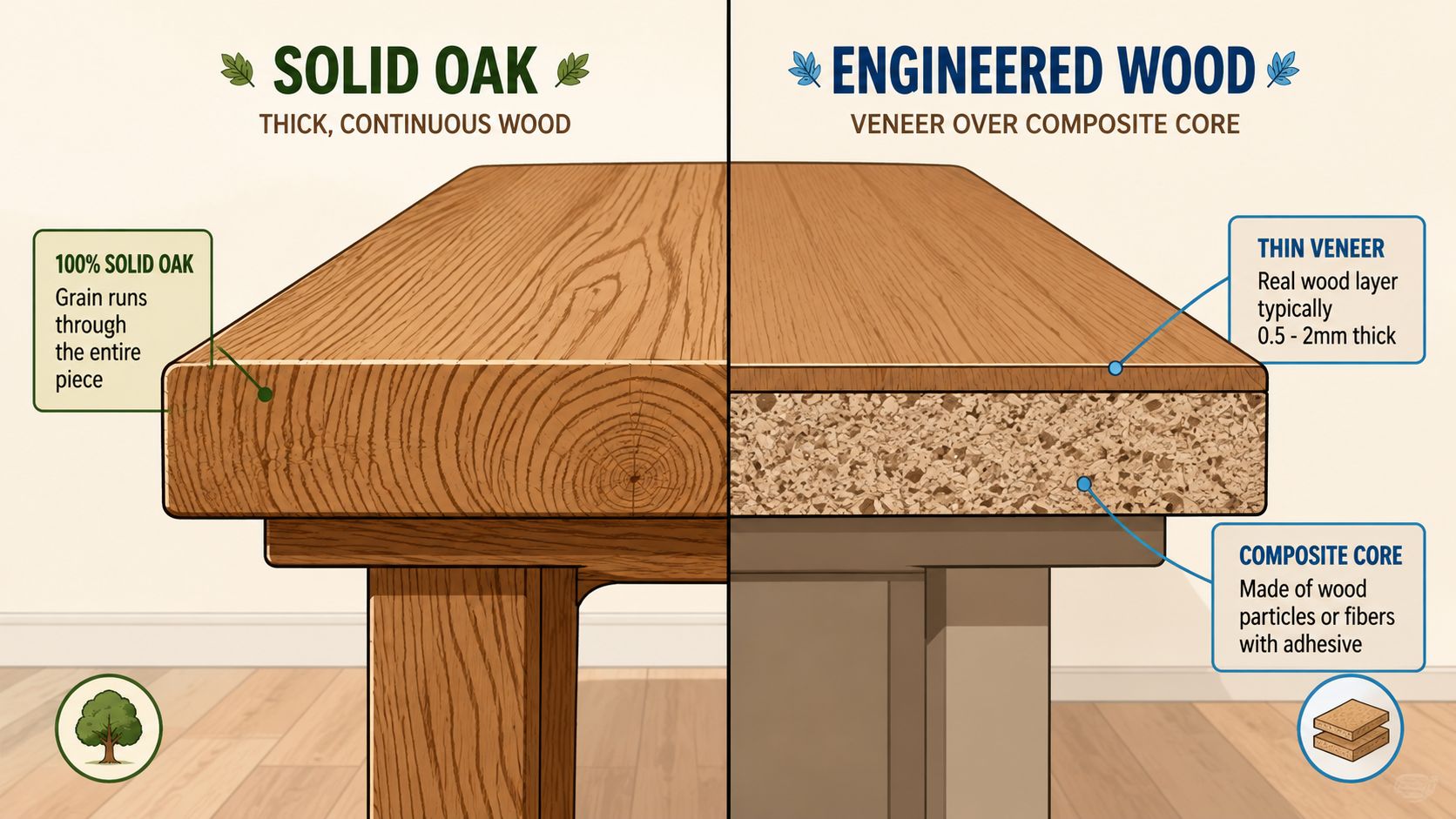
Solid wood means the table is built from natural lumber throughout the visible structure, rather than a thin decorative skin over a manufactured core.
Wood veneer means a thin slice of real wood is applied over another substrate.
MDF or particleboard means the core is a manufactured material rather than solid lumber.
The easiest way to think about it is this. A solid wood table is like a structure built from the same durable material all the way through. Veneer over MDF is more like a finished outer layer over a different core. It may look good at first glance, but it won't age the same way.
Why the distinction matters
The practical trade-off shows up after a few years of use.
With solid wood, minor wear can often be cleaned up, blended, or refinished because the material runs deeper than the surface. With veneer, once the top layer chips, peels, or wears through, repair becomes much harder. That's one reason many shoppers compare solid wood vs particle board before they commit.
A table for everyday meals, schoolwork, and holidays needs more than a nice color. It needs structure. It needs joinery and materials that still make sense after years of chairs being pulled in and out, dishes set down, and spills wiped up.
That preference for authenticity isn't going away. The category is growing, with the solid wood dining table market projected to reach USD 3.8 billion by 2033, driven by interest in sustainable and durable furniture made from solid planks of natural lumber instead of veneer over particleboard or MDF, according to Verified Market Reports on the solid wood dining table market.
What works and what doesn't
A few simple rules help sort through the noise:
- Works for long-term ownership. Solid lumber tops and bases that can be maintained over time.
- Works for real daily use. Materials that don't depend on a thin cosmetic layer to stay attractive.
- Doesn't work well for heavy wear. Surfaces that can't be meaningfully restored once the outer layer is damaged.
- Doesn't work for “buy it for life” goals. Construction that prioritizes lower upfront cost over repairability.
For shoppers who want a table to stay in the family, “solid wood” shouldn't be a style label. It should be a construction standard.
Choosing the Right Wood for Your Upstate NY Home
Not every hardwood behaves the same way, and that's where many good purchases turn into great ones. The right species depends on how the room is used, how much wear the surface will see, and what kind of look belongs in the home.
A family with young children usually needs something different from a couple furnishing a quieter dining room. A rustic Greene County interior may call for a different grain and tone than a cleaner-lined space in Albany. Wood choice is where function and style finally meet.
Start with wear resistance
For busy households, white oak deserves serious attention. It has a Janka hardness of about 1,360 lbf, which makes it about 35% more resistant to dents than walnut, measured at 1,010 lbf, according to this white oak and walnut durability comparison. That makes oak a stronger technical pick for high-traffic dining rooms, especially where kids use the table hard.
That doesn't make walnut a poor choice. It means walnut is often better for homes where appearance leads and heavy daily abuse isn't the main concern.
Solid Wood Species Comparison
| Wood Type | Hardness (Resistance to Dents) | Typical Color | Best For |
|---|---|---|---|
| White Oak | High. About 1,360 lbf | Light to medium brown | Busy family dining rooms, farmhouse and transitional spaces |
| Walnut | Lower than white oak. About 1,010 lbf | Deep brown | Formal dining rooms, statement pieces, lower-traffic spaces |
| Maple | Strong reputation for toughness | Light, clean, subtle grain | Casual homes, modern rooms, everyday use |
| Cherry | Moderate wear profile with rich aging character | Warm reddish tones | Traditional interiors, heirloom styling |
Shoppers comparing species in more detail usually benefit from a closer look at the best wood for tables, especially when balancing surface durability against color and grain.
How each wood fits a different home
Oak tends to be the safe bet for most households. It has visible grain, a grounded look, and the durability many families want without feeling too formal. In Upstate New York homes, it works especially well where the dining area sees constant use.
Maple feels cleaner and quieter visually. Its smoother look fits many updated interiors and gives a room brightness without looking fragile. It's often a strong option for households that want durability without prominent grain pattern.
Cherry wins people over slowly. Its warmth and classic appearance suit more traditional homes, and it often appeals to buyers who want a table to feel established rather than trendy.
Walnut is the dramatic one. It brings depth and a refined look, but it's usually best chosen by buyers who understand the trade-off. They're choosing character and richness over maximum dent resistance.
Practical rule: Match the wood to the household first, then match it to the style.
The wrong wood choice usually fails in one of two ways
- Too delicate for the room. A softer-looking, darker species may show everyday wear faster in a busy kitchen-dining area.
- Too visually heavy for the space. A bold grain or deep tone can overpower a smaller room if the rest of the furnishings are already substantial.
The best tables don't fight the home. They belong in it. When the species supports both the traffic level and the room's personality, the table looks better longer and feels right every time someone sits down.
Sizing Your Table for Your Capital Region Space
A family in Albany finds a table they love, measures the top, and orders it. Delivery day comes, the chairs are pushed out, and suddenly the path to the kitchen is blocked. That mistake happens all the time, and with a solid wood table, it is an expensive one to correct.
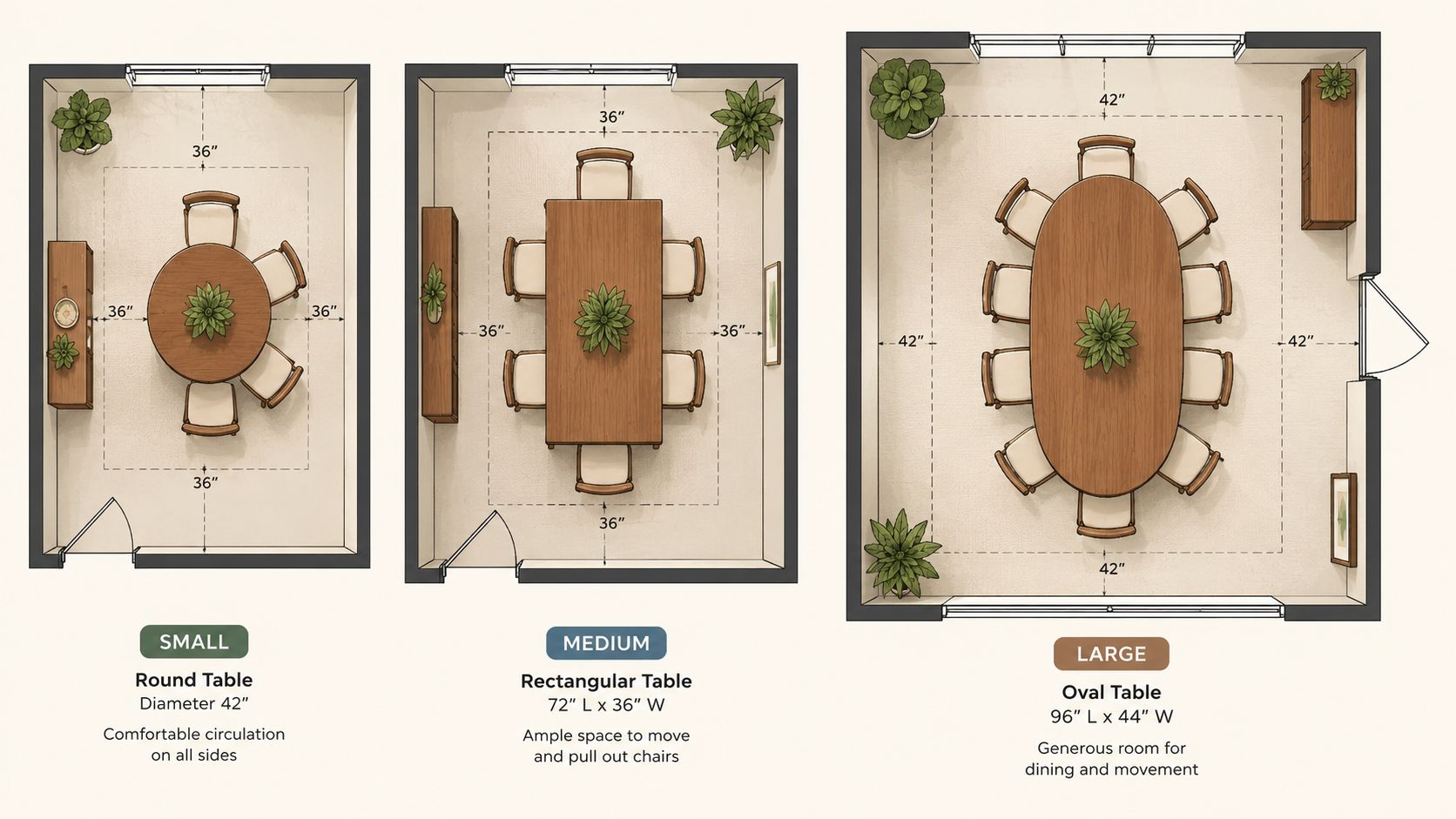
A dining table has to fit the room while people are living around it. The top size matters, but chair pull-out space, traffic flow, door swings, radiators, and nearby case pieces matter just as much. In many Capital Region homes, especially older ones, those details decide whether a table feels comfortable or oversized.
The clearance rule that prevents regret
Leave 36 to 48 inches around the table whenever the room allows it. That gives enough space to pull chairs out and lets someone pass behind a seated guest without squeezing sideways.
That range is a guide, not a law. I have seen plenty of older homes around Albany, Delmar, and Troy where one wall has a radiator, another has a doorway, and a third has a built-in cabinet. In those rooms, the right answer is often a slightly narrower table, a round top, or an extension style that stays compact most of the year.
A practical dining table size guide can help you sketch the room before you commit.
Table shape changes traffic and comfort
Shape is not just a style choice. It changes how the room works every day.
- Rectangular tables usually make the most sense in longer dining rooms and open kitchen-dining spaces.
- Round tables help in tighter rooms because they soften corners and keep conversation easy.
- Oval tables give you some of the flow of a round table with a little more serving and seating length.
- Square tables can suit balanced, smaller rooms, but they often stop working once guest counts grow.
For households that host showers, holiday brunches, or larger celebrations at home, the same spacing logic also helps when planning wedding table layouts, especially when comparing how round and rectangular tables handle seating flow.
Measure the room the way you actually use it
Use a simple process before you shop:
- Measure the open floor area, not just wall to wall dimensions.
- Subtract fixed obstacles such as buffets, heat registers, radiators, and door swing space.
- Tape the table outline on the floor so you can see its actual footprint.
- Set a few chairs in place and pull them out fully.
- Test the extension size too if you are considering leaves.
That last step matters more than many buyers expect. A table may fit beautifully closed and become awkward the few times a year it is opened. If you host twelve twice a year but bump into the table every day, the size is wrong.
Buy for daily life first
Many shoppers focus on the maximum number of seats they can squeeze into the room. For a table you plan to keep for decades, daily comfort is the better standard.
In our Freehold showroom, we often help Capital Region families work backward from how they live. How many people sit there on a Tuesday night. Which side needs a walkway. Whether the room needs one leaf or two. That local, hands-on planning is part of the advantage of buying nearby. A solid wood table should serve the room for generations, not dominate it from the first week.
The Beauty of Amish Craftsmanship and Custom Orders
Some tables are bought for convenience. Others are chosen because the buyer wants the piece to mean something. Amish-made dining furniture falls into the second category.
The appeal starts with the material, but it doesn't end there. Buyers who gravitate toward Amish craftsmanship are usually responding to a full package of values: solid hardwood, careful joinery, timeless proportions, and USA-made construction that doesn't chase short-term trends.
Why Amish construction stands apart
Amish craftsmen commonly build with hardwoods such as oak, maple, and cherry, and a typical benchmark is a minimum tabletop thickness of 1 inch (25.4 mm) to support structural integrity and resist warping over decades, as described by Heirloom Custom Woodworks and its custom woodwork standards.
That matters because a dining table takes stress in quiet ways. People lean on the edge. Leaves are installed and removed. The top expands and contracts with seasonal conditions. A thinner, weaker build often shows those strains early.
Amish construction has earned its reputation by building for the long run instead.
Custom order changes the outcome
For many Capital Region homes, custom ordering isn't about luxury for its own sake. It's about solving real problems that standard sizing and standard finishes don't address.
A custom table can help when:
- The room has awkward dimensions. A standard length may block a doorway or crowd a hutch.
- The wood tone needs to match existing pieces. This matters in homes with established flooring, trim, or inherited furniture.
- The family needs a specific seating plan. Some households want generous everyday seating, while others need extension capability for holidays.
- The style needs to stay timeless. Buyers can avoid trendy details that may look dated faster than the wood itself.
Those exploring that route usually start with custom order options for furniture so they can understand how wood, finish, size, and design choices come together.
Custom work makes the best sense when the buyer plans to live with the piece for a long time.
Buying an heirloom is different from buying a placeholder
A stock table asks one question. Does this work well enough?
A custom Amish table asks a better one. Will this still feel right ten or twenty years from now?
That shift matters. It turns the purchase away from short-term compromise and toward long-term ownership. Instead of accepting almost the right size, almost the right stain, or almost the right profile, the buyer gets a table shaped around the home and the family that will use it.
For anyone trying to buy once and buy well, that's often the difference between furniture and an heirloom.
Budgeting for Quality and Ensuring Lifelong Use
A dining table bought for life should be budgeted like a long-term household piece, not a short-term fix. Around Albany and the Capital Region, I often tell families to start with the years of use they expect, then work back to price. A table that serves weeknight dinners, holiday gatherings, school projects, and grandkids twenty years from now carries its cost differently than one that looks tired after five.
Price matters. So does what the price is buying.
With solid wood, the better question is whether the table is built to be lived with, repaired if needed, and still welcomed in the room as the house and family change. That is where quality earns its keep.
What quality looks like in person
Shoppers do not need a workshop background to spot a well-made table. A few practical checks tell the story fast.
- Push on the table lightly from the side. It should feel planted, not shaky.
- Look underneath the top. Clean joinery and solid attachment points usually signal better construction.
- Check the thickness and feel of the top. A table should have visual and physical substance.
- Study the finish in good light. The sheen should look even, with protection that feels durable rather than plastic-heavy or thin at the edges.
- Sit at it if possible. Knee room, apron depth, and base placement affect comfort more than many buyers expect.
I also tell buyers to trust their hands. If a table feels hollow, light in the wrong way, or rough in hidden places, that usually shows up later in day-to-day use.
Spend where it counts
For a buy-it-once table, construction and wood quality deserve the largest share of the budget. Fancy details are nice, but they should come after the basics are right. A simple, well-built cherry or oak table will usually outlast a more decorative piece made to hit a lower price point.
That trade-off is real. Some households choose a smaller solid wood table now instead of a larger table with weaker materials, and that can be the smarter decision. Others put more of the budget into extension leaves because holiday seating matters more than extra carving or a more elaborate base.
Good budgeting is not about chasing the lowest number. It is about avoiding the expensive cycle of replacing a table that was never built for heavy family use.
Care habits that help a table age well
Solid wood is durable, but it rewards steady care.
- Wipe spills promptly, especially water, wine, and anything acidic.
- Use placemats, trivets, and felt pads in the spots that see daily wear.
- Clean with a soft cloth and a wood-safe cleaner, not harsh sprays that can wear the finish.
- Avoid direct heat on the surface. Pots, pans, and baking dishes need a barrier.
- Lift, don't drag, objects across the top. Grit under a centerpiece or laptop can scratch faster than people expect.
- Keep indoor humidity reasonably stable during Upstate New York's dry heating season and humid summer months.
That last point matters in this region. Wood naturally responds to seasonal moisture changes. A well-made table is built to handle that movement, but stable indoor conditions help protect the fit and finish over time.
Lifelong use comes from construction plus habits
Even an excellent table can be worn down by repeated neglect. On the other hand, a solid wood table with good joinery, a durable finish, and sensible daily care often develops the kind of surface character families remember.
That is the goal. Buy a table with honest materials, keep up with simple maintenance, and choose a style you will still want in the room years from now. Done right, the budget stretches farther because the table stays in service, keeps its appeal, and becomes part of the family history.
Why Shop Local for Your Dining Table in Freehold
Saturday afternoon, a family from the Albany area walks into the showroom with a few phone screenshots and a rough room measurement. Within minutes, the essential questions start. Does that brown read too red against their floor? Will the pedestal base leave enough knee room for the grandchildren? Will the top still look right after years of weeknight dinners, holiday meals, and school projects?
Those answers are easier to get in person.
A solid wood dining table is a buy-it-for-life purchase for many households in the Capital Region. Photos can help narrow the field, but they do not show how a board reflects light near a window, how a finish reads beside your flooring, or how substantial a base feels when you put a hand on it. In the store, those details become clear fast.
Shopping local also means getting advice from people who know this region. Upstate homes range from older farmhouses and colonials to newer open-plan spaces, and each one asks something different of a table. Dry winter heat, humid summers, tighter dining rooms, and multi-use family spaces all affect what will work well over time. A good local showroom should help you sort through those trade-offs, not just point to a tag.
That matters even more if you want to build a room, not just buy one piece.
At Tip Top Furniture & Mattresses, shoppers from Albany, Schenectady, Troy, and nearby communities can compare wood species, table shapes, edge profiles, and finish colors side by side. They can also look at Amish-made and custom-order options with a clearer sense of what changes are useful. Sometimes a different width, leg style, or stain solves the whole problem better than settling for a stock table that is close, but not right.
There is practical value in having everything under one roof:
- Check table scale in person instead of guessing from online dimensions
- Compare finish tones against chairs, rugs, and other room pieces
- Review custom options that fit awkward layouts or specific seating needs
- Get guidance from a family business that has helped local homes for decades
- Coordinate the dining room with other furnishings and flooring in one stop
That last point saves people more trouble than they expect. A dining table rarely lives alone. Chairs need to feel right with it. The finish needs to sit well with the floor. The whole room needs balance. Working through those choices in person usually leads to a better result and fewer expensive mistakes.
For homeowners ready to find a solid wood dining table that fits their space and their long-term plans, Tip Top Furniture & Mattresses offers the kind of local help that makes a big purchase easier. Shoppers can visit the Freehold, NY showroom serving the Greater Albany Capital Region, explore Amish-made and custom-order options, and even check the Clearance Corner for immediate savings. For buyers who want a table, chairs, flooring, and room coordination handled in one place, it's worth making the trip.