Hybrid Mattress vs Innerspring: Which Is Best for You?

A bad mattress rarely fails all at once. More often, sleep starts slipping little by little. A shoulder goes numb. A partner turns over and the whole bed seems to move. Summer humidity settles into the room, and the mattress that felt fine in March suddenly feels stuffy in July.
That's when many shoppers across Albany, Schenectady, Troy, and Greene County start comparing the same two options: hybrid mattress vs innerspring. Both use coils. Both can feel supportive. But they're built differently, and that changes comfort, motion transfer, durability, and even how they handle Upstate New York weather.
For households also juggling a move, mattress shopping often lands on a long to-do list right beside furniture, delivery timing, and room setup. A practical resource like this Perth moving checklist shows how useful a clear plan can be when so many home decisions happen at once.
Good sleep starts with understanding the basics. The sections below break the choice into simple parts so readers can shop with confidence instead of guessing.
Table of Contents
- Introduction Is Your Mattress Working Against You
- Understanding the Core Construction
- A Head to Head Comparison for Upstate NY Sleepers
- The Overlooked Factor Temperature in the Capital Region
- Price vs Long Term Value A Smart Investment
- Finding Your Perfect Match Who Should Choose Which
- FAQs for Local Mattress Buyers in Upstate NY
Introduction Is Your Mattress Working Against You
Many people don't realize the mattress is the problem until sleep becomes a pattern of small frustrations. Falling asleep isn't hard, but staying comfortable is. The bed feels too firm under the hips, too springy when a partner moves, or too warm when the weather turns muggy.
That confusion gets worse because both major options can sound similar at first. They both contain coils, they both come in firm and plush feels, and both can look nearly the same from the outside. Inside, though, they work very differently.
For shoppers in the Capital Region, that difference matters more than national mattress guides often admit. A home in Albany with sticky summer nights and dry winter air places different demands on a bed than a climate-controlled showroom photo suggests. Construction, not marketing language, is what determines how a mattress responds over time.
A mattress should solve a sleep problem, not introduce a new one.
The good news is that this comparison becomes much easier once the internal design is clear. After that, feel, support, motion control, temperature, and value all make a lot more sense.
Understanding the Core Construction
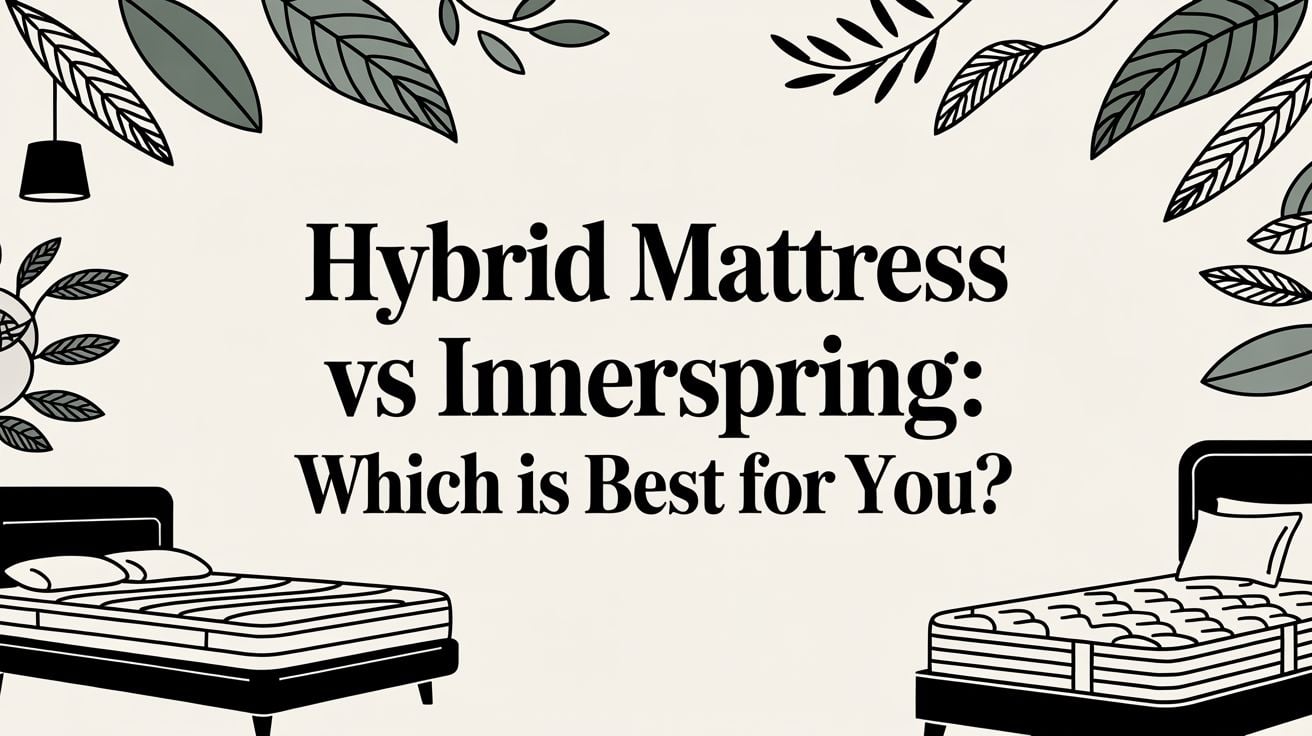
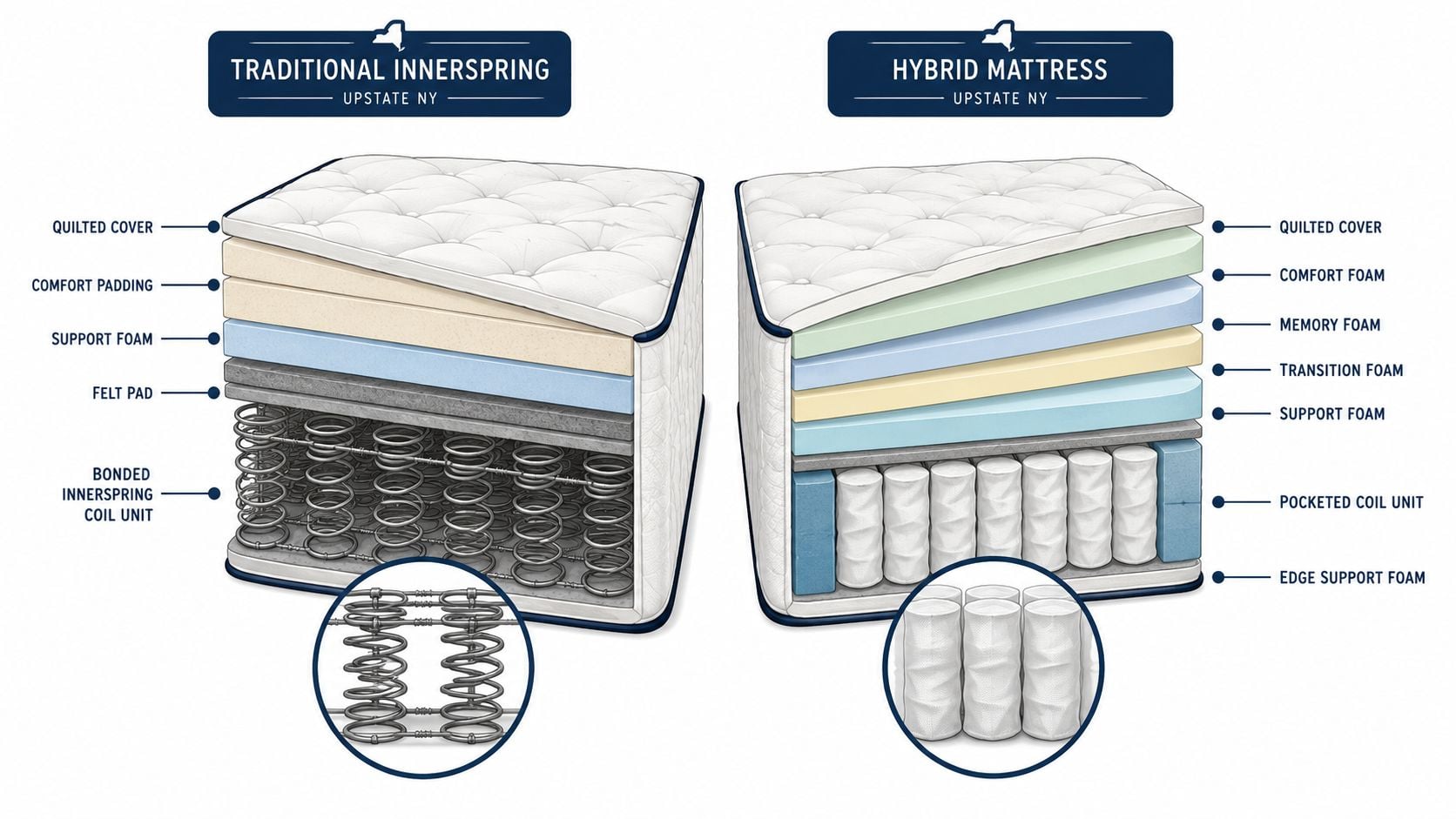
The simplest way to understand hybrid mattress vs innerspring is to look at where each bed does most of its work. One depends mainly on coils. The other splits the job between coils and thicker comfort layers.
What an innerspring mattress is made of
An innerspring mattress is the traditional model many adults grew up sleeping on. Its main feature is a coil unit that handles most of the support and much of the overall feel. On top, there's usually a relatively thin comfort layer.
That thin upper layer changes surface softness a bit, but it doesn't transform the basic character of the bed. The sleeper tends to feel more on top of the mattress than nestled into it. That's why innersprings often feel firmer, springier, and more direct.
A helpful analogy is a straightforward suspension system in an older vehicle. It supports weight well, feels responsive, and gives clear feedback. But it doesn't adapt as gently to curves and pressure points.
What makes a hybrid a hybrid
A hybrid mattress includes coils too, but the comfort system plays a much larger role. According to an industry definition of hybrid vs innerspring construction, a hybrid contains spring coils while more than one-third of its total height is made up of secondary comfort materials such as foam, latex, or wool. By contrast, an innerspring relies primarily on the coil core with only a thinner top layer.
That design changes both feel and function. Because the mattress has more material above the coils, the sleeper experiences more contouring and pressure relief before the support core pushes back. The coils in a hybrid are also physically shorter because those upper layers take up more of the mattress height.
For readers who want a deeper explanation of construction, this guide on what a hybrid mattress is gives a useful breakdown.
Practical rule: If the coil system is doing almost everything, it's an innerspring. If thick comfort layers share the work, it's a hybrid.
That single distinction clears up much of the confusion shoppers face in stores. It also explains why two mattresses with springs can feel nothing alike once someone lies down on them.
A Head to Head Comparison for Upstate NY Sleepers
Construction explains the “why.” Performance explains the “which one fits better.” For shoppers in the Capital Region, the best choice usually comes down to how the mattress feels through a normal week of sleep, not how it sounds in a product tag.
Innerspring vs. Hybrid At a Glance
| Feature | Innerspring Mattress | Hybrid Mattress |
|---|---|---|
| Construction | Coil-focused design with a thinner comfort layer | Coil support core with thicker comfort materials |
| Feel | More buoyant and on-top-of-the-bed | More cushioning and contouring |
| Pressure relief | Usually more limited | Generally more adaptive |
| Motion control | More movement can travel across the surface | Better at absorbing movement |
| Durability | Shorter average lifespan | Longer average lifespan |
| Best fit | Shoppers who like a classic, firmer bounce | Shoppers who want balanced comfort and support |
Readers who are still narrowing down features may find a broader mattress shopping guide helpful before visiting a showroom.
How they feel night after night
An innerspring usually has a more traditional, lifted feel. Many back and stomach sleepers like that easier movement because it doesn't hug the body as much. Changing positions can feel quick and simple.
A hybrid usually feels more balanced. The comfort layers soften contact at the shoulders, hips, and lower back, while the coils underneath still keep the bed from feeling flat or unsupportive. That combination often feels less harsh to sleepers who wake up sore on a firmer spring bed.
The difference is often easiest to notice first thing in the morning. On an innerspring, a sleeper may notice more obvious pressure at the points where the body meets the surface. On a hybrid, the mattress usually spreads that pressure more evenly.
What matters most for couples and long term use
Couples often notice motion transfer before anything else. According to this motion isolation comparison of hybrid and innerspring mattresses, hybrid mattresses provide superior motion isolation and reduced motion transfer compared to innerspring models because thick foam layers absorb movement, while the more open coil structure of innersprings tends to move that motion across the bed.
That matters in everyday ways:
- Partner movement: One sleeper turning over is less likely to disturb the other on a hybrid.
- Different sleep schedules: Early risers can get out of bed with less bounce traveling across the surface.
- Restless sleepers: A bed that absorbs motion often feels calmer through the night.
Durability also separates these two categories. In a direct lifespan comparison between innerspring and hybrid mattresses, the average lifespan of an innerspring mattress is 6 to 8 years, while a hybrid typically lasts 10+ years. The same source notes that innersprings are built primarily with continuous coils and less than 2 inches of comfort material, while hybrids use at least 2 inches of comfort material over pocketed coils.
That doesn't mean every innerspring is a poor choice. It means the classic spring design usually suits a narrower set of priorities. A hybrid tends to win when the sleeper wants a wider comfort range, better partner disturbance control, and a mattress built for a longer run.
The Overlooked Factor Temperature in the Capital Region
A lot of mattress advice stops at one simple statement: innersprings sleep cooler. That's partly true, but it's incomplete. In Upstate New York, sleep temperature isn't only about airflow. It's also about humidity, moisture retention, and how materials respond when the bedroom isn't in ideal conditions.
Why cool on paper can feel different at home
An innerspring usually allows more open air movement through the coil unit. That's why it has a reputation for a cooler sleep surface. But airflow alone doesn't guarantee comfort during sticky weather.
According to this temperature and humidity comparison for hybrid vs innerspring mattresses, 35% of hot sleepers still experience overheating in innerspring models, even though innersprings are commonly labeled cooler. The same source says hybrids with natural latex or wool layers show 20% better microclimate stability in humid conditions, which is especially relevant in places like Greene County where seasonal humidity swings can be noticeable.
That's an important distinction for homes across the Capital Region. A bedroom in August needs different performance than a bedroom in January. A mattress that feels breezy at first touch can still hold onto discomfort through the night if it doesn't manage the body's immediate sleep environment well.
In humid weather, “cool” and “temperature stable” are not always the same thing.
Materials that handle humidity better
Consequently, material choice becomes more useful than mattress labels. Some hybrids are built with comfort layers designed to stay more consistent in changing conditions. Natural latex and wool are the standout examples from the source above.
For local shoppers, that leads to a more practical way to think about temperature:
- If the main issue is simple airflow, an innerspring may still appeal.
- If the problem is feeling clammy in humid weather, a well-designed hybrid may perform better.
- If comfort changes with the seasons, material composition matters more than the word “cooling” on a showroom tag.
A broader look at creating a sleep sanctuary with lighting, temperature, mattress, and bedding can help readers connect the mattress decision to the full bedroom setup.
For many Upstate NY households, the better question isn't “Which mattress is cooler?” It's “Which mattress stays comfortable when the room, the season, and the air all change?”
Price vs Long Term Value A Smart Investment
Price matters. It should. A mattress is one of the bigger home purchases most families make, and the lower sticker price on an innerspring can be appealing right away.
Upfront cost and lifetime use are not the same thing
The problem is that lower upfront cost and better value are not always the same thing. A mattress gets used night after night, year after year. That makes lifespan part of the financial decision, not just comfort.
The most useful comparison is simple. A mattress that needs replacing sooner may cost less on day one, but it can become the more expensive choice over the long run. A mattress that lasts longer often gives the household more years of steady support before the next purchase cycle begins.
This matters even more for main bedrooms, guest rooms that see regular use, and homes where one poor mattress purchase leads to another rushed replacement.
How shoppers make the better bed fit the budget
A detailed look at why investing in a high-quality mattress matters for long-term health helps frame the decision beyond just the price tag.
Shoppers who want stronger value usually focus on three things:
- Useful lifespan: A bed that holds its comfort and support longer usually delivers better value.
- Daily impact: Better sleep quality affects the whole household, not just bedtime.
- Purchase flexibility: Financing and clearance options can make a better mattress more realistic now instead of later.
For many families in Albany, Troy, and nearby communities, the smartest move isn't always buying the cheapest model. It's choosing the mattress that won't need replacing prematurely, then using flexible payment options or shopping clearance inventory to stay within budget.
The best mattress value is often the one that solves the problem once, rather than cheaply solving it twice.
Finding Your Perfect Match Who Should Choose Which
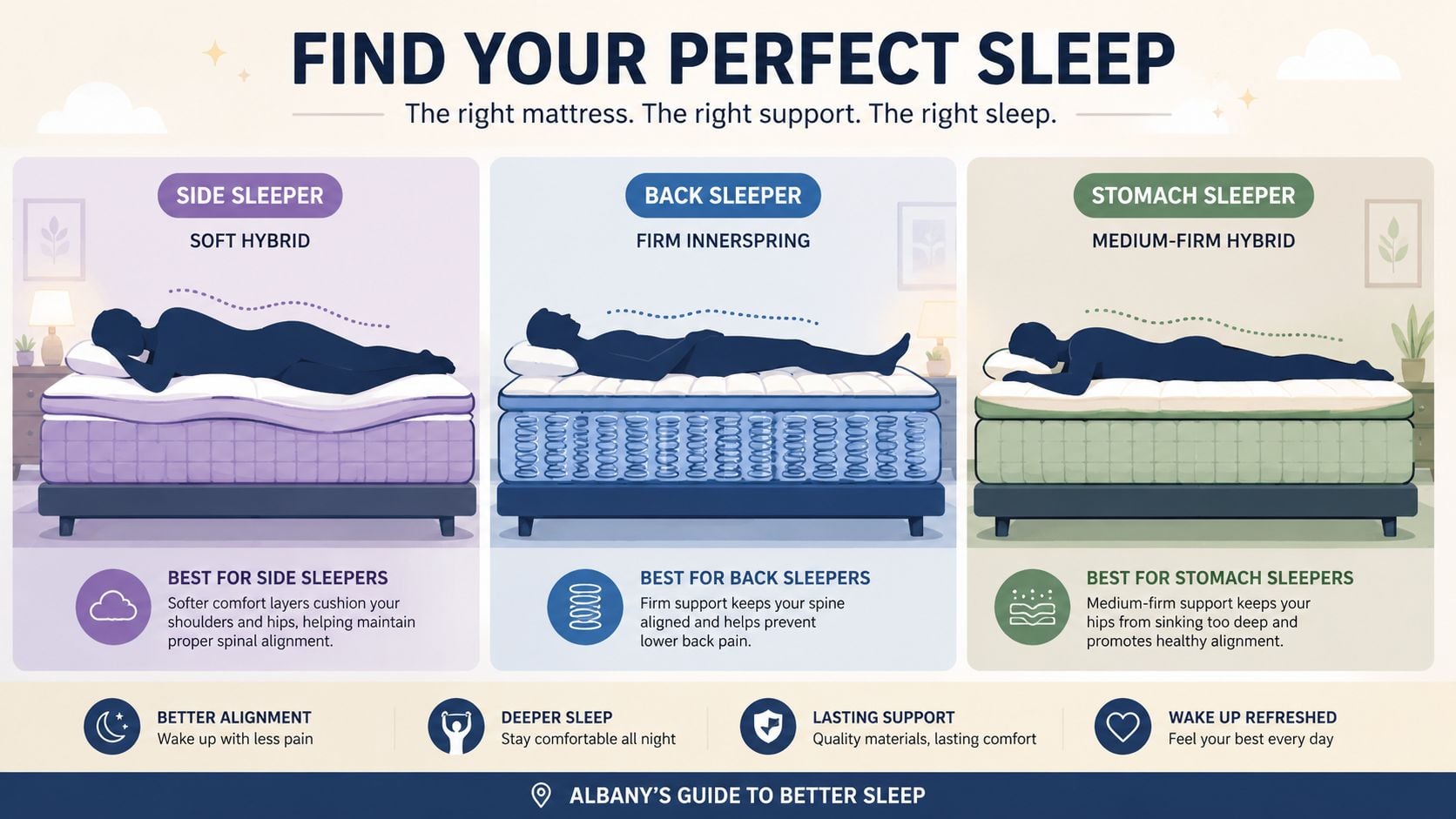
No mattress type works for everyone. The better choice depends on how a person sleeps, where pressure builds up, and how much cushioning the body needs before support kicks in.
Best fits by sleep position
Side sleepers often need more pressure relief at the shoulders and hips. A hybrid usually fits that need better because the upper comfort layers cushion those contact points more gently.
Back sleepers can go either direction. Some like the flatter, firmer pushback of an innerspring. Others prefer a hybrid that supports the lower back while taking pressure off the upper body.
Stomach sleepers often want a surface that feels supportive and less sinky. A firmer innerspring can work well here, though some firmer hybrids also meet that need if the comfort layers don't let the hips dip too far.
Body type and comfort needs matter too
Body weight changes how a mattress feels. A lighter sleeper may find an innerspring comfortable and responsive because there's less force pressing into the surface. A heavier sleeper often benefits from the deeper cushioning and more layered support a hybrid can provide.
Shoppers with joint sensitivity, shoulder discomfort, or hip pressure usually do better on mattresses that spread weight more evenly. Shoppers who dislike being cradled often prefer the simpler response of an innerspring.
A body-specific guide to which mattress is right for your body type can help narrow that choice.
There's also a point where reading stops being enough. Bed-matching technology is useful because it removes some of the guesswork from mattress shopping. Instead of relying only on showroom impressions, it helps match support and comfort to the sleeper's body and sleep style in a more personalized way.
That's especially helpful for couples who need a compromise, sleepers with changing comfort needs, and anyone torn between the familiar bounce of innerspring and the more adaptive feel of a hybrid.
FAQs for Local Mattress Buyers in Upstate NY
Local mattress shopping comes with questions national articles often skip. Delivery routes, older homes, custom furniture, and room fit all affect the final choice.

Do older homes need a new foundation for a hybrid
Sometimes yes, sometimes no. The key issue is support, not age. A hybrid is typically heavier and more layered than a traditional innerspring, so the existing base should be checked for manufacturer compatibility, slat spacing, and overall condition before the mattress is delivered.
How delivery and room fit questions usually work
Most shoppers should measure stairways, hall turns, bed frame dimensions, and the bedroom itself before buying. That matters in older Albany-area homes where room layouts can be tighter than expected.
A practical testing checklist helps:
- Measure access paths: Include stair railings, landings, and door swing clearance.
- Confirm foundation type: Platform, slatted base, adjustable base, or box spring all affect compatibility.
- Think about setup day: Remove old bedding and clear enough space for safe placement.
Can a mattress be matched to a custom bed frame
Yes, but measurements should be verified carefully. That's especially important with handcrafted wood furniture, including Amish-made bed frames, where build quality is excellent but exact interior dimensions still matter. Shoppers ordering custom bedroom furniture should confirm mattress size, foundation height, and desired sleep surface height together.
Why many shoppers look for USA made mattresses
Many buyers value durability, consistency, and better material transparency. That doesn't guarantee one mattress is right for every sleeper, but it often aligns with shoppers who want lasting value and dependable construction instead of disposable comfort.
For households furnishing more than one room, this is also where one-stop planning helps. Mattress choice doesn't happen in isolation. Bed height, bedroom furniture scale, flooring, and the overall room plan all connect.
Tip Top Furniture & Mattresses has helped Capital Region families sleep better and furnish their homes since 1978. Shoppers visiting the Freehold, NY showroom can compare USA-made mattresses in person, use the store's bed-matching technology, explore custom order options, and ask about flexible financing, delivery, and clearance values. For a practical next step, visit Tip Top Furniture & Mattresses to plan a showroom trip and find the right mattress for the way the household sleeps.