Modular Furniture for Small Spaces Your Upstate NY Guide

A lot of homes around the Albany Capital Region have good bones and tight rooms. A second-floor apartment in Schenectady, a compact ranch outside Albany, or an older Greene County house with narrow doorways all create the same challenge. Standard furniture often fits on paper but feels oversized once it's in the room.
That's why modular furniture for small spaces has become such a practical category. It gives homeowners and renters a way to work with the home they have, instead of forcing bulky pieces into layouts that were never built for them.
Table of Contents
- Making Big Style Fit in Small Upstate NY Homes
- The Genius of Modular Furniture Explained
- Exploring Modular Options for Your Entire Home
- How to Measure and Plan Your Modular Layout
- Quality Checklist What to Look for When Buying
- Your Local Guide to Buying Modular Furniture Near Albany
Making Big Style Fit in Small Upstate NY Homes
You find a sofa you love, measure the wall, and it looks like a fit. Then delivery day comes. The front entry is tight, the stair turn is tighter, and once the piece is in the room, it blocks the walking path to the kitchen. That is a common small-home problem around Albany, Troy, Schenectady, and the hill towns outside them.
Smaller homes and apartments are part of daily life across the Capital Region, especially in older neighborhoods where rooms have character but not always generous dimensions. I see the same trouble spots again and again. Narrow doorways, steam radiators, off-center windows, short wall runs, and multipurpose rooms that have to serve as living room, office, and guest space all at once.
Why small-space frustration is so common locally
A compact room can fail even when the square footage sounds reasonable on paper. The issue is usually the layout. One wall is broken up by trim or a heat source. Another has the main traffic path. By the time those limits are accounted for, a standard full-size sofa or bedroom set can make the room feel crowded fast.
Older Upstate NY homes add a second layer to the problem. Many were built for a different scale of furniture than what fills most showrooms now. Deep seats, wide arms, tall headboards, and oversized case pieces can look great in a large suburban room, but in a brownstone, bungalow, condo, or apartment near Albany, they often eat up storage space and floor space at the same time.
The best piece is the one that keeps the room usable every day.
Why modular works better than forcing standard furniture
Modular furniture gives you more control over fit before and after delivery. Instead of committing to one bulky piece, you can choose sections that come through tighter entries, work around obstacles, and suit how the room is used. That matters in local homes where the challenge is rarely just width. It is width, depth, traffic flow, and access all together.
At Tip Top, this is often where custom ordering helps. A customer may need a shorter sofa with a real seat depth, a storage bed that does not overwhelm the room, or a USA-made Amish piece sized for a wall that is not quite standard. Settling for the closest big-box size usually creates a compromise you feel every day. Ordering for the room usually costs more upfront, but it can save you from replacing a bad fit a year later.
If you are working on a tighter room, these small room ideas that help a space feel bigger pair well with modular furniture. Good small-space design comes down to scale, movement, and function. Style still matters, but in a smaller Upstate NY home, style has to earn its footprint too.
The Genius of Modular Furniture Explained
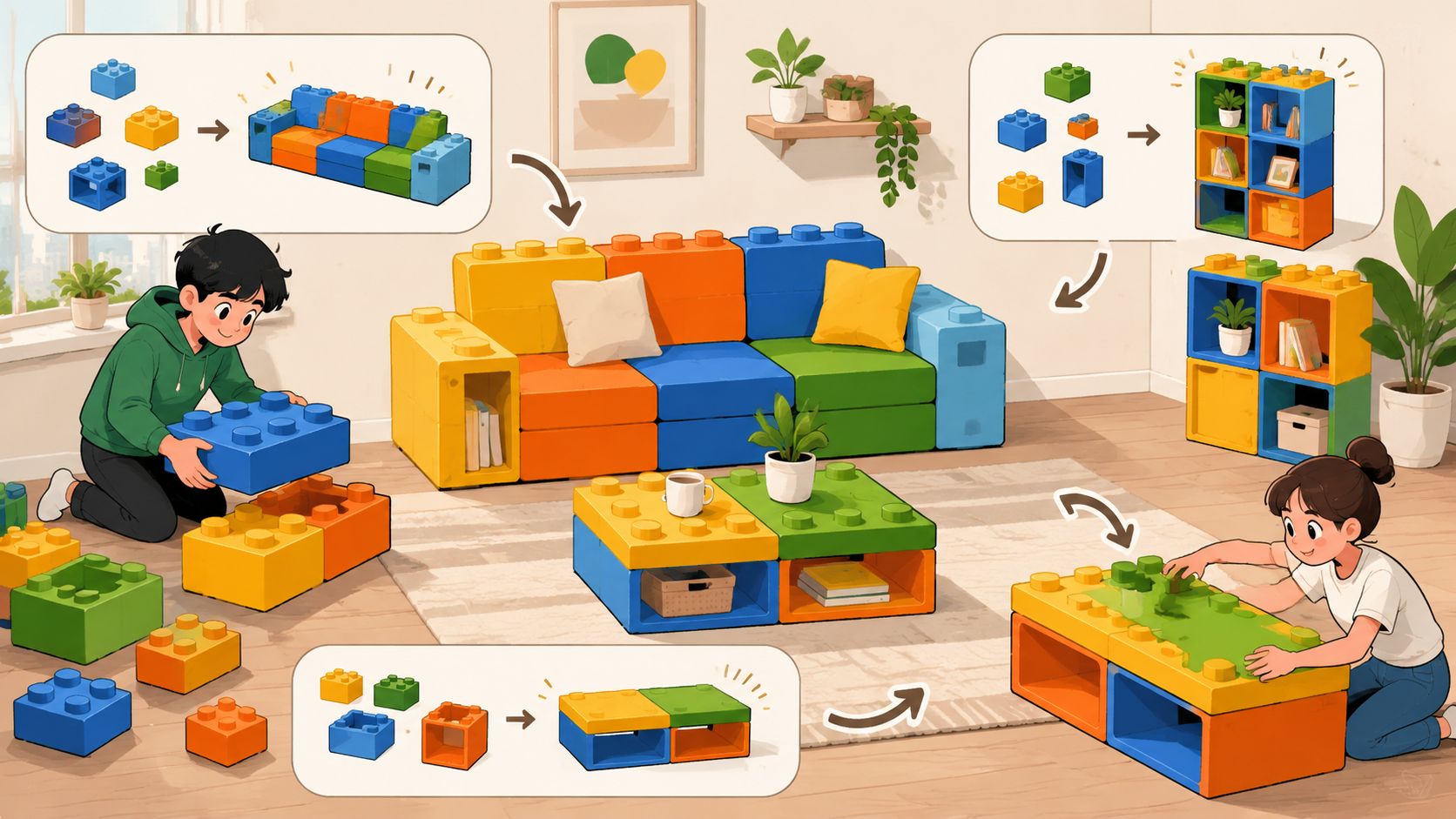
Modular furniture is easiest to understand as a system of parts instead of a single fixed object. It functions as building blocks made for daily living. Each section has a job, and those sections can be connected, separated, expanded, or rearranged as the room or routine changes.
What modular furniture actually means
A traditional sofa or sectional is mostly fixed. It arrives in one set form, and that form determines where it can go. If the room changes, the furniture usually doesn't.
A modular version works differently. A buyer might start with two armless chairs and a corner unit, then later add an ottoman, a chaise, or another seat. The same pieces can often shift from an L-shape to a straight run, or from a family room layout to an apartment-friendly setup after a move.
That is the main benefit. Modularity isn't just about pieces coming apart. It's about keeping options open.
Why it solves awkward rooms
Small rooms often fail because the furniture assumes a perfect rectangle. Real homes rarely cooperate. There may be a window off-center, a heating unit that steals one wall, or a traffic lane from the front door to the kitchen that can't be blocked.
Modular furniture handles those realities better because the layout can bend around the room. One home might need a low-profile corner arrangement. Another might work better with separated seats and an ottoman that moves where needed. In a rental, that matters even more because the next room may have an entirely different footprint.
A fixed sectional is usually strongest in a stable, single-wall arrangement. A modular system has the advantage when the room is irregular, the layout may change, or the owner expects another move in the future.
Good modular furniture gives a room a second chance. It lets the layout be edited after delivery, not locked in before real life starts.
For shoppers comparing flexible pieces, this guide on choosing multi-functional furniture for modern homes helps connect modularity with everyday use. That's where the concept clicks. A piece doesn't need to look complicated to work harder.
Exploring Modular Options for Your Entire Home
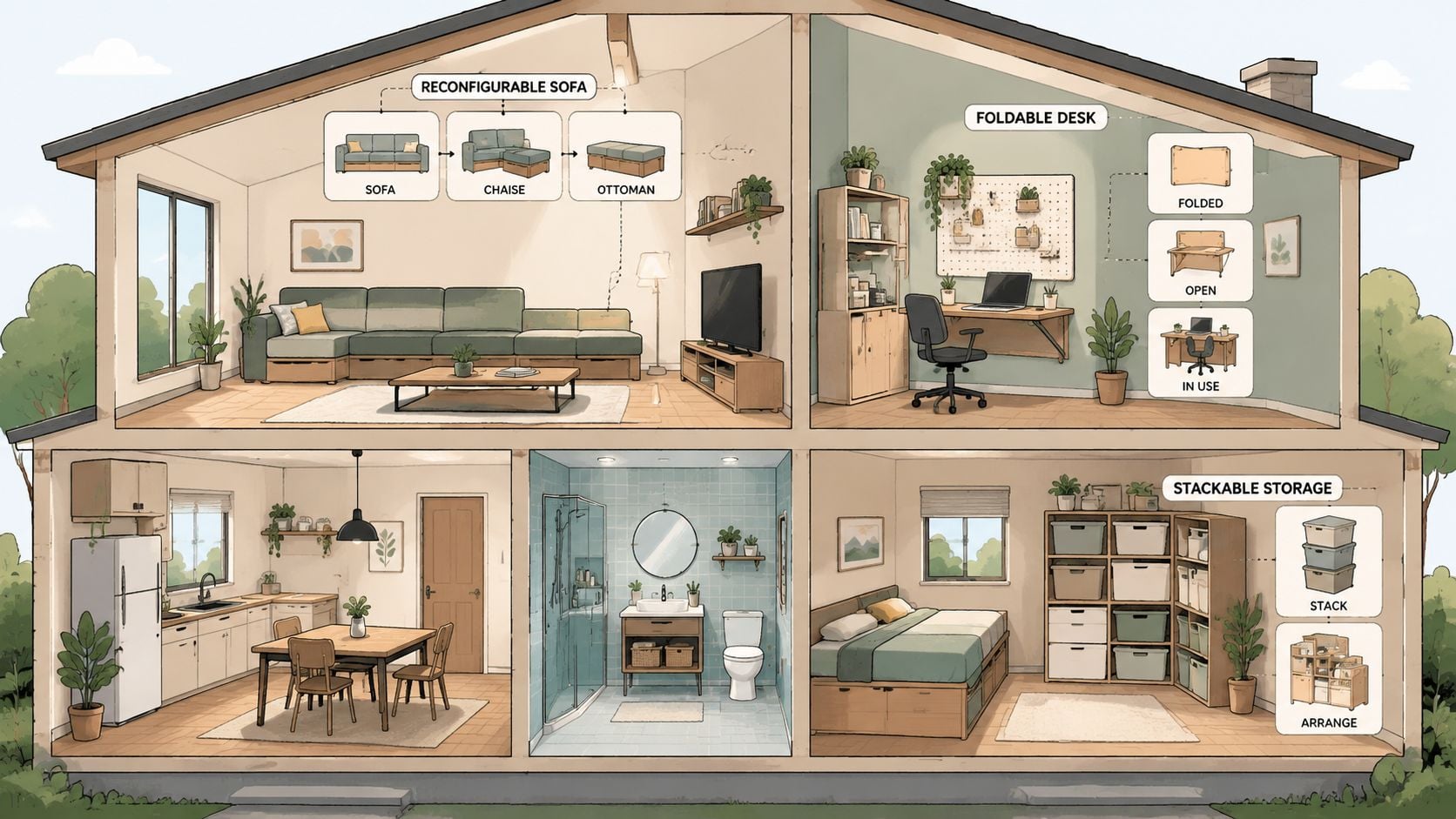
A small home works better when the furniture plan covers more than the sofa. In Albany-area apartments, older bungalows, and compact colonials, the pressure usually shows up across several rooms at once. The living room needs seating and storage. The bedroom needs to hold more than clothes. A dining corner may need to serve weekday meals, homework, and holiday overflow.
Living room pieces that earn their footprint
The living room usually carries the heaviest load. It is the place for everyday sitting, guests, storage, and sometimes remote work. Modular seating helps because it gives more control over how much room the layout takes up and where that room is used.
In many smaller homes, a few compact seating units and a movable ottoman work better than one oversized sectional with a fixed chaise. That setup keeps walkways clearer and gives the room more than one useful arrangement. In another house, a storage chaise is the better answer because it hides blankets, toys, or board games that would otherwise spill into the open.
Multifunctional furniture also improves usable floor space in a practical way. A bench that stores throws, an ottoman that works as a coffee table, or a sleeper that handles occasional guests can reduce the need for extra pieces. That matters in rooms where one bulky purchase can throw off the whole layout. If you are comparing room arrangements before you buy, this guide on planning a room layout for better flow helps sort out what should stay flexible and what should stay fixed.
Bedroom and office solutions that adapt
Bedrooms in older Upstate NY homes rarely behave like showroom rectangles. Windows sit where a dresser should go. Closets cut into wall space. Sloped ceilings and baseboard heat limit what can sit where.
Modular bedroom furniture handles those limits better than fully fixed sets. Storage beds, stackable nightstands, and flexible wardrobe pieces let the room use the wall space it has, not the wall space a catalog assumes. At our store, this is often where custom order options make the difference, especially for customers trying to fit bedroom storage into tighter city homes around Albany, Troy, and Schenectady.
Home offices benefit for the same reason. A desk with add-on shelving can start as a basic workstation and grow if paperwork, printers, or supplies start taking over. Open storage keeps daily items close. Closed cabinets keep the room from looking busy.
Dining and storage ideas for harder-working rooms
Dining spaces often need flexibility more than they need size. A table with modular seating, nesting pieces, or movable benches makes better use of an eat-in kitchen than a full dining set that stays spread out all week. Benches are especially useful in smaller homes because they tuck in tightly and can move to an entry or bedroom when extra seating is needed.
The overlooked spots matter too. Entryways, upstairs landings, and narrow alcoves are where modular storage often earns its keep. Shallow shelving, stackable cubes, and compact media pieces can create order without crowding the path through the house.
USA-made and Amish-built furniture is worth a close look here because small-space furniture gets used hard. Pieces that open, stack, store, or move around the house need solid joinery, durable slides, and materials that hold up over time. Cheap modular furniture can solve a space problem for six months and become a replacement problem after that.
A whole-home modular plan usually comes down to four practical needs:
- Living room: Seating that can shift with guests, pets, and everyday routines.
- Bedroom: Storage built into the furniture so the room does not need extra bulky pieces.
- Office: Components that can expand from a simple desk into organized storage.
- Dining: Compact pieces that work for daily use and can adapt when family visits.
The best results come from treating modular furniture as a house-wide strategy, not a single-room purchase. In smaller Capital Region homes, that approach usually saves more frustration than trying to solve each room one piece at a time.
How to Measure and Plan Your Modular Layout
Saturday delivery shows up, the boxes make it through the front door, and then the trouble starts at the stair turn or the living room walkway. In smaller Capital Region homes, that happens more often than people expect. Good planning fixes it before you buy.
Start with the room and the path in
Measure the room, then measure everything the furniture has to pass through to get there. Older Albany homes, upstairs apartments, and narrow entries in the Capital Region can be less forgiving than the floor plan suggests.
Use a simple process:
- Measure wall-to-wall dimensions and mark windows, radiators, vents, trim, and anything else that projects into the room.
- Check entry points including exterior doors, interior doors, stair width, ceiling height on stair runs, and tight corners.
- Map the main walking paths between the door, kitchen, hallway, and the spots people use every day.
- Note fixed obstacles such as baseboard heaters, low window sills, floor outlets, and return-air vents.
That last step matters more than shoppers expect. A sectional can fit on paper and still create daily frustration if it blocks a heater, crowds a doorway, or forces everyone to squeeze sideways past the chaise.
Choose proportions that suit the room
Compact rooms usually work better with shallower seats, slimmer arms, and a shorter overall footprint. The goal is to keep comfortable seating without letting one piece take over the room.
In practice, I tell shoppers to watch the shape as much as the size. A modular sofa with trim arms and visible legs often feels easier in a small living room than a bulky piece with deep seats and a heavy base, even when the outside measurements look close. If a chaise is part of the plan, place it where it supports lounging without cutting off the natural route through the room.
A quick planning table helps:
| Room element | What usually works better in a small room | What often causes problems |
|---|---|---|
| Sofa profile | Slim arms, lighter base, moderate depth | Bulky arms, deep seats, heavy skirted bases |
| Layout | Wall-based arrangement with clear walking space | Floating setup that squeezes the main path |
| Chaise use | Shorter chaise placed away from entry and windows | Long chaise that blocks access or interrupts traffic |
| Visual weight | Legs or floor clearance that shows more floor | Closed-bottom pieces that look heavy |
A room can technically fit a large piece and still feel cramped.
Test the layout before buying
Tape the footprint on the floor. Then live with it for a few minutes. Walk from the doorway to the kitchen, sit where someone would normally sit, open nearby drawers, and carry a laundry basket through the room. That quick test catches problems that a measuring tape alone will miss.
For a more precise version, use this room layout planning guide for arranging furniture to scale. It helps homeowners sort out spacing before ordering, especially when they are choosing custom configurations or trying to make a USA-made or Amish-built piece fit an older Upstate NY room with quirks.
The best modular layouts leave enough open space for real life. Kids cut through the room. Guests pull up a chair. Heat needs to circulate in winter. If the plan respects those everyday habits, the furniture will keep working long after delivery day.
Quality Checklist What to Look for When Buying
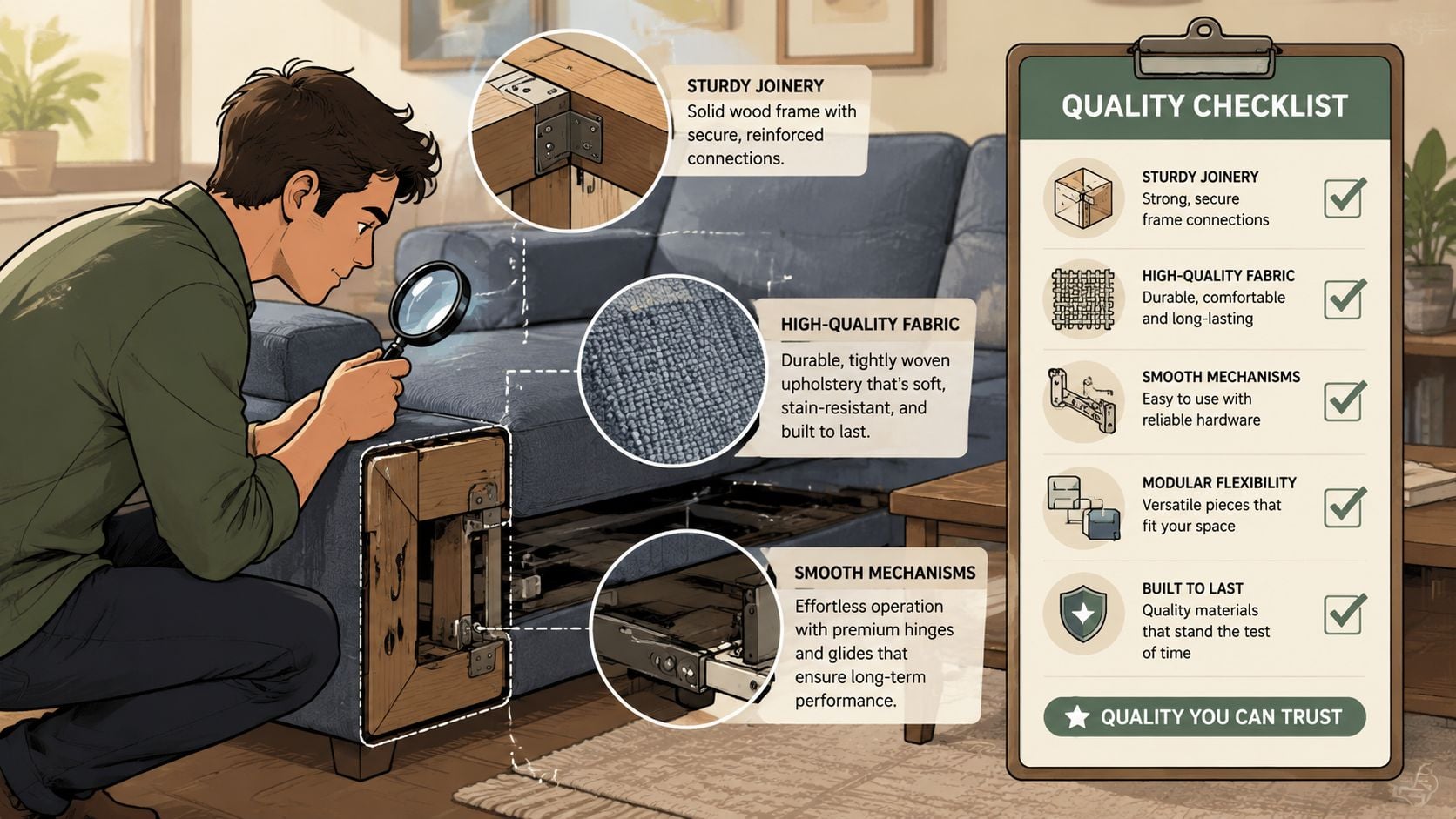
In a smaller Albany-area home, one weak piece of modular furniture becomes a daily annoyance. You feel it when sections drift apart, cushions stop sitting level, or storage hardware starts sticking after one heating season and one humid summer. Quality shows up fast in tight rooms because the furniture gets used hard and there is no spare space to hide a bad fit or a flimsy build.
The hardware and construction details that matter
Start with the parts you do not see at first glance.
A good modular system needs connectors that hold sections in place during normal use. If the pieces shift every time someone drops into a seat or pushes off the arm to stand up, the layout will never feel settled. In a small living room, even an inch or two of movement can throw off spacing around a coffee table or narrow walkway.
Then check how the piece sits as a whole. Look across the front edge. Look at the cushion height. Open any storage compartment. Pull on the arms a bit. Better-made furniture usually feels square, steady, and consistent from one module to the next.
Use this quick store checklist:
- Check how modules connect: Ask whether the pieces clip, lock, or bracket together, and have the salesperson show you.
- Look for straight lines: The front rail, seat cushions, and backs should line up cleanly across sections.
- Test the end seat: Sit on the outer edge and stand up normally. It should stay planted.
- Inspect the base and underside: Solid support, clean upholstery work, and neat dust covers usually point to better build quality.
- Try moving one section: Modular furniture should be movable, but it should not feel flimsy or loose.
Materials and features that hold up better
Materials matter just as much as the frame. In small homes, furniture often needs to do two jobs. A chaise may need to store blankets. A modular cabinet may need to hide kids' games and still look good in the main room. Removable or easier-care covers, performance fabrics, and finishes that handle everyday wear are practical choices, especially in households with pets, children, or strong afternoon sun.
For wood modular pieces, pay attention to what they are made of. Solid wood, quality veneer over stable core panels, and well-fitted joinery usually age better than thin printed surfaces and weak fasteners. That is one reason many Upstate NY shoppers still prefer USA-made and Amish-built options for shelving, storage, and dining furniture. The value is not in a slogan. It is in thicker materials, repairable construction, and workmanship that tends to stay tight over time.
There is a trade-off, of course. Better materials and custom-order flexibility usually cost more up front and can take longer to arrive. In our store, that conversation comes up a lot with Capital Region homeowners furnishing older apartments, small colonials, and compact townhomes. If the room has tight corners, uneven walls, or narrow stairs, paying for the right scale and stronger construction often prevents a replacement purchase a few years later.
Visual weight still counts, but it should not outweigh comfort and durability. A lighter-looking piece with some leg clearance can help a room feel more open. If that slimmer design comes with thin cushions or weak support, it is the wrong compromise.
Good modular furniture should feel settled on day one and still work the same way after years of real use.
If you want a better framework for comparing value, this smart guide to shopping for furniture without costly mistakes helps you judge construction, materials, and long-term practicality before you buy.
Your Local Guide to Buying Modular Furniture Near Albany
A lot of Capital Region homes ask more from furniture than the floor plan suggests. A second-floor apartment in Albany may have a tight stair turn. A small colonial near Schenectady may have short wall sections and older trim that make standard sizes look awkward. In those rooms, modular furniture works best when you buy for the house you have, not the catalog photo.
When custom ordering makes more sense than settling
Local shopping helps because the discussion starts with your actual room. In our store, that often means checking whether a bookcase needs a shallower depth, whether a sectional has to break into smaller pieces for delivery, or whether a dining set needs a different finish to sit comfortably with existing woodwork. Those are practical decisions, not decorating extras.
Custom ordering usually makes sense when a standard piece creates a daily annoyance. A cabinet that sticks too far into a walkway gets old fast. A modular wall unit that almost fits an alcove still looks wrong every time you walk in. In smaller Upstate NY homes, a few inches can decide whether a room feels usable or cramped.
That is where local experience matters. Tip Top works with plenty of homeowners and apartment dwellers across Albany, Troy, Saratoga, and the surrounding area who are trying to solve real space problems, not just fill empty corners. USA-made and Amish-built lines are often helpful here because they tend to offer better scale options, stronger construction, and more finish choices than quick-turn imported pieces.
How to shop locally without making an expensive mistake
Start with the trouble spots first, not the style board. Measure the room, of course, but also measure the front door, stair width, ceiling height on landings, radiator placement, window trim, and any narrow pass-through between rooms.
Then sort your priorities.
- Function comes first: Decide whether the piece needs to add seating, storage, sleeping space, or two of those jobs at once.
- Bring photos with measurements: A few phone pictures of the room and entry path can prevent ordering something that fits on paper but not in real life.
- Ask what can be adjusted: Depth, finish, arm style, configuration, and shelf layout often matter more than color.
- Compare delivery realities: White-glove service can save a lot of strain in older homes and upstairs spaces.
- Balance timing and fit: In-stock furniture solves an immediate need. Custom ordering often solves the room better.
Delivery and setup deserve more attention than many shoppers give them. If your home has narrow halls, porch steps, or a sharp stair turn, review these furniture delivery and assembly options before you commit to a larger modular piece.
The best local purchase usually feels straightforward once the planning is done. It fits the room, comes into the home without drama, and still works when life shifts a year or two from now.
For homeowners furnishing a smaller home in Freehold, Albany, Schenectady, Troy, or elsewhere in the Capital Region, Tip Top Furniture & Mattresses gives you the kind of practical help that makes modular buying easier. The showroom has served Upstate New York for decades, offers professional design help, and carries furniture, mattresses, décor, and flooring in one place. That matters when you are trying to make a small home feel finished without wasting space, money, or time.