Mattress Topper Thickness Guide for Better Sleep


A common Capital Region sleep problem starts the same way. Someone goes to bed on a mattress that feels fine for the first few minutes, then wakes up with sore shoulders, a tight lower back, or that restless feeling that comes from tossing from one side to the other. The mattress may not be completely worn out. It may just be too firm, a little uneven, or no longer quite right for the way that person sleeps now.
That's where mattress topper thickness changes the whole conversation. The thickness of a topper decides whether it works like a light comfort layer or a deeper cushion that can noticeably change how the bed feels. For readers sorting through firm bed comfort solutions, that one detail often matters more than the label on the package.
Families around Freehold, Albany, Schenectady, and Troy often want the same thing. They want better sleep without making an expensive mistake. Some need a simple softness upgrade. Some need better pressure relief at the shoulders and hips. Some need to know whether a topper is even the right fix at all.
A useful place to start is a practical guide to choosing a mattress, because topper decisions make more sense when the mattress underneath is part of the picture. Since 1978, local shoppers have relied on steady, plain-spoken sleep advice in Freehold, and that same careful approach matters here.
A topper isn't just about making a bed softer. It's about changing how the body meets the mattress.
The confusion usually comes from treating thickness like a softness score. It isn't. Thickness is a fit system. It works together with sleep position, body weight, material, and the condition of the mattress underneath.
Introduction Why Mattress Topper Thickness Changes Everything
Thickness decides how much of the underlying mattress a sleeper still feels. A thin layer can take the edge off a bed that feels slightly too firm. A thicker layer can reshape the comfort surface enough to reduce pressure points and cushion sharper contact areas.
That's why shoppers often notice that two toppers can both feel soft by hand but behave very differently overnight. One may only smooth the surface. The other may let the shoulders and hips settle in more, which can feel better for one sleeper and worse for another.
Why this matters in everyday bedrooms
In many homes across the Greater Albany Capital Region, the goal isn't to build a luxury hotel bed. The goal is simpler. It's to stop waking up stiff.
A guest room mattress may feel hard because it doesn't get used often. A main bedroom mattress may still feel supportive but no longer comfortable enough at the surface. In both cases, the right topper thickness can tune comfort faster than replacing the whole bed.
Three questions usually clear up the confusion:
- How much change is needed: A small adjustment calls for a thinner comfort layer. A bigger comfort correction calls for more depth.
- Where the discomfort shows up: Shoulder and hip pressure often call for more contouring than a sleeper who mainly wants a smoother surface.
- What shape the mattress is in: A topper can improve feel, but it can't rebuild a worn-out support core.
The mistake that costs people money
Many shoppers assume thicker always means better. It doesn't.
A topper that's too thin may not do much. A topper that's too thick may create too much sink, extra height, and a less stable sleep surface. The right choice sits in the middle, matched to the person and the bed.
That's why the rest of this guide treats mattress topper thickness as a practical fitting tool, not just a comfort buzzword.
How Mattress Topper Thickness Affects Comfort and Support
A topper's thickness controls how much of your body meets the topper first, and how quickly you reach the mattress underneath. That is why thickness affects two things at once. It changes pressure relief at the surface and body alignment below it.
A simple way to judge it is to picture layers under your hand. A thin kitchen towel softens a hard counter a little. A folded bath towel creates more cushion, but it also lets your hand sink farther before the counter pushes back. A mattress topper works in much the same way. More depth can reduce pressure at the shoulders and hips, but too much depth can let heavier parts of the body drop farther than they should.
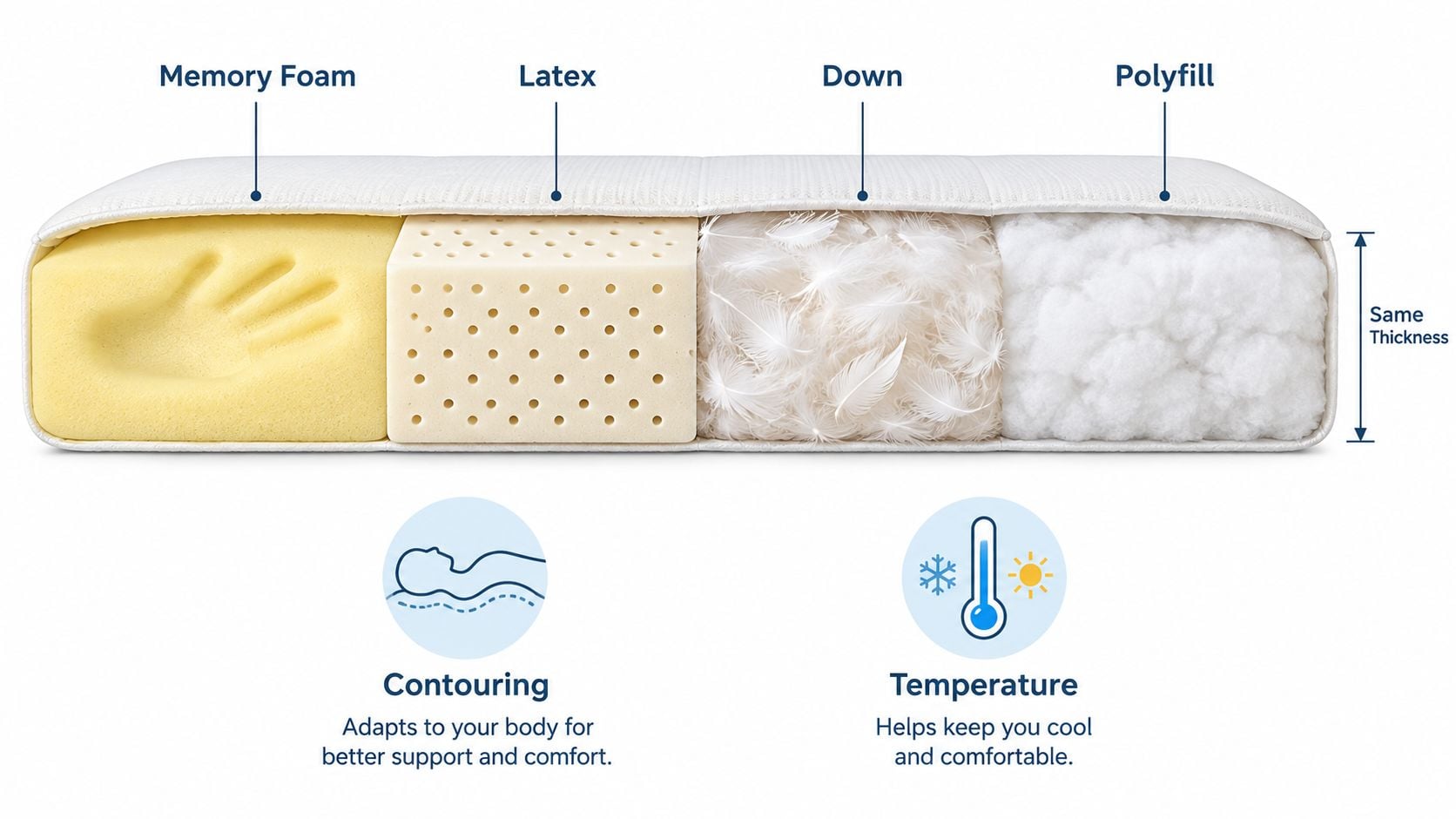
What each thickness usually does
Thickness is most useful as a fitting tool, not a softness score by itself.
- 1 inch: Best for a light surface adjustment. It can take the edge off a firm bed, but it usually will not change pressure relief very much.
- 2 inches: A common choice for sleepers who want noticeable cushioning without changing the bed's overall feel too much.
- 3 inches: Often a good middle ground for side sleepers, mixed-position sleepers, and people who need more room for shoulders or hips to settle in.
- 4 inches: Usually makes sense only when the mattress feels very firm at the surface or the sleeper needs a bigger comfort buffer. On the wrong bed, it can create too much sink and make movement harder.
The key is how far your body travels before support pushes back.
Lighter sleepers often do not compress a topper as much, so a very thick model can feel bulky without adding much benefit. Heavier sleepers usually press farther into the material, so a thinner topper may flatten out and leave them feeling the mattress too quickly. Sleep position matters too. Side sleepers often need more depth than back or stomach sleepers because the shoulders and hips carry more concentrated pressure.
Why comfort and support can pull in different directions
Comfort is what you notice first. Support is what you notice the next morning.
If a topper is too thin for your build and sleep position, pressure points still hit the mattress too sharply. If it is too thick for your body and bed, your midsection may sink too far and pull the spine out of a more even line. That is why a topper can feel soft at bedtime but leave someone stiff by sunrise.
This shows up often with upper-body discomfort. A sleeper may blame the pillow alone, even though the shoulders are not being held at the right height by the bed. For people sorting through sleeping with neck pain solutions, topper thickness is often part of the full setup because shoulder position affects the neck as well.
A good topper should do one clear job. It should add enough depth to relieve pressure, while still letting the mattress provide stable support underneath. If it goes beyond that, thicker stops being better and starts wasting money.
How Material Changes What Thickness Feels Like
A 3-inch topper can feel gentle and pressure-relieving on one bed, yet springy or flat on another. The difference often comes from the material, not the number on the label. Thickness tells you how much layer is there. Material tells you how that layer behaves once your body settles into it.
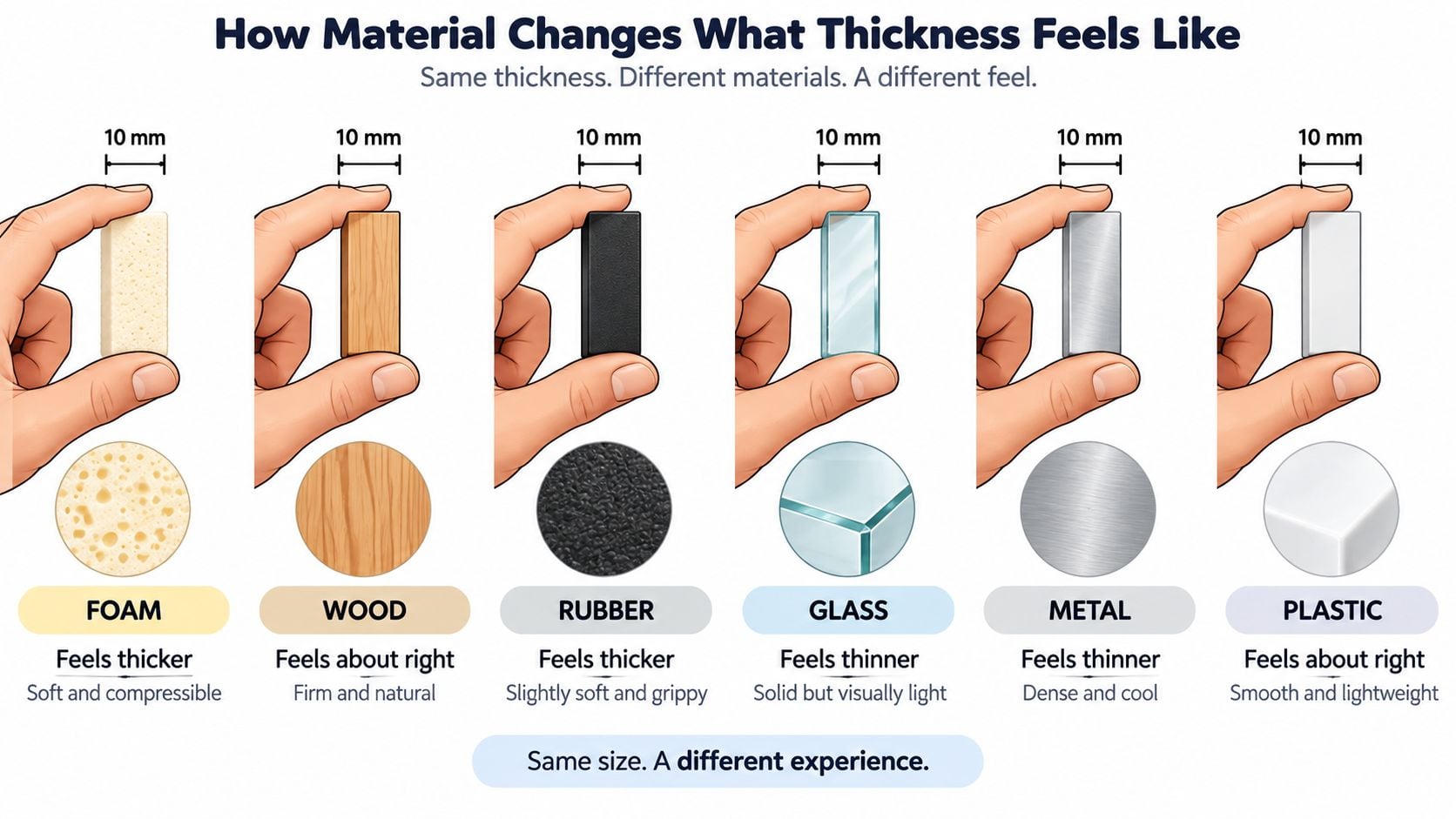
A simple way to read this is to treat thickness like the height of a cushion and material like the cushion's personality. Two cushions can be equally tall, but one lets you sink in slowly while the other holds you closer to the surface. That is why buying by thickness alone often leads to disappointment.
The same depth can feel very different
Memory foam usually shapes itself closely around the body. A thinner memory foam topper can feel surprisingly substantial because it compresses in a slow, close way. For a sleeper trying to soften sharp pressure points, 2 inches of memory foam may feel more noticeable than 2 inches of a fluffier fiber topper. Readers who want a clearer picture of foam behavior can review this plain-language guide to what a memory foam mattress does.
Latex tends to feel more buoyant and responsive. Instead of allowing a deep hug, it often keeps the body a bit more lifted. That means a latex topper may need more thickness than memory foam to give the same pressure relief to a side sleeper, but the payoff is that many sleepers find it easier to turn and change position.
Down feels plush at the surface, much like adding a pillow-top effect. It can make a mattress feel cozier, but it usually compresses quickly under heavier parts of the body. In practical terms, extra thickness in down does not always create the kind of steady support people expect.
Polyfill works in a similar way. It adds softness and loft, but not much structure. It suits sleepers who already like their mattress support and only want a gentler surface feel.
Why material matters more than shoppers expect
Material changes three things at once. It changes how far you sink, how fast the topper responds, and how much support reaches you from the mattress underneath.
That last point causes a lot of confusion.
If your mattress is still in decent shape, a softer material can do a nice job of taking the edge off. If your mattress is already sagging or uneven, a very soft thick topper may follow the dip below it. In that case, more inches do not always mean more comfort. Sometimes they only add more sink.
A firmer, springier material can be the better use of money for some sleepers, especially if they need a little cushioning without losing their posture. A closer-contouring material can be the better choice for sleepers with sharper pressure at the shoulders or hips. The right thickness depends on what your body needs the topper to do, and what condition the mattress is in now.
Which material usually fits which problem
- Memory foam often suits sleepers who want closer contouring and stronger pressure relief from a moderate thickness.
- Latex often suits sleepers who want cushioning but dislike the feeling of sinking in.
- Down often suits sleepers who want a soft, inviting surface and already have enough support from the mattress below.
- Polyfill often suits guest rooms, temporary comfort changes, or shoppers who want extra softness at a lower cost.
The better question is not how thick the topper should be. The better question is which material, at which thickness, matches your body weight, sleep position, and the condition of the mattress underneath.
Recommended Thickness by Sleep Position and Body Weight
A topper works a bit like shoe cushioning. The right amount depends on who is using it, how they move, and what sits underneath. Thickness is not just a softness rating. It is a fit system.
Sleep position is the first part of that fit. Side sleepers usually need more room for the shoulder and hip to settle in. Back sleepers usually need a more moderate layer so the lower back feels cushioned without letting the pelvis sink too far. Stomach sleepers often do better with less depth, because too much loft under the torso can pull the spine out of line.
Body weight changes how each inch feels.
A lighter sleeper may rest mostly on the surface of a topper, so even a thinner model can feel comfortable. A heavier sleeper compresses the same topper more, which means the comfort layer may need more depth to give pressure relief before the body meets the firmer mattress below. That is why two people can try the same 3-inch topper and describe it very differently.
A practical way to choose your range
Use your sleep position to decide how much pressure relief you need. Then use your body weight to decide whether you should stay at the lower end of that range or move up.
- Side sleepers often do well in the 2 to 3 inch range if they are lighter, and 3 to 4 inches if they are heavier, broader through the shoulders, or sleep on a very firm bed.
- Back sleepers often feel best around 2 to 3 inches, enough to soften the surface without letting the hips drop too low.
- Stomach sleepers usually do better with 1 to 2 inches, or a thinner firmer topper, because a deep soft layer can create sway through the midsection.
- Combination sleepers often land in the middle, usually around 2 to 3 inches, especially if they switch between the back and side through the night.
The goal is simple. You want enough depth for the parts that press in most, but not so much that the whole body loses level support.
Mattress Topper Thickness by Sleep Position and Weight
| Sleeper Profile | Recommended Thickness | Why It Works |
|---|---|---|
| Side sleeper with a lighter build | 2 to 3 inches | Gives the shoulder and hip some cushion without adding more loft than the body can use |
| Side sleeper with an average to heavier build | 3 inches | Offers more room for pressure relief before the sleeper feels the mattress below |
| Side sleeper with a broad frame or higher body weight | 3 to 4 inches | Helps prevent pressure buildup on a firm mattress, especially at the shoulder and hip |
| Back sleeper | 2 to 3 inches | Softens the surface while keeping the torso on a steadier plane |
| Stomach sleeper | 1 to 2 inches | Reduces the chance of the midsection dipping too far |
| Combination sleeper | 2 to 3 inches | Balances surface comfort with easier movement between positions |
One caution helps shoppers avoid wasting money. A thicker topper is not automatically better for a heavier person or a side sleeper. If the mattress underneath is already soft, adding more depth can create too much sink instead of better comfort. In that case, the smarter fix is often a firmer material or a thinner topper, not extra inches.
That is the heart of topper fitting. Match thickness to your body, your sleep position, and the condition of the mattress, rather than treating every extra inch as an upgrade.
When a Thicker Topper Helps and When It Will Not Fix Your Mattress
You wake up sore, add a thicker topper, and the bed feels better for a few nights. Then the same dip under your hips or lower back starts showing up again. That usually means the problem was never just the surface.
A topper works best as a comfort layer, not as a repair tool. The test is simple. Does the mattress still hold your body level, or has the support underneath started to give way?
When a topper is often a smart move
A thicker topper helps when the mattress is still doing its main job. It should keep the spine on a reasonably steady plane while the topper adds the missing comfort on top.
That often applies in a few common situations:
- The mattress feels too firm at the surface: The support is fine, but the top feels hard at the shoulder, hip, or rib area.
- There is mild wear, not major sagging: The bed feels a little flat or tired, yet it does not have a deep trench or a broken center.
- One sleep position is uncomfortable: The mattress may feel acceptable on the back but too sharp at the shoulder when lying on the side.
In those cases, a thicker topper can buy useful comfort. A 3-inch topper may soften a surface and blur small signs of wear. It cannot rebuild a mattress that has lost its support core.
When extra thickness wastes money
Thickness only helps if there is something stable underneath it. Put a plush layer over a worn-out mattress and it works like laying a soft rug over a floorboard that sags. The top may feel nicer to the touch, but the dip is still there.
Watch for signs like these:
- Deep body impressions that stay visible
- Edges that buckle or collapse when sitting or lying near them
- A center that feels lower than the rest of the bed
- Back pain or morning stiffness that stays the same even after changing the surface feel
A sleeper dealing with ongoing discomfort should assess the whole bed, not just the topper. This guide to choosing a mattress for back pain helps sort out whether the need is pressure relief, firmer support, or a full replacement.
A topper can change feel. It cannot restore lost support.
That distinction saves money. If the mattress is basically sound, a thicker topper can be a practical fix. If the mattress is sagging, leaning, or uneven, adding more foam often delays the decision and can make the bed feel taller without making it feel better.
In that replacement range, local shoppers often compare the cost of a topper with the value of starting fresh. Tip Top Furniture & Mattresses in Freehold uses a bed matching system and carries USA-made mattresses for shoppers in Albany, Schenectady, Troy, and nearby communities who need to test whether the answer is added surface comfort, a different support profile, or a new mattress altogether.
Measuring Fitting and Installing Your Topper Correctly
Even the right topper can disappoint if it doesn't fit the mattress well. Shifting, bunching, overhang, and sheets popping off the corners usually come from skipped measuring, not a bad topper.
A few careful steps solve most of those problems before the topper even comes out of the box.
Measure the bed before buying
Start with the mattress itself, not the old sheet label.
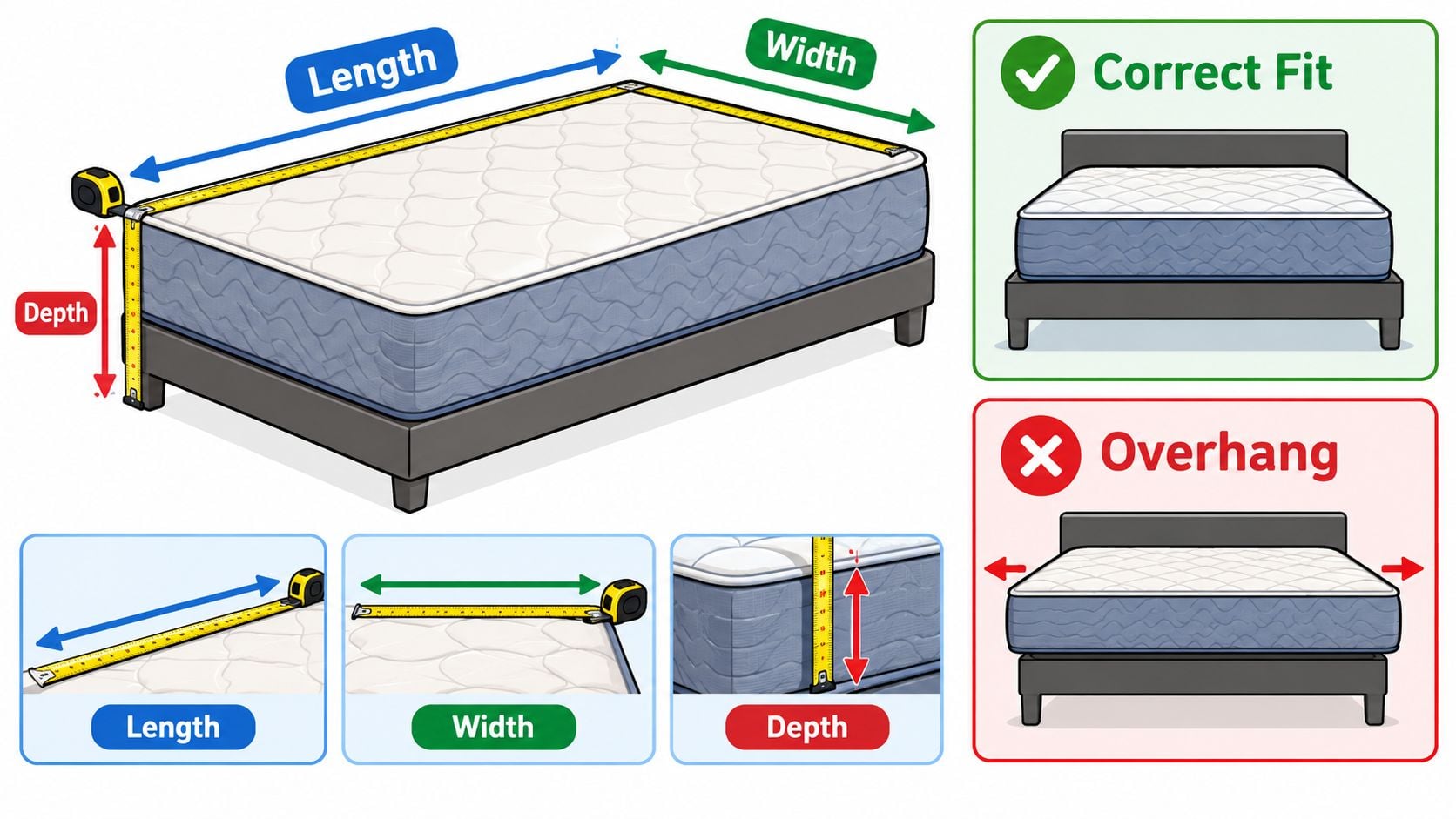
Check these three measurements:
Length
Measure from head to foot.Width
Measure from side to side across the center.Current mattress height
Measure from the base of the mattress to the top surface.
Then add the topper depth to the current mattress height. That combined number tells the shopper whether existing sheets are likely to fit. A useful reference for pocket depth and sizing is this guide to bed sheet measurements.
Installation steps that prevent frustration
Once the topper arrives, setup should be simple and deliberate.
- Let it settle first: Many toppers need time to air out and lie flat after unpacking.
- Match all corners carefully: Even a small misalignment can create rolling or bunching through the night.
- Use a fitted protector or topper cover: This helps hold the topper and mattress together as one surface.
- Add anchor straps if needed: They're especially helpful for restless sleepers or slick cover fabrics.
Fit problems people often misread
A few issues can look like topper failure when they're really setup problems:
- Sheets keep slipping off usually means the total bed height now exceeds the sheet pocket depth.
- The topper slides when the mattress cover is smooth and there's no fitted layer securing both pieces.
- The bed feels oddly high because a thicker topper changed the distance between the sleeper and the pillow, bed frame, or nightstand.
Setup reminder: The finished bed should feel stable, smooth, and easy to make. If it doesn't, the fit needs attention before the comfort can be judged fairly.
Memory foam owners should also give the material time to fully expand before deciding how it feels. Judging it too early often leads to unnecessary returns or confusion.
Care Lifespan and Smart Buying in the Capital Region
A topper lasts longer when it's treated like part of the sleep system, not an afterthought. Good care keeps the surface cleaner, helps the fill wear more evenly, and makes it easier to notice when the topper is still helping and when the mattress underneath has become the bigger issue.
Daily use is simple. The habits matter more than complicated routines.
Care habits that make a difference
A few basic practices usually help:
- Use a protector: It guards against sweat, spills, and everyday soil.
- Air the topper out from time to time: That helps moisture dissipate.
- Spot clean instead of soaking: Most toppers don't respond well to heavy saturation.
- Rotate when appropriate: Even wear helps preserve a more even sleep surface.
Different materials age differently, so shoppers should expect some variation in how long a topper keeps its original feel. Foam, latex, and fiber fills all break in their own way. Thickness also plays a role, because deeper toppers can change shape and feel more noticeably over time because there's more material being compressed night after night.
Buying smart close to home
Capital Region shoppers usually make better decisions when they can test comfort in person and compare topper logic against mattress condition, pillow height, and sheet fit all at once. That's one advantage of working with a long-established local showroom in Freehold rather than guessing from a product photo.
A practical pre-shopping step is this mattress shopping guide, which helps narrow down support needs before visiting a store. It's especially useful for households deciding between a topper purchase, a mattress replacement, or a coordinated bedroom update.
Since 1978, local shoppers have also valued one-stop convenience when sleep changes lead to other room changes. A bedroom refresh may include a new mattress, better sheets, custom bedroom furniture, or even a full-room plan coordinated through professional design services that have been available since 1984. Flexible financing, custom ordering, delivery options, USA-made mattresses, Amish furniture, flooring, and a strong clearance selection all make that process easier for families across Freehold, Albany, Troy, Schenectady, and the wider Capital Region.
Sleep feels better when the comfort layer, support level, and mattress condition all work together. Tip Top Furniture & Mattresses helps Capital Region shoppers compare mattress toppers, USA-made mattresses, sheet fit, and bedroom options in one Freehold showroom, with flexible financing and practical guidance that fits real homes. Visit the showroom to test what thickness feels right before bringing home the wrong solution.