How to Clean Your Mattress: A Pro Guide for Albany Homes

It's easy to forget what's hiding inside the one piece of furniture we spend a third of our lives on. A quick vacuum, a little spot treatment for any accidents, and a sprinkle of baking soda to freshen things up is a great start. But as your local experts at Tip Top Furniture since 1978, we know that to truly protect your sleep and your health, it helps to know why you're doing it and the best ways to tackle the job.
Letting your mattress air out completely after any cleaning is the single most important step to prevent mold and mildew from setting in.
Your Foundation for a Fresher Bedroom and Better Sleep

Your mattress is truly the centerpiece of a healthy bedroom. For homeowners all across the Albany Capital Region, from Troy to Schenectady, keeping it clean can feel like a real chore. But once you know how to clean your mattress the right way, it transforms from a dreaded task into a simple, satisfying routine.
As a family-owned business deeply rooted in Freehold, NY, we're here to walk you through why regular cleaning is so important for your family’s well-being. We're going to target the hidden dust mites, bacteria, and allergens that build up over time—a huge concern here in Upstate NY with our shifting seasons and pollen counts. A clean mattress is a cornerstone of a healthy home, especially if you're trying to prevent dust mite allergies in your home.
Why Regular Mattress Cleaning Matters for Capital Region Families
A clean sleep surface isn't just about looks; it's about the health of your family and the longevity of your mattress. Over the years, mattresses become gathering spots for things we can't see but can certainly feel the effects of.
Think about it this way:
- Fewer Allergens: Dust mites, pet dander, and pollen settle deep into the fibers, which can be a nightmare for anyone with allergies or asthma. A good cleaning clears them out.
- No More Odors: Sweat, body oils, and the occasional spill can lead to funky, lingering smells. A deep clean and deodorizing brings that freshness back to your bedroom.
- Stain Removal: Hitting spills right when they happen is the key to stopping them from becoming permanent reminders of that time breakfast in bed went wrong.
- Better Sleep: It's simple, really. A fresh, clean, and hygienic bed just feels more relaxing. That feeling can directly translate into better quality sleep.
This isn't just a local trend; people everywhere are waking up to the importance of a clean mattress. In fact, the global mattress cleaning service market was valued at a whopping $2.5 billion in 2026. That number is climbing because we have a much better understanding of the allergens and dust mites that love to make a home in our beds.
Your Mattress Cleaning Methods at a Glance
Here is a quick summary of the cleaning techniques we will cover, what they are best for, and how often you should do them.
| Cleaning Method | Best For | Recommended Frequency |
|---|---|---|
| Routine Cleaning | General upkeep, removing dust, dead skin cells, and surface debris. | Every 3-6 months |
| Spot Treatment | Fresh spills like urine, blood, sweat, or food. | As needed, immediately |
| Deep Cleaning | Tackling set-in stains, deep-seated dirt, and serious odors. | Once a year |
| Deodorizing | Eliminating musty or stale smells from sweat and body oils. | Every 3-6 months |
As a family-owned business serving the Albany area since 1978, we at Tip Top Furniture know that a clean mattress means better rest and a longer life for your investment. This is all about creating the peaceful sanctuary your bedroom is meant to be.
It also goes hand-in-hand with other healthy habits, like keeping your bedding fresh. If you're curious, you can learn more about how often you should be changing your sheets.
Gathering Your Essential Cleaning Toolkit
Before you tackle cleaning your mattress, getting the right supplies together will make all the difference. You don't need a bunch of expensive, specialized products. In fact, you probably have everything you need waiting in your laundry room or kitchen pantry right now.
Think of it like putting together a first-aid kit for your mattress. When you have these items ready to go, you can act fast when spills inevitably happen and keep your bed fresh for years.
The Core Cleaning Supplies
With our 45+ years of experience, we've found you can handle almost any common mattress mishap with just a few simple things. Here’s what we at Tip Top Furniture recommend keeping in your cleaning caddy:
- A Vacuum with an Upholstery Attachment: This is your most important tool. A good vacuum pulls up all the surface-level dust, crumbs, pet dander, and skin cells before they can work their way deeper into the mattress fibers.
- Baking Soda: That simple box in your kitchen is a powerhouse natural deodorizer. It does a fantastic job absorbing moisture and neutralizing odors from sweat and body oils, all without relying on harsh chemicals.
- Mild Dish Soap or Detergent: A simple, clear dish soap is all you need to create a gentle cleaning solution. It helps break down everyday grime and light stains without being too aggressive on your mattress fabric.
- Distilled White Vinegar: Vinegar is a great natural disinfectant. Diluted with a little water, it can help treat stains and knock out bacteria, and the smell dissipates as it dries.
- Clean Cloths or Sponges: Grab a few light-colored cloths for blotting up spills and applying your cleaning solutions. Using white or light-colored cloths is key to making sure no dye transfers onto your mattress.
Expert Tip from Your Local Mattress Team: For families here in the Capital Region dealing with seasonal allergies, we always suggest using a vacuum with a HEPA filter. This type of filter is specifically designed to trap microscopic particles like dust mites, dander, and pollen, keeping them from getting kicked back into your bedroom air.
It’s an unpleasant thought, but the average bed can be home to millions of dust mites. Their waste is a major trigger for allergies and can contribute to up to 20% of asthma cases worldwide. Here in Upstate NY, where our pollen-heavy springs are a fact of life, keeping those allergens in check is crucial. While professional services can use hot water extraction to remove up to 95% of embedded dirt, you can achieve great results with diligent spot-cleaning and regular vacuuming. The demand for these kinds of deep cleaning services is growing, which you can read more about in this market analysis from Fortune Business Insights.
A Simple Routine for Regular Mattress Care
Now that you have your toolkit, the secret to a clean, long-lasting mattress is all about consistency. A little bit of proactive care is your best defense against buildup and premature wear. This is the simple routine we’ve been sharing with customers at our Freehold showroom since 1978.
First, make it a habit to vacuum the surface monthly. When you change your sheets, just take ten minutes to run the upholstery attachment over the entire mattress surface, including the sides. This is your first line of defense.
Every three to four months, it’s time to deodorize with baking soda. Sprinkle a generous layer over the whole mattress and just let it sit. A few hours is good, but the longer you can leave it, the better. Then, simply vacuum it all up.
You'll also want to rotate your mattress every 3-6 months. Whether you turn it 180 degrees or flip it (if it's a double-sided mattress), this simple step ensures it wears evenly and helps prevent those dreaded dips and sags from forming.
Finally, and most importantly, always use a mattress protector. This isn't just a cleaning tip—it's the single best prevention strategy. A quality protector acts as a shield against spills, dust, and allergens, stopping problems before they start. You can read our complete guide to bedding and protectors to find the perfect one for your USA-made mattress.
Tackling Every Type of Mattress Stain
Life happens on a mattress. From a late-night glass of wine that takes a tumble to a sick child or a pet having an accident, stains are just a part of life for homeowners in Albany and across the Capital Region. When a spill happens, acting fast is your best weapon against a permanent mark.
Don't worry, we've seen it all. Our trusted team has relied on these tested methods for years to handle the most common mattress messes, stain by stain. The secret is always having the right tool for the job and getting to it quickly.
Our Pro Tip After 45+ Years: Always, always test your cleaning solution on a small, hidden spot first. Try a corner on the back or underside of the mattress. This little check ensures the fabric won't discolor, so you can treat the main stain with confidence.
The Blotting Golden Rule
When you're faced with any fresh, wet spill, your first instinct must be to blot, never rub. Rubbing just pushes the liquid deeper into the mattress fibers, making the stain bigger and much more stubborn.
Instead, grab a clean, dry, light-colored cloth (or a stack of paper towels) and press down firmly on the spill. You want to absorb as much of that liquid as you possibly can. Keep switching to a dry section of the cloth and continue blotting until you can't pull any more moisture out. This one simple move makes all the difference.
How to Remove Urine Stains
Accidents are bound to happen, especially if you have little ones or furry friends at home. The real challenge with urine isn't just the stain, but neutralizing the uric acid that leaves behind that lingering smell.
First, blot the spot thoroughly to get it as dry as possible. Then, you'll want to lightly spray the stained area with a simple mix of one part white vinegar and one part water. This is great for breaking down that uric acid.
Blot it again with a fresh, dry cloth. Now for the magic trick: sprinkle a very generous layer of baking soda all over the damp spot. The baking soda will pull out the rest of the moisture and vinegar, and it's a fantastic deodorizer. Let it sit for a good 8-10 hours—overnight is perfect—and then vacuum it all up.
Getting Rid of Blood Stains
The number one rule for dealing with a blood stain is to always use cold water. Hot water will essentially "cook" the proteins in the blood right into the fabric, setting the stain for good.
Start by making a simple paste: mix one part baking soda with two parts cold water. Gently spread this paste over the blood stain and let it sit for at least 30 minutes.
Once the time is up, use a clean cloth dampened with more cold water to blot away the paste and the stain. If you still see a faint mark, you can carefully dab a tiny amount of 3% hydrogen peroxide on the spot. You'll see it fizz and bubble as it works. Just blot it up with a cold, damp cloth and let the area air-dry completely.
This handy chart can help you decide which cleaning method to reach for based on the mess you're dealing with.
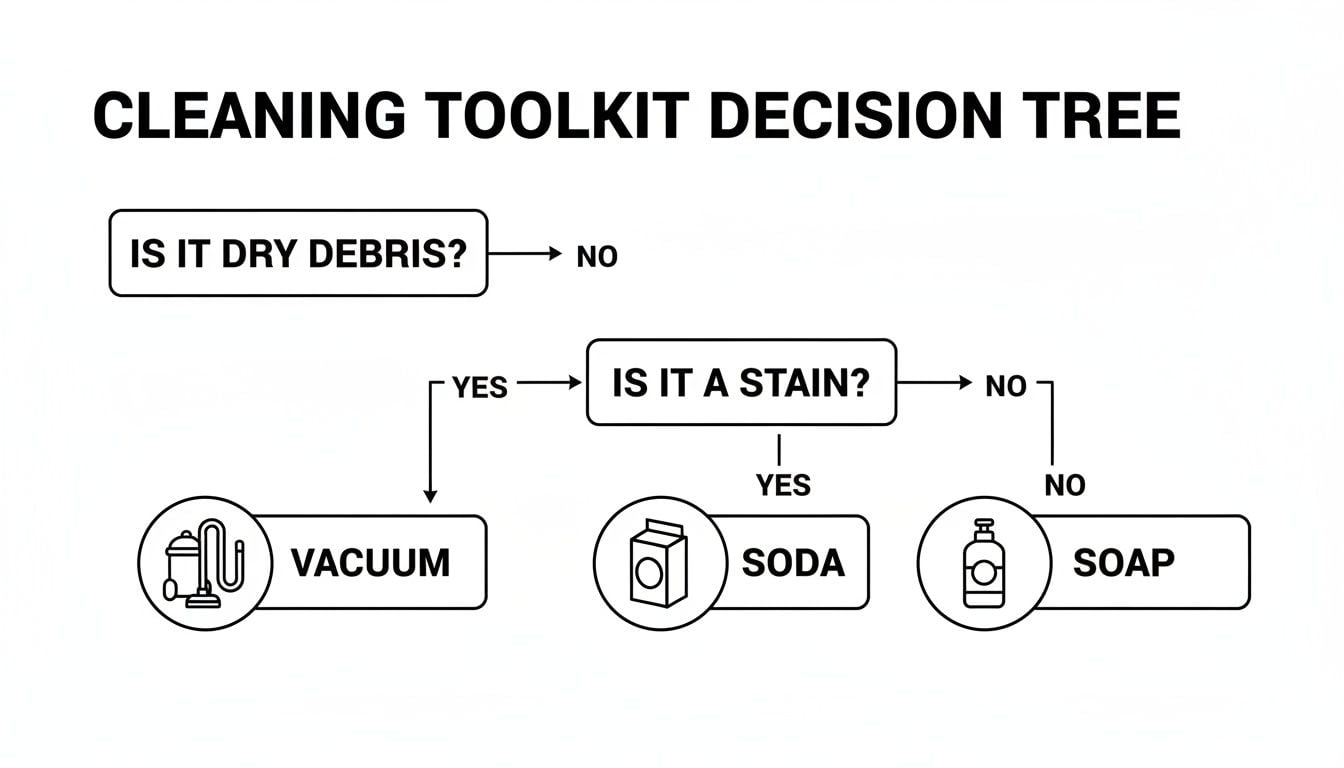
It’s a quick visual guide for whether you need the vacuum for dust, baking soda for odors, or a mild soap solution for simple surface stains.
Removing Sweat and Body Oil Stains
Over the months and years, sweat and natural body oils can build up, leaving behind yellowish discoloration on your mattress. It's a very common issue, but thankfully, it's also pretty easy to fix.
For this job, a solution of mild dish soap and warm water is your best friend. Mix a few drops of a clear, gentle dish soap into a bowl of warm water and swish it around to create a nice layer of suds.
With a clean sponge or cloth, skim just the suds off the top—you want to use as little water as possible. Gently work the suds into the stained areas in a circular motion. To "rinse," wipe the area with a cloth dampened with clean water, then blot it dry with a towel.
Stain-Fighting Solutions: Your Quick Reference Chart
Different stains call for different game plans. To make it even easier, we've put together this quick-reference chart.
| Stain Type | Recommended Cleaning Agent | Key Application Tip |
|---|---|---|
| Urine | White Vinegar, Water, & Baking Soda | Neutralize odor with vinegar, then draw out moisture with baking soda. |
| Blood | Cold Water & Baking Soda or Hydrogen Peroxide | Always use cold water. For stubborn spots, use 3% hydrogen peroxide sparingly. |
| Sweat/Body Oils | Mild Dish Soap & Water | Use only the suds to avoid over-saturating the mattress fabric. |
| Grease/Oil | Cornstarch or Baking Soda | Absorb the oil first with a powder before treating the remaining mark. |
| Coffee/Wine | White Vinegar & Water or Salt Paste | Blot immediately, then treat. A salt and cold water paste works on some red wine. |
This chart is a great starting point, giving you the best chance to tackle a fresh stain before it becomes a permanent problem.
Tackling Food, Drink, and Oily Stains
For greasy pizza drips or a dreaded coffee or wine spill, your approach needs to be a bit more specific.
- Greasy Stains: Start by sprinkling cornstarch or baking soda directly on the spot. This will help absorb the oil. Let it sit for about 20-30 minutes, then vacuum it up. You can treat any leftover mark with the dish soap suds method we mentioned earlier.
- Coffee or Wine: After blotting like crazy, turn to your vinegar and water solution. For a particularly nasty red wine stain, some folks have had great success making a paste out of salt and cold water.
While these tips work beautifully for most traditional innerspring or hybrid mattresses, some materials need a gentler touch. For example, if you have a memory foam bed, we have a whole guide dedicated to cleaning a memory foam mattress that shows you how to clean it without using too much moisture, which can damage the foam's structure.
How to Deep Clean and Deodorize Your Mattress
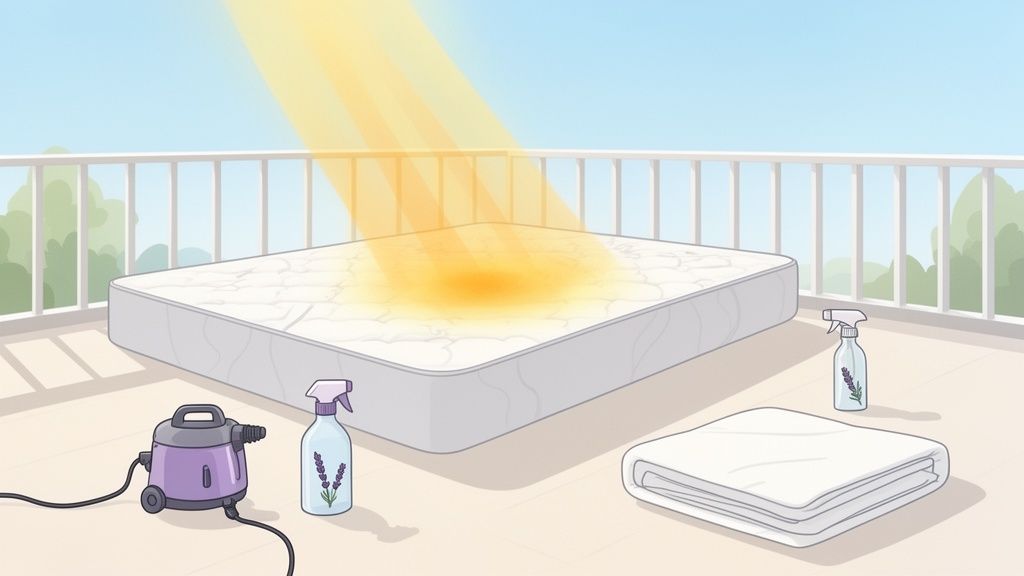
While spot-treating messes as they happen is a great start, a deep clean twice a year is what truly revives your mattress. This goes way beyond the surface, getting rid of the built-up dust, allergens, and odors that inevitably settle in over time. It’s a vital step to protect your investment and keep your family’s sleep environment healthy.
This isn’t just about aesthetics; it’s about basic hygiene. Believe it or not, after just a few years, a mattress can be home to 1.5 million or more dust mites. For stubborn organic stains, we always recommend an enzyme-based cleaner. It works by breaking down the proteins that cause lingering smells, which can cut down on odor recurrence by up to 80%.
The Power of a Sun Bath
One of the best, most natural deep-cleaning methods we’ve been telling customers about since we opened in 1978 is completely free: give it a sunbath. On a dry, sunny day—a frequent gift during our Upstate NY summers—haul your mattress outside to a clean spot on your deck or patio.
The sun’s ultraviolet (UV) rays are a powerful natural disinfectant that helps kill bacteria and neutralize odors that have seeped deep into the fabric. Just lean it against a wall so both sides get a few hours of direct sunlight. It’s an incredible, chemical-free way to sanitize your bed and leave it smelling fresh.
Safely Steam Cleaning Your Mattress
If you want to go a step further, you can use a garment steamer or an upholstery steam cleaner for an even deeper clean. The hot steam penetrates the mattress fabric to kill dust mites, bacteria, and other allergens without soaking it. This is really important for materials like memory foam or hybrids that can be damaged by too much moisture.
To do it safely, just follow a few simple tips:
- Keep it Moving: Never let the steamer sit in one place for more than a second or two. Use long, slow, overlapping strokes to cover the whole surface.
- Maintain Distance: Hold the nozzle a few inches from the mattress to avoid concentrating too much heat or moisture in one area.
- Dry Thoroughly: After you’re done, let the mattress air dry completely for several hours. A fan pointed at the mattress will help speed things up.
This is a great way to sanitize a bed, especially after someone has been sick. For those really tough situations, learning how to get vomit smell out of a mattress with the right techniques can make all the difference.
A proper deep clean twice a year can make a well-loved, eight-year-old mattress feel new again, extending its life and your comfort. It’s a core part of our commitment at Tip Top Furniture to providing long-term value for every family we serve.
DIY Deodorizing for Lasting Freshness
After a deep clean, deodorizing is the final touch. Baking soda works well, but a simple DIY spray can add a lovely, lasting scent with extra antibacterial power. It’s a simple recipe we love sharing with folks who visit our Freehold showroom.
Simple DIY Mattress Refresher Spray:
- In a spray bottle, mix 1 cup of distilled water with 1/2 cup of white vinegar.
- Add 10-15 drops of your favorite essential oil.
- Lavender is wonderful for promoting relaxation, while tea tree oil offers powerful natural antibacterial and antifungal properties.
Just lightly mist this solution over the entire mattress—don't soak it! Let it air dry completely. This will neutralize any leftover odors and leave your bedroom smelling like a peaceful retreat.
Of course, sometimes no amount of cleaning can save a mattress that’s simply worn out. If you’re still dealing with deep-set odors or sagging after all your hard work, it might be time for a replacement. We make it easy with our flexible financing options, helping you invest in better sleep without breaking your budget.
Protecting Your Mattress for Years to Come
Once you’ve put in the effort to get your mattress fresh and clean, the last thing you want is to do it all over again next month. The real secret to a long-lasting, hygienic mattress isn't just cleaning—it's preventing messes from ever happening.
We’ve been sharing this advice with families in our Freehold showroom since 1978. A little bit of prevention saves our customers across Greene County and the Capital Region a whole lot of time, stress, and money.
The Single Most Important Investment
Your best line of defense is a high-quality, waterproof mattress protector. This isn't just a nice-to-have accessory; it’s an absolute necessity for your bed. It creates a washable, impenetrable barrier against spills, sweat, allergens, and dust mites.
Think of it as the ultimate insurance policy for your mattress investment. A quality protector stops liquids in their tracks, preventing them from soaking into the foam and fibers where stains, mold, and mildew can take root.
You’ll generally find two styles to choose from:
- Fitted Style: These work just like a fitted sheet, covering the top and sides of your mattress. They're incredibly easy to pull off and toss in the wash, making them a popular and convenient choice.
- Encasement Style: This type zips around your entire mattress, offering 360-degree protection. It’s the gold standard for sealing your bed off from bed bugs, dust mites, and other allergens.
As your local sleep experts, we can’t stress this enough: a mattress protector is non-negotiable for preserving your investment. It protects your warranty, simplifies cleaning, and creates a healthier sleep environment, free from the allergens that can be a real nuisance in Upstate NY.
Don't Forget Support and Airflow
Beyond a protector, a few other good habits will make a huge difference in your mattress’s lifespan. First, take a look at what your mattress is sitting on. A solid, supportive foundation is crucial for preventing it from sagging and wearing out prematurely.
A well-made bed frame, like the durable, solid wood Amish furniture we carry, gives your mattress the even support it needs to wear correctly. It's a night-and-day difference compared to flimsy frames that can cause dips and valleys over time.
Good airflow is also a factor, especially during our humid New York summers. Letting your bedroom breathe by running a fan or cracking a window helps carry away the moisture that naturally builds up from perspiration overnight, keeping your mattress dry and fresh.
Finally, get into the habit of rotating your mattress. Simply turning it 180 degrees from head to foot every 3-6 months prevents one area from taking all the wear and tear. This is a simple but vital step for keeping the surface even and comfortable for years.
At Tip Top, we offer a carefully chosen selection of sleep accessories, including durable USA-made mattresses and the protectors designed to keep them clean. To learn more, check out our guide on unlocking the hidden benefits of a mattress protector. We invite you to visit our Freehold, NY showroom, where our team can offer personalized advice to help you protect your mattress for years of great sleep.
When to Replace Your Old Mattress in the Albany Area
While a good cleaning can work wonders, sometimes a mattress has just reached the end of the road. As your local furniture experts here in Upstate NY since 1978, we believe in giving you honest advice. It’s important to know when a mattress just isn't giving you the healthy sleep you deserve anymore.
Sticking with a worn-out mattress won't just make you tired; it can lead to chronic aches and pains and expose you to years of built-up allergens. Think of it like this: you know when it's time to stop repairing an old appliance and invest in a new one that actually works. Your mattress is no different.
Obvious Signs of Wear and Tear
The clearest signals are the ones you can see and feel yourself. Next time you change the sheets, run your hand over the bare mattress. Do you feel lumps, bumps, or deep ruts where you usually sleep?
Those visible body impressions and noticeable sagging are tell-tale signs that the inside support system has broken down, whether it's springs, foam, or a hybrid. If your mattress looks more like a hammock than a flat surface, its best days are long gone. No amount of cleaning is going to fix a broken structure.
A good rule of thumb we share with customers at our Freehold showroom is the “seven-year check-in.” Around the seven-year mark, you should start paying close attention to how your mattress looks, feels, and how you feel when you wake up.
When Your Body Tells You It's Time
Sometimes, the mattress itself doesn't look terrible, but your body is telling a different story. Do you consistently wake up with stiffness, soreness, or a nagging lower back pain that gets better after you've been up and about for a bit? Your mattress is the likely culprit.
A mattress that’s lost its support forces your spine out of natural alignment all night, which is a recipe for discomfort and restless sleep. You might also find you sleep way better on the couch or in a hotel bed—a classic sign your own bed is failing you. For a deeper look at these warning signs, you can check out our guide on the 7 signs it's time to replace your mattress.
Lingering Odors and Persistent Allergies
You've deep-cleaned, aired it out, and used a whole box of baking soda, but there's still a stubborn, musty smell you can't shake. Over nearly a decade, a mattress absorbs an incredible amount of sweat, body oils, and skin cells. This can create a permanent home for bacteria and mold that you just can't fully get rid of.
Likewise, if your allergies or asthma seem to flare up at night or first thing in the morning, your old mattress could be the source. Years of dust mites and their waste build up to a point where cleaning can't keep up. At that point, a fresh start becomes a matter of health.
Finding Your Perfect Replacement in the Albany Area
Deciding it’s time for a new mattress is the first step. Here at Tip Top Furniture, we make the next part easy and stress-free. We get that choosing a mattress is a personal decision, and our team is here to guide you, not pressure you.
Using our high-tech bed matching system, we can analyze your unique sleep style and pressure points to recommend the perfect USA-made mattress. We take the guesswork out of the process, making sure the mattress you bring home is exactly right for you. Our goal is simple: to help our neighbors in the Greater Albany Capital Region get a great night's sleep.
Ready for a fresh start? The team at Tip Top Furniture & Mattresses is here to help you find the perfect mattress for your best sleep ever.
Browse our USA-Made Mattresses and visit our Freehold, NY showroom today!