Your Ultimate Guide to Hardwood Flooring Care Tips

The secret to beautiful hardwood floors isn't some complicated, time-consuming process. It's all about consistent, simple habits. As a family-owned business serving the Greater Albany Capital Region since 1978, we tell our customers all the time: the most effective care focuses on daily prevention—like sweeping away that tiny bit of grit—and using the right tools to protect your investment for years to come.
Establishing Your Core Hardwood Care Routine
Here at Tip Top Furniture, serving the Greater Albany Capital Region from our Freehold showroom for over 45 years, we know that beautiful floors are the foundation of any great room. Just like a handcrafted Amish dining table, your hardwood floors are a long-term investment that deserves the right attention from a trusted local expert.
The good news? A solid care routine is easier than you think, and it prevents the vast majority of common issues we see. Consistency is your greatest ally. Think of your hardwood floors like any other fine surface in your home; they thrive on regular, gentle maintenance, not infrequent, aggressive scrubbing. It’s the small, daily actions that truly make a world of difference.
The Power of Prevention in the Capital Region
The most critical part of hardwood floor care is stopping damage before it even starts. Every single time someone walks into your home, they track in tiny particles of dirt, sand, and debris. In our beautiful Upstate New York climate, this also means salt in the winter and pollen in the spring.
These particles might seem harmless, but they act like fine-grit sandpaper, slowly grinding away at your floor's protective finish with every step.
This is why a simple daily habit is non-negotiable:
- Sweep or Vacuum Daily: Grab a broom with soft bristles or use a vacuum with a soft-brush head. Never use a vacuum with a beater bar—those stiff, rotating bristles will cause scratches. This quick five-minute task removes the abrasive grit that causes dullness and micro-scratches over time.
- Use Doormats: Place high-quality mats at every entrance to trap dirt and moisture before they ever reach your floors. It's a simple first line of defense.
- Enforce a "No Shoes" Policy: If you can, encourage family and guests to take off their shoes when they come inside. Honestly, it's the single most effective way to protect your floors from the outside world.
Expert Insight: Proactive care isn’t just about looks; it’s about protecting your investment. As your local experts since 1978, we know that these simple preventative steps can save Albany homeowners thousands of dollars in avoidable repair costs down the line.
Your Weekly Cleaning Ritual
To stay on top of your hardwood floor care, it's best to follow a simple weekly schedule. A quick checklist makes it easy to remember what to do and why it matters, especially with the unique challenges we face here in Upstate New York.
Your Weekly Hardwood Care Checklist
| Task | Frequency | Why It's Critical for NY Homes |
|---|---|---|
| Sweep or Light Vacuum | Daily | Removes salt, sand, and grit tracked in from outside, preventing scratches. |
| Damp Mop | Weekly | Lifts fine dust and residue without oversaturating the wood. |
| Check Furniture Pads | Weekly | Ensures felt pads haven't worn down or fallen off, preventing deep gouges. |
This simple routine keeps your floors looking their best and prevents the kind of gradual wear and tear that can sneak up on you.
Once a week, it’s time for a slightly deeper clean to remove any buildup that daily sweeping might miss. The key here is to use minimal moisture. Water is the natural enemy of hardwood, and oversaturating your floors can lead to warping, staining, and other long-term damage.
Your best tools for the job are a microfiber mop and a pH-neutral, water-based cleaner made specifically for hardwood. Please avoid using vinegar, ammonia-based cleaners, or oil soaps! These can strip the protective finish and leave a dulling residue behind. A lightly dampened mop is all you need to lift away dirt and bring back your floor's natural sheen without putting it at risk.
Protecting Your Floors from Your Furniture
One of the most overlooked sources of damage is furniture. Every time a chair is scooted out or a table is nudged, it can create nasty scratches and gouges. This is especially true for the beautiful, solid wood furniture we specialize in, like our heirloom-quality Amish furniture, which carries significant weight.
Luckily, the solution is incredibly simple and affordable: felt pads. Applying these to the bottom of every furniture leg is an essential step. This small detail provides a soft cushion between your furniture and the floor, allowing pieces to slide without causing harm. It’s a tiny investment that pays huge dividends in protecting both your floors and your furniture. This same principle of careful handling and protection is also vital for your other wooden pieces; you can learn more by reading our guide on how to properly care for wood furniture.
According to This Old House, consistent care can save you big on potential fixes. They note that the national average for wood floor repairs can be significant, and some data suggests that furniture movement is responsible for a high percentage of surface damage in busy households. Spending a few dollars on felt pads is a smart way to avoid those costly professional repair bills.
Managing Your Floors Through Upstate NY Seasons
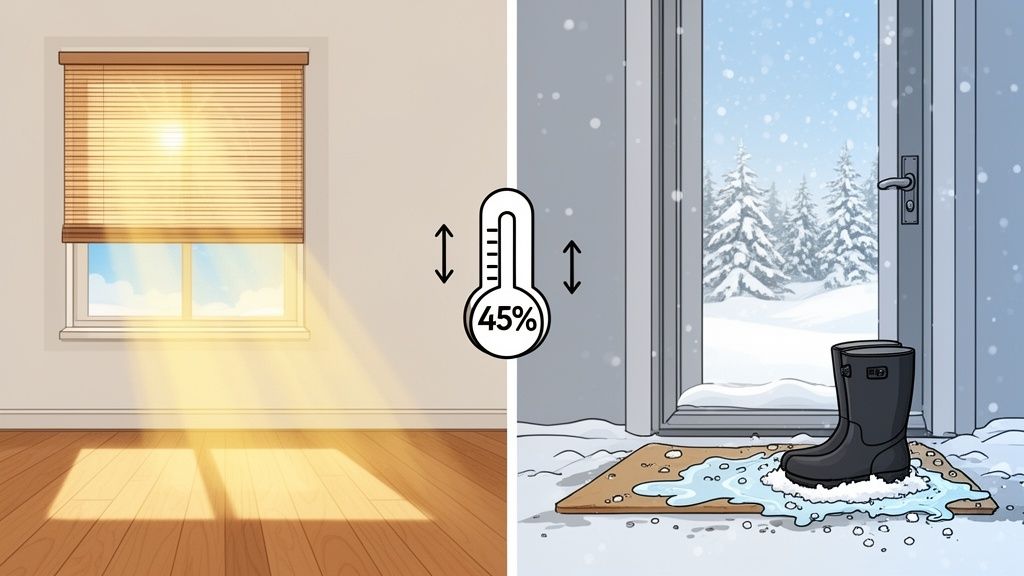
Here in the Albany Capital Region, we get the full experience of four distinct seasons. From humid summer days that make the air feel thick to those crisp, dry winters when the furnace is running nonstop, our weather is anything but boring. While we love it, this constant change puts your hardwood floors to the test.
Remember, wood is a natural material. It breathes. It expands when the summer air is heavy with humidity and shrinks back during the dry winter months. This is a completely natural process.
This seasonal movement is precisely why managing your home’s environment is one of the most important things we talk about with customers at our Freehold, NY showroom. If you let this cycle run wild, you’ll start to see noticeable gaps between your floorboards in the winter. In the summer, you might see "cupping," which is when the edges of a plank swell up higher than the center. Both are signs of a floor under stress.
Taming Upstate NY Humidity Swings
If you do one thing for the long-term health of your floors, make it this: control your indoor humidity. The goal is to keep your home’s environment as stable as possible all year long. This minimizes the constant expanding and contracting that wears down the wood.
- During Humid Summers: When the Capital Region gets sticky and damp, a dehumidifier is your floor's best friend. It simply pulls that excess moisture out of the air, preventing your floorboards from swelling.
- During Dry Winters: Once the furnace kicks on for the season, it starts drying out your indoor air in a hurry. A whole-house or even a good portable humidifier is essential to put that moisture back, which keeps the wood from shrinking and gapping.
Think of it this way: your floor is happiest when it's not going through extreme environmental shifts. Keeping the humidity consistent is the secret to that happiness.
A consistent humidity level is the foundation of seasonal hardwood care. By preventing extreme expansion and contraction, you are proactively protecting your investment from the most common cause of long-term damage in our climate.
Maintaining this balance isn’t just a suggestion; it’s a proven strategy. Beautiful hardwood is designed to last for decades with the right care, but hitting that milestone means being diligent about moisture. We always recommend aiming for a relative humidity between 35-55% year-round. In fact, straying from this range is responsible for a high percentage of seasonal cracks in northern climates like ours. If you want to learn more about how different materials handle these conditions, you might find our guide on choosing the best flooring for your living room helpful.
Here's a simple timeline to visualize your key floor care tasks.
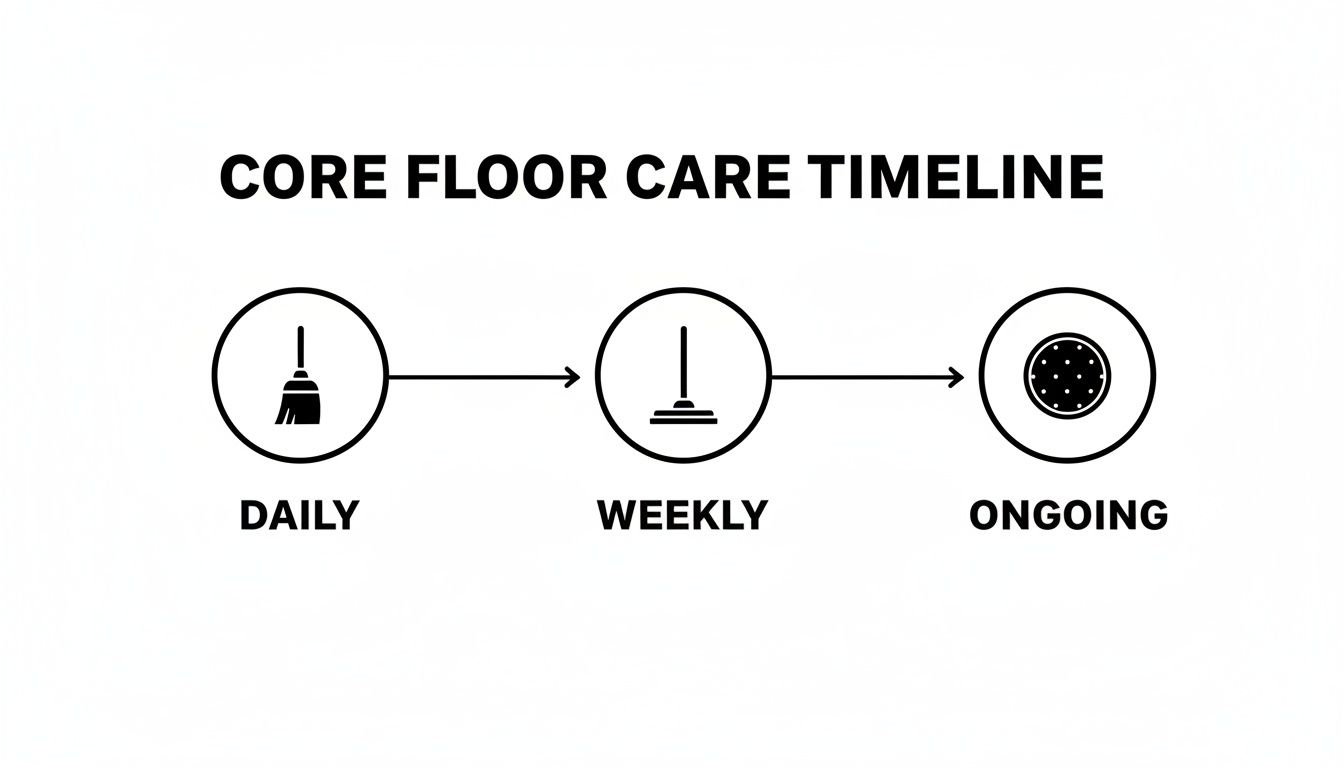
As you can see, the daily and weekly cleaning is important, but it’s those ongoing protective measures that form the backbone of a successful strategy.
Defending Against Winter Wear and Summer Sun in Albany
Beyond just humidity, our seasons throw other specific challenges at our floors. These simple, proactive tips will help you navigate the year without any surprises.
Winter Salt and Slush
Winter in Upstate NY means snow, ice, and road salt—all of which are enemies of your hardwood's finish.
- Establish a Landing Zone: Use high-quality, absorbent mats both outside and inside every doorway. This creates a buffer zone to catch the worst of the slush, dirt, and de-icing salt before it gets tracked in.
- Create a Boot Tray: A simple rubber or plastic tray right by the door gives wet, salty boots a designated spot to dry off without ever touching your beautiful floors. It's a game-changer.
- Clean Up Drips Immediately: If any slushy, salty water does make its way onto the floor, wipe it up right away with a dry cloth. This prevents moisture from seeping in and salt from staining the finish.
Summer Sun Exposure
The long, sunny days of summer can be just as tough on your floors, just in a different way. The sun's ultraviolet (UV) rays can fade or discolor wood over time. You’ll really notice it when you move an area rug and see a two-tone floor underneath.
To fight back against fading, take a look at your window treatments. Light-filtering blinds, shades, or curtains can block the harshest UV rays while still letting in plenty of natural light. As part of our one-stop Professional Design Services, established in 1984, we can even help you find window treatments that not only protect your floors but also pull the whole look of your room together. It’s just another way we help homeowners in the Greater Albany area protect their investments from top to bottom.
A Practical Guide to Scratches, Stains, and Dents
No matter how careful you are, life happens on your hardwood floors. A dropped toy from the kids, a spilled glass of wine during a get-together, or a chair scooted back a little too fast can leave a mark. We get it. Here at Tip Top Furniture & Mattresses, we've helped countless homeowners across the Greater Albany area breathe a sigh of relief.
The key is knowing how to respond calmly and effectively, without panicking. Most common blemishes can be handled with simple DIY methods, which is great news for preserving the integrity and beauty of your floors for years to come. Think of it less as a disaster and more as routine maintenance.
Addressing Minor Surface Scratches
Let's start with the most common issue: those faint surface scuffs. You know the ones—the light white or gray lines that haven't actually broken through the floor's top protective layer. They often pop up from a pet’s nails or a piece of grit dragged under a shoe.
For these minor marks, your first line of defense is surprisingly simple. A color-matched wax stick or a blending pencil, which you can find at most hardware stores, works wonders. Just rub the stick over the scratch, buff the area gently with a soft, clean cloth, and watch the mark practically disappear into the surrounding finish. It's an easy fix that keeps your floors looking pristine.
Repairing Deeper Scratches and Gouges
Now, for the deeper scratches—the ones that have penetrated the polyurethane finish and reached the bare wood. While it sounds intimidating, it’s a totally manageable DIY project if you act quickly.
Here’s our go-to approach:
- Clean the Area: First, gently clean the scratch and the wood around it. Use a soft cloth and a recommended pH-neutral hardwood cleaner to get rid of any dirt or debris hiding in the groove.
- Apply Wood Putty: Grab some wood putty that closely matches your floor's color. Using a flexible putty knife, press a small amount of the filler into the scratch, making sure it’s slightly overfilled.
- Scrape and Smooth: Carefully scrape away the excess putty with your knife until the filler is flush with the floor's surface. Let it dry completely according to the manufacturer’s instructions—don't rush this part!
- Sand Lightly: Once it's fully dry, lightly sand the filled area with very fine-grit sandpaper (around 220-grit is ideal) until it feels perfectly smooth. Just be careful not to sand the undamaged finish nearby.
- Seal the Repair: Using a small artist's brush, apply a very thin layer of matching polyurethane finish over the sanded area. This will seal the repair and help it blend in with the rest of the floor.
Our Local Expertise: Tackling scratches early is one of the most important hardwood flooring care tips we can share. A proactive repair prevents a small issue from collecting dirt and turning into a bigger, more noticeable problem that might require calling in a professional. We’ve seen this time and again helping families in the Albany area.
Tackling Common Household Stains
Stains can be alarming, but most can be removed if you act fast and use the right technique. The trick is to identify what caused the stain and apply the correct remedy without damaging the floor’s finish.
Below is a quick reference table for tackling some of the most common stains we see in homes around the Capital Region.
DIY Hardwood Stain Removal Guide
This table is your quick-reference guide for dealing with common household spills and spots on your hardwood floors using safe, effective methods.
| Stain Type | Recommended DIY Solution | Caution Level |
|---|---|---|
| Water Rings/White Spots | Place a dry cotton cloth over the spot and iron on a low, no-steam setting for a few seconds. | Low |
| Dark Stains (Pet Urine, etc.) | Dampen a cloth with 3% hydrogen peroxide and lay it over the stain for a few hours. Re-dampen if needed. | Medium |
| Grease or Oil Stains | Apply a small amount of dish soap to a soft, damp cloth and gently scrub the spot. Rinse with a clean, damp cloth and dry immediately. | Low |
| Scuff Marks from Shoes | A simple pencil eraser or a bit of baking soda on a damp cloth can often rub these marks right off. | Low |
Always test any cleaning solution on an inconspicuous area first, like inside a closet or under a big piece of furniture, to ensure it doesn't discolor your finish. And remember, preventing scratches in the first place is always the best strategy; read our complete guide on how to protect your floors from your furniture for more essential tips.
For damage that feels beyond a simple DIY fix, don’t hesitate to reach out. Since 1984, our Professional Design Services have helped homeowners in Freehold and beyond. We can connect you with trusted local experts to make any repair project feel simple and manageable. We also offer flexible financing options to help make bigger projects affordable.
Choosing the Right Cleaning Products and Tools
Walking down the cleaning aisle at the store can feel pretty overwhelming. You’ve got dozens of products all promising a perfect shine, but for hardwood floors, the wrong choice can cause some serious, irreversible damage. Here at Tip Top Furniture & Mattresses, we've spent over 45 years helping homeowners in the Greater Albany Capital Region protect their investment, and it always starts with using the right tools for the job.
Think of your floor's finish as its protective shield. Your goal is to clean that shield, not strip it away. A lot of common household cleaners are just way too harsh for modern polyurethane finishes. They can leave your floors looking dull and hazy, or worse, completely remove that vital layer and leave the raw wood vulnerable.
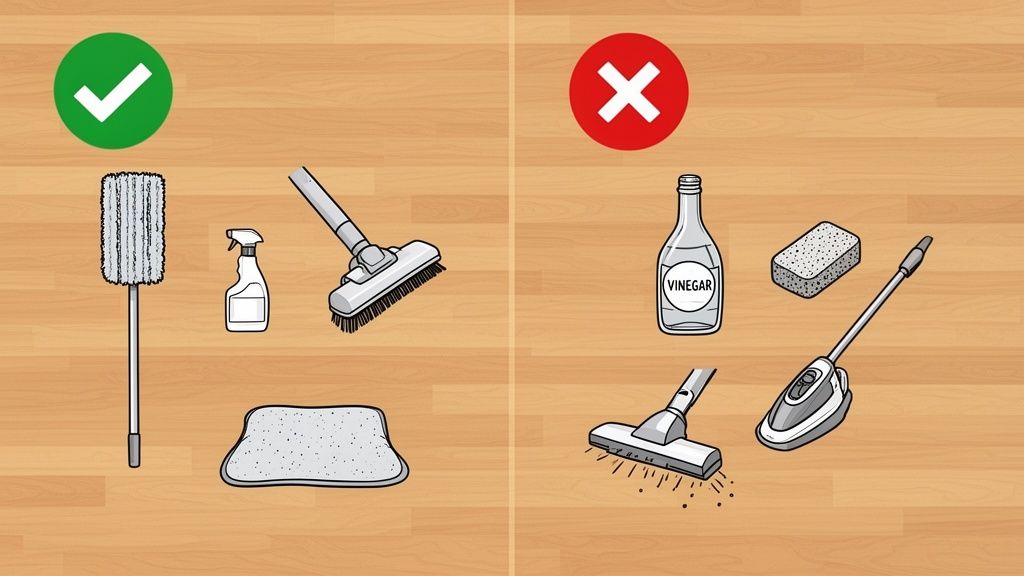
What to Avoid at All Costs
Before you reach for that all-purpose cleaner under the sink, stop and make sure it’s not on this list. Using these is one of the quickest ways to ruin a beautiful hardwood floor.
- Vinegar and Ammonia: They’re either too acidic or too alkaline, and over time they will literally etch and dull your floor's finish.
- Oil Soaps: They might sound like they're nourishing the wood, but these products leave behind a greasy, hazy residue that just attracts more dirt and makes your floors dangerously slippery.
- Steam Mops: High-pressure steam is a nightmare for wood. It forces moisture and heat deep into the seams between floorboards, which is a recipe for warping, cupping, and long-term structural damage.
- Abrasive Scrubbers: Stay away from stiff-bristled brushes, steel wool, or any harsh scrubbing pads. They’ll create tiny micro-scratches that permanently dull the surface.
Our Promise of Expertise: Since 1978, we've guided our neighbors in Freehold, NY, and the surrounding Albany area. We stand by this simple rule: if a product isn't specifically made for hardwood floors, don't let it anywhere near them.
Your Go-To Hardwood Cleaning Toolkit
Now for the good news—getting the right tools is simple and they are all easy to find. Putting together a dedicated cleaning kit is the best way to make sure your floors always get the gentle care they need. This is the exact combination our own design experts recommend.
The Essentials for Safe Cleaning:
- A pH-Neutral, Water-Based Cleaner: You want to look for formulas specifically designed for polyurethane-finished hardwood. These cleaners are powerful enough to lift dirt but gentle enough that they won't harm the protective topcoat.
- Microfiber Mops: Microfiber is the gold standard for hardwood. When used dry, a flat-head microfiber mop uses static electricity to grab dust and pet hair. For damp cleaning, it’s incredibly absorbent, so you use very little water.
- Soft-Bristle Vacuum Attachment: Like we mentioned, a vacuum is great for daily upkeep, but only if you use a soft brush head made for hard surfaces. And always, always turn off the rotating beater bar.
This straightforward approach doesn't just protect your floors—it simplifies your whole cleaning routine. If you’re gearing up for a bigger home refresh, you can find more helpful advice in our complete guide to spring cleaning.
At our Freehold showroom, we do more than just sell flooring; we give you the knowledge to care for it for years to come. Our Professional Design Services team, established back in 1984, can even recommend the perfect care products from our trusted manufacturers, ensuring you get the right match for your specific floor. Think of it as part of our commitment to being your one-stop local resource.
When to Refinish Your Hardwood Floors
Even with the most meticulous cleaning routine, every hardwood floor eventually reaches a point where it needs a real restoration. Think of it this way: your day-to-day cleaning is about maintaining your floor's health, but refinishing is like a trip to a specialist to bring it back to its original glory. For homeowners all over the Greater Albany Capital Region, knowing the signs that it’s time for a refresh is a huge part of long-term hardwood floor care.
Life in a busy home leaves its mark. Over the years, that protective polyurethane topcoat starts to wear down, especially in high-traffic spots like hallways, kitchens, and living rooms. This is the shield that stands between daily life and the actual wood.
Telltale Signs Your Floors Need More Than Cleaning
So, how do you know when you’ve crossed the line from simple maintenance to needing a full-scale restoration? It's rarely one single issue. It’s usually a combination of several obvious clues.
Keep an eye out for these undeniable signs:
- Widespread Deep Scratches: I'm not talking about the minor surface scuffs you can buff out. These are the deeper gouges that have broken through the finish and are starting to expose the raw wood underneath.
- Significant Dulling and Wear: Do you see distinct "pathways" through your home where the floor just looks tired and lifeless, no matter how much you clean it? That's a classic sign the finish has completely worn away in those areas.
- Water Damage Stains: Those large, dark gray or black stains from a past leak or spill are a dead giveaway. This means the wood itself has been damaged and will need to be sanded down to be removed.
- Fading or Discoloration: If big patches of your floor have been bleached out by years of sun exposure, refinishing is the only way to get back to a consistent, even color across the whole room.
Our Local Experience: Since 1978, we’ve seen it all here at our Freehold, NY, showroom. The most common trigger for a refinish is when a homeowner tells us they feel like they’re constantly cleaning, but the floors never truly look clean anymore. That’s the finish telling you it’s given all it has.
Understanding Your Restoration Options
When it's time to take action, you really have two main paths you can go down. The right one for you depends entirely on the current condition of your floors.
Screen and Recoat
Think of this as a refresh, not a full-blown renovation. A professional will lightly abrade—or "screen"—the existing top layer of finish to rough it up just enough for a new coat to adhere properly. Then, they apply a brand new coat of polyurethane.
- Best for: Floors with minor surface scuffs and a general dullness, but no deep scratches or major damage.
- Benefit: It’s a much faster process, creates less dust, and is more affordable than a full refinish. It's a fantastic way to extend the life of your floor's current finish.
Sand and Refinish
This is the complete restoration. The process involves using heavy-duty sanding equipment to take off the old finish and a paper-thin layer of the wood itself. This erases years of scratches, stains, and wear, revealing a fresh, raw wood surface. That new surface is then stained and sealed with multiple new coats of protective finish.
- Best for: Floors suffering from deep scratches, significant water damage, heavy wear patterns, or if you simply want to change the stain color entirely.
- Benefit: You essentially get a brand-new floor without the expense of a full replacement. To see how this compares to starting from scratch, check out our guide on understanding hardwood flooring installation costs.
Finding a contractor you can trust for a big project like this in the Albany area can feel overwhelming. That’s where our 45+ years of local experience really helps our customers. Through our Professional Design Services, which we established back in 1984, we can connect you with our network of vetted, trusted partners who we know do exceptional work. We also know that a large refinishing project is a significant investment, which is why our flexible financing options are available to make it much more manageable for your budget.
Your Hardwood Floor Questions, Answered
Working in our Freehold, NY showroom for 45+ years, we've pretty much heard it all when it comes to hardwood floors. From Albany to the wider Capital Region, homeowners come to us with fantastic questions. We've gathered a few of the most common ones we hear day in and day out to give you some clear, straightforward answers straight from our family to yours.
Can I Use a Robot Vacuum on My Hardwood Floors?
Absolutely! A robot vacuum can be your best friend for keeping dust and pet hair under control. But—and this is a big but—you have to choose the right one.
The single most important feature to look for is the ability to turn off the rotating beater bar. That stiff, spinning brush is a fast track to creating tiny micro-scratches that will slowly but surely dull your floor's beautiful finish.
Look for models that specifically mention a "hard floor mode" or use rollers made of soft rubber or gentle bristles. A lot of the newer robot vacuums are built with hardwood in mind, but it never hurts to double-check the specs. When you find the right one, it's a total game-changer for your daily cleaning routine.
How Do I Protect My Floors from My Pets?
We’re huge animal lovers, but we also know that claws and paws can be tough on wood. The best approach is a simple one-two punch: keep your pet well-groomed and give your floors a little extra defense.
- Keep Those Nails Trimmed: This is, without a doubt, the most effective thing you can do. If you can hear your dog's nails clicking on the floorboards as they walk by, they're too long. Regular trimming or filing helps round the nail tips, which drastically cuts down on the risk of scratching.
- Use Rugs in High-Traffic Areas: Think about your pet's daily route. The path from the sofa to the front door? Around their food and water bowls? Throw down some durable area rugs or runners in those spots. It gives them better traction and protects the floor underneath.
- Wipe Paws at the Door: Especially during our wild Upstate NY winters, keep a towel handy by the door. A quick wipe of muddy, wet, or salty paws makes a huge difference.
Our Family-Owned Insight: Since 1978, we've helped countless pet owners in the Capital Region find that perfect balance. A little bit of prevention goes such a long way in keeping both your floors and your four-legged family members happy.
What Is the Best Way to Clean Up After a Party or Big Event?
After a great get-together, your floors might look a little worse for wear from all the extra foot traffic. Don't sweat it; the cleanup is easier than you think.
First things first, get all the loose debris up. Do a thorough sweep or vacuum (using a soft-bristle attachment, of course!) to pick up crumbs and dirt. Next, hunt down any sticky spots from spilled drinks. Use your pH-neutral cleaner and a microfiber cloth to spot-treat those areas before you do anything else.
Once the spots are gone, you're ready for a full-floor clean. A lightly dampened microfiber mop is all you need. Just move with the grain of the wood, and you'll lift away any leftover grime and bring back that beautiful sheen. It'll look like the party never even happened.
Will Sunlight Damage My Hardwood Floors?
Yes, it definitely will. Over time, constant exposure to direct sunlight and its powerful UV rays can cause the color of your wood to fade or change. You've probably seen this before—someone moves an area rug that's been in the same spot for years, and there's a perfect, darker rectangle on the floor where it used to be.
The easiest fix is using window treatments. Blinds, shades, or even light-filtering curtains can diffuse the harshest sun, especially during those bright afternoon hours. As part of our Professional Design Services, we can even help you find window coverings that protect your investment while looking great in your home. It also helps to periodically rearrange your furniture and rugs just a bit to help the entire floor age more evenly.
At Tip Top Furniture & Mattresses, our goal is to be your go-to local partner for creating a home you love. As your one-stop shop with local expertise, from the floors under your feet to the furniture you relax on, our team is here to offer the expert, neighborly guidance you deserve.
Ready to get your next home project rolling? Visit our Freehold, NY showroom today or book your complimentary Design Consultation online!