How to Protect Hardwood Floors from Scratches

Keeping your hardwood floors from getting scratched really boils down to a few straightforward, proactive habits. The best defense is a good offense, and that means using furniture pads, sweeping up grit regularly, and laying down area rugs in your busiest spots. This simple strategy is the bedrock of good floor care, stopping the vast majority of scratches before they can even happen.
The Foundation of Floor Protection
Your hardwood floors are a huge part of what makes your house a home. They’re a significant investment, adding warmth and character that you just can't get anywhere else. Here in the Greater Albany Capital Region, we know that protecting that investment means guarding it against everything—from a sliding sofa to the salt and grit tracked in during our harsh Upstate New York winters.
At Tip Top Furniture & Mattresses, we've spent more than 45 years helping families in Freehold, Schenectady, and Troy find beautiful furniture while keeping their floors looking brand new. Think of this as advice from a trusted, local neighbor, built on decades of real-world experience since our founding in 1978.
The secret to pristine floors isn't some magic product. It's all about consistent, simple habits that tackle the root causes of scratches head-on.
The Most Common Culprits (And How to Stop Them)
Everyday life is the biggest challenge for your hardwood, but you'd be surprised how a few small changes can make a massive difference. A great defense strategy really focuses on three key areas:
- Furniture Movement: Every single piece of furniture, from a light dining chair to a heavy, Amish-made bookcase, has the potential to gouge your floors when it moves. This is exactly why high-quality furniture pads are an absolute must.
- Tracked-In Debris: The dirt, tiny pebbles, and sand that get stuck to the bottom of shoes act just like sandpaper on your floor's finish. Your first line of defense is a good doormat and a regular cleaning routine to catch it at the door.
- High-Traffic Zones: Hallways, the main part of the living room, and any spot where kids and pets love to play will naturally see the most wear. Area rugs are the perfect solution, creating a stylish barrier that absorbs the impact and adds a cozy touch to your decor.
More Than Just Maintenance
Ultimately, protecting your floors is about creating a living space where you can relax and enjoy your home without constantly worrying. It’s about having the freedom to rearrange your living room for a get-together or bring home a great find from our Clearance Corner without leaving a trail of destruction.
It’s also about preserving the value of both your heirloom-quality furniture and the beautiful flooring it rests on. For an even more in-depth look at total care strategies, this guide on how to maintain hardwood floors from other industry experts is a fantastic resource.
At Tip Top, we've always believed that your furniture and floors should coexist beautifully. Since 1978, our family-owned business has been guided by a simple goal: offer local, expert advice that helps you not only pick the right pieces but also care for your home for generations.
This guide will walk you through each step, giving you the same practical tips we share with our customers every day in our Freehold, NY showroom. We’ll cover how to choose the right protectors for your new living room furniture, build cleaning habits that stick, and move furniture the safe way. Armed with this trustworthy knowledge, you can keep your hardwood floors looking as stunning as the day they were installed.
To make things even easier, we've put together a quick checklist of the most important prevention tasks.
Quick-Reference Scratch Prevention Checklist for Albany & Capital Region Homes
This table summarizes the most critical daily, weekly, and as-needed tasks to keep your hardwood floors looking pristine.
| Protection Method | Frequency | Why It's Critical for Upstate NY Homes |
|---|---|---|
| Furniture Felt Pads | As Needed | Prevents scratches from chairs, tables, and sofas being shifted. Essential for protecting floors from heavy furniture. |
| Doormats | Daily | Catches salt, sand, and grit at the entrance, which is the #1 source of abrasive scratches during winter and spring. |
| Sweeping/Vacuuming | 2-3 Times a Week | Removes fine debris that acts like sandpaper underfoot. More frequent cleaning may be needed in high-traffic homes. |
| Area Rugs | One-Time Placement | Protects busy zones like hallways and living rooms from constant foot traffic, pet claws, and play-related wear. |
| Nail Trims for Pets | Every 4-6 Weeks | Keeps pet claws from scratching and scuffing the floor's finish as they walk and play. A must for dog owners. |
| Using Dollies for Moves | As Needed | When moving heavy furniture, lifting is always better than dragging. A dolly prevents deep gouges and accidental drops. |
Following these simple but consistent steps is the key to long-term floor health. It's a small investment of time that pays off in a big way.
Choosing the Right Furniture Pads for Floor Safety
Every single piece of furniture in your home is a potential threat to your beautiful hardwood floors. It's true. From the lightest dining chair to a heavy sofa, the constant, subtle movements can cause scratches over time. While sweeping and using rugs are great habits, the single most effective tool in your floor protection arsenal is the humble furniture pad.
This decision tree breaks down the two main sources of floor damage—furniture and foot traffic—and shows the simplest fix for each.
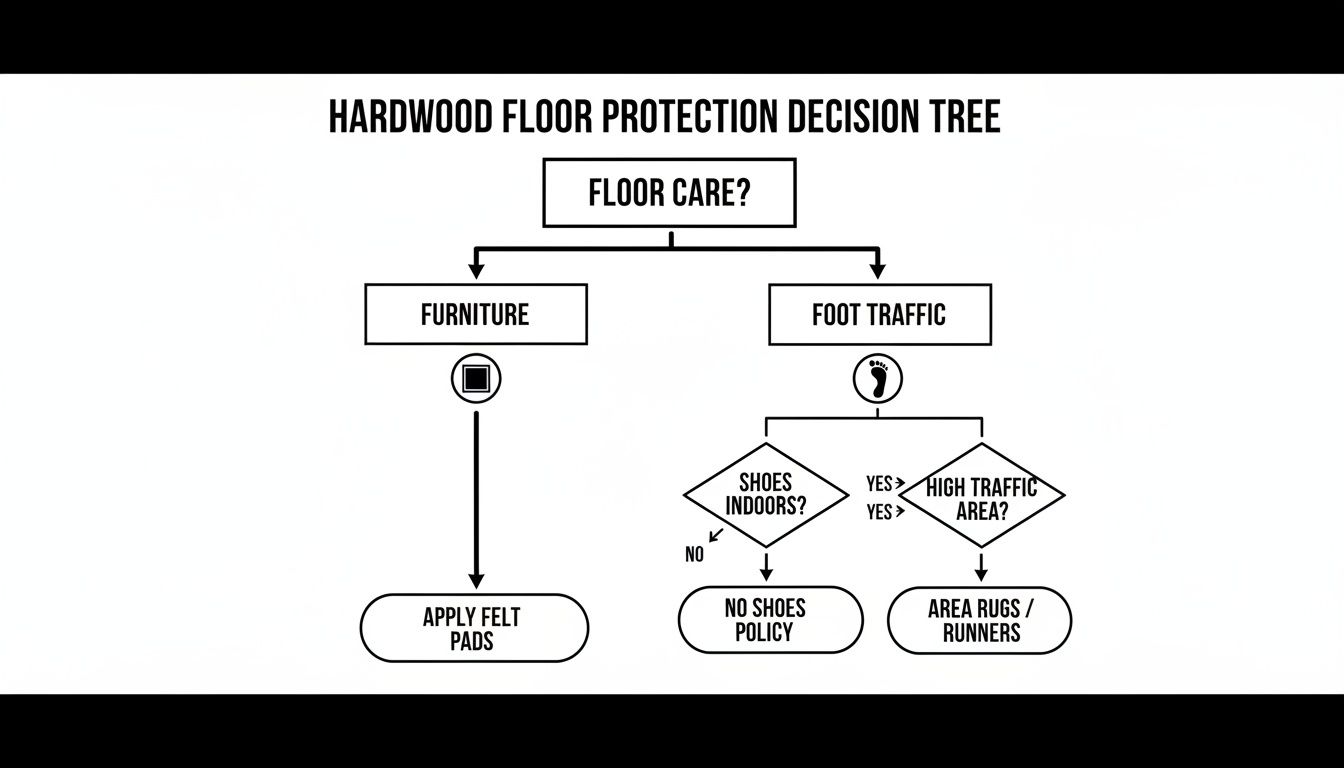
As you can see, while foot traffic is a real concern, direct furniture contact needs its own dedicated solution. Thinking about these two culprits separately is the key to creating a truly effective floor care strategy.
Matching the Pad to the Furniture
Not all furniture pads are created equal, and picking the right one is crucial. A one-size-fits-all approach just doesn't cut it when you're trying to protect your investment. The trick is to match the pad’s material to the furniture’s weight and how often it gets moved.
Here’s a quick rundown to help you make the right choice for every item in your home:
- Felt Pads (Self-Adhesive or Tap-In): These are your all-around champions. Use them on pieces that move a lot, like dining chairs, ottomans, and coffee tables. The soft felt lets them glide smoothly without scuffing the floor’s finish.
- Rubber Pads: Perfect for furniture you don't want to move. The grippy texture of rubber is ideal for keeping sofas, beds, and heavy cabinets locked in place. This stops the tiny, constant shifting that wears down the finish underneath.
- Plastic or Metal Glides: These are designed for sliding heavy items over carpet, but you should be extremely cautious using them on hardwood. If you absolutely have to, choose smooth plastic glides and make sure they’re perfectly clean before moving anything.
As a family-owned business serving the Capital Region since 1978, we’ve seen it all. The most common mistake we see is homeowners forgetting to put pads on new furniture. A beautiful, solid wood Amish dining table can leave a permanent mark the very first time it’s slid into place without protection.
Protecting Your Heirloom and Custom Furniture
When you invest in a special piece of heirloom-quality furniture, protecting it—and your floors—is even more important. A handcrafted bookcase or a custom-ordered dining set is meant to last for generations, and that all starts with proper care. Heavy, solid wood pieces put more pressure on your floors, making high-density felt pads an absolute must.
For these significant items, we recommend measuring the furniture leg and buying the matching pad size for a perfect fit. If the pad is too small, it can fail under the weight. If it’s too big, it can collect dust and grit around the edges, turning it from a protector into a scratcher.
Application and Maintenance: A Local Essential
Just putting the pads on isn't the whole job; they need a little TLC, especially with the changing seasons we get here in Upstate New York. After a long Greene County winter, trapped salt and grit can get stuck in old felt pads, turning them into something like sandpaper.
Follow these simple maintenance steps to keep your floors safe:
- Clean the Leg: Before applying a new self-adhesive pad, wipe the bottom of the furniture leg with a cloth to get rid of any dust or oils. This helps the pad stick securely.
- Inspect Regularly: Every few months, and especially during your spring cleaning, just lift a chair or table leg to check the pad's condition.
- Replace When Worn: If a felt pad looks dirty, compressed, or is starting to peel off, replace it right away. It’s a tiny task that prevents a huge headache.
This simple habit can make a massive difference. In fact, flooring experts have found that using felt pads diligently can reduce hardwood floor scratches by an incredible 90% in active households. In busy homes around Albany, where families are constantly growing and rearranging, this small step is critical.
For more tips, check out our complete guide on how to protect your floors from your furniture.
Using Area Rugs in High-Traffic Zones Around Your Albany Home
Think of area rugs as more than just decoration; they're the first line of defense for your beautiful hardwood floors. While furniture pads prevent scratches from stationary items, rugs take on the constant abuse from everyday foot traffic. By placing them in the busiest spots in your home, you create a buffer that catches dirt, absorbs wear, and adds a touch of personality.
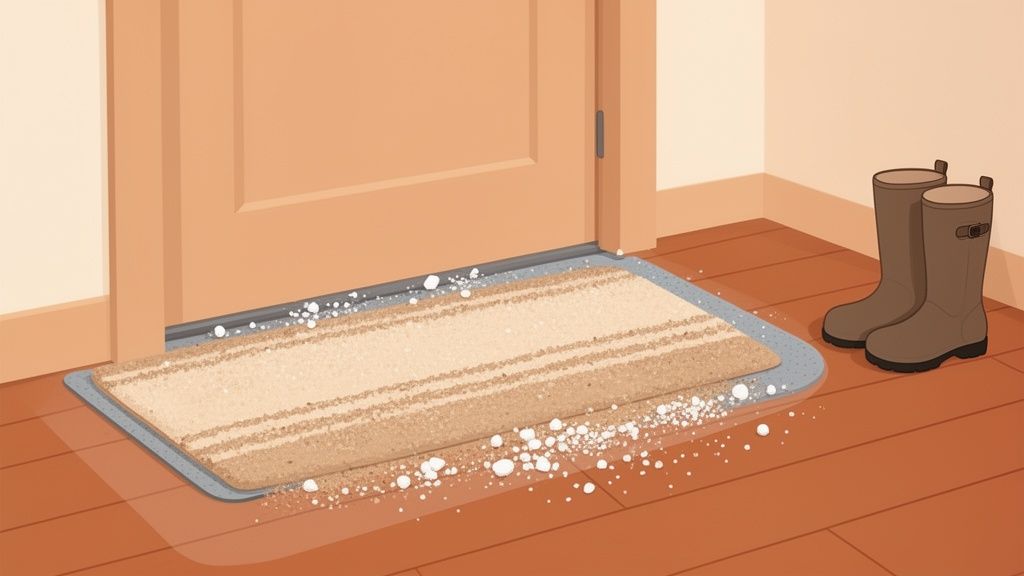
This is especially true for those of us here in the Greater Albany Capital Region. Our tough New York winters bring salt, sand, and slush right to our front doors. A durable rug in the entryway can trap all that abrasive grit before it gets a chance to scratch up your hardwood finish.
Identifying Your High-Traffic Zones
Every home has its "racetracks"—those natural pathways that get the most use from family, pets, and guests. Walk through your own home and you'll spot them right away. Protecting these key areas is the secret to preventing widespread wear and tear.
Common high-traffic zones usually include:
- Entryways and Mudrooms: This is where nearly all the outdoor grit and grime makes its entrance.
- Hallways: These narrow corridors concentrate foot traffic, leading to focused wear.
- Main Living Areas: Think of the path from the couch to the kitchen, or the space right in front of your favorite chair.
- Kitchens: The floor in front of the sink, stove, and refrigerator sees a ton of standing and spills.
For a busy home with kids and pets, studies have found that placing rugs in these spots can reduce wear on your hardwood floors by as much as 75%. It's an essential shield against everything from muddy paws to dropped toys.
The Unsung Hero: A Quality Rug Pad
You might think laying a rug directly on your hardwood is enough, but you’d be missing a crucial piece of the puzzle: the rug pad. A quality, non-slip rug pad does a lot more than just keep your rug from sliding around. It provides a soft barrier that actually stops the rug itself from damaging your floors.
Without a pad, tiny bits of dirt get trapped between the rug’s backing and the floor’s finish. Every time someone walks over it, that grit acts like sandpaper, grinding away and causing tiny, widespread scratches. A good pad holds the rug firmly in place, stops that grinding action, and adds a welcome layer of cushion under your feet. Here at Tip Top, we can help you match the right pad to any rug you choose as part of our one-stop shopping experience.
Visualizing Your Space with Our Room Planner
Choosing the right size rug can be tricky. Too small and it looks lost; too big and it overwhelms the room. Guessing is stressful, which is why we offer modern tools to take the uncertainty out of the equation.
We’ve been helping families in Freehold and Greene County furnish their homes since 1978, and we know that seeing how all the pieces fit together is everything. Our free Online Room Planner lets you see exactly how different area rugs will look with your furniture before you make a commitment.
Simply upload your room’s measurements, drop in your new Amish furniture, and play around with different rug sizes to find the perfect match. Wondering how an 8×10 rug will look under your dining set? Or if a runner is the right call for that long hallway? Our tool makes it easy, ensuring the final result is beautiful and perfectly functional. For more ideas on pairing rugs with tables, you can also check out our guide on the best area rugs for your dining room. This one-stop approach is what makes creating your perfect home so simple with Tip Top.
Smart Cleaning Habits to Prevent Scratches
Beyond adding furniture pads or rolling out a rug, the single best way to protect your floors is with your daily cleaning routine. We're not talking about hours of intense labor, but smart, consistent habits that tackle the biggest threat to your hardwood: abrasive grit.
Think about it—every time you walk across the floor, tiny bits of dirt, sand, and dust act like sandpaper under your feet. Over time, this slowly dulls the finish and creates a network of fine scratches. As a family-owned business that's been helping homeowners across the Greater Albany Capital Region for over 45 years, we know that a few simple tweaks to how you clean can make a world of difference.
Your Go-To Cleaning Methods
The most important habit you can build is getting dry debris off the floor before it has a chance to get ground in. This isn't just for looks; it's your first line of defense against damage.
- You'll want to sweep or vacuum your hardwood floors 2-3 times per week. For high-traffic zones like your kitchen or entryway, a quick daily sweep is even better. This is especially true during New York's snowy seasons when salt and sand get tracked in constantly.
- The right tool is everything. If you're vacuuming, make sure you use a soft-bristle head meant for hard surfaces. If your vacuum has a spinning beater bar, turn it off. An aggressive brush can scatter debris or even scratch the finish itself. For sweeping, a classic soft-bristle broom or a microfiber dust mop works perfectly to trap fine particles.
The Right Way to Mop Hardwood
One of the costliest mistakes we see is people mopping their hardwood floors like they would a tile floor. Water is wood's worst enemy, and too much of it can lead to warping, discoloration, and permanent damage to the finish. The secret is to use a damp mop, not a wet one.
Your mop head should be wrung out until it’s just barely damp to the touch. When you mop, it should leave behind only a whisper of moisture that evaporates in less than a minute.
As your local flooring experts in Freehold, we always tell our customers to think of it as wiping the floor clean, not washing it. A little goes a long way. This is the kind of trustworthy, local expertise we've been offering since 1978.
Also, stick with a pH-neutral cleaner that's made specifically for hardwood. Common household cleaners like vinegar or bleach-based products are far too harsh and can strip away your floor's protective finish, leaving it exposed and vulnerable.
Create a "No Shoes" Zone
Here’s an easy one: start a "no shoes in the house" policy. The soles of our shoes are magnets for tiny rocks, dirt, and all sorts of gunk that will absolutely destroy a hardwood finish.
Putting a simple shoe rack or a basket by the front door is a great visual reminder for family and guests to take their shoes off when they come inside. This one change can drastically cut down on the amount of grit that even makes it onto your floors in the first place.
Finally, a quick tip for pet owners: keeping your dog's or cat's nails trimmed is just as crucial as any cleaning habit. Long, sharp claws can easily dig into the wood, leaving behind scuffs and deep scratches. For more expert advice, our guide on hardwood flooring care tips covers even more ground.
How to Move Furniture Without Leaving a Mark
Bringing home a new treasure from our Freehold showroom—or even just rearranging for a fresh look—should be exciting, not a source of floor-scratching anxiety. With a bit of prep and the right technique, you can glide even the heaviest items, like a solid wood Amish bookcase, across your beautiful hardwood without leaving a single trace.
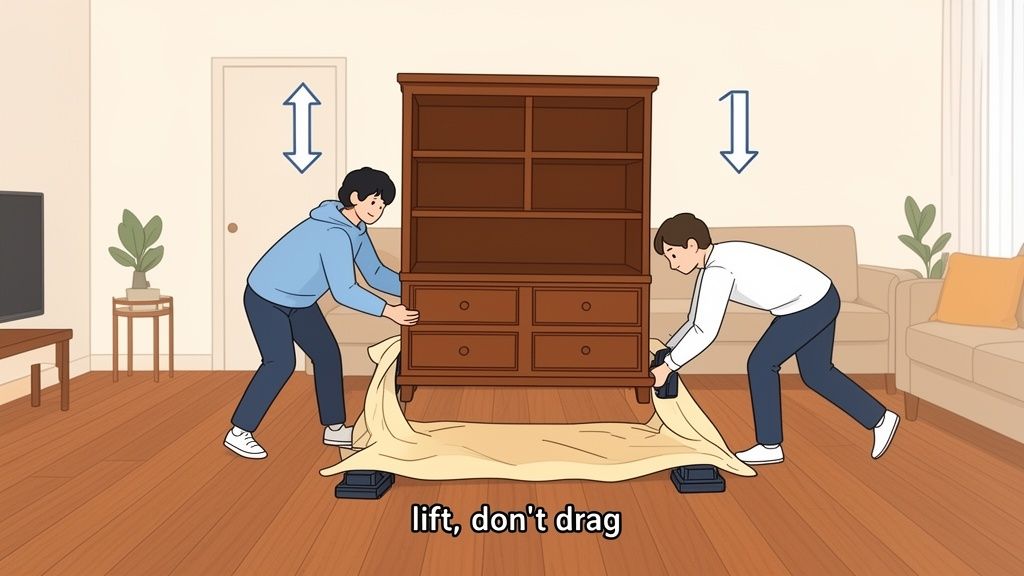
As your neighbors in the furniture business since 1978, we've learned one rule that trumps all others: lift, don't drag. It’s so simple, but so important. Dragging something—even if it feels light—can grind tiny bits of trapped grit right into your floor’s finish. The result? An ugly gouge that’s often permanent. Lifting the item completely off the floor is always your safest bet.
Essential Tools for a Safe Move
Of course, lifting isn't always practical for those big, bulky pieces. That's where a few simple tools make all the difference, acting as a critical buffer between your furniture and your floor.
- Furniture Sliders: These are your absolute best friends for moving heavy furniture. Just pop a slider under each leg or corner, and you'll be amazed at how easily a hefty sofa or cabinet can glide across the room. Make sure you grab the soft-bottomed kind designed for hardwood, not the hard plastic ones meant for carpet.
- Moving Blankets: A couple of thick moving blankets provide fantastic protection against both scratches and accidental bumps. We suggest laying them down to create a safe path, especially if you're trying to get around tight corners where a collision is more likely.
- Dollies or Hand Trucks: For the really heavy hitters, like a large USA-made mattress set or a solid oak armoire, a dolly is non-negotiable. It takes the strain off your back and, most importantly, keeps the furniture completely off the floor surface.
At Tip Top, we’ve seen it happen more times than we can count: someone tries to "walk" a heavy dresser across a room, only to leave a trail of crescent-shaped dents. Trust us, spending a few dollars on sliders or renting a dolly is a whole lot cheaper than a floor repair bill. And if the project feels too big, our flexible financing options can make professional help an easy choice.
A Smart Moving Plan
Before you even think about budging that piece of furniture, take a few moments to get everything ready. A little prep work goes a long way in preventing costly mistakes.
First, clear and clean the path. Get any area rugs, toys, or other obstacles out of the way. Then, give the entire route a good sweep or vacuum to pick up any stray dirt or grit that could cause a scratch.
Next, with a partner, carefully tilt the furniture just enough to slip a slider under each leg. Whatever you do, don't try to shove the furniture onto the slider—that can cause a scratch right from the get-go.
Finally, gently push the furniture from its lower half to keep it stable and balanced. Pushing gives you much better control and a clear view of the path ahead, unlike pulling.
For those bigger, more complex moves, especially for our customers in Albany, Schenectady, and Troy, remember that our professional delivery service is always an option. Our experienced team knows exactly how to navigate homes to ensure both your new furniture and your floors stay in perfect condition.
And remember, proper planning starts before you even buy. To avoid any moving-day headaches, be sure to learn how to measure your furniture so you know it will fit through doorways and hallways with room to spare.
Handling Floor Repairs and When to Call a Pro
Even if you follow every preventative step, life happens. A dropped tool, a dragged chair, or just years of foot traffic can leave their mark. While minor scuffs are just part of a floor’s lived-in character, it's crucial to know when a quick fix will do the trick and when it’s time to call in a professional for your floors in the Albany or Greene County area.
The first step is figuring out what you're dealing with. Is it a light surface scuff or a deep gouge? Surface scratches usually only break into the top protective finish and often look like thin, white lines. Deep gouges are a different story—they cut right through the finish and into the wood itself, exposing the raw fibers.
DIY Fixes for Minor Scratches
For those less-serious surface-level scratches, you’ve got some great DIY options. A simple scratch remover, like a wax repair stick or a stain-matching touch-up marker from the hardware store, can work wonders. These products are designed to either fill or color in the scratch, helping it blend right back into the surrounding floor.
Before you pick up the phone, it’s always worth seeing what you can do yourself. Many of the tried-and-true methods for furniture repair can be adapted for floors. You can find some excellent tips in A Homeowner's Guide to Removing Scratches from Wood Furniture.
Knowing When to Call a Professional
Sometimes, a DIY approach just isn't going to cut it. You’ll want to consider calling a professional when you run into these issues:
- Deep Gouges: If you can easily feel the scratch with your fingernail and it’s clearly gone through to the raw wood.
- Widespread Wear: When large areas of your floor look dull, tired, and are covered in countless fine scratches that are impossible to fix one by one.
- Water Damage: If you spot any dark stains, cupping (where the edges of the plank are higher than the center), or buckling, it's a sure sign that moisture has gotten into the wood.
As your local home experts in Freehold since 1978, we've spent decades building relationships with the best local flooring professionals in the Capital Region. If your floors are past the point of a simple fix and need refinishing, we can connect you with skilled experts who share our dedication to quality and trustworthiness.
This is where our one-stop-shop approach really makes a difference. Our Professional Design Services team, established back in 1984, can help coordinate a full floor refresh along with new furniture, ensuring your whole home comes together beautifully. For a better idea of what to expect, you can learn more about the hardwood flooring installation process directly from our flooring department.
Frequently Asked Questions
After 45+ years of helping homeowners around the Albany area, we’ve heard just about every question imaginable when it comes to keeping hardwood floors looking their best. Here are a few of the most common ones we hear in our Freehold showroom, answered with the attentive, local expertise you can trust.
Can I Use an Office Chair with Wheels on My Hardwood?
You can, but you absolutely have to use the right protection. Those standard hard plastic or metal wheels that come on most office chairs are notorious for grinding dirt and grit into your floor’s finish. Over time, this will absolutely cause significant scratching.
Your easiest fix is to place a high-quality chair mat under your chair. If you want a more seamless look, you can also swap out the chair's original wheels for soft, "rollerblade-style" casters made specifically for hardwood. It's a small change that makes a huge difference, especially if you have a home office.
What’s the Best Way to Protect Floors from My Dog's Nails?
There really isn't one single solution, so a few different habits work together best. The most important thing you can do is keep your dog's nails trimmed regularly. This keeps the tips blunt so they're far less likely to scratch the finish.
We also suggest placing durable area rugs or runners in their favorite "racetracks" through the house to absorb the impact of all that running and playing. And always, always clean up water spills from their bowls right away to prevent moisture damage. A few simple routines will help your floors and your four-legged family members coexist beautifully.
Are Some Hardwood Finishes More Scratch-Resistant Than Others?
Absolutely. If you're in the market for new flooring, make sure to ask about modern finishes that contain aluminum oxide. Think of this additive as a suit of armor for your floor—it dramatically increases the durability and scratch resistance of the topcoat. For a busy household with kids or pets, it’s a game-changer.
At Tip Top Furniture & Mattresses, our flooring experts can walk you through options from our 50+ trusted manufacturers. We’ll help you find a beautiful hardwood that not only matches your style but can also stand up to your family's active lifestyle, all available from our showroom near Albany.
How Can I Fix Minor Scratches That Are Already on My Floor?
For those very light surface scuffs, the kind that just look like a white line in the finish, you can often hide them with a stain-matching touch-up marker or a specialized wax repair stick. For scratches that are a little deeper, a good restorative polish can sometimes help fill them in and make them less noticeable.
If you’re dealing with deep gouges that have cut right through the finish and into the wood itself, it's best to call in a professional. Our team can connect you with trusted local experts throughout the Capital Region to make sure you get a proper, seamless repair.
Ready to find flooring or furniture that perfectly suits your home and lifestyle? At Tip Top Furniture & Mattresses, our family is here to help yours with the kind of expert advice and commitment to quality that has defined us since 1978.
Visit our Freehold, NY showroom today to explore your options!