How Much Does a Queen Size Mattress Weigh? a Complete Guide


A queen mattress typically weighs 60 to 130 pounds, depending on its construction, with most common builds sitting near 75 pounds. That range is wide because a queen's 60-by-80-inch footprint can hold very different combinations of coils, foam, latex, and comfort layers.
Someone replacing a mattress in Freehold, Albany, Schenectady, Troy, or elsewhere in the Capital Region usually has more than a number to consider. The mattress has to reach the bedroom, turn through doorways and stairwells, rest safely on its foundation, and eventually leave the home without damaging walls or creating a disposal headache. A simple coil model may be manageable with two adults, while a dense latex or thick hybrid can demand a more deliberate plan.
Why Queen Mattress Weight Is a More Complicated Answer Than It Sounds
At a Freehold showroom, a queen mattress can look manageable on the floor and become a serious handling job at home. Plan around 60 to 130 pounds for a typical queen mattress, with a practical average near 75 pounds for common queen builds. General category guides place memory foam queens around 50 to 80 pounds, innerspring models around 50 to 70 pounds, hybrids around 80 to 100 pounds, and Dunlop latex queens around 100 to 130 pounds. The queen mattress weight guide provides a general comparison, not the specification for the model you are buying.
The word “queen” describes the sleeping surface, not the finished load. Two mattresses can share a 60 by 80 inch footprint and differ by more than 50 pounds because their materials have different densities. Foam replaces metal coils, hybrids combine coils with substantial comfort layers, and latex uses dense rubber cores that add mass.
Five constructions change the answer
The main categories are:
- Innerspring: A traditional coil core with comparatively modest padding.
- Memory foam: An all-foam design that gets heavier as density and profile increase.
- Hybrid: Coils beneath several foam comfort layers.
- Latex: A dense natural or synthetic latex core, often heavier than other constructions.
- Pillow-top: Any core design with an added plush upper section.
Thickness, coil count, foam density, latex type, and the number of comfort layers all affect the scale. A taller mattress usually contains more material, but a shorter model made from dense latex can still outweigh a taller, low-density foam design.
Practical rule: The manufacturer's specification sheet matters more than a general category average.
Weight should shape the entire purchase decision. Confirm that the frame and foundation can support the mattress, arrange two-person handling for a heavier queen, and measure the route through doorways, stairwells, and tight turns. Older Capital Region homes often make rotation and bedroom setup harder than showroom handling suggests.
Plan for the old mattress before delivery day. Haul-away, recycling, donation eligibility, or another disposal method may require separate arrangements, especially if the set is worn or damaged.
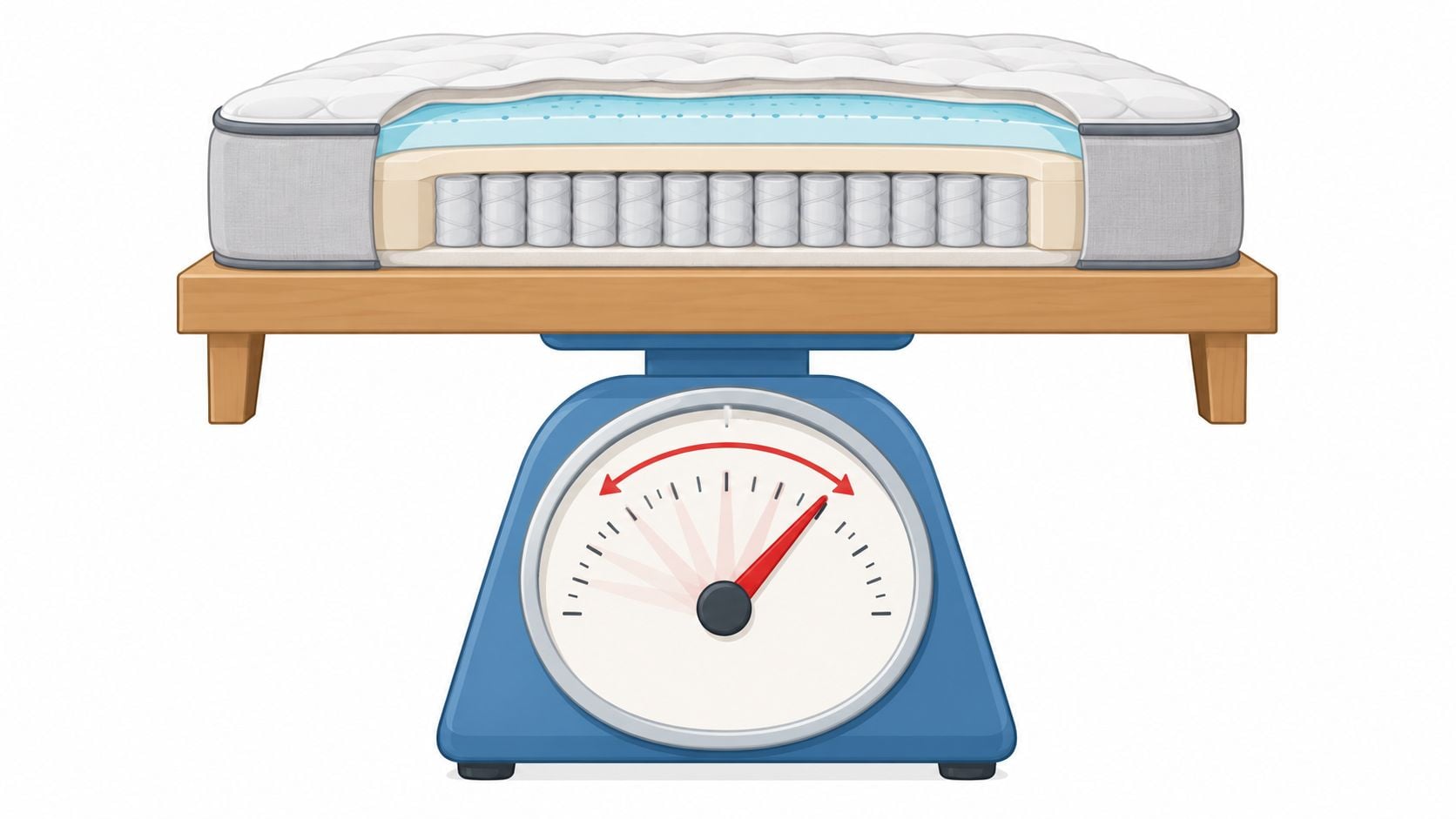
Use the average-weight table for a working estimate, then check the model specification before ordering. Material choice explains why a current mattress may feel unusually heavy.
Average Queen Mattress Weight by Construction Type
A queen mattress can look manageable in a Freehold showroom and become a two-person job on a narrow Capital Region staircase. Construction gives you a better working estimate than size alone, but the model specification remains the final authority. Broader real-world comparisons range from about 45 to more than 150 pounds as materials, thickness, and comfort layers change.
| Construction Type | Average Weight Range, Queen | Primary Weight Driver |
|---|---|---|
| Innerspring | 60 to 85 pounds | Steel coil system and padding |
| Memory foam | 70 to 100 pounds | Foam density and total foam volume |
| Hybrid | 80 to 120 pounds | Coils combined with thick foam layers |
| Natural latex | 90 to 130 pounds | Dense latex core, especially Dunlop latex |
| Pillow-top | Base construction plus 5 to 15 pounds | Added fiber, foam, or latex comfort layer |
What each category means on the showroom floor
Innerspring queens usually fall toward the lighter end because the coil unit provides support without filling the mattress with as much foam. More coils, heavier padding, and a thicker comfort package can move a model higher in its range.
Memory foam queens commonly weigh 70 to 100 pounds. A low-profile all-foam mattress is easier to position, while a tall, dense build demands more strength during delivery and setup. Use this guide to memory foam mattress brands to understand construction differences, then verify the exact product weight before ordering.
Hybrids typically weigh 80 to 120 pounds. Their coil core combines with foam, quilting, and comfort sections, creating a substantial load that deserves delivery planning. At our Freehold showroom, hybrids over 100 pounds are flagged for white-glove delivery at checkout, so the crew, route, and room setup are planned before delivery day.
Natural latex queens range from 90 to 130 pounds in this practical comparison. Dunlop latex generally creates a denser, heavier mattress, while Talalay latex is often lighter within the same category. That difference matters when rotating the mattress or carrying it upstairs.
Pillow-tops add roughly 5 to 15 pounds to the underlying construction, depending on the fill. The added comfort layer also makes the mattress harder to bend and grip. Review mattress types explained when comparing materials, then check the model's shipping or product weight.
For a local purchase, treat the table as a handling plan, not a final measurement. Confirm the listed weight, arrange adequate help, and tell the showroom about stairs, tight turns, or an older home before delivery.
What Actually Drives the Difference in Queen Mattress Weight
Weight comes from density multiplied by material volume. Foam density is commonly expressed in pounds per cubic foot, and memory foam above 5 pounds per cubic foot adds meaningful heft. Latex above 4 pounds per cubic foot does the same, especially when the mattress contains several dense layers.
Thickness compounds the effect. A 14-inch profile carries roughly twice the fill volume of a 7-inch profile when the construction and density are otherwise comparable. That doesn't mean every 14-inch mattress weighs exactly twice as much, because covers, support cores, and quilting vary, but it explains why taller designs can feel surprisingly heavy before they ever leave the showroom.
Coils and latex create different kinds of mass
Coil construction changes weight in several ways. Coil gauge, coil count, and the difference between pocketed and Bonnell systems can shift an innerspring model by 10 to 20 pounds across designs. More metal and more surrounding upholstery increase the finished load, although the exact result remains model-specific.
Latex has its own split. Dunlop latex is generally heavier and denser, while Talalay latex is lighter and more uniform. A queen with a thick Dunlop core can outweigh an all-foam mattress with the same dimensions, even when both appear similarly substantial from the outside.
Comfort materials finish the calculation. Pillow-tops, wool or fiber quilting, transition foams, edge reinforcement, and heavier cover fabrics stack on top of the support core. A tall hybrid with a generous pillow-top can approach the weight of an all-latex mattress because it combines several dense layers rather than relying on one system.
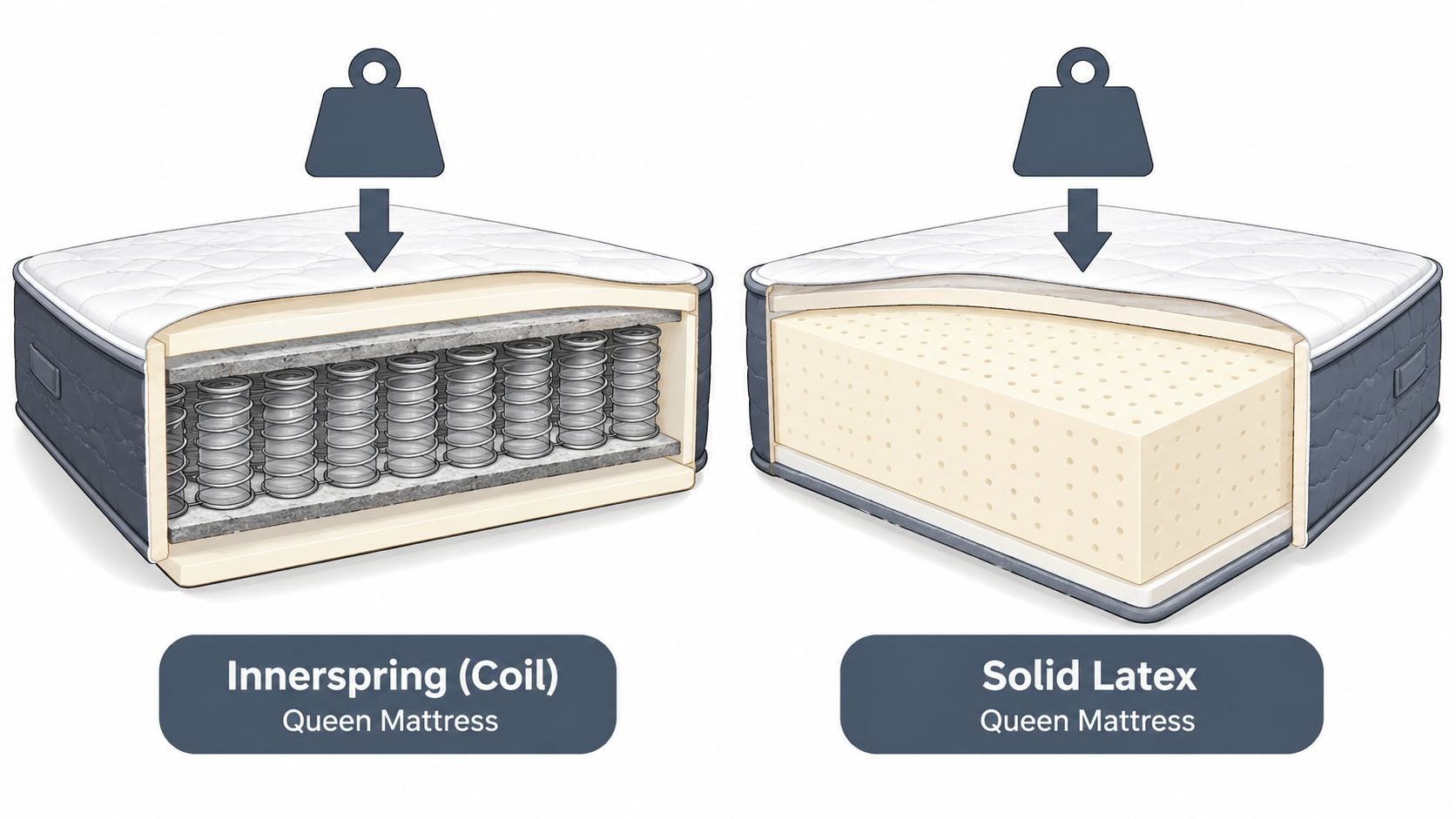
The same principle applies to upholstery and bedroom furniture. Fabric, batting, foam, wood, and hardware all affect how an item handles, which is why a guide to upholstery materials helps shoppers understand construction beyond appearance.
Comparing the Five Queen Constructions at a Glance
A quick comparison helps narrow the choice before a shopper spends time testing beds. Firmness varies by model, so the ranges below describe what's commonly stocked rather than a guarantee for every mattress.
| Construction | Typical Queen Weight | Common Firmness Range | Best Fit |
|---|---|---|---|
| Innerspring | 60 to 85 pounds | Medium-firm to firm | Back sleepers and budget-focused buyers who like traditional bounce |
| Memory foam | 70 to 100 pounds | Soft to firm | Side sleepers and couples who prioritize motion isolation |
| Hybrid | 80 to 120 pounds | Medium-soft to firm | Combination sleepers wanting coil response with foam comfort |
| Latex | 90 to 130 pounds | Medium to firm | Hot sleepers and buyers seeking resilient, natural-feeling materials |
| Pillow-top | Core weight plus 5 to 15 pounds | Plush to medium | Sleepers who want a softer surface feel |
The showroom-floor distinction is simple. Innerspring and memory foam are often easier to reposition, while hybrid and latex designs can feel more planted and require more help during delivery. Pillow-tops add softness, but they can also make rotation and stair handling less convenient.
Weight matters during testing because the mattress will be moved into the room, placed on a base, and occasionally rotated. A shopper comparing support and comfort can use this guide to choose between memory foam, hybrid, and innerspring while keeping the practical handling question in view.
Matching Queen Mattress Weight to Your Bed Frame and Foundation
A queen mattress isn't supported in isolation. The frame, foundation, mattress, bedding, and sleepers all contribute to the load the bed must carry. A heavy mattress can expose weak slats, aging box springs, loose center supports, or hollow rails that seemed adequate with a lighter bed.
Check the entire support system
For a practical example, a 110-pound latex queen, a 50-pound foundation, and a 40-pound frame create roughly a 200-pound dead load before anyone lies down. A prudent frame should be rated for combined static and dynamic loads above 500 pounds, not merely for the mattress by itself.
Key checks include:
- Slatted platforms: Slats spaced more than 3 inches apart may not provide the continuous support required by some dense mattresses.
- Metal frames: Hollow rails rated under 400 pounds total deserve careful review before carrying the mattress, foundation, and sleepers together.
- Traditional box springs: A worn foundation can lose support beneath a dense latex or hybrid core, even if the exterior still looks serviceable.
- Adjustable bases: The base's published capacity must cover the mattress and sleepers, and the manufacturer's compatibility rules should take priority.
The base should also have a center rail and legs that contact the floor securely. A frame that rocks, bows, or separates at the joints needs attention before delivery day.
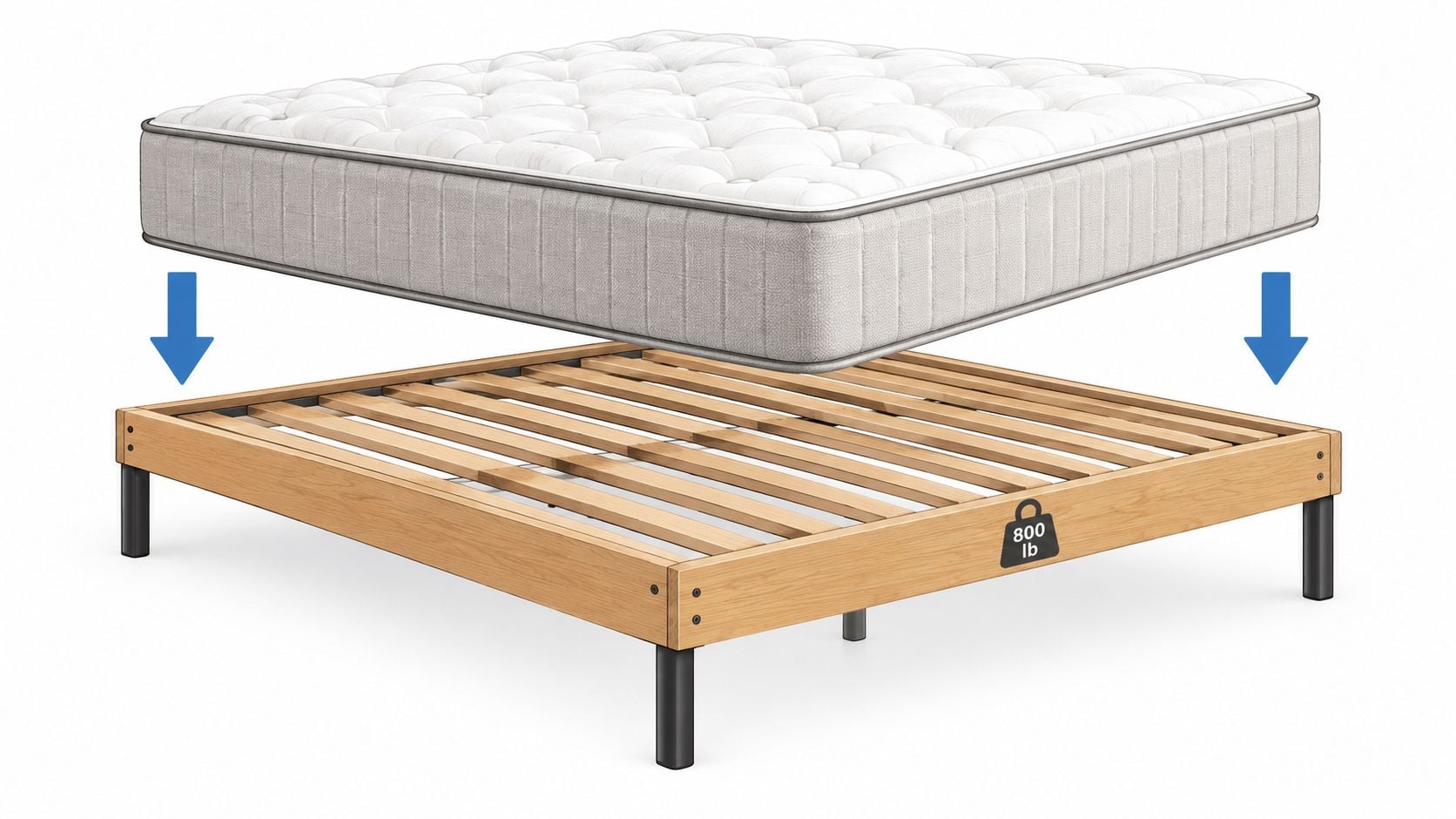
A box spring guide can help clarify when a foundation is necessary and when a platform base is the better match. For Capital Region deliveries, a qualified showroom team can verify dimensions, support requirements, and access conditions before the mattress arrives.
Moving, Delivering, and Setting Up a Queen Mattress Safely
The move starts before the truck reaches the house. A queen mattress should be handled by two adults, particularly when it belongs to the heavier hybrid or latex categories. Each person should lift with the legs, keep the mattress close to the body, and avoid twisting while carrying it.
A mattress bag protects the fabric from porch dirt, stair dust, and damp pavement. Ratchet straps help secure the mattress on a truck ramp or during a short repositioning, but they shouldn't be tightened so aggressively that they deform the comfort layers.
A local delivery needs a route plan
Before delivery day, households should measure:
- The exterior doorway and interior bedroom doorway.
- Hallway widths and ceiling clearance.
- Stairwell width, landing depth, and tight turns.
- Banister and wall clearance at the narrowest point.
- The final position of the bed frame and foundation.
Older Freehold-area homes and Upstate New York colonials can have narrow hallways, steep stairs, and corners that look passable until a full queen mattress reaches them. Removing doors, protecting banisters, and clearing lamps or wall décor can prevent avoidable damage.
White-glove delivery becomes especially valuable for queen builds over 100 pounds. A professional crew can plan the carry, protect walls, assemble the foundation, place the mattress, and coordinate haul-away of the old set. Commercial movers also use specialized staging areas, including storage mezzanines for moving operations, but a residential delivery still depends on careful measurements and controlled handling.
Once the mattress is in place, compressed foam may need 24 to 48 hours to expand fully. The household should use a mattress protector from the first night and rotate the mattress 180 degrees after the first month, provided the manufacturer permits rotation. Those steps protect the surface and help preserve warranty conditions. For furniture that arrives assembled or requires coordinated setup, review the assembled furniture delivery service before scheduling.
Why a Heavier Queen Mattress Is Not Automatically a Better Mattress
A scale measures mass, not sleep quality. A dense 90-pound memory foam queen can sag sooner than a well-engineered 75-pound latex build, while a 110-pound innerspring with thin comfort layers may provide better support than a 130-pound pillow-top filled with lower-density material.
Weight is a logistics clue. It tells shoppers to think about carrying, foundations, frame strength, and rotation, but it doesn't certify durability or comfort.
Read the specification sheet
A better quality check includes:
- Foam density: Higher density can support durability, but the complete design still matters.
- Coil gauge and count: These reveal more about an innerspring system than total mattress weight.
- Latex ILD: This helps describe firmness and resistance.
- Material certifications: Certifications such as CertiPUR-US or GOLS can provide useful information about material standards.
- Comfort testing: Spinal alignment, pressure relief, edge support, and motion isolation matter more than heft alone.
A heavy pillow-top can mislead buyers because added fiber and quilting create softness and mass without necessarily improving support. Latex can also appear heavier because its core is dense, not because every sleeper will prefer its feel.
The sensible approach is to lie on each construction long enough to judge alignment and pressure. A local Freehold showroom gives shoppers from Albany, Schenectady, Troy, Greene County, and surrounding communities a chance to compare feel in person instead of treating the scale as a quality score.
Disposing or Donating a Queen Mattress in Upstate New York
An old queen mattress needs a plan before the new one arrives. Disposal rules vary by municipality, so Freehold-area residents should contact the local town highway department before placing a mattress at the curb. The department can confirm bulk-pickup weight limits, required mattress-bag rules, scheduling windows, and whether the foundation must be handled separately.
County transfer stations provide another route. Before loading the old set, residents should verify accepted wrapping, current fees, operating hours, and proof-of-residency requirements. A wrapped mattress is easier to transport cleanly and may be required for acceptance.
Donation depends on condition
Donation works only when the mattress is clean, dry, structurally sound, and free from stains, odors, tears, pest concerns, or significant sagging. Potential local options include:
- Faith-based charities: These may accept gently used mattresses when they have a current household need and transportation capacity.
- Regional reuse stores: A local Habitat for Humanity ReStore or similar reuse organization may have condition and scheduling rules.
- Salvation Army or Goodwill locations: Acceptance policies differ by location, so households should call before making the trip.
A mattress that isn't fit for sleep shouldn't be donated. It may still be recyclable, however. The Bye-Bye Mattress program can provide a recycling pathway where participating facilities are available, and an innerspring unit may offer steel-scrap recovery after proper dismantling.
Coordinate removal with replacement
The cleanest sequence is to arrange old-mattress removal when the replacement is delivered. That avoids storing a bulky queen in a garage, basement, or hallway and reduces the chance that a heavier new mattress must be moved around an old one.
Households purchasing a new queen in the Freehold showroom can ask the delivery team about haul-away and responsible disposal options. The right plan depends on municipal rules, mattress condition, and available recycling or donation partners, so confirmation before delivery is essential.
Tip Top Furniture & Mattresses is a family-owned Freehold showroom serving Albany, Schenectady, Troy, Greene County, and the wider Capital Region with USA-made mattresses, personalized sleep matching, delivery, flexible financing, and more than 45 years of local experience. Visit Tip Top Furniture & Mattresses to compare queen constructions, verify frame compatibility, and arrange delivery or haul-away with a knowledgeable local team.