Entryway Chest of Drawers Buying Guide for Albany Homes


The front door opens after a long day, and the entryway tells the story before anyone has taken off a coat. Keys have disappeared beneath the mail, shoes crowd the walking path, gloves have lost their partners, and a leash is somewhere near the door but not where anyone can find it. An entryway chest of drawers can turn that daily scramble into a simple landing place for the things a household carries in and out.
The right piece isn't decoration alone. It can provide closed storage, a useful surface, and a visual anchor without demanding the footprint of a larger cabinet. This guide helps homeowners judge size, depth, drawer capacity, materials, safety, and styling with the practical needs of Albany, Schenectady, Troy, and the wider Capital Region in mind.
At Tip Top Furniture & Mattresses, a family-owned showroom serving Freehold and surrounding communities since 1978, furniture decisions are handled with local attention rather than guesswork. The same entryway may need to coordinate with flooring, bedroom furniture, lighting, and seasonal storage. A thoughtfully arranged entrance can also support the broader goal of creating homes with more curb appeal, because the feeling of welcome begins at the threshold and continues inside.
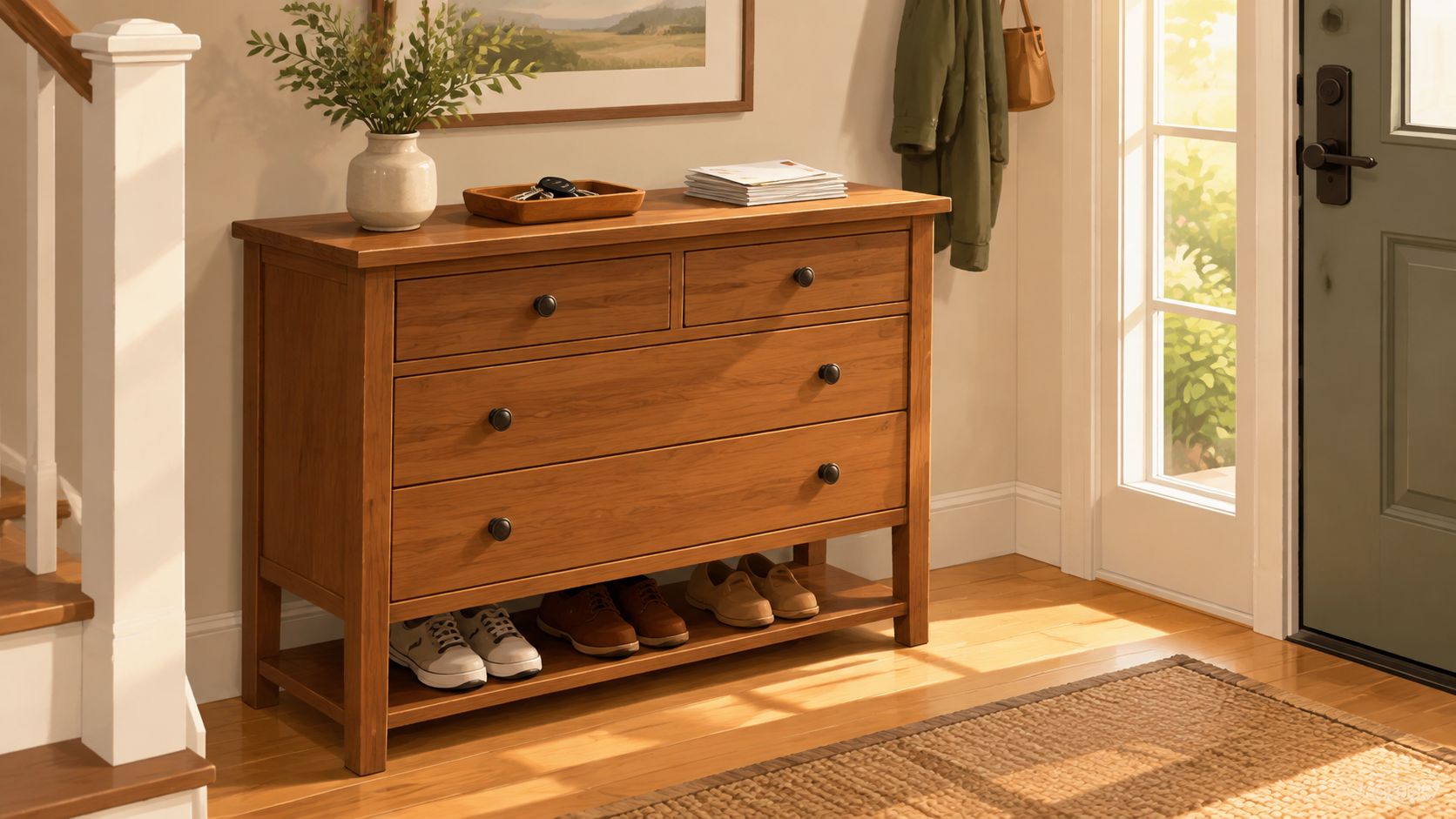
The entry table can offer a starting point for keys and décor, but a chest goes further by concealing the everyday overflow. A helpful overview of entry table elements can clarify how the surface, lighting, mirror, and storage should work together. By the end of the guide, a homeowner should be able to measure the space, describe the needed capacity, compare styles, and arrive at the Freehold showroom with a clear furniture brief.
What an Entryway Chest of Drawers Is and How It Works
Think of a chest of drawers as a vertical toolbox for the entrance. Instead of spreading storage across the floor, it stacks compartments upward. Each drawer can handle a different category, such as daily accessories, pet supplies, school items, or seasonal gear, while the top supports a lamp, mirror, tray, or small piece of décor.
That arrangement differs from an open bench or a simple console. An open bench keeps shoes visible and often gives someone a place to sit, but it may leave loose items exposed. A console usually emphasizes a narrow top and light visual presence, while a chest emphasizes closed, compartmentalized storage. A buffet can provide generous storage, though its wider proportions may suit a dining room or spacious foyer better than a tight hallway.
Why the form became so useful
The furniture form has a long history. The chest of drawers developed in the mid-17th century from a chest with drawers in the base. By the 1680s, the older chest form had largely disappeared and been replaced by a full drawer case, often arranged with three long drawers of varying depth above two short drawers side by side. This history is documented by Britannica's overview of the chest of drawers.
That change matters in a modern entrance because it established the compact logic still used today. Vertical storage makes practical use of wall height while limiting the furniture's spread across the walking area. In a narrow Capital Region hallway, that can be more valuable than a broad case with fewer, larger compartments.
When a chest is the right choice
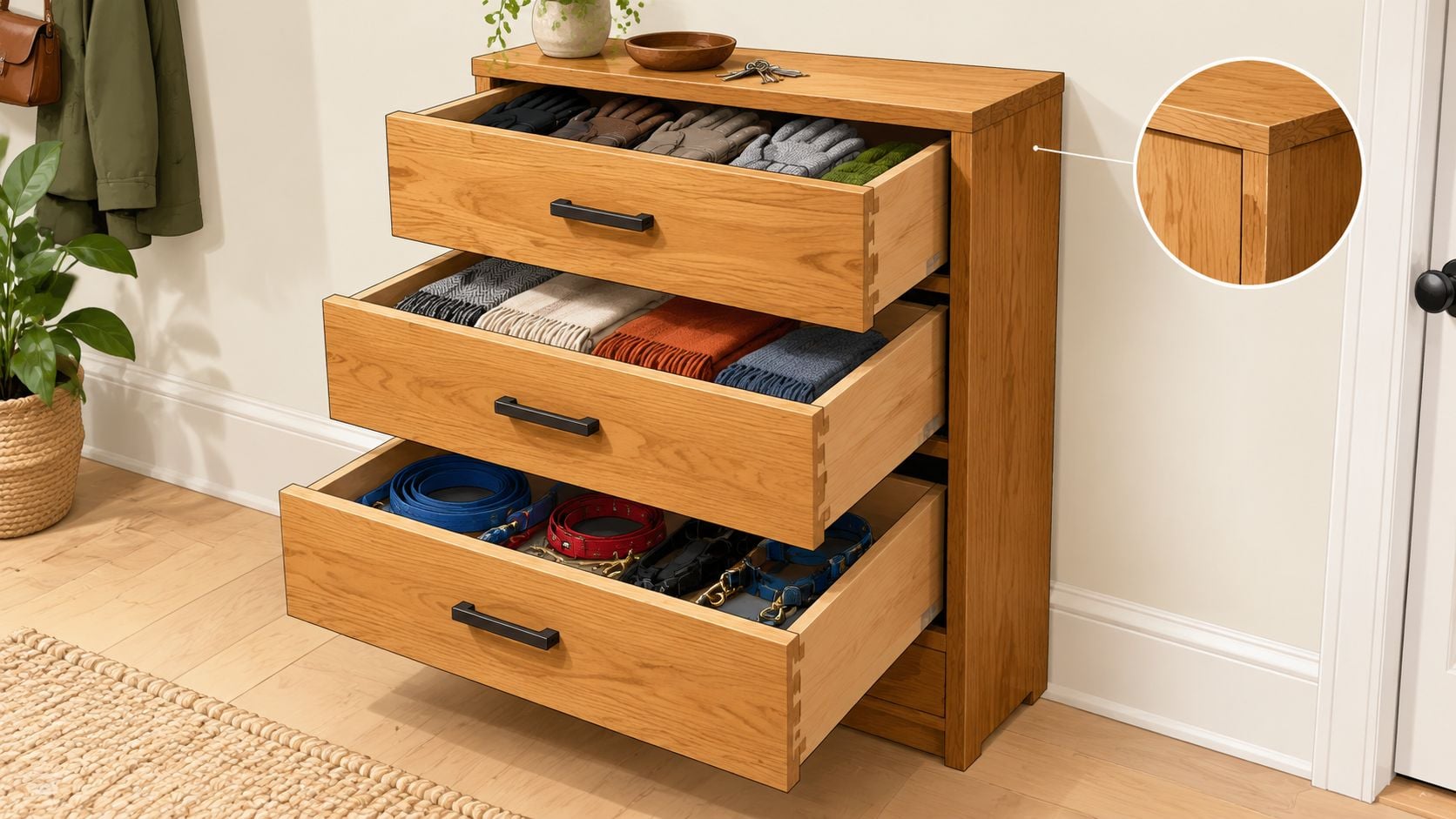
A chest makes sense when the entrance needs hidden organization and the household wants a surface for useful objects. It works especially well when:
- Loose items are the main problem: Drawers can separate keys, gloves, hats, leashes, and mail.
- The floor is limited: A taller, narrower silhouette can preserve the circulation path.
- Visual calm matters: Closed fronts keep everyday clutter from becoming part of the room's appearance.
- The entry connects to other rooms: A chest can echo the finish of bedroom or living room furniture without looking like a temporary storage bin.
Before choosing a style, shoppers can review what to look for when buying chests, dressers, and cabinets so construction, drawer operation, and proportions receive as much attention as appearance.
Finding the Right Size and Layout for Your Entryway
A winter morning exposes a poor layout quickly. One person reaches for gloves, another opens the front door, and a child turns toward the stairs with a backpack. If the chest interrupts that movement, its dimensions are working against the household. Measure the full entry width first, then mark the door swing, trim, radiators, stairs, and natural turning points.
Keep the main route at at least 36 inches of circulation width, following this entryway furniture spacing guidance. Around 30 inches may fit a tighter arrangement, while 42 inches can feel more comfortable for several people using the entrance together. Treat these measurements like lanes on a small road. The chest should store belongings without narrowing the route people use every day.
Use depth as a traffic decision
In a narrow Capital Region hallway, deeper is not automatically better. A chest with 12 to 15 inches of depth can hold keys, gloves, hats, leashes, and school supplies while leaving more floor available. Allow 30 to 36 inches of open space in front so drawers can open without blocking the walking route, as the spacing guidance explains.
A foyer with more room may accommodate 16 to 18 inches of depth. A standard chest near an entry can reach 18 to 20 inches, a common chest depth, but that extra depth needs a clear reason. It may add capacity, yet it also brings the case closer to doors, stairs, and passing feet.
| Hallway Situation | Recommended Chest Depth | Clearance to Leave in Front |
|---|---|---|
| Tight hallway with regular traffic | 12 to 15 inches, as recommended for entryway circulation | 30 to 36 inches |
| More generous foyer | 16 to 18 inches | 30 to 36 inches |
| Standard chest used near an entry | 18 to 20 inches | At least 10 to 12 inches after drawers are fully pulled out |
Choose height by the job
A waist-high chest is commonly about 30 to 36 inches tall, according to chest size guidance. That height provides a useful surface for a mirror, lamp, tray, or artwork. A tallboy generally reaches 48 to 60 inches, stacking more storage upward while leaving less display space.
Drawer count should match real family capacity. One drawer might handle keys and mail, another gloves and hats, and another pet or school gear. A taller piece can preserve hallway floor space, while a wider, shallower case may let several people reach their items without crowding one another.
Sketch the footprint before ordering. Mark the door swing, then draw each drawer fully open. If an open drawer reaches the main path, choose a shallower chest or reconsider the location. When seating and shoe removal matter more than drawer capacity, an entryway corner bench may fit the household's routine better.
Style and Material Options That Fit Albany Homes
An entryway chest needs to look comfortable beside the home's existing architecture. In an older house near Albany or a newer home farther through the Capital Region, the right finish should relate to trim, flooring, stair rails, and nearby furniture without creating a room full of matching surfaces.
Compare the material choices
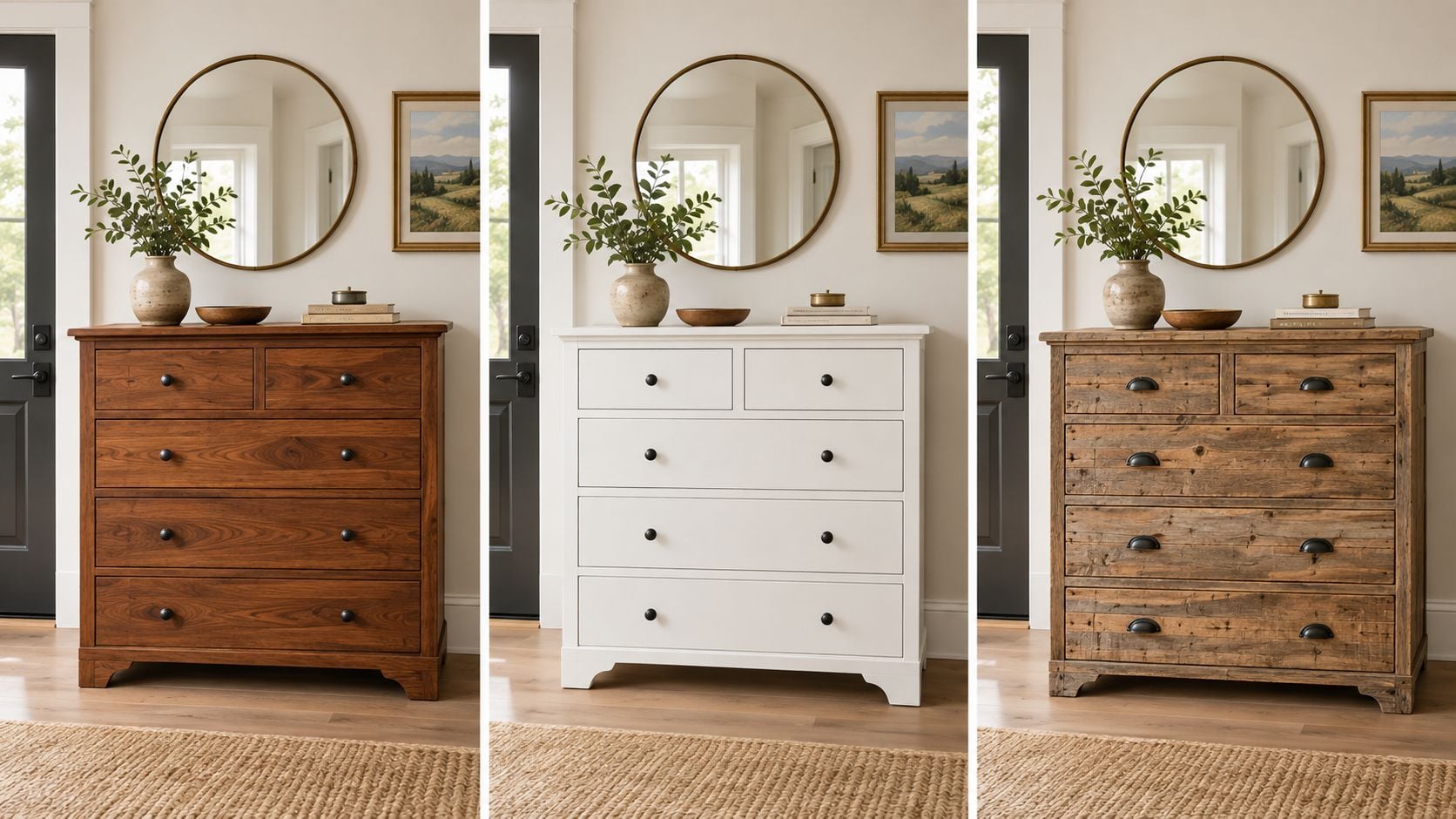
Solid wood, including Amish furniture handcrafted in the USA, brings visible grain, substantial construction, and an heirloom character that can suit homes expected to evolve over time. Wood species and finish affect the impression. A lighter finish can make a compact entry feel more open, while a darker finish can add weight and connect with dark stair rails or traditional trim.
Painted furniture offers a different advantage. It can introduce a soft color, bridge old and new furnishings, or echo a nearby wall tone. It may feel lighter visually even when the case itself is sturdy. Mixed-material pieces, such as wood combined with metal hardware or another contrasting surface, can suit a more transitional entrance where traditional and contemporary details meet.
Material matters most where daily use is hardest. A busy entrance benefits from a finish and hardware that feel comfortable to touch, easy to live with, and consistent with the home's other durable surfaces.
Construction deserves a close look. Drawers should move smoothly and sit evenly when closed. Hardware changes the personality of the piece, from simple pulls that keep the front quiet to more detailed handles that support a traditional or collected look. The case should also feel visually balanced, especially when placed near a doorway where the eye sees it from several angles.
Create a coordinated local look
A chest doesn't have to match every item exactly. Repeating one detail often creates enough connection:
- Echo the floor: Relate the wood tone or painted color to nearby hardwood, laminate, or a runner.
- Respect the trim: A traditional home may welcome framed drawer fronts and visible grain, while a clean-lined house may suit flat fronts and restrained hardware.
- Balance visual weight: A substantial chest can pair with a simple mirror, while a delicate piece may need stronger artwork or lighting above it.
- Keep the entrance useful: Finish and style should never force the household to leave daily items exposed because the storage isn't practical.
Custom ordering adds another route. Tip Top's custom ordering service allows shoppers to select style, size, wood type, and finish, and craftsmen can work from a picture or sketch when a standard piece doesn't fit the space. That option is useful for an unusual stair landing, a narrow alcove, or a home where the entry chest needs to coordinate with existing Amish or USA-made furniture.
For Greater Albany customers, the Freehold showroom provides a place to examine wood, finish, scale, and hardware in person. The decision becomes easier when the actual surface and drawer operation can be experienced rather than judged from a small screen.
Matching Storage Capacity to Real Family Needs
Storage capacity should be described by what the household needs to put away, not just by the number of drawers. A chest with several shallow drawers may handle keys, gloves, hats, and pet leashes better than a piece with fewer deep compartments. A family that needs room for school gear or larger accessories may prefer a different internal arrangement.
Start with a short entryway audit. For several ordinary days, collect the items that repeatedly land near the door. Group them by frequency and size instead of assuming every drawer should hold the same category.
Build a household storage brief
A useful brief might look like this:
- Daily small items: Keys, sunglasses, wallets, and reusable bags belong near hand height.
- Cold-weather accessories: Gloves, scarves, and hats need a drawer that remains easy to reach during the winter.
- Pet supplies: Leashes, waste bags, and small grooming items benefit from one clearly assigned compartment.
- School and work gear: Folders, small devices, and outgoing items need enough width to avoid becoming a pile.
- Seasonal pieces: Less frequently used accessories can move to a lower drawer or another storage area.
Slim storage guidance places tight-hall cabinets around 10 to 12 inches deep, with ultra-slim models around 7 to 8 inches, according to recent entryway shoe-storage guidance. Typical slim cabinets can hold roughly 8 to 16 pairs of shoes, depending on shoe size and the use of dividers, as that source explains. A chest of drawers isn't automatically the right shoe cabinet, so shoppers should test whether shoes sit flat, whether the drawer height works, and whether boots require a separate solution.
Why deeper isn't automatically better
A deeper case may appear to offer more storage, but it also consumes more floor space. In a narrow, high-traffic entrance, that extra depth can shrink the walking route, interfere with a door swing, and make the whole room feel crowded. Maximum storage can be the wrong target if the furniture prevents people from moving comfortably.
Closed storage often works well for a visually quiet entry. Dividers, shallow trays, and labeled drawer zones prevent small items from disappearing into a deep cavity. A household that needs seating, hooks, and open shoe access may be better served by a hall tree, such as the storage hall trees available from Tip Top, rather than forcing every entry function into a chest.
The best showroom conversation includes the actual categories, not just “more space.” A clear list helps a design consultant match drawer count, depth, and proportions to the family's routine.
Placement Styling and Safety Tips That Keep Your Entry Beautiful
A chest can look perfectly proportioned in the showroom yet crowd the entry once the door opens, coats pile up, and children pass through. Place it on a wall outside the door swing, then walk the route used for packages, pets, shoes, and school bags. Leave the top available for a small tray or lamp, rather than allowing it to become another mail pile.
Safety starts before the drawers are filled. Tall or heavy chests should be anchored to wall studs with approved anchoring devices, following furniture tip-over prevention guidance. The ASTM F2057-23 scope covers chests and similar furniture 27 inches or taller. Its stability checks consider both unloaded furniture and loaded drawers opened to the stop or 66% of sliding travel, according to UL's summary of the furniture safety standard.
Use a simple setup checklist
- Anchor first: Secure the case before adding keys, gloves, shoes, or other belongings. Follow the manufacturer's instructions and connect the hardware to a wall stud.
- Load thoughtfully: Put heavier items in lower drawers. Keep the top surface and upper drawers lighter.
- Test the movement: Pull each drawer fully open and confirm that people can still pass comfortably. Keep 10 to 12 inches of clearance after the drawers are pulled out, as noted in this sizing reference.
- Create zones: Give daily accessories their own drawer, move seasonal items to another, and reserve lower storage for supplies used less often.
- Style with restraint: A tray contains keys, one practical light source improves visibility, and a mirror or artwork finishes the wall without crowding it.
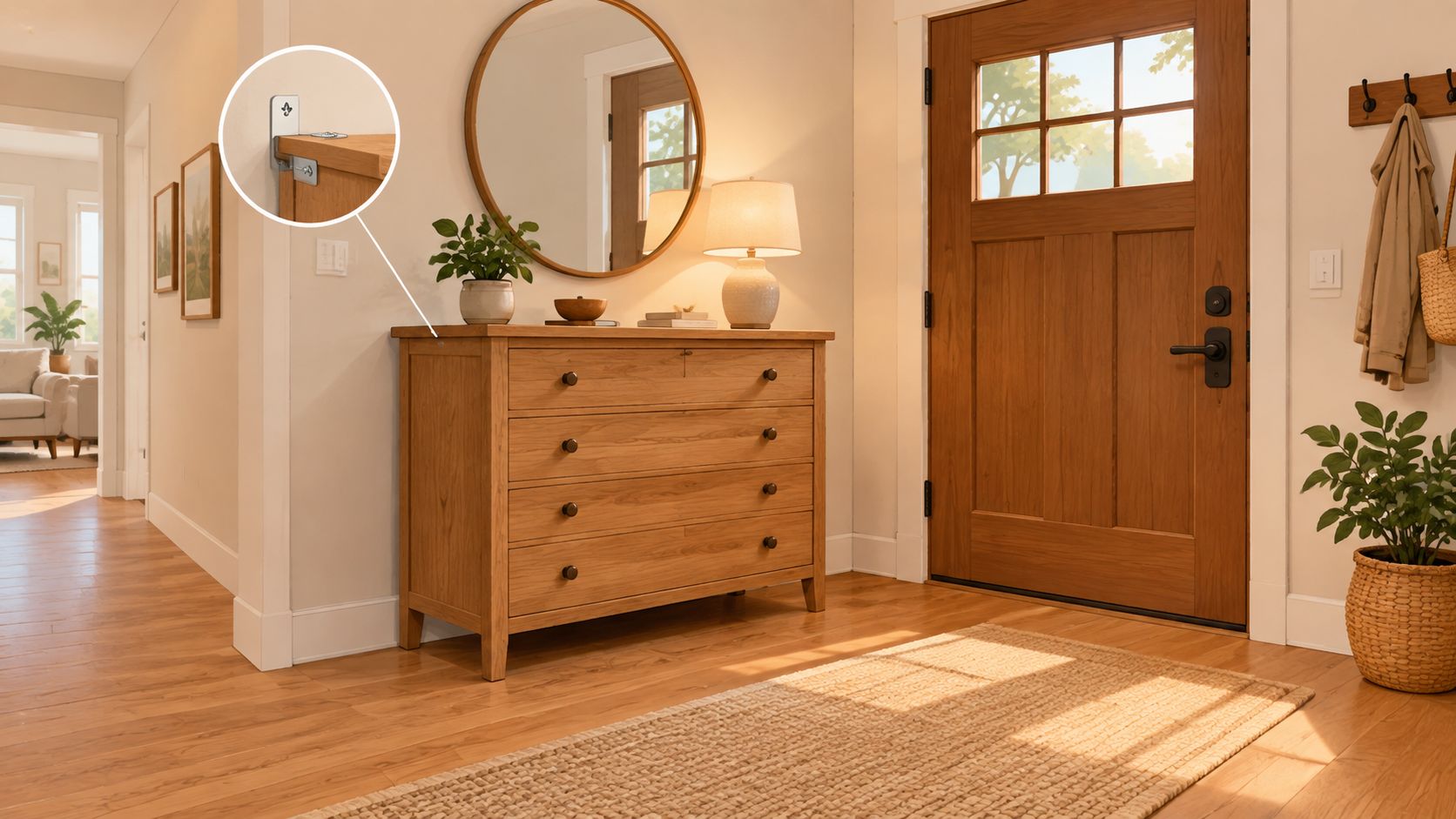
A mirror reflects available light and gives family members a quick check before leaving. Browse these entryway mirror ideas from Tip Top to coordinate scale and placement with the chest. A lamp suits a wider top, while a wall light preserves surface space in a narrow Capital Region hallway.
Seasonal editing keeps the drawers useful. Place gloves and hats within easy reach during cold weather, then move them lower or elsewhere when the season changes. If the household still needs more coat storage, boot space, or seating, plans to add a mudroom to your home may solve the circulation issue more effectively than choosing a deeper chest.
How Tip Top Furniture Helps You Choose Customize and Bring It Home
Choosing an entryway chest becomes clearer when the furniture is considered alongside the rest of the house. A chest may need to relate to a living room finish, bedroom storage, flooring, window treatments, and the practical demands of a growing household. A one-stop showroom can make those connections easier to evaluate in one visit.
Tip Top Furniture & Mattresses is a family-owned business based in Freehold, serving Albany, Schenectady, Troy, Greene County, and the broader Capital Region since 1978. The showroom works with over 50 trusted manufacturers and carries furniture, décor, flooring, mattresses, and accessories. Its selection includes USA-made products and Amish furniture handcrafted in the USA, including pieces suited to shoppers seeking heirloom-quality solid wood and custom order options.
Services that support the decision
- Design guidance: Professional Design Services have been available since 1984, helping homeowners coordinate furniture, décor, and flooring needs.
- Room planning: A free online Room Planner helps visualize furniture layouts to scale before a purchase.
- Custom ordering: Shoppers can select wood type, finish, size, and style, or discuss a design based on a picture or sketch.
- Whole-home coordination: Flooring choices and furniture can be considered together instead of treated as unrelated projects.
- Sleep support: USA-made mattresses and a high-tech bed matching system serve households furnishing bedrooms along with the entrance.
- Value options: The Clearance Corner offers discounted quality pieces for shoppers focused on immediate availability and budget.
- Payment flexibility: Financing options include special financing with a Synchrony Home Card, subject to store details and approval.
A homeowner arriving with measurements, door-swing notes, storage categories, and a preferred finish can receive more useful guidance than someone shopping by appearance alone. Delivery and local service also matter, particularly when a substantial chest needs to reach a hallway without damaging floors, trim, or walls.
For a compact Albany entry, the strongest choice may be a shallow chest with carefully assigned drawers. For a larger Freehold foyer, a deeper or taller piece may provide the needed capacity without harming circulation. The right answer comes from matching real household behavior to real furniture proportions, then finishing the space with safe installation and a surface that welcomes people home.
Tip Top Furniture & Mattresses offers local design guidance, custom ordering, Amish and USA-made furniture, flooring coordination, financing options, delivery, and Clearance Corner values for homeowners choosing an entryway chest of drawers. Visit Tip Top Furniture & Mattresses in Freehold to compare finishes, discuss measurements, and find a practical piece for a home in Albany or across the Greater Capital Region.