Cream Colored Table Runner: Styling Your Home


You straighten the chairs, step back, and look at the dining table. Something still feels unfinished.
That’s a common moment in homes across Freehold, Albany, Schenectady, Troy, and the wider Capital Region. The table is solid. The dishes are ready. The room is clean. But the space doesn’t yet feel warm, finished, or welcoming.
A cream colored table runner often solves that problem faster than people expect. It softens hard edges, gives the eye a clear focal line, and helps the whole room feel more intentional without overwhelming the table you already love.
The Timeless Appeal of a Cream Colored Table Runner
A cream runner works because it’s quiet. It doesn’t compete with wood grain, holiday dishes, everyday plates, or the view out the window. It supports the room instead of stealing attention.
That’s especially helpful in Upstate New York homes where dining spaces do a lot of jobs. One week the table hosts a holiday meal. The next week it’s homework, coffee, or a quick lunch before work. A cream colored table runner can move between all of those moments without feeling too formal or too plain.
Why cream feels easy to live with
Cream sits in a helpful middle ground. It’s lighter than brown, softer than stark white, and more flexible than stronger accent colors.
It also plays well with common dining room features such as:
- Natural wood tables like oak, maple, cherry, and darker farmhouse finishes
- Painted furniture in black, white, sage, navy, or greige
- Seasonal centerpieces from greenery to candles to ceramic bowls
- Mixed wall colors whether your dining room leans warm or cool
If you're still deciding on the room around the table, this guide to dining room wall colors can help you think through the bigger picture.
A choice with history behind it
Table runners aren’t a passing decorating fad. Their roots go back to the Middle Ages, when they were used to protect expensive tablecloths from spills. By the Victorian era, they had become decorative as well as practical, and today the cream version remains popular because of its neutral elegance and versatility, as noted in this overview of the history of table runners.
Design note: If a room already has a strong wood table, patterned curtains, or a statement light fixture, a cream runner often creates balance better than a bold print.
In real homes, that timelessness matters. You don’t want a piece that only works for one season or one trend. You want something that looks right at Thanksgiving, still looks right in January, and doesn’t feel out of place when guests come over in spring.
That’s why so many homeowners start with cream. It gives the table a finished look without locking the room into one style.
How to Choose the Right Table Runner Material
Color gets attention first. Material decides how the runner lives in your home.
A formal dining room used a few times a year has different needs than a busy family table in Greene County or a compact breakfast area in Albany. The right question isn’t “What’s the best material?” It’s “What’s the best material for the way we use this table?”
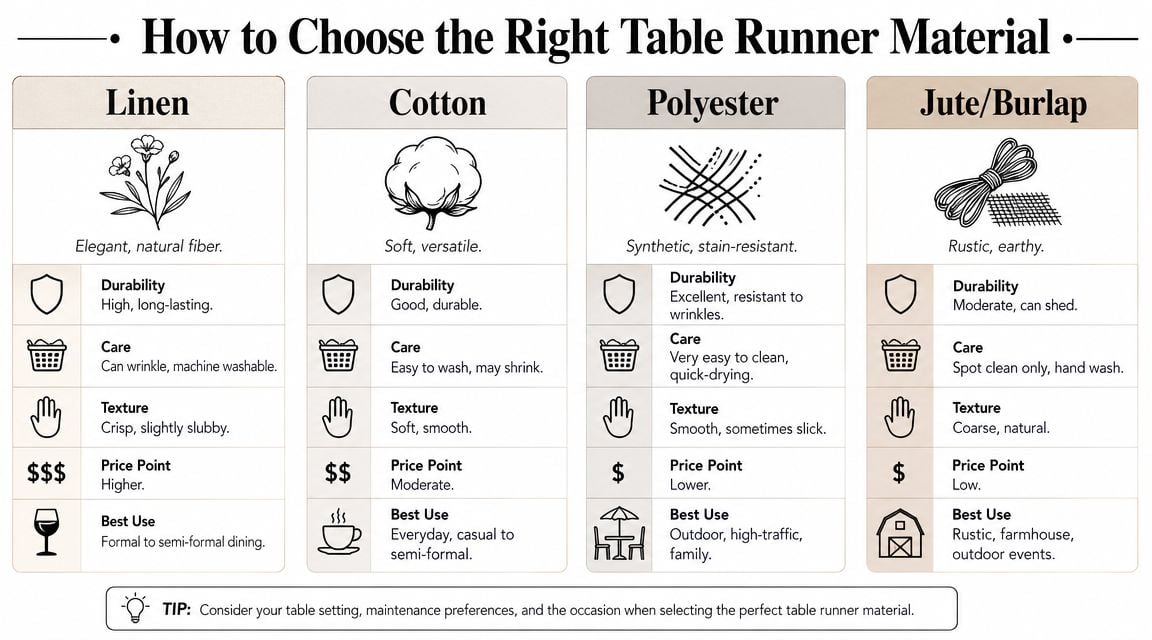
The big material differences
The story of table linens stretches from ancient linen to modern polyester, and the broader home textiles market reached $120 billion in 2022, according to this background on the history of table linen. For shoppers, that long history shows up in the choices available now.
Here’s a practical way to compare the most common options.
| Material | Feel & Look | Best For | Durability & Care |
|---|---|---|---|
| Linen | Crisp, natural, slightly textured | Formal or semi-formal dining | Durable, but wrinkles easily |
| Cotton | Soft, familiar, versatile | Everyday meals and casual gatherings | Easy to wash, may shrink |
| Polyester | Smooth, often more uniform | Busy households, frequent use | Resists wrinkles, generally easy care |
| Jute or burlap | Rustic, earthy, coarse | Farmhouse looks and seasonal styling | More limited care, can shed |
Linen for a tailored, classic table
Linen has that relaxed-but-refined look many people want. On a cream colored table runner, it gives you softness without looking flimsy.
It’s a strong choice when you want the table to feel polished but not stiff. Linen looks especially good on solid wood dining tables, including handcrafted pieces with visible grain and simple lines.
A few things to know:
- Best look: Slightly textured and refined
- Best setting: Dinner parties, holidays, and semi-formal meals
- Tradeoff: Wrinkles are part of the character
Cotton for easy versatility
Cotton is often the easiest place to start. It feels approachable, works with most decorating styles, and doesn’t ask you to build the whole room around it.
For many households, cotton hits the sweet spot between appearance and practicality. If you want one runner that can handle weekday use and still look nice for company, cotton is worth a close look.
Cotton tends to feel the most familiar because it behaves the way people expect a household fabric to behave. That makes it less intimidating for first-time buyers.
Polyester for everyday durability
Polyester works well when real life is the priority. Kids, frequent meals, craft projects, and regular entertaining all put stress on table linens.
This material usually gives you:
- Better wrinkle resistance
- Simpler cleanup
- A lower-fuss option for repeated use
That doesn’t mean it has to look cheap. Many polyester and blend runners have a clean appearance, especially in cream, where the neutral color helps the fabric look calmer and more finished.
Jute or burlap for texture and rustic character
If your room leans farmhouse, country, or seasonal, jute and burlap can be appealing. They add texture quickly and look especially at home on darker wood tables.
They’re usually less suited to households that want a soft, refined, all-purpose piece. These materials can feel rougher and need gentler handling.
A simple way to decide
If you’re stuck, match the runner to your routine:
- You host holiday meals and want a refined look: Linen
- You want one flexible runner for most occasions: Cotton
- You need lower-maintenance performance: Polyester
- You love rustic texture more than softness: Jute or burlap
If you’re comparing textiles for your whole room, not just the table, this guide on how to choose upholstery fabric helps you think through texture, use, and long-term practicality in the same way.
A Practical Guide to Table Runner Sizing
Sizing is where many people get tripped up. They buy a runner that looks nice folded on a shelf, bring it home, and realize it’s too short, too wide, or oddly out of scale with the table.
The good news is that sizing doesn’t need to be complicated.
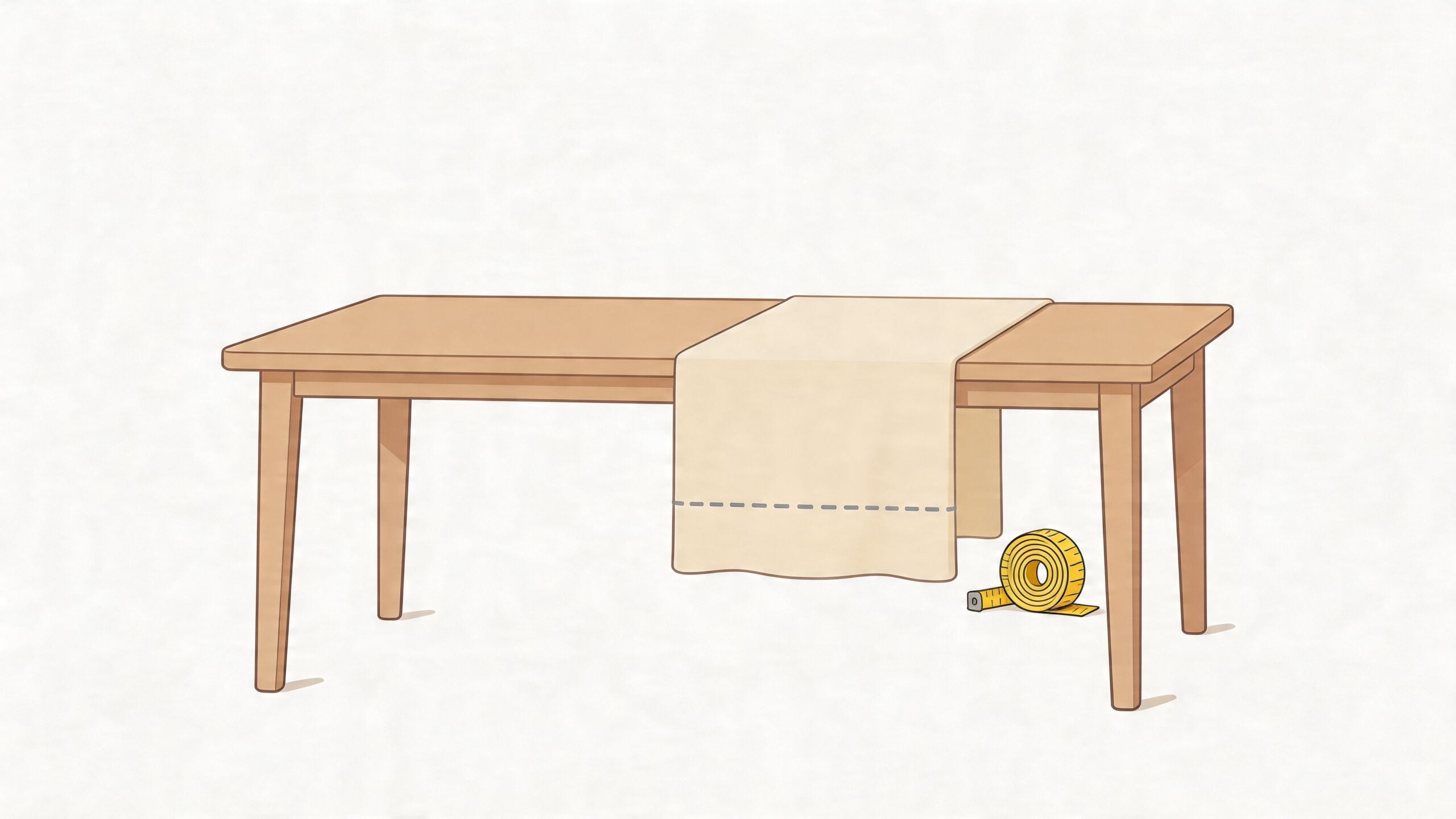
The two rules that matter most
For good visual balance, a runner should be about one-third of the table’s width and should hang over each end by 6 to 12 inches, based on this sizing guidance for a cream lace table runner.
That sounds technical, but it’s simple in practice.
- Measure your table width
- Estimate one-third of that width for the runner
- Add enough length for an overhang at both ends
A common example makes it easier. On a 60-inch table, a 72-inch runner usually delivers a popular aesthetic.
Why these proportions work
A runner that’s too wide crowds plates, centerpieces, and serving dishes. A runner that’s too narrow can look like an afterthought.
The one-third rule usually keeps the table visually balanced. The overhang adds softness and helps the runner look intentional rather than skimpy.
Practical rule: If you want a neat, tailored look, stay closer to a shorter overhang. If you want a more dressed-up look, choose the longer end of the range.
Common sizing mistakes
People usually run into the same issues:
Buying by guesswork
“Standard size” doesn’t mean much if your table is unusually wide or narrow.Ignoring the tabletop shape
A long rectangular table and a compact round table need different visual treatment.Forgetting the centerpiece
If your centerpiece is large, an oversized runner can make the table feel crowded fast.
For anyone furnishing a new dining room or replacing an existing table, a dining table size guide can help you visualize proportions before you buy accessories.
A quick confidence check
Before you commit, lay out painter’s tape or a spare sheet on the table using the dimensions you’re considering. It’s a simple trick, but it shows you right away whether the runner will feel balanced in the space.
That little test can save you from choosing a runner that looks right online but wrong in your room.
Styling Ideas for Your Capital Region Home
Most online advice stops at “pair cream with anything.” That’s technically true, but it’s not very helpful when you’re standing in your dining room trying to make everything work together.
An essential question is how a cream colored table runner connects to the rest of the room. Flooring, furniture style, window treatments, wall color, and centerpiece choice all shape the final result. That broader design connection is often missing in product listings, which is why room-level thinking matters so much, as noted in this discussion of a holistic design approach for table runners.
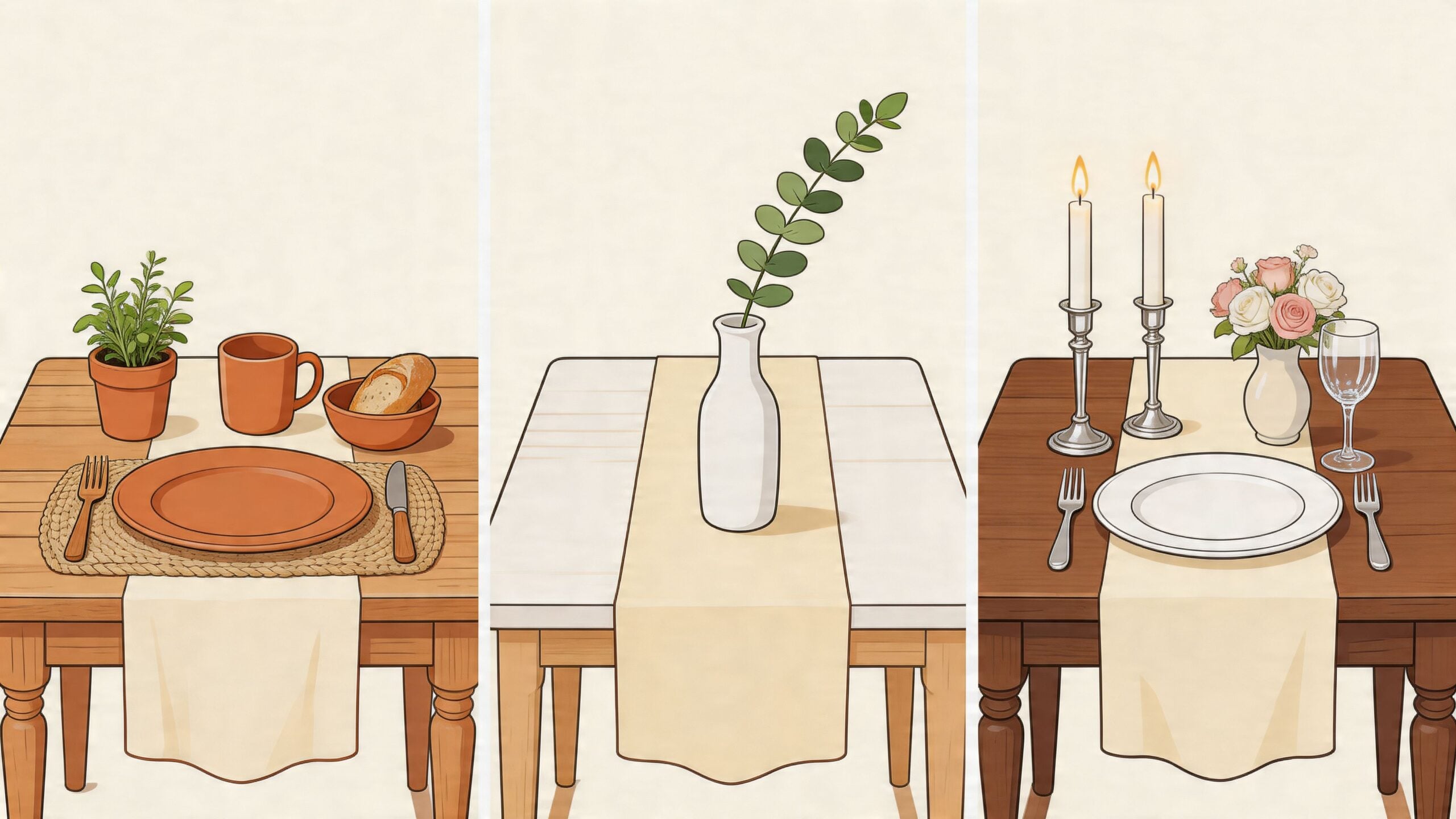
The Greene County farmhouse look
This is one of the easiest styles for cream because the palette already welcomes it.
Start with a substantial wood table. Medium to dark wood tones give cream enough contrast to stand out without looking sharp. Add a low centerpiece with greenery, pottery, or a dough bowl, then layer in simple woven placemats if you want more texture.
For the rest of the room:
- Flooring: Warm wood or wood-look tones keep the space grounded
- Window treatments: Soft neutrals or subtle checks feel at home
- Dinnerware: White, stoneware, or slightly speckled ceramic pieces work well
This style suits homeowners who want the table to feel relaxed, sturdy, and welcoming.
The Albany or Schenectady modern look
A cream runner can also feel clean and contemporary. In a more modern dining room, choose a runner with minimal texture and crisp edges.
Pair it with black accents, brushed metal, glass, or sleek chairs. On a simpler table, cream brings warmth without interfering with the room’s lines.
Try this combination:
- A cream runner
- A black or charcoal vase
- A few branches or one sculptural centerpiece
- Uncluttered place settings
The result feels calm and edited, not bare.
A neutral runner often works best in modern rooms because it adds softness where the furniture is doing most of the visual work.
The Troy brownstone or traditional look
Traditional rooms usually have more detail already. Wood trim, older architecture, patterned rugs, or classic china can make a strong backdrop.
In those spaces, a cream colored table runner acts as a bridge. It gives you a lighter layer between the tabletop and the accessories you place on it.
You can comfortably use:
- Candlesticks
- Layered china
- Silver or brass accents
- Seasonal florals
If you’re planning a more event-like table, these wedding floral centerpiece ideas can spark ideas for arrangement shape, scale, and balance that also translate nicely to anniversaries, holidays, and family dinners at home.
Don’t forget the surrounding surfaces
A runner never exists on its own. It sits inside a room with competing textures and tones. If the floor is busy, a simple runner helps calm the view. If the chairs are plain, a textured cream runner can add depth.
That same thinking applies to pattern. If your room already has stripes, florals, checks, or carved wood detail, the table often benefits from one soft, steady element. This guide to mixing and matching patterns while finding balance is useful when you’re trying to keep the room layered but not chaotic.
A simple seasonal approach
Cream also works because it adapts.
- Spring: Add fresh greens or pale flowers
- Summer: Keep it airy with woven accents and simple glassware
- Fall: Bring in wood, amber glass, or muted pumpkins
- Winter: Use evergreen, candlelight, and richer metallic touches
That flexibility is what makes cream feel like a smart long-term choice instead of a one-season purchase.
Keeping Your Cream Table Runner Looking New
A lot of shoppers love the look of cream but hesitate for one reason. They’re worried it won’t stay beautiful.
That concern is reasonable. Light textiles do show spills and handling more easily. What’s often missing online is actual care guidance, and that gap matters because fabric-specific maintenance helps people buy with more confidence, as noted in this overview of the need for better care advice for home textiles.
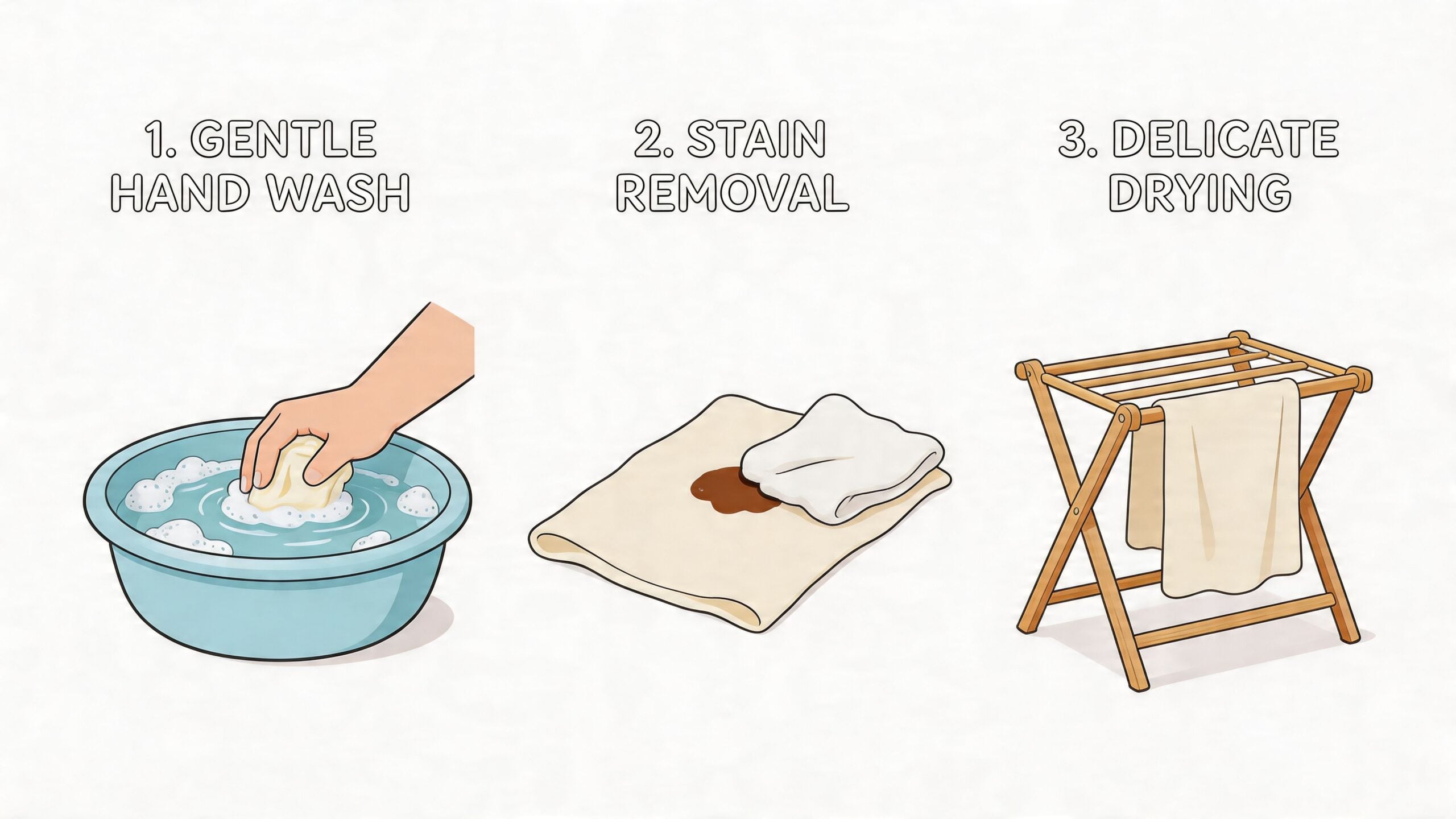
Day-to-day habits that help
Most table runner wear doesn’t come from one dramatic spill. It comes from repeated small issues like crumbs, oily fingertips, candle wax, and leaving the fabric in sunlight too long.
A few simple habits make a difference:
- Shake it out regularly so crumbs and dust don’t grind into fibers
- Treat spills quickly by blotting instead of rubbing
- Store it clean and fully dry before folding it away
- Rotate seasonal pieces so one runner doesn’t take all the wear
Care by fabric type
Different fabrics need different handling.
Linen usually benefits from gentler washing and careful smoothing after cleaning. If wrinkles bother you, press it while it’s still slightly damp.
Cotton is often the easiest to wash, but it can shrink or lose its shape if handled roughly. A gentler cycle and lower heat usually help.
Polyester tends to be simpler for busy homes. It usually dries faster and wrinkles less, which is one reason many families like it for frequent use.
Jute or burlap often need spot cleaning rather than full washing. These fibers can be less forgiving, so rough treatment usually does more harm than good.
If you spill coffee, sauce, or wine, blot first. Rubbing pushes the stain deeper and roughs up the fabric surface.
Smart storage matters too
Storage is easy to overlook. Fold a runner while it’s slightly damp, stuff it in a crowded closet, or leave it under direct light, and it may come out looking older than it is.
For better results:
- Clean it before storing
- Let it dry completely
- Fold it neatly or roll it if the fabric allows
- Keep it in a cool, dry place
If you’re already thinking this sounds a lot like caring for other soft home surfaces, you’re right. The same gentle, material-aware mindset applies to larger pieces too, including washable floor textiles. This guide on whether you can wash rugs is helpful if you’re trying to build a practical care routine across the whole room.
Your Local Source for Table Linens in Freehold NY
By the time individuals finish comparing runners online, they still have the same unanswered questions. Will this cream look warm or yellow in my room? Will the texture fight with my chairs? Is the length right for my table? Will it work with my flooring and centerpiece, or just look fine in a product photo?
That’s why seeing décor in person still matters.
For homeowners in Freehold, Greene County, Albany, Troy, Schenectady, and across the Greater Albany Capital Region, shopping locally gives you something online browsing can’t. You can compare tones against real wood finishes. You can feel the difference between a crisp linen look and a softer cotton one. You can ask how a runner will behave in everyday use, not just how it looks styled for a catalog.
Why local guidance makes the choice easier
A cream colored table runner sounds simple until it has to work with the rest of the room. The table may be rustic. The chairs may be painted. The rug may have pattern. The flooring may pull warm while the wall color pulls cool.
In person, those decisions become clearer.
A good showroom experience helps you answer questions like:
- Does this cream read soft and neutral, or too yellow for my room
- Will a smooth fabric or a textured fabric fit my dining style better
- Should I choose a runner for everyday use, special occasions, or both
- Would a custom option solve an awkward size or finish problem
The benefit of one-stop shopping
Homeowners often decorate in stages, but rooms rarely function that way. The table, chairs, flooring, window treatments, and nearby furniture all affect one another.
That’s where a one-stop approach helps. Instead of choosing a runner in isolation, you can think through how it works with:
- Dining furniture
- Flooring
- Accent décor
- Other nearby rooms if the layout is open
That bigger view is especially useful in Capital Region homes where dining spaces open into kitchens, living rooms, or entry areas.
Good options matter, but service matters more
Choice is helpful. Guidance is what turns choice into confidence.
A family-owned showroom that has served the region since 1978 brings a different kind of value. There’s long experience behind the advice, plus access to over 50 trusted manufacturers, custom ordering, and professional design services that have been available since 1984. For larger home projects, the flooring department also works with 25+ manufacturers, which makes coordinated room design far easier than piecing everything together from separate stores.
If your dining room project needs flexibility, it helps to know you can explore custom order options, look for ready-to-take-home values in the Clearance Corner, or review flexible financing choices as part of the plan.
What to bring when you shop
If you’re ready to choose a runner or rethink the whole dining space, bring a few basics:
- Table measurements including width and length
- A photo of the room in daylight if possible
- Pictures of your chairs, flooring, or nearby furniture
- A rough sense of how you use the table, whether daily or mostly for gatherings
Those small details make it much easier to narrow the options and avoid guesswork.
A cream runner may be a modest piece, but it can do a lot. It can soften a formal room, finish a farmhouse table, tie together mixed materials, and make a dining area feel cared for. When the size, fabric, and styling are right, the whole room looks more settled.
If you’d like help choosing the right cream colored table runner and building a dining room that feels cohesive from the table to the flooring, visit Tip Top Furniture & Mattresses. Our family-owned Freehold, NY showroom has proudly served the Greater Albany Capital Region since 1978, and we’re here to help with dining furniture, custom orders, flooring, design guidance, clearance finds, and flexible financing. If you’re not sure where to begin, stop in or start planning your space with our room design support.