
How to Clean Laminate Flooring Without Damaging It


You just came in from a wet sidewalk in Albany or Troy, boots still damp, and the laminate by the door already looks cloudy. A bucket of soapy water feels like the obvious next move. It is the move that ruins these floors.
Grit under those boots scratches the surface, and water that sits in the joints can swell the core. How to clean laminate flooring depends on the exact product, the seams, and how long water is allowed to sit. Homes around Freehold and the Greater Albany Capital Region deal with snow, road salt, and damp basements for months. That weather punishes a soaked mop long before it punishes a dry one.
Adjust Your Method for Water-Resistant and Standard Laminate
A floor marketed as water-resistant can take a limited, documented splash. It still cannot take a bucket-and-mop wash. The carton label, warranty card, care sheet, and installer paperwork name the product you own. If those papers are missing, treat the floor as ordinary laminate until you can confirm the line.
Pergo's laminate maintenance leaflet allows wet maintenance on Aquasafe laminate and prohibits it on non-Aquasafe ranges. Floors with beveled edges should never be wet-mopped, because moisture may collect in the joints. Standing water should come up within 24 hours on certain Aquasafe products and within 15 minutes on non-Aquasafe laminates. A carefully wrung, slightly damp mop is the ceiling, and water left in the seams needs drying at once.
Quick-Step's laminate maintenance leaflet shows how wide the claims run. Some HydroSeal products permit water exposure only if it is removed within 24 hours, while other water-resistant ranges allow up to 72 hours. Even those floors still need the moisture taken off after cleaning. A waterproof marketing line is a timed exposure, not permission to flood the room.
Wet-cleaning limits by laminate type
| Floor Type | Wet Cleaning | Standing Water Removal | Safe Method |
|---|---|---|---|
| Standard laminate, not water-resistant | Not allowed | Within 15 minutes | Dry microfiber, with a damp cloth for small spots |
| Water-resistant laminate, Aquasafe-type | Barely damp mop allowed | Within 24 hours | Tightly wrung microfiber mop, dry seams at once |
| Water-resistant laminate, HydroSeal-type | Limited exposure per product sheet | Within 24 hours on some ranges, up to 72 hours on others | Follow the exact product sheet |
| Beveled-edge laminate | Never wet-mop | Remove water from joints immediately | Dry cleaning, with a damp cloth for spots only |
Use that table before every damp mop. If your row says Not allowed, skip the wet step, dry clean with a microfiber cloth, and move on.
- Find the product name on the label, warranty, or installer receipt.
- Read the care sheet for wet-cleaning rules and standing-water limits.
- Match the table row and stop if wet cleaning is barred.
- Start a timer as soon as water appears, including melt from boots.
Wet boots and basement moisture around Upstate New York make that timer matter. Snow sits in entry mats, then drips along the first seams. If the product is unknown, stay with dry cleaning, use a damp cloth only on small spots, and follow the 15-minute standing-water rule.
People sometimes copy a wood-floor wash onto laminate. Notes on hardwood floor deep cleaning methods show how much water a wood floor is sometimes given. Laminate joints do not offer that margin. If you are still picking a floor for a Capital Region entry, how to choose laminate flooring is the point where seam design and wet traffic should be matched before installation.
Step-by-Step Routine for Cleaning Laminate Floors
Most planks stack three jobs in one board. Wikipedia's laminate flooring overview describes a decorative image layer, a resin-based wear layer, and a fiberboard core. The picture is only a print. The wear layer takes the scratches. The core swells if water gets through the joints.
Because many of these floors float over underlayment, the seams stay open enough for a drip to travel. Grit is the other half of the problem. Sand underfoot works like fine sandpaper on that wear layer, especially between the door and the kitchen.
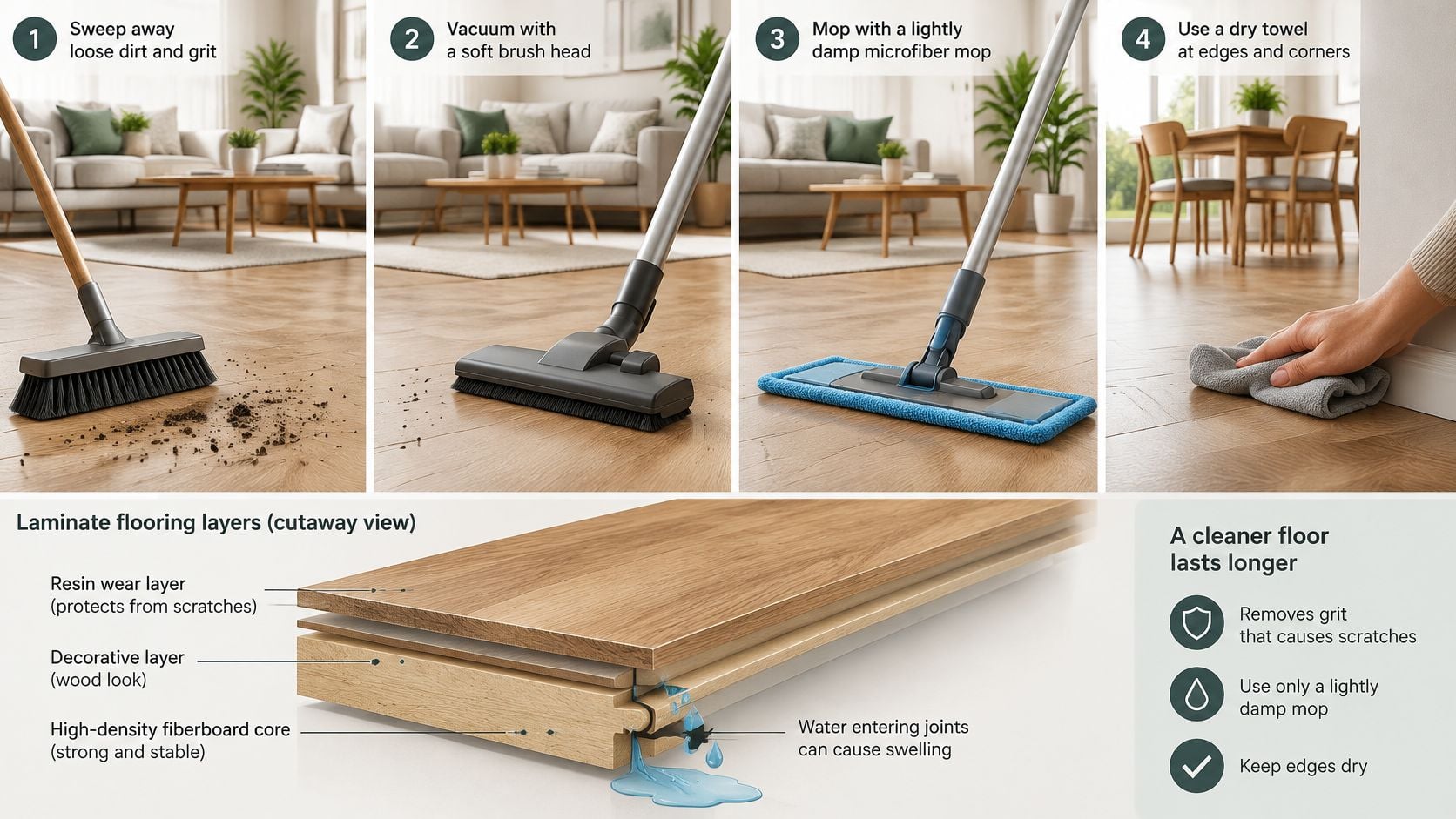
Sherwin-Williams floor-covering care guidance sets a practical bar: zero standing water and a mop that does not drip. Liquid in the joints can cause swelling, raised edges, warping, or damage you cannot sand out.
- Lift the grit first. Sweep, or vacuum on a hard-floor setting with the beater bar off. A soft brush or microfiber dust mop catches sand before it scratches. Skipping this step means the mop drags grit across the finish.
- Blot spills immediately. Use a dry or slightly damp microfiber cloth and press, rather than smear. A cloth left wet at a seam keeps feeding the joint after the puddle looks gone.
- Pick a labeled cleaner. Use the product named on the care sheet. If none is named, use a pH-neutral laminate cleaner at label strength. Skip homemade mixes. Residue and pH decide safety, not how "natural" the bottle sounds.
- Wring until nothing drips. Work a small patch, then the next. A dripping mop is already too wet, even if the floor looks only shiny.
- Wipe with the planks, then dry. Follow the plank direction so you are not pushing liquid sideways into every joint. Towel seams, doorways, and the edges beside appliances before you leave the room.
- Read the dry floor. Haze, tackiness, or a raised edge means stop. More water will not fix a film or a swollen joint.
Practical rule: Remove grit often, use minimal moisture, and dry quickly.
Steam mops, soaking string mops, abrasive pads, wax, polish, bleach, and ammonia are the usual ways this routine fails. A second walk-through of how to clean laminate flooring is useful when you want the same order without adding products. Pair the floor work with the rest of the house during spring cleaning, when salt and mud have had all winter to collect in the entry.
How Often to Clean Laminate in Upstate New York Homes
A laminate floor in a lightly used bedroom needs a different schedule from one in a busy kitchen. Start with dry grit removal, then damp-mop only as often as the room's traffic and the floor's care instructions call for. Pergo's laminate maintenance page recommends sweeping or vacuuming with soft wheels and a parquet-style brush. It advises thorough cleaning once or twice a month, depending on use and how quickly the floor gets dirty.
Cleaning frequency by room and traffic level
| Area or Household | Dry Grit Removal | Damp Mopping | Deep Clean |
|---|---|---|---|
| Entryways and mudrooms | Daily or every other day | Weekly, or after tracked-in dirt | Monthly |
| Main living areas | Two to three times a week | Every one to two weeks | Once or twice a month |
| Bedrooms and home offices | Weekly | Every two to three weeks | Every one to two months |
| Homes with pets or young children | Daily in play areas | Weekly | Twice a month |
| Ground-floor or basement rooms | Weekly | Only when visibly soiled, dried at once | Monthly moisture check |
Treat these intervals as a starting schedule, not a rule for every laminate product. A dining room used daily may need more frequent dry cleaning than a spare bedroom. In a kitchen, check around the sink and dishwasher regularly: a damp cloth pressed along the plank edges can help reveal swelling before it becomes obvious underfoot.
If shoes come off at the door, main living areas may need dry cleaning only two or three times a week. Bedrooms and home offices often stay cleaner with a weekly dust-mop pass. In homes with pets or young children, clear grit from play areas daily and adjust the damp-mopping schedule if the floor gets visibly soiled.
- Door mats: Place one at each exterior door and shake it out before dirt builds up.
- Spare mop head: Keep a dry microfiber head ready for a quick pass after a spill or damp cleaning.
- Rinse the bucket: Empty it after each session so dirty water does not leave residue on the floor.
Use the schedule as a prompt to inspect the floor, not a reason to add moisture on a fixed date. If seams look raised or the perimeter feels damp, pause wet cleaning and check the product's care instructions. For a busy kitchen or family room, flooring options for high-traffic areas can help you compare what to consider before choosing a floor.
Products to Avoid and How to Remove Stubborn Marks
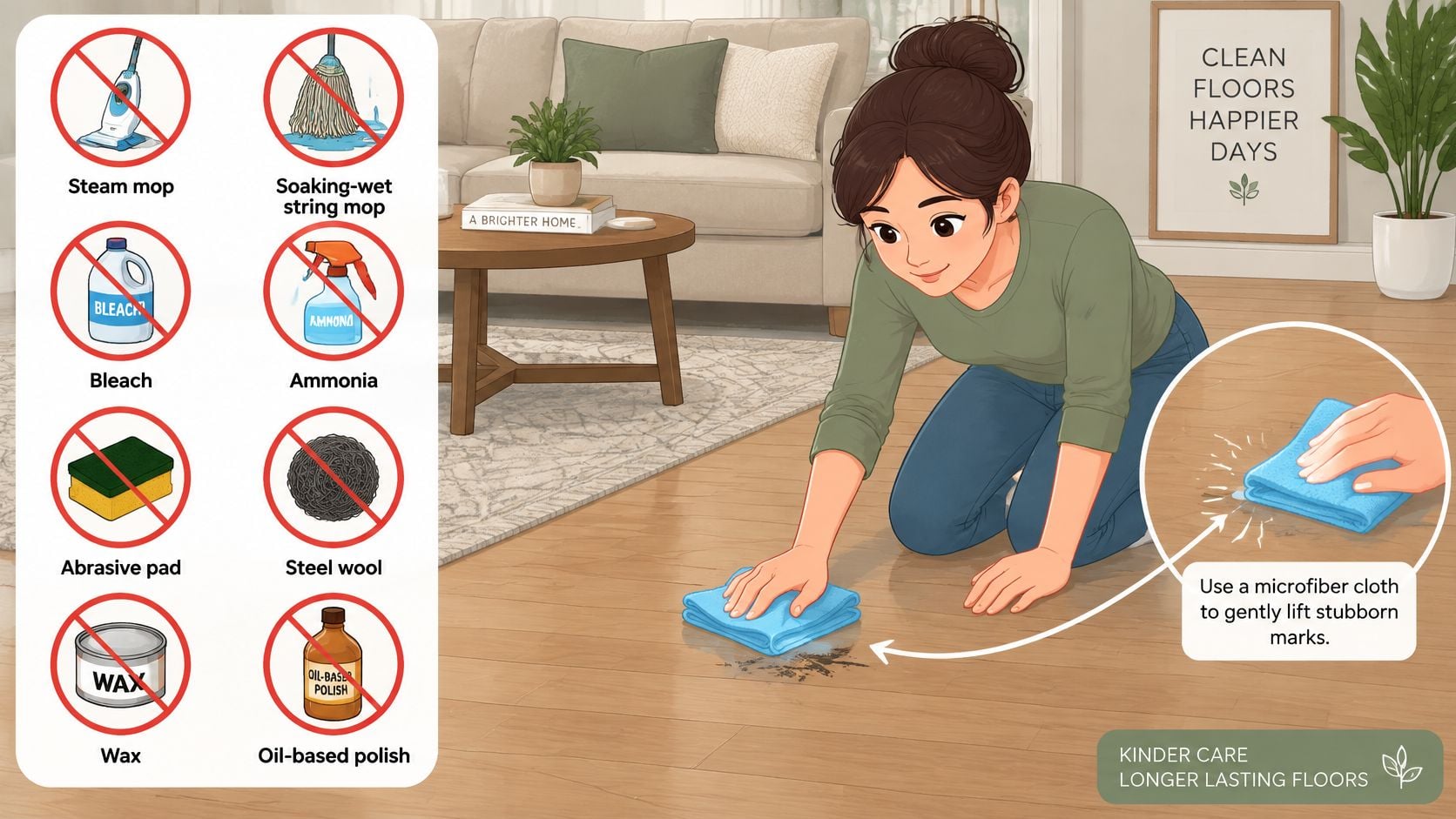
A floor can look clean while a thin film holds onto grit. Vinegar can dull the coating over time, baking soda can scratch it, and soap residue can attract soil. Natural ingredients are not automatically safe for laminate.
Follow the care sheet for your exact product. Avoid bleach, ammonia, abrasive pads, steel wool, wax, oil, polish, steam, vinegar, baking soda, and natural-soap cleaners. Acidic solutions may degrade the protective coating, while excess moisture can reach seams and contribute to swelling or gaping joints. Oil soaps made for bare wood can leave residue on a sealed wear layer. For context on why they suit a different surface, see Murphy oil soap on wood floors.
Some laminate warranties exclude damage caused by chemical cleaners or by cleaning methods that introduce excess moisture. Check the care sheet and warranty terms before using a product that is not specifically approved. Water-resistant laminate may tolerate brief contact better than standard laminate, but water can still cause trouble when it sits at seams.
Three jobs that are not the same clean
- Dry grit: Vacuum on a hard-floor setting. Vacuuming controls abrasion; it does not disinfect.
- Sticky residue: Use a manufacturer-approved cleaner on a tightly wrung microfiber mop. Apply it to the cloth, not as a puddle on the floor.
- A biological spill: Blot and spot-clean promptly. Avoid spreading a chemical disinfectant across the room.
Test an unfamiliar approved cleaner in a hidden spot. Wipe along the planks, then dry the area. If the finish hazes, stop using that product.
Removal method for common laminate marks
| Mark | Method | Avoid |
|---|---|---|
| Fresh water or juice spill | Blot with a dry microfiber cloth, then a barely damp cloth, and dry at once | Letting it sit or flooding the area |
| Cooking oil or grease | Wipe with a damp cloth and pH-neutral laminate cleaner, along the plank direction | Vinegar, wax or oil-based polish |
| Pet urine | Blot, clean with laminate cleaner, dry thoroughly and check seams for odor | Steam, bleach or ammonia |
| Crayon, marker or ink | Rub gently with a cloth dampened with approved cleaner, after a patch test | Abrasive pads or steel wool |
| Chewing gum | Harden with ice, lift with a plastic scraper, then clean the spot | Metal scrapers or solvents |
| Black heel scuffs | Rub lightly with a dry microfiber cloth, then a barely damp cloth if needed | Scrubbing hard with abrasives |
Pet urine deserves a seam check because liquid may travel underneath even when the surface looks dry. Let gum harden before lifting it with a plastic scraper. Heel marks often come off with a dry cloth; scrubbing harder risks scratching the wear layer.
After the spot dries, check for haze, tackiness, swelling, or open seams. If a mark remains after two careful tries, stop and reread the care sheet. More force will not restore a damaged wear layer. Felt pads and a no-shoe habit help prevent scuffs; these ways to protect hardwood floors from scratches also offer useful ideas for reducing abrasion around the home.
Confirm Your Care Rules Before Your Next Clean
Before the next clean, check the care sheet for your exact laminate. It tells you whether to use a dry mop or a barely damp one. Water-resistant flooring still has limits: the product, its seams, and how long water sits all affect the safest method.
Deep scratches, swollen planks, raised edges, or open seams point to damage that cleaning cannot fix. A scrub cannot close a gap or flatten a bubble. Check the product's care guidance before deciding whether the floor needs repair or replacement.
Tip Top Furniture & Mattresses is family-owned and has been in business since 1978. Its flooring department offers choices from over 25 manufacturers, including hardwood, carpet, and laminate, with estimates and in-house measuring available. If you are weighing a replacement, review the pros and cons of laminate flooring before comparing options.
Bring your measurements and care-sheet details when you visit the Freehold showroom to discuss flooring choices for your room.