Bedroom Sets Clearance: How to Shop Smart and Save


A wide showroom aisle, a bold red clearance sign, and a bedroom group reduced to a price that feels impossible to ignore. The bed, dresser, mirror, and nightstands look coordinated, but the important questions usually arrive after the excitement: Will the set fit through the Albany-area home's doorway? Is the foundation included? What happens if the floor model has damage or the sale is final?
Smart bedroom sets clearance shopping isn't about chasing the biggest percentage on the tag. It's about checking room fit, construction, safety, included pieces, delivery terms, and the complete delivered price. That approach matters in a category that generated approximately $98.5 billion in U.S. sales in 2009, even while annual sales declined 5.1% that year, according to historical Census Bureau furniture retail data. A market with that much volume constantly rotates inventory, which creates opportunities for careful buyers.
Why the Biggest Discount Is Not Always the Best Deal
A bedroom set can be heavily marked down and still be the wrong purchase. A missing rail, a damaged drawer, an awkward delivery route, or a final-sale policy can erase the apparent savings before the first night's sleep.
Clearance usually reflects a retailer's inventory decision, not a judgment that the furniture has lost its usefulness. A collection may be discontinued, replaced by a new finish, displaced by seasonal merchandise, or held in excess quantity. Bedroom groups are especially suited to this process because coordinated beds, dressers, mirrors, and nightstands can be sold together or separated when a model leaves the assortment.
Practical rule: The right question isn't “How much was taken off?” It's “What will this set cost, include, and do after delivery?”
Before falling for a display, a careful shopper should complete five quick checks:
- Confirm the reason for clearance. Discontinued merchandise can be an excellent value. A damaged floor model needs a more cautious inspection and possibly a repair allowance.
- Count every included piece. Check the bed, rails, slats, foundation, dresser, mirror, nightstands, hardware, and delivery components.
- Record assembled and delivery dimensions. The set must fit both the room and the route into it.
- Inspect condition under showroom lighting. Open drawers, check corners, examine veneer, and look behind mirrors and headboards.
- Ask about final-sale status, warranty coverage, delivery, assembly, and returns. Get the answers in writing.
The buying decision deserves care because furniture is a high-consideration purchase, as explained in this guide to why furniture purchases are high-consideration decisions. A discounted set should solve the bedroom's needs, not create a second project involving repairs, replacements, and difficult returns.
What Clearance Actually Means for Bedroom Sets
“Clearance” describes a sales condition, not a single quality level. Two bedroom groups can carry the same markdown while presenting very different risks. One may be a complete, discontinued collection in excellent condition. Another may be a display unit with scratches, missing hardware, or limited warranty protection.
The five most common categories deserve separate treatment:
Clearance categories at a glance
| Category | Typical Discount | Condition Risk | Inspect First | Best For |
|---|---|---|---|---|
| Discontinued collection | Varies by inventory decision | Low to moderate | Finish availability, replacement pieces, warranty | Buyers who want coordinated quality at a lower price |
| Overstock | Varies by quantity and demand | Usually low | Complete components, packaging, delivery timing | Shoppers who want new furniture without waiting for a special order |
| Floor model | Varies by showroom condition | Moderate to high | Scratches, fading, drawer alignment, hardware | Buyers comfortable documenting cosmetic wear |
| Cancelled-order inventory | Varies by item and quantity | Low to moderate | Exact configuration, finish, included pieces | Shoppers seeking a nearly new set with immediate availability |
| Minor cosmetic flaw | Varies by defect | Moderate | Location and severity of the flaw, repair options | Budget buyers who can live with or repair visible imperfections |
The table's “typical discount” column should be treated as a description of retail practice, not a promised range. A retailer's actual price depends on condition, age, inventory position, handling costs, and whether the remaining pieces need to be sold together.
A discontinued bedroom set may be the strongest opportunity. The style may have changed, but the construction, finish, and usefulness remain intact. A floor model can also work well when the defect is cosmetic, clearly documented, and reflected in the final price. Structural looseness, cracked casework, warped panels, missing rails, and damaged drawer tracks deserve a firm pass.
The percentage is only one line on the comparison sheet. Completeness, construction, warranty, delivery, and expected service life determine value.
The Tip Top Furniture & Mattresses Clearance section gives Freehold and Greater Albany Capital Region shoppers a place to review discounted inventory, but an online or showroom tag still needs a physical inspection. The right comparison is between complete delivered packages, not between isolated red numbers.
Measure Your Bedroom Before You Fall in Love With Anything
A room-fit audit should happen before the showroom visit. Measure the room's length and width, then note ceiling height, sloped areas, windows, radiators, outlets, door swings, and every turn along the delivery route.
A bedroom-design study identifies approximately 270 cm as a minimum room width and 10 m² as a minimum area for essential furniture and movement, with about 60 cm of clearance around the bed recommended for practical circulation. The findings appear in this bedroom design study. These figures are useful reference points, but the actual room and delivery path still control the decision.
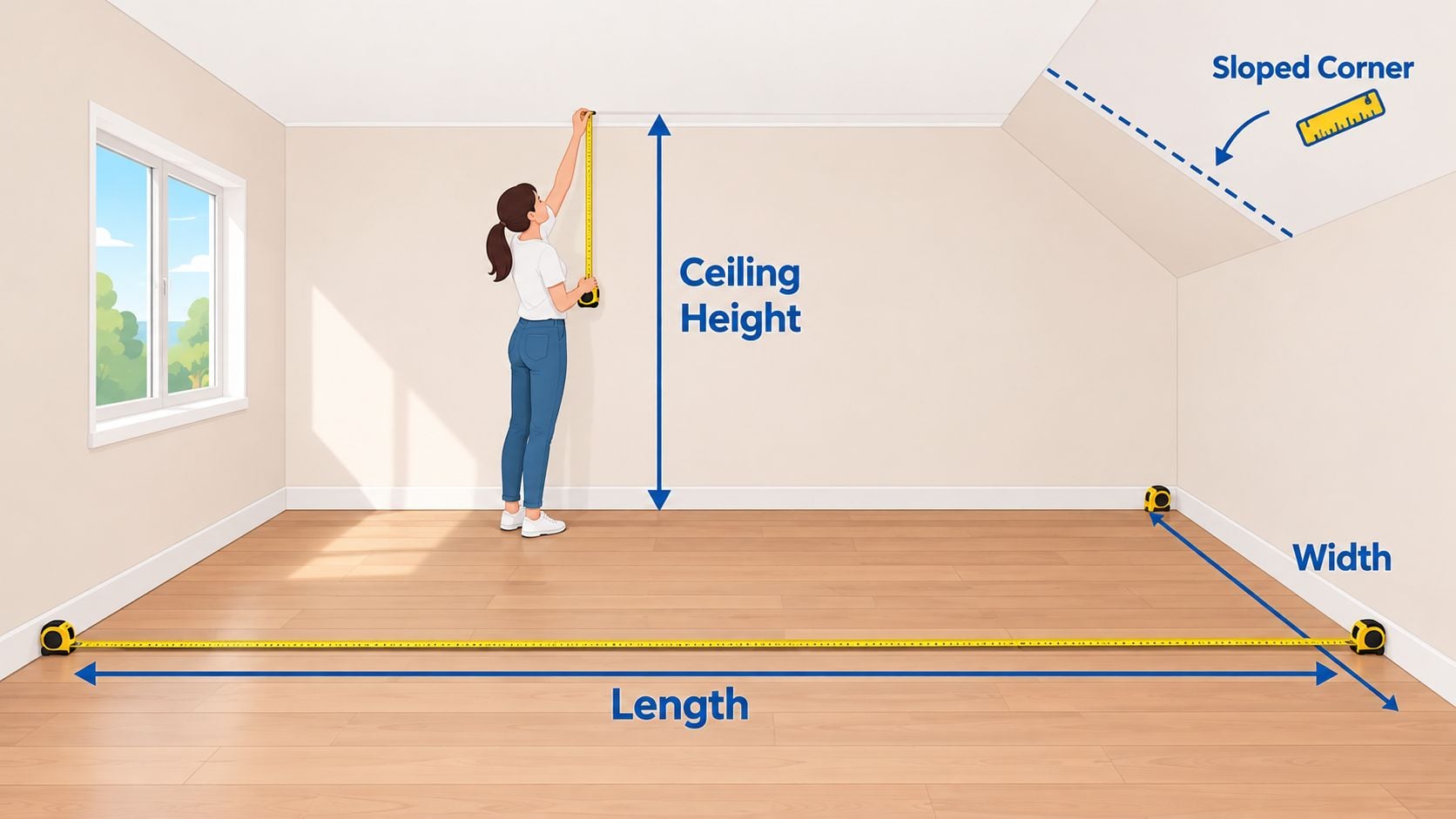
The measurement sequence that prevents expensive mistakes
- Measure the open room. Record length, width, and ceiling height. Include alcoves, bump-outs, sloped corners, and closet doors.
- Map fixed obstacles. Mark windows, radiators, vents, outlets, switches, ceiling fans, and trim. A tall dresser beneath a low window may block light or heat.
- Measure the delivery route. Record the entry door, interior doorway, stair width, stair turns, elevator opening, and tight hallway corners. Measure the doorway at its narrowest usable point, not just the frame's widest span.
- Reserve operating space. Draw the bed, dresser, nightstands, and walking paths to scale. Extend drawers and open doors on the drawing.
- Record both furniture dimensions. Ask for the assembled size and the packaged or delivery size. A set can fit once assembled but fail at a stair turn.
Consider a realistic 12-by-12-foot Albany bedroom with one window, a radiator beneath it, and a 28-inch doorway. A low headboard and narrow case goods might work on paper, while a tall dresser under the window creates a heat and access problem. A large bed may fit inside the room but still fail at the doorway if its packaged width exceeds the usable opening.
Bring a tape measure, phone photos, a sketch, and the must-meet dimensions to the showroom. The design consultant can then work around actual constraints instead of guessing from a vague description.
How to Spot Quality and Avoid Hidden Flaws
A clearance inspection should feel like a short engineering check, not a polite glance at the finish. The shopper should open every drawer, push gently against each corner, kneel to inspect the underside, and ask what the furniture is made from.
Start with the case goods. Pull drawers fully open and test the movement under normal pressure. They should travel smoothly, sit squarely, and close without scraping. Examine the joints at the corners, the underside of the top, the back panels, and the points where legs or feet meet the case.
The hands-on walkaround
A durable set often shows its quality in places shoppers overlook:
- Drawer construction: Look for secure joints, consistent gaps, and slides that don't bind. Dovetail joinery can indicate a more substantial construction approach, but the entire drawer still needs inspection.
- Case stability: Push lightly from different directions. Wobble, racking, loose fasteners, or a shifting back panel deserve an explanation before purchase.
- Veneer and finish: Run fingertips over edges and corners. Check for lifting veneer, bubbling, chips, cloudy patches, and mismatched repairs.
- Mirror mounting: Confirm that the mirror attaches securely to the dresser or wall and that the hardware is present.
- Bed compatibility: Verify the mattress size, foundation requirements, rails, slats, headboard attachment, and support system. A bed frame and mattress must work as a pair.
- Documentation: Photograph every existing flaw and record whether it's cosmetic, repairable, or structural.
For shoppers comparing solid wood, USA-made, or Amish bedroom furniture with lighter construction, the wood joinery guide can help clarify what different joints mean. Material claims still need verification at the showroom. Ask about wood species, finish, construction, repair options, and the source of the piece.
Stability deserves its own check. The U.S. Consumer Product Safety Commission's mandatory stability standard took effect on September 1, 2023, and covers tests involving carpeting, loaded drawers, multiple open drawers, and simulated interaction by children weighing up to 60 pounds. The CPSC reported 234 clothing-storage-unit tip-over fatalities from January 2000 through April 2022, including 199 child fatalities, along with an estimated 84,100 related emergency-department injuries from 2006 through 2021, as detailed in its clothing-storage-unit safety standard announcement.
A discounted dresser still needs proper anchoring hardware and instructions. If a unit lacks secure wall-attachment equipment, the price isn't attractive enough.
Build the True Final Price Before You Commit
The clearance tag is a starting point. The comparison should use the delivered, tax-included total, with every required component listed.
A written worksheet should include:
- Clearance set price
- New York State and local sales tax
- Delivery charge
- Assembly cost
- Mattress and foundation, if excluded
- Required rails, slats, hardware, or support pieces
- Financing terms and any applicable costs
- Optional accessories, protection, or repair work
New York's statewide sales-tax component is 4%, with local taxes added according to the delivery jurisdiction, as explained by the New York State Department of Taxation and Finance. New York uses destination-based taxation for retail sales, so the delivery location generally determines the applicable local rate. A set delivered to Albany can therefore produce a different tax total from one delivered to Schenectady, Troy, Greene County, or another locality.
That distinction matters for Freehold showroom shoppers serving the Greater Albany Capital Region. A lower ticket price can lose its advantage after delivery, assembly, tax, or a missing foundation is added.
The same discipline applies to financing. Flexible financing can make a larger project manageable, but the shopper should read the payment schedule, promotional conditions, and total obligation before signing. A written out-the-door quote makes it easier to compare a clearance bedroom set with a custom-order option, an Amish solid-wood group, or a complete bedroom package that costs more upfront but includes more.
Ask for one number in writing: the complete amount required to receive a usable, assembled bedroom.
Returns, Warranty, and the Smart Way to Buy on a Budget
A clearance purchase isn't complete until the return and warranty rules are understood. Ask whether the merchandise is final sale, what defects are already documented, which components remain covered, and whether the warranty follows the complete set or only certain pieces.
Furniture returns can be expensive because the items are large, heavy, and difficult to repack. Consumer Reports' furniture-shopping guidance recommends reading the return policy before purchase and checking whether the customer pays return shipping. For a bedroom set, the same principle applies to delivery, assembly, restocking, and pickup charges.
A smart budget buyer keeps a written record:
- Photograph the showroom condition. Capture every scratch, finish variation, dent, loose joint, and missing component.
- List the package contents. Write down each piece, hardware item, rail, mirror, foundation, and service.
- Confirm final-sale language. Don't rely on a verbal statement made at the register.
- Review warranty coverage. Ask what remains covered after clearance pricing and who handles a claim.
- Inspect before signing at delivery. Check corners, drawer alignment, mirrors, hardware, and structural joints.
- Report damage promptly. Save photographs, delivery paperwork, and all written communication.
Buyers working with tight floor space may also benefit from practical guidance on smart storage for small rooms, especially when deciding whether a full set will improve organization or consume needed circulation space.
The Tip Top Furniture & Mattresses warranty information should be reviewed alongside the specific clearance item's terms. A warranty doesn't replace inspection, and a return policy doesn't excuse poor measuring. The strongest purchase combines both protections with accurate documentation.
Timing Your Visit and Putting It All Together
Clearance inventory changes when retailers make room for new collections, refresh a showroom, adjust seasonal assortments, or clear discontinued merchandise. That makes timing useful, but waiting for a particular markdown can also mean losing the exact finish, size, or matching nightstands a bedroom requires.
The practical shopping routine is straightforward:
- Before leaving home: Measure the bedroom and delivery route. Photograph windows, radiators, outlets, doorways, and stair turns.
- At the showroom: Confirm why the set is on clearance, inspect construction and condition, and verify every included component.
- Before paying: Request the delivered, tax-included total and read the warranty, return, final-sale, delivery, and financing terms.
- For the sleep system: Match the bed with a USA-made mattress and compatible foundation. A bedroom set should support better sleep, not just improve the room's appearance.
- For a coordinated project: Ask about custom ordering, fabric or finish options, flooring, décor, and room planning when the clearance pieces don't solve every need.
Tip Top Furniture & Mattresses is a family-owned Freehold showroom serving Albany, Schenectady, Troy, Greene County, and the wider Capital Region. The business has served local homeowners since 1978, has offered professional design services since 1984, and works with more than 50 trusted manufacturers. Its one-stop selection includes furniture, décor, flooring, USA-made mattresses, Amish furniture, custom orders, design support, and flexible financing.
The smart move is to bring the measurements and worksheet to Freehold, inspect the Clearance Corner with purpose, and apply for financing only after the true total is clear. A good clearance purchase is built from evidence, not stumbled into because a red sign looked dramatic.
Visit Tip Top Furniture & Mattresses in Freehold with the bedroom measurements, delivery notes, and inspection checklist ready. The showroom team can help compare clearance bedroom sets, USA-made mattresses, Amish furniture, custom options, flooring, and flexible financing for a complete Capital Region home project.