Hardwood Flooring vs Carpet Cost: A Homeowner Guide


A homeowner in Albany or Saratoga can spend a Saturday comparing two flooring quotes, one for carpet and one for hardwood, while snow collects by the front door and an older subfloor waits underneath. The first question usually sounds simple: Which option costs less? The better question is what that floor will cost to install, maintain, repair, replace, and live with over the years.
The hardwood flooring vs carpet cost decision has no single winner for every room. Carpet usually has the lower entry price and brings warmth and quiet to bedrooms. Hardwood costs more at installation, but it can serve for decades, clean up more easily after daily wear, and fit the resale expectations of many Capital Region buyers. Upstate New York homes add practical complications, including winter grit, road salt, humid basements, aging framing, and uneven subfloors.
Why This Decision Costs More Than a Price Tag
A homeowner in the Capital Region may receive a carpet estimate that looks comfortably manageable, then see a hardwood quote that feels excessive. The difference seems straightforward until the household considers what happens after the crew leaves. Snowy boots track salt through an entryway, a dog races across the living room, a basement experiences moisture, or a plumbing leak ruins a section of flooring.
Those events don't affect both materials in the same way. Carpet can be removed and replaced relatively easily, but repeated replacement cycles add labor, disposal, furniture-moving, and disruption costs. Hardwood can scratch or react badly to standing water, yet a well-maintained solid floor can remain useful for decades and may be refinished instead of discarded. The choice also affects sound, warmth, cleaning habits, and how a future buyer sees the home.
A homeowner shouldn't compare two quotes until both bids describe the same scope. A low hardwood number may exclude subfloor leveling, transitions, stair work, or removal. A low carpet number may use a thinner pad or a less durable fiber than the household expects.
Practical rule: The cheapest quote is only useful when it includes the same preparation, materials, labor, removal, disposal, and finish details as the competing quote.
The first step is to understand the trade-off clearly. This flooring selection guide helps organize the decision around room use, appearance, durability, and maintenance rather than price alone.
In an older Albany, Troy, or Schenectady home, the subfloor can matter as much as the finish material. A floor that looks inexpensive on paper may become costly once installers uncover squeaks, uneven planks, damaged areas, or moisture concerns. Conversely, a homeowner may not need premium hardwood throughout the house. A mixed plan often delivers the strongest balance, with hard surface flooring in public areas and carpet in selected bedrooms.
The quote is the entry fee. The decision involves how long the floor will remain useful, how well it handles the room, and whether the next owner will see the installation as an asset or a problem.
Upfront Installed Cost per Square Foot
A cold-weather project in an older Capital Region home can change the quote quickly. Carpet usually has the lower installed price, while hardwood requires a larger initial investment. Broad cost guides commonly place carpet at approximately $2 to $8 per square foot installed, solid hardwood around $8 to $25 or more, and engineered hardwood roughly $7 to $20. Material grade, labor, removal, layout, and site conditions create the wide spread. (Flooring America's cost comparison)
| Flooring Type | Material Range per sq ft | Installed Range per sq ft | 180 sq ft Room Estimate |
|---|---|---|---|
| Carpet | About $2 to $8 | About $2 to $8 | About $360 to $1,440 |
| Engineered hardwood | About $7 to $20 | About $7 to $20 | About $1,260 to $3,600 |
| Solid hardwood | About $8 to $25+ | About $8 to $25+ | About $1,440 to $4,500+ |
For a 180-square-foot living room, approximately 12 by 15 feet, carpet may cost around $360 to $1,440. Solid hardwood may reach $1,440 to $4,500 or more, before unusual preparation or complex trim work. A 200-square-foot bedroom commonly falls around $600 to $2,200 for carpet and approximately $1,600 to $5,000 or more for hardwood. Use those figures as planning ranges, not promises. The final bid must reflect the actual room and subfloor.
Why the ranges spread so far
Carpet pricing depends on fiber, pattern, padding, removal, and installation method. Basic carpet with standard padding is a different purchase from dense, premium material with a thicker cushion. Padding affects comfort, wear, and the way the finished floor feels during Upstate NY winters.
Hardwood pricing varies with species, plank width, finish, installation pattern, subfloor condition, and whether the boards arrive prefinished. Engineered hardwood can simplify some installation conditions, but installers still need to evaluate moisture and surface preparation. Older homes may require extra work around uneven boards, squeaks, or transitions.
Stairs deserve their own line item. Treads, risers, nosing, trim, and labor can make a stair project cost far more than applying a room rate. Ask for that scope separately.
A mixed plan often controls the upfront budget better than choosing one material everywhere. Hardwood can suit visible living areas and hallways, while carpet can provide warmth and quieter footing in selected bedrooms or finished spaces.
Carpet may also be financially sensible when cleaning preserves an otherwise sound installation. Homeowners comparing carpet replacement vs cleaning savings should identify whether the problem is surface soil, odor, isolated staining, or failed fibers. Replace carpet when it is worn, matted, permanently stained, or damaged underneath. Cleaning is the better choice when the backing and fibers remain serviceable.
For a room-specific planning reference, review Tip Top's hardwood flooring installation cost guide. Request a complete installed scope for both options, including preparation, materials, labor, removal, disposal, transitions, and stair work. That comparison gives you a usable starting point for a longer ownership decision.
Lifetime and Replacement Cost Over Decades
A carpet quote can look attractive in an older Upstate NY home, especially when winter heating bills and other repairs already compete for the budget. The better question is what the floor will cost across the years you expect to own the house.
Solid hardwood can serve for 50 to 100 years, engineered hardwood for 25 to 50 years, and carpet for 5 to 15 years. Some luxury carpet products may last up to 20 years. Those ranges make replacement cycles a major part of the decision, not a footnote.
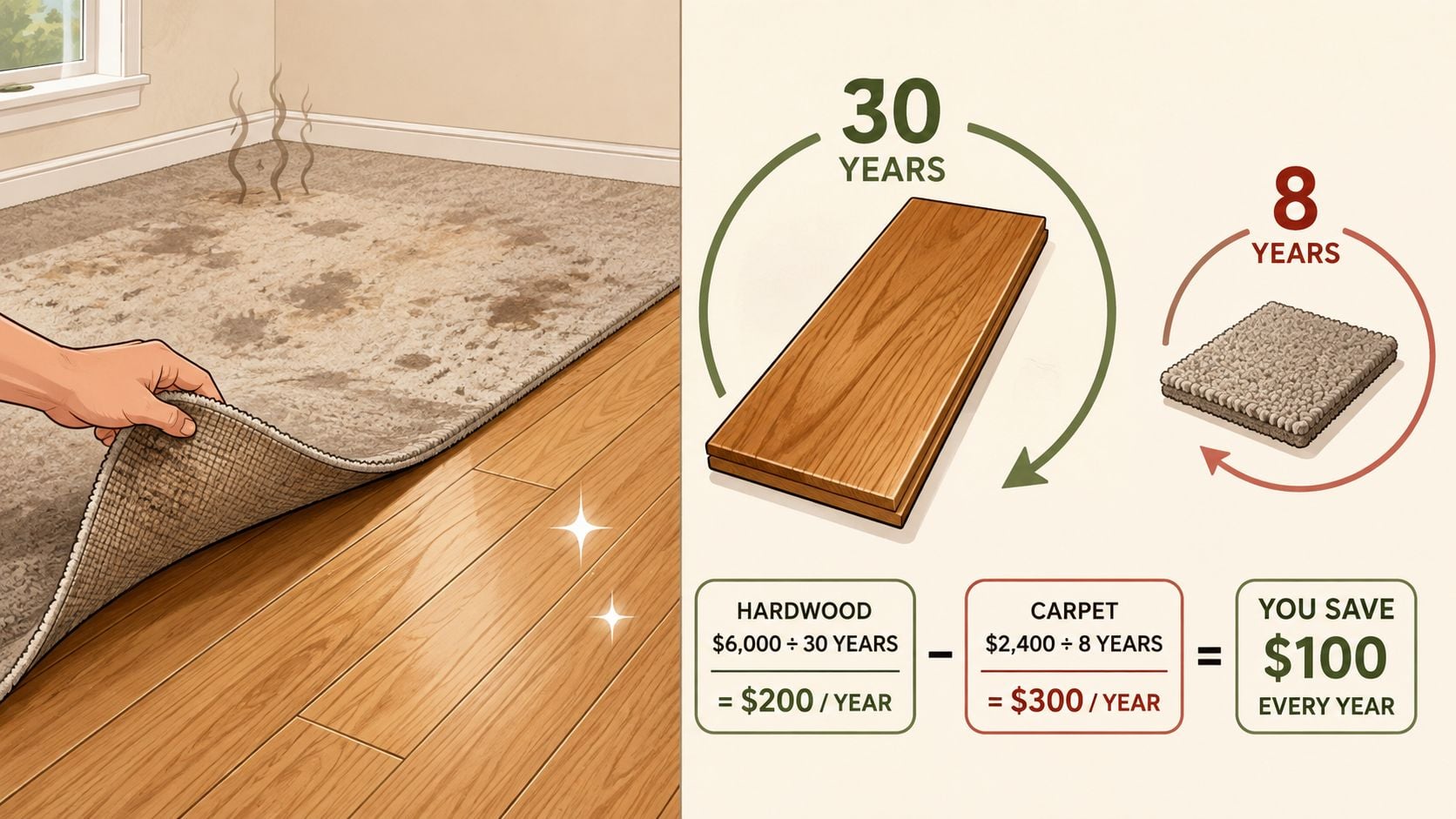
Carpet usually requires less money at installation, but a long ownership period can bring additional rounds of padding, material, removal, disposal, installation, and household disruption. Hardwood requires more capital at the start. Its longer service life can spread that investment across many more years.
Hardwood is not automatically the lower-cost choice. A rental property with frequent tenant turnover, a damp basement, or a bedroom where softness matters may justify carpet. The room's conditions and purpose should guide the material before lifecycle math enters the discussion.
What long-term ownership actually includes
Hardwood ownership can include repairs, refinishing, protective pads, area rugs, and moisture-related damage. Carpet ownership can include professional cleaning, spot treatment, odor management, replacement padding, removal, disposal, and furniture moving. Arelli's carpet shampoo care can help homeowners judge whether cleaning may extend a usable installation.
The 20- to 50-year view matters most for homeowners who plan to stay in the same house. A quote based only on installation can make carpet appear to be the bargain. Adding likely replacement cycles often makes hardwood more attractive in busy living areas, particularly where older subfloors can support a durable finish after proper preparation.
Long-term judgment: Hardwood is usually the stronger ownership investment in a dry, busy main-level area. Carpet remains the sensible comfort choice when warmth, quiet, and a lower initial bill matter more than maximum service life.
Warranty language does not guarantee identical performance in every Upstate home. Winter grit, pets, moisture, direct sunlight, and an aging subfloor can shorten real-world performance. Tip Top's guide to flooring types and their pros and cons helps weigh durability, comfort, maintenance, and room conditions together. For Albany-area resale, hardwood also gives buyers more flexibility, while carpet can remain the practical choice where comfort matters most.
Room-by-Room Recommendations for Upstate Homes
A whole-house flooring decision often creates unnecessary conflict. Bedrooms, stairs, basements, and entryways don't ask the same material to do the same job. The strongest plan usually assigns each room the finish that handles its specific traffic, moisture, sound, and comfort demands.
| Room | Recommended Material | Why It Wins | Typical Installed Cost |
|---|---|---|---|
| Bedrooms | Carpet or engineered hardwood with rugs | Carpet adds warmth and quiet, while hardwood supports a cleaner, more open look | Carpet about $2 to $8, hardwood about $7 to $20 per sq ft |
| Living rooms | Solid or engineered hardwood | Handles traffic and spills while supporting broad design flexibility | Hardwood about $7 to $25+ per sq ft |
| Stairs | Hardwood or hard-surface runner | Supports durability and a finished resale presentation | Project-specific, request separate stair pricing |
| Basements | Engineered hardwood, carpet, or another moisture-conscious option | The correct choice depends on moisture history and subfloor conditions | Project-specific |
| Entries and mudrooms | Hard surface flooring | Better suited to salt, grit, wet footwear, and frequent cleaning | Project-specific |
Bedrooms need a comfort decision
Carpet remains a strong choice in bedrooms, especially in cold Upstate winters. It feels warmer underfoot, softens footsteps, and reduces the hard echo that can make a second-floor hallway feel unfinished. A homeowner who prefers wood can use engineered hardwood with properly selected area rugs, but the rug placement and underlayment should be planned before installation.
Main living spaces need resilience
Living rooms, dining areas, and open main-level spaces usually benefit from hardwood. Pets, food spills, winter debris, and frequent movement make a cleanable hard surface easier to manage. Hardwood also connects adjoining rooms visually, which matters in older homes where a patchwork of unrelated finishes can make the floor plan feel smaller.
A homeowner comparing layouts and traffic patterns can review living room flooring recommendations before selecting a material. The right choice depends on how the room operates, not only on which sample looks attractive in a showroom.
Stairs and basements require caution
Stairs deserve their own quote because installation includes nosing, risers, rail-side details, and transitions. Hardwood or a hard-surface runner can create a durable, polished result, while carpet may provide softness and traction. The installer should explain cleaning, edge protection, and repair expectations before work begins.
Basements are the most condition-dependent area. Moisture history, slab condition, ceiling height, and the possibility of future water intrusion can rule out certain hardwood applications. An in-home assessment is more reliable than choosing from a sample alone.
Hidden Project Costs Most Comparisons Miss
A low flooring quote can change quickly once the crew opens up an older Capital Region home. Carpet may conceal plank subfloors, patched sections, squeaks, or uneven transitions. In cold Upstate NY winters, tracked grit and wet footwear also make protection during the project part of the budget.
Request these line items separately
Ask the installer to show each cost in writing:
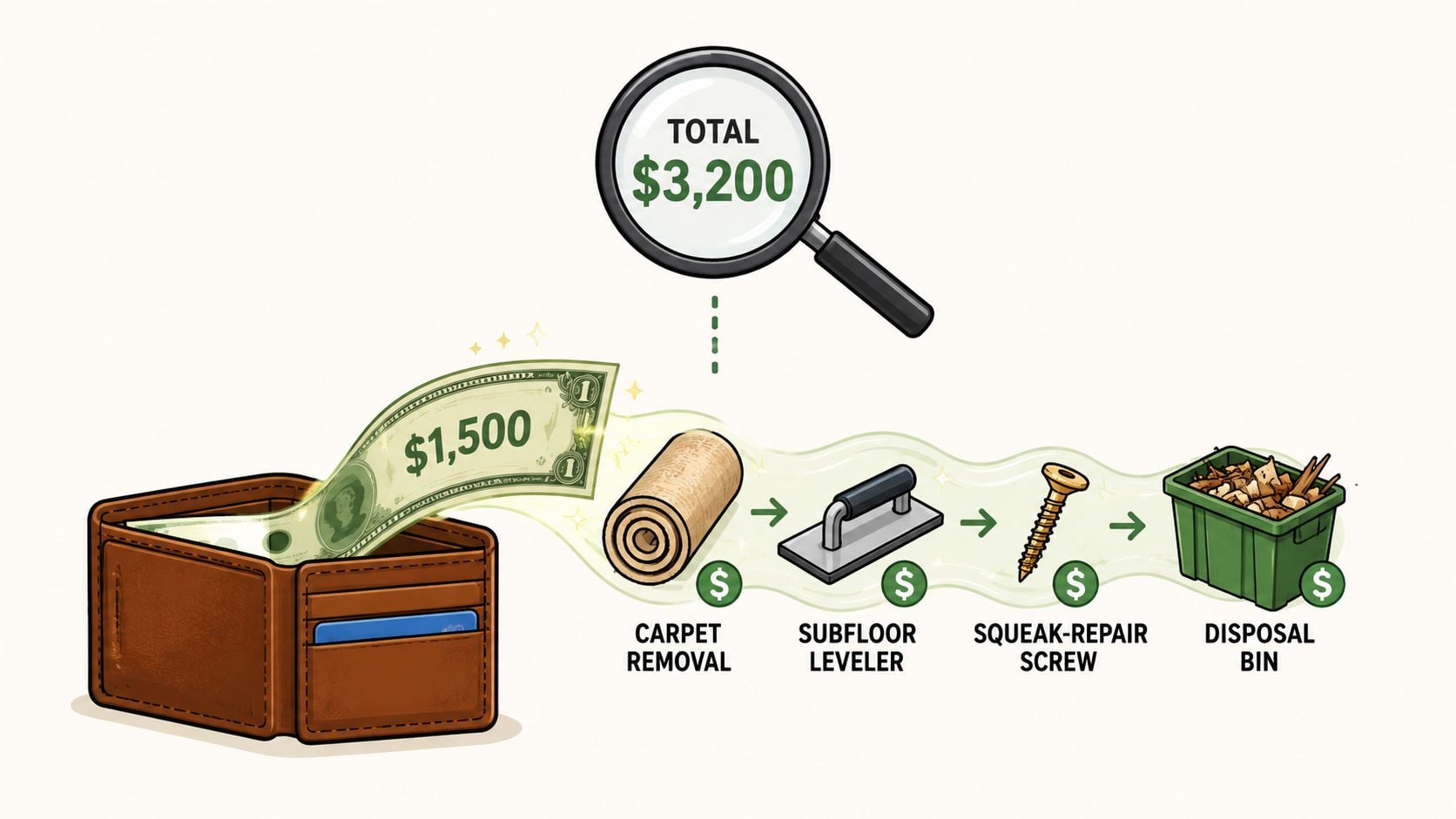
- Removal and disposal: Confirm whether the price covers carpet, pad, tack strips, staples, adhesive, and haul-away.
- Subfloor preparation: Check the allowance for leveling, squeak repairs, damaged boards, and new fasteners.
- Transitions and trim: Price reducers, thresholds, stair nosing, baseboard adjustments, and door-jamb undercutting separately.
- Moisture evaluation: Test basements, slab areas, and rooms with dampness history before choosing solid hardwood.
- Furniture and appliance work: Clarify who moves furniture, disconnects appliances, and returns items.
- Carpet cushion: Compare pad density and quality, not only the visible carpet fiber.
A carpet-to-hardwood conversion costs more when the existing floor must come out first. Recent industry guides estimate approximately $7 to $15 per square foot when removal and installation are included, though the final price depends on the layout and subfloor condition. Use the Weles flooring replacement guide as a planning reference, not a substitute for a local quote.
Finished floors need protection during delivery, installation, and furniture placement. Follow practical guidance on how to protect hardwood floors when moving, including protective coverings, grit-free traffic paths, and safe handling of heavy items.
Bid standard: Every quote should identify what happens to the old floor, what condition the subfloor must reach, and which trim or transition details remain outside the base price.
Furniture placement affects the floor long after installation ends. Review Tip Top's guidance on protecting floors from furniture before the new surface arrives, then use suitable pads and avoid dragging heavy pieces across it. Planning these details now protects a 20- to 50-year ownership decision from preventable repair costs.
Resale Value and Buyer Appeal in the Capital Region
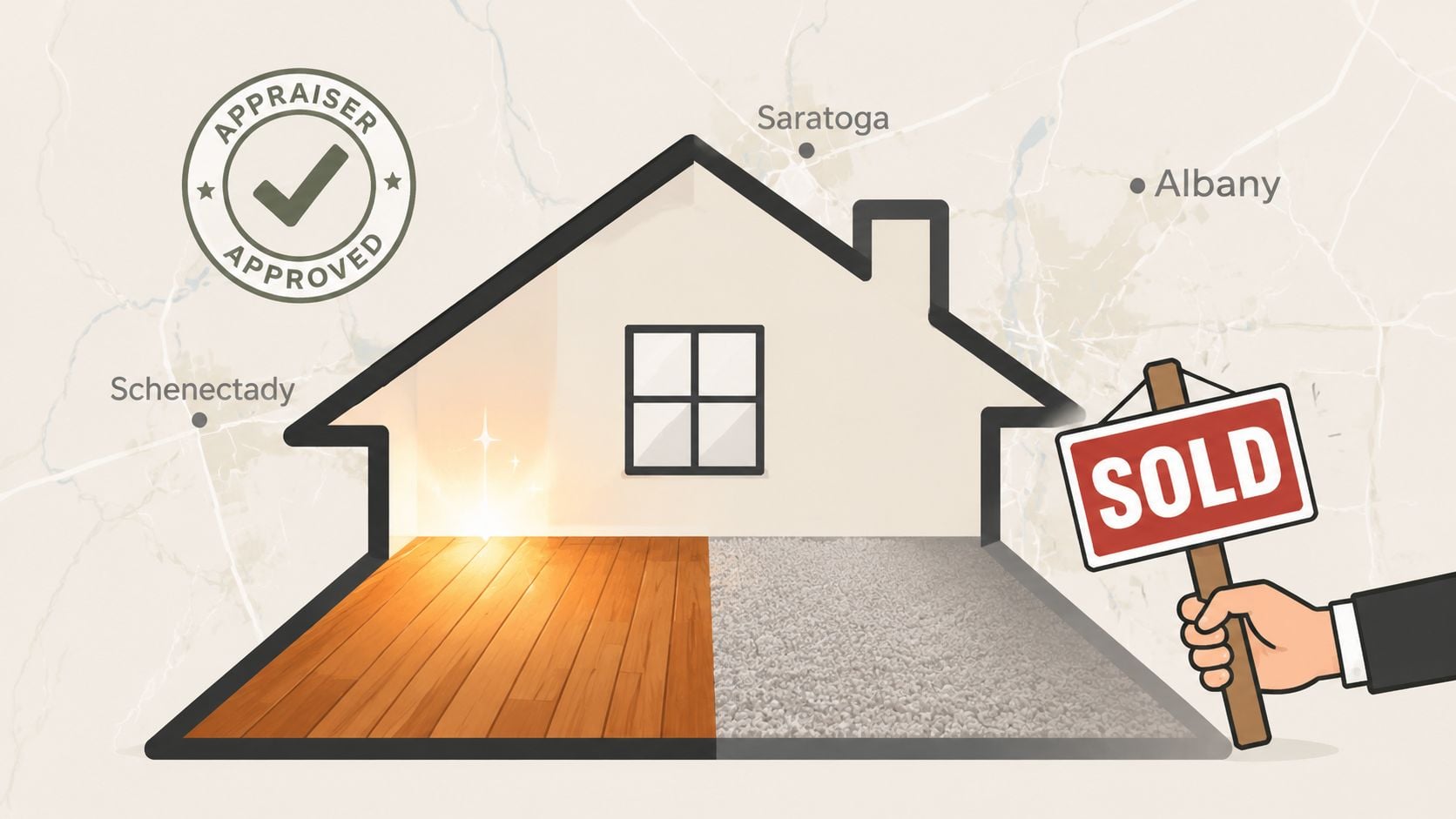
Flooring affects resale through presentation, buyer expectations, and visible condition. Hardwood usually reads as an upgrade in main living areas, especially when it runs consistently through connected spaces and complements the home's architecture. Carpet can still look appropriate in bedrooms, but worn carpet in a foyer, living room, or staircase can make buyers calculate replacement work before they make an offer.
Albany, Saratoga, Schenectady, and Troy homes vary widely by age, neighborhood, and price point, so no flooring choice guarantees a higher sale price. A well-installed floor with clean transitions and a suitable design helps the home show better. A premium material installed over a failing subfloor does not solve the underlying problem.
How buyers tend to read each finish
Hardwood gives buyers a durable, adaptable surface that can work with changing furniture and décor. It also photographs clearly, which matters when listings compete for attention online. Area rugs can add warmth later without permanently covering the entire floor.
Fresh, neutral carpet has a place, particularly in bedrooms and lower-cost refresh projects. It can make a room feel comfortable and finished without the higher installation price of hardwood. Its weakness appears when the carpet shows traffic lanes, stains, matting, pet odor, or dated color.
Stairs deserve special attention during resale preparation. Buyers notice worn stair carpet quickly because stairs receive constant foot traffic and are difficult to ignore during a showing. A homeowner planning to sell soon should compare the cost of a durable stair upgrade with the cost of replacing a visibly tired runner.
Resale shouldn't override daily life
A household planning to move within a short period may favor clean, neutral finishes that photograph well and avoid obvious repair needs. A household staying longer should prioritize room performance and maintenance habits. Hardwood in public areas, with carpet reserved for selected bedrooms, often offers a practical compromise.
The resale question is therefore not, “Which material always adds more?” It is, “Will this floor look intentional, durable, and properly installed when the next buyer walks through the door?”
Planning Your Project and Next Steps in Freehold
A confident flooring decision starts with a measured scope, not a showroom guess. Homeowners in Greene County and the Greater Albany Capital Region can move from uncertainty to useful quotes by following a short process.
Five steps that prevent expensive surprises
Measure every area. Include closets, hallways, landings, and stairs. Record doorways and transitions because they affect material quantities and trim.
Set a realistic range. Use the installed pricing ranges above as an early planning tool, then reserve room for removal, preparation, trim, and moisture-related work. A budget that covers only the visible flooring isn't a project budget.
Request itemized quotes. Two or three bids become useful only when each one lists material, pad or underlayment, removal, disposal, preparation, transitions, stair work, furniture handling, and installation separately.
Schedule an in-home evaluation. Installers should inspect the subfloor, check for movement and squeaks, and evaluate moisture risk where appropriate. Older framing in Albany-area homes can make a remote estimate unreliable.
Set the schedule carefully. Ask about material acclimation, household disruption, delivery timing, room-by-room access, warranty terms, and cleanup. The installation date should work for the household, not just the crew calendar.
Full-size samples should be viewed in the actual rooms. Morning light, warm bulbs, painted walls, furniture wood tones, and winter daylight can change how carpet and hardwood appear. A small sample viewed under showroom lighting can't answer every design question.
Tip Top Furniture & Mattresses has served homeowners from its family-owned Freehold, NY showroom since 1978 and has provided professional design services since 1984. Its one-stop showroom brings together flooring, furniture, décor, window treatments, USA-made mattresses, custom ordering, flexible financing, delivery, and products from 50+ trusted manufacturers, allowing homeowners to discuss a room plan in one visit. The flooring department includes hardwood, carpet, and laminate choices, while the design team can coordinate flooring with living room, bedroom, dining, and home office furnishings.
Homeowners can bring room measurements, photographs, paint samples, and a written list of priorities to the Freehold showroom. Financing can help phase a larger project, while the Clearance section may provide immediately available furnishings when the flooring work is only part of a broader renovation. A local consultation won't replace a proper installer's site inspection, but it can make the material and room-planning decisions far clearer before contracts are signed.
The right hardwood flooring vs carpet cost decision isn't about choosing the most expensive finish. It's about matching the investment to the room, the subfloor, the household, and the number of years the home will be used.
Visit Tip Top Furniture & Mattresses in Freehold, NY with room measurements and photos to compare hardwood, carpet, furniture, décor, and financing options in one place. The local team can help Capital Region homeowners coordinate a practical flooring plan with the rest of the home, including custom furnishings, delivery, and installation planning.