Best Fabric Protection for Furniture: 2026 Expert Guide


A new sofa usually feels exciting for about a day. Then real life in the Capital Region starts again. Someone sets down a coffee mug without a coaster, the dog claims the corner cushion, or a child walks in with a snack and no sense of danger.
That's when fabric protection stops sounding like an add-on and starts sounding practical. For households in Albany, Schenectady, Troy, and the surrounding area, the right choice depends less on marketing and more on how the furniture will be used.
A family-owned showroom in Freehold, NY that's been helping local homeowners since 1978 sees the same questions come up again and again. What works. What's worth paying for. What should never be sprayed. And what makes sense for a busy family versus a formal room. With over 45 years of experience and professional design services available since 1984, the advice is usually straightforward. Protection helps, but only when it matches the fabric, the room, and the household.
Your Guide to Keeping Furniture Looking New
A common Albany-area scenario goes like this. A household finally picks the right sectional, gets it into the living room, steps back to admire it, and then immediately starts thinking about spills, pet hair, and everyday wear.
That concern is reasonable. Upholstery takes abuse slowly and then all at once. One missed spill, one oily stain, or one season of heavy use can make a piece look older than it is.
For families trying to get ahead of that problem, the best fabric protection for furniture isn't one single product for every home. It's a decision. Some homes do well with a simple spray treatment. Others should skip sprays and choose performance upholstery from the start. Others need a professional cleaning and re-treatment plan because the furniture is already in use.
What local households usually need to sort out
- New furniture or existing furniture: The right answer changes if the piece is brand new versus already lived on.
- Kids and pets or low-traffic use: A formal sitting room has very different needs than a family room.
- Fabric type: Some durable weaves handle protection well. Delicate materials can react badly.
- Maintenance habits: A protector buys time. It doesn't replace cleanup.
For pet owners, one challenge starts before spills even happen. Hair, dander, and ground-in debris can wear down upholstery faster than people expect. A practical resource on how to remove pet hair from furniture can help households reduce that daily friction before it turns into deeper soil issues.
Seasonal care matters too, especially in Upstate New York where homes see mud, boots, indoor heating, and closed-window living for long stretches. A good companion read is Tip Top's fall furniture maintenance checklist, which fits well with a broader protection plan.
Practical rule: Protection works best when it's treated as part of furniture care, not as a substitute for furniture care.
How Fabric Protection Really Works
A common misconception is that “fabric protector” makes furniture waterproof. It doesn't. What it does is buy time.
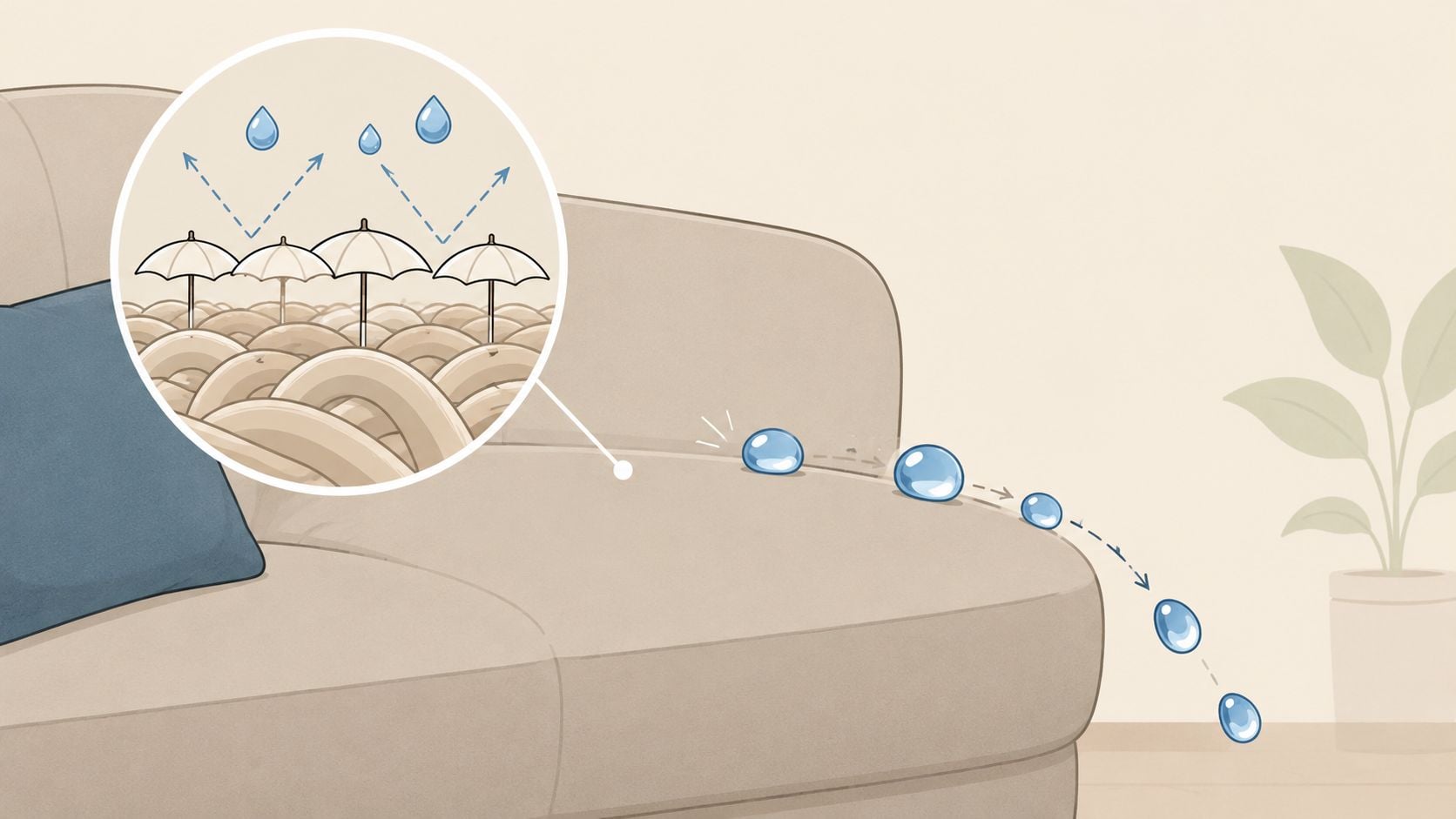
The simplest way to think about it is a rain jacket for individual fibers. The treatment sits at a microscopic level on the fabric so liquids don't sink in right away. That pause is what gives a homeowner time to blot the spill before it becomes a stain.
What the barrier actually does
The technical version is useful here because it explains why some products perform better than others. The most effective fabric protection for furniture relies on fluoropolymer-based polymer technology that creates a microscopic, non-continuous layer on fabric fibers, causing both oil and water-based liquids to bead up and roll off rather than absorb immediately, as explained in this fluoropolymer upholstery protection overview.
That “non-continuous layer” matters. It isn't a thick plastic coating. On the right fabric, applied correctly, the protector can do its job without making the piece look coated or unnatural.
Homeowners comparing materials should also understand that fabric construction matters as much as the protector itself. Dense synthetics, textured weaves, and natural fibers all respond differently, which is why a primer on upholstery materials helps before any treatment decision gets made.
What fabric protection does not do
A lot of disappointment comes from expecting the wrong thing.
- It doesn't stop every stain: It slows absorption, which improves cleanup odds.
- It doesn't fix poor maintenance: Dirt, oils, and body soil still need regular cleaning.
- It doesn't last forever: Use, friction, humidity, cleaning, and sunlight all wear protection down over time.
- It doesn't suit every fabric: Some materials shouldn't be treated with standard sprays.
A protector should make cleanup easier. If someone expects it to make a family sofa immune to spills, they're expecting too much.
That's why the best results usually come from matching the treatment to the fabric and the room, then following the care instructions instead of assuming the job is finished after one spray.
Comparing Your Fabric Protection Options
Most Albany and Capital Region households are choosing between three paths. A DIY spray. A professional-grade treatment. Or a performance fabric built into the upholstery itself.
Each has a place. The mistake is assuming they're interchangeable.
Fabric Protection Methods at a Glance
| Protection Type | Upfront Cost | Durability | Best For |
|---|---|---|---|
| DIY spray | Lower upfront cost | Often suitable for periodic reapplication | New furniture, budget-conscious households, everyday spill defense |
| Professional-grade treatment | Higher upfront cost than DIY | Generally stronger application control and better for larger jobs | Larger seating groups, households that want less guesswork |
| Built-in performance fabric | Higher cost at purchase | Long-term practical protection built into the fabric choice | Busy homes with kids, pets, frequent entertaining |
DIY sprays for everyday households
For many families, a DIY fabric protector is the most practical starting point. High-performance fabric protectors can repel liquids for up to 12 months after application, and tested results have shown effective resistance against common household contaminants like wine, coffee, and food before they soak into fibers, according to this fabric protector testing review.
That matters in real living rooms. The extra cleanup window can be the difference between blotting up a spill and shopping for a slipcover.
DIY makes the most sense when:
- The furniture is new: Clean, dry fibers give the treatment the best chance to bond well.
- The fabric is fairly forgiving: Durable everyday upholstery usually responds better than delicate textures.
- The household will maintain it: Reapplication and prompt spill cleanup still matter.
The downside is consistency. A rushed application, poor ventilation, or uneven coverage can leave a patchy result or weaker protection than expected.
Professional-grade treatments for larger or more demanding jobs
A professional-grade route can make sense when a household has multiple pieces to protect, a large sectional, or limited patience for trial and error. Some industrial-style protectors are built for broad coverage, and they're often more practical when the job is too large for a small consumer can.
This category tends to appeal to homeowners who want cleaner application, less mess, and a more systematic treatment plan. It can also be a reasonable choice when furniture is part of a bigger room update.
One practical middle ground is to ask about available furniture protection options at the time of purchase, alongside choices like performance fabric upholstery. That approach keeps the protection decision tied to the actual piece and the way it will be used.
Built-in performance fabrics for households that want less worry
For many families with children, pets, or frequent guests, performance upholstery is often the strongest long-term answer. Instead of adding a treatment on top, the resistance is built into the fabric choice from the start.
That doesn't mean every room needs it. A formal chair in a low-use office may not justify the upgrade. But for the main sofa where everyone lands after school, after work, and after dinner, built-in performance often saves more aggravation than any after-purchase spray routine.
The best answer for a busy home is often to solve the problem at the fabric-selection stage, not after the furniture is delivered.
Choosing the Right Shield for Your Albany Home
The right answer depends on the room, the fabric, and the people using it. A townhouse in Troy, a family home in Colonie, and a quieter sitting room outside Albany won't all need the same level of protection.
That's where decision-making gets more useful than product talk.
For homes with kids, pets, and constant traffic
This household should lean practical. If the sofa is going to be used hard every day, performance fabric or a durable upholstery paired with a protection plan usually makes more sense than relying on occasional cleanup alone.
A few signs this is the right path:
- Food is regularly eaten on the sofa
- Pets sleep on the furniture
- The piece is the main family seating area
- The household wants easier cleanup, not delicate care routines
In that situation, custom ordering can help. Tip Top Furniture & Mattresses offers access to custom order upholstery choices, including performance-oriented options, so households can choose a style they like without defaulting to a fragile fabric.
For entertaining spaces and adult-only rooms
A lower-traffic room has more flexibility. A homeowner who loves hosting in a Troy apartment or keeps a more formal living room in Greene County may be perfectly fine with a quality fabric and a careful treatment approach.
That's often where a DIY or professional-grade protector can be enough. The furniture isn't under constant assault, so the owner can focus on preserving appearance rather than defending against daily abuse.
For heirloom looks and delicate fabrics
This is where restraint matters. For delicate fabrics like velvet, applying standard protectants significantly alters the hand, or tactile texture, often causing stiffening or matting that permanently degrades the aesthetic and comfort quality of the upholstery, as shown in this upholstery protector testing review.
That's not a small trade-off. For velvet and similarly sensitive materials, the wrong protection choice can do more harm than the original spill risk.
A smart filter for shoppers is this:
- Choose durability first for family-room furniture.
- Choose beauty first only when the room's use supports it.
- Avoid standard sprays on delicate, pile-sensitive fabrics.
- Ask fabric-specific questions before any treatment is applied.
Households comparing options by feel, texture, and maintenance expectations can narrow the field faster with guidance on how to choose upholstery fabric.
Some fabrics are meant to be lived on. Some are meant to be admired more carefully. Protection should respect that difference.
For shoppers who love heirloom-quality looks, especially Amish-made pieces or custom upholstery, the best outcome often comes from pairing the frame and style they want with a fabric that fits real household behavior.
How to Apply and Maintain Your Furniture's Shield
A DIY treatment can work well, but only if it's done carefully. Most problems come from skipping prep, spraying too heavily, or treating furniture that isn't clean enough to begin with.
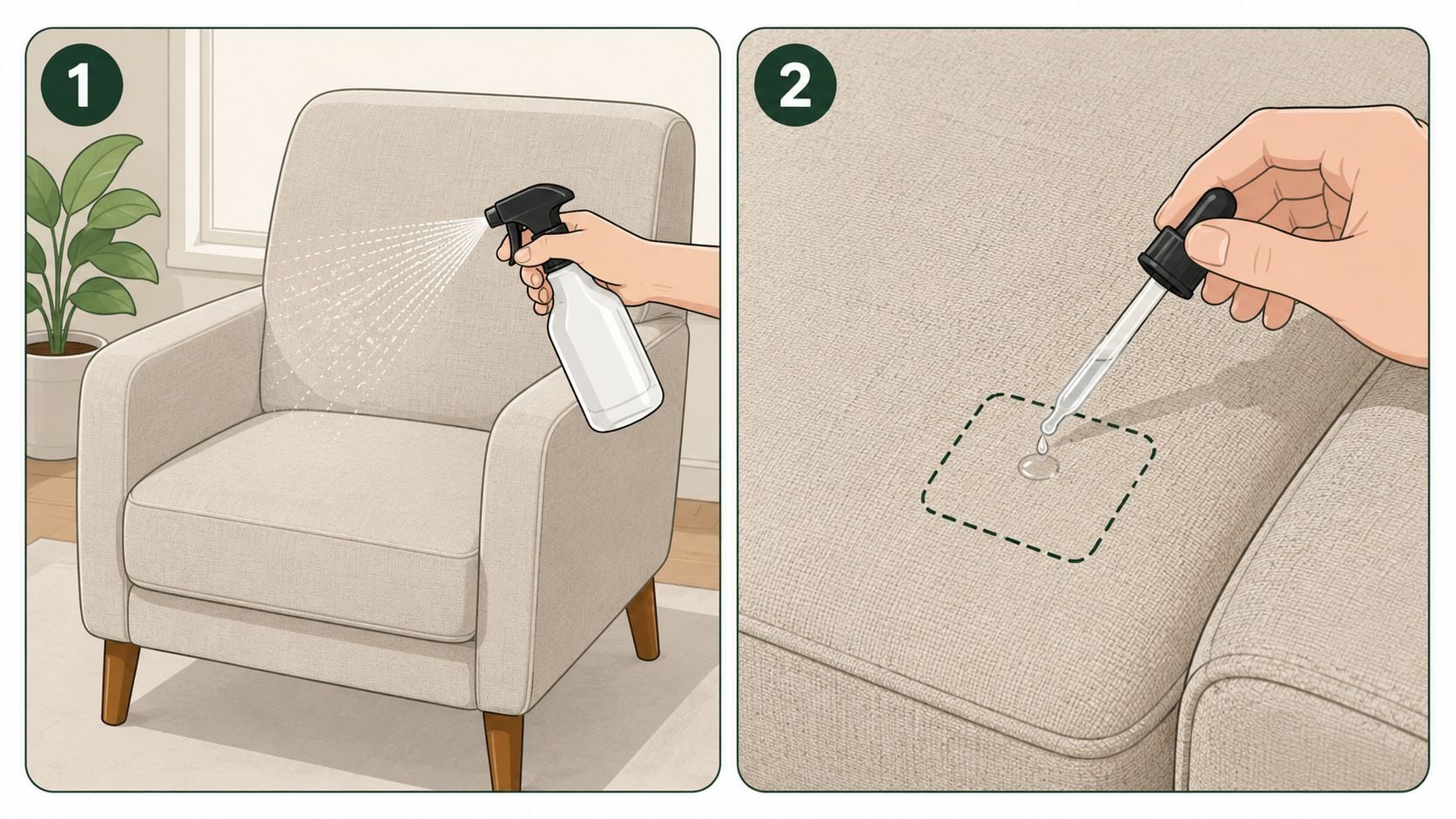
A practical application routine
Start with a clean, dry surface
Dust, pet hair, and residue should be removed first. A protector applied over surface grime won't perform the way it should.Test a hidden area
An inconspicuous spot tells the homeowner whether the fabric's color or feel changes.Ventilate the room well
Open windows when possible and follow label directions carefully.Apply an even coat
Light, consistent coverage is usually better than soaking the fabric.Let it dry fully before use
Rushing this step can undo the whole job.
Maintenance habits that matter more than people think
Protection doesn't replace cleanup discipline. It supports it.
- Blot spills quickly: Press with a clean cloth. Don't rub the spill deeper.
- Keep up with soil removal: Routine vacuuming reduces grit that wears fibers down.
- Reapply after deep cleaning when needed: Cleaning can strip protection from the surface.
- Pay attention to wear zones: Armrests, seat fronts, and favorite cushions lose protection first.
For households updating older pieces instead of buying new, cosmetic changes can also be part of the conversation. A separate resource on how to transform furniture with vinyl is useful for hard-surface furniture projects, though it's not a substitute for proper upholstery protection.
A broader care routine helps too. Tip Top's furniture maintenance guidance gives homeowners a practical framework for keeping upholstery and surrounding furnishings in better shape over time.
Protection buys response time. Maintenance preserves the furniture.
The Real Cost and Lifespan of Fabric Protection
A lot of homeowners focus on the price of the spray can or the treatment package. That's understandable, but it's not the full math.
The better question is what the household is paying for over the life of the furniture. A low upfront cost can still be a poor value if the treatment is weak, badly applied, or attached to a retailer package that doesn't add much practical benefit.
Where value actually comes from
A single application of industrial-grade fabric protector can cover up to 269 square feet for one coat, according to this industrial fabric protector product detail. That same source also notes consumer research suggesting that DIY options from established brands may offer better value than retailer-added packages, which is a useful reminder to look at coverage, reputation, and application quality instead of assuming the in-store add-on is automatically smarter.
That leaves households with a practical value ladder:
- DIY treatment can make sense when the furniture is new, the fabric is suitable, and the owner will maintain it.
- Professional application may justify itself for larger jobs or households that want consistency.
- Performance fabric at purchase often costs more upfront, but it can be the easiest path for busy homes that don't want to keep revisiting the issue.
Lifespan depends on use, not just product choice
Even a strong treatment wears down from friction, sunlight, moisture, repeated seating, and cleaning. That's why a family-room sofa and a guest-room chair can't be judged by the same expectations.
For households budgeting future care, a regional cost framework like this guide to CT upholstery cleaning expenses can help illustrate how cleaning fits into total ownership, even though Albany-area pricing will vary. For some homes, it makes sense to invest earlier in better upholstery and use flexible financing so the right material is in place from day one rather than trying to rescue the wrong fabric later.
Your Fabric Protection Questions Answered
A few questions come up late in the buying process, usually after someone has already fallen in love with a sofa.
Can protection be applied to used furniture
Yes, but only under one condition. Used upholstery must be “thoroughly deep cleaned” first, because applying protector over existing soil traps contaminants and makes the treatment ineffective, as explained in this Scotchgard upholstery protector guidance.
Will protection change how the fabric feels
Sometimes it won't be noticeable on the right upholstery. Sometimes it absolutely will. Delicate fabrics are the biggest concern, which is why standard protectants should never be treated like a universal solution.
Is DIY enough for most households
Often, yes. For a clean, durable fabric in a normal-use room, a careful DIY application can be a sensible option. For heavy-use homes, built-in performance upholstery is usually easier to live with.
What's the safest way to decide
Match the protection level to the room. A formal chair, a family sectional, and a custom heirloom-style piece shouldn't all be treated the same way.
For homeowners across Albany, Schenectady, Troy, Greene County, and the surrounding Capital Region, Tip Top Furniture & Mattresses is a practical place to compare durable upholstery, custom order options, Amish-crafted furniture, flooring coordination, clearance pieces, and flexible financing in one stop. A visit to the Freehold, NY showroom can help narrow down the right fabric for real-life use, whether the priority is kid-proof seating, a pet-friendlier living room, or a custom piece that balances comfort, appearance, and easier maintenance.