Bennington Carpet and Tile a Homeowner’s Guide


A flooring search often starts the same way. A homeowner in Albany, Schenectady, Troy, or Greene County decides one room needs help, then realizes the decision touches the whole house. Warmth, cleanup, durability, style, furniture scale, and budget all land on the table at once.
That's also when regional names like Bennington Carpet and Tile come up. For households comparing stores across southern Vermont and eastern New York, the smartest move isn't picking a store name first. It's understanding which flooring type fits the space, what installation details matter, and where design help can save an expensive mistake.
Table of Contents
- Starting Your Upstate NY Flooring Project
- What to Know About Bennington Carpet and Tile
- Carpet vs Tile Which Is Right for Your Home
- Key Considerations Before You Buy New Flooring
- Why Professional Installation Makes a Difference
- Find Your Perfect Floor at Your Local Design Partner
Starting Your Upstate NY Flooring Project
Most Upstate New York flooring projects begin with one practical question. What has to live on this floor every day? Kids coming in from the yard, wet boots in winter, pets circling the same path, chairs scraping at the table, or a cold bedroom that needs a softer landing in the morning all point toward different materials.
In homes around the Capital Region, older floor plans often complicate the choice. One room may have original wood trim, the next may lead into a newer kitchen addition, and the flooring has to make both spaces feel intentional. That's why it helps to think beyond color first and look at use, moisture, traffic, and how the new floor will relate to surrounding furniture and finishes.
A practical starting point is to sort rooms into three groups:
- Dry comfort spaces: Bedrooms, family rooms, and finished upstairs areas often prioritize softness, warmth, and sound control.
- Wet or messy zones: Mudrooms, entries, baths, and many kitchens need easier cleanup and more moisture tolerance.
- Connection areas: Hallways, open living spaces, and transitions need visual continuity so the house doesn't feel choppy.
Practical rule: Good flooring decisions start with lifestyle, then performance, then appearance.
Homeowners weighing a regional option like Bennington Carpet and Tile should still map the project room by room before visiting any showroom. That prevents the common mistake of falling in love with a sample that doesn't fit the actual use of the space. For a closer look at how comfort, durability, and style play out in one of the most-used rooms in the house, this guide to living room flooring choices is a useful next step.
What to Know About Bennington Carpet and Tile
For shoppers specifically searching Bennington Carpet and Tile, the basic public-facing picture is straightforward. Bennington House of Tile and Carpet appears to operate as a full-line flooring retailer in Bennington, Vermont, with a catalog that includes carpet, hardwood, laminate, ceramic and porcelain tile, stone, and resilient vinyl, according to the store's Bennington flooring catalog.
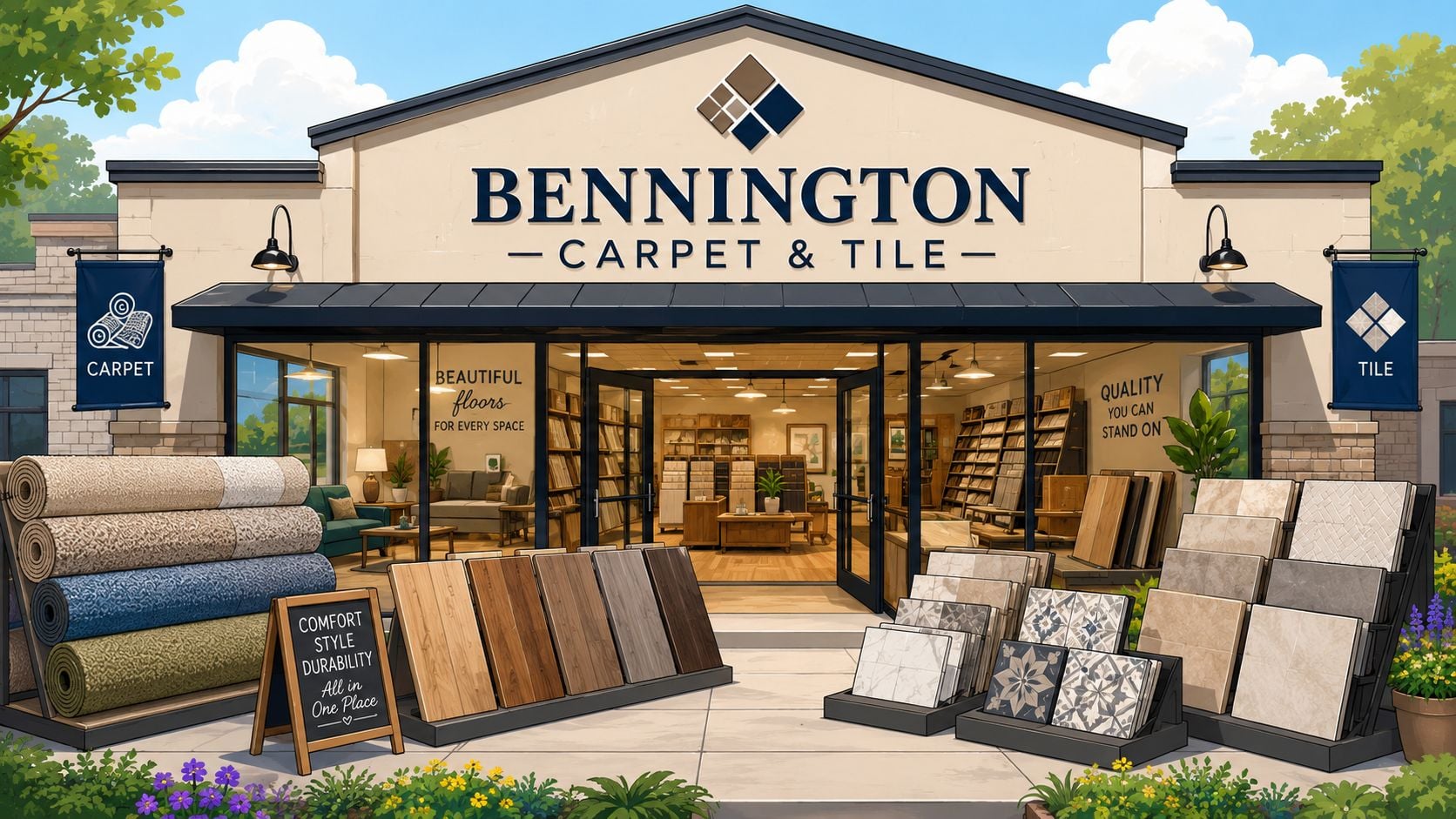
That kind of product mix matters because flooring isn't one category. It's several categories with different strengths. A store carrying soft surface and hard surface options can usually help a homeowner compare rooms more realistically than a single-material shop can.
What that product mix means for buyers
A broad catalog gives shoppers flexibility, but it also makes the decision process more technical than many expect.
- Carpet usually enters the conversation where comfort, quieter rooms, and a softer feel underfoot matter most.
- Porcelain and ceramic tile are common candidates where water exposure and cleanup take priority.
- Laminate and resilient vinyl often attract attention in spaces where households want a hard surface look with easier everyday maintenance.
- Hardwood and stone tend to be style-driven choices that also require careful thought about room conditions and long-term maintenance expectations.
The real value of an objective search
A homeowner looking up Bennington Carpet and Tile is usually doing one of two things. Either they're narrowing down local places to shop, or they're still trying to understand which flooring category belongs in which room. The second question matters more than the first.
A flooring store can only help if the homeowner walks in with a clear sense of what the room demands.
For buyers in southern Vermont, Greene County, or the greater Albany area, the useful takeaway isn't just that a regional retailer offers multiple surfaces. It's that the project should be approached as a performance decision first, especially in homes that deal with cold weather, tracked-in moisture, and a mix of older and updated rooms.
Carpet vs Tile Which Is Right for Your Home
The carpet-versus-tile decision is one of the most common forks in the road. Both work well in the right place. Both disappoint in the wrong one.
Carpet remains popular for a reason. It isn't a trend product. The category has a long history, with weaving techniques tied to the Pazyryk Carpet of the 5th century B.C., and the U.S. carpet industry began in 1791, according to the history of carpet industry overview. That long lineage shows up today in how many households still rely on carpet where comfort matters more than wash-down durability.
Where carpet works better
Carpet usually makes more sense in spaces where people want the room to feel quieter, warmer, and more relaxed.
Strong carpet use cases include:
- Bedrooms: Soft landing underfoot matters more here than in almost any other room.
- Family rooms: Carpet can make a large room feel less echo-prone and more comfortable for everyday lounging.
- Finished upper floors: Carpet often helps soften sound between levels.
Carpet doesn't work as well in rooms that deal with repeated wet shoes, slush, or frequent spill cleanup. That's where homeowners often regret choosing softness over practicality.
Where tile wins
Tile is a workhorse surface. In Upstate New York homes, that matters most in entries, bathrooms, mudrooms, and some kitchens.
Tile's strengths show up when the room sees moisture, grit, and regular cleanup. Households comparing options for baths may also find it helpful to review ideas on designing a functional bathroom with tiles, especially when balancing slip resistance, layout, and visual scale.
Here's a quick comparison for local homes.
| Feature | Carpet | Tile (Ceramic & Porcelain) |
|---|---|---|
| Comfort in cold weather | Softer and warmer underfoot | Feels firmer and often cooler |
| Performance with wet boots and mud | Less ideal in messy entry conditions | Better fit for repeated moisture and cleanup |
| Noise control | Helps soften sound | Harder surface, more sound reflection |
| Maintenance | Needs routine care and quicker attention to spills | Easier everyday wipe-up in wet zones |
| Best room types | Bedrooms, family rooms, upstairs spaces | Baths, entries, mudrooms, many kitchens |
| Style effect | Cozy, quieter feel | Clean, crisp, durable look |
The local trade-off most people miss
The wrong comparison is asking which material is “better.” The right comparison is asking which one is better for that room. A warm bedroom and a muddy side entry should not be judged by the same standard.
Many homes also need more than one flooring answer. That's why mixed-material planning often works better than forcing carpet or tile through the whole project. In busy households, this becomes even more important in halls, stairs, and connecting spaces. For that reason, guidance on flooring for high-traffic areas can help sort out where durability should outweigh softness.
Choose carpet where people settle in. Choose tile where the room has to shrug off the day.
Key Considerations Before You Buy New Flooring
A lot of flooring disappointment starts before installation day. It starts when a buyer chooses from a hand sample without checking how the room behaves.
Start with the room, not the sample
The first question should be about use. The second should be about the subfloor. The third should be about maintenance habits. Color and texture matter, but they come after those basics.
A practical buying checklist looks like this:
- Measure the room shape carefully: Bay windows, closets, angled walls, and transition areas can change what the project really involves.
- Notice the light: A sample that looks calm under showroom lighting may read much darker or busier in a north-facing room.
- Think about what comes in from outside: Snow, gravel, lawn debris, and pet traffic change what performs well.
- Check adjacent finishes: Flooring should make sense with trim color, cabinetry, upholstery, and nearby wall tones.
For households reworking kitchens, there's also value in seeing how renovation pros think through hard-surface performance. This article on choosing kitchen flooring for renovations gives a helpful outside perspective on balancing appearance and everyday use.
Small buying mistakes that become big annoyances
Some errors don't show up right away. They show up after a few months of living with the floor.
Common examples include:
- Picking a floor too smooth for a wet area
- Ignoring transition height between rooms
- Choosing a busy pattern for a small room already filled with visual detail
- Forgetting how dining chairs, rolling furniture, or pets will affect wear
Buyer note: A good flooring choice still feels right on an ordinary Tuesday, not just in the showroom.
Another detail many homeowners miss is coordination. A floor doesn't live alone. It sits under sofas, around dining sets, beside bedroom furniture, and against rugs, tables, and fabrics. That's why many shoppers benefit from reviewing broader advice on how to choose flooring for the whole home before making a final material call.
Why Professional Installation Makes a Difference
A quality floor can still fail if the installation is rushed. That's especially true with modular products and hard surfaces where small prep errors telegraph through the finished job.
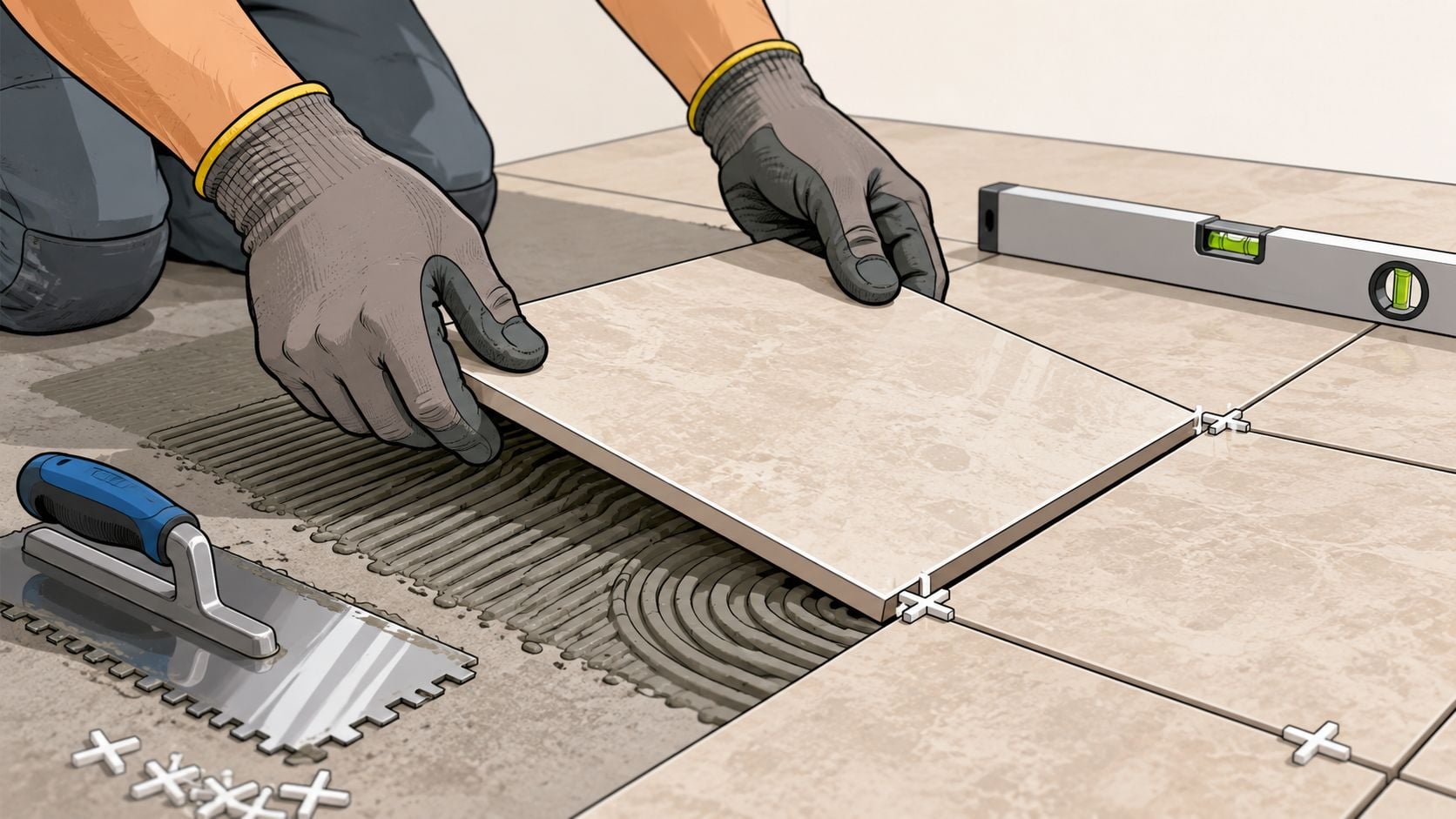
What pros check before the first piece goes down
Professional guidelines for modular flooring call for concrete subfloors to meet ≤90% RH and 7-9 pH, and they require rolling with a 75-100 lb roller to support adhesion, according to these modular flooring installation guidelines.
Those details sound technical, but the takeaway is simple. Installers need to know what's happening in the slab or subfloor before adhesive and finish material go down. If moisture conditions are ignored, the floor may not stay bonded the way it should.
Other parts of professional prep matter just as much:
- Flatness and level changes: Even minor irregularities can show up in seams, edges, and finished appearance.
- Layout control: Rooms rarely run perfectly square, so installers have to plan where cuts and alignment will fall.
- Adhesive discipline: Too little, too much, or the wrong spread pattern can create preventable problems later.
What goes wrong with rushed installation
Homeowners usually notice installation errors in everyday ways. Tiles don't feel aligned from one sightline. Carpet modules drift visually across the room. Edges curl. Adhesion weakens. Transitions feel awkward underfoot.
Moisture testing and layout control aren't extras. They're basic risk reduction.
Stairs are another area where workmanship matters more than people think. Material choice, nosing details, and slip considerations all have to be handled carefully. For homeowners evaluating hard-surface options on steps, this guide to ceramic tile on stairs highlights some of the practical issues worth thinking through before ordering material.
Find Your Perfect Floor at Your Local Design Partner
The easiest flooring projects aren't always the smallest ones. They're the ones where the homeowner can make material choices in context, with the room's furniture, color palette, and overall layout in view.

Why coordinated shopping saves time
Flooring decisions get easier when they aren't isolated from the rest of the home. A warm carpet tone may work beautifully until it sits beside the wrong wood finish. A clean tile may feel too cold once paired with the room's upholstery and wall color. Coordinated selection helps prevent that disconnect.
For homeowners in Freehold, Albany, Schenectady, Troy, and Greene County, one practical option is Tip Top Furniture & Mattresses, a family-owned showroom in Freehold, NY, serving the region since 1978 and offering professional design services since 1984, along with flooring, furniture, décor, custom ordering, and financing support based on the publisher information provided for this article.
A practical option for Capital Region and Greene County homes
That one-stop approach can help with projects where the floor is only one part of a larger refresh. A buyer may need a new floor, but also a better sofa scale, a bedroom set that suits the room proportions, or window treatments that make the flooring color read correctly in natural light.
Useful advantages in that kind of setup include:
- Whole-room coordination: Flooring can be considered alongside furniture, accent pieces, and finish tones.
- Custom flexibility: When a room has odd dimensions or a specific style direction, custom ordering can simplify matching.
- Budget planning: Financing options can make a multi-room or mixed-category purchase easier to phase.
Shoppers who are still deciding among hard-surface options may want to browse hardwood flooring buying ideas as part of a broader comparison before settling on carpet, tile, laminate, or wood.
The strongest flooring result usually comes from stepping back and asking one final question. Does the room work better as a whole after the new floor goes in? That's the standard worth using.
For homeowners comparing Bennington Carpet and Tile with options closer to the Capital Region, Tip Top Furniture & Mattresses offers a practical place to continue the search. The Freehold showroom serves Albany, Schenectady, Troy, Greene County, and nearby communities with flooring, furniture, décor, custom order help, design guidance, and financing options so the project can be planned as one coordinated home update.