
Front Porch Flower Ideas: Boost Curb Appeal in 2026

A front porch usually reaches the awkward stage first. The winter grit is still in the corners, the chairs look a little bare, and the entry needs color before the rest of the yard catches up. That's exactly why smart front porch flower ideas matter so much in Upstate New York. They give a home an immediate sense of care and welcome, even when the garden beds are still waking up.
For homeowners around Freehold, Albany, Schenectady, Troy, and Greene County, the porch often does double duty. It's the first impression from the street, and it's also a real living space where people sit with coffee, shake off muddy boots, and ease into summer evenings. Nationally, 96% of REALTORS® reported that curb appeal matters to buyers, 63% said the front exterior matters more than the back yard for first impressions, and 92% recommend improving curb appeal before listing. Porch flowers are one of the simplest ways to improve that first view.
Tip Top Furniture & Mattresses has helped Capital Region homeowners create comfortable, inviting homes since 1978, with professional design services available since 1984. That same design thinking applies outside. A porch looks best when flowers, planters, seating, and the home's architecture work together. For extra plant inspiration, this Prescott landscaping flower guide offers another useful look at seasonal color planning.
Table of Contents
- 1. Classic Hanging Baskets with Trailing Petunias
- 2. Boxwood Shrubs with Flowering Accent Plants
- 3. Ornamental Grasses with Mixed Perennials
- 4. Seasonal Container Gardens with Mixed Annuals
- 5. Climbing Vines and Flowering Trellises
- 6. Rose Gardens with Complementary Underplantings
- 7. Hydrangea Plantings with Structured Layers
- 8. Pollinator-Friendly Native Plant Gardens
- 9. Fragrant Flower Gardens with Sensory Focus
- 10. Year-Round Interest Gardens with Architectural and Evergreen Elements
- 10 Front Porch Flower Ideas Comparison
- Your Upstate NY Porch Maintenance Calendar
1. Classic Hanging Baskets with Trailing Petunias
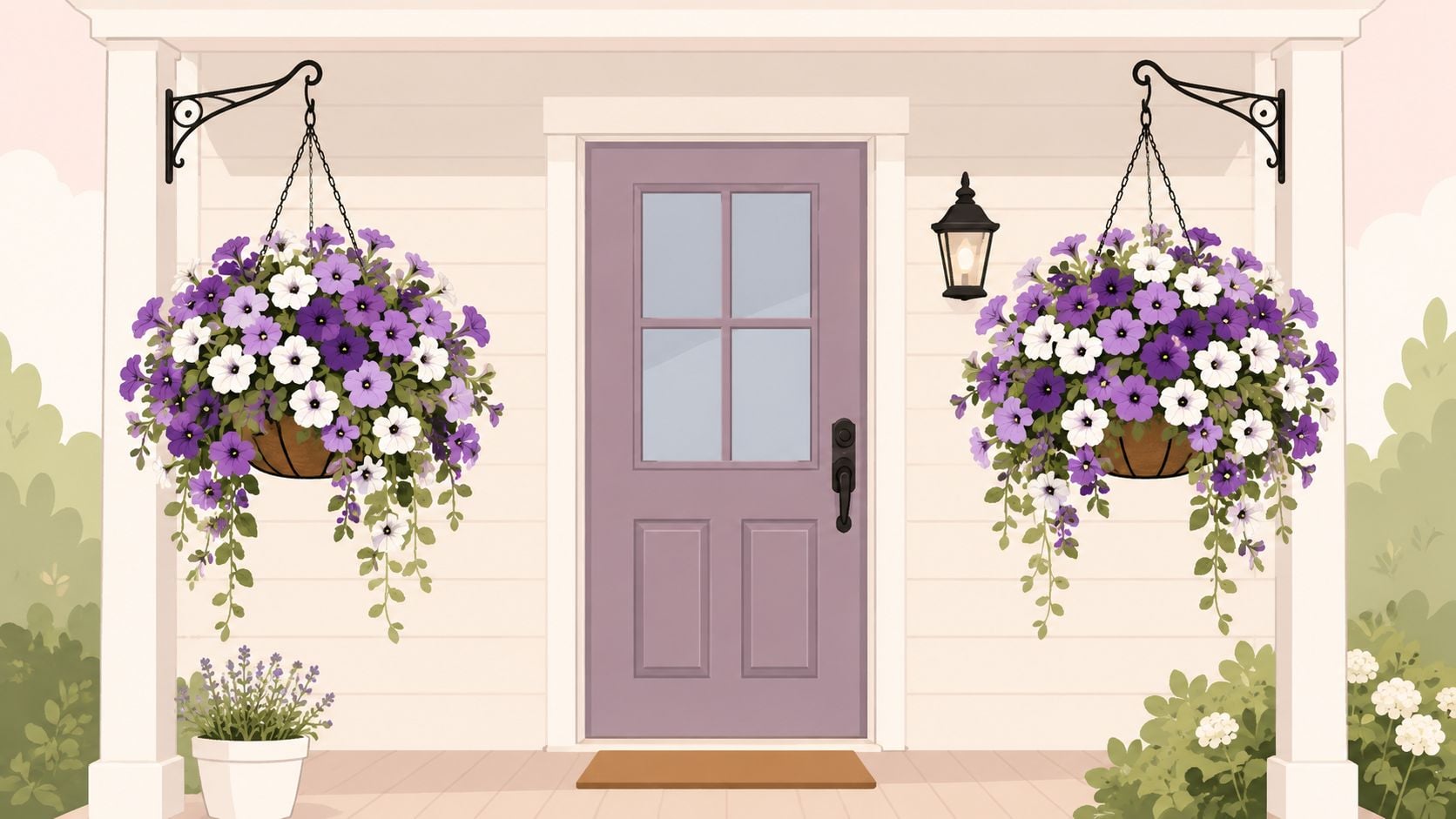
You pull into the driveway in late June, and the porch still looks a little flat. The railing is fine, the door is fine, but nothing draws the eye up. Hanging baskets fix that quickly, and in Greene County and around Albany, trailing petunias are still one of the easiest ways to get a full, welcoming porch without crowding the steps.
They earn their keep on porches where floor space is limited. They also soften square posts, plain soffits, and long stretches of siding. On older village homes, farmhouses, and simple ranch entries, that bit of height makes the whole entrance feel more finished.
The catch is light. Petunias want real sun, and a basket under a deep covered porch will never perform like one hanging off an open facade. If your front entry gets half a day of sun or more, they are usually a safe bet. If it stays shaded most of the day, choose a different basket plant instead of fighting the site all summer.
Get the basket size and color right
In our Upstate weather, basket size matters as much as the flower choice. Wind dries them out fast, especially on porches that face west or sit exposed on a hill. I usually steer homeowners toward larger baskets than they first planned because small ones can look stressed by July, even with regular watering.
Color should support the house, not compete with it. Purple and white look crisp against white trim and cooler paint colors. Pinks and reds warm up gray siding, stained wood, and brick. On a small porch, stick with one color family so the entry reads as one composition. The same idea works indoors and out. Repeating tones from the door, cushions, or planters helps the porch feel connected to the home, much like these simple color layering ideas for a pulled-together space.
A few practical habits keep baskets looking full past the first flush of bloom:
- Use a loose potting mix: Dense soil stays soggy after rain and then dries into a hard mass.
- Feed on a schedule: Petunias bloom hard, and baskets need regular fertilizer to keep replacing flowers.
- Trim once they get leggy: A light midsummer haircut usually brings them back thicker.
- Water thoroughly: A quick splash is not enough. Water until the basket is fully saturated and excess drips out.
One last trade-off. Hanging baskets look best when someone is willing to pay attention to them. For homeowners who want strong color and do not mind watering, they are one of the best front porch flower ideas around. For a low-maintenance porch, use fewer baskets and make each one larger.
2. Boxwood Shrubs with Flowering Accent Plants
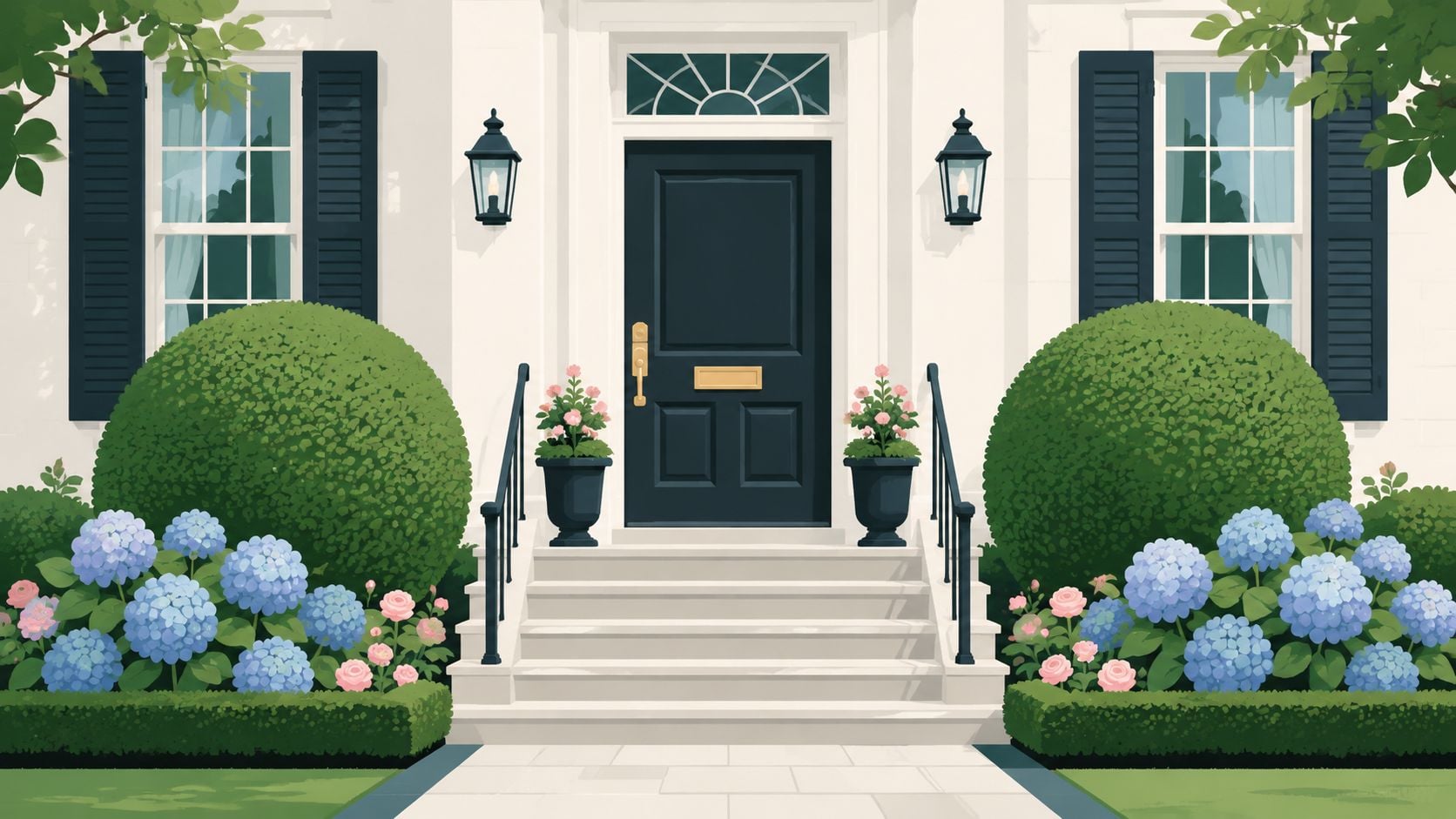
Some front porch flower ideas rely on abundance. This one relies on discipline. Boxwood gives an entry shape, steadiness, and year-round presence, which is valuable in Upstate New York where the porch has to look decent long after summer color fades.
A pair of boxwoods beside the steps or flanking the walk creates a visual frame. Then the flowers can do the seasonal work. Hydrangeas, roses, or softer perennials nearby keep the entry from feeling stiff.
Use structure first, flowers second
This approach suits formal colonials, older brick homes, and porch entries that already have symmetrical lines. It also helps large porches feel anchored. Without some evergreen structure, flowers alone can look temporary and scattered.
Independent porch styling guidance often treats planters as architectural elements, highlighting tall columns, urns, and square stone forms along with thriller, filler, and spiller planting. That same principle applies to boxwood. It should read as architecture first, greenery second.
A few trade-offs come with this look:
- Best result: Clean, timeless framing that works in every season.
- Main risk: Planting too close together and forcing constant pruning.
- Common mistake: Adding loud annual color everywhere around the boxwood, which weakens the calm, refined effect.
Boxwood works best when the flowers support it, not compete with it.
For homeowners trying to make the whole entrance feel more intentional, the same idea shows up indoors too. Tip Top's advice on how to create an eye-catching room mirrors that balance of structure, focal point, and restraint.
3. Ornamental Grasses with Mixed Perennials
A porch in late August around Albany often needs more than another round of color. It needs shape, motion, and plants that still look good once the nights start cooling off. Ornamental grasses paired with mixed perennials handle that job well. They soften porch posts, break up hard rail lines, and keep the entry from looking flat after midsummer bloomers slow down.
This is one of the better options for farmhouse porches, country homes, and newer builds that need a less formal planting style. Around Greene County, it also fits properties with open wind exposure, where stiffer annual displays can look tired by August. The goal is a planting that feels relaxed but still controlled.
Why this mix works in Upstate New York
Our local season makes texture matter. A grass such as feather reed grass or switchgrass keeps its form well into fall, while coneflower, black-eyed Susan, salvia, and asters carry color across different parts of the season. On a porch bed or in large containers, that staggered timing keeps the front entry from peaking all at once and then fading early.
Mixed light is another reason this combination works. Many porches in this area get morning sun on one side and afternoon shade on the other because of rooflines, maples, or neighboring houses. Grasses and perennials give more flexibility than a single-color annual planting, as long as you match the plant to the exposure instead of forcing one recipe across the whole porch.
A practical layout usually works best:
- Back layer: One upright grass with a defined shape.
- Middle layer: Two or three flowering perennials with different bloom times.
- Front edge: A lower plant that softens the rim of the bed or planter without hiding it.
Restraint matters here. One strong grass in a container usually looks better than three cramped together. I see that mistake a lot on smaller porches in older Hudson Valley and Capital Region homes. The planting starts with good texture, then turns bulky by July.
Soil and drainage matter too, especially in containers that sit under partial roof cover and miss steady rainfall. Use a potting mix that drains well but still holds enough moisture to get through hot stretches. Leaves & Soul container gardening tips give a solid overview of what to look for if you're building mixed porch planters.
This style also pairs well with the rest of the porch, not just the planting bed. Grasses have a lighter, more natural look, so they sit best beside simple rockers, woven seating, or clean-lined outdoor pieces instead of overly ornate accessories. If you want the whole entrance to feel tied together, these home decor ideas for a comfortable, pulled-together space follow the same principle of balancing structure, softness, and everyday use.
A few trade-offs come with this approach:
- Best result: Long season of interest with movement, texture, and less dependence on nonstop blooms.
- Main risk: Overcrowding the planting and losing the individual shape of the grass.
- Best use: Larger containers, foundation beds near the porch, and homes that suit a softer, natural style.
- Common mistake: Choosing floppy grasses that sprawl into the walkway or block steps by late summer.
4. Seasonal Container Gardens with Mixed Annuals
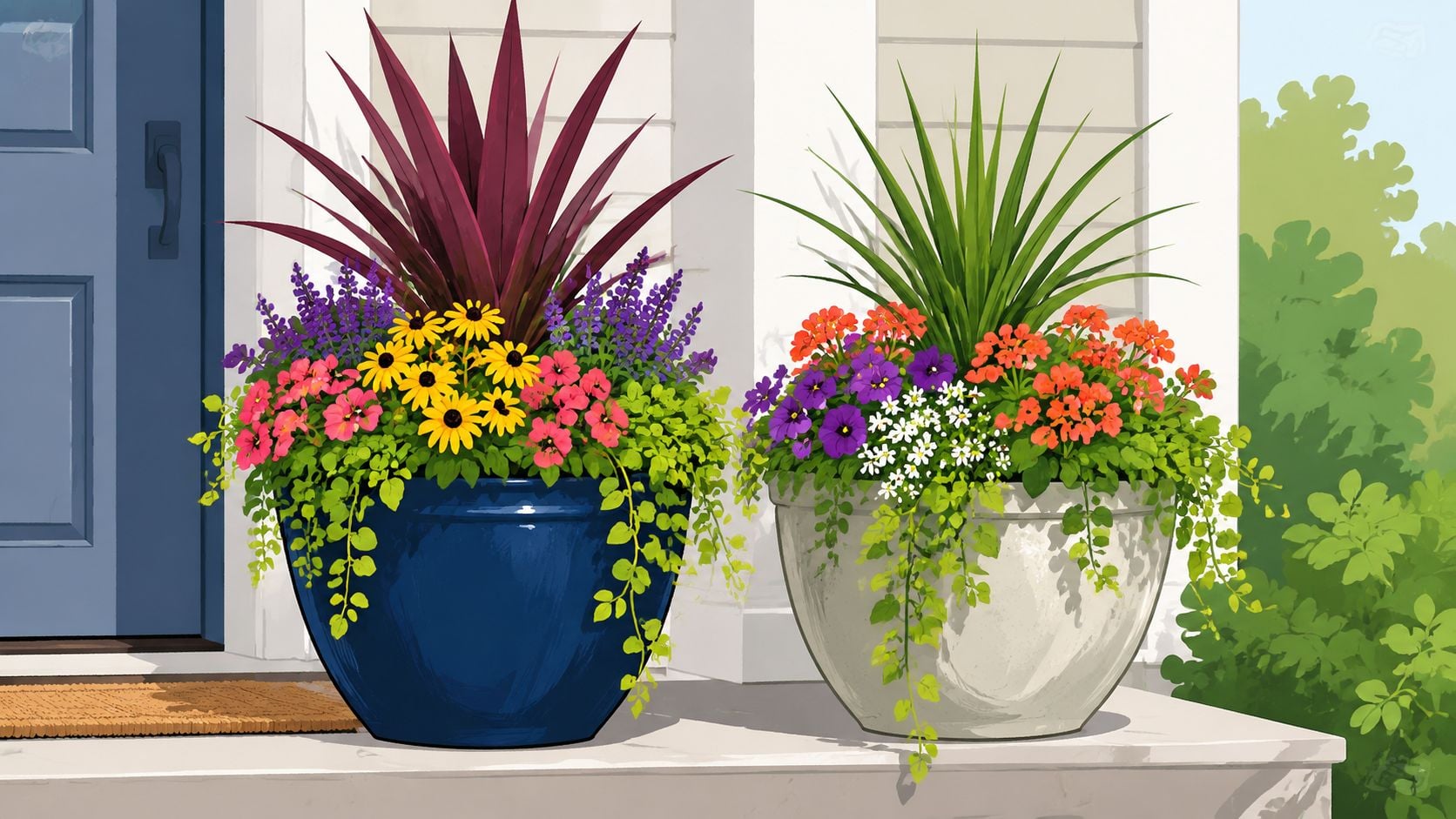
Seasonal containers are one of the most flexible front porch flower ideas because they can change with the house and the calendar. Spring can lean soft and fresh. Summer can go bright. Fall can turn textural and warm. That adaptability is a big reason container gardening has become such a standard part of home presentation.
The broader gardening base is large too. The U.S. Census Bureau's 2018 National Gardening Survey estimated that 71.5 million U.S. households participated in some form of gardening. Porch containers fit that mainstream appeal because they work in small spaces and let homeowners refresh an entry without construction.
Build containers like a designer
Contemporary porch guidance consistently returns to a few practical design rules. Matching planters on both sides of the front door is one of the most timeless arrangements. Oversized containers suit large porches, while compact porches usually look better with fewer, smaller planters rather than a crowded collection.
The planting itself should be layered. The classic thriller, filler, spiller formula still works because it gives height, body, and softness in one container. A strong upright center, a mounding middle plant, and a trailing edge plant nearly always reads better than three plants of the same height.
For homeowners trying to stretch the budget, one smart trick deserves more attention. A porch tutorial on resource-efficient container gardening notes that placing smaller nursery pots inside larger containers can save a lot of soil, while layered planting and leaving room for growth helps long-term performance. That matters on big porches where oversized pots can otherwise become expensive to fill.
For soil basics and container setup, Leaves & Soul's container gardening soil tips are a helpful companion read.
5. Climbing Vines and Flowering Trellises
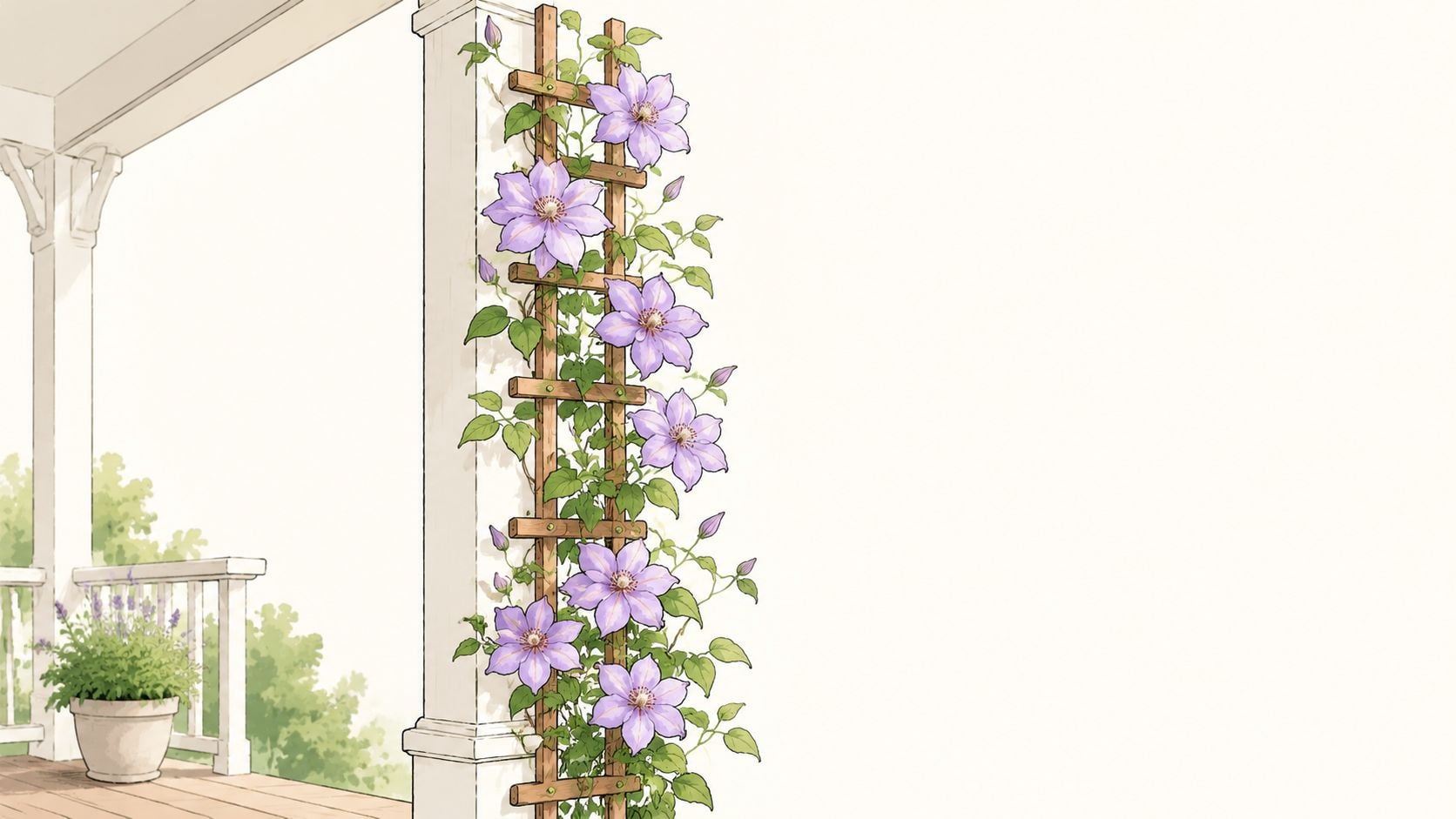
Vertical planting can rescue a plain porch. When a wall feels blank or a post looks too harsh, a flowering vine can soften the whole entry and add a lot of character without taking up much floor area. Clematis is often the favorite for that reason, especially on cottage-style homes and older porches in the Capital Region.
This is one of the best choices for small porches where every square foot matters. A trellis or narrow support gives the eye something to travel up, which makes the entry feel taller and more finished.
Train the plant before it trains the porch
Vines need a sturdy plan from the start. That means putting up the support first and choosing a vine that suits the site. Fast growth sounds appealing, but it can become a headache if the plant overwhelms railings, wraps around lighting, or traps moisture against trim.
A few practical pairings work well:
- Clematis on a porch post trellis: Good for refined color and a lighter, more romantic look.
- Climbing hydrangea on a substantial surface: Better for mature homes with room and patience.
- A narrow trellis beside the door: Useful when the porch needs height but can't spare floor space for more pots.
A vine should frame the entry, not swallow it.
This is also where porch décor matters. The more vertical plant material added, the simpler the furnishings should be. Tip Top's home décor tips reflect the same principle indoors, where layered accents work best when the larger lines of the room stay clear.
What usually fails is weak support. Lightweight lattice and undersized hooks rarely hold up once the plant fills out and catches rain or wind.
6. Rose Gardens with Complementary Underplantings
Roses near the front porch can be beautiful, but they aren't the right answer for every homeowner. They suit traditional houses, historic properties, and anyone willing to stay involved with pruning, cleanup, and disease watching. When they're paired with lavender, catmint, or salvia, the result looks layered and intentional rather than stiff.
The best porch rose plantings in Upstate New York are usually the ones that keep expectations realistic. Shrub roses tend to fit porch life better than fussier types because they carry the form well and don't ask for as much coddling.
Keep roses honest about maintenance
Roses need sun, airflow, and room. A cramped corner beside the porch almost always leads to frustration. Wet leaves, reduced circulation, and crowded stems invite problems that make the planting look rough fast.
A workable front-entry rose layout usually follows this pattern:
- Main rose layer: One or two strong shrubs, not a whole collection.
- Underplanting layer: Lavender, salvia, or catmint for contrast and a softer base.
- Breathing room: Enough space that the rose doesn't scrape siding, steps, or railings.
The trade-off is simple. Roses give more romance and fragrance than many porch plants, but they ask more in return. If a homeowner wants a set-it-and-forget-it planting, hydrangeas or mixed containers are often easier.
Still, for the right house, roses are hard to beat. A white porch with soft pink or cream roses and a restrained underplanting still reads as classic Upstate charm.
7. Hydrangea Plantings with Structured Layers
A lot of front porches in Albany and Greene County need planting that looks settled fast. Hydrangeas do that job well. They give a porch real weight, soften hard corners, and keep the entry from feeling bare even when the rest of the bed is simple.
They also suit the way many Upstate NY homes are built. A porch often has railings, steps, columns, and furniture competing for attention. Hydrangeas help organize all of that visual noise because their form is full and readable from the street.
Pick the hydrangea to match the exposure and the house
Start with light, then work backward to bloom style and size. On hotter, brighter porch fronts, panicle hydrangeas usually handle the site better and hold their shape with less fuss. On porches with gentler morning sun or filtered light, bigleaf types can work, but they are less forgiving after a rough winter.
Placement matters as much as plant choice. I usually treat hydrangeas as the middle layer near a porch, not the only feature in the bed and not something jammed tight against the foundation. That gives them room to mature and leaves space for lower plants that keep the base from looking leggy.
A layered hydrangea bed often works best with three clear levels:
- Back or anchor layer: Porch railing, foundation shrubs, or the house itself
- Middle layer: One hydrangea or a matched pair, scaled to the bed
- Front layer: Low annuals, heuchera, dwarf grasses, or neat mounding perennials
That structure looks ordered without feeling stiff.
The common mistake is choosing a hydrangea for the flowers alone, then planting it where snow gets dumped off the walk or where roof runoff hits all winter. Those are hard spots. In our area, that kind of stress shows up fast in broken stems, delayed leaf-out, and a shrub that never really looks balanced.
For style, the pairings are pretty straightforward. Panicle hydrangeas with boxwood fit formal and colonial homes. Hydrangeas with grasses or darker foliage perennials suit newer builds and simpler farmhouse-style porches. If the porch is also a sitting area, keep the bed calm rather than cramming in too many bloom colors. The furniture, cushions, and containers already add enough detail.
That same approach carries into furnishing the porch. Tip Top's guide on home design and where to begin uses the same practical order. Start with the main anchors, then add smaller elements that support the space instead of fighting it.
8. Pollinator-Friendly Native Plant Gardens
Native-leaning porch plantings can look beautiful, but they need a little editing to avoid looking accidental. Bee balm, black-eyed Susans, coneflowers, and Joe-Pye weed all have strong garden value, especially on properties where the porch blends into a broader outdoor area rather than standing apart from it.
This style fits country homes, farmhouse entries, and transitional gardens that want a softer connection to the surrounding yard. It's also a smart choice for homeowners who prefer less fussy planting once the bed is established.
Make native plantings look intentional
The key is repetition and restraint. A porch bed shouldn't look like a sample row of everything at the garden center. Repeating a smaller number of plants gives the display rhythm and keeps it from turning chaotic.
A practical native porch layout often works best when it includes:
- A clear backbone: One grass or structural perennial repeated.
- Two or three flowering natives: Enough to create bloom waves without visual clutter.
- A clean edge: Stone, metal edging, or even a disciplined mulch line to signal that the planting is deliberate.
Native plantings look their best when the edges are crisp and the middle is allowed to feel a little loose.
What usually goes wrong is scale. Joe-Pye weed and similar plants can overpower a shallow porch bed. They're better as background plants unless the house has generous space and a larger garden setting to absorb them.
9. Fragrant Flower Gardens with Sensory Focus
Fragrance changes how a porch feels. Color reads from the street, but scent is what someone notices when they step onto the boards, settle into a rocker, or open the front door after work. That makes fragrant planting especially effective on porches that people use rather than just pass through.
Roses, lavender, peonies, and lilacs are the usual favorites in this region. Each gives something different. Lavender is cleaner and lighter. Roses feel traditional. Peonies deliver a brief but memorable season. Lilacs connect strongly to older Northeast gardens.
Place scent where people actually sit
The best fragrant gardens are placed close to seating, pathways, and entry points. Planting a highly scented flower out by the curb may look nice, but it won't shape the porch experience the same way. This is one reason smaller-scale fragrant plants often outperform larger shrubs in a true porch design.
A few smart placements stand out:
- Lavender near steps or railing corners: Fragrance catches easily as people brush past.
- Roses near a sitting area: Best where there's airflow but not constant harsh wind.
- Peonies in adjacent beds: Great for seasonal impact without crowding the walkway.
This is also the category where restraint matters most. Mixing too many strong scents can feel muddled instead of pleasant. One dominant fragrance, supported by a second lighter note, usually creates a better experience.
For homes with porches designed as real outdoor rooms, this sensory layer pairs well with comfortable seating, outdoor side tables, and lighting that invites lingering into the evening.
10. Year-Round Interest Gardens with Architectural and Evergreen Elements
Some of the strongest front porch flower ideas barely rely on flowers at all for part of the year. In Upstate New York, that's practical. A porch has to hold together through thaw, mud season, frost, and long stretches when bloom isn't doing the heavy lifting. Evergreens, seed heads, berries, and strong plant shapes are what keep the entry looking intentional.
This style is especially useful on prominent front-facing homes where the porch stays visible all year. It also suits homeowners who don't want to rebuild the look from scratch every season.
Build the winter view on purpose
A good year-round planting starts with the bones. Boxwood, holly, or other hardy evergreen forms create permanence. Ornamental grasses add motion and winter texture. Seed heads from plants such as rudbeckia or sedum can stay attractive long after frost, especially against snow.
The strongest multi-season entries usually include these layers:
- Evergreen backbone: The constant structure around steps, corners, or foundation edges.
- Warm-season flower layer: Summer and fall bloom for color.
- Cold-season texture: Grasses, branches, berries, and persistent seed heads.
This style also connects naturally to the porch as an outdoor living space. A well-made rocker, bench, or small seating group looks better when the surrounding planting has visual weight in every season. Tip Top's ideas for designing a captivating patio translate well to front porches too, especially when furniture and planting are planned as one composition rather than separate projects.
10 Front Porch Flower Ideas Comparison
| Planting Option | Implementation complexity | Resource requirements | Expected outcomes | Ideal use cases | Key advantages |
|---|---|---|---|---|---|
| Classic Hanging Baskets with Trailing Petunias | Low, simple planting and hanging | Moderate watering, full sun, seasonal replacement | Instant seasonal color, continuous blooms for months | Porches, small spaces, renters, quick curb appeal | Affordable, versatile, instant visual impact |
| Boxwood Shrubs with Flowering Accent Plants | Moderate, planting and periodic shaping | Low maintenance once established, spacing and occasional pruning | Structured year‑round greenery with seasonal accents | Formal/upscale homes, traditional architecture | Evergreen structure, polished look, increases value |
| Ornamental Grasses with Mixed Perennials | Moderate, planning and spacing for groups | Low water after establishment, initial planting effort | Textural movement, seasonal interest, wildlife attraction | Sustainable, contemporary, low‑maintenance landscapes | Drought‑tolerant, perennial returns, cost‑effective |
| Seasonal Container Gardens with Mixed Annuals | Low–Moderate, frequent seasonal changes | High watering, regular soil and plant replacement | Highly changeable displays matching seasons or décor | Busy homeowners, renters, those wanting variety | Maximum flexibility, portable, instant dense displays |
| Climbing Vines and Flowering Trellises | High, requires structures and training | Strong supports, regular pruning, time to establish | Vertical drama, privacy screening, softened architecture | Small porches, screening needs, accenting entryways | Maximizes vertical space, dramatic architectural interest |
| Rose Gardens with Complementary Underplantings | High, dedicated care and management | Regular pruning, pest/disease control, full sun | Timeless blooms, fragrance, cut‑flower supply | Traditional/historic homes, enthusiasts, romantic landscapes | Classic beauty, fragrance, high perceived value |
| Hydrangea Plantings with Structured Layers | Moderate, correct siting and pruning | Consistent moisture, soil amendments for color, space | Large, showy seasonal blooms and reliable regional performance | Upstate NY, cottage or formal porches | Reliable in region, big visual impact, long bloom period |
| Pollinator-Friendly Native Plant Gardens | Moderate, species selection and ecosystem planning | Low water after establishment, native plant knowledge | Supports biodiversity, low long‑term maintenance | Conservation‑minded homeowners, naturalistic gardens | Ecological benefits, low inputs, pollinator support |
| Fragrant Flower Gardens with Sensory Focus | Moderate, careful timing and variety selection | Specific site needs for scent producers, attentive care | Multi‑sensory entry experience, memorable scent moments | Seating areas, homeowners valuing scent and nostalgia | Strong fragrance, therapeutic effects, memorable entries |
| Year‑Round Interest Gardens with Architectural and Evergreen Elements | High, complex seasonal planning and design | Diverse palette, initial design effort, layered maintenance | Continuous visual interest across seasons, winter structure | Homeowners wanting multi‑season appeal, cold climates | All‑season beauty, reduced need for seasonal replanting, structural depth |
Your Upstate NY Porch Maintenance Calendar
Keeping a front porch beautiful in the Capital Region means working with the seasons instead of fighting them. Upstate entries take a beating from snow, road grit, wind, and summer heat trapped against siding and steps. The good news is that porch planting is one of the most manageable home upgrades when it follows a simple routine.
Spring (March-May): Clean out winter debris first. Old leaves packed behind pots or under benches hold moisture and make the entry look neglected. This is also the time to prune roses and hydrangeas appropriately for the type, refresh container soil, and start cool-tolerant color once conditions allow.
Summer (June-August): Watering becomes the job that can't be skipped, especially for hanging baskets and containers near reflective heat. Deadheading petunias, roses, and many annuals keeps the display looking fresh instead of stretched and exhausted. If the porch is partly shaded, keep an eye on whether sun-loving plants are blooming well enough to justify their spot.
Fall (September-November): Switch tired summer containers out before they collapse. Mums, ornamental kale, grasses, and late-season texture carry a porch far better than fading annuals. This is also the right season to leave some coneflowers and grasses standing if the goal is winter structure rather than a bare, cleaned-out look.
Winter (December-February): The porch garden becomes more about form than bloom. Evergreens, branches, berries, and sturdy containers do the visual work now. Before the ground freezes, shrubs near the porch should go into winter well watered, and lightweight pots should be checked so they don't crack or shift.
A porch usually looks best when the flowers support the life happening there. That might mean hanging baskets above a pair of rockers, tall planters framing a bench, or hydrangeas softening the edge of a wide farmhouse porch. Tip Top Furniture & Mattresses has helped homeowners across Freehold, Albany, Schenectady, Troy, and the wider Capital Region create comfortable homes since 1978, with professional design services available since 1984. That one-stop approach matters when the front entry needs to connect with the rest of the home.
Homeowners planning a fuller update can explore living room furniture collections, browse home décor selections, review flexible financing options, or look through the Clearance Corner for budget-friendly finds. The same thoughtful choices that make a porch inviting can carry all the way inside.
Ready to turn the front porch into a welcoming extension of the home? Tip Top Furniture & Mattresses offers local design help, custom ordering, flexible financing, and a historic Freehold, NY showroom that serves homeowners across Albany, Greene County, and the Greater Capital Region. Visit the showroom for porch-friendly furniture, home décor, and whole-home inspiration that helps the entry feel just as comfortable and well-finished as the rooms inside.