A Homeowner’s Guide to the Folk Art Rug

A lot of homeowners reach the same point with a room. The sofa works, the tables are fine, the paint color is livable, but the space still feels flat. It looks furnished, not finished.
That's often where a folk art rug changes everything. It brings pattern, history, warmth, and a sense that the room belongs to real people, not a catalog page. In Albany-area homes, from older houses with wood floors to newer family rooms that need softness and color, that kind of character matters.
For families across the Capital Region, that search usually isn't for something flashy. It's for something with a little soul. A rug that feels collected, handcrafted, and easy to live with. That's why folk art rugs keep drawing attention from shoppers who want more personality than a standard mass-market pattern can offer.
Local homeowners who are already thinking about color and texture often find it helpful to start with broader room balance first, then layer in the rug. A practical example appears in this guide on adding color to a home without painting, which fits the same design challenge many Greene County and Albany homeowners face.
Table of Contents
- Introduction The Soul of a Room
- What Truly Defines a Folk Art Rug
- Authentic Craftsmanship vs Mass Produced Lookalikes
- Styling Folk Art Rugs in Your Albany Area Home
- Your Buyer's Guide to the Perfect Folk Art Rug
- Simple Care to Preserve Your Rug's Beauty
- Find Your Home's Next Heirloom in Freehold
Introduction The Soul of a Room
A folk art rug does more than fill empty floor space. It gives a room a center of gravity. In a living room, it can soften the gap between upholstered seating and wood furniture. In a bedroom, it can make the room feel settled instead of temporary. In a dining area, it can turn a table and chairs into a complete setting.
That matters in real homes around Albany, Schenectady, Troy, and Greene County, where rooms often have to do more than one job. A family room may also be a reading room, a gathering space, and the place where kids sprawl out on the floor. A handcrafted-looking rug helps those spaces feel layered and lived in.
Since 1978, local shoppers have leaned on family-run guidance when they want pieces that hold up and still feel personal. With professional design services available since 1984, there's a long history in Freehold of helping neighbors tie together furniture, flooring, and decor in a way that feels collected rather than rushed.
Practical rule: If a room feels cold, unfinished, or too uniform, the missing piece often isn't another table or lamp. It's texture underfoot.
What Truly Defines a Folk Art Rug
A broad tradition, not one single look
A folk art rug isn't one exact style. That's where many shoppers get tripped up. The term covers a broad handmade tradition shaped by everyday life, local materials, and practical household use.
Historically, rug-making has been part of American domestic interiors since the 17th century, and handmade folk rug traditions became especially significant in the mid-19th century, when hooking emerged as the most popular handmade rug technique in both number of examples and pattern variety, according to this museum-based historical overview of American folk rugs. The same historical record notes techniques such as yarn-sewing, shirring, appliqué, embroidery, knitting, crocheting, and braiding.
That matters because it changes how the category should be understood. A folk art rug isn't just “a colorful old rug.” It may be hooked, braided, sewn, or made with another handwork method. It may also reflect household creativity more than formal factory design.
Many homeowners who already appreciate tactile materials respond well to other handcrafted textiles too, including hand-woven home pieces that bring the same sense of texture and human workmanship into a room.
Why the category confuses shoppers
Museum coverage helps widen the picture. The American Folk Art Museum's exhibition on American rugs on beds, tables, and floors shows that these textiles weren't limited to one use or one room. That broader framing explains why some folk art rugs look like floor coverings, while others feel closer to coverlets, bed-rugs, or decorative textile art.
A homeowner in the Capital Region may see all of these described with similar language:
- Hooked rugs with bold flowers, animals, geometrics, or scenic motifs
- Braided rugs that feel humble, sturdy, and traditional
- Hand-knotted pieces with a more detailed, collector-oriented look
- Decorative textiles that may work on a wall, bed, bench, or floor
Some of the appeal comes from that flexibility. A folk art rug can work in a farmhouse, a traditional home, a layered eclectic room, or even a cleaner contemporary space that needs one warm, human element.
The best way to think about a folk art rug is as a handmade expression first, and a decorating style second.
This also explains why two rugs can both be called folk art and look completely different. One may be graphic and primitive in feeling. Another may be dense, intricate, and refined. Both can still belong in the same family of craft.
For Albany-area homes, that's good news. It means there isn't one “correct” folk art rug. There's only the rug whose color, texture, and spirit make the room feel more like home.
Authentic Craftsmanship vs Mass Produced Lookalikes
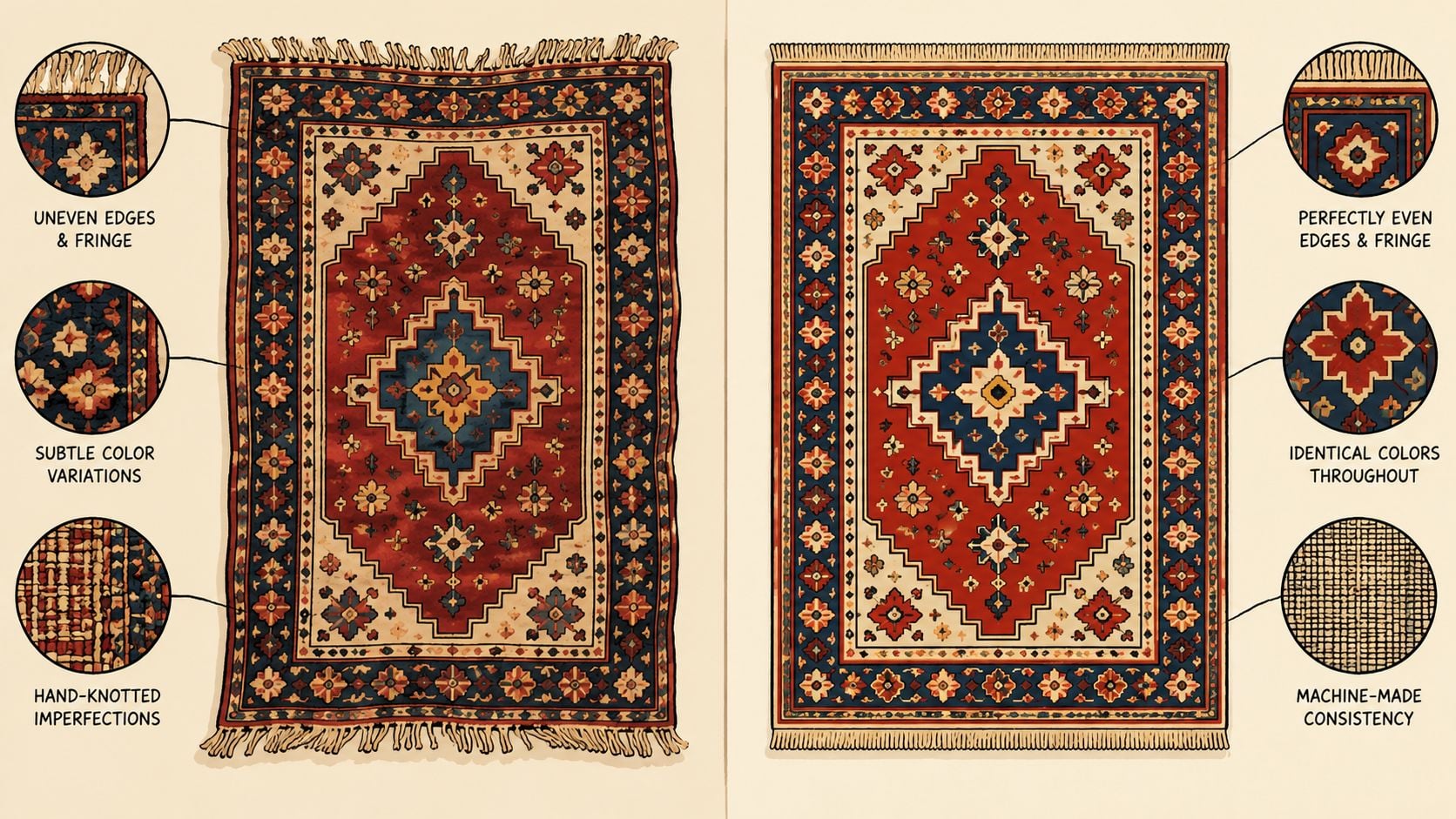
A lot of rugs borrow the look of handcrafted folk pieces without sharing the same construction. That doesn't automatically make them wrong for every buyer, but it does mean shoppers should know what they're paying for.
What to look for with your own eyes
One of the clearest quality checks is simple. Turn the rug over.
Guidance on handmade rug quality notes that buyers should inspect the back for closely spaced knots and check for hand-sewn edge binding, because these structural details indicate stronger craftsmanship and better resistance to fraying over time in comparison with machine-made alternatives, as explained in this guide to identifying a quality handmade rug.
When homeowners compare rugs in person, these differences usually stand out:
| Feature | Handcrafted quality sign | Common lookalike sign |
|---|---|---|
| Back of rug | Visible, closely spaced knot structure | Uniform synthetic-looking backing |
| Edges | Hand-finished feel, often less rigid | Perfectly identical machine finish |
| Pattern | Small variations that show handwork | Repetitive, overly exact print or weave |
| Overall feel | Substance, depth, texture | Surface-level imitation of age or craft |
Homeowners who care about joinery, solid wood, and long-term value often recognize the same principle in furniture. A rug with honest construction has a lot in common with the craftsmanship discussed in this explanation of mortise and tenon joint construction. The beauty comes from how it's made, not just how it's styled.
Why craftsmanship matters in daily family life
A handcrafted rug isn't only about tradition. It's about function. In a busy Albany family room, denser construction and better edge finishing help the rug handle foot traffic, furniture weight, and the steady wear of everyday use.
That's why mass-produced lookalikes can disappoint people who expected more substance. The color may be attractive online, but the rug may feel thin, flat, or short-lived once it's in a real room.
For shoppers building a layered interior, it often helps to study other antique-style pieces with the same mindset. This overview from Quote My Wall's drinks cabinet guide is useful because it shows how buyers can separate surface charm from construction details when evaluating older-looking furnishings.
A folk art rug should reward a closer look. If everything about it feels too perfect, too flat, or too standardized, it may be selling the mood of craftsmanship instead of the thing itself.
Styling Folk Art Rugs in Your Albany Area Home

The easiest way to use a folk art rug well is to let it anchor the room instead of compete with every piece in it. These rugs usually carry enough personality on their own. They don't need a dozen other strong patterns fighting for attention.
Living rooms that need warmth and structure
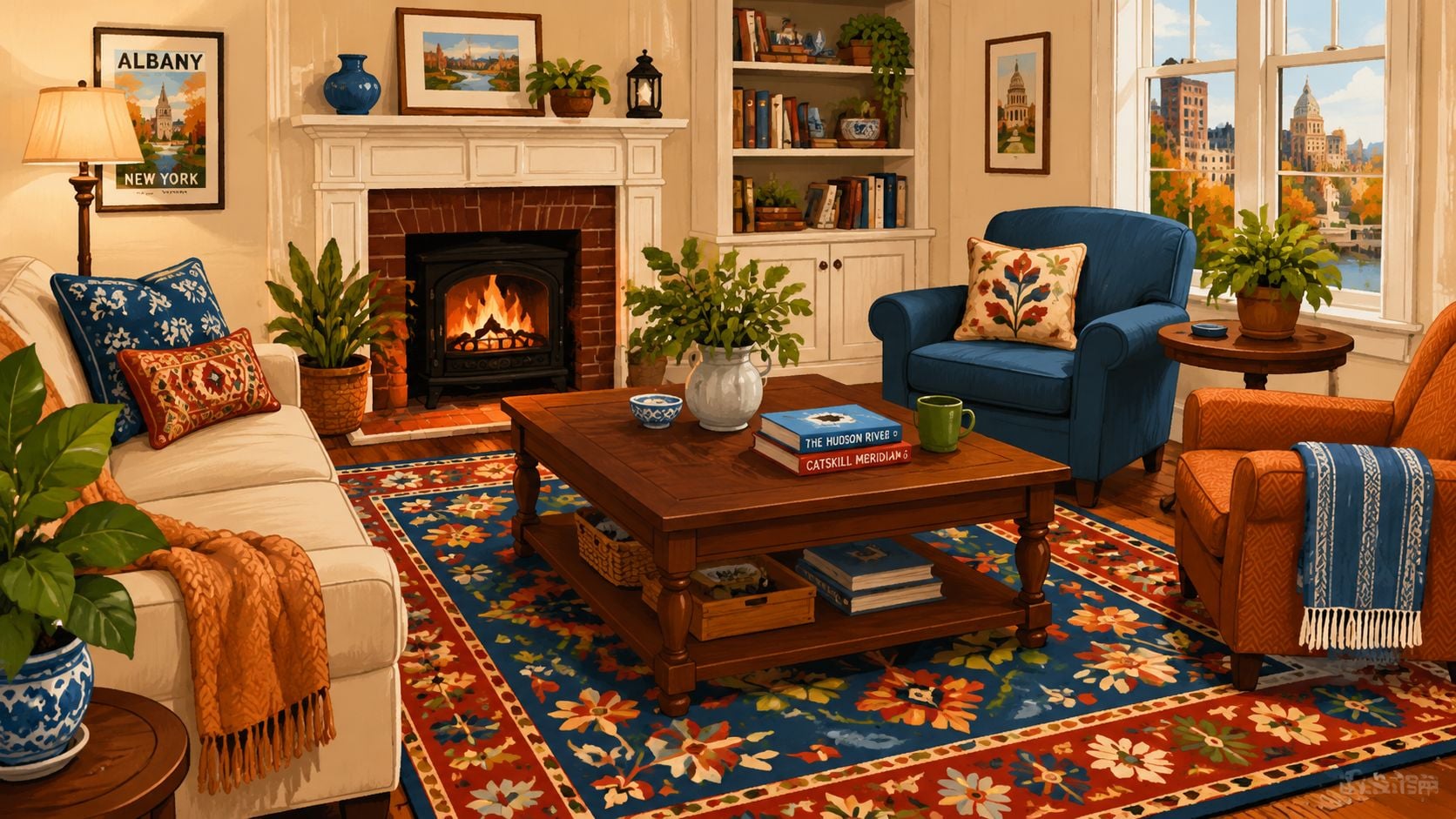
In a living room, a folk art rug works especially well under a seating group with upholstered furniture and wood accents. A hooked or braided look can soften a room with hard lines, while a denser hand-crafted piece can bring depth to a space that already has strong architecture, built-ins, or a fireplace.
For many Capital Region homes, the winning combination looks like this:
- Solid wood furniture nearby to echo the handmade feel
- One or two repeating rug colors picked up in pillows or window treatments
- Enough exposed flooring around the edges so the rug feels framed, not cramped
- Simple upholstery when the rug pattern is lively
Rooms with several patterns need restraint. A busy rug can still work beautifully, but the surrounding stripes, florals, or checks should feel related rather than random. This guide on mixing and matching patterns while finding balance is a helpful reference for homeowners trying to avoid visual clutter.
In many family rooms, the rug should be the storyteller and the sofa should be the listener.
Bedrooms, dining rooms, and mixed-use spaces
Bedrooms are often the most overlooked place for a folk art rug. Yet they may be the best fit for one. A rug with visible texture and handmade character can make a bedroom feel grounded, especially under a wood bed, beside a bench, or partly tucked under dressers and nightstands.
In dining rooms, the rug should support the table rather than steal the scene. Folk-inspired patterns with a little movement are often more forgiving than rigid formal layouts, especially in homes where the dining space also handles homework, coffee, or weekend overflow.
A few room-specific ideas help:
- Bedroom with painted furniture: Use a warmer folk art rug to keep the room from feeling too crisp.
- Dining area with wood table: Look for a rug that repeats one tone from the wood without trying to match it exactly.
- Open-concept main floor: Let the rug define the seating zone while the flooring carries visual continuity elsewhere.
- Older Albany home with hardwood: Choose a rug that softens and layers, not one that hides all the charm of the floor.
Flooring matters here. A rug looks different over dark hardwood than it does over light oak, laminate, or wall-to-wall carpet. Since room planning often involves all of those elements together, some shoppers consider coordinated help through local one-stop options, including furniture, decor, flooring, and area rug support from Tip Top Furniture & Mattresses when they want the whole room considered at once.
Your Buyer's Guide to the Perfect Folk Art Rug
Shopping for a folk art rug can feel confusing because the label isn't used consistently. One listing may describe a hand-knotted wool rug with vegetable dyes. Another may use the same phrase for a bright vintage-look hooked rug. Neutral market information on folk art rugs and how the term is used in commerce makes that inconsistency clear, and it's exactly why buyers should ask more questions before falling in love with a photo.
Start with the three questions that matter most
Before size, color, or budget, three questions help narrow the field.
What is it made of?
Materials affect feel, longevity, and the way a rug ages. Natural fibers and handwork often appeal to buyers who want authenticity and repairability, while imitation materials may prioritize appearance first.
How was it constructed?
A folk art rug may be antique, newly handmade, vintage-style, hooked, braided, or machine-made with a handcrafted look. None of those should be treated as the same thing.
Where will it live?
A bedroom rug can prioritize softness and atmosphere. A family room rug needs stamina. A dining rug needs enough visual weight to hold the furniture arrangement together.
A simple shopping checklist
When homeowners in Albany, Troy, or Schenectady are standing in a showroom or scrolling listings at night, this checklist keeps the decision grounded.
- Clarify the category first. Ask whether the rug is antique, contemporary handmade, or machine-made in a folk style.
- Check the construction. Look at the back, edges, and overall finish. Construction tells more than a styled product photo.
- Think about room traffic. Entry-adjacent spaces, TV rooms, and play areas demand more from a rug than a formal guest bedroom.
- Use the furniture footprint. The rug should relate to the seating or bed placement, not float awkwardly in the center of the room.
- Let age be evident. If a rug is described as old or vintage-inspired, its wear and finish should make sense visually.
- Ask about origin. Buyers don't need a lecture on provenance, but they do need a clear answer on where and how the rug was made.
For homeowners still working out proportion, this practical article on how to find your ideal area rug is a helpful companion because it focuses on matching rug size to room layout.
A few shopping paths make sense depending on the household:
- For a one-of-a-kind look: Browse changing floor samples, decor arrivals, or special finds in clearance areas.
- For a very specific room plan: Ask about custom ordering so the rug works with the furniture scale, wood tones, and color palette already in play.
- For a larger home refresh: Consider financing if the rug is part of a whole-room purchase rather than a stand-alone accessory.
The main point is simple. Buyers should never assume the words “folk art rug” tell the whole story. Construction, materials, and origin matter just as much as style.
Simple Care to Preserve Your Rug's Beauty
A well-chosen folk art rug should be lived with, not treated like it's too delicate for family life. Regular care doesn't have to be complicated, but it should be consistent.
Everyday habits that make a difference
Routine maintenance usually comes down to gentleness and attention.
- Vacuum carefully. Use suction without an aggressive beater bar when possible, especially on handcrafted textures or raised hooked surfaces.
- Rotate the rug. Turning it periodically helps distribute wear more evenly in sunny rooms or heavy traffic paths.
- Watch the edges. If a corner starts to curl or an edge shows stress, address it early before wear spreads.
- Use the right pad. A good pad helps with grip, reduces shifting, and adds a little cushioning underfoot.
Small maintenance habits protect handmade pieces better than occasional rescue efforts after years of neglect.
What to do when spills happen
Most family homes deal with spills. The key is speed and restraint.
Blot first. Don't scrub. Scrubbing can push moisture and color deeper into the fibers or distort the texture on more handcrafted surfaces.
If the spill is substantial or the rug seems older and more delicate, professional cleaning is the safer path. That's especially true when the rug has visible handwork, older dyes, or sentimental value. A calm response usually protects the rug better than aggressive home stain treatment.
Find Your Home's Next Heirloom in Freehold
A folk art rug brings something many rooms are missing. Not just color. Not just softness. It brings evidence of the human hand, and that changes the feeling of a space.
For homeowners across Albany, Schenectady, Troy, and the wider Capital Region, that makes these rugs a smart design choice when the goal is a home that feels layered and personal. They sit especially well with solid wood furniture, older architectural details, and rooms that need warmth without looking overdecorated.
There's also a lesson here that applies to decorating more broadly. Buyers often do best when they learn the true character of a piece before bringing it home. Even outside interiors, guides such as this saguaro cactus buying guide show the same principle at work. Ask what it is, how it was grown or made, and what kind of care it requires. That approach leads to better long-term choices.
For families drawn to craftsmanship, a folk art rug often pairs naturally with handmade wood furniture and other lasting pieces. Shoppers exploring that direction can also look at Amish furniture near Albany and the Capital Region to see how handcrafted furnishings and textile character can work together in one room.
A well-chosen rug doesn't just decorate the floor. It becomes part of the home's story.
Homeowners across Freehold, Albany, Schenectady, Troy, and the Capital Region can explore room ideas, handcrafted furnishings, and coordinated decor at Tip Top Furniture & Mattresses. A visit to the showroom can help narrow down style, scale, flooring coordination, and custom options for a space that needs more warmth and personality.