A 2 Story Playhouse Guide for Upstate NY Homeowners

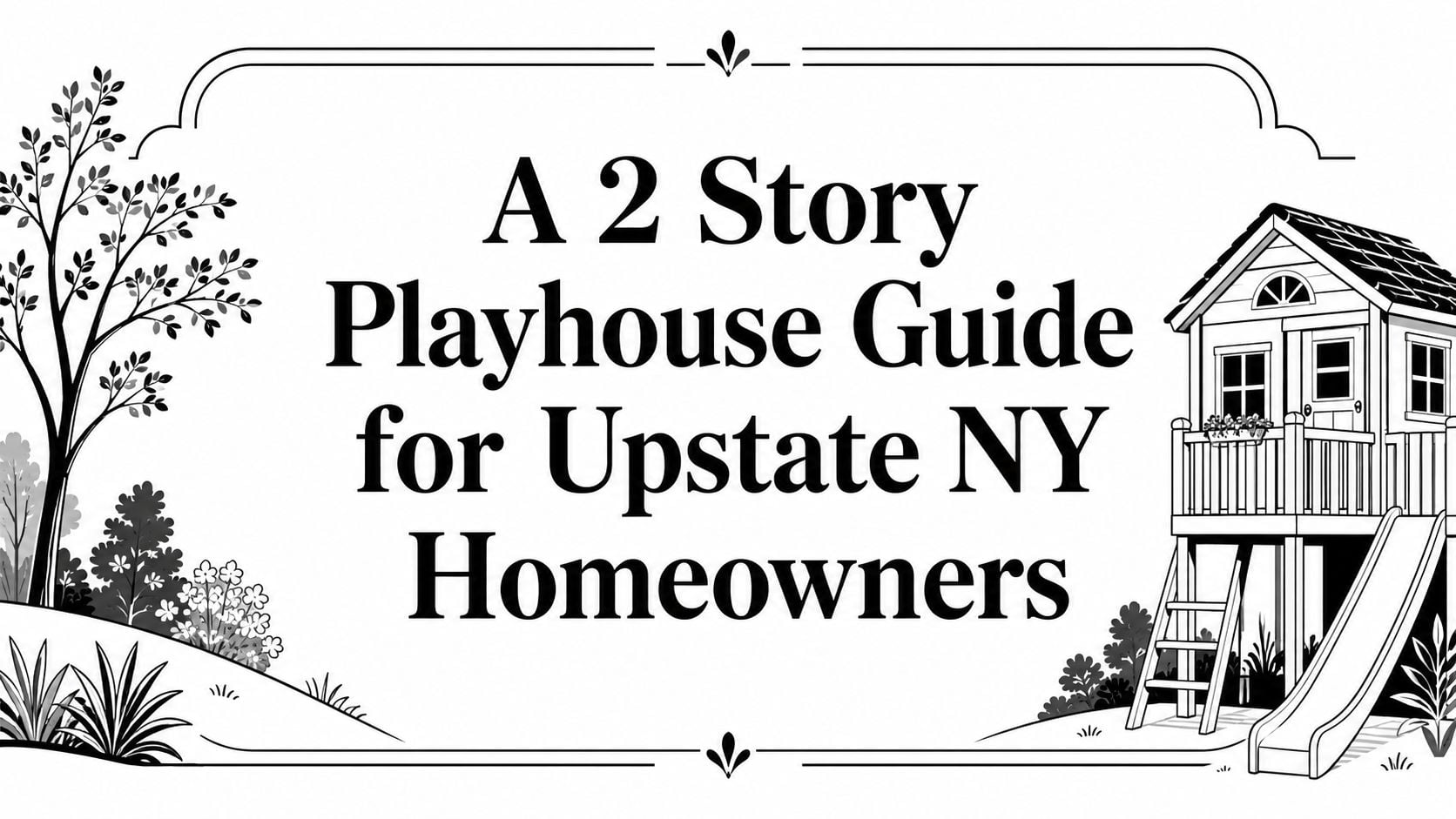
A lot of families in Freehold, Albany, Schenectady, Troy, and across the Capital Region reach the same point at about the same time. The swing set feels small, the kids want a place that feels like their own, and the backyard starts looking less like grass and more like opportunity. That's when a 2 story playhouse moves from a fun idea to a serious project.
For Upstate New York homeowners, that project has more moving parts than most online inspiration galleries admit. A two-level structure has to fit the yard, hold up through four seasons, stay safe for active play, and make sense over the long run. Families often start with style and excitement, then realize the critical questions are about site planning, guardrails, snow, maintenance, and whether a larger playhouse may trigger local rules.
That practical side matters. A backyard structure should create memories, not a list of repairs and regrets. Families already thinking about outdoor living often find it helps to view the playhouse as part of the whole property, much like a patio or sitting area, and that's where outdoor space planning ideas can help frame the yard as one connected family zone. For early inspiration on keeping the project grounded, these budget-friendly playhouse tips are also useful.
Table of Contents
- Your Guide to Creating Backyard Magic
- What Makes a Two Story Playhouse So Special
- The Big Decision Build Buy or Custom Order
- Planning Your Playhouse Footprint and Size for NY Yards
- Essential Materials and Construction for Upstate New York Weather
- Safety First Local Codes and Essential Playset Standards
- Budgeting for Your Playhouse What to Really Expect
Your Guide to Creating Backyard Magic
A 2 story playhouse works best when the family treats it like a small piece of architecture instead of a toy dropped into the yard. That shift changes every decision. Placement becomes more important, material choices get more serious, and the structure starts serving as a backdrop for years of make-believe, neighborhood visits, and quiet outdoor time.
There's history behind that appeal. The idea of multi-level playhouses isn't new. Historical records point to Moscow's “Amusement Palace” in 1652 and to detailed wooden playhouses in the Victorian era used for children's tea parties and social play, showing that immersive miniature architecture has been around for centuries (historical playhouse background).
A good playhouse doesn't just fill a corner of the yard. It gives children a place that feels scaled to them, with enough detail to keep the play going.
For families in Greene County and the greater Albany area, that old idea meets very modern concerns. Snow load, wet springs, uneven ground, and local permit questions all shape what kind of playhouse works here. That's why the most successful projects balance imagination with the same common-sense planning used for decks, sheds, and outdoor gathering spaces.
What Makes a Two Story Playhouse So Special
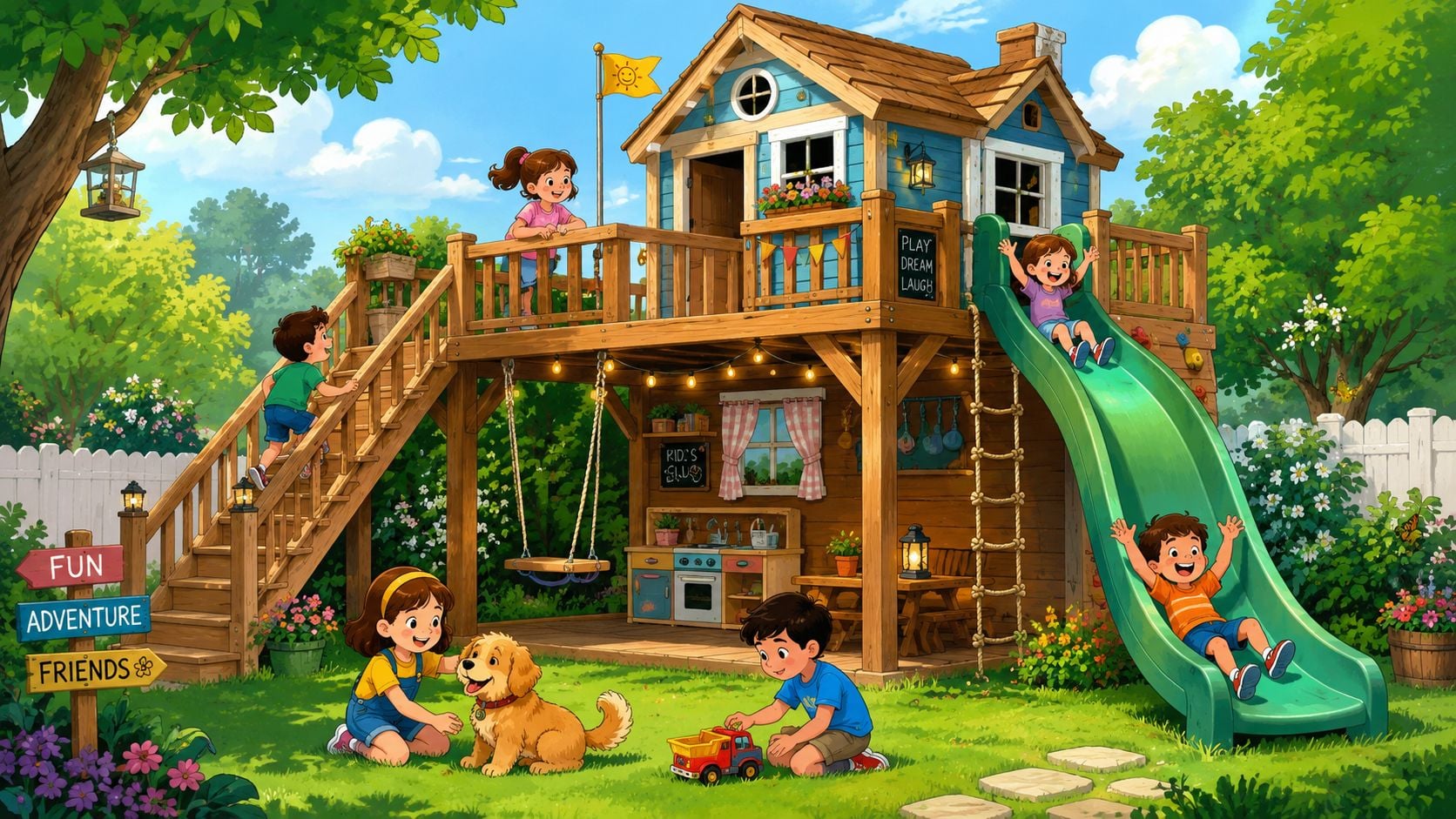
A two-level playhouse feels different from the moment children use it. The lower level often becomes the “house,” “shop,” or “club,” while the upper level turns into lookout space, a retreat, or a stage. That separation gives kids more ways to play together without crowding each other.
Why vertical space changes play
The biggest difference is layered use. A single-level playhouse is usually one room with one dominant activity. A 2 story playhouse creates zones.
That matters because kids don't all play the same way at the same time. One child may want quiet pretend play downstairs while another wants the excitement of climbing and looking out from above. The extra level supports both.
The modern market reflects that push toward more immersive, multi-level designs. The Enchanting Adventures 2-Story Playhouse & Slide™ is explicitly built as a two-story structure for social play and storytelling, while Philadelphia's Smith Memorial Playground & Playhouse includes three floors of interactive play, showing how the category has expanded upward as well as outward (multi-level playhouse examples).
How it compares with a single-level playhouse
A simple way to think about it is this: a single-level playhouse is a room, while a 2 story playhouse is an environment.
Here's how the trade-off usually looks:
| Option | What works well | What tends to be limited |
|---|---|---|
| Single-level playhouse | Easier placement, easier access, simpler build | Less variety in play, can be outgrown faster |
| 2 story playhouse | Better use of vertical space, richer pretend play, stronger visual impact | More planning, more safety details, more upkeep |
| Playset with enclosed deck area | Good for climbing and active movement | Often weaker for house-style imaginative play |
Practical rule: If the yard is compact but the family wants a play feature that feels substantial, vertical design often makes more sense than spreading outward.
That doesn't mean every family should go bigger. Some yards need a lower profile. Some households want the simplest possible upkeep. But for buyers who want something closer to a miniature backyard cabin than a toy box with a roof, a two-story design earns its footprint.
The Big Decision Build Buy or Custom Order
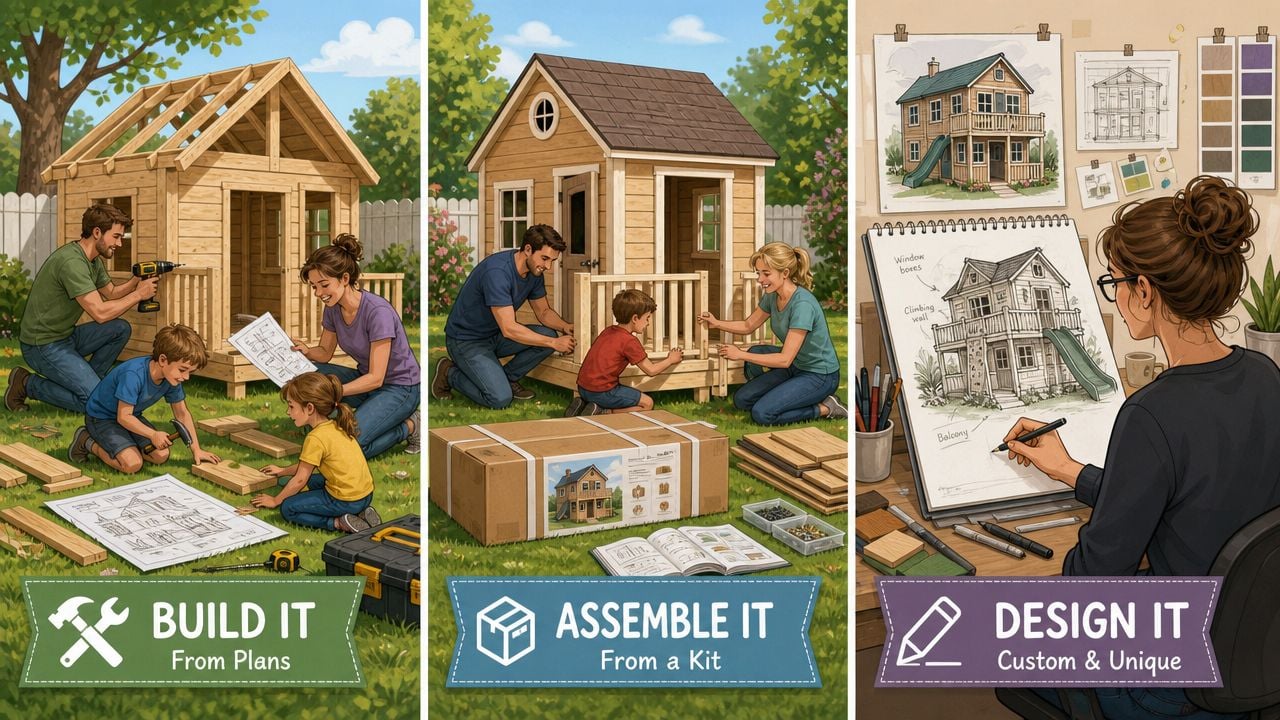
A two-story playhouse usually looks simple in the showroom photo and much more complicated once it reaches a real backyard in Upstate New York. Snow load, spring mud, sloped lawns, freeze-thaw movement, and sightlines from the house all affect which path makes sense. The right choice is not the cheapest starting price. It is the option your family can finish properly, maintain over time, and trust for safe daily use.
Three common paths
DIY from plans works best for homeowners who already build confidently and understand that the plan set is only the beginning. The job includes leveling the site, choosing footing or base materials, adding bracing, setting safe stair geometry, fastening rails correctly, and sealing exposed wood so it survives more than one hard winter. DIY gives the most freedom, but it also gives you full responsibility if the upper deck feels bouncy, doors swell shut in August, or the roof starts taking on water.
Kit or prefab purchase shortens the decision process. For some families, that is a practical win. The trade-off is fit. A kit may be fine structurally and still be wrong for the yard, the grade, or the way your children play. I often see families focus on the package price and then discover they still need site prep, anchoring, better hardware, added guardrails, roof upgrades, and a finish that can handle four seasons.
Custom order makes sense when the property has quirks or the family wants the playhouse to feel like a lasting part of the yard instead of a temporary add-on. This route costs more up front, but it usually reduces compromise. You can match the scale to the house, account for supervision from the kitchen or patio, choose materials that hold up better, and avoid forcing a standard kit into a space it was never designed for.
For homeowners considering that route, this custom order guidance for home projects gives a clear look at how dimensions, finishes, and use requirements get sorted before anything is built.
A custom approach also helps when the playhouse has to do more than look good on day one.
How to choose the right path for your yard and schedule
Use a blunt filter.
- Choose DIY if you have solid carpentry skills, realistic weekend time, and the patience to correct small mistakes before they become safety problems.
- Choose a kit if you want a faster install and can accept standard dimensions, standard features, and a shorter list of finish options.
- Choose custom if the yard is uneven, the placement is prominent, the family wants a better visual match, or long-term durability matters more than the lowest entry cost.
Before deciding, mark out the actual footprint in the yard with stakes, string, or even folding chairs. Then stand at the back door and upstairs windows. A two-story structure changes how the whole yard feels. It can improve a dead corner, or it can crowd a small lawn faster than expected.
Digital planning can help at this stage. Simple visual mockups using ai for backyard design are useful for testing placement ideas before you commit to a kit size or custom dimensions.
There is also the ownership question. Who is going to repaint it, tighten hardware, clear snow away from the base, and keep water from pooling around the posts? Families do better with the option they can maintain without resentment. In this part of New York, that matters just as much as the buying decision.
This is the same planning mindset we use at Tip Top Furniture & Mattresses when helping families with custom orders. The piece has to fit the property, the routine, and the long view, not just the catalog page.
Planning Your Playhouse Footprint and Size for NY Yards
A 2 story playhouse can feel surprisingly large once it's in place. The footprint might seem modest on paper, but the height and visual mass change how the whole yard feels. That's why sizing should start from the property outward, not from the playhouse inward.
Start with sightlines sun and setbacks
Start by asking three practical questions.
First, can adults see the entry and upper level from the house. Good visibility makes supervision easier and tends to make the playhouse more used.
Second, what kind of sun does that area get. Morning sun is usually gentler. A fully exposed afternoon location can make the space less comfortable in summer, especially with darker roofing or enclosed upper sections.
Third, how close is the structure to fences, trees, drainage paths, and neighboring property lines. Even when a spot looks open, roots, low branches, or runoff can turn it into the wrong choice.
The best location is rarely the far corner of the property. Families use playhouses more when they sit inside everyday sightlines and normal backyard traffic.
For homeowners who want help visualizing layout ideas before committing, simple digital mockups can help. Tools intended for outdoor concepts, including AI for backyard design, can be useful for rough placement thinking before final measurements are taken.
Measure the yard like a furniture layout
There's a surprisingly good crossover between room planning and yard planning. The same discipline used to fit a sectional, dining table, or bedroom set applies here.
A practical measuring routine looks like this:
- Mark the footprint first: Use stakes, string, or garden hoses to outline the likely base.
- Add the circulation zone: Leave room around the structure for climbing access, supervision, and maintenance.
- Include the feature swing: Doors, slides, ladder angle, and roof overhang all need space beyond the main base.
- Measure grade changes: Even mild slope can affect anchoring, leveling, and drainage.
Homeowners who haven't measured a project area in a while can borrow the same habits used indoors. This guide on how to measure a room for furniture is meant for interior planning, but the basic method translates well to backyard layouts too.
Material choice also starts here. In Upstate New York, quality wood species and better construction details usually justify themselves over time because the structure deals with wet springs, humid stretches, freeze-thaw movement, and winter snow. That's one reason handcrafted woodwork, especially the kind associated with careful joinery and finish discipline, keeps its appeal. The structure has to do more than look nice on install day. It has to hold its shape over the years.
Essential Materials and Construction for Upstate New York Weather
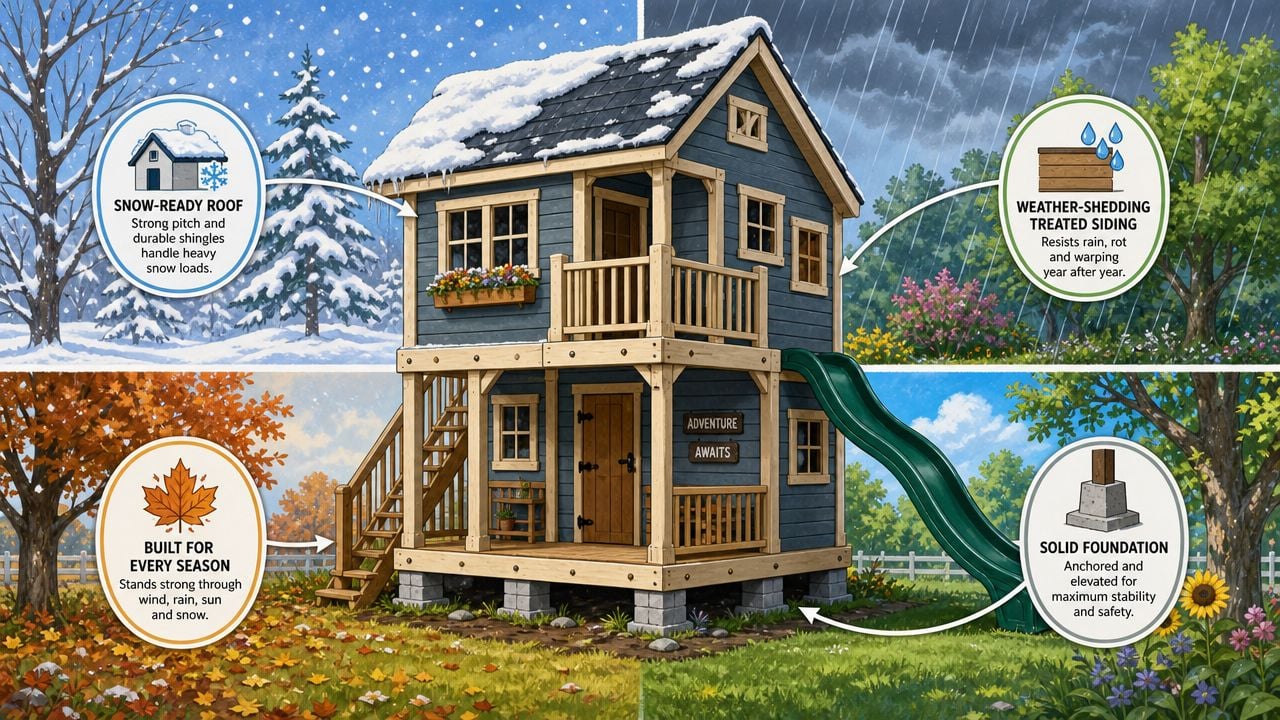
A 2 story playhouse in Upstate New York lives a harder life than one in a milder climate. It faces wet ground in spring, strong sun in summer, leaf debris in fall, and snow and ice in winter. Material selection can't be an afterthought.
Build for movement moisture and winter
The core structural issue is height over a relatively small base. Commercial examples of two-story playhouses commonly reach about 11 to 12 feet in overall height with compact footprints around 6×8 feet or 7×7 feet, which makes vertical load transfer, post sizing, corner bracing, and fastening quality especially important (example of compact tall playhouse design).
That's a useful reminder for homeowners. A playhouse that goes upward needs a stable path carrying weight to the ground. If the lower structure flexes, the upper level will announce it quickly with sway and racking.
Build note: Height magnifies every shortcut. Lightweight framing, weak connectors, and minimal bracing might look acceptable at ground level, but they show up fast once children start moving on the upper floor.
Foundation planning matters too. In colder regions, the ground moves. Homeowners comparing approaches often benefit from reading a plain-language homeowner's frost depth resource because it explains why below-grade conditions affect posts, footings, and long-term stability.
What works and what usually disappoints
Some material choices age better here than others.
- Pressure-treated lumber: Often practical for structural members near moisture exposure. It's widely used, but it still needs sound detailing and routine inspection.
- Cedar or similar naturally durable wood: Attractive and often more stable visually, though families should still expect maintenance.
- Composite details: Useful in certain trim or deck applications, though they don't replace good framing underneath.
- Quality roofing: A real roof system matters. Thin decorative coverings usually disappoint once snow, water, and wind get involved.
Fasteners deserve just as much attention as lumber. Exterior-rated hardware, solid anchors, and correct connector installation are often the difference between a structure that stays tight and one that loosens season by season.
For buyers comparing wood quality in any home project, this explanation of what kiln dried wood is helps clarify why moisture content and stability matter so much.
What doesn't work well in this climate is the “good enough for now” approach. Thin roof materials, underbuilt corners, untreated cut ends, and poor drainage create headaches fast. A handsome design can still fail early if water sits where it shouldn't.
Safety First Local Codes and Essential Playset Standards
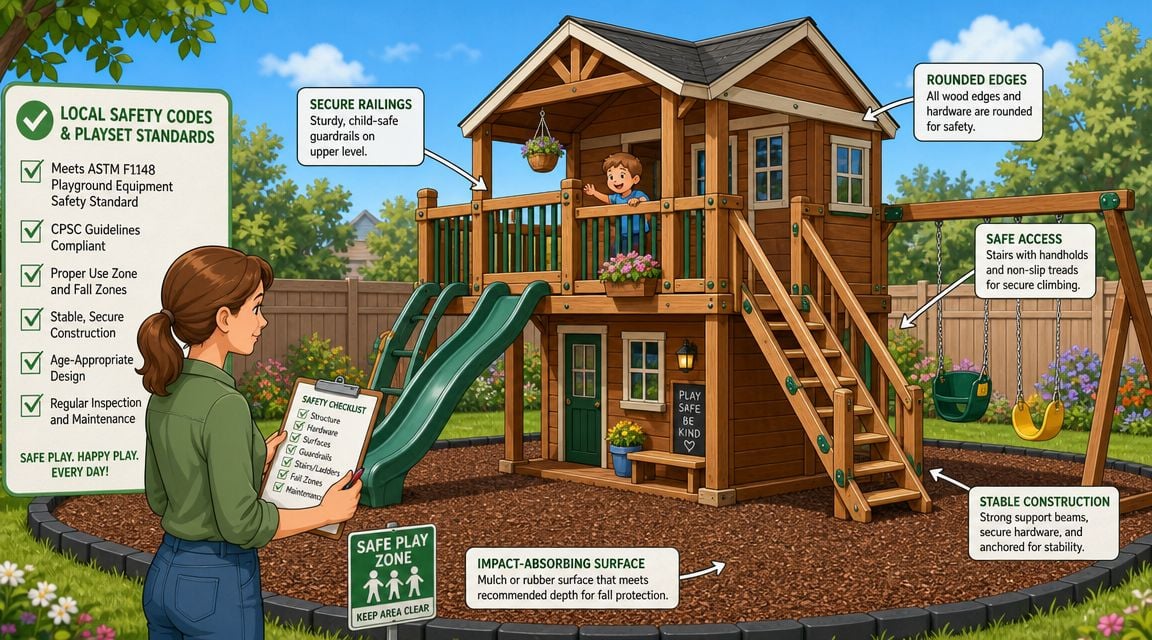
Safety is where a lot of online playhouse advice falls apart. Plenty of articles show charming finished projects. Far fewer deal clearly with fall protection, guard openings, anchoring, impact surfaces, and local code questions.
A critical point is that fall hazards are a leading risk in home playground equipment, and official safety standards include detailed guidance on guardrails and head entrapment prevention that many DIY guides barely touch (safety discussion for elevated play equipment).
Safety standards and local rules are not the same thing
Families often blend two separate issues together.
One issue is playground safety guidance. That covers how children interact with the structure. It includes things like rail design, climbing access, and what kind of surface belongs below higher areas.
The other issue is local building oversight. Depending on size, height, and construction details, a larger playhouse may be viewed more like a backyard playset, or more like an accessory structure. That distinction can affect permits, setbacks, anchoring expectations, and whether the town wants to review the project before installation.
That's why the local building department should be part of the early planning conversation, not the cleanup step after a purchase.
Ask the building department one simple question first: how do they classify the proposed structure on a residential property?
That answer shapes almost everything that follows.
A practical safety checklist before anyone climbs up
For a 2 story playhouse, the essentials include:
- Guardrails at upper areas: Open upper platforms need appropriate protection.
- Opening sizes: Gaps should be reviewed carefully to reduce entrapment risk.
- Safe access design: Stairs, ladders, and climbing walls need consistent hand and foot placement.
- Anchoring: A tall, narrow structure has to stay where it was installed.
- Impact surfacing: The area below climbing and upper-level access should be treated as a fall zone, not just bare dirt worn hard by traffic.
- Weather-related slip control: Steps, ladders, and decks need traction and drainage.
Parents should also evaluate how children of different ages will use the structure. A feature that's fine for one child may be too steep, too open, or too fast for another.
Budget for safety from the beginning
Safety features are often framed as upgrades. That's the wrong mindset. They're part of the base project.
The total cost isn't just lumber, a roof, and paint. It includes:
| Cost area | Why it matters |
|---|---|
| Site prep | Level, stable ground supports the structure properly |
| Anchoring and hardware | Keeps tall structures stable under active use |
| Surfacing | Helps manage fall risk below elevated areas |
| Code or permit follow-up | Avoids expensive corrections later |
| Ongoing inspections | Catches loosened hardware, rot, and wear early |
Families trying to keep the project manageable often benefit from building the budget around essentials first, then cosmetic extras second. Slides, decorative shutters, and add-ons can come later. Guarding, access safety, and structural support can't.
Budgeting for Your Playhouse What to Really Expect
A two-story playhouse budget should reflect ownership, not just purchase price. In Freehold and across Upstate New York, the families who stay happiest with these projects usually plan for site work, weather exposure, and upkeep from the start.
The base structure is only one part of the total cost. Yard conditions often change the actual cost fast. A sloped corner, soft ground after spring thaw, or a tight gate that complicates delivery can add labor before the first wall panel goes up.
A practical budget usually accounts for:
- Ground prep: leveling, drainage correction, compacted base material, or minor grading
- Delivery and access: extra labor when installers need to carry parts through narrow side yards or fenced entries
- Assembly: professional installation or the time and tools required for a careful DIY build
- Anchoring and fall-zone surfacing: especially important for a taller structure with stairs, loft space, or active climbers
- Weather protection: stain, paint, roof materials, flashing details, and sealers suited to freeze-thaw cycles
- Future touch-ups: hardware checks, repainting, board replacement, and roof maintenance after a few hard seasons
- Surrounding yard improvements: seating, storage, pathways, or cleanup work that makes the area feel finished
That last category gets missed all the time.
A playhouse can look great on paper and still leave the backyard feeling half-done if the area around it turns muddy, cramped, or hard to maintain. I usually tell families to budget for the setting too, not only the structure. A simple gravel path, a bench for supervision, or a storage box for outdoor toys can make daily use much easier.
Long-term value comes from choosing the right places to spend. Structural framing, fasteners, roofing, drainage, and safe access details deserve the money first. Decorative trim, shutters, flower boxes, and interior extras can wait.
That trade-off matters in our climate. A lower-cost build can work well if the family is realistic about resealing wood, watching for movement after winter, and fixing wear before it spreads. A more durable build often costs more upfront but asks less of you year after year.
The better budgeting question is simple. What kind of ownership do you want?
- Lower upfront cost with more hands-on maintenance
- Higher initial cost with fewer seasonal repairs
- A balanced approach that protects structure and safety first, then adds cosmetic upgrades later
For many Upstate New York families, the middle option is the smart one. Put the budget into the frame, roof, guardrails, anchors, and ground conditions. Keep the wish-list extras flexible.
Families in Freehold, Albany, and the wider Capital Region who are weighing a backyard upgrade can explore practical home planning ideas and project support through Tip Top Furniture & Mattresses. If the playhouse is part of a larger round of home improvements, it also helps to review financing options, custom ordering, and in-stock value pieces before committing to the full project.