White Bookcase With Desk: A Complete Buying Guide


A lot of homes around Albany are asking one room to do too many jobs. The spare bedroom is now an office. The dining nook handles homework at 4:00 and video calls at 9:00. The kitchen table still works, but it never feels settled.
That’s where a white bookcase with desk earns its keep. It combines a work surface and vertical storage in one footprint, which matters when every wall and walkway counts. It also keeps a room looking lighter than a darker, heavier piece often does.
Your All-in-One Solution to Clutter and Cramped Spaces
If your papers keep drifting across the house, the problem usually isn’t motivation. It’s that the room doesn’t give those items a real home. A white bookcase with desk solves that by putting the desktop, shelves, and daily-use storage in one place, so work gear stops spreading into the rest of the room.
That kind of setup fits how people live today. The global home office furniture market is projected at USD 41.21 billion in 2026, and desks and tables account for 33.74% of that market, which shows how central the workstation has become in modern homes, according to Mordor Intelligence’s home office furniture market report. In plain terms, households are putting more thought into furniture that helps one room do more than one job.
For smaller homes, apartments, and older Capital Region layouts, combining storage and workspace usually works better than buying a separate desk and a separate bookcase. It cuts visual clutter and gives you one controlled zone for work, school, bills, or hobbies. If you're also trying to transform your small workspace, it helps to start with furniture that already builds organization into the footprint.
A white finish helps too. It reflects light, blends with trim and painted walls common in Upstate New York homes, and doesn’t box a room in the way bulky dark furniture sometimes can.
Practical rule: If a room has to serve two purposes, choose furniture that solves two problems at once.
For anyone starting that search, it helps to look at furniture designed specifically for tighter layouts, like these ideas for small-space furniture solutions.
Why Choose a White Bookcase Desk for Your Capital Region Home
The strongest argument for this type of furniture is simple. It handles real life better than a standalone desk does.
During the remote work shift in 2020, U.S. desk sales rose 62.8% and bookshelves rose 38.1%, according to Market.us office furniture statistics. That jump tells you something useful. People didn’t just need a place to sit. They needed storage right next to where they worked.
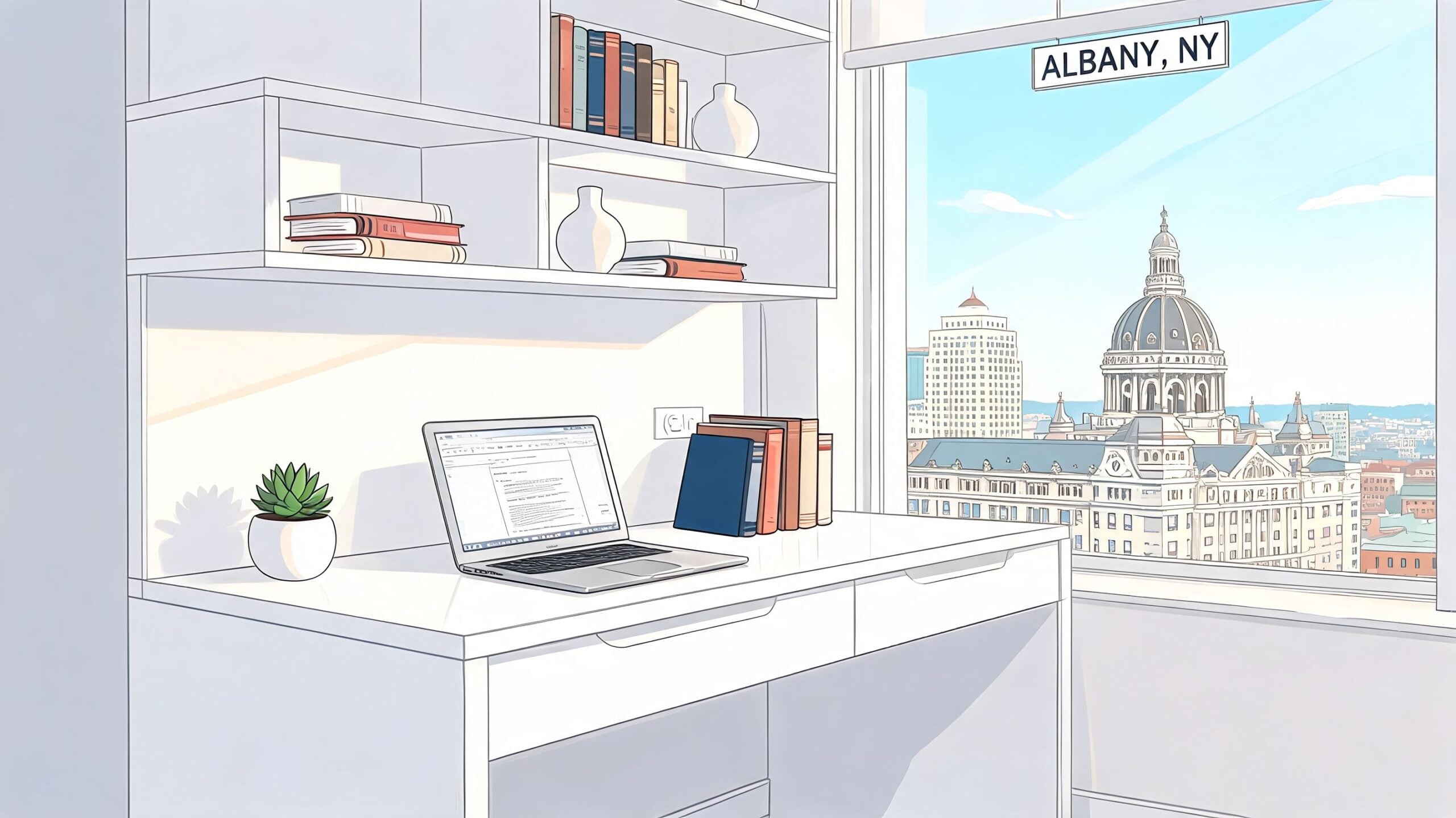
It saves floor space without feeling cramped
A separate desk and bookcase can eat up a wall fast. An integrated unit usually feels cleaner because the shelves rise above or beside the workspace instead of asking for another furniture footprint elsewhere in the room.
That’s especially useful in:
- Older Albany homes where room dimensions can be awkward
- Townhomes and apartments where a nook has to become an office
- Kids’ bedrooms where homework space and storage need to share one wall
- Guest rooms that still need to function as an office during the week
White works with more rooms than people expect
White gets dismissed sometimes as too plain or too modern. In practice, it’s one of the easiest finishes to place.
It pairs well with painted trim, natural oak floors, darker accent walls, and mixed decor that has built up over time. In a room with limited daylight, white also helps the furniture recede visually instead of dominating the space.
It supports changing uses over time
A good white bookcase with desk can start as a student station and later become a home office. It can hold binders and textbooks now, then office supplies, baskets, and framed photos later. That flexibility matters more than trend-chasing.
Here’s where these units usually outperform a plain desk:
Homework and study zones
Shelves keep books, chargers, folders, and craft supplies off the desktop.Hybrid work setups
A nearby shelf gives your printer, files, and reference materials a defined place.Shared family spaces
The unit creates one contained work area instead of letting office clutter spill into the whole room.
A piece earns its place when it works at 8:00 a.m. for emails and at 7:00 p.m. for schoolwork without needing to be rethought.
It looks more intentional
A room feels calmer when the storage and desk were designed to live together. That matters in dens, living room corners, and open-plan spaces where the workstation is always visible.
What doesn’t work as well is buying a random white desk first, then trying to bolt organization onto it later with mismatched cubes, carts, and baskets. That approach can function, but it rarely looks settled. If you want the room to feel finished, the integrated route usually wins.
Decoding Materials and Finishes From Budget-Friendly to Amish Heirloom
Not all white bookcase desks are built for the same job. Some are fine for a short-term setup in a teen room or first apartment. Others are meant to stay put for years and handle daily use without sagging, wobbling, or looking tired.
The material tells you which camp a piece belongs in.
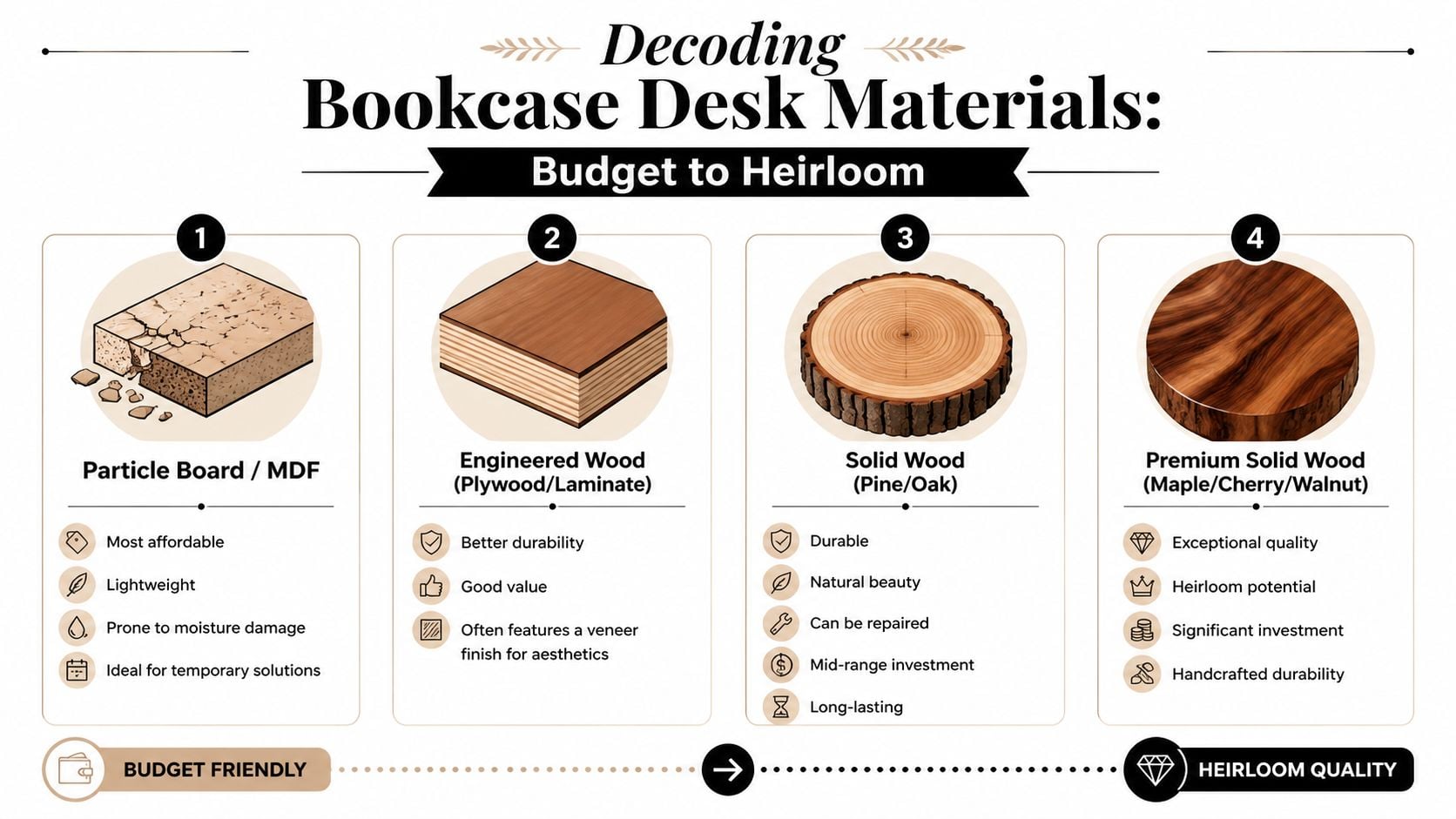
Particle board and MDF for entry-level budgets
This is the common big-box category. The core is usually engineered wood, then finished with laminate, melamine, or paint.
That doesn’t automatically make it bad. For a light-duty setup, engineered materials can be practical and affordable. They also tend to come in the cleanest bright-white finishes.
The trade-off is wear over time. Lower-end units are more vulnerable at the edges, around fasteners, and near the floor if moisture gets involved. In our area, wet boots, winter slush, and seasonal humidity changes can reveal those weaknesses sooner than buyers expect.
Better engineered wood can be a solid middle ground
There’s a large difference between bargain engineered furniture and better-made engineered furniture. A stronger design with quality laminate, better hardware, and tested construction can perform very well.
For example, quality furniture can meet ANSI/BIFMA performance standards, with shelves tested to hold over 200 lbs and finishes designed to resist yellowing for over 10 years of typical home office use, as shown in this Bush Business Furniture product reference at Office Depot. That matters because a white finish only stays attractive if it keeps its color and the shelves stay true.
What works in this category:
- Laminated surfaces that clean easily
- Thicker panels with proper backing
- Well-placed fixed shelves that help keep the unit square
- Commercial-style testing for load and finish durability
What often disappoints:
- Thin backing panels
- Screw points that loosen after a move
- Bright white finishes that chip at corners
- Shelves that look straight in the store but bow under real use
Solid wood changes the value equation
If you want long-term value, solid wood is where the conversation shifts. It costs more up front, but it’s usually the better answer for buyers who want a piece to stay in the home, not cycle out in a few years.
Solid wood tends to feel steadier, wear more gracefully, and allow for repair rather than replacement. Painted white wood can also be refinished or touched up more convincingly than many thin factory laminates.
That’s especially important for a bookcase desk, because this category combines two stress points in one piece. The shelves carry weight. The desktop gets constant contact. The joinery matters.
Amish and American-made options for lasting use
This is the part many online guides skip. There’s a real gap between furniture built to hit a price point and furniture built to stay useful through years of daily use.
Verified market notes in the provided research point out that Amish furniture can offer a 30 to 50% longer lifespan, averaging 25+ years versus 5 to 10 for composites, in the context of durability comparisons drawn from industry reporting and summarized through this research reference. That lines up with what many experienced furniture buyers already know. A well-built solid wood piece usually ages far better than a disposable import.
If you expect to move the piece once, use it daily, and still like it in ten years, shop construction first and color second.
A helpful starting point is learning how different hardwoods behave over time. This guide on choosing the right hardwood for longevity and style is worth reading before you compare custom and ready-made options.
Material Comparison for Bookcase Desks
| Material | Durability & Lifespan | Typical Cost | Best For |
|---|---|---|---|
| Particle board / basic MDF | Lower long-term durability, especially with moisture and repeated moves | Lower | Temporary setups, light-use rooms |
| Better engineered wood with laminate | Moderate to strong durability when well made | Moderate | Home offices, student rooms, value-focused buyers |
| Solid wood | Strong long-term durability, repairable surface | Mid to upper range | Daily-use workstations, long-term homeowners |
| Premium solid wood | Highest long-term value and heirloom potential | Higher | Custom rooms, buyers planning to keep the piece for many years |
Finding the Perfect Fit Sizing Layout and Configuration
A white bookcase with desk can solve a room, or overpower it. The difference usually comes down to planning before you buy.
Most sizing mistakes happen because people measure the wall but not the room’s movement. The unit may technically fit, yet still block a vent, crowd a window casing, or leave no elbow room for the chair.
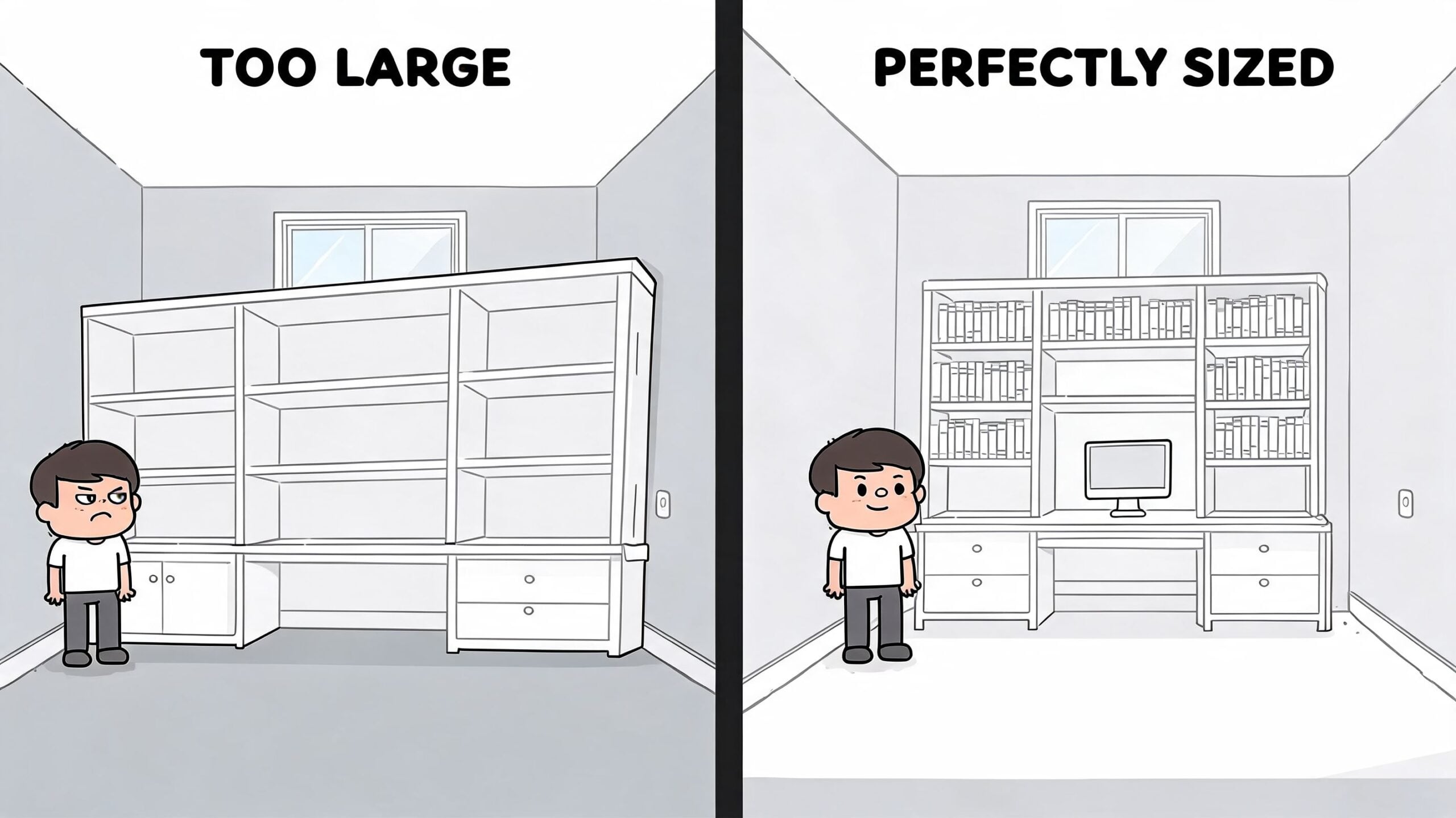
Start with the wall, then measure the working zone
Measure the width of the wall, yes. Then measure the depth you can spare once the chair is pulled out and someone walks behind it.
Don’t forget:
Window trim and radiators
Older homes in the Capital Region often have details that steal usable inches.Outlet placement
A great desk location becomes a headache fast if cords have to cross the room.Door swing
A nearby closet or bedroom door can limit where a tall side bookcase can go.Baseboards and molding
Some larger units sit differently against older walls than buyers expect.
If you want extra ideas before you sketch the room, these Endless Storage ideas for cramped spaces offer practical examples of how multifunctional furniture can reduce crowding.
Match the configuration to the way you work
Not every room wants the same layout. A few common configurations stand out.
Straight wall unit
This is often the cleanest look. It suits bedrooms, upstairs landings, and living room walls where you want the desk to look built in rather than improvised.
Corner unit
Useful when the room has one dead corner that won’t comfortably hold larger case goods. It can free up the center of the room, but only if the chair still has enough space to move.
Desk with hutch and side bookcase
This works well for people who need visible storage without filling the whole wall. It also gives more flexibility if you want some display space and some work storage.
The right size feels a little smaller than your maximum. Leave the room breathing space and you'll like the furniture longer.
Adjustable shelves are more important than they sound
Many shoppers focus on desktop width first. Fair enough. But shelving flexibility is often what determines whether the piece still works a year from now.
According to the verified product data, adjustable shelves can accommodate 75 to 150% more items of varying heights than fixed-shelf designs, and that flexibility can cut reach-related strain by 25% when heavier items are placed at better working heights, based on the Bush Somerset reference at 1StopBedrooms.
That matters if your storage includes:
- Tall binders and textbooks
- A printer or paper trays
- Monitor stands or speakers
- Storage baskets that don’t come in standard heights
A fixed shelf can look neat in a product photo and still be annoying in daily use. Adjustable shelving usually ages better with your needs.
Use a room planner before you commit
Tape on the floor works. So does cardboard. But a scaled planner gives you a cleaner answer before delivery day.
For buyers comparing a few options, a digital layout tool can help you test clearances, chair pullback, and shelf swing without guessing. A practical place to begin is this guide on how to measure a room for furniture, especially if you’re fitting a workstation into a room that already has a bed, sofa, or storage cabinet.
Styling Your White Bookcase Desk for Any Room
A white bookcase desk can look crisp and minimal, warm and collected, or nearly invisible in a shared room. Styling decides which direction it goes.
A common mistake is filling every shelf at once. A better approach is to decide what the furniture needs to do first, then style the remaining space around that job.
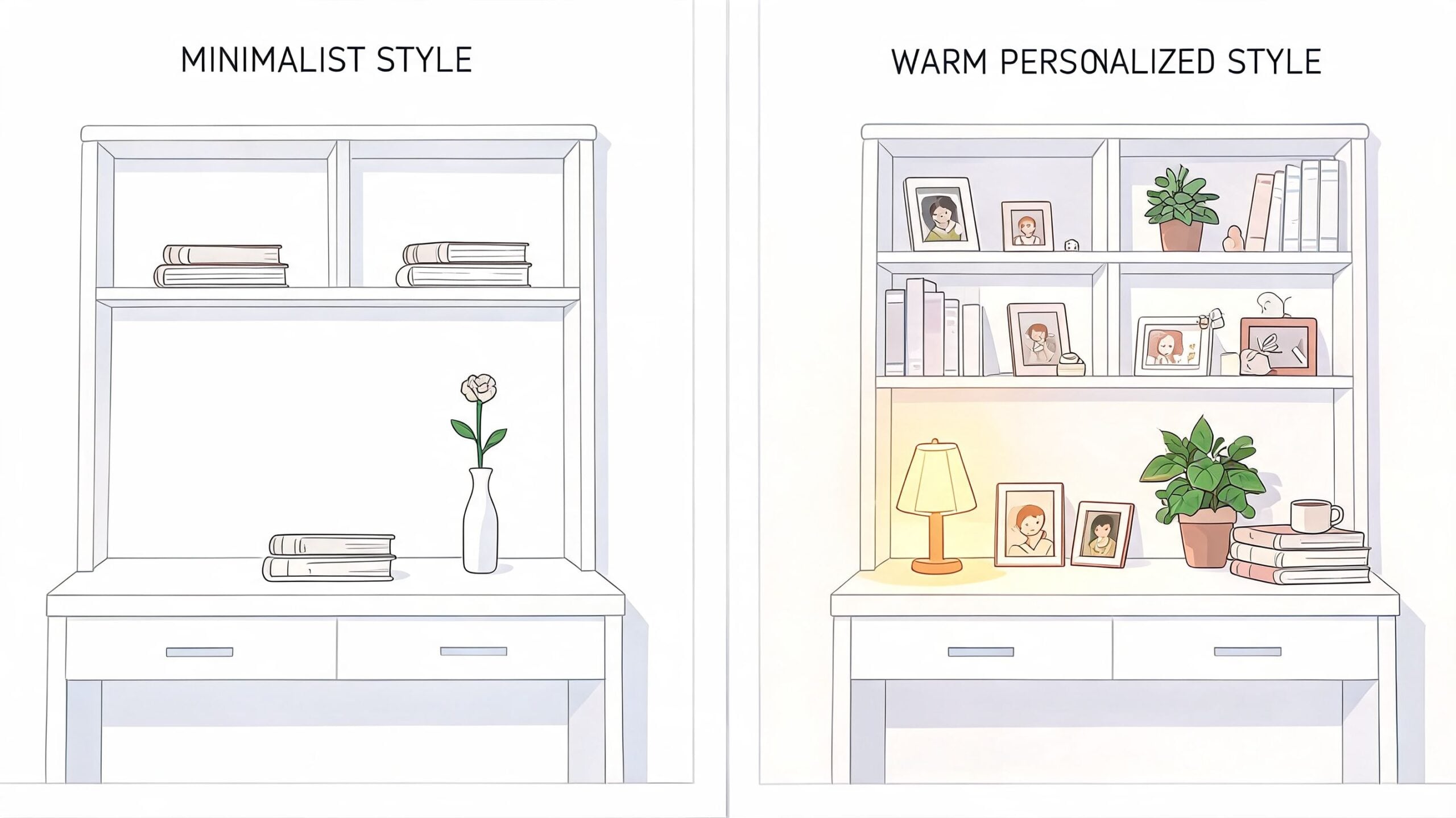
In a home office, keep the shelves disciplined
For work, the desk should read clean before it reads decorative. That doesn’t mean sterile. It means the useful items should be close at hand and the visual noise should stay controlled.
A balanced office setup often includes:
- Closed storage bins for cables, notebooks, and extra tech
- A task lamp that brightens the desktop without taking over shelf space
- A few vertical book groupings instead of one crowded row
- One personal item such as framed art or a plant
If you collect oversized art books or portfolio materials, some principles from this guidance for art collectors' storage can help you think more carefully about shelf spacing, upright storage, and keeping heavier items supported.
In a kid’s or teen’s room, make access easy
A student setup has to support fast clean-up. If putting items away feels fussy, the desktop becomes a pile.
Use lower shelves for daily school items, a small bin for chargers and pens, and a simple rhythm like books on one side, supplies on the other. White furniture also gives you room to bring in color through baskets, bulletin boards, and wall art without the room looking chaotic.
Shelves work better when each level has a role. One for daily use, one for backup supplies, one for display.
In a living room nook, hide the office in plain sight
A white finish is particularly advantageous. In a den or living area, it can blend into painted trim and light walls so the desk doesn’t announce itself from across the room.
A few tricks help:
- Mix books with decor so the unit feels like built-in shelving
- Choose matching baskets to hide paper clutter
- Keep the desktop mostly clear when the workday ends
- Repeat nearby finishes such as wood tones, black metal, or linen textures
For more display ideas, this article on bookshelf styling ideas for Capital Region homes gives useful direction on balance, layering, and how not to overfill shelves.
Assembly Installation and Long-Term Care
A white bookcase with desk can arrive in two very different forms. One is a flat-pack project with a long instruction sheet. The other comes assembled or is set up by a delivery team. Each route can work, but they don’t ask the same thing from the buyer.
DIY assembly makes sense if the unit is modest in size, the hardware is straightforward, and you’re comfortable squaring a case piece so the shelves and doors sit correctly. The bigger the hutch or side bookcase, the less forgiving the assembly becomes.
What usually goes wrong during setup
The common problems aren’t dramatic. They’re small alignment issues that create long-term irritation.
Watch for:
- Out-of-square frames that make drawers or shelves sit unevenly
- Overtightened fasteners that damage engineered panels
- Skipped wall anchoring on taller units
- Assembling on carpet without checking level afterward
If the unit includes multiple case sections, take extra time before fully tightening everything. Once a tall piece leans, the strain can show up later as wobble or visible gaps.
Keep the white finish looking clean
White furniture rewards gentle, consistent care. Harsh cleaners tend to dull finishes faster than normal use does.
A few simple habits help most:
- Dust first with a soft cloth so grit doesn’t scratch the surface
- Use a damp, not wet cloth for routine cleaning
- Dry the surface after wiping especially around seams and edges
- Use coasters or pads under mugs, printers, and organizers
Lower-quality white finishes are more likely to discolor over time, while stronger tested finishes hold up better under normal use. If you own solid wood, the care routine can differ from laminate or painted engineered wood, so material-specific guidance matters. This overview of how to care for wood furniture is a good reference point.
A few habits that extend the life of the piece
Move heavy electronics with two hands instead of dragging them. Don’t overload one shelf while leaving the others empty. Check fasteners occasionally, especially after the first seasonal change if the piece is in a room with dry winter air or summer humidity.
That kind of maintenance isn’t complicated. It’s just the difference between furniture that stays crisp and furniture that starts looking tired before it should.
The Tip Top Advantage Custom Orders and Expert Design in Freehold
A lot of shoppers can find something close. The harder job is finding something that fits the wall, the storage needs, and the way the room has to work every day.
That matters even more now because clutter and tech needs have changed the job description. A 2025 survey found that 40% of U.S. remote workers report productivity loss due to clutter, according to the verified research summary tied to this study desk with bookshelf market reference. A mass-market unit might look right in a photo and still fall short if you need better cable routing, a deeper work surface, or shelf spacing that fits real equipment.
When custom makes more sense than compromise
Custom ordering is often the better route if you need:
- A specific width or height for an alcove or narrow wall
- Solid wood construction instead of composite panels
- A painted white finish matched to your room style
- Cable management built around your actual setup
- Storage that serves work and household use together
A custom-capable local store has a different role than a national listing page. A piece can be adjusted to the room instead of forcing the room to adjust to the piece.
Design help saves expensive mistakes
For homeowners in Albany, Schenectady, Troy, and nearby communities, in-person planning still matters. A local showroom conversation often surfaces issues an online cart won’t catch, like chair clearance, outlet placement, nearby trim, or whether the desk should visually match adjacent living room furniture.
One practical option is custom ordering through Tip Top Furniture & Mattresses, where buyers can work through size, wood species, finish, and layout details. If budget timing matters, flexible financing options can also make a larger whole-room project easier to stage without settling for a lower-grade piece right away.
Freehold is a worthwhile stop for Capital Region shoppers who want to compare finishes and construction in person instead of guessing from product thumbnails.
Frequently Asked Questions About White Bookcase Desks
Are white bookcase desks hard to keep clean
Not usually. They just show dust sooner than darker finishes. The upside is that you notice the dust before it builds up. A soft cloth and gentle routine cleaning are usually enough.
Is white a risky choice if styles change
White is one of the safer choices, not one of the riskier ones. It adapts well if you change wall color, swap rugs, or mix in warmer wood tones later. If you get tired of an all-white look, it’s much easier to warm it up with baskets, lamps, art, and wood accessories than it is to lighten a visually heavy desk.
Can a bookcase desk work for two monitors
Yes, if the desktop depth and shelf placement allow for it. This is one reason measurements matter so much. Some hutches and upper shelves are fine for a laptop setup but feel cramped with taller monitors. If you use more than one screen, think about cable paths, outlet access, and whether the upper shelving blocks your sightline.
Are adjustable shelves really worth it
Usually, yes. Fixed shelves can be perfectly fine when your storage needs are simple and unlikely to change. Adjustable shelves are better if the desk has to support work gear, school materials, baskets, or a printer. They give you more room to adapt instead of replacing the furniture later.
What’s the biggest mistake buyers make
Buying for the photo instead of the room. A white bookcase with desk can look neat online and still be wrong for your wall, your chair clearance, or your daily storage. The best results come from measuring carefully, thinking through what has to live on the shelves, and deciding whether the piece is meant to last a few years or a lot longer.
Is solid wood always necessary
No. It depends on how long you expect to keep the furniture and how hard it will be used. A better engineered unit can be a smart choice for lighter-duty spaces. Solid wood makes more sense when the piece is a long-term part of the home and you want stronger construction, repairability, and a finish that ages more gracefully.
If you’re comparing white bookcase with desk options for a home office, bedroom, or multi-use room in the Capital Region, Tip Top Furniture & Mattresses is a practical place to continue the search. Visit the Freehold, NY showroom to see construction and finishes in person, or explore planning tools and custom options online if you want help matching the piece to your room, storage needs, and budget.