Distressed Dining Set: Albany’s 2026 Guide


A lot of families start the same way. They look at their dining room and realize it doesn’t feel settled yet. The table may be too formal for everyday life, too flimsy for regular use, or just missing that lived-in warmth that makes people want to sit down, stay longer, and talk.
That’s why a distressed dining set keeps coming up in real homes across the Albany Capital Region. It offers character without feeling fragile, and it can bridge the gap between “nice enough for company” and “comfortable enough for Tuesday night spaghetti.” For homes in Albany, Schenectady, Troy, Freehold, and throughout Greene County, that balance matters.
Families around here also tend to shop with the long view in mind. They want furniture that works through school years, holidays, weather swings, and changing décor. A distressed finish often appeals because it already has visual depth. A small mark from daily life usually blends in instead of becoming the only thing you notice.
Creating a Dining Room That Feels Like Home
A dining room feels right when it supports the way your family lives. For one household, that means homework at the table before dinner. For another, it means Sunday meals, extra leaves for guests, and enough durability to handle heavy serving dishes, elbows, spills, and years of regular use.
In Upstate New York, the dining room often has to do more than one job. Older homes may have a formal room that needs softening. Open-concept homes may need a table that adds warmth so the space doesn’t feel flat or overly new. A distressed dining set helps with both. It brings texture, visible grain, and a sense of history without requiring you to buy an actual antique.
Many shoppers get stuck between two concerns:
- They want charm but don’t want furniture that looks fake or overdone.
- They want durability but don’t want a table that feels bulky and heavy in the room.
- They want something timeless but still compatible with changing paint colors, flooring, and chair styles.
That’s where good planning makes the difference. Room size, finish level, wood species, and chair shape all affect whether the set feels cozy or crowded.
A dining room usually works best when the table matches the pace of daily life, not just the look of a catalog photo.
If you’re starting from scratch, a helpful first step is reading designing a dining room where to start. It gives you a practical framework before you fall in love with a style that may not fit your room.
What Is a Distressed Furniture Finish
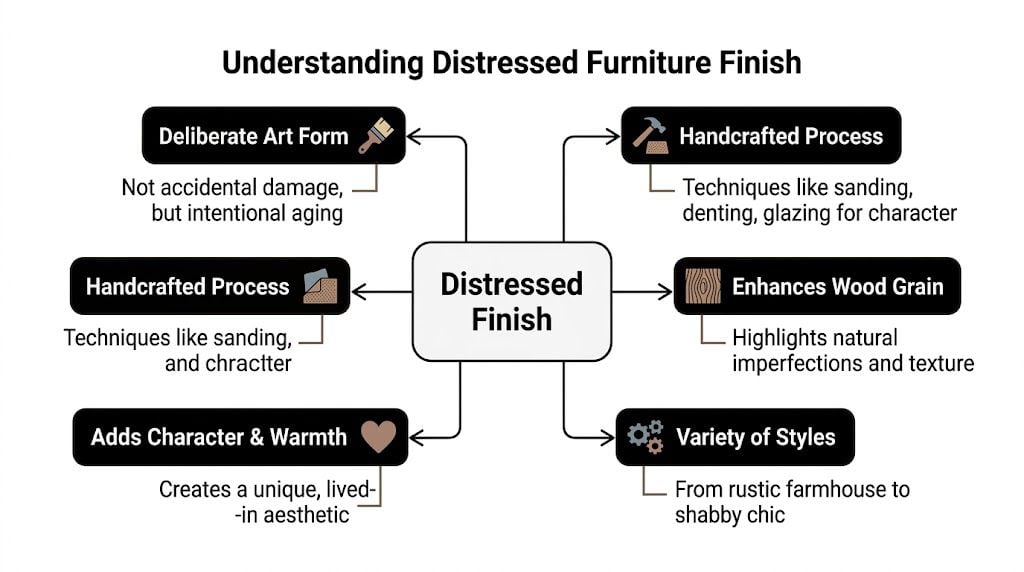
Many people hear the word distressed and think it means damaged. That’s the main point of confusion. In furniture, distressed doesn’t mean neglected. It means the finish was created on purpose to give the wood an aged, softened, time-worn look.
A helpful comparison is denim. A pair of jeans with intentional fading isn’t defective. The fading is part of the style. A distressed dining set works the same way. Craftsmen shape the surface so it looks relaxed, broken-in, and full of character from day one.
How craftsmen create the look
The finish usually comes from a sequence of surface treatments, not a single step.
- Wire-brushing raises the grain and makes the wood texture more visible.
- Selective sanding softens some areas and leaves variation in others.
- Glaze layering adds depth so the finish doesn’t look flat or one-note.
According to Walker Edison, the distressing process can involve wire-brushing to raise grain, selective sanding with 80-220 grit progression, and glaze layering, and that process can result in a surface hardness increase of 20-30% as embedded pigments fill micro-cracks. The same product information explains that the sealing process mimics natural weathering while helping prevent further cracking by equalizing internal stresses (Walker Edison distressed finish details).
That matters because a quality distressed finish is doing two jobs at once. It shapes the appearance, and it also helps protect the surface.
What distressed doesn’t mean
A true distressed finish isn’t random abuse. It shouldn’t look like someone dragged a chain across a table and called it rustic. The best versions are controlled.
Look for these signs of quality:
| What you see | What it usually means |
|---|---|
| Variation that follows the grain | The finish was applied with intention |
| Softened edges instead of sharp chips | The piece was designed to look aged, not broken |
| Depth in the color | Multiple finish layers were used |
| Texture you can feel without rough splinters | The surface was crafted, then sealed |
Practical rule: If the finish looks believable up close and still feels smooth enough for everyday use, you’re usually looking at a better-made piece.
Some shoppers also confuse distressed furniture with furniture that needs refinishing. Those are different things. Distressed furniture is sold with its aged look already built into the design. If you’re curious about how wood surfaces can be renewed or adjusted over time, how to refinish wood furniture is a useful companion read.
How to Choose the Right Distressed Dining Set
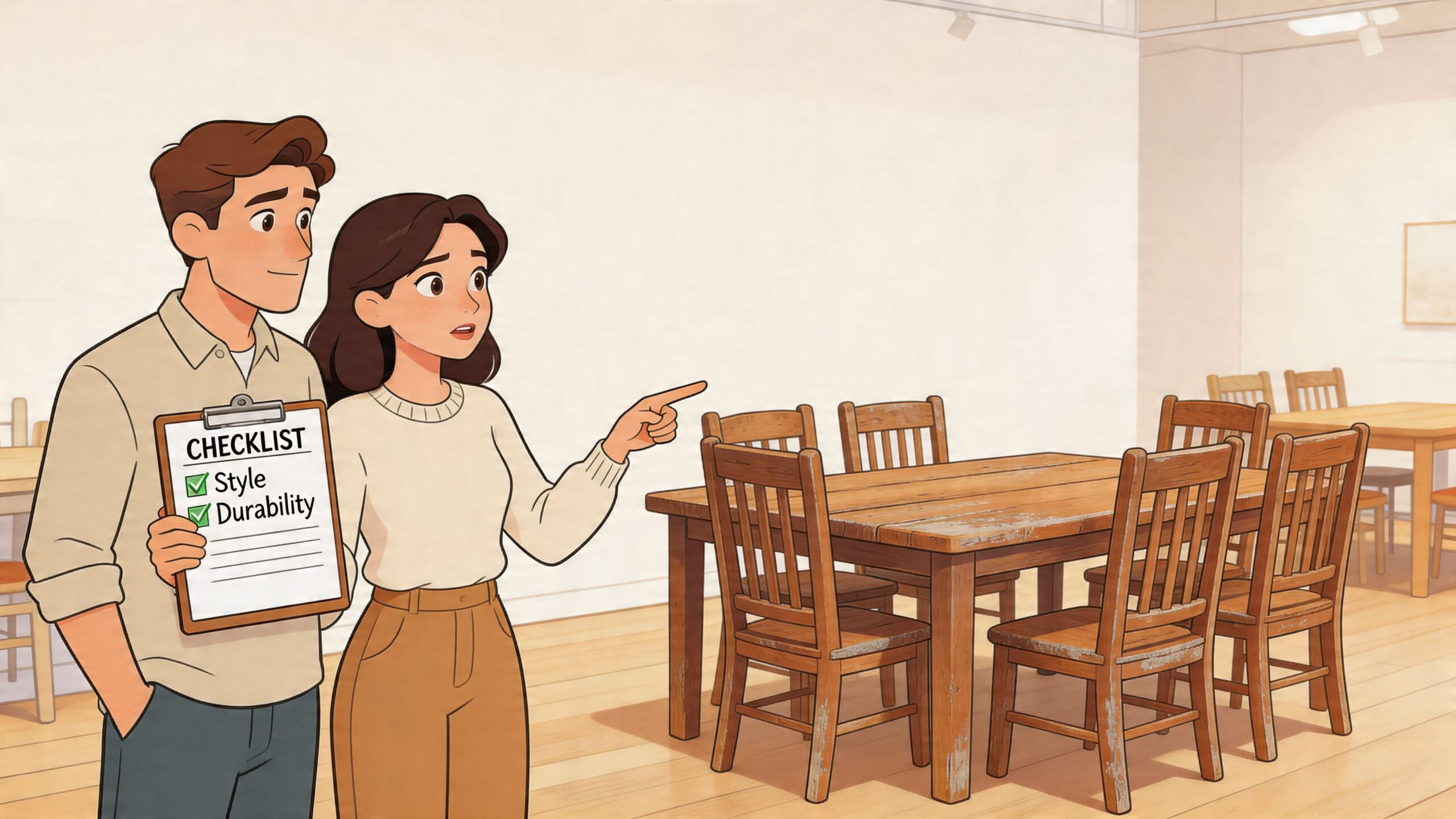
A good distressed dining set should fit your room, suit your habits, and hold up to years of use. Style matters, but this is one of those purchases where construction deserves just as much attention as appearance.
Start with the practical decisions first. Then narrow the look.
Size the set for the room you actually have
People often measure only the tabletop area. That’s not enough. You need room for chairs to pull out and for people to move around the table without bumping into walls or case pieces.
Ask yourself:
- How many people sit there daily
- How often you host more than that
- Whether a bench, armchairs, or side chairs will change the footprint
- If the room is closed off or open to another space
A rectangular distressed dining set can anchor a traditional room well, while a round table often helps smaller spaces feel simpler to move within.
If your dining room doubles as a walkway, choose for traffic flow first and seating second.
For a more detailed buying framework, how to pick the right dining room table breaks down shape and layout choices clearly.
Choose a wood that matches your lifestyle
Different woods create different expectations. Consequently, shoppers often focus too much on color and not enough on how the table will wear.
Here’s a simple way to consider it:
- Oak suits families who want visible grain and a sturdy, traditional feel.
- Maple tends to look cleaner and a bit more refined.
- Pine often fits casual farmhouse looks, though some people prefer harder woods for heavier daily use.
A distressed finish can make all three feel more relaxed, but the base wood still influences the final look. Oak usually shows texture more boldly. Maple can feel smoother and more refined. Pine reads softer and more rustic.
Pick the right level of distressing
Not every distressed dining set looks heavily weathered. Some are subtle. Others make the aged character the main design statement.
Use this quick guide:
- Light distressing works well in transitional rooms or homes with painted trim.
- Medium distressing fits classic farmhouse and many Colonial interiors in the Capital Region.
- Heavy distressing pairs better with rustic interiors, industrial accents, or homes where you want the table to feel old-world and substantial.
If you already have patterned floors, strong wood beams, or busy cabinetry, a lightly distressed finish may keep the room from feeling too crowded visually.
Check construction before you check accessories
This is the part many buyers skip, and it’s often the most important.
A distressed finish can hide future wear beautifully, but it can’t compensate for weak construction. Look under the table. Lift a chair. Check how parts connect.
According to Countryside Amish Furniture, in high-quality distressed dining sets, a heavy-duty metal trestle base paired with a solid wood top can support up to 800 lbs, and mortise-and-tenon joints at wood-metal interfaces can yield a tensile strength up to 1200 MPa, compared with 300-500 MPa for dowel joints in many mass-produced tables (Countryside Amish Furniture construction details).
That doesn’t mean every buyer needs a metal-base table. It does show what to look for in any style:
- Solid tops and sturdy bases
- Joinery that feels intentional, not stapled together
- Minimal wobble
- Weight that suggests substance, not hollow construction
Match the set to how your home changes
A smart distressed dining set can adapt as your style shifts. You can change the chairs later. You can swap lighting. You can add a rug or remove one. The table still works.
That flexibility is one reason distressed pieces remain popular with homeowners who don’t want to redecorate every few years. If you’re exploring options in person or online, keep a running list of “must-haves” and “nice-to-haves.” It prevents you from getting distracted by surface details.
The Enduring Value of Amish and USA-Made Sets
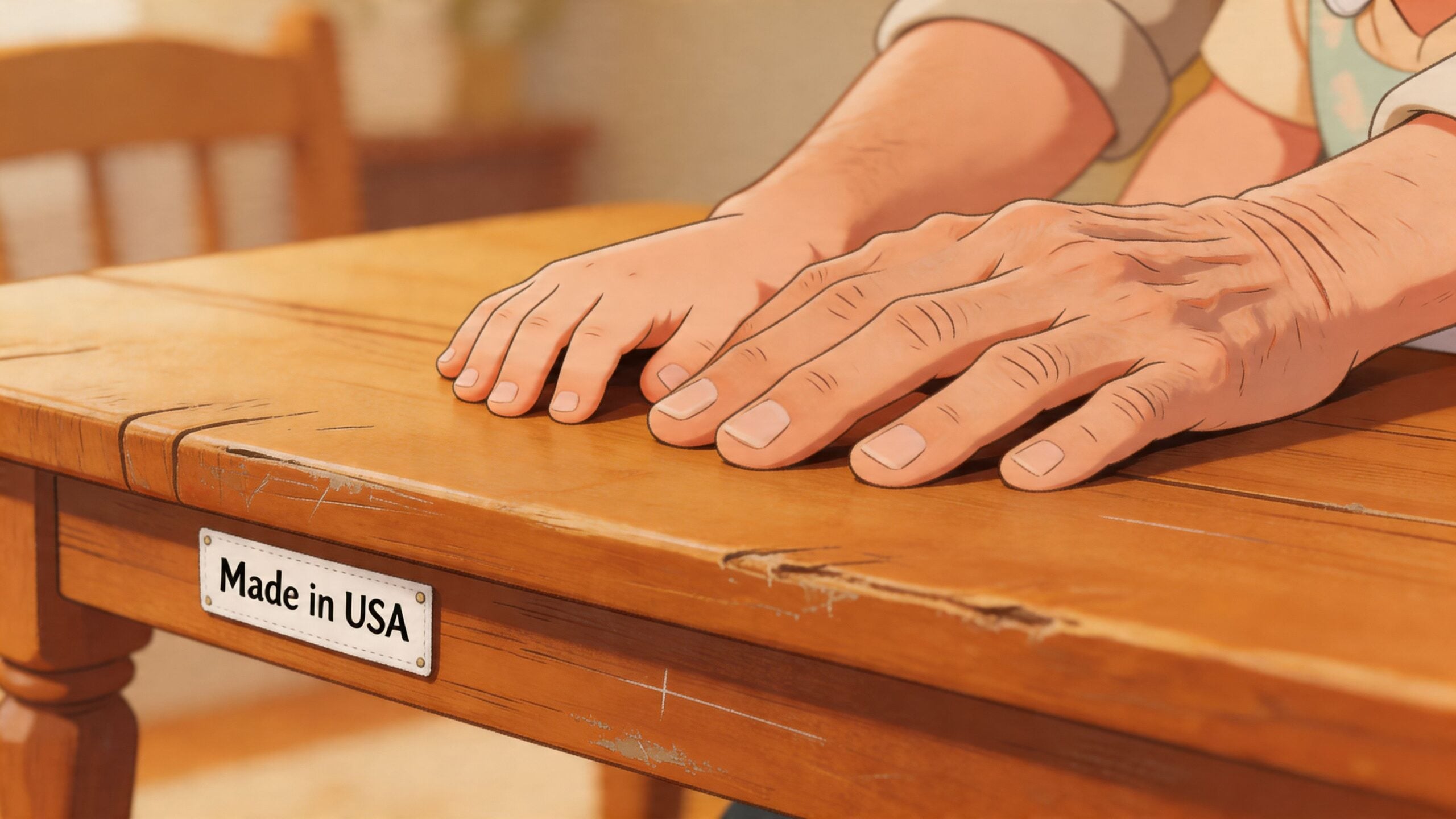
Fast furniture often looks fine for a short stretch. Then the joints loosen, the finish starts looking tired in the wrong way, and the piece never quite settles into family life. A well-made Amish or USA-made distressed dining set follows a different path. It’s built to stay.
That matters in homes where the dining room isn’t decorative only. It’s where people gather often, move chairs in and out constantly, and expect the table to serve for years instead of seasons.
Why these sets feel different in person
Shoppers usually notice three things right away with Amish and other USA-made dining furniture:
- The wood feels substantial
- The finish has depth instead of a printed-on look
- The piece feels calmer and steadier when touched
That last point is easy to miss online. A solid table has a different presence in a room. It doesn’t shimmy when someone leans on one end. Chairs don’t feel temporary. Over time, that everyday sturdiness becomes part of the value.
Custom ordering changes the outcome
Custom ordering is especially useful with distressed furniture because the finish is only one part of the decision. You may also want a different wood, edge shape, table length, or chair combination.
For Albany-area and Greene County homeowners, that matters when the room has quirks. Older homes often do. A standard-size set may be close, but not quite right.
Common custom decisions include:
- Table size for tighter dining rooms or longer farmhouse spaces
- Wood species to coordinate with existing trim or floors
- Finish tone so the distressing feels warm, not overly gray or overly orange
- Chair mix such as all side chairs, captains chairs, or a bench on one side
If you want to explore handcrafted options, Amish furniture near me is a practical place to start.
Long-term value includes sourcing
Some buyers are also thinking about where and how furniture is made. That’s becoming part of the value equation, not a side issue. According to Rustic Furniture Depot, Amish handcrafting can reduce factory emissions by as much as 40% compared to mass-produced furniture (Amish dining room sets and sourcing).
That won’t be the only reason someone chooses a table, but it can reinforce the appeal of buying a piece made with care, durable materials, and a slower production mindset.
Styling Your Dining Set in an Upstate NY Home
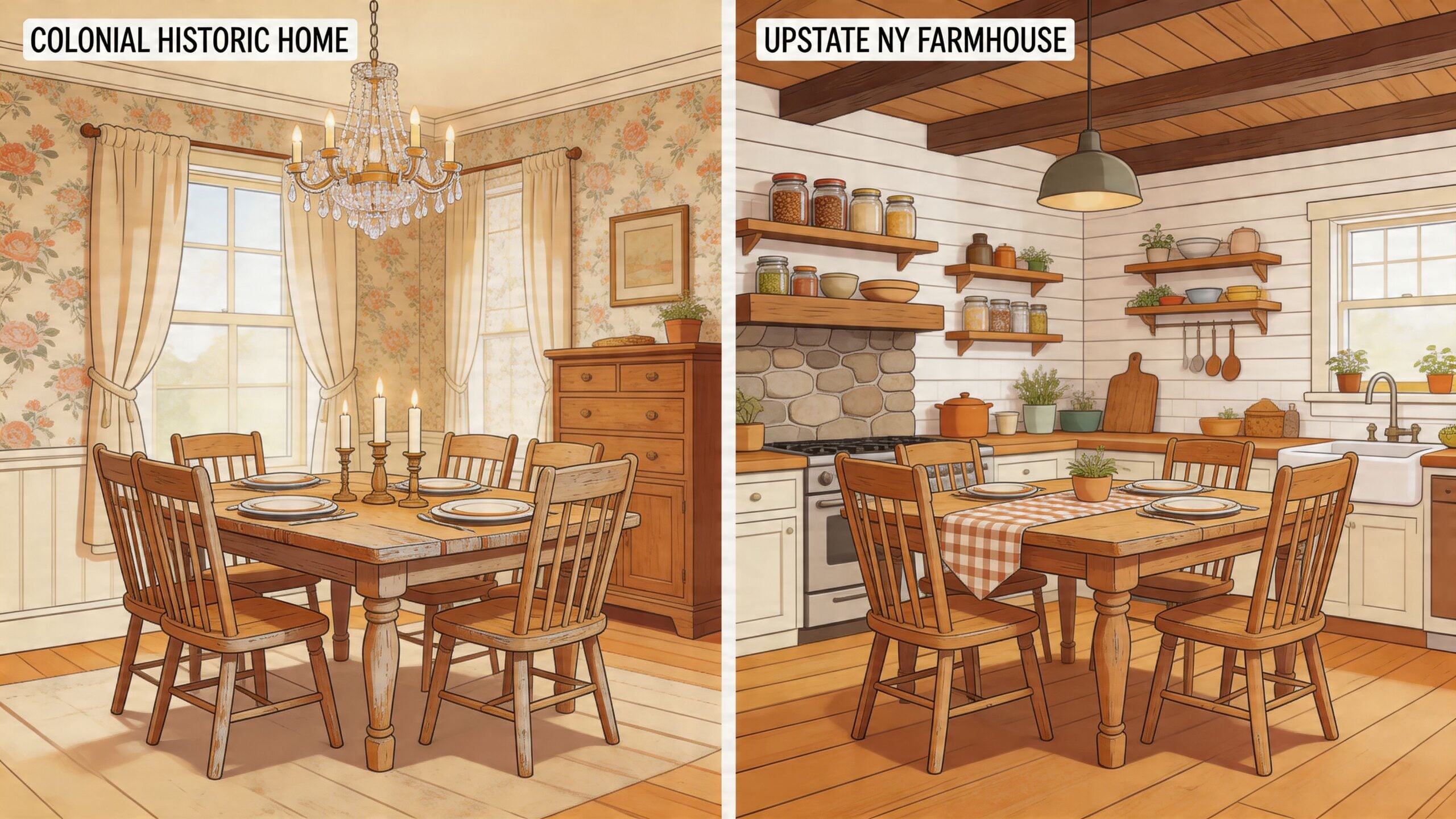
A distressed dining set works well in Upstate New York because the region’s homes already carry a lot of architectural variety. You’ll see Colonials, farmhouses, capes, split-levels, and newer open layouts within the same few towns. The trick is matching the table’s finish and shape to the mood of the house.
Classic farmhouse
This style feels natural with distressed wood, but it doesn’t have to look theme-driven.
Try pairing the set with:
- Slat-back or ladder-back chairs in a painted or wood-tone finish
- A simple pendant or iron chandelier
- Natural textiles like woven runners and seat cushions
- Muted wall colors that let the grain stand out
If your home has wide-plank flooring or older trim, this look usually settles in easily.
Modern industrial
A distressed dining set can also work in a cleaner, more urban room. The easiest path is combining wood warmth with sharper lines.
Look for:
- Black metal bases or hardware
- Upholstered chairs with simple silhouettes
- Less decorative centerpiece styling
- Lighting with matte black or mixed-material details
This approach works well in renovated homes around Albany and Troy where owners want character without leaning fully rustic.
The right contrast often makes distressed wood look more current, not less.
Cozy transitional
Many families want something between traditional and modern. Distressed furniture is useful here because it softens the room.
A transitional setup often includes:
- Fully upholstered host chairs
- A rug with subtle pattern
- A mirror or sideboard with cleaner lines
- Window treatments and flooring that support the table instead of competing with it
Coordinated planning is beneficial. If you’re selecting furniture, flooring, and finishing touches together, consistency matters more than perfectly matching every wood tone. For broader inspiration on mixing old and new elements gracefully, House Beautiful has a helpful gallery of farmhouse dining room ideas.
Consumer interest is also shifting toward responsible materials. Rustic Furniture Depot notes that Google data from 2025 showed a 35% rise in searches for "eco-distressed furniture," reflecting growing interest in pieces that combine style with more transparent sourcing.
Care and Maintenance for Lasting Beauty
One reason families like a distressed dining set is that daily life doesn’t show on it as harshly. A small scuff usually blends in. That doesn’t mean maintenance doesn’t matter. In Upstate New York, dry winters and more humid periods can challenge any wood surface.
According to Wayfair’s referenced market summary, a 2025 report noted that 28% of consumer complaints on rustic sets involve finish wear within two years, which is why quality sealing matters so much in humid climates like ours (distressed finish kitchen and dining room sets).
Daily habits that help
Most care is simple.
- Wipe spills promptly so moisture doesn’t sit on the finish.
- Use a soft cloth instead of abrasive scrubbers.
- Skip harsh cleaners that can dull the surface over time.
- Use trivets and placemats under hot dishes and serving pieces.
A distressed finish is forgiving visually, but heat rings and standing water can still cause trouble.
Seasonal upkeep in New York homes
Seasonal shifts are where many tables show their age fastest. If your dining room gets strong sun, keep that in mind when placing the table. If it sits near a heating vent, try not to let one end take all the dry air.
A care guide like how to care for wood furniture is useful to keep on hand for regular maintenance and finish-safe cleaning habits.
A distressed surface hides life’s little marks well. It still rewards basic care.
If you’re finishing the room on a budget, it can also make sense to add companion pieces slowly, especially side chairs, accents, or dining décor from a clearance section rather than trying to do the whole room at once.
Make Your Dream Dining Room a Reality with Tip Top
Once you know what you want from a distressed dining set, the process gets much easier. The key is turning a style idea into an actual room plan that fits your home, your habits, and your budget.
For local shoppers, Tip Top Furniture & Mattresses in Freehold offers a practical set of tools for that process. The store has served the region since 1978, provides professional design services dating back to 1984, and carries furniture, décor, flooring, and mattresses in one showroom. That’s useful if you’re trying to coordinate more than just the table.
A few services matter especially for dining room projects:
- Free online room planning so you can test scale and layout before buying
- Custom ordering for wood species, finish, size, and other details
- Flexible financing if you’re furnishing a larger space in stages
- Design guidance for tying the dining set to flooring, trim, and nearby rooms
If you’re ready to take the next step, visiting the Freehold showroom can help you compare finishes and construction in person. For shoppers who are planning a broader home update, applying for financing online can also make the timeline easier to manage.
Frequently Asked Questions for Local Homeowners
Is a distressed dining set good for families with kids
Usually, yes. Many families like it because small dings or light wear tend to blend into the finish more naturally than they do on a very smooth, formal surface. Construction quality still matters more than the look alone.
Will it clash with my existing wood floors
Not necessarily. Matching wood perfectly often makes a room feel stiff. It usually looks better when the floor and table coordinate in tone or mood rather than copying each other exactly.
Can distressed furniture work in a more updated home
Yes. Choose cleaner chair shapes, simpler lighting, and a lighter level of distressing. That keeps the room current while still adding warmth.
Where can I see a larger selection near Albany, Schenectady, or Troy
Many Capital Region shoppers head to the Freehold area when they want to compare handcrafted options in person, especially if they’re considering Amish dining furniture or custom ordering.
If you’re comparing styles, sizes, or custom possibilities for a distressed dining set, Tip Top Furniture & Mattresses is a practical place to continue your search. You can explore room planning tools, design help, financing options, and in-person shopping from the Freehold, NY showroom while serving homes across Albany, Schenectady, Troy, Greene County, and the wider Capital Region.