Full Captains Storage Bed A Complete Buyer’s Guide


The bedroom usually starts with good intentions. Then the extra blanket lands on a chair, out-of-season clothes end up in a tote, and the guest room slowly becomes the place where everything goes when there isn’t a better spot.
That’s especially common in older homes and compact bedrooms around the Albany Capital Region. Closets can be shallow, floor space disappears fast, and a standard bed frame leaves a large block of storage potential sitting empty under the mattress.
A full captains storage bed solves that problem in a practical way. It gives you a real bed, built-in organization, and less need for extra case goods crowding the walls. For many households, it’s one of the smartest ways to make a smaller bedroom work harder without making it feel busier.
Families who are sorting out a child’s room, setting up a guest room, or trying to reclaim a multipurpose bedroom usually start in the same place. They want cleaner lines, easier storage, and furniture that won’t feel like a short-term fix.
If clutter has been winning lately, this look at bedroom storage solutions that eliminate clutter is a helpful companion. The bigger decision is choosing the right storage bed the first time, with the right layout, materials, and mattress fit.
Your Guide to a Clutter-Free Bedroom
A full storage bed works best when it handles two jobs well. It needs to sleep comfortably, and it needs to store daily-life items in a way that’s easy enough to use every day.
That second part matters more than most shoppers expect. If drawers stick, if they open into a cramped walkway, or if the compartments are awkward for the things you own, the storage stops helping.
A common bedroom problem in real homes
A typical setup goes like this. There’s a full bed, a dresser, maybe a narrow nightstand, and still not enough room for linens, books, or seasonal clothes.
In a child’s room, the problem becomes toys, extra bedding, and clothing that keeps changing with the season. In a guest room, it’s the opposite. The room looks fine most of the time, but there’s nowhere sensible to put overflow items when guests arrive.
A captain’s bed fixes that by bringing storage into the bed base itself. You’re using space that already belongs to the bed, instead of asking the room to make space for another furniture piece.
Small bedrooms rarely need more furniture. They need furniture that does more.
Why this bed style keeps showing up
The reason shoppers keep circling back to a full captain’s bed is simple. It answers a very ordinary problem with a built-in solution.
A well-chosen model can help you:
- Free up wall space by reducing the need for a separate dresser
- Hide visual clutter behind drawer fronts instead of baskets and bins
- Keep essentials close so sheets, pajamas, or guest linens stay where you use them
- Make a compact room feel calmer because fewer pieces compete for space
That sounds straightforward, but trade-offs exist. Some rooms need drawers on one side only. Some mattresses sit too high on the wrong platform. Some lower-priced frames look fine on day one and become frustrating after steady use.
Those details decide whether a storage bed becomes a favorite piece or a regret purchase.
What Is a Full Captains Storage Bed
A full captains storage bed is a full-size bed frame with storage built into the base itself. Instead of leaving the area under the mattress empty, the frame uses that footprint for drawers, and in some designs, a bookcase headboard or open cubbies. The full size fits a standard full mattress, but that detail deserves more attention than many shoppers expect. In our store, I often see problems start when a bed is built around one platform height and the mattress, especially a USA-made model, runs thicker or slightly different in finished dimensions than the customer was told.
A captain’s bed has been around for a long time. The idea came from tight quarters on ships, where built-in storage made better use of limited room, as explained in this history of the captain’s bed. The design lasted because it solves a real furniture problem, not because it followed a trend.
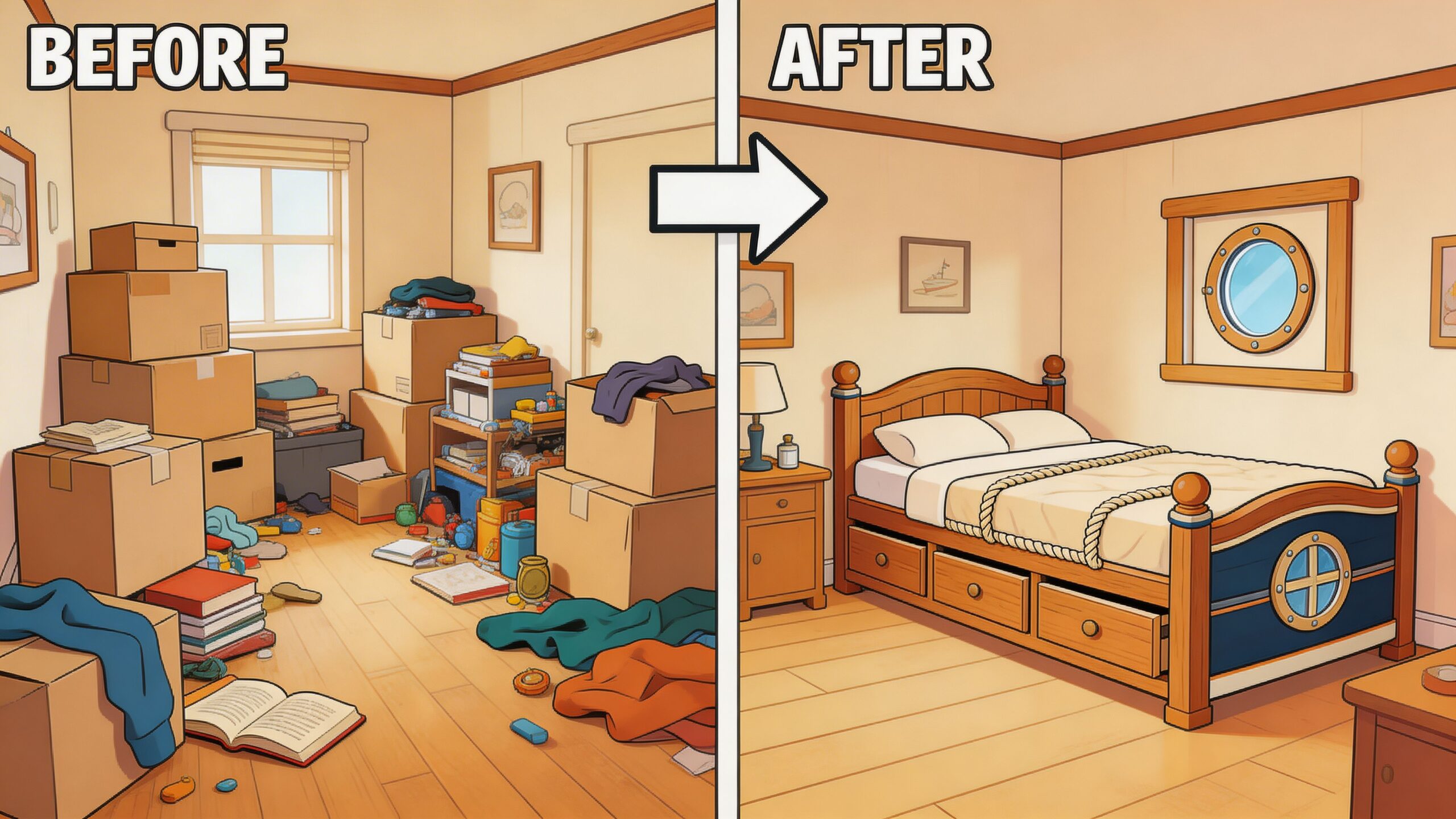
A bed frame that also has a job to do
The best way to understand this style is to look at how the base is built. On a true captain’s bed, the storage is part of the structure. The drawers are planned into the frame, supported by the bed’s side rails and platform, and meant to be used every day.
That matters over time. A lower-priced storage bed can look similar online but use light drawer boxes, weak bottoms, or cheap guides that start binding after a season of use. Good captain’s beds hold up because the storage mechanism and the bed frame were engineered together.
What makes it different from a mate’s bed
Shoppers mix up captain’s beds and mate’s beds all the time, and some retailers do not help much with the labeling.
In practical terms, a mate’s bed usually has a simpler storage setup, often a single row or fewer drawers. A captain’s bed tends to offer more built-in storage and a taller base to support it. That extra capacity is the whole point. The bed is doing part of the dresser’s job, not just adding a little bonus storage.
If you’re comparing designs, this guide to storage features to know in bedroom furniture helps sort out which storage is integrated and which pieces only borrow the look.
How to spot a true captain’s bed
Look for these signs:
- Multiple drawers built into the bed base
- A taller platform that allows usable drawer depth
- Storage that is fully integrated into the frame, not added underneath later
- Optional built-ins such as a bookcase headboard or trundle
One quick test helps. If the drawers look like an accessory, the bed usually is not a true captain’s bed.
That distinction affects daily use more than shoppers expect. Integrated storage usually opens better, carries weight better, and stays aligned longer. It also gives you a more predictable mattress fit, which is a bigger deal than it sounds when you are pairing the frame with an American-made mattress that may sit higher, heavier, or tighter on the platform than a big-box setup.
The Smart Benefits of Choosing a Captains Bed
A full captains storage bed earns its keep when the room needs to stay useful every day. It’s not just about adding drawers. It’s about removing friction from the way the bedroom works.
Why it helps in real households
Some furniture saves space on paper but feels awkward in use. A captain’s bed usually does the opposite. It adds storage where you already expect furniture to sit, so the room doesn’t have to grow to hold more things.
That’s why this style fits so many different rooms. A child’s room gets better toy and clothing storage. A guest room can keep linens tucked away without needing a dresser. A smaller primary bedroom can feel less packed because one larger piece replaces two smaller ones.
The benefits that matter most
It cuts down on extra furniture
When the bed base handles clothing, bedding, or everyday items, you may not need a full dresser at all.It keeps the room visually cleaner
Closed drawers make a room look calmer than open bins, stacked baskets, or items stored in plain sight.It uses dead space well
The area under a standard bed often collects dust and forgotten items. A captain’s bed turns that footprint into usable storage.It suits changing needs
What starts as toy storage can later hold school items, spare sheets, or guest bedding. That flexibility makes the piece easier to live with over time.It can be a strong value buy
A better-made storage bed may cost more up front, but it can reduce the need for additional bedroom furniture and save space in a more efficient way.
Where it works best and where it doesn’t
A captain’s bed is a smart fit when:
- the bedroom is short on closet space
- the wall layout makes a bulky dresser feel cramped
- you want everyday items organized, not buried
- the room needs to serve more than one purpose
It’s less ideal when the room is so tight that drawers can’t open fully, or when the sleeper strongly prefers a very low bed height.
If you use the storage every week, a captain’s bed usually makes sense. If you’ll only stash things there twice a year, another bed style may be easier.
That’s the difference between buying for the catalog photo and buying for real life.
Exploring Your Storage Options and Configurations
The right storage layout changes how a full captains storage bed works day after day. Drawer count matters, but access matters more. A bed can look generous on a spec sheet and still be frustrating in real use if the drawers are shallow, the openings are small, or the storage sits on the wrong side for the room.
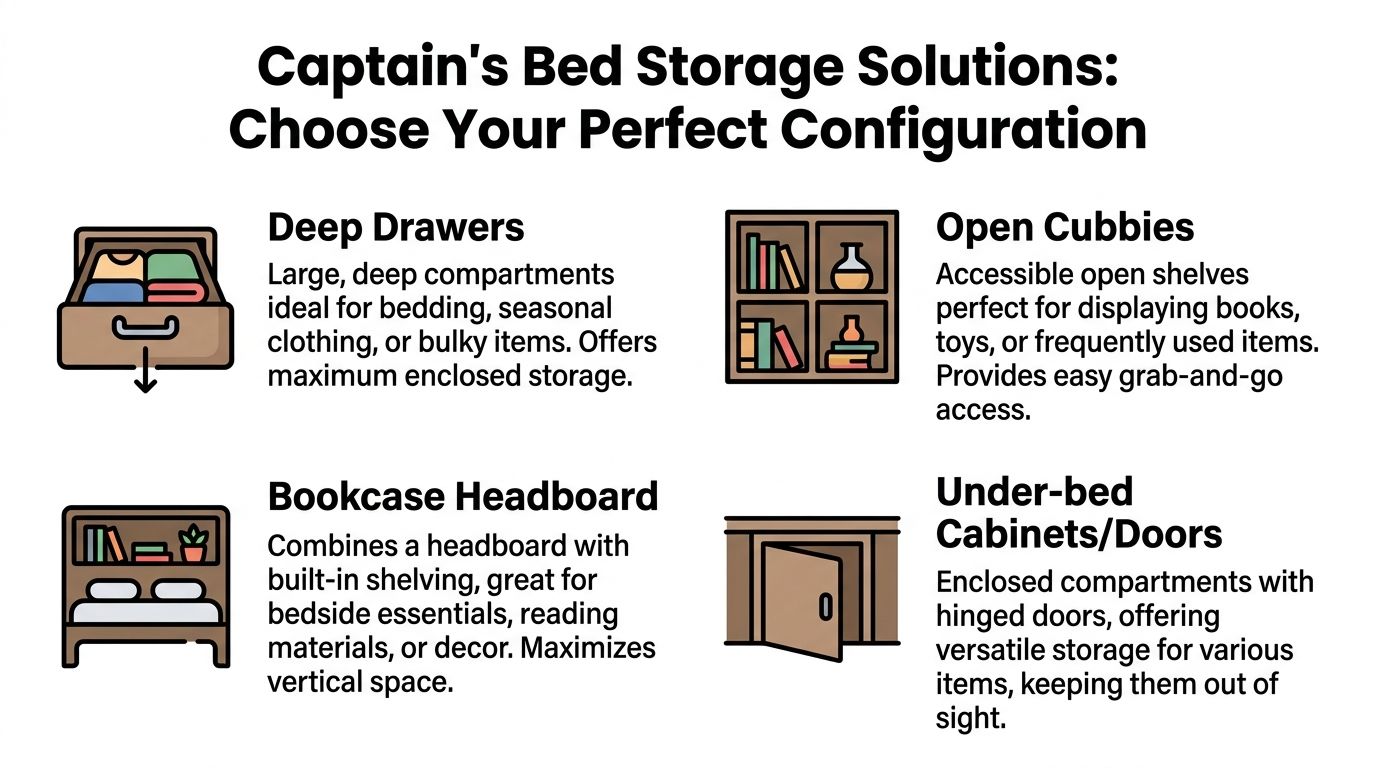
Capacity is a big reason shoppers choose this style. As noted in Amerisleep’s captain bed overview, many captain’s beds use double rows of drawers under the mattress and a taller frame to create substantially more usable storage than simpler platform designs. In the showroom, that extra volume is only part of the story. I pay just as much attention to how the drawers ride, how far they open, and whether the casework will stay square after years of use.
Four common setups
Start with what needs a home.
| Configuration | Best for | Trade-off |
|---|---|---|
| Deep drawers | Blankets, sweaters, spare pillows, thicker bedding | Full extension needs side clearance, and heavy loads put more strain on slides |
| Open cubbies | Books, baskets, kids’ items, things used every day | They show clutter fast and collect dust more easily |
| Bookcase headboard | Glasses, chargers, alarm clock, reading materials | Adds bulk at the head of the bed and can limit pillow space |
| Cabinets or doors | Mixed storage, awkward items, less-folded goods | Slower to access than drawers, especially for daily clothing |
For a broader comparison of built-in and standalone pieces, this ultimate guide to furniture storage options gives helpful background.
One side or both sides
This decision affects daily function more than shoppers expect.
One-sided storage is usually the better answer for beds that sit against a wall or in rooms with narrow walkways. It keeps the usable drawers on the open side, where they will get opened.
Two-sided storage gives more capacity, but only in a room with enough clearance on both sides. In practice, blocked drawers become dead storage. That is why I would rather sell a well-planned one-sided bed than a larger two-sided model that only works on paper.
A bed with a storage headboard layout can also take pressure off the side drawers. That setup works well for readers, students, and anyone who wants everyday items within reach instead of mixed in with clothing or linens.
Match the layout to the user
The best configuration depends on habits, not just room type.
- Kids’ rooms usually do well with medium-depth drawers that open smoothly and do not require much force. Oversized drawers can become junk bins.
- Guest rooms benefit from fewer compartments with more depth. Spare sheets, pillows, and off-season bedding store better that way.
- Teen rooms and small apartments often need the bed to do dresser duty. In those cases, drawer size and slide quality matter more than the total drawer count.
- Adult bedrooms usually work best with a balanced mix. Deep storage for linens, easier-access space for clothing, and a layout that does not interfere with traffic around the bed.
One detail big-box listings often skip is mechanism durability. Full drawers loaded with denim, books, or winter bedding are hard on cheap slides and thin drawer bottoms. Better beds use stronger joinery, sturdier bottoms, and hardware that can handle weight without racking over time.
Custom sizing deserves the same attention. Some USA-made mattresses run a little thicker, heavier, or truer to size than mass-market imports, and that can affect rail height, drawer clearance, and how neatly the mattress sits inside the frame. A good storage bed setup is not just about fitting the mattress length and width. It also has to work with the mattress profile and the way the bed will be used every week.
Choose the configuration that fits your routine on an ordinary weekday. That is usually the one that still feels right five years later.
Ensuring a Perfect Fit with Mattress and Room Planning
Saturday morning gets expensive fast when a new bed arrives, the drawers hit the nightstand, and the closet door only opens halfway. A full captains storage bed needs to fit the room in real use, not just on paper.
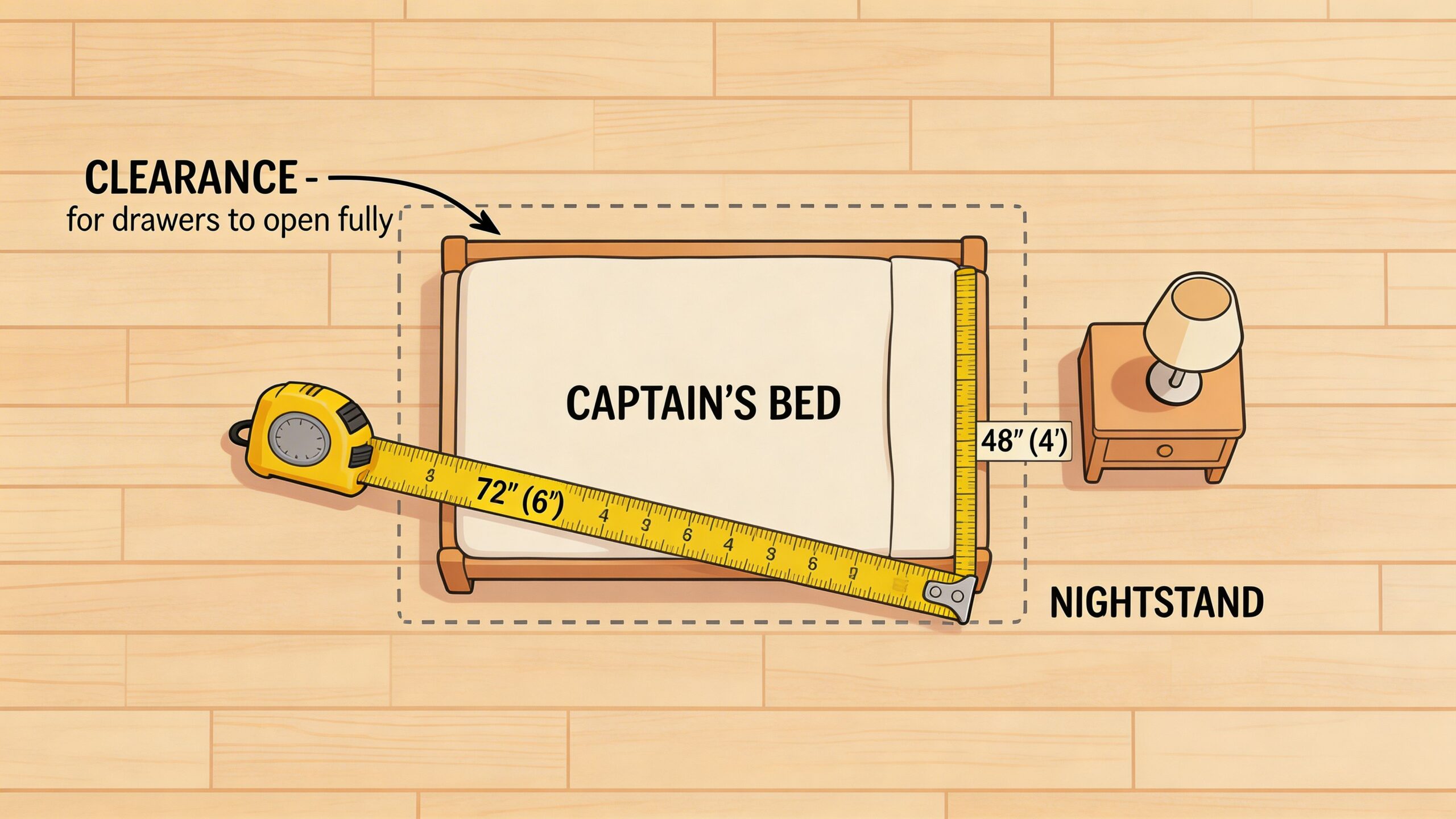
I always tell shoppers to plan for three things at once: the bed footprint, the drawer swing, and the path your feet take around the bed every day. If one of those gets tight, the room starts working against you.
Measure the room like a furniture planner
Wall-to-wall dimensions are only the start. Real rooms have baseboards, window trim, heat registers, door swings, and nightstands that steal usable space.
A simple floor test helps. Mark the bed size with painter's tape, then mark the full drawer extension. Stand where you would use the drawers. If you have to turn sideways, block a closet, or bump a nightstand, the layout needs to change before you order.
Check these points before you settle on a configuration:
Measure the bed wall
Include trim, outlets, vents, and anything that pushes the bed forward or off center.Mark the full footprint
Tape out the bed on the floor so you can see how much of the room it really claims.Allow for drawer use
A drawer that opens only halfway is wasted storage. Leave enough room to pull it out and stand in front of it.Test surrounding furniture
Nightstands, dressers, closet doors, and entry doors all affect whether the storage stays convenient.Walk the room
Make the same path you use in the morning and at night. The bed should not turn that route into a squeeze.
For a quick size comparison while you plan, this guide to bed sizes can help you visualize common dimensions.
Mattress fit is more than length and width
Mattress fit is more than length and width. Big-box listings often come up short here. They usually list the mattress size the frame accepts, but they skip the details that affect how the bed performs over time.
Mattress height matters. So does mattress weight. A thicker USA-made mattress can sit higher inside the frame, change how the headboard looks, and affect how easy it is to get in and out of bed. Heavier hybrids also put more demand on the support system under the mattress. If the platform, slat spacing, or rail height is wrong, you can end up with poor support, warranty trouble, or a bed that feels off in daily use.
Custom sizing solves more of these problems than many shoppers realize. Some American-made mattresses run true and substantial, while some imported models vary enough in thickness or finished size to create fit issues inside a storage frame. On a captains bed, that difference can affect side rail reveal, overall bed height, and how neatly the mattress sits in the opening.
A detailed guide on choosing the best bed and mattress size for your home is a good place to start before pairing a frame with a mattress.
A quick planning checklist
| Planning point | What to check |
|---|---|
| Mattress height | Will the finished sleep surface feel comfortable for the person using it every night? |
| Mattress weight | Can the platform and center support handle a heavier hybrid or pillow-top properly? |
| Drawer clearance | Can each drawer open fully without hitting another piece or blocking a walkway? |
| Headboard and wall space | Will the bed crowd a window, vent, or outlet once it is in position? |
| Daily routine | Can you make the bed, reach the storage, and move through the room without hassle? |
A good storage bed gives you storage without adding friction to the room. If everyday use feels cramped during planning, it will feel worse after delivery.
Custom work is especially helpful for shoppers who already own a mattress they love and want the bed built to suit it. That approach usually produces a better long-term fit than forcing the mattress and frame to compromise with each other.
Quality Materials and Heirloom American Craftsmanship
A full captains storage bed earns its keep every day. The frame carries weight, the drawer boxes handle real loads, and the moving parts get used far more than people expect. In our store, the biggest difference between a bed that still feels right in ten years and one that starts annoying you in two usually comes down to materials, joinery, and drawer hardware.
Why storage beds usually fail at the working parts
The weak spots are rarely obvious on a website photo. Problems show up after months of opening loaded drawers, shifting weight across the platform, and living with the bed through seasonal humidity changes.
Drawer alignment is often the first thing to go. If the casework is thin, the fasteners are light-duty, or the frame flexes under load, the drawers start rubbing, sagging, or sitting unevenly in the opening. That is one reason I tell shoppers to judge a storage bed more like a piece of cabinetry than a simple bed frame.
What deserves a close look
Solid wood matters, but it is only part of the story. The bed also needs a stable structure and hardware that can stand up to repeated use.
Check these details:
Drawer slide quality
Full-extension, well-mounted slides make a noticeable difference in daily use and long-term alignment.Case construction
A rigid base helps keep drawer openings square, which protects smooth operation over time.Drawer box strength
Plywood or solid wood drawer boxes usually hold up better than thin stapled components under the weight of clothes, blankets, or toys.Joinery and support system
Strong corner blocks, center supports, and secure rail connections help the bed stay quiet and solid.Finish quality
A durable finish resists scuffs around drawer pulls, foot traffic, and routine cleaning.
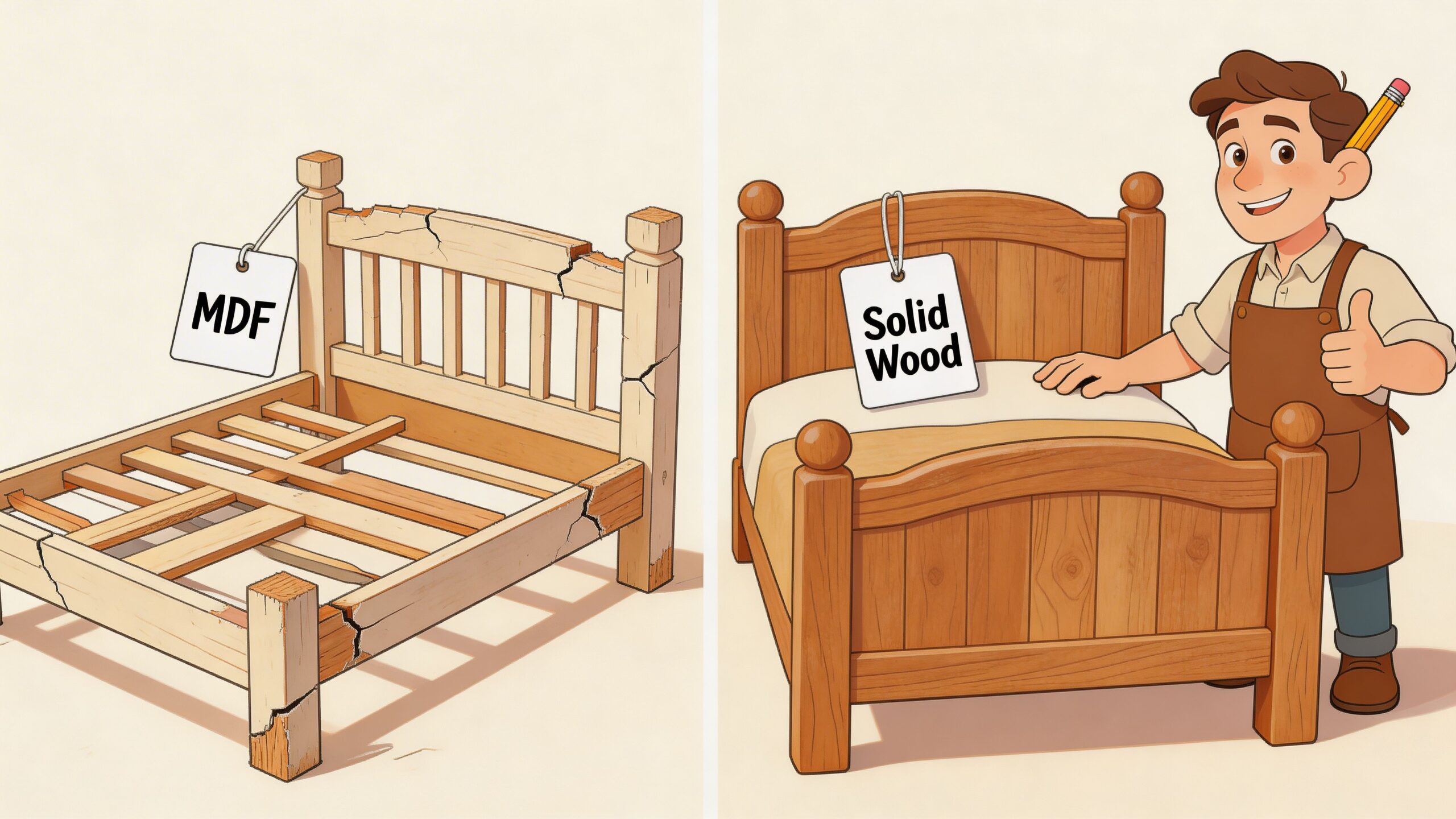
Solid wood versus lower-cost sheet goods
There is a real trade-off here.
| Material choice | What usually works well | What often goes wrong |
|---|---|---|
| Solid wood | Better screw hold, stronger joinery, longer service life, easier repair or refinishing | Higher upfront cost, more weight |
| MDF or particleboard-heavy builds | Lower price, consistent surface for paint, broad style selection | Weaker fastener hold, more swelling risk from moisture, faster wear at drawers and joints |
That does not mean every engineered panel is bad. Good manufacturers use plywood and selected engineered components in smart places. The problem is cheap construction hiding behind a nice finish. That is why many shoppers who want a bed to last start by looking at USA-made furniture manufacturers with stronger build standards.
Where American craftsmanship shows up in real use
Better American-made storage beds usually prove themselves in the unglamorous details. Drawer faces sit evenly. The platform stays quiet. The bed feels planted instead of loose. Years later, you are less likely to be dealing with stripped screws, split panels, or drawers that need a lift to close.
This matters even more with a captains bed because mattress fit and bed construction work together. If a mattress is made to a true American size but the bed opening is built loosely or out of square, the whole piece can look and feel off. Big-box retailers often gloss over that point. A well-built bed has to do both jobs well. It needs to hold up mechanically and fit the mattress cleanly.
A guest room can tolerate more compromise. A child’s everyday bed or a primary bedroom storage bed usually cannot. In those rooms, paying for stronger materials and better craftsmanship tends to save money, hassle, and frustration over the long haul.
Customizing Your Style at Tip Top Furniture
Once the function is right, style matters. A storage bed is a large visual piece, so the finish, wood tone, hardware, and headboard shape all influence how the whole bedroom feels.
Start with the room, not the bed
The easiest mistake is choosing a bed in isolation. A full captains storage bed should match the room’s mood and the furniture already in it.
A few examples:
- Rustic spaces usually pair well with warm wood tones, substantial drawer fronts, and classic hardware.
- Cleaner transitional rooms often look better with simpler lines and less decorative framing.
- More modern bedrooms benefit from flat panels, restrained hardware, and a lower-contrast finish palette.
The details that change the look
Small choices make a big difference.
- Wood species affects grain pattern and visual warmth
- Finish color shifts the room brighter, deeper, or more neutral
- Hardware style can make the bed feel traditional or more current
- Headboard design changes whether the bed reads as compact or statement-making
A custom order is often the best route when standard listings feel close, but not quite right. That’s especially true if you need a specific wood, want the storage arranged differently, or need the piece to work with an existing mattress and room layout.
For shoppers who want those options, custom order furniture services make it possible to adjust style, size, wood type, and finish more precisely than a boxed online order usually allows.
When custom is the smarter buy
Custom isn’t only for dramatic projects. It’s often the practical answer when:
- the room has unusual dimensions
- you already own a mattress you want to keep
- you want Amish or solid wood construction in a specific finish
- you’re trying to match other bedroom pieces
- standard drawer layouts don’t fit your floor plan
The best custom furniture doesn’t feel custom because it’s flashy. It feels custom because nothing about it fights the room.
That’s usually the difference between furniture you work around and furniture that works for you.
Find Your Perfect Bed in Our Freehold Showroom
A full captains storage bed is one of the most practical bedroom upgrades you can make when space is tight and clutter keeps creeping back. The right one gives you storage where you need it, a cleaner layout, and a bed that works harder without asking the room to do more.
The key is choosing carefully. Drawer layout, mattress fit, room clearance, and construction quality all matter. Skip those details, and a storage bed can become awkward fast. Get them right, and it can replace extra furniture and serve the room for years.
That’s where local experience helps. Seeing the piece in person, opening the drawers, checking the height, and comparing wood quality side by side makes the decision much easier than scrolling through generic product listings.
For shoppers in Freehold, Albany, Schenectady, Troy, and across the Capital Region, it also helps to know there are options beyond standard boxed imports. Better materials, custom ordering, room planning, and mattress guidance can make the final choice much more successful.
If you’re still deciding, compare in-stock bedroom pieces, look at custom possibilities, and pay attention to long-term value, not just the first price tag. If budget is part of the equation, it’s also worth watching current bedroom deals, clearance opportunities, and financing choices before you buy.
If you’re shopping for a full captains storage bed in the Albany Capital Region, Tip Top Furniture & Mattresses is worth the trip to Freehold, NY. Since 1978, this family-owned showroom has helped local homeowners find better-quality bedroom furniture, USA-made mattresses, Amish-crafted pieces, custom orders, and coordinated design help. You can explore bedroom options, ask about custom sizing, browse the Clearance Corner for value-priced finds, or review flexible financing if you’re furnishing a room all at once.