Bed with Lights: A Buyer’s Guide for Albany, NY Homes

You’re probably seeing more beds with lights online than ever before. Some look sleek and useful. Others look like a trend that might feel dated in a year. If you live in Albany, Schenectady, Troy, Greene County, or nearby and you want your bedroom to feel calmer, better organized, and a little more current, it helps to know what these beds do before you buy one.
A bed with lights can be practical. It can also be a poor fit if the lighting is too bright, too cold in color, or cheaply built. That is where many shoppers get stuck. The photos look good, but the details that affect comfort, sleep, and long-term value are easy to miss online.
Families across the Capital Region have also become more thoughtful about sleep. Lighting, mattress support, room temperature, and layout all work together. For extra context on how those pieces connect, this guide on creating a sleep sanctuary is useful: https://tiptopfurniture.com/creating-a-sleep-sanctuary-lighting-temperature-mattress-and-bedding-working-together/
Your Guide to a Brighter Bedroom
A bedroom does a lot of work. It needs to feel restful at night, safe when you get up in the dark, and functional when you read, charge a phone, or wind down after work. That is why lighted beds appeal to so many homeowners. They combine furniture and lighting in one footprint.
The simplest way to think about them is this. A bed with lights is not just a flashy frame. It is a bed that adds low, purposeful light where people use it. Sometimes that light sits in the headboard. Sometimes it glows beneath the frame. Sometimes it does both.
For homeowners who like to gather ideas before they shop, these brilliant bedroom lighting ideas offer a helpful look at how layered lighting changes the feel of a room.
What confuses shoppers most is that all lighted beds get grouped together, even though they serve very different purposes. A reading-friendly headboard behaves differently than an under-bed glow. A softly lit wood bed feels different from a color-changing LED platform. Once you separate the categories, the choices become much easier.
Understanding the Different Types of Lighted Beds
Some beds use light for function. Others use it mainly for atmosphere. Many do a bit of both.
If you have been browsing platform beds and storage beds, you may have already seen these styles without knowing the names. A good example of a frame style that helps shoppers picture bed structure clearly is a bookcase platform bed: https://tiptopfurniture.com/bookcase-platform-bed/
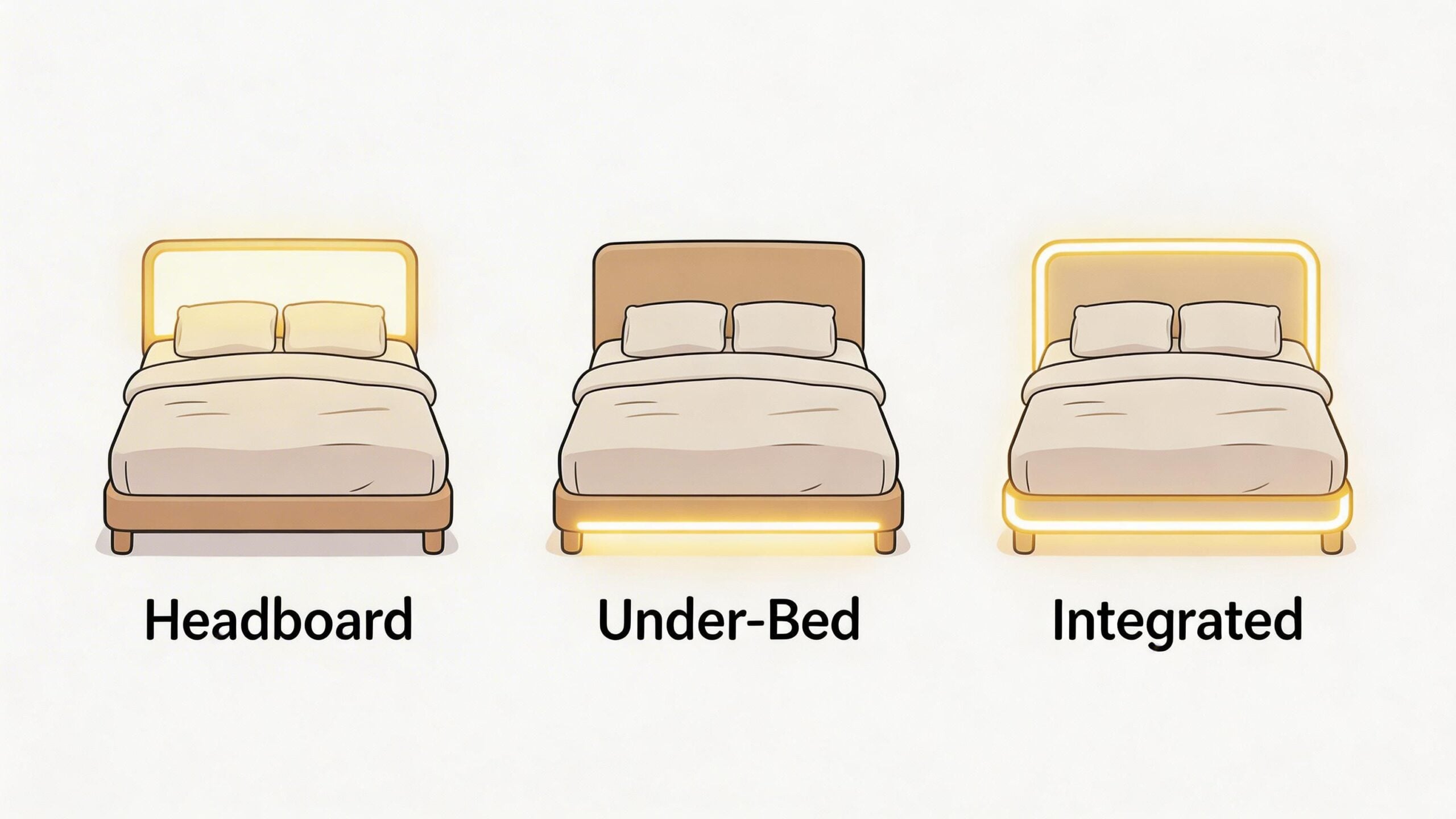
Integrated headboard lighting
This is the most familiar version for many people. Lights are built into or mounted onto the headboard area.
Headboard lighting works well when you want:
- Reading support that keeps light close to the pillow area
- A cleaner nightstand setup with less need for bulky bedside lamps
- A softer visual focal point behind the bed
Think of it as a built-in glow wall. Instead of lighting the whole room, it creates a pocket of light around the bed itself.
This style often appeals to people in apartments and smaller bedrooms around Albany where every surface matters. If your nightstand already holds a phone charger, water glass, and a book, moving some lighting function into the bed can reduce clutter.
Under-bed lighting
Under-bed lighting creates the “floating bed” look. The light source sits under the frame and casts a glow onto the floor.
This style is less about reading and more about navigation and mood. It can help with:
- Nighttime visibility when you get up without wanting overhead light
- A modern look that makes the bed feel lighter and more architectural
- A softer room atmosphere in the evening
For older adults, kids, or anyone who wakes during the night, this type can be especially useful if it is dim and well controlled. You want enough light to see the floor edge, not enough to light up the whole room.
A good under-bed light should feel like a guide, not a spotlight.
Full-frame LED systems
This is the version most often pushed online. It may include headboard lighting, underglow, side rails with LEDs, app controls, remote controls, or color-changing features.
The appeal is obvious. These beds can feel customizable and dramatic. Some product listings describe USB-powered RGB strips and app-based controls, and some modern designs promote a very wide range of color options through integrated LED systems, including styles shown on retail product pages such as this HOMLUX model: https://www.nfm.com/homlux-full-storage-platform-bed-with-led-headboard-with-charging-station-in-gray-69506848/69506848.html
But this category is also where shoppers need to slow down. A full-frame LED bed can either feel polished or overly busy depending on:
| Feature | Helpful when | Less helpful when |
|---|---|---|
| Color controls | You want occasional ambiance | You prefer a timeless bedroom |
| App operation | You like smart home tools | You want simple controls |
| Strong underglow | The room has a modern look | The room leans traditional |
| Multiple light zones | You want adjustability | You are unlikely to use the extras |
Which type fits best
If your goal is comfort and calm, headboard or subtle under-bed lighting usually makes the most sense.
If your goal is visual impact, a full-frame LED design can deliver that look, but only if the light quality is good and the controls are easy enough that you will use them well.
A lot of confusion disappears once you ask one question first. Do you want the light to help you see, help the room feel different, or do both?
The Benefits and Drawbacks of Illuminated Beds
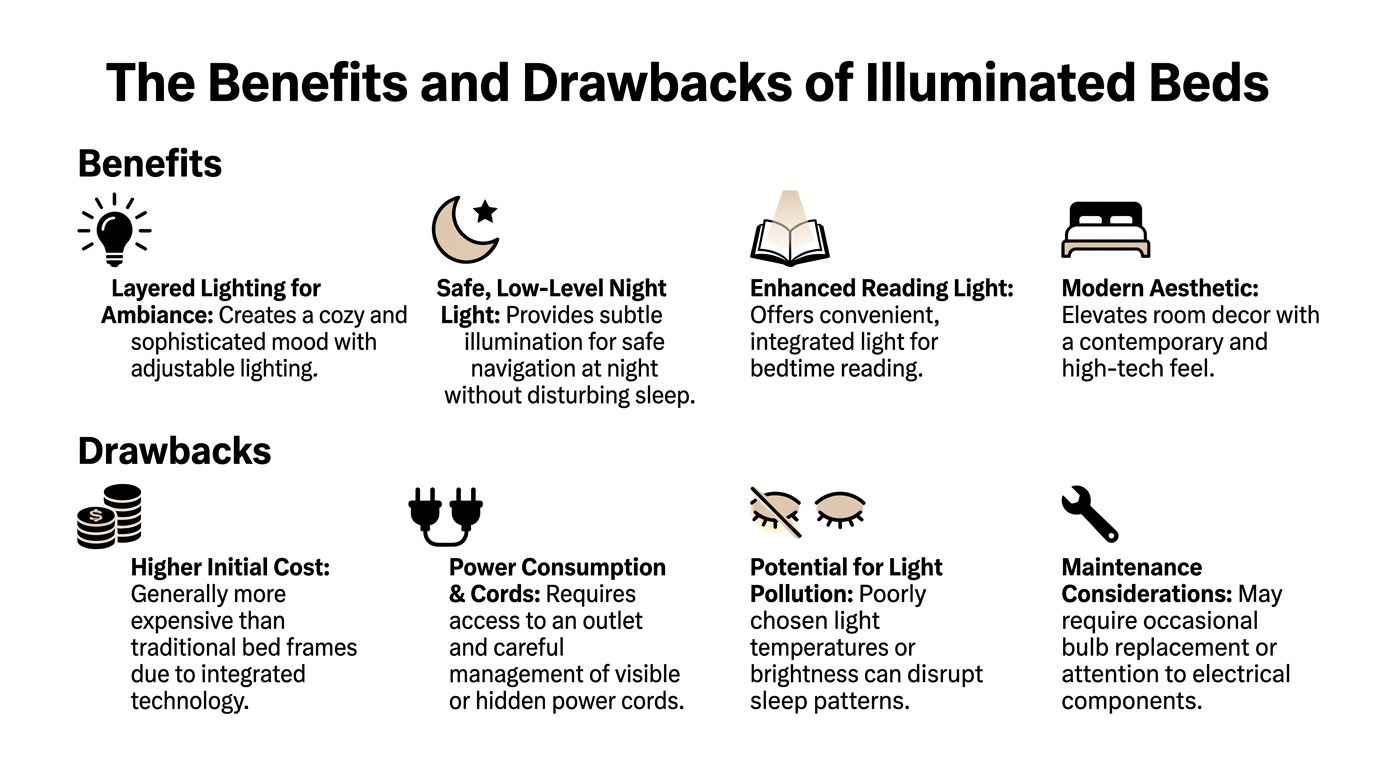
The appeal of an illuminated bed is easy to understand. It adds style, creates a softer nighttime mood, and can make a bedroom feel more custom. But the drawbacks are real too, especially if the lighting is too bright or poorly chosen.
Why people like them
A lighted bed often solves several small bedroom problems at once.
- It layers the room nicely. Instead of relying only on a ceiling fixture, you get a lower, gentler light source.
- It can make nighttime movement easier. A soft under-bed glow is easier on the eyes than flipping on an overhead light.
- It often feels more intentional. Even simple rooms can feel more finished when lighting is built into the furniture.
For people who want a more restful bedroom overall, sleep habits matter as much as furniture. This guide to better sleep offers practical ideas beyond lighting alone: https://tiptopfurniture.com/how-to-get-better-sleep-proven-techniques-for-natural-and-restful-sleep/
Where shoppers run into trouble
The biggest mistake is assuming all integrated lighting is harmless because it is “just accent light.” Brightness, timing, and color matter.
A Northwestern University study found that even minimal light exposure during sleep at 100 lux increased insulin resistance by 24% and sympathetic nervous system activity by 32% compared with sleeping in near-total darkness under 3 lux (NHLBI). That does not mean every bed with lights is a bad idea. It means bedtime lighting should be chosen with care.
Here is the practical takeaway. A bed light is helpful when you can dim it, warm it, and turn it off easily. It becomes a problem when it stays bright into the night or throws blue-heavy light into the room.
What to look for in a healthier setup
Not every shopper needs a high-tech frame. Many just need better control.
Look for these features first:
- Dimmable output so the bed can provide a low glow instead of constant brightness
- Warm-toned light rather than a cool blue-white effect
- Timer functions so the light turns off after you settle in
- Simple controls that make it easy to use the lighting correctly every night
If you have to choose between more features and better light quality, choose better light quality.
The tradeoffs that matter most
A balanced buying decision usually comes down to four questions.
Will you use the lighting every day?
If not, paying extra for elaborate effects may not make sense.Does the light support sleep or fight it?
A calm bedroom needs lower, warmer light near bedtime.Can the room handle another visible light source?
In a bedroom that already has lamps, sconces, and overhead lighting, built-in bed lighting may be more decorative than necessary.Will the look age well?
A subtle glow tends to stay appealing longer than aggressive color effects.
Some buyers love the modern look right away and then stop using the feature after the novelty wears off. Others find that a very simple under-bed light becomes one of their favorite parts of the room. The difference usually comes down to restraint. The best illuminated beds are the ones that subtly improve the room rather than dominate it.
Matching a Lighted Bed to Your Capital Region Home Style
A bed with lights can fit more homes than people think. The trick is matching the style of the lighting to the style of the room.
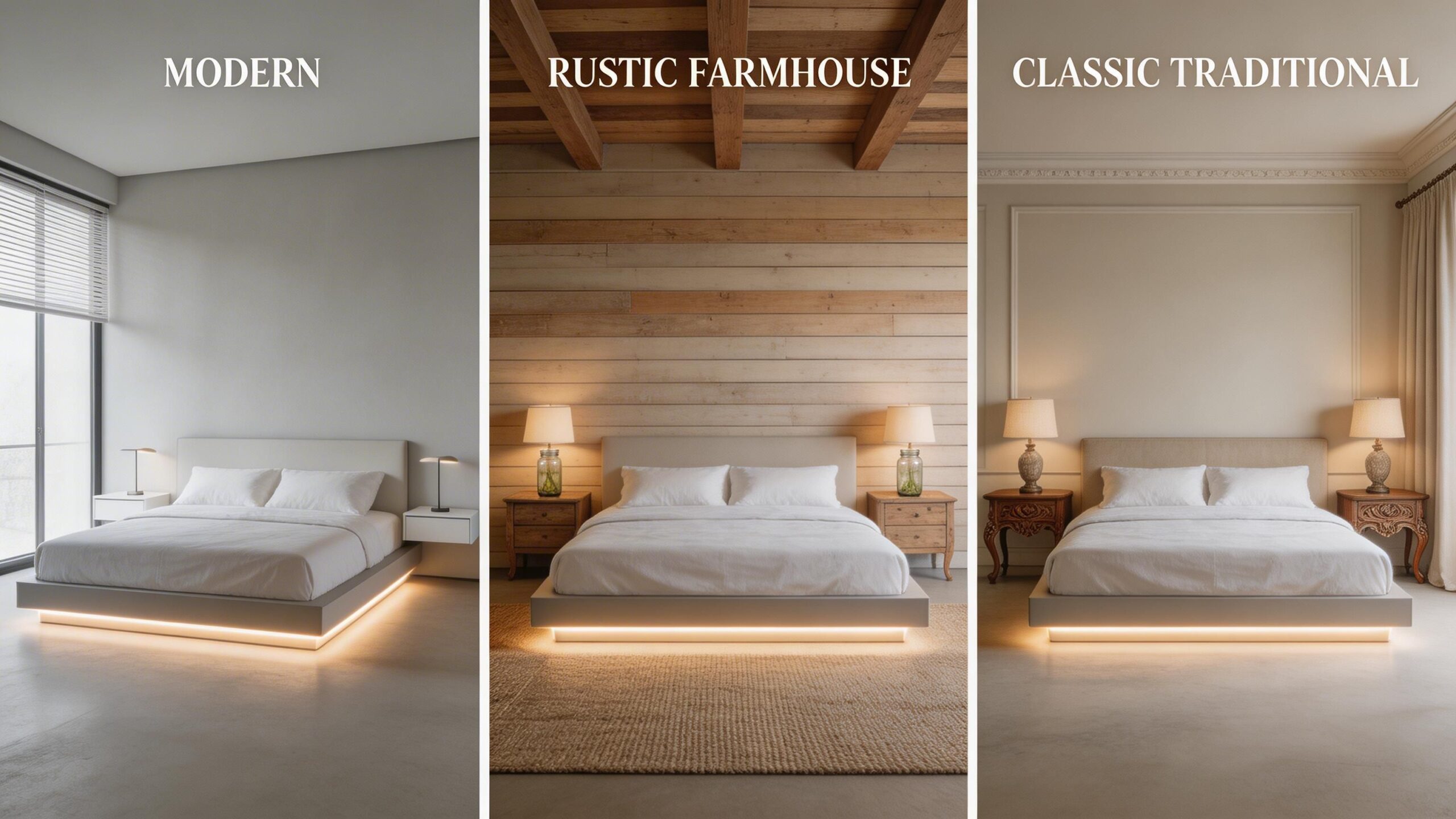
In the Capital Region, that matters because bedroom styles vary a lot. A downtown Albany condo, a suburban home in Clifton Park, and a farmhouse in Greene County do not call for the same lighting language.
Modern and minimal rooms
Modern bedrooms usually handle integrated lighting best. Clean platform beds, lower profiles, and simple lines already support the look.
In this setting, under-bed lighting often works better than a dramatic headboard. It keeps the room sleek and avoids visual clutter. If the bed has charging ports or storage, the whole setup can feel efficient rather than gadget-heavy.
A practical note for style-conscious shoppers: recent data points to a rise in searches for sleep-tech hybrid furniture in the Northeast, while many mass-market product pages still do not explain lighting quality, which is why custom specification matters when you want details like warmer 2700K LEDs for better sleep (Wayfair category reference).
Traditional and transitional homes
People often assume lighted beds will not work in these homes. They can, but the lighting needs to stay subtle.
A traditional room with wood furniture, softer bedding, and classic case pieces usually benefits from:
- Concealed under-bed light rather than visible LED strips
- Warm white light instead of color-changing effects
- A bed design that still looks complete when the lights are off
The bed should still read as furniture first. The lighting should feel like a quiet extra.
Rustic and farmhouse settings
Homes in rural parts of the Capital Region often lean toward rustic wood, painted finishes, and more natural textures. In these spaces, integrated lighting works best when it is nearly invisible.
A solid wood bed can pair beautifully with soft underglow if:
- the fixture is hidden,
- the light is warm,
- and the bed retains a handcrafted feel.
This is also where custom work matters. Some shoppers want the convenience of modern lighting without the plastic look that often comes with online-only frames.
Good lighting should match the character of the bed, not compete with it.
Kids rooms and guest rooms
These rooms are less about drama and more about usefulness.
In a guest room, a gentle bed light helps visitors find their footing without searching for switches. In a child’s room or teen room, the right bed with lights can replace a harsher nightlight and make the room feel more personal.
A few style rules help:
| Room type | Best lighting approach | What to avoid |
|---|---|---|
| Guest room | Low, simple under-bed glow | Complicated app controls |
| Teen room | Adjustable light with easy controls | Overly bright color effects at bedtime |
| Primary bedroom | Warm, dimmable integrated lighting | Lights that stay visually busy all day |
The broad lesson is simple. The right bed with lights should feel like it belongs in the room even before you plug it in.
How to Choose the Right Bed for Your Mattress and Room
A bed can look perfect online and still be wrong for the room. Most mistakes happen because shoppers focus on the headboard or lighting first and leave scale, mattress fit, and walking space for later.
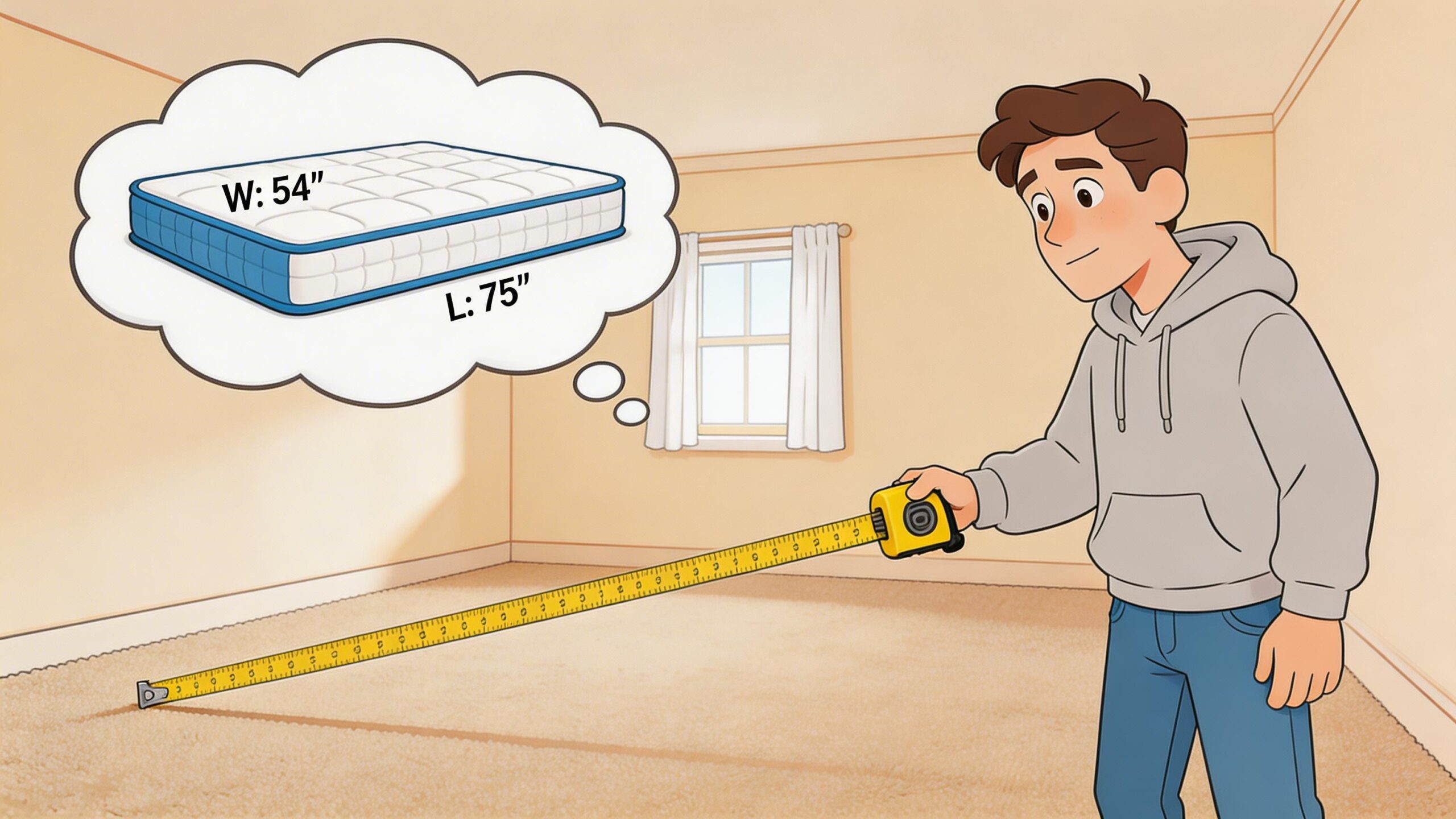
Start with measurements
Measure the room before you compare bed styles. Then measure again.
You need more than mattress size. You need to know:
- The wall width where the bed will sit
- Window and door swing locations
- How much walkway space remains on each side
- Whether the lighted bed includes a larger headboard or storage footprint
If you want a quick refresher on mattress dimensions before planning the layout, this bed sizes guide is a handy reference.
Match the frame to the mattress type
Not every bed frame works equally well with every mattress. Platform beds, slat systems, storage bases, and traditional rails all support mattresses differently.
That is especially important if you are replacing both pieces at once. Mattress height changes how the bed looks and how the lighting performs. A very thick mattress can visually swallow a low headboard. A low-profile mattress can make a tall illuminated headboard feel oversized.
For a more complete breakdown of mattress pairing, this guide is worth reviewing: https://tiptopfurniture.com/the-ultimate-guide-for-choosing-a-mattress/
Use a simple decision filter
When buyers feel overwhelmed, I suggest narrowing the choice with three filters.
First, function.
Do you need storage, reading light, nighttime floor visibility, or mostly style?
Second, room scale.
A compact room usually benefits from a cleaner frame and softer lighting. A larger primary bedroom can carry a bolder headboard.
Third, sleeping habits.
If one person reads while the other falls asleep early, integrated headboard lighting may be more useful than underglow.
Bring room dimensions, mattress size, and a few photos when you shop. Those three things answer most fit questions quickly.
A lighted bed works best when the light feature solves a real need in the room. If the fit is wrong, the feature will not save it.
Installation Safety and Long-Term Maintenance
This is the part many online listings skip. A bed with lights is still furniture, but it also includes electrical components. That means durability and serviceability matter more than they do on a standard frame.
Why cheap systems disappoint
The upfront price on mass-market frames can be tempting. What those listings often do not explain is how hard the lighting may be to service later.
One concern shows up often in budget models. Consumer reports indicate that under-bed LEDs in budget online frames can fail relatively quickly within 18 months (Walmart category reference). Failure is frustrating enough on a lamp. It is worse when the light is built into the bed and difficult to reach.
This is one reason shoppers should ask about modular parts, strip replacement, and access panels before buying.
Ask these questions before purchase
Not every buyer needs technical jargon. You just need clear answers.
Use this checklist:
- Can the light be replaced without replacing the whole bed?
- Is the wiring concealed and protected from rubbing or pinching?
- Are the controls simple enough for daily use?
- Can the light be dimmed or timed?
- Will delivery and setup include proper assembly of the lighting components?
If the seller cannot answer basic maintenance questions, that is a warning sign.
Keep the system working longer
Lighted beds do not need complicated upkeep, but they do need some common sense.
A few habits help:
Keep dust from building around exposed strips or control areas.
Dust does not look serious until it starts affecting small components.Avoid crushing cords behind the bed.
Pushing a frame hard against the wall can stress the wiring.Use the controls gently.
Remotes, switches, and charging ports tend to fail sooner when handled roughly.Do not ignore flickering.
A flicker is usually a sign to inspect connections, not something to live with.
For homeowners who like to understand hardware better, even something as basic as a headboard installation article can be helpful because it trains your eye to notice how furniture parts align and attach: https://tiptopfurniture.com/attaching-headboard-to-wall/
Safety matters as much as style
A safe setup should feel boring in the best way. Cords stay out of the path. Connections feel secure. The lighting works consistently. Nothing heats up unnecessarily. Nothing wiggles loose.
The best bed lighting system is one you barely think about after it is installed.
That is the long-term value test. A good bed with lights should not just look sharp in a product photo. It should keep doing its job night after night without turning into a maintenance project.
Find Your Perfect Bed at Our Freehold NY Showroom
Online shopping makes it easy to compare styles. It does not make it easy to judge light quality, wood tone, build strength, or how a frame feels in person.
That is where a showroom visit helps. If you are shopping anywhere in the Greater Albany Capital Region, including Albany, Troy, Schenectady, and Greene County, seeing a bed with lights in person can answer questions in minutes that product pages leave unresolved.
What you notice in person
A display floor tells you things a screen cannot.
You can compare:
- Whether the light feels soft or harsh
- How the bed looks when the lights are off
- Whether the controls feel intuitive
- How the frame works with different mattress heights
- If the style feels current or overly trendy
This matters for health as well as design. A UK study found that sleeping in the brightest rooms was linked to a 42% higher risk of heart attack compared with the darkest environments (Study Finds summary of the UK research). That is a strong reminder that bedroom lighting should be adjustable and used thoughtfully, not treated as decoration alone.
Why local guidance helps
A local furniture team can help you think through the whole room, not just the frame.
That includes choices like:
| Decision area | Why it matters |
|---|---|
| Bed style | Needs to match the architecture and furniture already in the room |
| Lighting tone | Should support evening comfort rather than overstimulate |
| Mattress pairing | Affects bed height, appearance, and daily comfort |
| Window treatments | Help control outside light and support a darker sleep environment |
For many homeowners, the strongest reason to shop locally is confidence. You can compare quality, ask practical questions, and make a decision that fits your room instead of guessing from a thumbnail photo.
If you want a bed with lights that feels useful, looks right in your home, and holds up over time, in-person shopping is still the clearest path.
If you’re ready to compare a bed with lights in person, explore custom options, or pair a new frame with a better mattress, visit Tip Top Furniture & Mattresses. Our family-owned Freehold, NY showroom has served the Greater Albany Capital Region since 1978, with expert design help since 1984, custom ordering, USA-made mattresses, Amish furniture, delivery, flexible financing, and a strong clearance selection for budget-friendly finds.