
Euro Sham vs Standard Sham: The Complete Bedding Guide


A bare bed can look perfectly tidy and still feel unfinished. The usual problem isn't the mattress or duvet. It's the pillow arrangement, especially when a homeowner is deciding between a Euro sham vs standard sham and discovers that the wrong insert can leave the bed looking flat, crowded, or oddly proportioned.
The practical answer is straightforward. Standard shams create a familiar rectangular layer, while Euro shams add square structure and height. Most polished arrangements use one format behind the other, then finish with a smaller accent pillow. The right choice depends on the bed's proportions, headboard, bedding fabric, and how much daily bed-making feels reasonable.
For homeowners in Freehold, Greene County, Albany, Schenectady, Troy, and the wider Capital Region, the decision is easier when the shams are considered as part of the entire bedroom rather than as isolated accessories. A pillow cover needs to work with the mattress, bed frame, nightstands, flooring, and the room's overall texture.
Understanding the Basics of Bed Shams
A sham is a decorative pillow cover designed to make a bed look finished during the day. Unlike a regular pillowcase, it often includes a structured border, flange, embroidery, quilting, texture, or a more substantial fabric. The insert gives the sham its shape, while the cover provides the visible color and pattern.
Consider a common Freehold bedroom. The sheets are clean, the duvet is neatly pulled up, and the headboard has a strong silhouette. Yet the bed still looks more like a place to sleep than a composed room. Adding properly sized shams creates a visual middle layer between the headboard and the coverlet, making the entire arrangement feel intentional.
Shams are decorative first, although a soft, uncomplicated sham can sometimes be used for resting. Most households remove heavily embellished or structured shams before sleeping because decorative details aren't always comfortable against the face or neck. A standard pillowcase remains the practical choice for nightly use.
Why shams became part of bed-making
Bed shams have a long history. Industry references trace their use to the 18th century, when decorative covers appeared in elite bedrooms, as described by the Sleep Foundation's guide to bed shams. Another historical overview also places the development of bed shams in the 1700s, while connecting modern formats to regional bedding customs in the history of the sham.
That history explains why the category contains more than one shape. Bedding traditions developed around different pillow formats, and those formats eventually became familiar retail sizes. The standard sham kept the long rectangular profile associated with conventional American bed pillows. The Euro sham developed around a square decorative pillow format associated with European bed-making.
The functional difference
The basic distinction is useful:
- Standard sham: A rectangular decorative cover closely related to an everyday sleeping pillow.
- Euro sham: A square decorative cover used to add height, structure, and a stronger back layer.
- Pillowcase: A functional cover intended for regular sleeping rather than presentation.
The standard sham often feels more casual and familiar. The Euro sham feels more architectural because its square shape fills vertical space behind the other pillows.
Practical rule: A sham should make the bed look more composed, not create another daily chore that the household resents.
For a relaxed bedroom, two standard shams may be enough. For a layered, custom room, Euro shams usually provide the stronger foundation. More bedroom styling ideas and practical arrangement guidance appear in Tip Top's bed accessorizing guide.
Exact Size Differences and Dimensions
A bed can have the right pillow arrangement and still look wrong when the inserts do not match the covers. The key measurement in the euro sham vs standard sham decision is shape: a standard sham is typically 20 x 26 inches, while a Euro sham is typically 26 x 26 inches, according to the Sleep Foundation's bedding size guide.
A Euro sham is therefore 6 inches wider than a standard sham while keeping the same 26-inch length. That extra width changes the bed's visual balance. A standard sham forms a broad rectangle. A Euro sham creates a substantial square that occupies more vertical space and gives the back row a fuller appearance.
The insert must follow the cover's proportions. Pair a standard sham with a standard rectangular pillow insert, and pair a Euro sham with a square Euro insert. Treat the cover and insert as one matched system. A rectangular insert stuffed into a square cover leaves empty corners, while an oversized insert can strain the seams and make the cover look distorted.
Standard vs Euro Sham Dimensions and Uses
| Feature | Standard Sham | Euro Sham |
|---|---|---|
| Typical dimensions | 20 x 26 inches | 26 x 26 inches |
| Shape | Rectangular | Square |
| Typical role | Decorative layer tied closely to the conventional bed pillow | Decorative back layer that adds height and structure |
| Usual insert | Standard rectangular pillow insert | Square Euro pillow insert |
| Visual effect | Familiar, horizontal, and relatively simple | Fuller, taller, and more architectural |
| Common placement | In front of or near the headboard, often behind sleeping pillows | Upright at the back of a layered arrangement |
Retail bedding guidance also treats Euro shams as a larger decorative layer and standard shams as a closer match for everyday pillow dimensions, as explained in this pillow and sham sizing guide. If you are comparing square covers with other decorative formats, review these Woodstock Furniture pillow sizing tips before ordering inserts.
Which profile suits a bed
Choose a standard sham for a restrained arrangement. Its rectangular profile suits a lower-profile headboard, a simple quilt, or a room where decorative pillows need to move easily at night. A pair can create a neat, symmetrical finish without building a large back row.
Choose Euro shams when the bed needs more visual height and structure. Their square shape helps anchor a tall upholstered headboard, balance a broad wall, or give a plain duvet more presence. They also keep decorative pillows upright instead of allowing them to sink into the bedding.
Measure the bed separately from the shams before placing an order. Sham dimensions describe the pillow covers, not the mattress or sheets. Use this bed sheet measurements guide to confirm the fitted sheet, flat sheet, and mattress sizes. For custom orders, provide the exact cover dimensions and request inserts made to match them, then check the finished proportions before ordering a full set.
How to Style and Layer Your Bed
A polished bed doesn't require a mountain of pillows. It requires a clear order, sensible insert sizes, and enough empty space for each layer to remain visible. The most reliable arrangement places the tallest or most structural pillows at the back, then steps down toward the front.
The following sequence works across many bedroom styles:
Set the sleeping pillows against the headboard. These create the practical foundation and keep the decorative arrangement from sitting directly against the frame.
Add Euro shams at the back when height is needed. Their square shape gives the bed a strong upright layer. They can sit nearly vertical against the headboard or lean slightly forward for a softer appearance.
Place standard shams in front of the Euro layer. The rectangular profile creates a second tier and introduces a horizontal line that keeps the arrangement from looking too square.
Finish with one smaller accent or lumbar pillow. A compact front piece adds personality without hiding every layer behind it.
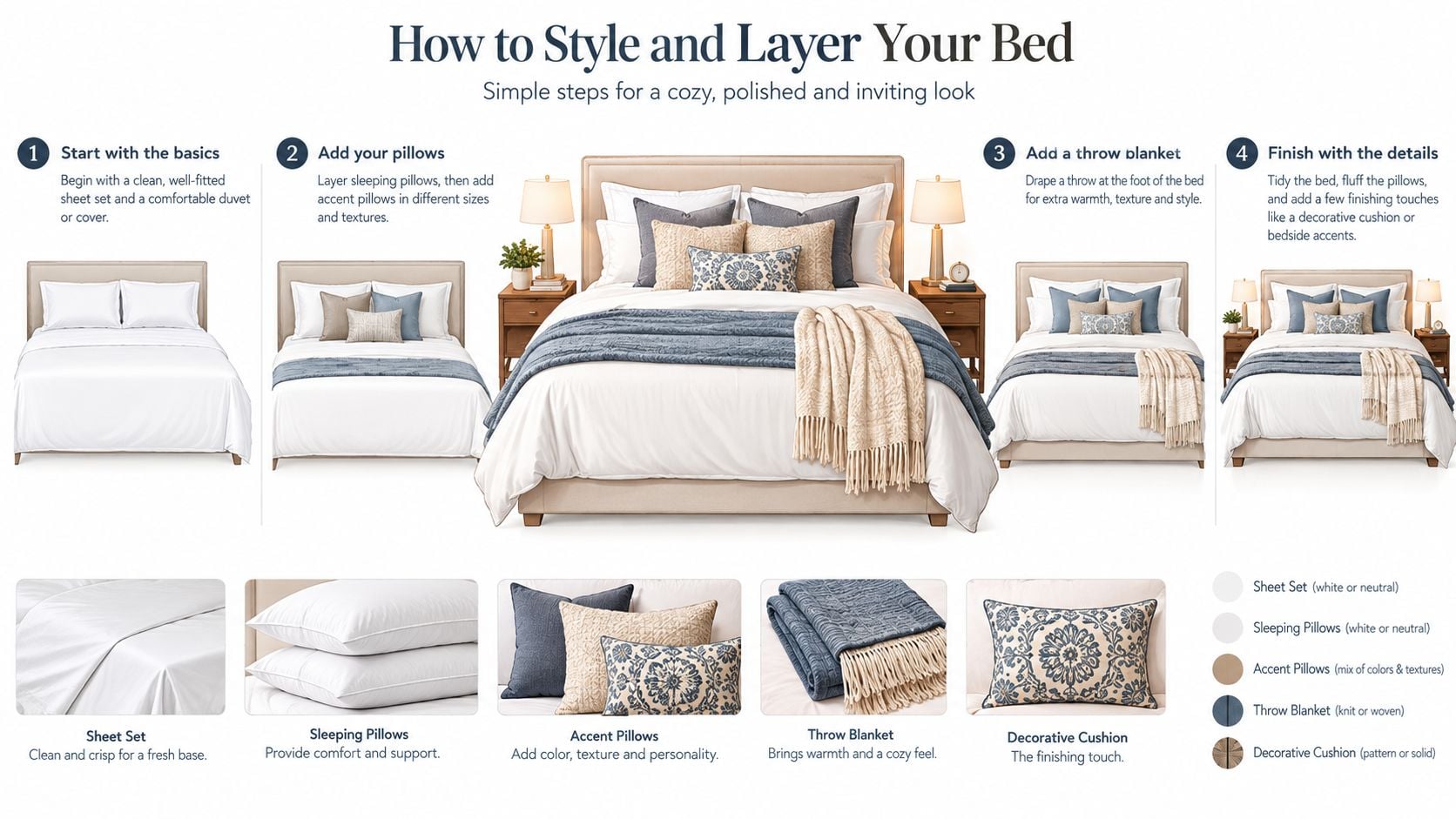
Three arrangements that work
A homeowner who prefers a simple room can use sleeping pillows followed by standard shams. This setup looks orderly and doesn't overwhelm a smaller bed or a delicate headboard. It also makes the nightly routine easier because fewer decorative pieces need to be moved.
A more custom arrangement uses Euro shams behind standard shams. The square pillows create height, and the rectangular pillows provide a clear front edge. This is the strongest general recommendation for a bed that needs a finished showroom-style profile without becoming overly ornate.
A softer arrangement places Euro shams behind sleeping pillows, then adds a single lumbar pillow in front. This approach works especially well with linen, relaxed cotton, or a textured coverlet. The result feels composed but not formal.
Match the arrangement to the headboard
The headboard determines how much structure the bed needs. A tall upholstered headboard can support a fuller back row, while a low wood frame may look crowded if too many large pillows are pushed against it. A substantial Euro sham can also balance a broad headboard, but it shouldn't hide distinctive woodwork or carved details.
Layering advice: The back row should establish the silhouette, the middle row should add proportion, and the front pillow should provide the room's personality.
Each pillow should be fluffed and turned so its corners sit evenly. Overstuffed edges can make a sham look lumpy, while a loose insert leaves gaps at the corners. The arrangement should be checked from the doorway, not only from directly in front of the bed, because the room's overall sightline matters more than the pillow pile itself.
Choosing the Right Pillow Inserts and Fill
A well-made sham can still look disappointing when the insert is wrong. A cover that matches the insert exactly may appear flat because the fabric has no extra tension to fill the corners and support the decorative face.
For a fuller presentation, designers commonly size up the insert. A 28-inch insert inside a 26-inch Euro sham creates a plumper profile, provided the cover's construction and fabric can accommodate it. The same principle can be applied carefully to rectangular shams, but the insert shouldn't be so large that the closure strains or the seams twist.
Fill choices and their practical effects
Down creates a soft, moldable shape and can be arranged into a relaxed, luxurious profile. It needs regular fluffing and may not suit every household's allergy or maintenance preferences.
Down alternative provides a practical compromise. Synthetic fibers can offer a fuller appearance with simpler care, and they're often selected when allergen concerns or budget limits make natural fill less suitable.
Polyester or other synthetic fibers tend to hold a consistent shape and work well for decorative pillows that need dependable structure. The tradeoff is that some synthetic inserts feel less pliable than down when shaped by hand.
The sham fabric should influence the insert. Velvet and thick cotton need enough internal support to prevent the face from collapsing. Lightweight linen can accept a softer, less rigid fill because a relaxed profile suits the material.
Avoiding the deflated look
The insert should fill the corners without creating hard bulges. A good fit gives the sham a smooth face, defined edges, and enough loft to hold its shape when leaned against another pillow. If the center looks full but the corners sag, the insert is usually too small or too soft for the cover.
Homeowners working with unusual dimensions or making their own covers can review these luxury pillow kits for sewing from On Pins & Needles Quilting Co. for ideas about forms, construction, and decorative finishes. For everyday pillow comfort, the guide to choosing the perfect pillow remains the more appropriate starting point because decorative fullness and sleeping support aren't the same requirement.
A useful test is simple. Insert the pillow, close the sham, and place it upright for several minutes. If the corners remain empty, the cover needs a fuller insert. If the closure pulls or the seams strain, the insert is too large.
Fabric Options Closures and Care Advice
Fabric determines how a sham feels in the room and how much maintenance it demands. Cotton percale gives a crisp, matte appearance and suits clean, traditional bedrooms. Cotton sateen has a smoother surface with a subtle sheen, making the bed feel more polished without the visual weight of velvet.
Linen brings breathable texture and a relaxed finish. Its natural creasing can look appropriate in farmhouse, coastal, rustic, and understated rooms. Velvet adds depth and richness, but its pile needs more careful handling and can dominate a room if used with too many other strong textures.
Choosing the closure
The closure affects both appearance and convenience:
- Envelope backs are straightforward, flexible, and easy to use. The overlapping fabric keeps the insert contained without visible hardware.
- Zipper closures create a clean edge and hold the insert firmly. They need gentle handling so the zipper doesn't catch the fabric.
- Tie closures add a handcrafted detail and can suit cottage, traditional, or custom bedding. They take longer to open and close but can contribute to the design.
A closure should be selected according to how often the sham will be removed. A seasonal decorative cover can justify a more detailed closure. A sham that gets washed frequently benefits from a simple, durable opening.
Care that protects the finish
The care label takes priority because fabric blends, embroidery, quilting, and trims respond differently to heat and moisture.
- Before washing: Remove the insert, close zippers or ties, and turn the sham according to the manufacturer's instructions.
- During washing: Use a gentle cycle and appropriate temperature for washable cotton or synthetic fabrics. Embellished pieces may require gentler treatment.
- During drying: Avoid excessive heat when the fabric or trim is sensitive. The sham should be fully dry before the insert goes back inside.
- During pressing: Cotton and linen may benefit from careful pressing, while velvet should be handled in a way that protects its surface.
A clean, dry storage space helps seasonal shams retain their shape. Additional guidance on fabric selection and construction appears in these duvet cover fabric tips from Farmhouse World, which can also help when coordinating a sham with a larger bedding layer. For local material guidance, the bedding fabric types resource offers a useful reference before a custom order is placed.
Common Mistakes to Avoid When Buying Shams
The most common mistake is buying an insert that fits the cover too precisely. A technically correct measurement can still produce a lifeless pillow because decorative shams need shape and tension. A slightly fuller insert usually gives the face a cleaner appearance, but the closure and seams must remain comfortable.
Another error is ignoring the headboard. A petite wood frame can get buried behind a large, heavily layered arrangement, while a broad upholstered headboard may make a pair of small standard shams look lost. The bed's vertical scale should guide the choice.
Corrections that save time and money
- Don't match every pattern: A patterned sham can be attractive, but a versatile solid or textured layer often works across more seasonal bedding changes.
- Don't confuse sleeping pillows with decorative inserts: A standard pillowcase is intended for nightly use, while the sham is primarily part of the daytime presentation.
- Don't buy by appearance alone: Online photos can hide the difference between a structured cover and a soft, collapsing one. The insert, closure, flange, and fabric weight all affect the final result.
- Don't overlook the bed frame: The sham arrangement should support the headboard rather than cover its most distinctive features.
- Don't overfill the front row: A smaller accent pillow should complete the composition, not block every layer behind it.
A useful correction: When a bed looks cluttered, removing one pillow often improves the design more than adding another decorative piece.
Budget-conscious homeowners should also consider texture before committing to a highly seasonal print. A neutral Euro sham with a tactile weave can remain useful through multiple room updates, while a smaller accent pillow can introduce a temporary color or pattern. Clearance inventory may also provide a practical way to test a new style without rebuilding the entire bedroom.
Where to Buy and Custom Ordering Options
Bedding decisions become more precise when shoppers can compare fabrics, inserts, finishes, and proportions in person. A showroom visit lets a homeowner see whether a Euro sham looks too dominant against a particular headboard or whether a standard sham provides enough structure for the intended arrangement.
Tip Top Furniture & Mattresses is a family-owned showroom in Freehold, NY, serving homeowners throughout the Greater Albany Capital Region, including Albany, Schenectady, Troy, Greene County, and surrounding communities. Its legacy reaches back to 1978, and its Professional Design Services have been available since 1984. The showroom works with 50+ trusted manufacturers, giving shoppers access to varied furniture, décor, mattress, and bedroom options.
Why custom ordering can be the right choice
Ready-made bedding works well for common proportions, but custom ordering becomes valuable when the bedroom has unusual dimensions or a very specific design direction. A designer can help coordinate:
- Fabric: Cotton, linen, velvet, or a blended textile that suits the room's use.
- Finish: Trim, flange, piping, embroidery, or a cleaner unembellished edge.
- Size: A cover adjusted to an existing insert, headboard, or custom bed frame.
- Coordination: Matching or complementing the bed, window treatments, flooring, and nearby furniture.
The custom order process gives homeowners a starting point for discussing those decisions. Custom ordering is especially useful for a bedroom built around heirloom-quality Amish Furniture, handcrafted in the USA, where the bedding should respect the wood species, finish, and scale of the case goods.
One-stop planning for the whole bedroom
A bedroom refresh rarely stops at the pillows. A mattress affects the bed's height, a headboard affects the pillow silhouette, and flooring changes how the room's colors and textures read. A local design team can coordinate those elements rather than treating each purchase as a separate project.
The showroom also offers USA-made mattresses and sleep accessories, with a bed matching system intended to help shoppers compare support and comfort needs. Flooring, décor, delivery, flexible financing, and clearance selections extend the project beyond decorative bedding, which can make the process more manageable for homeowners furnishing a room in stages.
For Albany-area shoppers, the main advantage of local guidance is practical judgment. A professional can spot when a Euro sham needs a firmer insert, when a standard sham is enough, or when the bed frame calls for a simpler arrangement. That advice prevents a common online-shopping problem, buying attractive pieces that don't work together once they arrive.
Tip Top Furniture & Mattresses offers bedroom furniture, USA-made mattresses, Amish Furniture, décor, flooring, custom ordering, delivery, flexible financing, and professional design guidance from its Freehold showroom. Homeowners comparing Euro and standard shams can visit Tip Top Furniture & Mattresses to discuss inserts, fabrics, bed proportions, and a complete bedroom arrangement with local experts.