Best Couch Fabric for Pets: A Pet Owner’s Guide


The best couch fabric for pets is usually a tight-weave performance fabric rated around 30,000 double rubs or more, while some performance fabrics exceed 100,000 double rubs; finished leather is the easiest surface for shedding and quick wipe-downs. The right choice still depends on the pet, the household's cleaning habits, and the furniture budget.
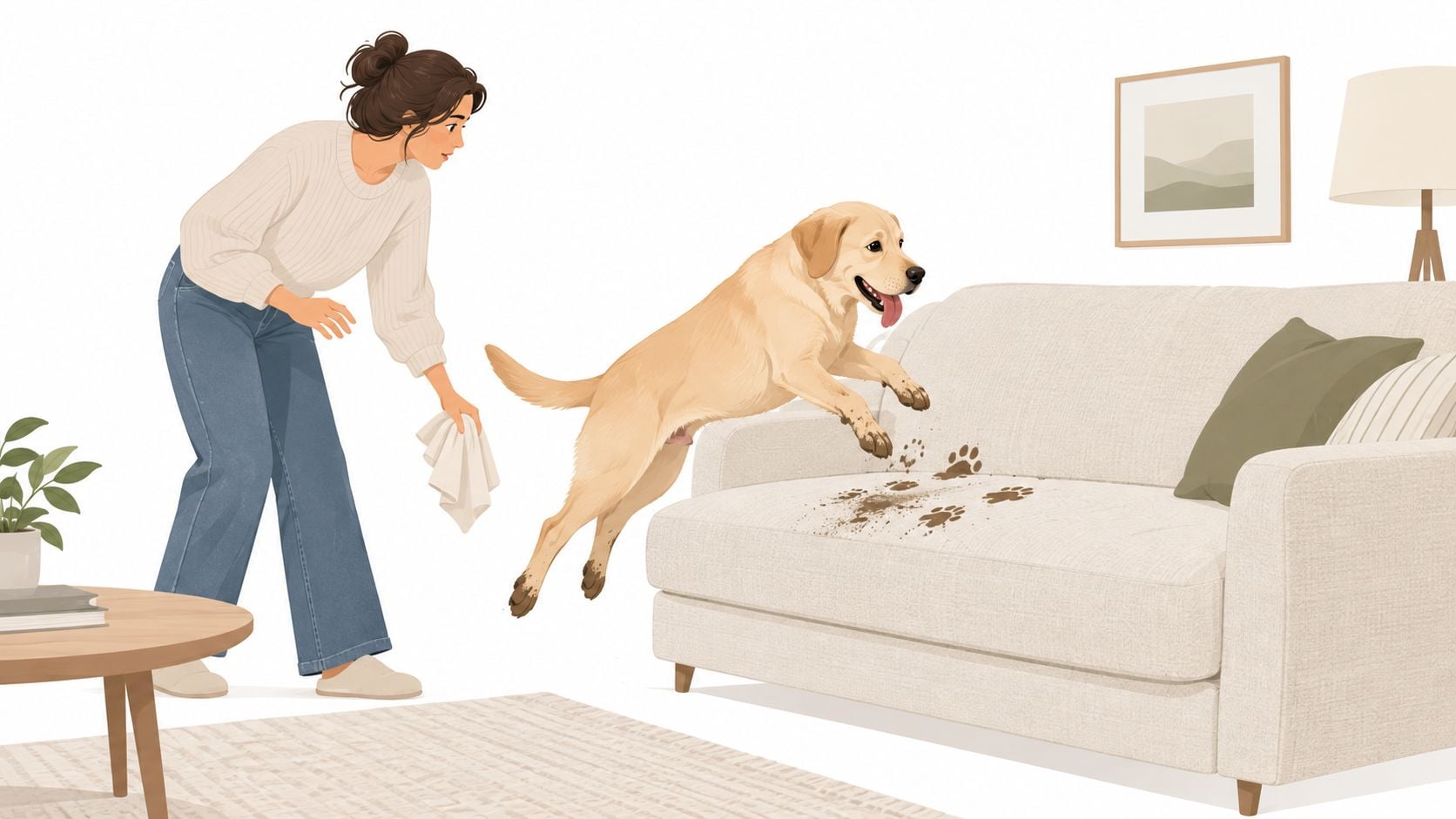
A Labrador launches onto a brand-new chenille sofa, muddy paws land on a pale cushion, and the owner reaches for a towel before the dog has even settled in. A cat can create a different problem, catching one claw in a loose thread and turning a small snag into a visible pull.
That scene plays out in homes across Freehold, Albany, Schenectady, Troy, Greene County, and the wider Capital Region. Pet owners rarely need a couch that looks industrial. They need upholstery that handles the specific ways their animals use furniture every day.
Why Pet Owners Need a Different Couch Fabric Mindset
Start with the pet, not the showroom display
A sofa can feel wonderfully soft under a showroom hand and still be a poor choice for a home with animals. Before choosing a color or texture, every shopper should answer two practical questions:
- What does the pet do to furniture? Does the animal claw, shed heavily, drool, track in mud, sleep in one corner, or combine several of those habits?
- How much upkeep will the household realistically handle? A fabric that needs frequent brushing or careful solvent cleaning won't stay attractive if the household only has time for quick vacuuming.
A large dog that jumps up after a rainy walk creates a different upholstery problem from a cat that kneads the same arm every evening. A quiet senior dog may need warmth and softness more than extreme claw resistance. The best couch fabric for pets starts with behavior, not a generic “pet-friendly” badge.
The usual sofa instincts can mislead pet owners
Most shoppers begin with hand-feel, color, and pattern. Those details matter, but they can steer pet owners toward loose linen, open cotton, looped bouclé, or heavily textured chenille because those materials look inviting on a showroom floor. After months of jumping, shedding, and spot cleaning, the same sofa may look tired long before its frame or cushions need replacement.
A darker color only hides some hair. It doesn't stop claws from catching, prevent drool from soaking into the weave, or make a stubborn stain easier to remove. Construction and finish do that work.
Showroom rule: A fabric should be judged with a fingernail, a swatch, and a cleaning question, not by appearance alone.
A useful starting point is the guide to kid-friendly and pet-friendly furniture, especially for households where children and pets share the same seating. The strongest decision combines fabric structure, cleaning compatibility, cushion design, and the household's actual routine.
The Criteria That Actually Matter for a Pet Friendly Sofa
A pet-friendly sofa deserves the same five-part test for every fabric. This keeps a shopper from confusing “stain resistant” with “claw resistant,” or assuming a high durability rating guarantees easy hair removal.
Five tests that separate practical upholstery from clever marketing
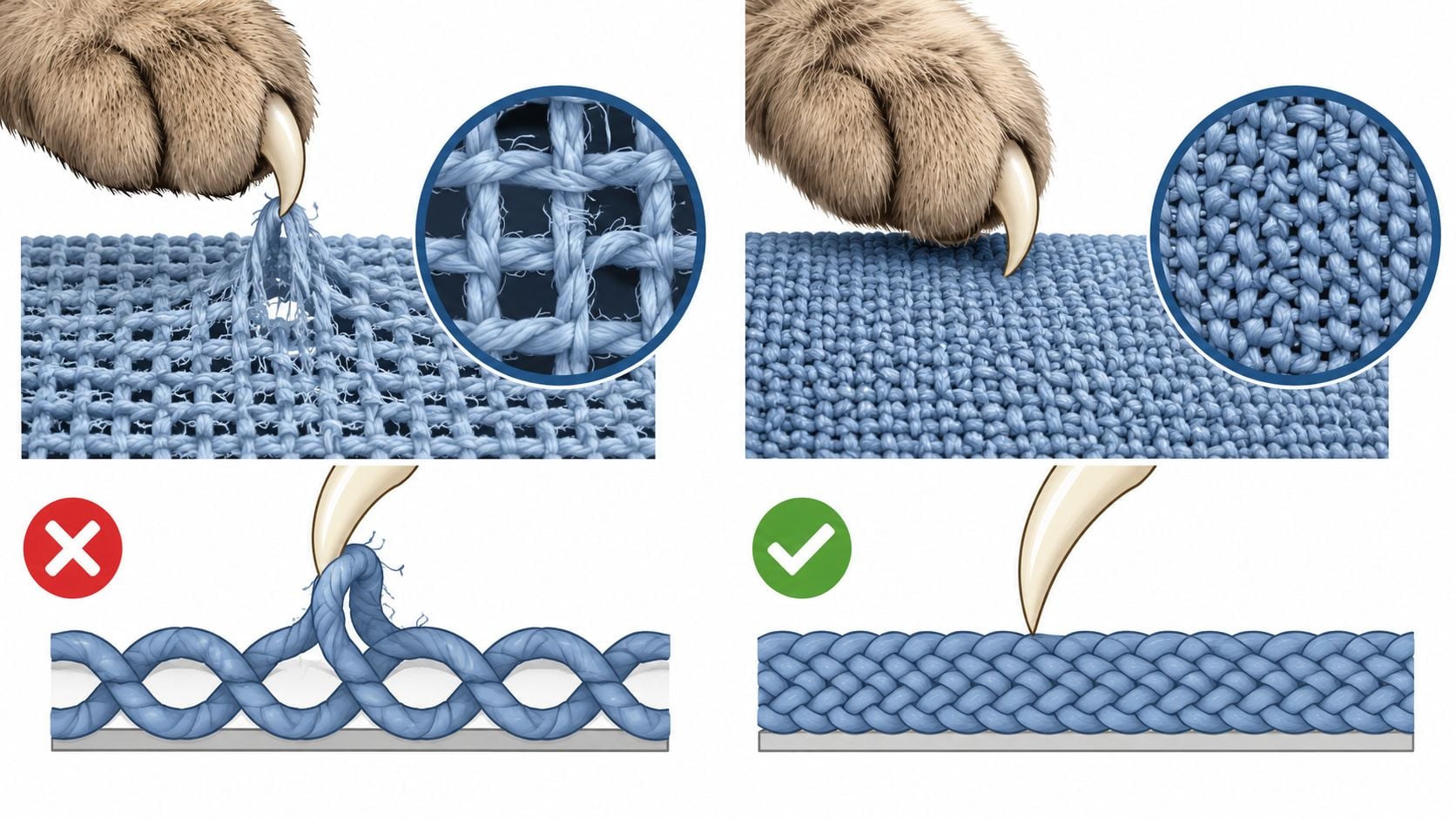
Claw resistance comes first for cat households and dogs that dig before lying down. A tight surface keeps a snagged thread from pulling across the cushion. Loops, open basket weaves, and raised textures give claws something to hook.
Stain resistance describes how a spill behaves when it lands. Some fabrics let moisture bead briefly on the surface, while others absorb it into the yarn immediately. Stain resistance buys cleaning time, but it doesn't eliminate the need to blot quickly.
Hair release determines whether fur stays visible on top or disappears into the upholstery. Dense, low-pile microfiber generally lets a vacuum, brush, or damp cloth collect hair efficiently because the surface gives it fewer places to hide. Upholstery guidance identifies microfiber and microsuede as common options reaching roughly 30,000 to 100,000 or more Wyzenbeek double rubs, with their tight weave helping reduce claw snagging and simplify routine cleaning (upholstery guidance on microfiber performance).
Cleanability depends on the manufacturer's care code and finish. A spot-cleanable fabric suits busy homes better than upholstery that requires specialized solvent treatment. Some solution-dyed synthetics can tolerate stronger cleaning methods, but the care label always controls.
Comfort trade-offs still count. A sofa that survives pets but feels hot, stiff, or unpleasant won't be used by the people who bought it. Breathability, softness, pile height, and how the fabric feels in summer should sit beside durability on the decision list.
How durability ratings translate on a sofa
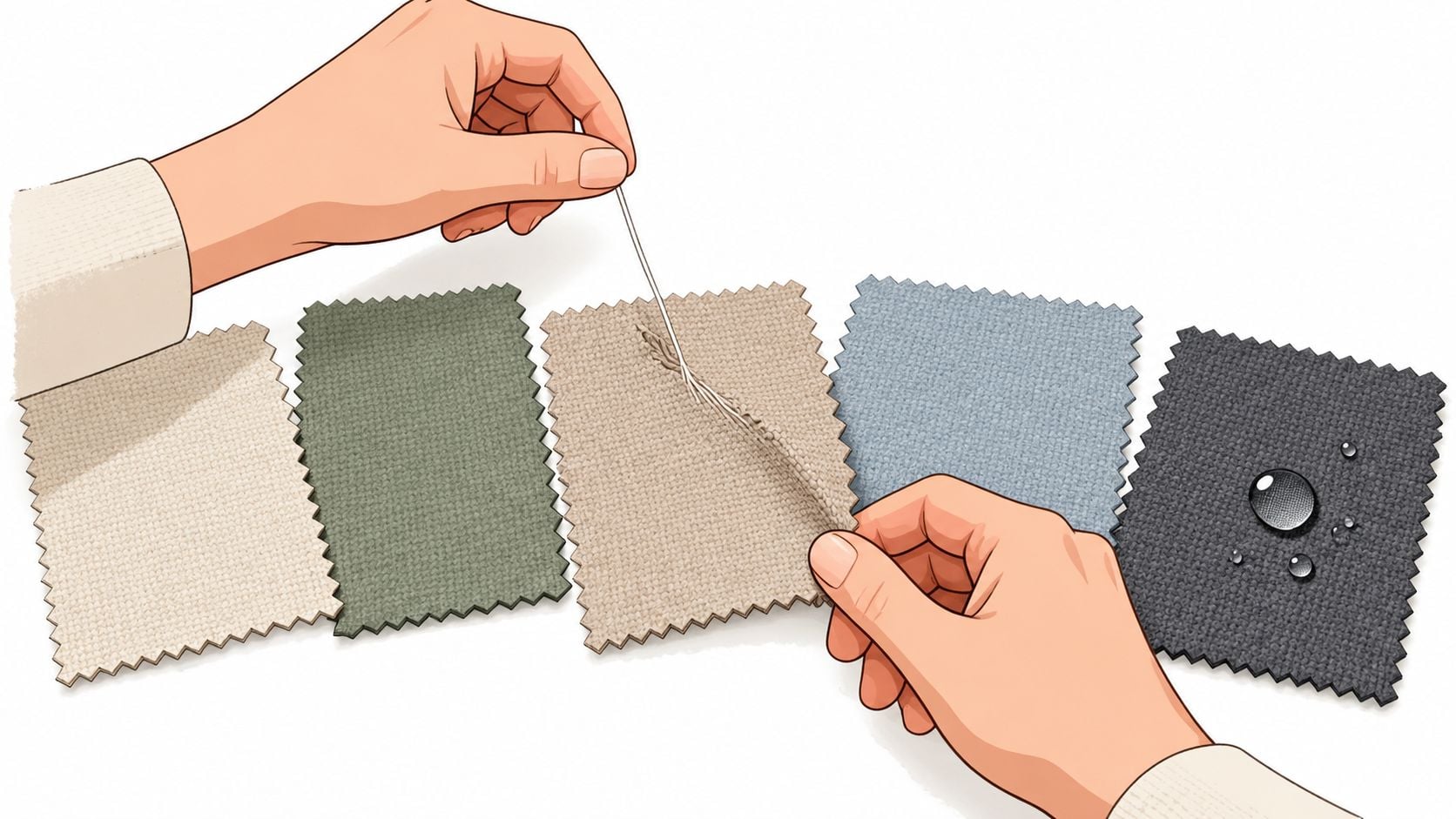
A double-rub test measures repeated abrasion on upholstery. Around 15,000 double rubs is commonly treated as heavy home use, while 15,000 to 20,000 is often considered adequate for general home use and 30,000 is frequently recommended for high-traffic areas. Some performance fabrics exceed 100,000 double rubs, a level associated with years of wear in high-traffic, pet-heavy households.
Wyzenbeek is one testing method, while Martindale is another. The number helps, but it isn't the whole verdict. A tightly woven fabric with a lower pile can work better for claws and hair than a higher-rated fabric with loops or a loose surface.
Households also benefit from giving pets a separate resting place. A washable pet bed, such as the practical options described in this pet bedding resource from Nandog Pet Gear, can reduce the hours an animal spends digging into one favorite sofa cushion.
For a broader explanation of upholstery fibers and construction, shoppers can review Tip Top's upholstery materials guide.
How the Most Common Couch Fabrics Stack Up for Pets
No single textile wins every household. The comparison below weighs the five criteria together rather than ranking fabrics by a single durability label.
Pet Friendly Couch Fabric Comparison
| Fabric | Claw Resistance | Stain Resistance | Hair Release | Cleanability | Best For |
|---|---|---|---|---|---|
| Microfiber | Strong when tightly woven | Good, but odor can linger | Very good | Usually easy spot cleaning | Shedding dogs and practical budgets |
| Performance polyester | Strong with dense construction | Very strong | Good | Often simple spot cleaning | Active families |
| Olefin | Strong abrasion resistance | Excellent in suitable constructions | Good | Some versions offer stronger cleaning options | Mud, shedding, and heavy use |
| Crypton | Strong when tightly woven | Excellent | Good | Designed for demanding cleanup | Multiple pets and children |
| Woven polyester or chenille | Varies widely | Moderate to good | Moderate | Depends on finish and care code | Homes with limited claw activity |
| Tightly woven velvet | Moderate to good | Moderate to good | Moderate | Requires careful brushing and spot care | Calm pets and style-focused rooms |
| Finished leather | No snagging, but claws can gouge | Strong surface resistance | Excellent | Quick wipe-downs | Shedding dogs and frequent cleanup |
| Faux leather | No snagging, but surface can damage | Good at first | Excellent | Easy at first, less reliable over time | Short-term budget furnishing |
Microfiber remains the dependable budget all-rounder. Its dense weave resists many claw snags, fur tends to stay near the surface, and water-based spot treatment is often practical. The drawback is odor retention, especially when the fabric absorbs drool or repeated accidents.
Performance polyester and Crypton are the easy-clean leaders when the construction is dense. Polyester has become a common durable upholstery choice, while performance textiles are designed around stain resistance and appearance retention. These suit children, active dogs, and households that want less panic after muddy paws.
Olefin, also called polypropylene, is an underrated tough option. It offers strong stain, mildew, and abrasion resistance, and some solution-dyed constructions can tolerate bleach-cleanable maintenance. Its synthetic, tight construction can also release pet hair more effectively than many natural fibers (olefin upholstery guidance). It suits busy homes where tracked-in soil is a daily issue.
Woven chenille feels soft but can present a claw risk when the yarns or weave are loose. It works best for calm pets that don't dig, scratch, or climb over the arms.
Velvet is more complicated. A tightly woven, cut-pile velvet can resist snagging better than expected, but crushed areas, pressure marks, and brushed direction make it less forgiving. It suits a style-focused room with a calm animal.
Finished leather is the top choice for shedding dogs because fur wipes away and the surface doesn't absorb it like fabric. Claw gouges remain the trade-off, particularly with cats. Faux leather offers the same initial hair-release advantage at a lower entry cost, but peeling and surface wear can make it a short-term play. Smooth leather and faux leather are widely recognized for easy fur removal, with visible claw marks as the main disadvantage.
For fabric-specific selection help, the upholstery fabric guide can help shoppers narrow the choices before ordering swatches.
Why Weave Structure Beats the Marketing Label Every Time
A “performance” label does not tell the whole story. Weave density, yarn twist, pile construction, backing, and surface finish determine what a pet encounters when a claw, paw, or wet coat reaches the cushion.
A loosely woven velvet can carry a pet-friendly label and still offer enough texture for a cat claw to catch. A tightly woven twill may carry no special marketing label and still release fur, resist pulls, and handle daily friction better. Fiber type matters, but construction often decides whether that fiber performs well.
What shoppers should inspect on a swatch
Thread density describes how closely the yarns sit together. More tightly packed yarns leave fewer openings for claws and hair. A loose basket weave has visible gaps and a more obvious snag path, while canvas and twill generally present a firmer, more compact surface.
Yarn twist affects how easily a strand pulls apart. Firmly twisted yarns tend to hold their shape better than soft, loosely spun yarns, although the full weave still matters.
GSM weight gives a sense of textile density by indicating the fabric's weight per area. A heavier swatch can feel substantial, but weight alone doesn't prove claw resistance. A dense, well-constructed lighter fabric may outperform a heavy fabric with open loops.
Back-coating can add stability and help keep the surface from shifting. It doesn't repair a poor face construction, but it can improve handling and resistance to distortion.
A showroom swatch test beats a persuasive sales phrase
A shopper can learn plenty before sitting on a full sofa:
- Scratch lightly with a fingernail. Look for raised loops, pulled yarn, or a visible track.
- Rub the surface in several directions. Check whether the nap changes dramatically or the yarns shift.
- Press and bend the swatch. A stable backing should help the fabric recover instead of leaving a distorted pocket.
- Hold a contrasting hair or lint against it. This reveals whether the surface grabs fibers.
- Ask about the finish. The buyer should know whether stain protection is built into the fiber, applied as a treatment, or dependent on a removable cover.
The most useful guidance on pet sofas makes this same distinction between weave structure and fiber type, noting that a tightly woven polyester can outperform a looser fabric marketed as performance. Buyers should inspect the structure before trusting the label.
Matching the Right Fabric to Your Pet and Household
The strongest recommendation changes with the animal. A big shedding dog, a group of claw-prone cats, and a quiet senior pet don't need the same sofa.
Pet Profile to Fabric Match
| Pet Profile | Top Fabric Pick | Key Reason |
|---|---|---|
| Large shedding Lab or Golden | Tight-weave performance polyester or finished leather | Releases hair and handles daily traffic |
| Multiple cats | Crypton or tightly woven treated microfiber | Reduces snagging and simplifies cleanup |
| Calm senior pet or small breed | Dense microfiber, selected chenille, or breathable linen blend | Prioritizes comfort when claw stress is limited |
The big shedding dog
A Lab or Golden usually leaves hair, drool, dampness, and outdoor soil in the same seating area. Tight-weave performance polyester wins when the household wants fabric comfort with easier maintenance. Finished leather wins when the main priority is wiping away hair and wet marks.
A removable slipcover improves either choice, especially on the dog's favorite cushion. The fabric should still be judged for claw and stain behavior, because a cover doesn't make a weak textile durable.
The practical routine is simple:
- Vacuum the seating with an upholstery attachment.
- Lift remaining hair with a lint tool or damp cloth.
- Blot drool and muddy moisture before rubbing it deeper.
- Use a washable throw on the preferred resting spot.
The multi-cat household
Multiple cats create the hardest claw test. Cats knead, climb, turn in circles, and target edges, arms, and corners. Crypton or tightly woven treated microfiber is the firm recommendation because both can provide a compact surface with better cleanup potential than loose chenille or open linen.
Loose chenille and traditional cut-pile velvet should be avoided in a cat-heavy home. A cat can hook a claw into texture that feels harmless to a hand, and one snag can become a visible run.
Odor deserves separate attention. Microfiber can be excellent for hair release but may retain smells when moisture repeatedly reaches the upholstery. A treatment should be evaluated for odor behavior and care requirements, not just the promise of stain repellency.
The calm senior pet or small breed
A calm older dog or small breed that doesn't scratch opens more design choices. Dense microfiber remains practical, but selected chenille or a breathable linen blend may suit a household that values softness, warmth, and a relaxed appearance over maximum claw resistance.
That recommendation comes with conditions. The weave should be compact, the care code should match the household's cleaning habits, and the pet's favorite spot should receive a washable layer. Comfort matters more when the animal spends long periods resting, but comfort doesn't justify choosing a fabric that cannot handle occasional accidents.
Shopping, Swatching, and Caring for a Pet Proof Couch
Capital Region shoppers should treat upholstery selection like a small home test, not a one-minute color decision. A local showroom can provide swatches, explain care codes, and compare frame and cushion options before a custom order is placed.
The swatch path
Request several samples in the actual color family under consideration. Test them near the home's flooring and lighting because a fabric that looks forgiving in a showroom can show every strand of fur beside a bright window or dark rug.
At home, test three things:
- Fingernail resistance. Lightly drag a nail across the surface and inspect for lifted loops.
- Water behavior. Place a small amount of water on the swatch and observe whether it beads briefly or absorbs immediately. This is only a screening test, not permission to ignore the care label.
- Fur release. Press pet hair into the textile, then use a vacuum attachment, lint roller, or damp cloth to see what remains.
Labels need careful reading. Crypton describes a performance textile system, but the specific product still has care instructions. PFAS-free claims deserve attention because buyers increasingly want stain protection without treatments they prefer to avoid. Stain resistance and odor retention aren't the same thing, so both questions should be asked.
Custom ordering and everyday care
Custom ordering can help a household select the right size, seat depth, cushion arrangement, fabric, and finish. It also means the household should ask about production timing, replacement covers, frame choices, and whether the chosen textile is available for every component.
A weekly routine keeps a pet sofa manageable:
- Vacuum first. Use an upholstery attachment to remove surface hair and grit.
- Lint-roll microfiber. A quick pass handles loose fibers between deeper cleanings.
- Blot accidents. Rubbing spreads moisture and works it into the yarn.
- Follow the care code. Test any cleaner in an unseen place before treating the visible cushion.
- Condition leather regularly. A scheduled conditioning treatment helps maintain the surface, but the manufacturer's instructions control the interval.
A household that wants a removable protective layer can also review this clear plastic sofa protectors guide from Meliusly. The right protector should preserve comfort and appearance rather than turn the sofa into a piece of covered furniture no one wants to use.
For additional help with protective treatments and upholstery care, shoppers can use this furniture fabric protection guide. A well-chosen fabric still needs sensible maintenance, and no finish excuses delayed cleanup.
Top Picks and Next Steps for Capital Region Pet Owners
The decision becomes straightforward once the household identifies its main problem. Active families with kids and multiple pets should start with tight-weave performance polyester or Crypton. Owners who hate seeing hair on upholstery should consider finished leather, provided the pet isn't a determined scratcher. Budget-conscious households should look closely at olefin-blend microfiber.
Top Pet Friendly Couch Picks by Household Situation
| Household Situation | Top Fabric Pick | Why It Wins | Care Habit | Where to See It |
|---|---|---|---|---|
| Kids, active dogs, and multiple pets | Tight-weave performance polyester or Crypton | Balances abrasion, cleanup, and daily comfort | Vacuum with an upholstery attachment weekly | Capital Region furniture showroom |
| Shedding dog and quick-clean priority | Finished leather | Hair wipes away and spills stay on the surface longer | Condition according to the manufacturer's care instructions | Local living room furniture department |
| Budget workhorse household | Olefin-blend microfiber | Combines practical hair release with useful stain and abrasion resistance | Vacuum, lint-roll, and blot promptly | Freehold showroom and custom-order consultation |
| Calm pet and design-first room | Dense velvet or selected chenille | Adds softness and visual texture without extreme claw demands | Brush or spot-clean according to the care code | Upholstery swatch consultation |
A six-month conditioning treatment is often used as a planning point by leather owners, but the manufacturer's instructions should control rather than an invented universal schedule. Fabric owners should focus on regular vacuuming, fast blotting, and keeping a washable pet bed or throw in the animal's preferred location.
The Freehold showroom serves shoppers from Albany, Schenectady, Troy, and surrounding Upstate New York communities with living room furniture, custom ordering, professional design services available since 1984, delivery, flexible financing, and access to more than 50 trusted manufacturers. Its one-stop selection also includes flooring, décor, USA-made mattresses, and heirloom-quality Amish furniture near Albany, which can help households coordinate a pet-ready room rather than choosing a sofa in isolation.
Custom options are especially useful when a room needs a particular seat depth, layout, wood finish, or fabric. Clearance inventory can suit shoppers who need immediate availability, while a custom order allows more control over the textile and configuration. Buyers should ask about fabric protection plans, in-home delivery, replacement or removable covers, and trade-in options before finalizing the order.
Tip Top Furniture & Mattresses offers living room furniture, custom upholstery guidance, design services, delivery, flexible financing, and clearance options for pet-owning households across Freehold and the Greater Albany Capital Region. Visit Tip Top Furniture & Mattresses to compare swatches, discuss a fabric that fits the household's pets, and plan a comfortable room built for everyday use.