
11×14 Shadow Box Guide for Keepsakes and Displays

A family has just returned from a graduation ceremony with a diploma, tassel, photograph, and a medal. An 11×14 frame seems like the obvious answer, until the medal presses against the glazing and the tassel leaves the backing uneven. The problem isn't always the width or height. The hidden decision is usable interior depth.
An 11×14 shadow box can be a simple case for a certificate and photograph, or a deeper display for medals, dried flowers, fabric, and small keepsakes. The outside label alone won't tell a buyer which version will protect the contents. Measuring the tallest object first prevents the most common mistake, buying a case that looks right on the wall but can't comfortably hold the memory inside.
What an 11×14 Shadow Box Really Is
An 11×14 shadow box is a deep-set display case, not a flat picture frame. Its nominal opening measures 11 by 14 inches, a commonly stocked format for certificates, invitations, medals, and small memorabilia. Standard sizes also make mats, backing boards, and replacement fronts easier to source. See a standard 11×14 shadow box example.
The label describes the front opening only. It does not tell you how much space remains behind the glazing for the item itself. A shallow case may hold a diploma and photograph, while a medal or pressed flower needs room to rest without being flattened.
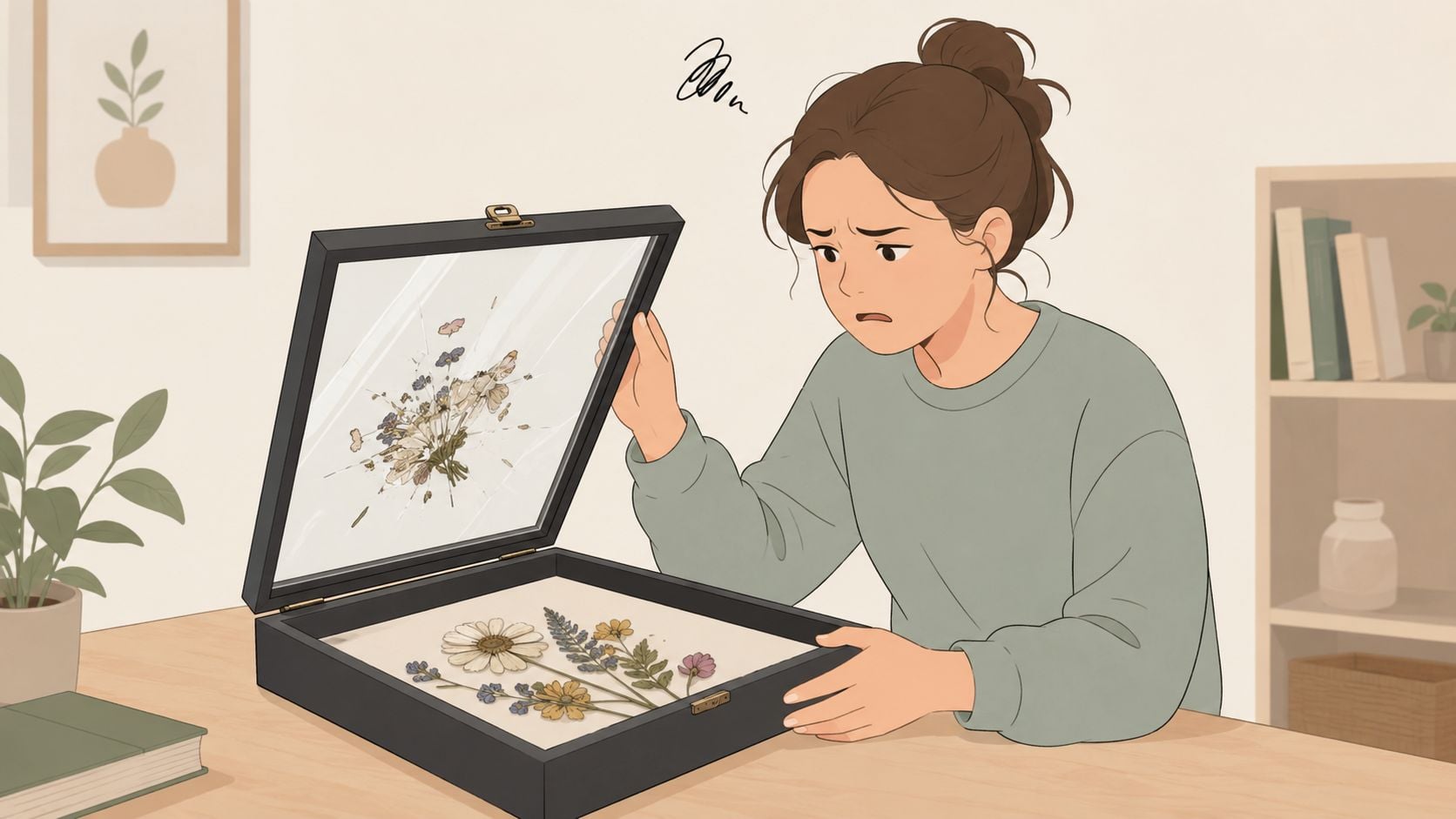
The outside can look identical
Two cases may have the same nominal opening but very different interior cavities. Available specifications range from about 0.38 inches in a shallow display case to 2.75 inches in a deeper wood shadow box, according to listed 11×14 shadow box specifications. A flat photograph may fit the first type, while layered fabric, flowers, or a medal may require more room.
Depth comes before finish. Black, natural wood, composite, or metal can change how the display suits a room, but no finish creates space inside a cavity that is too shallow.
Practical rule: Treat 11×14 as the opening size. Treat usable depth as the case's capacity.
A shopper planning a gallery wall in Albany, Schenectady, Troy, or another Capital Region home can apply the same rule to any wall display. For broader arrangement ideas, see these seven big wall art ideas. Measure the keepsake's thickest point before choosing the style, finish, or hanging position.
Understanding Nominal Size vs Usable Depth
Suppose an 11×14 frame looks large enough for a medal, but the medal touches the glass as soon as you close it. The problem is not the front opening. It is the space behind that opening.
“Nominal size” describes the advertised face measurement. “Usable depth” describes the room left for the keepsake after the glazing, frame construction, backing, and interior layers occupy their share. The 11×14 label works like a doorway measurement. Usable depth tells you how far the room extends behind it.
Listings may use terms such as overall depth, interior depth, rabbet depth, or display depth. These labels can describe different parts of the frame, so read the measurement details rather than choosing by the headline size alone.
How to read a confusing listing
Inspect the product page in this order:
- Find the measurement label. Look for “usable depth” or “interior depth,” not only overall thickness. For a broader explanation of reading dimensions, see this furniture measurement guide.
- Identify what the number includes. Overall depth may include the frame, glazing, and back panel. Those parts do not provide storage space for the object.
- Check the backer and glazing. Their combined thickness leaves less room inside the cavity.
- Compare the cavity with the object. An 11×14 opening does not guarantee enough room for a medal, bouquet, or layered fabric piece.
Marketplace listings show usable depths around 0.875 inches to 2 inches. They may separately describe a frame as 1.5 inches deep, 1.75 inches usable, or 0.75 inches of rabbet depth, as shown in an 11×14 shadow box listing with mixed depth terminology. “Rabbet depth” can refer to the frame recess rather than the clear space available to the keepsake.
Typical 11×14 Shadow Box Depth Classes and What They Hold
| Usable Depth | Best For | Watch Out For |
|---|---|---|
| About 0.38 inches | Certificates, photographs, thin paper pieces | Medals, flowers, and raised embellishments may touch the glazing |
| About 1.5 to 1.82 inches | Invitations, medals, small layered memorabilia | Bulky knots, thick fabric folds, and dense arrangements need measuring |
| About 2 to 2.75 inches | Dried flowers, several medals, small keepsakes, layered displays | Extra depth can make a wall case project farther from the wall |
| About 3 inches | Thicker mixed-media arrangements and more dimensional objects | The object still needs clearance and secure mounting |
Available specifications include 0.38 inches, 1.5 inches, 1.82 inches, 2.75 inches, and 3.0 inches, as shown in available 11×14 shadow box depth specifications. Choose the usable figure, then compare it with the keepsake's tallest point and required clearance.
Measuring Your Keepsake Before You Buy
The safest measurement is the tallest point of the finished arrangement, not the thickness of the flattest piece. A wedding invitation may be nearly flat, while the boutonniere beside it has stems, ribbon, and dried petals that rise much farther from the backing.
Place every intended piece on a table in roughly the arrangement planned for the case. Measure from the table to the highest point. Then add roughly 1 to 2 cm of clearance, a practical framing guideline described in this shadow box frame guide. That space keeps the glazing from pressing against the item and leaves room for a backing layer or mounting method.
A simple measurement routine
- Arrange first. Include the ribbon, tag, mat, fabric, or other layer that will remain inside the display.
- Measure the peak. Find the highest raised point, even if it appears small.
- Add clearance. Allow roughly 1 to 2 cm beyond that tallest point.
- Match the result to usable depth. Choose a case whose clear cavity meets or exceeds the combined measurement.
- Allow for future additions. If a small photograph or note may be added later, step up one depth class rather than compressing the original arrangement.
A folded baby garment shows why this method scales beyond paper. The fold itself may seem manageable, but seams, buttons, and a layered sleeve can create a higher point. The case needs to accommodate the finished fold, not the garment laid completely flat.
Width and height matter too. A buyer comparing a photograph with the 11×14 opening can use this resource to compare print sizes by dimension, then reserve the remaining area for mats and three-dimensional pieces. The same planning discipline helps when arranging objects on furniture, shelves, or a wall, as shown in this guide to how to decorate shelves in any room.
Choosing Materials, Glazing, and Backings
Once the object fits, materials determine how the display feels and how easily it can live in the intended room. The best choice isn't automatically the most expensive one. It depends on the object's weight, the case location, the desired finish, and how often the display may be handled.
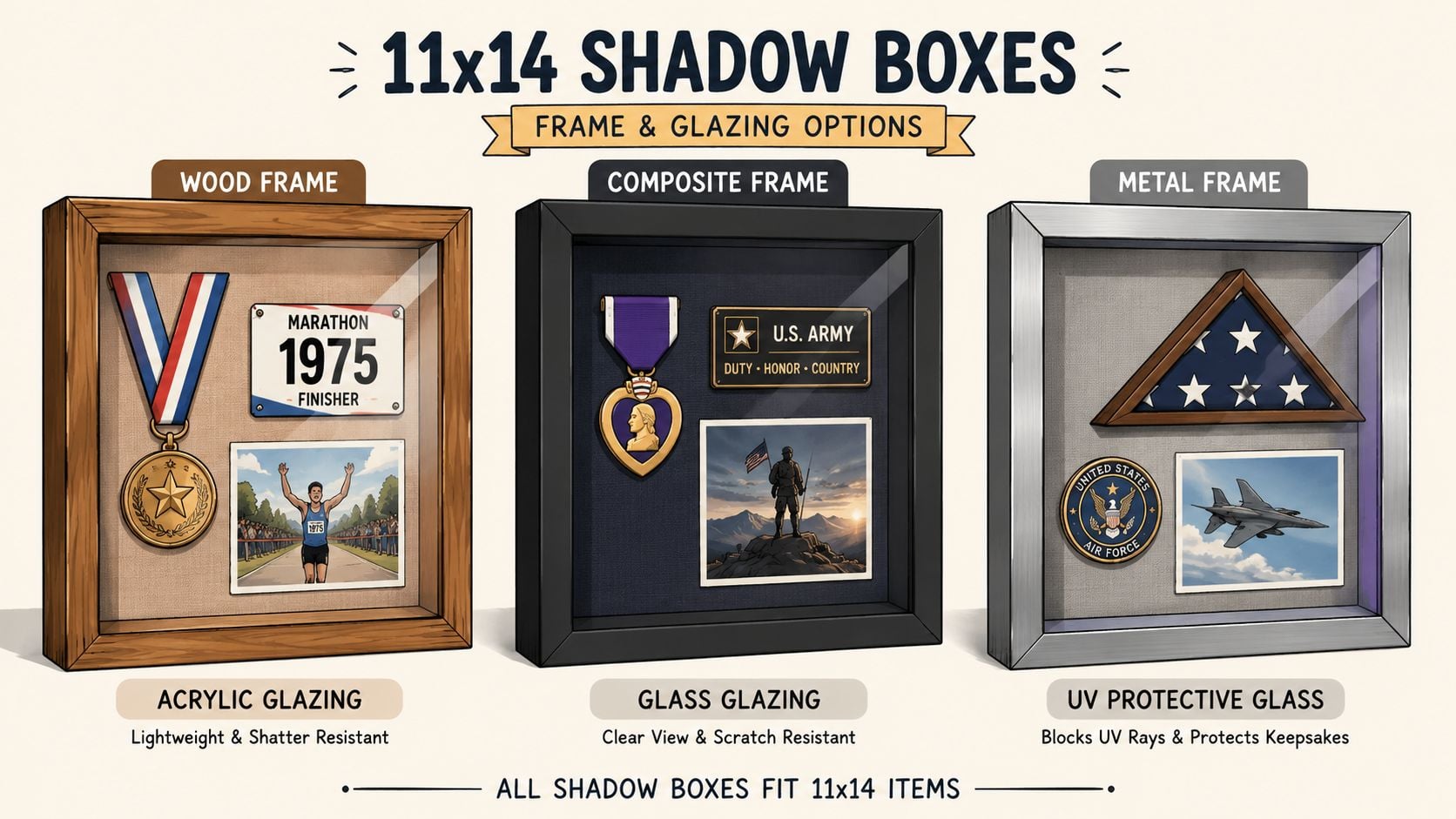
Frame construction
Solid wood gives an 11×14 shadow box more visual weight and supports a furniture-like finish. It suits heirloom displays, traditional rooms, and cases intended to coordinate with wood furnishings. Wood can also be a strong foundation for a custom stain or paint treatment.
Composite frames can provide a consistent appearance with a lighter, more uniform construction. Metal frames create a cleaner, more contemporary outline and can work well in modern spaces or mixed-material wall groupings.
Glazing choices
Real glass offers a crisp surface and substantial feel, but it adds weight and needs careful handling. Acrylic is lighter and can be a practical option for a busy hallway, a child's room, or a wall where reduced weight matters. Shatter-resistant glazing offers another safety-minded approach, particularly for displays placed where accidental impact is possible. Readers comparing home display surfaces can also review the practical distinctions in glass features and applications.
Backing surfaces
A rigid backer supports paper and mounted objects evenly. A linen-wrapped backing softens the visual field and can give medals, flowers, and fabric pieces a more finished setting. Soft fabric can also make shadows easier to read, especially when the objects have similar colors to the frame.
A useful decision filter is to choose the two features that matter most:
- Object protection: Select the glazing and backing that keep the contents stable and separated.
- Room safety: Favor lighter or shatter-resistant glazing when the case will hang where people pass.
- Visual continuity: Match the frame and backing to nearby furniture, flooring, and wall finishes.
Matting and Layering for a Polished Look
Matting isn't just a decorative border. It creates visual breathing room around flat pieces, helps organize several objects, and can contribute to the depth plan. A mat also prevents a certificate or photograph from appearing lost inside a larger cavity.
A graduation display demonstrates the difference. The diploma can occupy one side, the tassel can sit in a raised area, and the graduate's photograph can anchor the opposite side. A fabric backing gives the group a common surface, while a narrow mat around the paper keeps the arrangement from reading like loose items placed in a box.
Building a clear visual order
A layered display works best when the eye can move through it without searching. The main item should have the clearest position, while supporting pieces should reinforce its story rather than compete for equal attention.
- Start with the focal piece. A diploma, invitation, portrait, medal, or pressed bouquet can establish the display's purpose.
- Add one supporting layer. A contrasting mat or fabric panel separates the focal piece from the backing.
- Place dimensional items nearby. A tassel, ribbon, or small medal can add depth without blocking the main object.
- Leave intentional space. Empty areas help each item remain legible.
A double mat can add another visual step between the object and the frame. For a fabric item such as a scarf or jersey panel, a raised layer can bring the material forward while leaving space behind it for shadows. That effect makes the case feel dimensional without filling every inch.
The mat opening should be at least a half inch wider than the object so the item doesn't push against the glazing. That clearance is especially important when paper can shift or fabric edges curl. Mounting hardware should also remain hidden whenever possible, allowing the arrangement to read as a finished composition rather than a collection of fasteners.
Mounting, Hanging, and Caring for the Display
A well-sized case can still fail if the contents move or the wall hardware isn't suited to the load. Mounting should match the object. Lightweight paper may use an acid-free adhesive or clear mounting strips, while heavier medals and fabric pieces may need sewing, pins, or another secure method that distributes weight across the backing.
Adhesive should never be the automatic answer for irreplaceable paper. A removable method can be preferable when the item may need to come out later, while sewing can secure fabric without placing adhesive directly on the material. Pins work for some sturdy objects, but they should be positioned so they don't stress delicate fibers or create visible damage.
Securing the case
- Check the wall surface. Use suitable anchors for drywall and locate a stud when the case and contents require stronger support.
- Use the built-in hanging points correctly. Keep the hardware seated and confirm that both sides carry the load.
- Level the display. A small level prevents a carefully arranged composition from appearing tilted.
- Test the closure. The backing should sit firmly before the case goes above a shelf, desk, or bed.
Direct sunlight can fade photographs, fabrics, and preserved botanicals. High-humidity rooms can also affect paper, textiles, backing materials, and dried plant matter, so a bathroom or damp area usually isn't the best location.
Care remains simple. Dust the glazing gently with a soft cloth, air fabric-lined cases occasionally in a dry room, and check the backing seal each season. For more guidance on positioning wall displays, use this step-by-step picture hanging guide.
When a Custom 11×14 Shadow Box Makes Sense
A stock 11×14 case suits a keepsake that fits its interior cavity, matches the room, and leaves enough space around the arrangement. Custom work makes sense when the object, wall, or finish requires a more exact solution.
Start with the measurement that can stop a project: interior depth. A 2.5-inch medal mounted on a stiff backing may require a 3.25-inch cavity once clearance is included. A stock case may have the right 11×14 face size but too little room behind the glazing. A custom order can set the cavity to the finished thickness, so the medal is not pressed against the glass or forced into a crowded layout.
Custom ordering also helps when the display must fit a particular setting:
- Exact furniture matching: Select a wood tone that coordinates with an existing bedroom, living room, or home office.
- Precise wall planning: Build the case for a planned opening, shelf relationship, or grouped arrangement instead of adapting the display to an available case.
- Personal backing: Choose a fabric color and texture that support the keepsake without competing with it.
- Layered presentation: Allow room for spacers, a raised mount, or several objects arranged at different heights.
Bring a sketch, photograph, and finished measurements to Tip Top Furniture & Mattresses in Freehold. Its design team can turn the object's thickness and the room's dimensions into a custom display plan for homeowners in Albany, Schenectady, Troy, and nearby areas. Review this custom framing price breakdown before discussing the project budget.
Custom work can also coordinate with Amish furniture handcrafted in the USA, flooring, or a wider bedroom and living room plan. Flexible financing may help when the shadow box is included with a larger furnishing decision.
Your Pre-Shop Checklist and Next Step
Before selecting an 11×14 shadow box, a shopper should have six answers ready:
- Tallest point: What is the highest part of the finished arrangement?
- Clearance: Has roughly 1 to 2 cm been added above that point?
- Usable depth: Does the case provide enough clear interior space?
- Material choice: Will wood, composite, or metal suit the room and keepsake?
- Glazing and backing: Does the display need lighter glazing, shatter resistance, linen, or rigid support?
- Stock or custom: Does an available case fit, or does the project need a specific depth, finish, or wall dimension?
Photographs of the objects and a written measurement can make a showroom consultation more productive. Homeowners across Freehold, Albany, Schenectady, Troy, and the surrounding Capital Region can bring those details to a local design appointment and discuss delivery, custom options, and financing before committing.
Tip Top Furniture & Mattresses offers one-stop shopping in its family-owned Freehold showroom, with personalized design services, custom ordering, Amish furniture handcrafted in the USA, flooring, USA-made mattresses, financing, and clearance selections. Visit Tip Top Furniture & Mattresses with the keepsake measurements to explore a display solution that fits both the object and the home.