Best Flooring Options for Bedroom in Albany 2026


A lot of Albany-area homeowners start the same way. They wake up on a January morning, step out of bed, and land on a floor that feels colder, louder, or more worn than the room around it deserves. In older Capital Region homes, that usually means one of two things. The bedroom still has tired carpet from a previous remodel, or it has a hard surface that looks fine but never quite feels restful.
That's where bedroom flooring gets more personal than people expect. A bedroom floor has to do more than survive traffic. It has to feel comfortable first thing in the morning, stay stable through Upstate New York's changing seasons, and work with the furniture that makes the room feel like home.
Families visiting from Albany, Schenectady, Troy, Greene County, and the surrounding area often come in with the same practical questions. Which floor feels warm without trapping every speck of dust. Which one still looks good years later. Which option fits the budget without creating regret. The answer usually depends less on trends and more on how the room is used, how the house is built, and what kind of comfort matters most.
Choosing the Perfect Bedroom Floor in Upstate New York
Bedrooms in this part of New York ask more from flooring than many guides admit. Winter air turns floors chilly. Spring and summer bring humidity swings. Older homes around the Capital Region often have rooms with uneven walls, narrower footprints, or transitions from tile hallways and entries that can make a flooring choice look right in the sample and wrong in the room.
That's why the smartest starting point isn't color. It's function.
A bedroom floor usually needs to balance these priorities:
- Warmth under bare feet on cold mornings
- Quiet performance for better rest upstairs and downstairs
- Durability around beds, dressers, pets, and daily use
- Style longevity so the room still feels current years from now
- Reasonable upkeep for real households, not magazine houses
For homeowners trying to sort through those trade-offs, a good first step is reviewing the basics of how to choose flooring before narrowing down materials.
Practical rule: The right bedroom floor isn't always the toughest material. It's the one that fits the room's temperature, noise level, maintenance needs, and furniture style without forcing a compromise that gets annoying every day.
In Freehold and across the Albany Capital Region, that often means looking beyond the usual “carpet versus wood” debate. Some rooms need softness most. Others benefit from a cleaner, easier-to-maintain surface. And in many homes, the winning choice comes down to details often unfamiliar until installation day, such as underlayment and plank direction.
An Overview of Bedroom Flooring Choices
Bedroom flooring usually narrows to four materials that solve most real-world needs in Albany-area homes: plush carpeting, solid hardwood, engineered wood, and luxury vinyl plank or tile.
Each one can work well. The better choice depends on how the room is used, how the house behaves through our dry winters and humid summers, and how much the homeowner cares about softness, cleanup, long-term appearance, and installation details that do not show up on a sample board.
Bedroom Flooring at a Glance
| Flooring Type | Average Cost/sq. ft. | Comfort & Warmth | Noise Level | Best For |
|---|---|---|---|---|
| Plush Carpeting | Varies by product and cushion | Softest and warmest underfoot | Quietest | Primary bedrooms, cold upstairs rooms, households prioritizing coziness |
| Solid Hardwood | Mid to upper range, depending on species and grade | Warmer than tile, firmer than carpet | Moderate without rugs | Timeless bedrooms where resale appeal matters |
| Engineered Hardwood | Often less than solid wood, depending on wear layer and core | Comfortable with a slight give | Moderate | Bedrooms needing real wood with better seasonal stability |
| Luxury Vinyl Plank or Tile | Varies by product and build | Depends heavily on underlayment | Can be quiet or hollow depending on installation | Budget-minded updates, easy-clean bedrooms, modern wood-look designs |
Plush carpeting for warmth and quiet
Carpet still earns its place in bedrooms across Upstate New York. In older homes with cooler subfloors, it takes the edge off first thing in the morning and does a better job controlling footfall noise than any hard surface.
It is also forgiving. Beds shift, nightstands get dragged, and kids or guests are harder on a room than they realize.
The trade-off is maintenance. Carpet holds dust, pet hair, and spills more than a hard surface, so it fits best in bedrooms where warmth and quiet matter more than quick cleanup.
Solid hardwood for a classic look
Solid hardwood gives a bedroom a settled, permanent feel that works especially well with traditional furniture, antique pieces, and homes where the owners want continuity from hallway to bedroom.
In the Capital Region, the question is not whether solid wood looks good. It does. The question is whether the room and the house are good candidates for it. Seasonal movement is real, especially in older homes with fluctuating indoor humidity, and that can show up as small gaps or board movement over time.
Engineered wood for balance
Engineered hardwood is often the practical middle ground. It gives homeowners a real wood surface, but its layered construction usually handles seasonal moisture changes better than solid planks.
That matters here. A bedroom can feel dry and tight in January, then noticeably different by July.
For many Albany-area homes, engineered wood brings the look people want without asking the floor to fight the house all year. It also gives more flexibility over wood species, plank width, and subfloor conditions, which can be a deciding factor in second-floor bedrooms or remodels where perfect site conditions are not on the table.
A bedroom floor should look good in October and still behave well in February.
Luxury vinyl for practical flexibility
Luxury vinyl has improved enough that it deserves a serious look, especially for bedrooms tied to baths, tile hallways, or busy households that want easier cleaning. The product itself is only part of the story, though. In my experience, underlayment often determines whether vinyl feels comfortable and quiet or hard and hollow.
That is one of the details homeowners miss most often. A budget-friendly plank with the right pad underneath can feel better underfoot than a more expensive product installed with little attention to sound and subfloor prep.
For readers comparing newer resilient surfaces, these curated hybrid flooring selections offer a useful visual reference for the layered, wood-look formats often considered alongside vinyl and laminate.
If your shortlist includes more than one material, this guide to flooring types pros and cons helps sort out where each option fits before making a final decision.
Prioritizing Coziness or Cleanliness
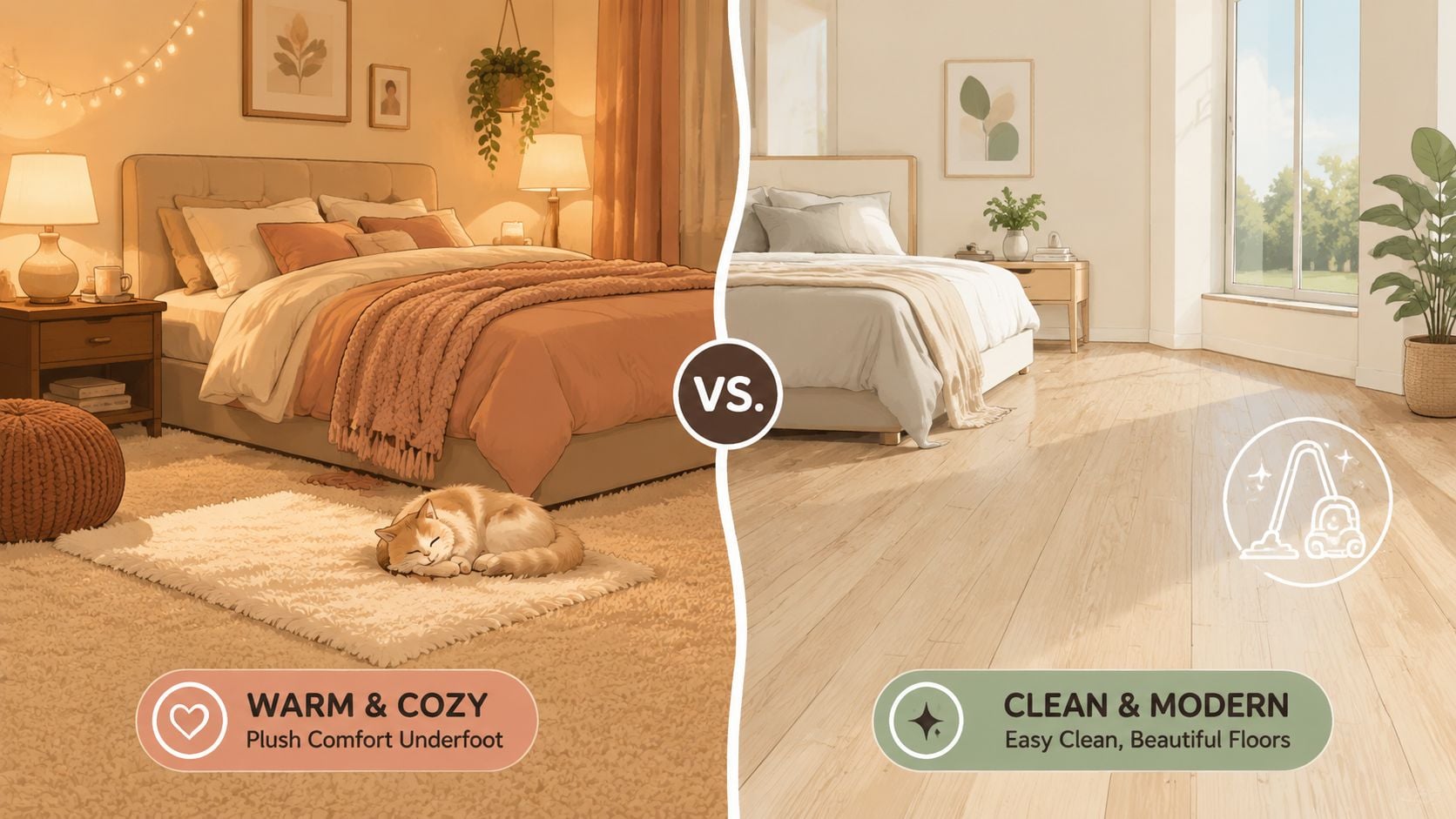
January makes this choice clear fast. On a cold Albany morning, carpet feels forgiving the moment you step out of bed. A hard surface feels easier to keep dust-free by the end of the week. Bedroom flooring usually comes down to which daily experience matters more in your house.
That choice carries more weight in the Capital Region than it does in milder climates. Older homes in Albany, Troy, and Schenectady often have cooler subfloors, and long heating seasons make sound control and warmth more noticeable in a bedroom than they are in a family room or kitchen.
When comfort comes first
Carpet still does one job better than any other bedroom floor. It makes the room feel warmer and quieter right away.
That matters most in second-floor bedrooms, kids' rooms, and guest rooms where the goal is comfort, not an overly formal design. It also helps in homes where the floor underneath runs cold through winter. In those spaces, softness underfoot is not a small luxury. It changes how the room feels every day.
Carpet is usually the better fit for:
- Second-floor bedrooms where footstep noise travels
- Children's rooms where softness and slip resistance matter
- Guest bedrooms that should feel comfortable right away
- Rooms over older subfloors that stay cool in winter
There is a trade-off. Carpet holds dust more easily than a hard surface and takes more work to keep fresh in homes with pets or allergy concerns. If that issue is part of the decision, it helps to review factors that can improve home indoor air quality before choosing wall-to-wall carpet.
When cleanliness matters more
Hard-surface flooring keeps bedroom maintenance simple. Dust, hair, and tracked-in debris sit on top where they can be vacuumed or swept up quickly. For busy households, that alone can make the room feel easier to live with.
The look matters too. In local homes, the best bedroom hard surfaces usually stay warm and natural rather than overly gray or glossy. Light oak, soft maple, and matte finishes tend to sit better with the traditional trim, painted woodwork, and mixed furniture styles common across the Albany area. If you are comparing wood-look materials, these alternatives to hardwood floors for bedrooms give a clearer picture of where resilient products make sense.
One detail many homeowners overlook is how the floor changes the room visually. Plank flooring can make a small bedroom feel wider or longer depending on the direction it runs. In narrow rooms, laying planks parallel to the longest wall often helps the space read larger. That kind of decision will not fix a poor layout, but it can make a modest bedroom feel more settled and intentional.
A cleanable bedroom floor should still feel calm and comfortable at the end of the day.
Match the floor to the way the room actually gets used
The right answer usually shows up once you stop thinking in categories and look at habits.
- Choose carpet if the bedroom is mainly used for sleeping, dressing, reading, and quiet comfort.
- Choose a hard surface if pets sleep in the room, allergies are a concern, or cleaning speed matters.
- Use an area rug over hard flooring if you want easier cleaning but still want softness at the bedside.
In practice, homeowners rarely regret choosing the floor that fits their routine. They regret choosing the one that looked right in a sample and worked against the way they live.
Affordable Flooring That Feels Luxurious
A bedroom floor can be budget-friendly and still feel finished. In Albany-area homes, the difference usually comes down to what is under the floor, not just the plank or tile you see on top.
Vinyl and laminate get dismissed when they are installed over a thin, noisy base. The result is familiar. Footsteps sound hollow, the surface feels cooler than expected, and the whole room reads a little cheaper than it should. In many cases, the material is not the actual problem. The underlayment is.

The upgrade many budget floors need
A better underlayment can soften sound, add a bit of warmth underfoot, and make a lower-cost floor feel more solid. I have seen that firsthand in second-floor bedrooms and in older homes around the Capital Region where subfloors are not perfectly quiet to begin with.
Cork and other higher-quality pads often make the biggest difference in bedrooms. They help cut the clicky sound that shows up with floating floors, and they can take some of the chill out of laminate or vinyl during an Upstate winter. That matters more in a bedroom than it does in a hallway, because people notice comfort first thing in the morning and last thing at night.
Where lower-cost materials make sense
Vinyl and laminate are smart choices when the room needs a clean look without the cost of solid wood. They also work well when pets sleep in the room, when guest rooms need a durable update, or when a homeowner wants to improve the space now and save the larger investment for another project.
Used well, budget flooring does a lot:
- Gives a wood-look style at a lower price
- Handles everyday cleanup with less fuss than carpet
- Works well in guest rooms and kids' rooms
- Leaves room in the budget for a better pad, area rug, or new bedroom furniture
That last point is the one many homeowners miss. Spending a little less on the surface can free up money for the installation details that change how the room feels every day.
What sits under the floor often decides whether the finished room feels basic or comfortable.
Spend carefully, not cheaply
The best value usually comes from balancing the floor itself with the parts around it. A mid-range laminate with a better underlayment often feels nicer in a bedroom than a cheaper plank installed with the bare minimum. The same goes for vinyl.
If you are still weighing wood-look products, this guide to hardwood floor alternatives for bedrooms can help narrow down which materials are worth considering.
Tip Top Furniture & Mattresses also offers flooring with flexible financing, which can help when the bedroom project includes more than the floor. In many local homes, it makes sense to coordinate the flooring, bed, dresser, and rug at the same time so the room feels pulled together instead of pieced together over several seasons.
The Installation Detail That Changes Everything
You see this a lot in Capital Region bedrooms. The floor sample looks right at the store, the color works with the paint, the price fits the budget, and then the finished room still feels tighter than it should. In many cases, the problem is not the material. It is the installation plan.
Direction changes how the room feels
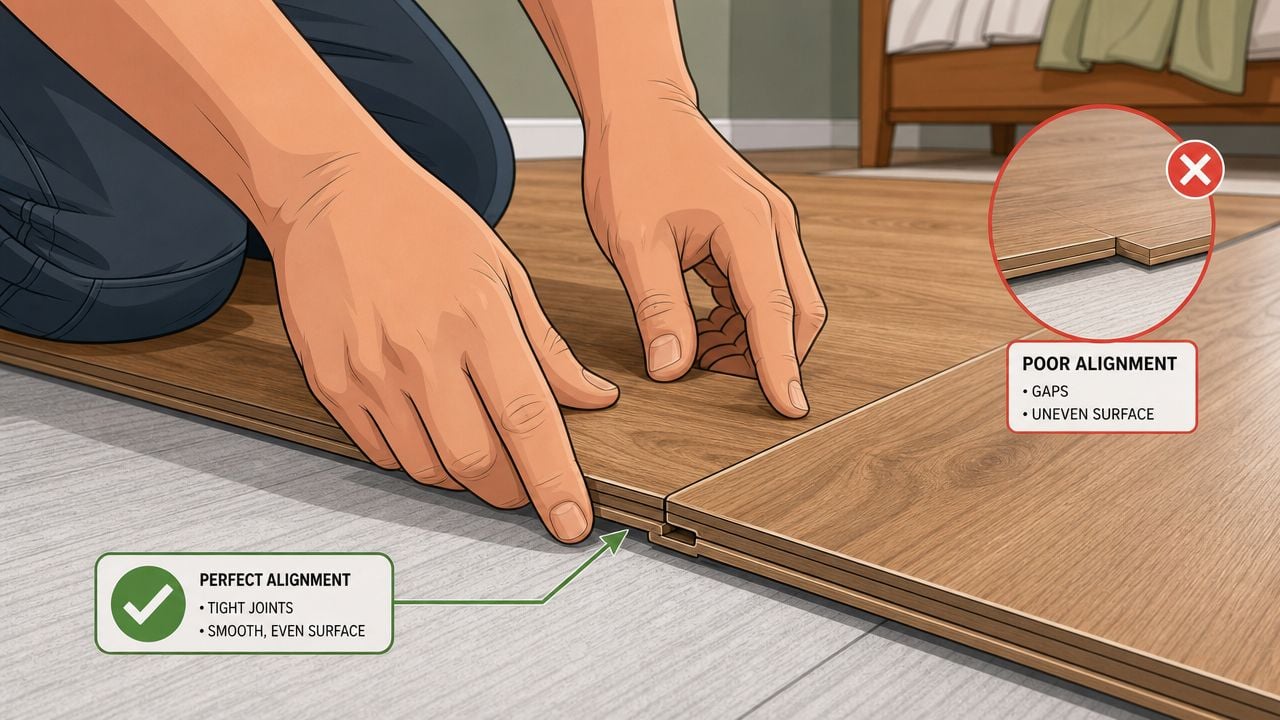
Plank direction affects what your eye reads first. In many Upstate New York homes where bedrooms are on the smaller side, laying planks perpendicular to the longest wall can make the room feel wider. Run them the other way, and the same room can look narrower or more chopped up, especially from the doorway.
Older Albany homes make this more noticeable. Bedrooms often have short wall runs, radiator placements, narrow entries, or closet offsets that break up the layout. A good installer plans for that before the first row goes down.
Underlayment matters more than many homeowners expect
This is the part I often tell people not to skip. In a bedroom, underlayment changes the sound underfoot, softens minor imperfections in the subfloor, and helps a laminate or vinyl floor feel less hollow. That matters in second-floor bedrooms, in older homes with a little movement, and in houses where you do not want every footstep carrying into the room below.
This is also where budget flooring can improve dramatically. A modest plank with the right pad often feels better day to day than a better-looking floor installed over the bare minimum.
A practical way to plan the layout
Before installation starts, look at the room the way you use it, not just as a rectangle on paper.
- Start with the doorway view. The first sightline into the room should feel open, not cut across awkwardly.
- Check the longest uninterrupted wall. That usually gives the best clue for plank direction, but not every room follows the same rule.
- Account for the hall and nearby rooms. A smooth visual transition matters, but matching every adjoining space should not come at the expense of making the bedroom feel cramped.
- Look at the subfloor and sound control together. In many local homes, that decision affects comfort as much as the flooring surface itself.
Homeowners comparing materials and labor should also review hardwood flooring installation costs in the Albany area before settling on the full plan.
A bedroom floor should pull your eye into the room and make the space feel calmer the minute you step through the door.
That is why layout and underlayment deserve as much attention as color and plank style. In a bedroom, those two decisions often decide whether the finished floor feels basic or well considered.
Matching Your Floor to Your Bedroom Furniture
The floor doesn't live by itself. It sits under the bed, beside the dresser, and behind every color and texture in the room. A lot of flooring options for bedroom spaces fail visually not because the material is wrong, but because the furniture and floor are competing.
Wood with wood needs contrast, not a perfect match
When a bedroom includes solid wood furniture, especially Amish-made pieces, the goal usually isn't to match every tone exactly. A room looks better when there's some distinction between the floor and the furniture finish.
A few reliable pairings:
- Medium wood floors with darker furniture create a grounded, traditional look
- Light natural floors with warm wood furniture keep the room airy without feeling washed out
- Deep-toned floors with painted furniture can make trim, bedding, and metal accents stand out
That's especially helpful in homes furnished with handcrafted American-made bedroom pieces that are meant to last. Those rooms benefit from flooring that feels equally permanent.
Rugs can finish the room
Hard-surface bedrooms often need a rug to feel complete. A rug helps with comfort at the bedside, softens acoustics, and visually anchors the bed so the room doesn't feel like furniture sitting on a bare platform.
A rug also solves a common design issue. If the floor has strong grain movement, the rug calms the visual field and gives the eye a resting place.
Build the room as one project
Flooring choices make more sense when they're considered alongside bed frames, nightstands, dressers, and textiles. That's one reason homeowners often benefit from looking at floor tone before committing to furniture finishes. This guide to colors of wood floors can help with those combinations.
For shoppers furnishing the whole room, one-stop shopping can also save a lot of backtracking. Bedroom furniture, Amish-crafted options, rugs, and even Clearance Corner finds can help pull the final look together without guessing across multiple stores.
Your Bedroom Flooring Checklist and Next Steps
A better bedroom floor usually comes from asking better questions before anything is ordered. The material matters, but so do the quieter details that affect comfort once the room is in daily use.
A simple checklist helps keep the decision clear:
- Start with the room's priority. Decide whether warmth and softness matter most, or whether easy cleaning and durability should lead.
- Look at the house, not just the sample. Bedroom size, hallway transitions, and seasonal conditions in the Albany area all affect what will work.
- Don't overlook what goes underneath. If vinyl or laminate is on the shortlist, underlayment deserves as much attention as color.
- Plan plank direction before installation. Small bedrooms can feel larger or tighter depending on layout.
- Match the floor to the furniture. The final room should feel coordinated, not pieced together.
- Think in full-room terms. A bedroom renovation often goes more smoothly when flooring, furniture, rugs, and mattress choices are considered together.
For homeowners in Freehold, Albany, Schenectady, Troy, and the wider Capital Region, the next step doesn't have to be a hard sales conversation. It can be as simple as narrowing the material list, comparing a few wood tones, or testing how a room layout will look before making a purchase.
For homeowners ready to move from ideas to a real plan, Tip Top Furniture & Mattresses offers a practical next step. Use the free online room planner to test furniture layout with new flooring in mind, explore coordinated bedroom pieces and flooring selections in the Freehold, NY showroom, book a complimentary design consultation, or ask about flexible financing if the project includes more than one room update.