Adjustable Bed Comparison: Find Your Perfect Fit in NY


Most shoppers looking up adjustable bed comparison are already doing the same nightly routine. They stack pillows to read. They shove one behind the back to watch the news. They wake up with the pile flattened, the neck cranky, and the whole setup sliding off the bed. That routine works for about twenty minutes. Then it becomes a nuisance.
A good adjustable base fixes the problem at the source. It changes the bed itself instead of asking the sleeper to build a pillow fort every night. For many families around Albany, Schenectady, Troy, and Greene County, that shift isn't a splurge anymore. The category has moved squarely into the mainstream.
Table of Contents
- Your Guide to Choosing an Adjustable Bed in the Capital Region
- Understanding the Core Components of an Adjustable Bed
- Comparing Adjustable Bed Features and Price Tiers
- Which Adjustable Bed Is Right for Your Lifestyle
- How to Test an Adjustable Bed at Our Freehold Showroom
- Financing Delivery and Making Your Purchase Simple
- Adjustable Bed FAQs for Albany Homeowners
Your Guide to Choosing an Adjustable Bed in the Capital Region
A lot of Capital Region shoppers start out skeptical. They assume adjustable beds belong in hospitals, luxury condos, or TV commercials. Then they try one for ten minutes and realize it solves a very ordinary problem. It makes everyday winding down easier.

That change in mindset makes sense. The global adjustable bed market was valued at USD 9.58 billion in 2025 and is projected to reach USD 19.09 billion by 2033, with North America accounting for over 45% of revenue in 2025, according to Data Bridge Market Research on the adjustable bed market. That tells shoppers something important. Adjustable bases aren't a fringe product anymore. They've become a normal part of modern bedroom buying.
For families making an adjustable bed comparison, the smartest move is to treat the base like a long-term comfort decision, not a gadget purchase. The right one can help a bedroom function better every single night. The wrong one becomes an expensive metal frame with features nobody uses.
Why local shoppers benefit from testing in person
Online lists make everything look similar. Every base seems to promise comfort, presets, and a better night's sleep. The problem is that none of those lists can tell a shopper whether the remote feels clumsy, the motion feels abrupt, or the position feels good with their own back and shoulders.
That's where a local showroom matters. A family-owned store that has served the area since 1978 sees the same concerns every week from Albany-area shoppers. One partner wants to read upright. The other wants less snoring. Another customer wants easier entry and exit from bed. Those are real-life use cases, and they're better solved in person than guessed at online.
Adjustable beds are easiest to understand when a shopper lies down, presses the button, and feels the difference instead of trying to decode feature lists.
A useful starting point is learning how the sleep system works together. This mattress shopping guide helps explain what to match with the base, what to test, and what questions are worth asking before buying.
The practical goal
A smart adjustable bed comparison should answer four questions fast:
- Does it fit the sleeper's routine like reading, TV, reflux relief, or easier repositioning.
- Does it feel sturdy enough for real household use.
- Does it move smoothly without a noisy or confusing setup.
- Does the price match the features used most often instead of paying for extras that sound nice on paper.
That's the standard worth using in Freehold, Albany, and across the Capital Region.
Understanding the Core Components of an Adjustable Bed
A quality adjustable base doesn't need to be complicated. It does need to be built for daily use. Most shoppers get distracted by the remote and presets, but the smarter comparison starts underneath the mattress.
What actually matters in the base
The first thing to check is the total load rating. For most households, the key technical comparison point is a total load rating in the 650–850 lb range, because that supports the combined weight of the mattress, bedding, and sleepers without overworking the system, as noted by Mattress Clarity's adjustable bed guidance. That number matters more than most flashy features.
Shoppers should also remember that heavier mattresses change the equation. A thick mattress plus two adults can push a base harder than expected. If the frame is underbuilt, the motors and joints take the punishment over time.
The second thing to check is articulation. At minimum, most buyers should expect independent head and foot adjustment. Some models add more targeted zones, but the key question is whether the movement helps the sleeper get comfortable quickly.
The practical checklist before buying
Noise matters more than brochures admit. A base should sound like a quiet mechanical hum, not a grinding lift. If the motor sounds strained on the sales floor, it won't sound better in a quiet bedroom at home.
Frame construction also deserves a close look. Steel support, stable legs, and a solid platform all matter because adjustable bases carry both static weight and moving stress. A flimsy build might feel acceptable in the flat position and less convincing once the head and foot sections are raised.
Here's the simple checklist that helps most shoppers cut through the clutter:
- Start with capacity: Make sure the base can handle the full sleeping setup, not just the mattress.
- Watch the movement: It should rise and lower smoothly, without jerking or wobbling.
- Listen to the motor: Quiet operation is part of comfort.
- Check the remote: Buttons should be clear, responsive, and easy to understand in low light.
- Look at the frame: A sturdy metal build usually signals better long-term confidence than a lightweight feel.
Practical rule: If a shopper can't explain why a feature improves nightly use, that feature shouldn't drive the purchase.
For readers who want a broader look at comfort and support benefits before comparing models, this overview of the benefits of an adjustable base is worth reviewing.
Comparing Adjustable Bed Features and Price Tiers
Most adjustable bed comparison articles make one mistake. They treat every feature like it belongs on the same level. It doesn't. Some features change daily life. Others are nice bonuses. The fastest way to shop well is to divide the category into clear tiers.
Adjustable Bed Feature Comparison by Tier
| Feature | Entry-Level | Mid-Range | Premium |
|---|---|---|---|
| Head and foot articulation | Yes | Yes | Yes |
| Remote control | Basic remote | Upgraded remote with presets | Advanced remote and expanded controls |
| Zero Gravity preset | Sometimes absent | Common and worth having | Standard expectation |
| USB charging | Usually limited or absent | Common | Common |
| Massage | Usually absent | Often included | More robust options |
| Under-bed lighting | Usually absent | Sometimes included | Common |
| Day-to-day convenience | Basic position changes | Better nightly usability | Most refined experience |
| Best fit | Simple needs and tighter budgets | Most households | Shoppers who want comfort plus convenience |
The feature benchmark that matters most today goes beyond simple head and foot movement. A fully functional adjustable bed should include Zero Gravity, integrated USB charging, and under-bed lighting, because those features improve comfort and everyday usability, as outlined in this adjustable bed frame comparison guide.
What each tier really buys
Entry-level is for the shopper who wants the core function and nothing else. This tier usually makes sense for a guest room, a straightforward sleeper, or someone mainly interested in elevating the head or feet. It can be a perfectly sensible buy, but only if expectations stay realistic. Basic models tend to be about movement, not convenience.
Mid-range is where most households should focus. This is the tier that usually gives buyers the features they'll use repeatedly. Zero Gravity is the big one. USB charging also sounds minor until the nightstand is full and charging cords stop reaching comfortably.
Premium is worth it only when the household will use premium features regularly. Under-bed lighting helps with nighttime visibility. More refined controls can matter for older adults or anyone who changes positions often. Better usability is true luxury, not just a longer feature list.
A quick way to decide:
- Choose entry-level if the goal is occasional adjustment and a lower upfront cost.
- Choose mid-range if the bed will be used nightly for reading, relaxing, or preset comfort positions.
- Choose premium if convenience, nighttime access, and a smoother overall user experience matter as much as the movement itself.
One feature deserves special attention. Zero Gravity isn't fluff. It's one of the few presets that many shoppers use over and over because it creates a more balanced, pressure-relieving feel. This explanation of Zero Gravity bed positioning helps shoppers understand why it keeps showing up in better adjustable bed comparisons.
Shoppers rarely regret buying the tier that matches their routine. They often regret paying for a tier that looked impressive but didn't fit how they actually use the bed.
Which Adjustable Bed Is Right for Your Lifestyle
The right adjustable base depends less on specs and more on what happens between bedtime and morning. A shopper in Albany who reads for an hour every night needs something different from a couple in Troy dealing with snoring, or a homeowner in Greene County who wants easier leg elevation after long days on their feet.
For the snorer the reader and the restless sleeper
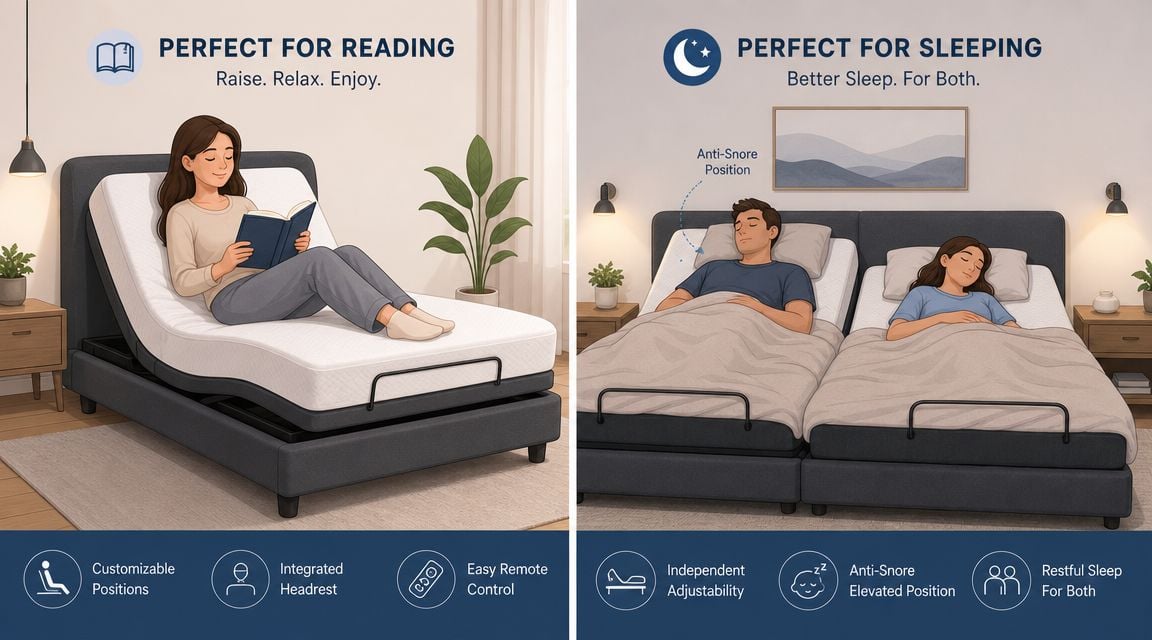
The reader is the easiest case. Anyone who constantly stacks pillows already has a clear use for an adjustable base. Raising the upper body directly from the base is cleaner, more stable, and far more comfortable than wrestling with pillows that slide flat.
The snorer in the household often benefits from slight head elevation. That doesn't turn an adjustable base into a medical device, but it does make the bed more adaptable to real sleeping habits. The same goes for people who want customized positioning for relaxation or comfort.
Then there's the person who wakes up and shifts around all night. Better positioning doesn't solve every sleep issue, but the right setup can help some sleepers reduce tossing and turning by improving how the body settles into the mattress.
A lot of shoppers also come in asking whether an adjustable base can help with certain discomforts or recovery needs. This guide on how adjustable bases can help alleviate 5 health concerns gives a solid overview of the lifestyle and comfort side of that conversation.
What couples need to think through
Couples should pay attention to one issue that many online roundups barely explain. Split king setups create a tradeoff. They allow each side to move independently, but they can also create a center separation that some sleepers notice.
Consumer-facing guidance points out that the split-king gap is a real comfort consideration for couples who want independent adjustability without feeling divided in the middle, as discussed by Consumer Reports in its adjustable bed frame coverage. That means couples need to choose based on priorities, not trends.
Here's the blunt advice:
- Choose split king if independent positioning matters most.
- Choose a single-piece surface if an unbroken shared feel matters most.
- Ask about gap solutions carefully because some fixes can interfere with the very benefit that made split king appealing.
A couple shouldn't buy a split setup just because it sounds advanced. It only makes sense when both sleepers value independent control enough to accept the tradeoff.
How to Test an Adjustable Bed at Our Freehold Showroom
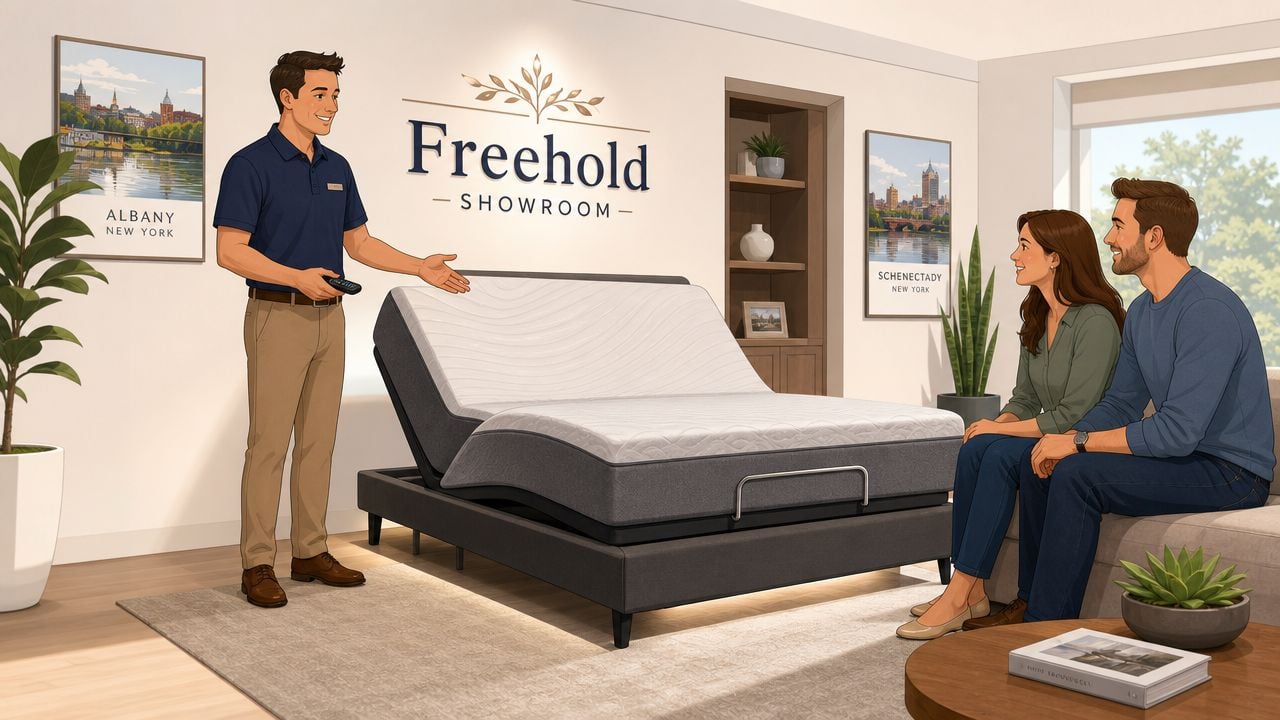
Reading about adjustable beds helps. Testing them is what separates a smart purchase from a guessing game. That's especially true for shoppers driving in from Albany, Schenectady, Troy, or nearby Greene County communities who want to get this decision right the first time.
A key reason to test in person is usability. Expert reviews have found meaningful differences in transition speed, including one model that moved to a preset 16.5 seconds faster than another in testing, according to AARP's adjustable bed review coverage. For older adults, people with mobility concerns, or anyone who changes positions often, that isn't a minor detail.
What to do in the showroom
Start by lying down in the position normally used at home. Don't sit on the edge for thirty seconds and call it a test. A real test means spending a few minutes flat, then moving through the positions that matter most.
Use this checklist:
- Run flat to raised and back again: The motion should feel smooth and controlled.
- Test the preset buttons: A shopper should know within seconds whether the remote is intuitive or annoying.
- Listen closely: Quiet operation matters more at bedtime than on a sales floor.
- Pause in each position: Reading, head raised, and Zero Gravity should each feel distinct and useful.
- Notice stability: The frame shouldn't feel shaky when changing angles.
What to bring and what to ask
Shoppers should wear comfortable clothes and take their time. If two people will sleep on the base, both should test it. If one partner has stronger opinions about firmness or position, that person needs extra time on the bed.
Questions worth asking include:
- Will this base work with the intended mattress
- How easy is setup in the home
- What happens if a remote or motor component needs service
- Are there bracket or furniture compatibility options
One practical advantage of testing locally is mattress pairing. A base can feel completely different depending on what's on top of it. Tip Top Furniture & Mattresses carries adjustable mattresses and frames and uses a high-tech bed matching system to help shoppers evaluate comfort and support together, which gives buyers a more realistic in-store test than trying a base in isolation.
The shopper should leave the showroom knowing which position felt right, which remote felt easiest, and which base moved with the least fuss. If those answers aren't clear, the test wasn't long enough.
Financing Delivery and Making Your Purchase Simple
Sticker price gets too much attention. Value matters more. A queen adjustable bed frame can range from $899 to $1,599 in buyer guidance from the National Council on Aging, and a queen adjustable base priced at $1,248 was identified by AARP as the lowest-priced model in its 2026 comparison, about $300 below the next option, as summarized in NCOA's adjustable bed buying resource. That spread proves the point. Price alone doesn't tell a shopper what the bed will feel like, how easy it is to use, or whether it fits the household.
How to think about value instead of sticker shock
A smart buyer should judge an adjustable base by three things:
- How often it will be used
- Whether the features solve a real need
- How long the setup is expected to stay in service
That's why financing matters. When a family finds the right comfort setup but wants to spread out the purchase, flexible furniture financing options can make the decision much more manageable.
Delivery setup and mattress fit
The other piece people underestimate is setup. Adjustable bases are heavy, mechanical products. Most shoppers don't want to wrestle one through a hallway, attach parts, and guess at mattress compatibility. Professional delivery and installation remove that hassle.
Most modern mattresses can work well with adjustable bases, but compatibility still needs to be confirmed before purchase. That's especially true when trying to pair an existing mattress with a new base. A quick in-store check saves a lot of frustration later.
Shoppers who want better value should also ask about clearance inventory, floor models, or last-chance buys. That can be a practical way to get more comfort without stretching the budget further than necessary.
Adjustable Bed FAQs for Albany Homeowners
Do most people need a new mattress
Not always. Many modern foam and hybrid mattresses can work well on an adjustable base. The key is flexibility and compatibility. If the mattress is too rigid or not designed to bend comfortably, the base won't perform the way it should.
Can an adjustable base work with an existing bed
Often, yes. Many setups can work with existing headboards or inside certain bed frames, depending on clearance and hardware. For these compatibility checks, in-person guidance saves time. A shopper should bring photos and measurements instead of guessing.
What should shoppers expect from a warranty
Warranties usually break coverage into parts of the system, such as frame structure, motor components, and other mechanical or electrical pieces. The important step is reading what's covered, for how long, and what service process applies if something goes wrong. A long warranty sounds reassuring, but the details matter more than the headline.
Is a split setup automatically better for couples
No. It's only better when both people want independent movement badly enough to accept the tradeoff in the middle. For some couples, shared comfort wins. For others, personalized adjustment wins. Neither choice is wrong. The wrong move is buying without testing both options first.
Albany-area shoppers who want hands-on help with an adjustable bed comparison can visit Tip Top Furniture & Mattresses in Freehold, NY to test different base styles, compare mattress pairings, and get straightforward guidance on financing, delivery, and fit for the home.