Master Curtain Panel Sizes for Your Home

You're standing in the room, tape measure in hand, staring at a window that suddenly seems much bigger than it did yesterday. You know the old curtains have to go. You also know that once you start shopping, you'll see width, length, rod size, panel count, and words like “fullness” that sound simple until you have to make a real decision.
That confusion is normal. Curtain panel sizes trip people up because the package only tells part of the story. A panel can be the right length and still look skimpy. It can be the right width on paper and still leave the room feeling unfinished.
That's especially true around Albany, Schenectady, Troy, and Greene County, where homes often mix standard windows with older, slightly unusual openings. If you're also comparing shades or blinds, practical guides like Florida blind installation and repair can help you think through adjacent window treatment issues too.
If you want a broader starting point before choosing fabric or hardware, this guide on how to choose window treatments is a helpful companion. For now, let's make curtain panel sizes easy to understand so you can buy with confidence.
Choosing Curtains Can Feel Overwhelming We Can Help
Difficulty often stems not from an inability to measure, but from the fact that curtain panel sizes involve three separate decisions at once. You need the right width, the right length, and the right amount of fabric for the look you want.
A common example is the family who buys two ready-made panels because that seems logical. They hang them up, step back, and notice three problems right away. The curtains barely cover the glass when closed, they look flat when open, and the whole window seems smaller than before.
Curtains usually look “wrong” for a simple reason. The panel size on the package doesn't automatically equal the finished look on your wall.
That's why it helps to think like a design consultant instead of a rushed shopper. Start with the window. Then consider the rod. Then decide how much softness and coverage you want from the fabric.
Here's where readers usually get tangled:
- Width confusion. They measure the glass, but forget that curtains hang from a rod, not from the glass itself.
- Length confusion. They see several standard lengths and aren't sure which one fits an 8-foot ceiling, a bedroom, or a dining room.
- Panel count confusion. They assume one package equals one complete window treatment.
What makes this easier
You don't need complicated math. You need a few dependable rules and a realistic example or two. Once you understand standard curtain panel sizes, shopping gets much less stressful. You'll know when two panels are enough, when three make more sense, and when a custom option will save you frustration.
Decoding Standard Curtain Panel Sizes
A curtain label gives you two numbers, but those two numbers answer two different questions. Width tells you how much fabric spans the rod. Length tells you where the curtain ends. So if a package says 52 x 96 inches, read it as 52 inches wide and 96 inches long for one panel.
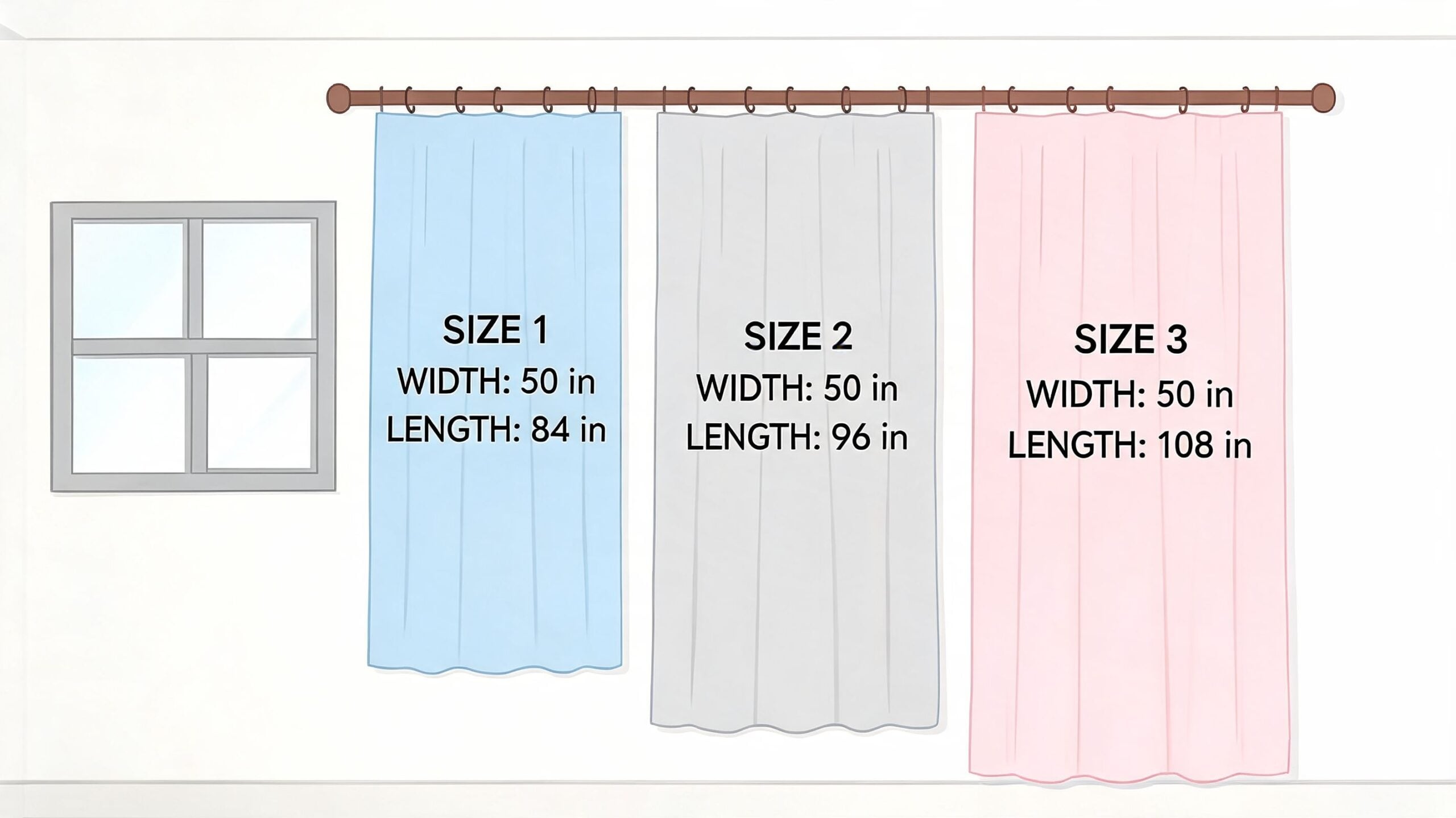
That last part trips up plenty of shoppers in the Capital Region. They see one package, assume it covers one window, and end up with curtains that look skimpy. Panel sizing works a bit like buying area rugs. The label tells you the size of the piece you are buying, not how full or finished the whole room will feel once it is in place.
Standard widths you'll see most often
Ready-made curtain panels are commonly sold in a fairly narrow width range, and many fall close to the width of decorator fabric used to make drapes. In plain English, store panels often look similar in width because they are built from similar fabric standards.
For your home, the useful takeaway is simple. A single panel usually covers only part of the job. Most windows need a pair of panels to look balanced and to close properly.
That matters even more in older Albany homes, where windows are often wider than they first appear because the trim is chunky, the casings are deep, or the rod needs to extend past the frame. In a Center Square brownstone or a colonials-style home in Delmar, a standard panel may fit the package description and still look undersized on the wall.
Standard lengths and what they mean
Omni Calculator's curtain size guide explains that common ready-made curtain lengths include 72, 84, 96, and 108 inches. Those are the sizes you'll usually see online and in stores.
Here's how those lengths tend to function in real rooms:
| Common length | Where it usually works |
|---|---|
| 72 inches | Shorter windows, casual spaces, or spots where floor-length curtains would get in the way |
| 84 inches | A common off-the-shelf option for standard wall heights |
| 96 inches | A better choice when you want a more tailored, floor-length look |
| 108 inches | Helpful for taller placements, higher ceilings, or a more formal style |
A simple way to remember it is this. Width handles coverage. Length handles placement and style.
If you are dressing a patio door or another wide opening, our guide to curtains for sliding glass doors can help you sort out scale, traffic flow, and privacy.
Why standards are only the starting point
Standard sizes are helpful, but they do not solve every window in the Greater Albany area. Many local homes have quirks that change the answer fast. Uneven floors can make one side of a panel look too short. Deep window stools can push fabric outward. Radiators under the sill may rule out one length and make another much more practical.
That is why standard sizes work best as a starting framework. The final choice still depends on your actual wall, rod placement, and how the window lives in the room.
If you have ever dealt with accurate window screen measurements, you already know the same lesson applies here. A small measuring assumption can throw off the finished fit. In many Albany-area homes, especially older ones with non-standard windows, custom guidance saves time and gets a better result than guessing from the package alone.
How to Measure Your Windows for Curtains
You get the panels home, hold one up to the window, and something feels off. The width looked right on the package. The length sounded close enough. Then the rod goes up, the floor slopes a little, and the whole plan starts to wobble. That happens in plenty of Capital Region homes, especially older houses where windows are not always perfectly centered, square, or standard.
Good curtain measuring starts with the rod, not the glass. Curtains hang from hardware, and the hardware decides how wide and how long the finished look will be.
Start with a steel tape measure, a pencil, and the exact spot where you want the rod installed. If you have ever handled another window project, a guide to accurate window screen measurements is a useful reminder that a small measuring mistake at the start can turn into a poor fit later.
Measure the width based on the rod span
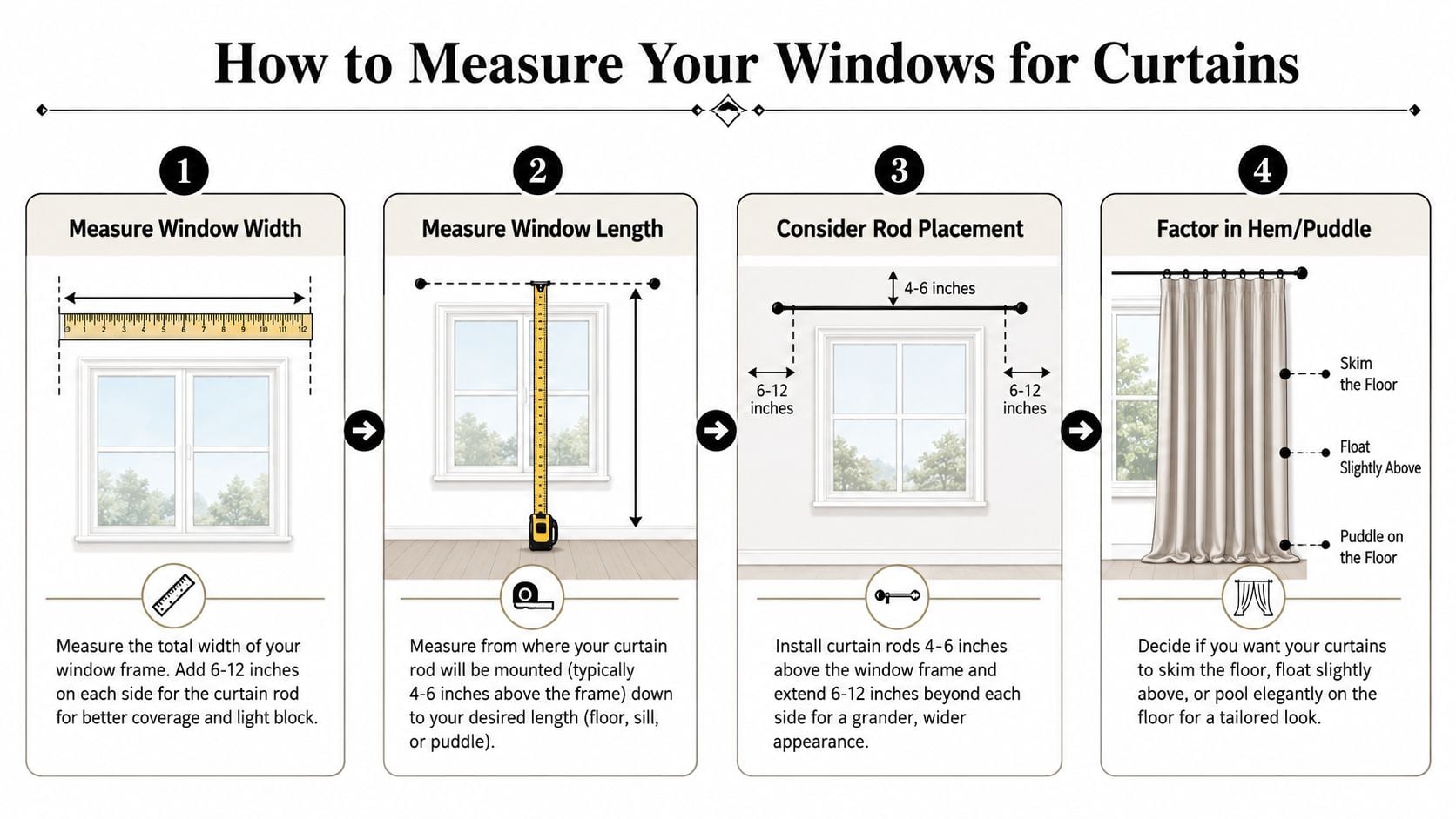
Measure from the far left end of the planned rod to the far right end, not just from one side of the window frame to the other. This is the number that matters for curtain sizing.
Why? Because curtains need space to open without covering all your daylight. In many Albany homes, that extra room matters even more. Trim can be thick, window casings can project farther than expected, and older rooms often have less wall space on one side than the other. Measure the full span you want the curtains to cover when closed, then confirm there is enough room for the panels to sit back when open.
If the window has an unusual shape or angle, these ideas for bay window curtains for living room layouts can help you plan bracket placement before you buy anything.
Measure the length from the mounted rod location
Curtain length works like hemming a pair of pants. The starting point matters just as much as the final length.
Mark where the rod will sit, then measure straight down to your preferred stopping point. That could be the sill, just above the floor, or lightly touching the floor. Measure both the left and right side if your home has older flooring or a settled wall. Around Albany, that is common enough that it is worth checking every time.
Use this simple process:
- Mark the rod height above the window.
- Measure down to the exact endpoint you want the curtain to reach.
- Check both sides of the window opening.
- Write width and length separately so they do not get mixed up later.
If the two sides give you slightly different floor measurements, use the shorter one for ready-made panels. That usually looks cleaner than curtains that drag unevenly.
Watch for the house itself
This is the part many homeowners miss.
Radiators, deep sills, baseboard heat, and out-of-level floors can all change the best curtain length. A panel that looks perfect in a newer development may behave very differently in a Center Square brownstone, a ranch in Colonie, or a farmhouse outside Albany with settled floors and non-standard trim. Measuring the window alone will not catch those details.
That local reality is one reason custom help can save frustration. At Tip Top Furniture, we often help families measure for their existing room, rather than the one the package assumes.
Two measuring mistakes that cause trouble
These are the errors we see most often:
- Measuring only the glass instead of the full rod span
- Measuring from the top of the window instead of from the mounted rod position
- Skipping the second side measurement in older homes with uneven floors
- Buying by label size alone without comparing it to your actual setup
Careful measuring will not solve every design decision, but it gives you a reliable starting point. And in the Greater Albany area, where windows often come with a few surprises, that extra care is usually what separates a curtain job that feels close from one that looks right.
Calculate Curtain Fullness for a Luxurious Look
A common Albany scenario goes like this. You measure carefully, buy two curtain panels that match the rod width, hang them up, and the window still looks a little skimpy. The curtains close, but they do not have those soft folds you see in a well-finished room.
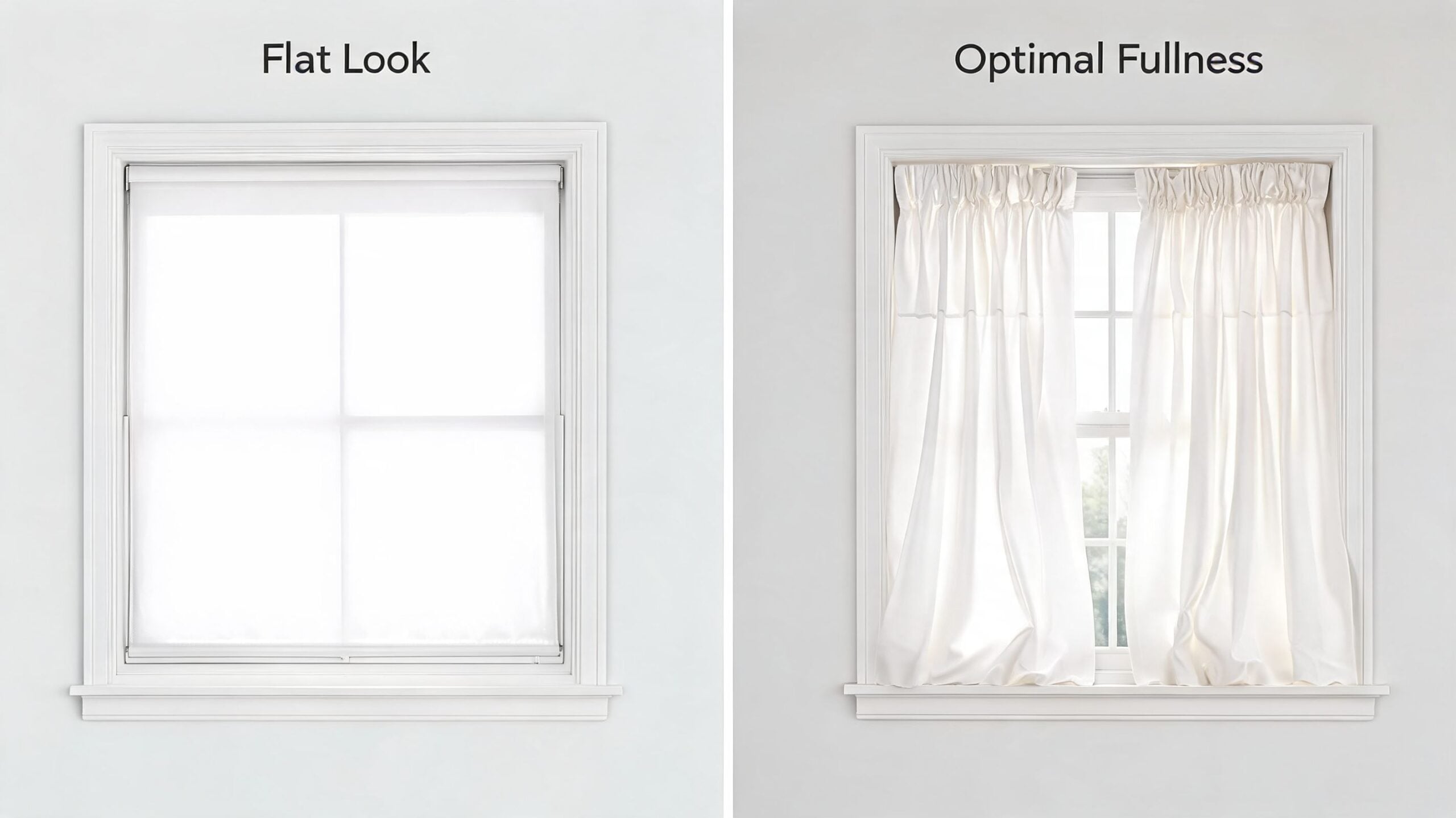
That missing piece is fullness. Fullness is the extra fabric beyond the bare width needed to cover the rod. It works like gathering a tablecloth into soft pleats instead of pulling it flat across the table. The window is covered in both cases, but the result feels very different.
How much fullness do you need?
A good working range is 1.5 to 3 times your rod width in total fabric.
Here is the simple version:
- 1.5 times the rod width gives a lighter, more structured look
- 2 times the rod width gives the balanced, everyday fullness many homeowners prefer
- Up to 3 times the rod width gives a richer, more decorative look with deeper folds
If your rod is 60 inches wide, a balanced setup usually calls for about 120 inches of total panel width. That could mean two 60-inch panels, or another combination that adds up to the same total.
When shopping for ready-made curtains, sizing can get confusing. A pair may be wide enough to meet in the middle, but still too narrow to hang with any shape. Flat curtains often look undersized because they have no room to form folds.
Why fullness changes the whole look
Curtains need a little extra fabric for the same reason a sofa needs cushions with enough fill. If everything is stretched tight, the room feels harder and less finished. If there is some body and softness, the window treatment looks intentional.
That matters even more in the Greater Albany Capital Region. Many local homes have tall old windows, uneven trim, or layouts where the front room faces the street more closely than newer subdivisions do. In those spaces, fuller curtains can help the room feel warmer, softer, and a bit more private.
Fullness also affects function. More fabric usually gives you better overlap at the center and better coverage at the sides, which can help with privacy and light control.
A quick real-world example
Say you live in a Center Square brownstone or an older Colonial in Delmar, and your rod span is wider than the window itself because you want the curtains to stack back neatly. Two standard panels might technically cover the opening, but they can still look thin once they are pushed open and expected to drape nicely.
In that case, adding width often fixes the problem faster than changing length or fabric. Sometimes that means choosing wider ready-made panels. Sometimes it means using extra panels. In older Capital Region homes with non-standard windows, it often means custom curtains are the cleaner answer.
For people who sew or want to understand how panel width translates into fabric needs, B-Sew Inn's sewing advice offers a useful fabric-planning perspective.
If you want the curtains to work with the rest of the room instead of feeling like an afterthought, this guide on how to create an eye-catching room can help tie the window treatment to your furniture, rugs, and color choices.
At Tip Top Furniture, this is the point where custom guidance often saves Albany-area homeowners from buying twice. When your window sizes are unusual, your floors are a little off, or you want a fuller look without guessing, we can help you choose a treatment that fits your home the way it is.
Pro Styling Tips for Hanging Your Curtains
A curtain can be the right size on paper and still look off once it is on the wall. In many Greater Albany homes, especially older ones with settled floors, deep wood trim, or windows that sit a little unevenly, hanging height and hardware make a bigger difference than people expect.
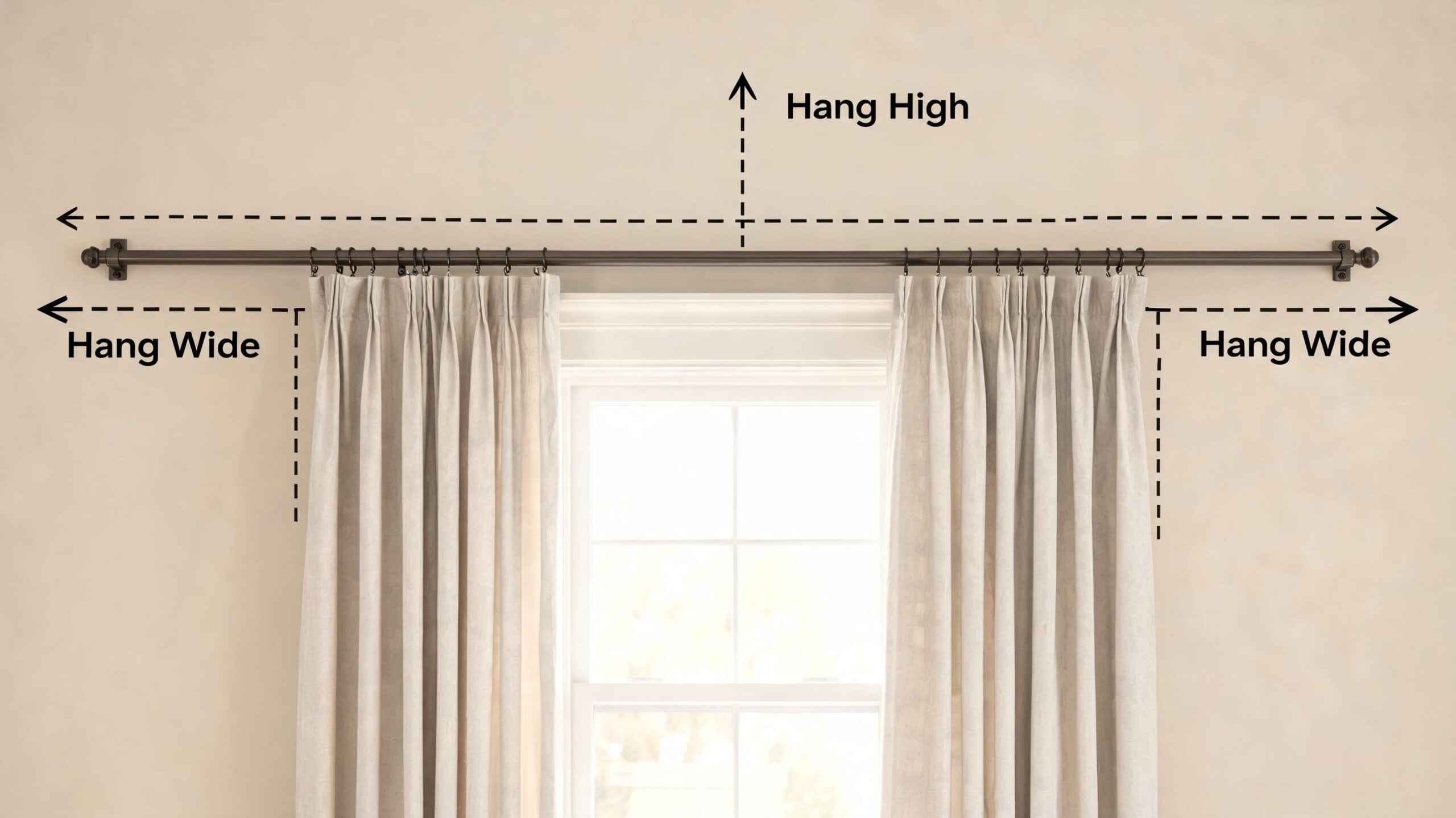
Hang them high and wide
Two Pages Curtains notes that hanging 96-108 inch floor-length curtains high and wide can visually expand a room's height by 10-20% by drawing the eye upward. The same source explains that short curtains can make a room feel smaller and less finished.
The idea is simple. Your eye follows the rod line first, not the window frame. So if the rod sits higher and extends past the sides of the window, the whole wall reads as larger.
That one adjustment often helps you get:
- More exposed glass when the curtains are open
- A taller-looking room
- A wider-looking window
- A cleaner finished appearance
In Albany-area homes, this can be especially helpful where original windows are charming but a little awkward by modern standards. A smart rod placement can make an older window feel intentional instead of tricky.
Choose the length style on purpose
Curtain length should match how the room lives day to day. A formal dining room in Loudonville usually asks for something different than a busy family room in Clifton Park.
| Style | How it looks | Best for |
|---|---|---|
| Float | Hangs slightly above the floor | Busy family spaces where easy cleaning matters |
| Kiss | Just touches the floor | A clean, classic look |
| Puddle | Extra fabric rests on the floor | Formal rooms where drama matters more than ease |
A good way to judge these styles is to think about pant hems. Too short looks accidental. Too long looks careless unless it is clearly done on purpose. Curtains work the same way.
Rooms usually look best when the curtain length makes a clear choice. Slightly above the floor, lightly touching it, or pooling with intention.
Match the curtain style to the room
Longer curtains often help soften the strong trim lines and tall proportions found in many homes around Albany, Troy, and Schenectady. They can also make a room with slightly uneven architecture feel more unified.
Shorter treatments still have their place. Kitchens, mudrooms, laundry areas, and other hardworking spaces often benefit from a more practical approach.
Color changes the effect too. If you are considering a stronger accent, these burnt orange curtain ideas for warm, grounded rooms show how fabric choice and panel length shape the mood. The same color can feel rich and welcoming in the right proportion, or too heavy if the panels are too short or too bulky.
For visual inspiration on proportion and window styling, ELLE Decor is a useful design reference, especially when you want to compare casual and formal curtain looks.
Don't let hardware undercut the fabric
Curtain hardware works like the frame around a picture. If it is too small, too light, or poorly placed, the whole installation feels less settled.
Make sure the rod diameter, bracket size, and rings fit both the span of the window and the weight of the fabric. This matters even more in older Capital Region homes, where wide trim, plaster walls, or extra-wide openings can call for sturdier support than a basic off-the-shelf set provides.
At Tip Top Furniture, we often help local homeowners solve these finishing details before they turn into frustration. Sometimes the fix is a better rod. Sometimes it is a different panel style. In homes with unusual windows, getting those small decisions right is often what makes the curtains look like they belong there.
Custom Curtains for Your Unique Albany Home
You measure carefully, buy ready made panels, hang them up, and something still feels off. The hem floats above the floor, the stack covers too much glass, or the panels look skimpy against a tall window in a Center Hall Colonial or an older Victorian in Albany.
Custom curtains solve problems like these because they are built for the room you have, not the room a package assumes you have. In the Capital Region, that matters more than many homeowners expect. Older houses often come with deep wood trim, uneven window spacing, extra-tall ceilings, and sizes that do not line up neatly with standard panel lengths.
Custom drapery also gives you more control over proportion. A good work shirt off the rack may fit your shoulders but miss at the sleeve. Tailoring fixes the whole picture. Curtains work the same way. The right width, length, lining, and pleat style help the window feel settled in the room instead of being a basic covering.
When custom is the better answer
Custom curtains make sense when:
- Your windows are outside standard sizes, so store bought panels look too short, too narrow, or awkward at the floor
- Your room needs more presence, especially with tall ceilings, large trim, or wide openings common in many Capital Region homes
- You are matching several finishes, such as upholstery, rugs, paint, and wood tones
- You want details that suit the house, like fuller pleats, better lining, or fabric that feels appropriate for the architecture
One more point matters in this area. A ranch in Colonie, a brownstone-style home in Troy, and a farmhouse near Freehold rarely need the same curtain plan. The window may call for custom length. The fabric may need to handle strong sun. The hardware may need stronger support because of plaster walls or a wider span.
The best custom curtain fits the window, the room, and the house itself.
If you'd like help choosing the right curtain panel sizes, fabric, and finished look for your space, Tip Top Furniture & Mattresses is a reliable local place to start. Since 1978, their family-owned Freehold showroom has helped Capital Region homeowners coordinate furniture, décor, flooring, and custom details in one place. You can explore custom order options, browse room ideas, or ask about flexible financing if you're planning a larger home update.