Different Types of Lamp Shades: A Buyer’s Guide

You settle into the sofa after dinner, switch on the lamp, and the room still feels a little off. The furniture is in place, the wall color works, but the light lands awkwardly. Sometimes the missing piece is the lamp shade.
A shade works like a window treatment for a bulb. It softens, directs, and frames the light, while also affecting how finished the lamp looks on the table beside it. That makes shade selection less about picking a color you like and more about choosing the right tool for the job.
Around the Capital Region, that can mean different things from one home to the next. A farmhouse living room in Glenmont may call for a warmer, more relaxed glow. A cleaner-lined townhouse in Albany may need a shade that feels precise and controlled. If you are also refining a sitting area, these ideas for putting your living room in the best light can help you connect lamp choices to comfort and layout.
Workspaces need their own approach. If a desk lamp has to support long reading sessions or video calls, these home office lighting solutions show useful ways to layer light without making the room feel sharp or tiring.
The part many homeowners miss is fit. Shade shape matters, material matters, and the fitter, the hardware that connects the shade to the lamp, matters too. Once you understand those pieces together, the different types of lamp shades get much easier to choose, especially if you want a result that suits your room and can be custom ordered with help from a local furniture store that has been guiding families for decades.
The Secret Power of the Perfect Lamp Shade
A room can be nicely furnished and still feel uncomfortable after sunset. Usually, the problem shows up in one of three ways. The light is too bright, too dim, or aimed in the wrong direction.
That’s where shade choice matters more than people think. A wide shade can spread light across a seating area. A narrower, sloped shade can push light down toward a book, puzzle table, or side chair. Even before you change furniture, a better lamp shade can make a room feel calmer and more finished.
For living spaces, this matters just as much as furniture placement. If you’re building a warmer evening setup, these ideas on putting your living room in the best light show how lighting choices affect comfort, mood, and everyday use.
A lamp gives light. A shade decides where that light lives.
Many homeowners get stuck because stores often sort shades by color or shape, while real life calls for a different question first. What do you need the lamp to do? Read? Glow softly? Light a dark corner? Balance a large end table?
When you start there, the different types of lamp shades become much easier to understand.
Understanding Lamp Shade Shapes and Fitters
Shape is where most shoppers begin, and it’s a good place to start. The outline of the shade controls how light leaves the lamp and how the lamp feels in the room.
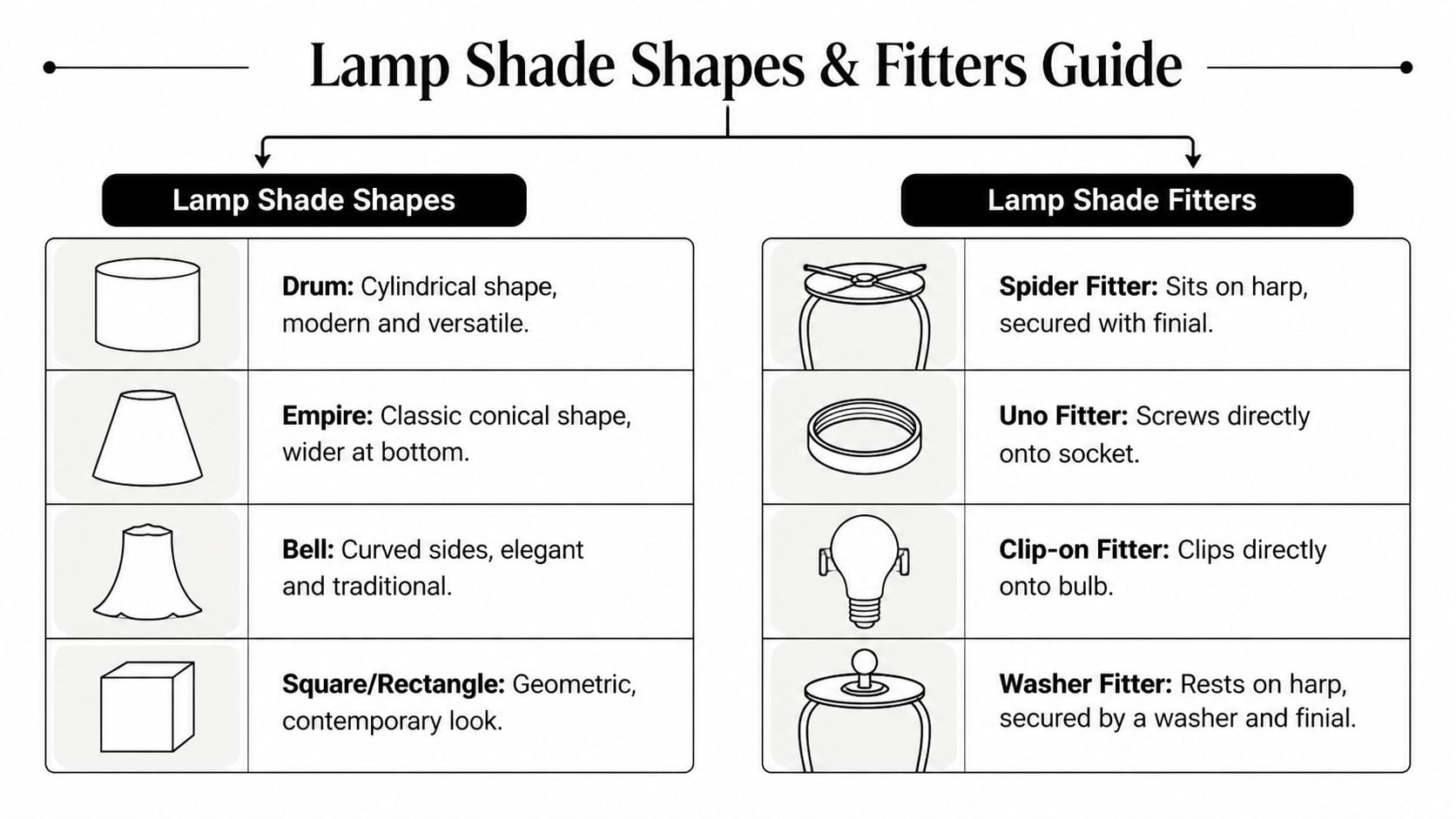
The main shade shapes
Drum shades have straight sides and a clean profile. They’re the most common shape, and they’re popular because they spread light evenly. According to this lamp shade guide from Pooky, cylindrical drum shades are prized for balanced light distribution, while sloped empire and coolie shades can direct 60 to 70% more light downward.
That makes drum shades a safe choice in many Capital Region homes, especially in family rooms, casual living rooms, and updated farmhouse spaces.
Empire shades are narrower at the top and wider at the bottom. They look more traditional, and they direct more light downward. If you like to read in bed or need better light on a side table, this shape often works well.
Bell shades curve outward as they widen. They bring a softer, more classic look. In older homes around Albany and Greene County, bell shades often feel at home with traditional wood furniture and vintage-style lamps.
Square and rectangular shades feel more architectural. They work well when the lamp base has crisp lines, such as a boxy ceramic base or a geometric metal form. These shades can look sharp in contemporary rooms, but they need the right base to feel intentional.
A quick consideration:
| Shade shape | Best for | General effect |
|---|---|---|
| Drum | Living rooms, versatile table lamps | Even, balanced glow |
| Empire | Reading lamps, bedside use | More downward light |
| Bell | Traditional rooms | Soft, decorative presence |
| Square or rectangle | Modern or geometric bases | Structured, tailored look |
If you’re browsing accent lighting, a bronze Tiffany table lamp is a good example of a lamp where shade shape strongly affects whether the piece feels classic, focused, or purely decorative.
The part many people miss
A beautiful shade still won’t work if it attaches the wrong way. That attachment is called the fitter.
Shoppers often get frustrated because a fitter isn’t always obvious until the shade arrives.
- Spider fitter. This sits on top of a harp and is secured with a finial. It’s common on table and floor lamps.
- Uno fitter. This fitter attaches directly to the lamp socket.
- Clip-on fitter. This clips directly onto the bulb and is usually used for smaller shades.
- Washer fitter. Similar in appearance to spider-supported setups, but secured differently on the lamp assembly.
How to avoid a mismatch
Before you buy, check the lamp itself, not just the old shade. Look for the hardware that’s holding the shade in place.
Practical rule: If your lamp uses a harp and a finial at the top, you’re likely looking for a spider fitter.
If the lamp has no harp and the shade connects near the socket, you may need an uno. If it’s a small accent lamp with a tiny shade attached right to the bulb, it may be clip-on.
This sounds technical, but it’s really just a matching exercise. Shape affects light. Fitter affects whether the shade can even be installed.
Choosing Your Material for Light and Style
A shade can look perfect in the store and still disappoint once it gets home to Albany, Delmar, or Clifton Park. The usual reason is material. Two shades with the same shape can cast very different light, change the mood of a room, and even make a lamp feel more casual or more formal.
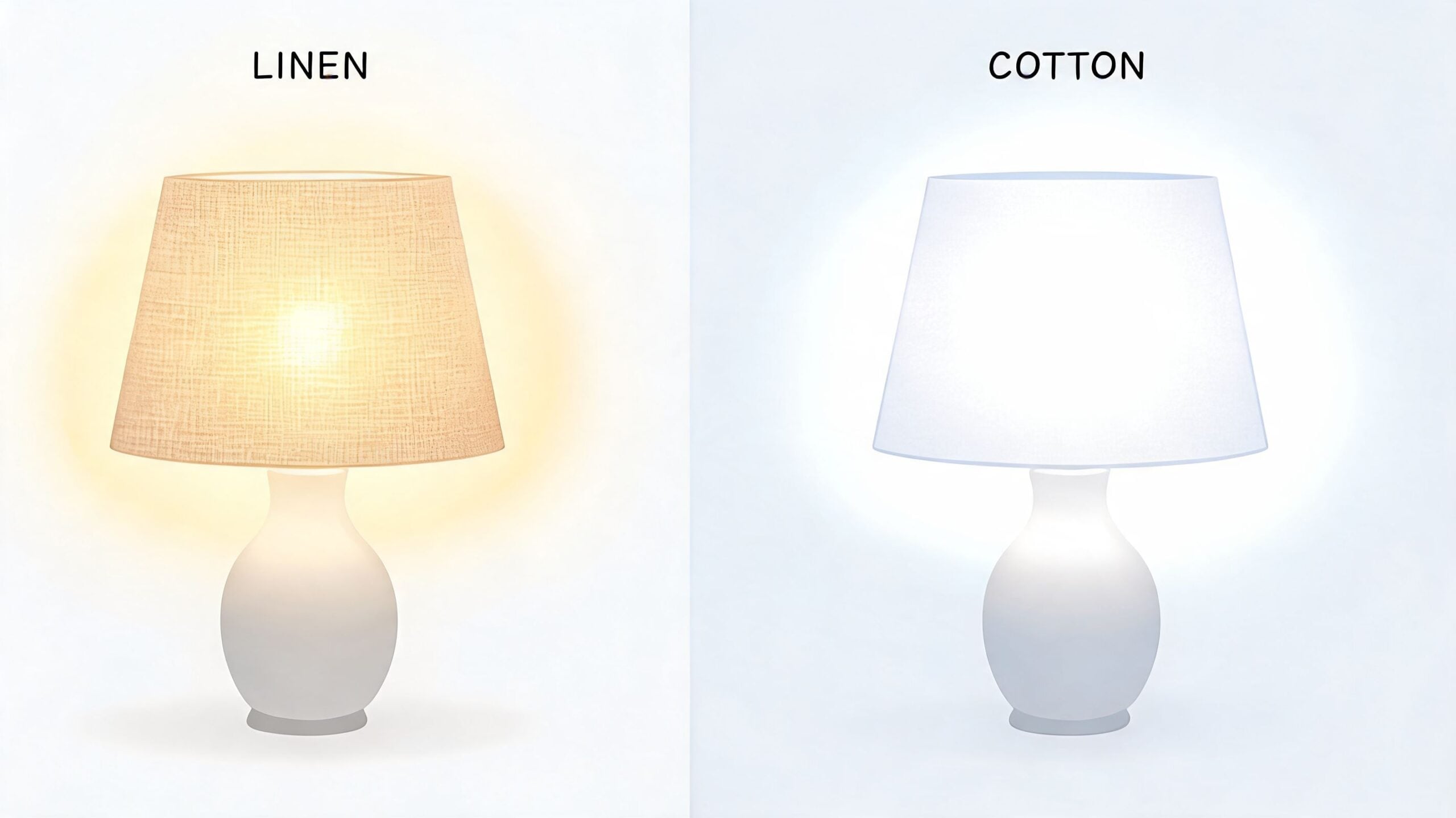
Translucent and opaque shades
Start by asking a simple question. Do you want the shade to glow, or do you want the light directed mostly up and down?
A translucent shade lets light pass through the sides. Linen, cotton, and some silk shades often do this well. The effect works like a frosted window. You still get light on the table, but you also get a softer wash of light around the room. That is often a good fit for living rooms, bedrooms, and any spot where you want the lamp to feel warm rather than sharp.
An opaque shade blocks more side light. More of the bulb’s light is pushed through the top and bottom openings instead. The result is more focused light, which can be useful beside a reading chair, on a desk, or on a console where you sort mail and keys after work.
This one choice changes how a room feels at night.
Softback and hardback construction
Construction matters just as much as fabric.
A softback shade usually has a fabric exterior and a softer inner structure. It often feels traditional, relaxed, and a little more decorative. If you like layered, classic interiors, or you have a lamp with an antique or cottage look, a softback shade often suits it well.
A hardback shade has a firmer lining and a cleaner profile. It usually reflects light more directly and gives the lamp a crisper, more refined appearance. In many Upstate homes, that makes hardback shades a practical choice for family rooms, home offices, and multipurpose spaces where one lamp may need to do more work.
If you have ever wondered why one white shade feels cozy and another feels brighter and more controlled, the lining is often the reason.
Matching material to the room
Material also sets the tone for the space, much like upholstery does on a sofa or accent chair.
- Linen or cotton feels easy, approachable, and well suited to casual or transitional rooms
- Silk looks dressier and often fits traditional bedrooms, formal living rooms, or elegant entry tables
- Textured weaves or burlap-style fabrics bring a rustic, relaxed look that can work nicely in farmhouse or lake-influenced homes
- Metal or firmly lined shades feel sharper and more directional, which pairs well with cleaner, more modern interiors
For a helpful way to compare how home fabrics affect mood and texture, Lewis and Sheron Textiles' fabric guide gives good context beyond lighting alone.
If you are trying to match a new shade to an existing chair, sectional, or ottoman, this guide to upholstery materials for furniture and room coordination can help you avoid mixing textures that compete with each other.
A good shade material should make sense in daylight and after dark. It should look right with your furniture, cast the kind of light you need, and suit the way the room is used every day.
How to Measure for a Perfect Lamp Shade Fit
A lamp can have a beautiful base and still feel a little off in the room. In many Albany-area homes, that problem comes down to proportion. The shade is either too tall, too squat, or so wide that the base seems to disappear under it.
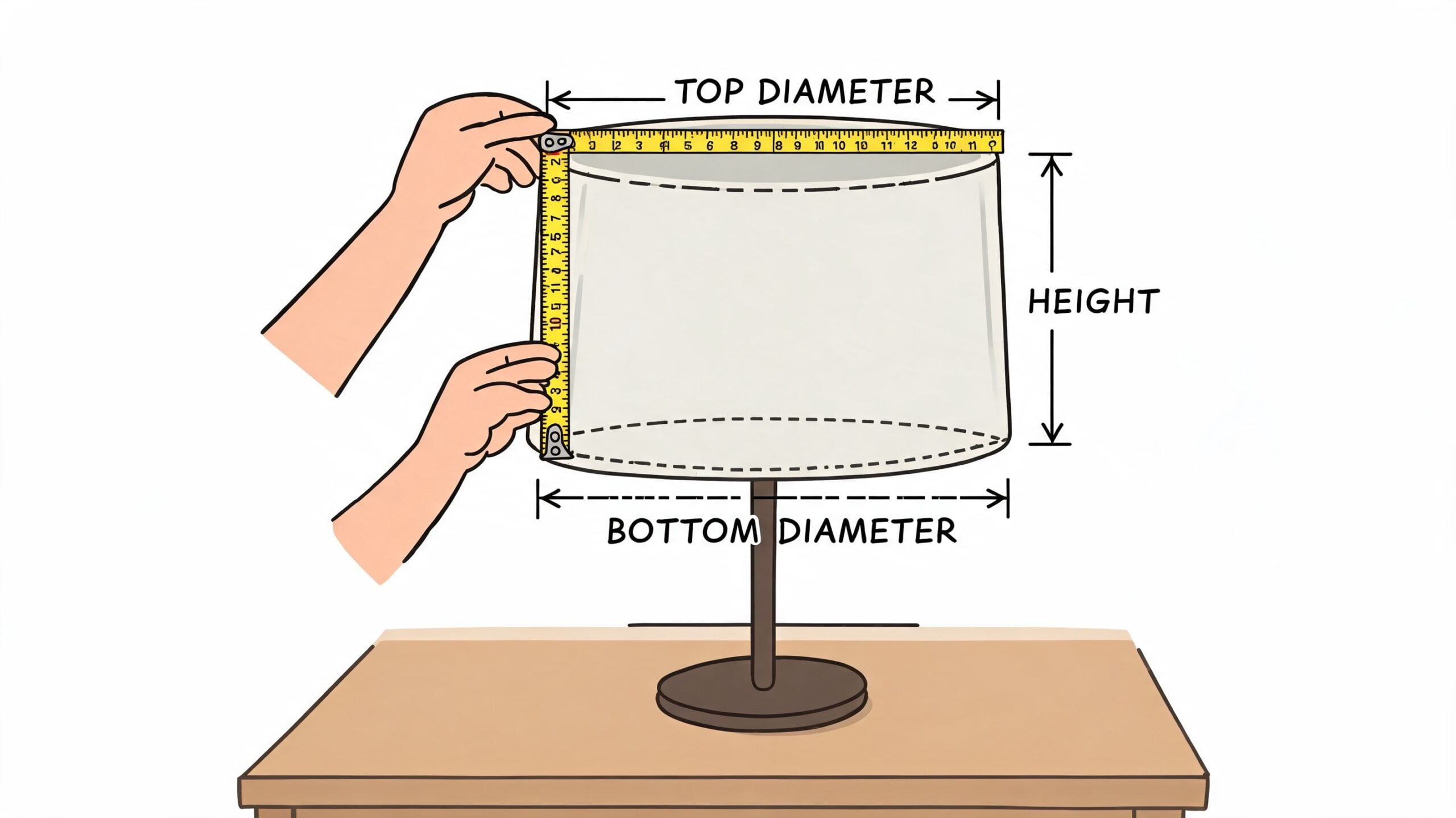
The good news is that measuring is not complicated. It works a lot like fitting a rug under a dining table or checking sofa scale in a living room. A few basic measurements give you a strong starting point, then your eye confirms whether the lamp feels balanced.
The easiest sizing rules to remember
Start with two practical guidelines decorators use every day:
- Shade height should usually be about two-thirds of the lamp base height.
- Shade width should usually be about twice the width of the base at its widest point.
These are rules of thumb, not strict math. They help you avoid the most common mistakes, especially when you are replacing a worn-out shade and trying to keep the lamp looking natural in the room.
Here is the simplest way to measure:
- Measure the lamp base height from the bottom of the base to the bottom of the socket.
- Measure the base width at its widest point.
- Compare those numbers to the shade’s height and bottom width.
- Set the shade on the lamp and view it at eye level. The socket and harp hardware should be mostly hidden.
That last check matters. A lamp can match the numbers and still look awkward if too much hardware shows or if the shade cuts the base in an odd place.
What a good fit looks like
A well-fitted shade makes the whole lamp look settled, the way a properly sized coffee table makes a seating area feel right.
Here’s a quick reference:
| What to check | Good sign |
|---|---|
| Shade height | About two-thirds of base height |
| Shade width | About twice the base width |
| Socket visibility | Hardware is mostly hidden |
| Overall look | Lamp feels balanced, not top- or bottom-heavy |
For homeowners who like to measure first and shop second, this guide on how to measure furniture for your space follows the same practical approach. Careful measuring saves time, returns, and second-guessing.
Don’t skip bulb clearance
Fit is not only about appearance. The bulb also needs enough space inside the shade so heat does not build up too close to the material.
Before you settle on a shade, turn the lamp off, let the bulb cool, and check how much room you have around the bulb and above it. If the bulb sits very close to the side or top of the shade, choose a larger shade, a different shape, or a lower-heat bulb that suits the lamp.
This comes up often with older lamps, especially vintage table lamps and slender accent lamps. The base may have plenty of charm, but the wrong shade can create both a style problem and a safety problem.
One more detail gets missed all the time. The fitter has to match the lamp. If your lamp uses a spider fitter with a harp, an uno fitter, or a clip-on style, the shade has to be built for that hardware or it will never sit correctly, no matter how good the measurements are. That is one reason in-store guidance and custom ordering can be so helpful when you want the lamp to look right the first time.
Matching Shades to Rooms in Your Upstate NY Home
The best shade for your home depends on what each room needs at night. In Upstate New York, where long evenings and darker winter afternoons are part of daily life, this matters more than many people realize.
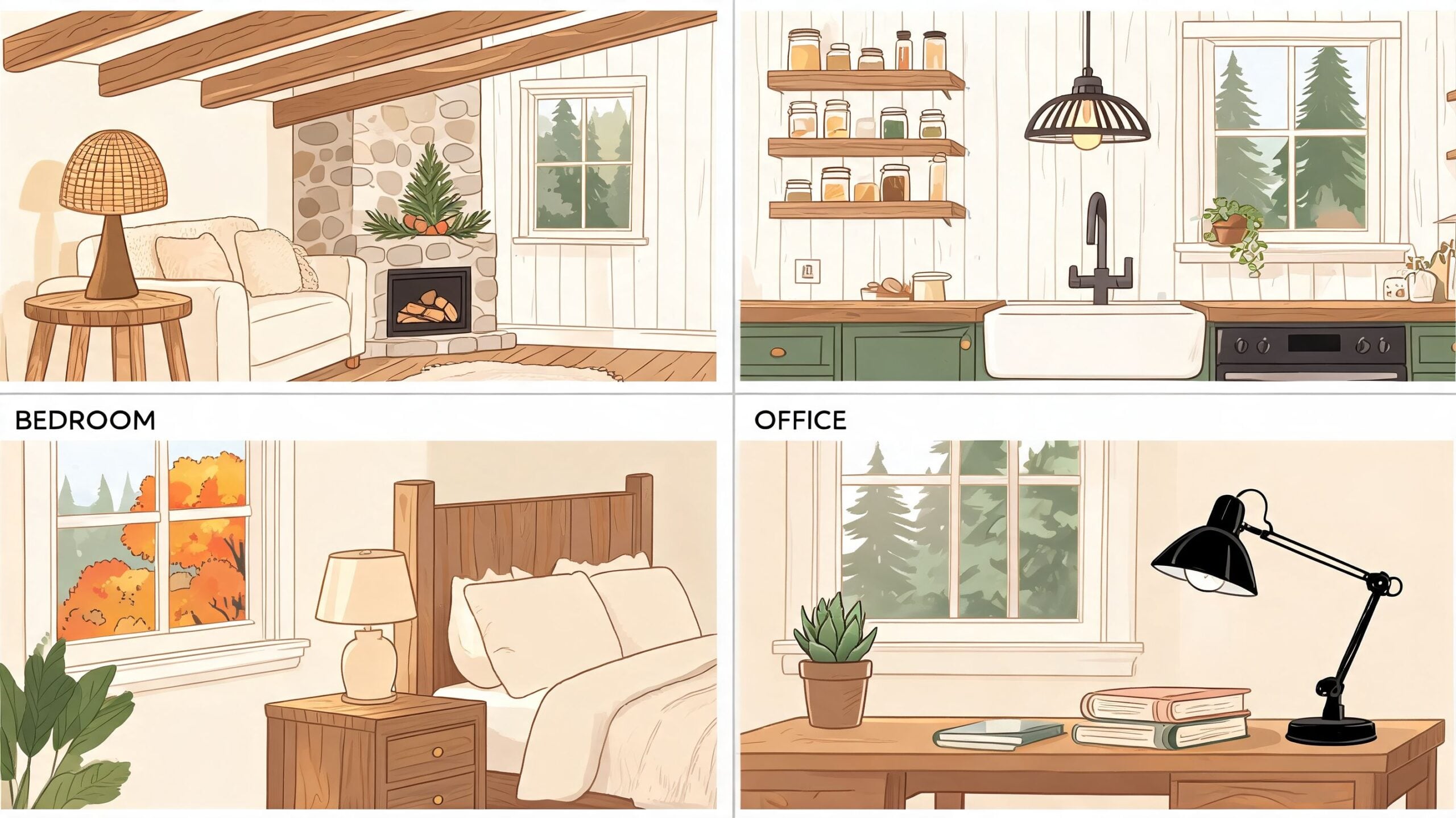
Living room choices that feel welcoming
In a living room, ambient light is preferred. It provides enough brightness to talk, relax, or help kids with homework, but avoids the hard glare of overhead lighting.
A drum shade often works well here because it spreads light evenly. On a floor lamp near a sofa, it can help a seating area feel connected rather than patchy. If the room has solid wood furniture, warm neutral upholstery, or handcrafted pieces, textured linen or burlap-style shades can add softness without feeling fussy.
An older lamp from a sale or clearance floor can also get a second life with a new shade. That’s often a smart move when the base has character but the original shade feels dated.
Bedroom and reading spaces
Bedrooms usually need gentler light, but bedside lamps also have a job to do. If you read in bed, an empire shade can help send more light downward toward the page. If the lamp is mostly for evening mood, a softer fabric shade often creates a calmer glow.
A guest room is a little different. There, it helps to choose a shade that feels easy and familiar. Nothing too dark. Nothing too directional. Guests shouldn’t have to figure out the lamp.
In bedrooms, comfort usually beats drama.
Dining rooms, entryways, and home offices
A lamp in a dining room or entry often acts like jewelry. It may not need to light the whole space. It needs to look right and add warmth.
A bell shade or a shade with a refined fabric can work beautifully in that setting, especially if the lamp sits on a console or buffet. In home offices, though, function usually comes first. A hard-backed empire or drum shade can make a desk lamp more useful because the light feels better directed.
A simple room-by-room guide helps:
- Living room. Choose broader, softer light for conversation and comfort.
- Bedroom. Decide whether the lamp is for reading, winding down, or both.
- Entryway. Let the shade support the lamp’s decorative role.
- Home office. Favor control and clarity over mood.
- Reading corner. Pick a shape that aims light where your eyes need it.
In many Albany, Schenectady, and Troy homes, the nicest results come from mixing purposes. One lamp handles glow. Another handles reading. A third lamp softens a dark corner. The shades don’t all need to match perfectly. They need to work together.
Custom Shades and Expert Advice at Tip Top Furniture
By the time decorators narrow down the different types of lamp shades, they are typically deciding between three things: Shape, material, and fit. That sounds manageable, but the details can still trip people up, especially when older lamps, unusual bases, or replacement shades enter the picture.
One of the biggest pain points is fitter confusion. This guide to lamp shade fitters and returns notes that mismatch problems account for an estimated 30 to 40% of online shade returns, especially when shoppers confuse spider, uno, and clip-on styles.
That’s why in-person guidance still matters. A quick check of the lamp hardware, bulb position, and scale can save a lot of trial and error.
If you’re ordering a special shade, replacing one on a favorite lamp, or trying to match a shade to a particular room style, it helps to start with a clear custom process. This page on getting started with custom order shows how a measured, customized approach can make the final result feel intentional instead of close enough.
Good lamp shade selection isn’t about memorizing design jargon. It’s about asking the right practical questions. Where should the light go? How should the room feel? And will the shade fit the lamp you have?
If you’d like help choosing the right lamp shade for your home, Tip Top Furniture & Mattresses is a trusted place to start. Since 1978, the family-owned Freehold showroom has helped homeowners across the Greater Albany Capital Region find furniture, décor, custom options, and expert design guidance that fit real homes and real budgets. Bring photos, dimensions, or even a fabric swatch, and their team can help you compare styles, explore custom-order possibilities, and make the whole room come together.