Queen Size Captains Bed: The Ultimate Buying Guide


Some bedrooms look fine until real life starts happening in them.
A chair becomes a closet. Extra sheets get shoved into a corner. Shoes migrate under the window. The dresser fills up, but the room still feels crowded. That’s a common story in homes around Albany, Schenectady, Troy, and the smaller towns in between, especially in older houses where closet space never kept up with modern living.
A queen size captains bed solves a very specific problem. It gives you a comfortable everyday bed for two adults, while turning the space under the mattress into organized, built-in storage you can use. Not plastic bins. Not a bed skirt hiding clutter. Real drawers, built into the frame.
That’s why this style keeps coming up when families want one room to work harder. It’s useful in a primary bedroom, smart in a guest room, and especially effective when you’re trying to make a smaller space feel calmer without stuffing in more furniture.
A good captain’s bed isn’t just about storage. It changes the room. Fewer loose pieces. Cleaner sightlines. Better use of floor space. And if you choose a well-built one in solid wood, it doesn’t feel like a compromise. It feels intentional.
Is Your Bedroom Working Against You
The bedroom is supposed to be the room that slows the day down. A lot of bedrooms do the opposite.
I’ve seen the same pattern in homes all over the Capital Region. The bed takes up most of the room, the dresser takes up the wall, and whatever doesn’t fit ends up on top of something else. That’s when the room starts feeling busy, even if it isn’t technically messy.
The signs show up fast
You probably need a different bed setup if any of this sounds familiar:
- Clothes keep landing on a chair because drawer space ran out.
- Seasonal bedding gets buried in a closet that’s already too full.
- You’re using bins under the bed and still can’t find what you need.
- The room feels tight once nightstands and a dresser are in place.
- You want better storage without adding another bulky piece.
That’s where a captain’s bed earns its keep. It doesn’t ask for more square footage. It uses the space the bed already occupies.
Practical rule: If you’re short on storage but don’t want more furniture crowding the room, start by upgrading the bed, not by adding another chest or cabinet.
Why this matters in everyday life
A bed with built-in drawers changes your routine in small but important ways. Pajamas, extra pillowcases, winter blankets, guest linens, even off-season clothes can live right where you use them.
That’s different from “technically stored.” It’s organized storage with a clear home. When people use it well, the room feels less scattered because the problem items finally have a place.
A queen size captains bed also makes sense when you want your home to work better without looking overbuilt. You’re investing in the room anyway. It’s worth choosing a bed frame that contributes more than one function.
What Is a Captains Bed Really
A captain’s bed started as a practical answer to a cramped space problem. The design goes back to the 16th century, when ship captains used built-in drawers under a low-profile bed frame to store clothes, maps, and essentials in tight cabins. By the 19th century, families brought that idea into the home because it saved space in smaller bedrooms, as noted in this history of the captain's bed.

That origin matters because it explains why the design still works. A captain’s bed wasn’t created as a trend piece. It was built for places where every inch had to earn its keep.
What separates it from a regular storage bed
A true captain’s bed is more than a bed frame with empty space underneath. The storage is part of the structure.
Here’s the difference:
- Integrated drawers are built into the base itself.
- The mattress sits on a platform rather than a separate frame and box spring setup.
- The look is cleaner because the bed reads as one complete piece of furniture.
- Everyday access is easier than lifting bins, baskets, or loose containers.
That last point is where people notice its true value. Separate under-bed storage always sounds good on paper. In daily life, it often turns into dust, mismatched containers, and things shoved out of reach.
Why the design has lasted
A captain’s bed keeps surviving style changes because the basic idea is still sound. Bedrooms haven’t gotten less demanding. In many homes, they have to do more than ever.
If you want to compare current layouts and styles, our collection of Captains Beds is a useful reference because it shows how the core concept gets interpreted in different wood frames and storage arrangements.
A well-made captain’s bed feels like furniture, not a workaround.
What it is not
It helps to clear up a few common mix-ups.
| Bed type | What it does well | Where it falls short |
|---|---|---|
| Standard platform bed | Clean look, simple support | No built-in storage |
| Regular frame with bins underneath | Cheap starting point | Cluttered look, harder access |
| Captain’s bed | Built-in drawers, finished design, daily-use storage | Needs planning for drawer clearance |
That trade-off is worth being honest about. A captain’s bed works best when the room layout allows the drawers to open comfortably. If the room is very tight on both sides, you need to think carefully about which side gets storage.
Queen Size Dimensions and Mattress Matching
A queen captain’s bed usually solves one problem and creates another if you skip the measuring. I’ve seen Albany-area shoppers feel confident because their current queen mattress fits the room, then run into trouble once the storage base, side drawers, and headboard add real bulk around that 60 by 80 sleeping surface.
The mattress size stays standard. The outside dimensions do not.
A queen mattress measures 60×80 inches. A queen captain’s bed frame will run larger on all sides because the base has to house drawers, support the platform, and often carry a heavier headboard than a basic metal frame or rail bed. That extra footprint is exactly why a captain’s bed can replace other bedroom storage, but it also means room planning has to be more exact.
In older homes around Albany, Troy, and the hill towns, bedroom dimensions are not always generous. A queen captain’s bed can still work beautifully, especially in custom or Amish-built versions, but the fit has to be checked with the full frame in mind, not just the mattress.
What to measure before you buy
Start with the room, then the bed.
- Measure the full wall-to-wall space where the bed will sit.
- Measure walking clearance at the foot and the drawer side.
- Check headboard depth, especially if windows, trim, or radiators sit close behind the bed.
- Confirm where drawers open, because one well-placed bank of drawers often works better than trying to use both sides in a tight room.
If you want a good refresher on standard mattress sizing before you compare frame specs, this guide on how to choose the best bed mattress size for your home is worth a look.
Why most captain’s beds do not use a box spring
Most queen captain’s beds are built as platform beds. The mattress sits on slats or a solid deck that is already part of the frame.
That changes the setup in a practical way. You usually skip the box spring, keep the bed height from getting awkward, and let the frame support the mattress the way it was designed to. Adding a box spring to a platform captain’s bed often makes the bed sit too high and can throw off the look of the headboard proportion.
That matters even more with better-made pieces. Many USA-made and Amish-built captain’s beds are designed as complete systems, not mix-and-match frames. The support, drawer base, and mattress height are meant to work together.
Match the mattress to the platform design, not to the setup you had on your last bed.
Mattress height matters more than shoppers expect
A queen captain’s bed already has visual weight because the base is doing real work. Pair it with an extra-thick mattress and the whole bed can feel too tall and heavy for the room. Go too thin, and the proportions can look skimpy on a substantial wood frame.
Edge support matters too. If you sit on the side of the bed every morning to get dressed, a mattress with weak edges will feel less steady on a platform storage base than shoppers expect. I usually tell people to judge the mattress and bed as one package, especially if they are investing in a solid cherry, maple, or oak frame they plan to keep for years.
Bedding fit deserves a quick check as well. A fuller wood base changes how blankets drape, so before you buy new layers, what size blanket for queen bed is a practical reference.
A simple fit checklist
| Item | What to confirm |
|---|---|
| Mattress size | Standard queen, 60×80 inches |
| Frame footprint | Full outside dimensions of the bed |
| Foundation | Platform design usually means no box spring |
| Mattress height | Comfortable for sitting, standing, and overall bed proportion |
| Drawer clearance | Enough space for daily opening without crowding the room |
| Bedding | Blankets and comforters should suit the thicker frame profile |
Get those details right, and a queen size captains bed feels settled and useful from day one. Get them wrong, and even a beautifully built bed can make the room feel tighter than it should.
A Tour of Smart Storage Configurations
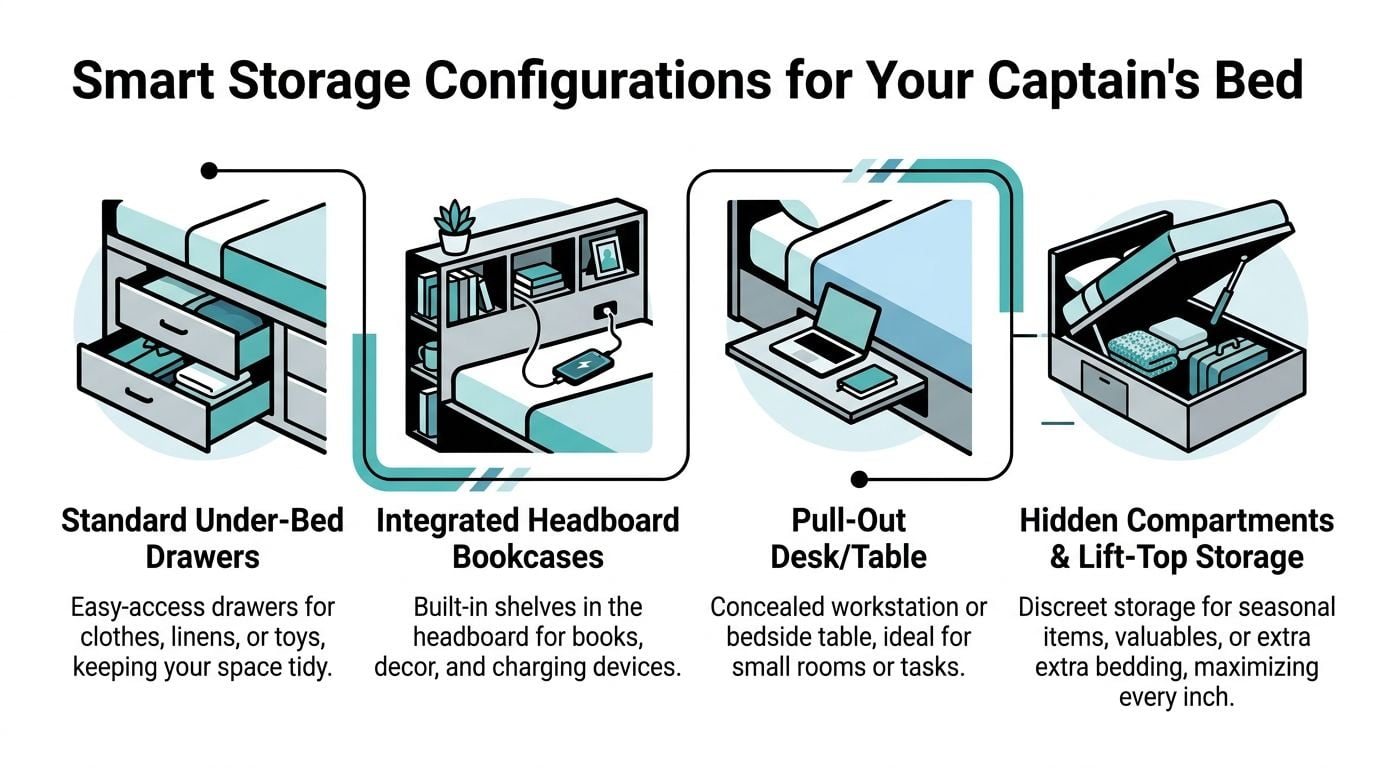
The phrase “storage bed” can mean almost anything. With a queen size captains bed, the details matter. Drawer count, drawer placement, headboard style, and access all change how useful the bed feels once you live with it.
A well-designed model can include 6 to 9 drawers, and those configurations can equal 4 to 6 standard dresser drawers, while reducing bedroom clutter by 40 to 60%. Quality drawer systems often support 50 to 75 lbs per drawer, according to Futonland’s captain’s bed specifications.
If you’re trying to organize a smaller bedroom, these bedroom storage ideas for small spaces pair well with the bed itself.
Side drawers for daily-use storage
This is the classic captain’s bed setup. The drawers run along one side or both sides of the base.
What works well:
- Clothing and basics stay easy to reach.
- Sheet sets and pillowcases can live near the bed where you use them.
- The bed can replace some dresser storage, which helps open up wall space.
What doesn’t work as well:
- Rooms with tight side clearance can make drawers awkward.
- If one side is hard against a wall, a two-sided drawer setup doesn’t make much sense.
For many adults, side drawers are the most practical option because they serve everyday storage instead of deep storage you only touch a few times a year.
Double-layer drawer setups for maximum capacity
Some models stack storage deeper into the base with a taller profile. These are useful when the bed needs to do serious work.
Best for:
- Guest bedding
- Seasonal clothes
- Overflow items from smaller closets
Possible downside:
- The bed can look visually heavier, especially in a compact room with dark finishes.
That doesn’t make it a bad choice. It just means the room needs balance from the rest of the furniture and bedding.
Worth remembering: More drawers aren’t automatically better. The best configuration is the one you can open easily and use consistently.
Footboard storage and end access
Some queen size captains bed designs add drawers at the foot of the bed. This setup can be excellent in a room where side access is partially blocked by nightstands or nearby walls.
It’s often a smart place for:
- Spare blankets
- Guest pillows
- Out-of-season items
- Less frequently used linens
The trade-off is simple. You need clear space at the end of the bed. In narrower bedrooms, that may be harder to spare than side access.
Bookcase headboards for visible storage
A headboard with shelving gives the bed another job. It can hold books, reading glasses, a charger, or a few small decorative pieces.
This setup works especially well when:
- You don’t want a larger nightstand
- The room needs vertical function
- You like keeping bedtime items close
The caution is visual clutter. If every shelf fills up with cables, bottles, papers, and random items, the bed starts looking busy instead of useful.
Pull-out desks and hidden compartments
These are less common, but they can be excellent in the right room. In a guest room, youth room, or mixed-use space, a concealed work surface adds flexibility without needing another standalone piece.
A hidden compartment or lift-style section can also make sense for bulkier items. It’s handy, but not as convenient for daily-use things as standard drawers.
Quick comparison by room type
| Room need | Best configuration | Watch out for |
|---|---|---|
| Primary bedroom | Side drawers, one or both sides | Leave enough clearance to open fully |
| Guest room | Side drawers plus footboard storage | Don’t overbuild the room visually |
| Smaller room | One-sided drawers, simple headboard | Avoid bulky combinations |
| Multi-use room | Drawers plus bookcase or pull-out surface | Keep surfaces from becoming catch-alls |
A captain’s bed works best when the storage layout matches the way you live. If you use the drawers every day, the room gets easier to maintain. If the configuration fights the room, even good storage ends up ignored.
Choosing Materials for Lasting Quality
A queen size captains bed has more going on structurally than a simple frame. It carries the mattress, supports sleepers, anchors the drawer system, and handles repeated opening and closing every day. That’s why material choice matters so much.
This is also the part many online listings rush past. A key gap in the market is customization for American-made or Amish-crafted versions, while most online content stays focused on mass-produced imports and overlooks custom wood types, finishes, and drawer layouts, as noted in Jerome’s overview of captain’s bed options.
Solid wood changes the experience
There’s a big practical difference between a solid wood captain’s bed and a lighter imported unit built around thinner engineered panels.
Solid wood tends to give you:
- Better long-term rigidity
- Stronger drawer anchoring
- A more stable feel getting in and out of bed
- A finish that can age gracefully instead of just wearing out
That matters more in a storage bed than in some other bedroom pieces. Drawers put stress on the frame. Tracks and joinery need a stable structure behind them. If the box loosens, the whole bed starts telling on itself through sticky drawers, shifting panels, or hardware that never feels quite right again.
What works and what doesn’t
Here’s the practical version.
| Material choice | Usually works best for | Common weak point |
|---|---|---|
| Solid hardwood | Everyday adult use, long-term ownership | Heavier to move, higher upfront investment |
| Furniture-grade plywood with solid wood elements | Good balance of strength and cost | Quality varies by maker |
| Particleboard or thin composite builds | Lighter-use rooms, short-term solutions | Fast wear around drawers and fasteners |
This isn’t about snobbery. It’s about stress points. The more moving parts the bed has, the more construction quality matters.
Why Amish and USA-made customization stands out
Mass-market storage beds are often sold in a few fixed finishes with generic layouts. That’s convenient, but it doesn’t solve every room.
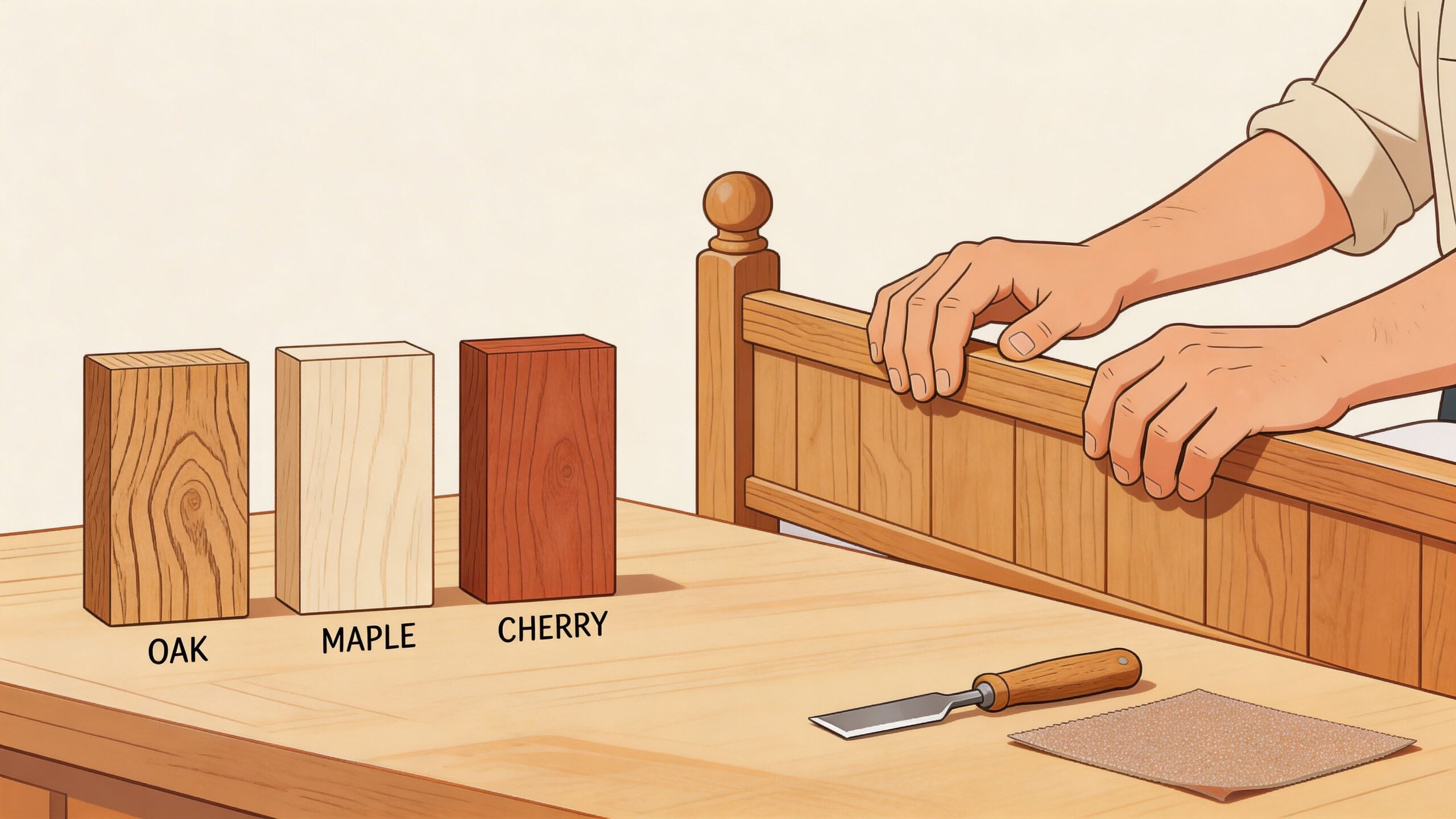
Custom and semi-custom makers can be much more useful because you can often choose:
- Wood species such as oak, maple, or cherry
- Finish tone to match existing furniture
- Drawer configuration based on room access
- Headboard style from plain to more detailed
- Hardware look that fits the room better
That’s a major advantage if you’re trying to make one substantial piece work for a long time instead of replacing it when the room changes.
If you want a deeper look at how wood choice affects durability and appearance, wood furniture explained choosing the right hardwood for longevity and style is worth reading.
The best captain’s beds don’t just store more. They hold up better because the whole design is built around use, not packaging.
Construction details worth asking about
When you shop, don’t stop at “solid wood” in the description. Ask what kind of joinery and drawer hardware the bed uses.
Look for signs of quality such as:
- Dovetail drawer construction
- Smooth metal drawer glides
- Consistent finish inside and out
- A solid platform or substantial slat support
- Hardware that feels secure, not decorative-only
A drawer should open straight, close cleanly, and feel supported when loaded. If it racks or wiggles in the showroom, it won’t improve at home.
The long-view trade-off
A cheaper captain’s bed can look appealing because the category is already framed as “saving space.” The risk is buying something that solves the layout problem while creating a durability problem.
A better-built wood bed costs more up front, but it usually gives you the thing people want. Confidence. It feels steady, useful, and worth keeping.
That matters in a primary bedroom. It also matters in guest rooms and family homes where furniture gets real use, not showroom use.
Styling Your Captains Bed in Your Home
A lot of people hear “captain’s bed” and picture a kid’s room. That’s far too narrow. A good queen size captains bed can work beautifully in an adult bedroom if the rest of the room is planned with intention.
The bed has visual weight. That’s the truth of it. So the styling job isn’t to hide the bed. It’s to balance it.
Styles that suit this bed best
A captain’s bed tends to look strongest in rooms where furniture has some substance.
It often fits well with:
- Modern farmhouse, especially in oak or warmer medium wood tones
- Shaker and transitional rooms, where clean lines matter more than ornament
- Contemporary spaces, if the profile is simple and the hardware stays understated
- Classic American interiors, where solid wood looks at home
It can work in a very minimal room too, but then the surrounding pieces need to stay disciplined. Too many accessories can make a storage bed look crowded fast.
How to keep the room from feeling heavy
This comes down to contrast.
Try these moves:
- Use lighter bedding to soften a darker or fuller frame.
- Keep nightstands simpler if the bed has lots of drawer detail.
- Add vertical elements like lamps, art, or window panels to pull the eye upward.
- Leave some surfaces clear. A storage bed already adds visual information.
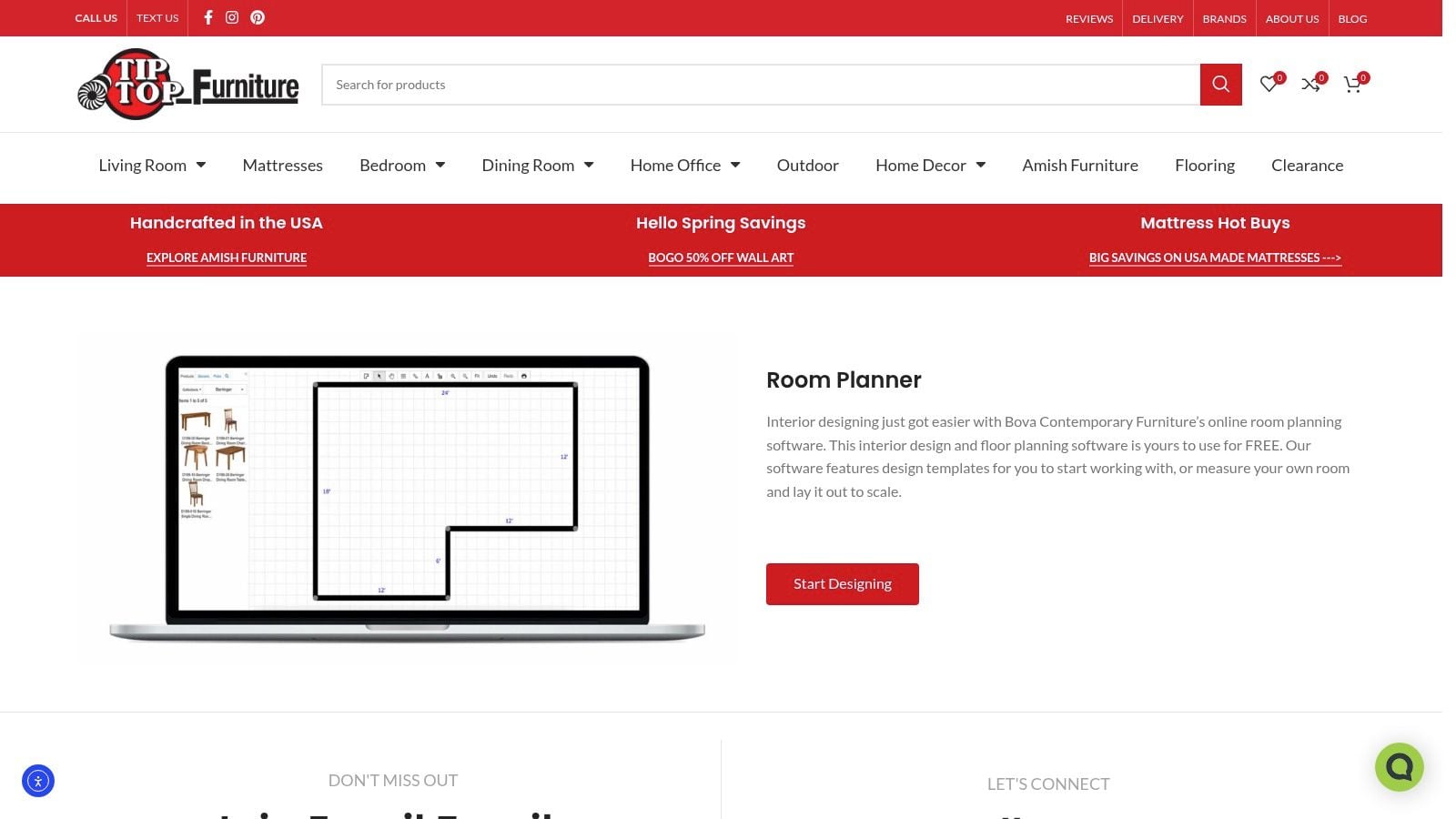
If you need help picturing the layout before moving a single piece, the Online Room Planner is one of the easiest ways to test scale and spacing.
A captain’s bed looks best when the room feels edited. Let the bed do the storage work so other furniture can stay lighter.
Captain’s bed versus other setups
Sometimes the best styling advice is really a layout decision.
| Setup | Good for | Less ideal for |
|---|---|---|
| Captain’s bed | Rooms needing storage and fewer extra pieces | Layouts with poor drawer clearance |
| Traditional bed plus dresser | Larger rooms with ample wall space | Tight rooms that already feel full |
| Plain platform bed | Clean, minimal look | Homes that need more hidden storage |
The captain’s bed usually wins when the room needs to carry more function without becoming busier.
Bedding and accessories matter
Because the bed base is more substantial, the textiles need to feel intentional. A skimpy comforter can make the frame look oversized. A fuller quilt, duvet, or coverlet often gives better visual balance.
Accent choices help too:
- One or two supportive pillows for reading
- A bench only if the room has space
- A rug large enough to ground the bed properly
- Art that scales with the headboard, not against it
For more finishing ideas, bedroom 101 accessorizing the bed of your dreams gives practical guidance without overcomplicating it.
Use the room for what it needs to be
That’s the key insight. A captain’s bed isn’t just a style choice. It’s a room-planning decision. If the bedroom needs to stay restful while carrying more storage, this bed type can effectively simplify the design instead of weighing it down.
Your Local Partner from Freehold to Albany
A queen captain’s bed can solve one problem and create another if nobody asks the right questions first. I’ve seen shoppers fall in love with the storage, then realize the drawer side blocks a heat register, the staircase turn is too tight for the headboard, or the finish that looked good online doesn’t work with the rest of the room.
That’s why local guidance matters.
Serving families from Freehold to Albany gives a store team a better read on the homes in this area, the size limits older bedrooms can have, and the difference between a quick fix and a bed you’ll still be happy with years from now. That matters even more with higher-quality captain’s beds, especially Amish and other USA-made options, where wood species, finish, drawer layout, and lead time all affect the final result.
Why local help makes a difference
A queen size captains bed is a furniture purchase, but it is also a room-planning decision. Before ordering, it helps to confirm four things. Will the bed fit through the house, will the drawers open fully, will the mattress height feel right, and does the construction match how long you expect to keep it?
Good showroom help makes those trade-offs easier to sort out:
- You can inspect the build in person, including drawer joinery, finish quality, and how substantial the platform feels.
- Custom options are easier to judge face to face, especially if you are comparing oak, cherry, maple, or painted finishes.
- Delivery questions get answered clearly, including stair access, setup, and old-bed removal.
- Budget conversations stay practical, whether that means choosing the best long-term piece or balancing quality with financing.
For the delivery side of the decision, our guide to furniture stores that deliver and assemble covers what to ask before a storage bed shows up at your door.
More than just the bed frame
The best bedroom results usually come from looking at the whole room at once. A well-made captain’s bed changes storage, traffic flow, nightstand scale, and mattress height, so it helps to work with people who can help you sort through the full setup instead of selling a frame in isolation.
That is especially true if you want something better than the mass-market versions. Around the Capital Region, many shoppers are looking for furniture that feels permanent, with solid wood construction, customizable layouts, and craftsmanship that can hold up for the long haul. Those are the details big-box retailers often skip, and they are often the reason a locally selected piece ends up feeling right in the room.
Frequently Asked Questions
Can I assemble a queen size captains bed myself
Sometimes, yes. I still tell Albany-area shoppers to treat it as a two-person job unless they are very comfortable with furniture assembly.
A queen captain’s bed has more going on than a simple metal frame or basic platform. You are lining up storage components, making sure the base sits level, and checking that every drawer opens cleanly once the mattress is on. If the floor is uneven, which is common in older Capital Region homes, a bed that looked square during assembly can start binding or creaking later.
For many households, professional setup is money well spent. It saves time, prevents damaged parts, and gives you a better shot at getting the drawers and platform aligned correctly the first time.
Are captain’s beds noisy or creaky
A well-built one should stay quiet.
Noise usually comes from three places. Loose hardware, an out-of-level floor, or lighter construction that flexes under weight. Solid wood frames with good joinery tend to hold up better than imported particleboard versions, especially after a few moves or a few heating seasons in the Northeast.
If someone tells me their storage bed squeaks, I usually look at assembly and materials first.
Can I use an adjustable base with a captain’s bed
In most cases, no. A traditional captain’s bed uses a fixed platform and built-in storage underneath, so there is no room for an adjustable base to bend and lift the way it needs to.
There are a few custom exceptions in higher-end bedroom lines, but they need to be planned that way from the start. If you want head-and-foot adjustability, say that early, before you fall in love with a storage design that cannot be modified.
Are they only good for small rooms
No. They make sense anywhere storage can replace extra furniture.
I have seen queen captain’s beds work well in primary bedrooms, guest rooms, lake houses, and upstairs rooms where adding another dresser would tighten the walkways too much. In a larger room, a captain’s bed can make the space feel cleaner and less crowded because the storage is built into the footprint you are already using.
That is one reason better custom options stand out. Amish and other USA-made builders often give you more say in drawer layout, wood species, finish, and bed height, which makes the piece work for your room instead of forcing your room to work around the bed.