
100 Pima Cotton Sheets: A Buyer’s Guide for 2026

Most shoppers are told to buy the highest thread count they can find and call it luxury. That advice misses the story. With 100 Pima cotton sheets, the label matters, but fiber quality, weave, and proof of authenticity matter more, because a beautiful number on the package can't fix weak yarn, a dense weave, or a misleading blend.
For anyone comparing bedding in Freehold, NY, or across the Greater Albany Capital Region, the smart move is to treat 100% Pima as the beginning of the conversation, not the finish. The goal is to understand what the sheet is made from, how it's woven, and how to tell a true premium sheet from a marketing-heavy one.
What 100 Pima Cotton Actually Means
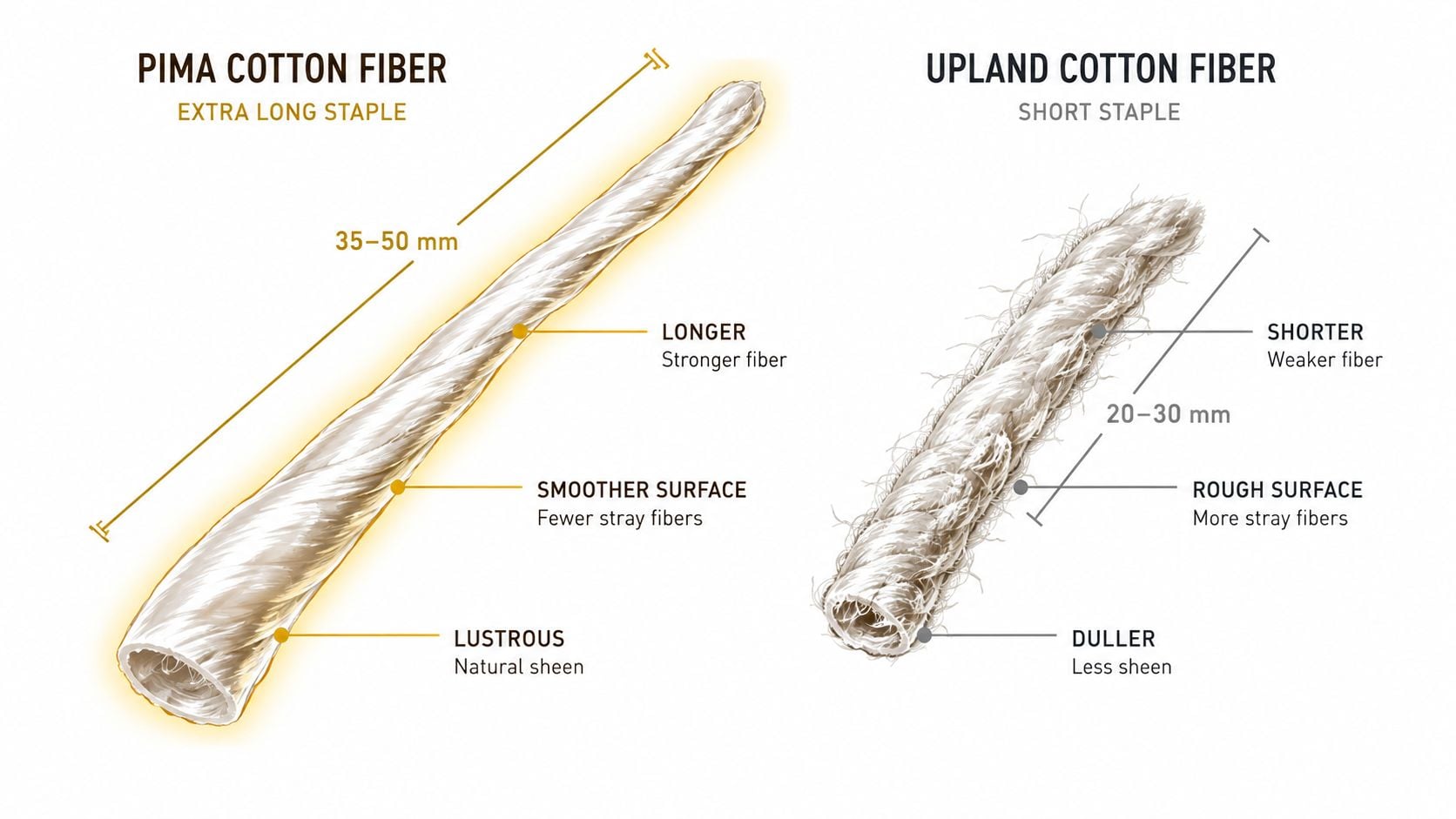
100 Pima cotton sheets start with a premium extra-long-staple cotton fiber, and that is the part of the story buyers should notice first. The label points to the raw material, not to a special coating or a polished-sounding phrase. A technical comparison notes typical Pima and Supima fiber length at 36.5 to 38 mm, bundle strength at 36 to 42 g/tex, and a uniformity index of 85 to 87%, compared with 25 to 28 mm, 28 to 32 g/tex, and 80 to 83% for upland cotton (technical fiber comparison).
Longer fibers matter because they spin into smoother yarn with fewer weak points. Short cotton fibers behave like short hairs that slip and tangle, while longer Pima fibers hold together more evenly. That is one reason well-made Pima sheets can feel softer and resist pilling better, but only if the yarn and weave are handled well. The fiber class gives the sheet its starting advantage before the loom even begins.
Why the fiber class matters before the weave does
Pima sits in a smaller supply category than standard cotton, so the name carries a premium signal before the fabric is even finished. One textile industry source says it represents only 1 to 2% of global cotton production, with the main production regions in the United States, Peru, and Australia (Pima cotton market overview). A broader bedding reference places the Pima and Egyptian group at around 10% of global production, while upland cotton makes up about 90% (Pima cotton bedding context).
That scarcity helps explain the premium position. It also explains why “100% Pima” is a fiber-grade claim, not a guarantee of comfort by itself. A well-woven lower-grade cotton can still feel better than a poorly made premium sheet. The fiber gives the sheet potential, the construction decides whether that potential shows up on the bed. For a closer look at the choices that change feel after the fiber is selected, see bedding fabric types and construction basics.
Practical rule: If a sheet label says 100% Pima, treat that as the raw material, not the final verdict. The next questions should always be about weave, thread-count range, and labeling proof.
Why Thread Count Is the Wrong Number to Chase
Thread count gets treated like a scorecard, but it's more like the tip of an iceberg. The number you can see on the package is only part of the story, while fiber length, yarn quality, and weave structure do most of the work. For 100 Pima cotton sheets, trusted bedding guidance usually points shoppers toward 200 to 400 thread count for balanced construction, rather than assuming bigger is better (Pima sheet construction guidance).
That's where the thread-count myth breaks down. Consumer guidance from Consumer Reports and Good Housekeeping places strong-performing cotton sheets around 280 to 500 thread count, which reinforces the idea that construction quality matters more than inflated counts (Consumer Reports and Good Housekeeping).
What a high number can hide
A very high thread count can come from tricks, not better cotton. Multi-ply yarns can be counted in ways that make the number look impressive while making the fabric heavier and less breathable. For sleepers, that often means a sheet that feels dense instead of refined.
For Pima sheets, the most useful ranges are simple.
- Percale: usually feels right in the 200 to 400 range, because the weave stays breathable and crisp.
- Sateen: often makes sense in the 300 to 600 range, because the structure is smoother and naturally a little more substantial.
- Very high counts: should trigger questions, not excitement, because the number may reflect marketing more than fabric performance.
A sheet set that sounds luxurious on paper can still sleep hot if the yarns are crowded together. Breathability is a sleep feature, not a bonus detail.
For a plain-language breakdown of how bedding fabric construction changes feel, a useful reference is this guide to bedding fabric types. The key lesson is simple, thread count is a clue, not a verdict.
Percale vs Sateen and How Each Feels
Once the fiber question is settled, the choice is often about feel. Percale is the crisp, airy option, while sateen is the smoother, more luminous one. Think fresh button-down shirt versus silk blouse, not because the fabrics are identical, but because the hand-feel tells the story immediately.
Percale uses a one-over, one-under weave. That structure leaves more space between yarns, so the sheet feels cooler and lighter, with a matte finish that many hot sleepers like. Sateen uses a three- or four-over, one-under structure, which exposes more yarn surface and gives the sheet a softer sheen and a more draped feel.
Which weave suits which sleeper
Hot sleepers usually do better with Pima percale, especially in bedrooms that run warm. The crisper weave lets air move more freely, so the sheet feels less clingy. That's why percale is often described as the hotel-fresh choice.
Cool sleepers, or anyone who likes a polished, smooth hand, often prefer Pima sateen. It feels richer against the skin and has a more fluid drape over the mattress. If the room is cooler, that extra touch of warmth can be welcome instead of stuffy.
A useful outside comparison of these weave differences is luxury bedding sateen percale, which mirrors what shoppers notice in real life. The choice isn't about which weave is “best.” It's about which one matches sleep temperature and preference.
Rule of thumb: choose percale for a crisp, cooler bed, and sateen for a smoother, more enveloping one.
A good Pima sheet doesn't need to hide behind a number. It should feel balanced in the hand, breathe well on the mattress, and suit the room it's being used in.
How to Verify Real Pima Before You Buy
A label only helps if it is precise. The easiest way to judge 100 Pima cotton sheets is to read the packaging the way you would read a repair estimate, looking for substitutions, missing details, or language that stays vague on purpose. In the United States, the FTC requires cotton product labels to identify the generic fiber name and the percentage of each fiber when it makes up 5% or more of the item's weight (FTC textile labeling guidance).
That means the wording should sound factual, not romantic. If a description says “Pima blend,” “with Pima,” or “Pima feel,” that is not the same as 100% Pima. The more the label sticks to fiber facts and construction facts, the more likely you are looking at a real sheet instead of a marketing shortcut.
A fast checklist that catches weak listings
- Fiber wording: Look for 100% Pima cotton, not a softer phrase that leaves room for other fibers.
- Origin clues: Genuine Pima commonly comes from the United States, Peru, or Australia, and some products may carry stronger origin proof than others.
- Supima licensing: If the product is American-grown Pima, the Supima trademark is the cleaner verification path because it signals traceability.
- Construction details: A listing that names the weave, thread-count range, and finish is usually more credible than one that only repeats “luxury.”
- Weight or hand-feel cues: If a page gives GSM or a store tag lets the fabric be handled, use that as a reality check alongside the label.
A product page should read like a specification sheet, not a poem. The same habit that helps you sort through how to read furniture product descriptions and buy with confidence helps here too, because the useful clues are usually the plain ones. When the description names the fiber, the weave, and the finish, you can verify more than the headline claim.
A shopper who checks for those details is asking the right question: does the sheet only say Pima, or does it show how that claim is supported? That extra minute of reading often separates a true cotton specification from a loose promise.
Care Habits That Make Pima Sheets Last
Premium cotton rewards gentle care. Pima softens over time when it's treated well, and it breaks down faster when it's overwashed, overheated, or beaten up in the dryer. A simple routine protects the fiber and helps the sheet keep its hand-feel longer.
Start with cool to warm water and a mild detergent. Skip bleach and harsh brighteners, because they can wear down the fabric and dull the finish. If the sheets are line dried, or tumble dried on low and removed before they get bone-dry, the fibers usually stay happier.
A practical care rhythm
- Wash separately: Keep sheets away from jeans and towels so abrasion stays low.
- Use gentle detergent: Liquid detergent is usually easier on the fabric than harsh powder or additive-heavy formulas.
- Dry with restraint: Low heat or line drying helps preserve softness and reduce stress on the weave.
- Rotate sets: Two or three sheet sets spread out wear and make each set last longer.
That rotation habit matters more than many shoppers realize. A sheet that rests between uses gets less cumulative abuse, and that can make a noticeable difference over years of regular laundering. For a simple schedule that fits real households, see how often you should change your sheets.
Well-cared-for Pima shouldn't feel like disposable bedding. It should settle in, soften, and stay useful.
Think of good care as part of the purchase. The sheet you buy today is the sheet you maintain later, and that routine decides whether it becomes a long-lived favorite or a disappointment.
Pairing Pima Sheets With the Right Mattress and Bedroom
A sheet never lives alone. It sits on top of a mattress, next to pillows, and inside a room that either supports sleep or works against it. Memory foam tends to sleep warmer, so a Pima percale sheet can help the bed feel more open and breathable. Latex and innerspring mattresses are usually more flexible partners, since either percale or sateen can work depending on the sleeper's preference.
That's why the mattress matters as much as the fabric. A smooth sateen sheet can feel lovely on a cooler bed, but on a warm, contouring mattress it may feel too insulating for some sleepers. Percale, by contrast, often helps a dense sleep surface feel lighter.
The sheet is the visible frame of the room
The top sheet and pillowcases are the textiles most see first, so color and finish shape the room's mood as much as the mattress affects the sleep itself. A matte percale can make a room feel quieter and more refined. A subtle sateen sheen can make the bed look more dressed up without needing more decoration.
That visual role matters in bedrooms where the bed is the main focal point. A coordinated sheet set can anchor the whole room, while a mismatched one can make even a good mattress feel unfinished. For shoppers thinking about mattress protection alongside bedding, this guide to mattress protectors is a sensible companion piece.
When the mattress, weave, and room style work together, the bedding feels intentional instead of accidental. That's the payoff of choosing well.
Why Buy From a Local Showroom Like Tip Top
Online research helps, but fabric still has to be felt. A local showroom gives shoppers the one thing product photos can't, a side-by-side comparison of weave, hand-feel, and finish under the same lights. For homeowners in Freehold and across the Greater Albany Capital Region, that hands-on step can save a lot of second-guessing.
Tip Top Furniture & Mattresses has served the area since 1978, and its professional design services have been available since 1984. That kind of long memory matters when a shopper is trying to match bedding to a bedroom, a mattress, and the rest of the home's style. It also helps that the store is built around one-stop shopping, with furniture, décor, flooring, and sleep products under one roof.
What in-person guidance changes
A good showroom visit lets a shopper compare:
- Weaves side by side, so crisp percale and smoother sateen are easy to distinguish.
- Finish and drape, because the way a sheet falls over a bed tells you more than a product photo.
- Fit concerns, especially when mattress depth or room proportions make standard choices feel wrong.
- Design coordination, since bedding should work with the rest of the room instead of fighting it.
Tip Top's broader service mix also matters for people planning a whole room at once. Custom ordering helps when a standard fit isn't enough, flexible financing can make a project easier to manage, and the room-planning tool helps connect the bedding choice to everything else in the space. That's useful for shoppers who want the bedroom to look thought-through, not pieced together.
The bigger point is simple. A local expert can help translate the fiber facts into a real-life bed, which is where the decision gets made.
Your Pima Sheet Decision in Five Minutes
Start with the fiber. 100% Pima cotton tells you the sheet begins with a premium extra-long-staple fiber, but it doesn't tell you enough by itself. Then check the weave and thread-count range, because balanced construction usually matters more than a flashy number.
Next, match the sheet to how the bed sleeps. Percale usually fits hotter sleepers and warmer rooms, while sateen suits cooler rooms and anyone who likes a smoother, more enveloping finish. After that, verify the label language, origin clues, and whether the sheet gives enough construction detail to trust what's being sold.
For fit, the measuring step is worth a minute. A mattress that's deeper than expected can make even a good sheet behave badly, which is why the sizing details in this bed sheet measurements guide deserve a quick look before buying. Finally, protect the investment with gentle washing, low heat, and rotation between sets.
Bottom line: the best Pima sheet is the one that proves what it is, suits the sleeper, and fits the bed cleanly.
If all of that sounds like more than a package label can answer, that's because it is. The smart next move is to compare real fabrics in person and ask the questions that separate a true premium sheet from a polished marketing claim.
Tip Top Furniture & Mattresses helps shoppers in Freehold, NY and the Greater Albany Capital Region find bedding and bedroom pieces that fit the way they live. If you're ready to compare sheet feel, room style, and bedroom comfort the right way, visit Tip Top Furniture & Mattresses and take the next step with a local team that knows how to help.