Elevate Your Home with Furniture Design Services

A lot of homeowners start in the same place. They've saved room photos, measured once or twice, and walked around a living room or bedroom wondering why it still doesn't feel settled. One wall is shorter than expected, the traffic path cuts through the seating area, and the furniture that looked right online suddenly feels too large, too small, or just disconnected.
That's where furniture design services become useful. A good design process doesn't start with pushing a sofa or a bedroom set. It starts with how the room needs to work, what the home already gives you, and what kind of comfort and durability will still make sense years from now. For households in Freehold, Albany, Schenectady, Troy, and across the Capital Region, that often means balancing style with practical concerns like older home layouts, mixed-use rooms, custom sizing, flooring coordination, delivery access, and budget.
Table of Contents
- What Are Furniture Design Services and Why Use Them
- The Four Stages of Professional Furniture Design
- Benefits of a Local Showroom near Albany NY
- Pricing Timelines and How to Prepare for Your Consultation
- Your Furniture Selection Checklist From Start to Finish
- Start Your Design Journey with Tip Top Furniture
- Frequently Asked Questions About Our Design Services
What Are Furniture Design Services and Why Use Them
More than picking furniture
Furniture design services are a planning and decision-making process that helps a homeowner turn ideas into a workable room. The service usually includes layout guidance, scale planning, finish and fabric selection, coordination between pieces, and help narrowing choices so the room feels intentional instead of pieced together.
That matters because most decorating problems aren't caused by bad taste. They're caused by competing priorities. A room has to fit the people using it, work with the architecture, hold up to daily life, and still feel like home.
Professional guidance also helps separate inspiration from execution. A photo may show a beautiful room, but it won't tell a homeowner whether the walkway is too tight, whether the table shape fights the room, or whether the fabric will be difficult in a busy household. For readers curious about one part of that process, this guide for custom furnishings gives a helpful explanation of what custom work can involve when off-the-floor options don't quite fit.
Why guidance matters in real homes
In a family-owned showroom serving the Capital Region since 1978, one pattern shows up again and again. Customers usually don't need more choices. They need better filtering.
Practical rule: The right piece isn't the one that looks best alone. It's the one that solves the room without creating two new problems.
A strong design service helps with questions like these:
- How should the room function first so seating, storage, sleep, dining, or work all make sense?
- What scale belongs in the space so the room feels balanced rather than crowded or underfurnished?
- Which materials match real life if kids, pets, guests, or daily use are part of the equation?
- Where should custom options step in when standard dimensions or finishes won't get the job done?
There's also value in experience. Tip Top Furniture has provided Professional Design Services since 1984, establishing over 42 years of continuous expertise in the field, aligning with the formalization of industry standards by the American Institute of Furniture Design in the same year. That kind of longevity matters because furniture decisions are rarely isolated. One choice affects the next one.
Homeowners who want a clearer picture of what a guided project can include can review interior design consultation services. The main benefit isn't mystery or luxury. It's clarity. A room comes together faster when someone is paying attention to fit, flow, finish, and the details that are easy to miss on a screen.
The Four Stages of Professional Furniture Design
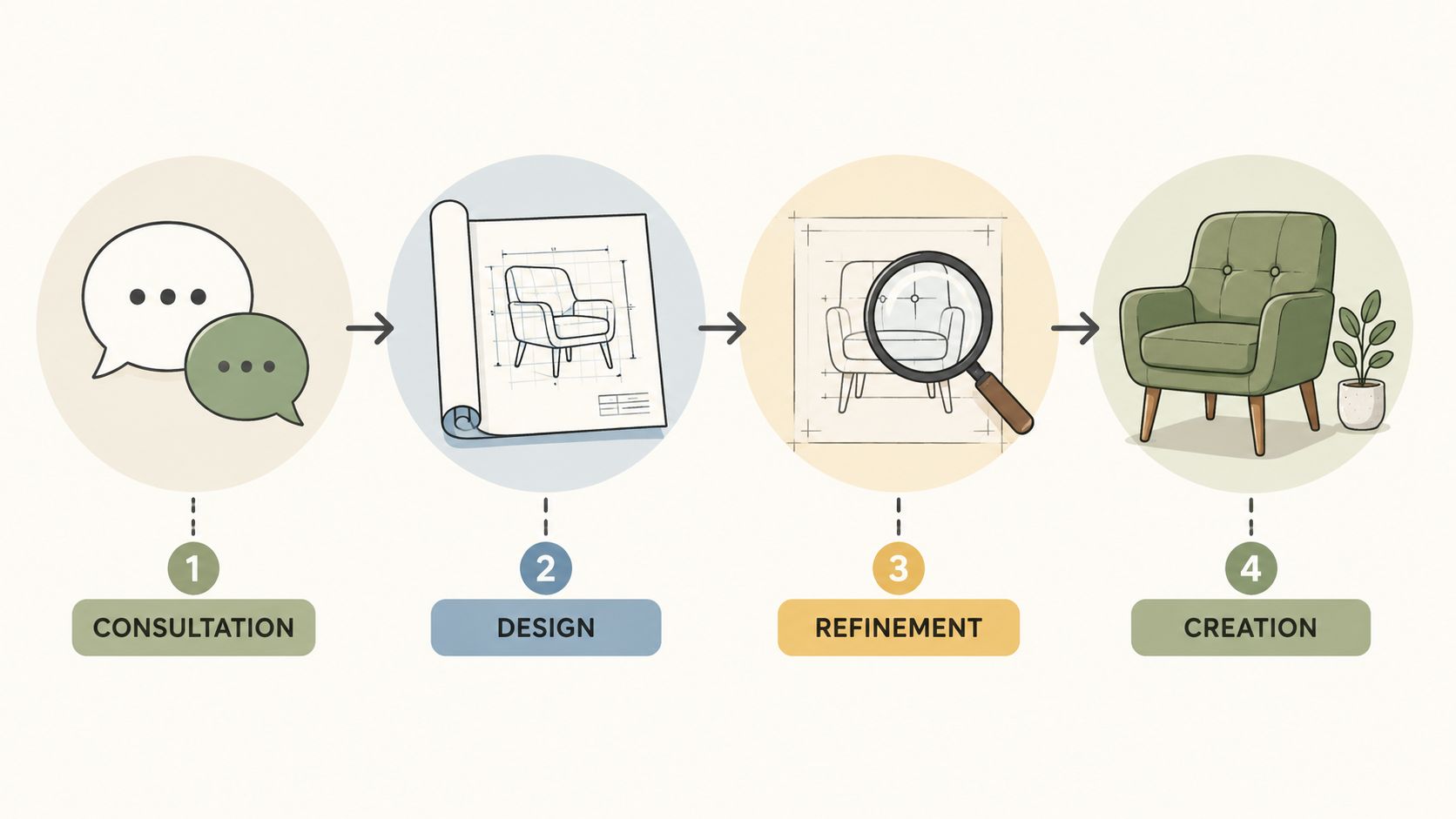
A good furniture project usually starts the same way. A homeowner walks into the showroom with a few photos, a rough idea of the style they like, and a room that still does not feel settled. They may have already looked online, saved inspiration, and measured once or twice. What they need next is a process that turns all of that into a room that fits the house and works in daily life.
That full showroom process tends to follow four stages.
Stage one consultation and discovery
The first stage focuses on the room as it exists today. Measurements, traffic paths, architectural quirks, existing pieces worth keeping, and everyday routines all matter before anyone starts picking fabrics or wood finishes.
This is also the point where hidden problems come to the surface. A room may feel unfinished because the seating is too large for the wall it sits on. In another home, the issue is not the furniture at all. It is a layout that blocks conversation, light, or movement. Catching that early saves money and avoids ordering the wrong piece for the wrong reason.
A strong consultation usually covers room use, household habits, style direction, and project scope. If the home needs solid wood case pieces or made-to-order dining furniture, it also helps to review locally available Amish furniture options early, because size, finish, and lead time decisions can affect the whole plan.
Stage two design and custom ordering
Once the goals are clear, the plan becomes specific. Floor plans get refined. Finish samples get compared in person. Upholstery, bedroom pieces, dining furniture, rugs, lamps, and accents can be selected as one coordinated project instead of a string of separate purchases.
Custom ordering matters most when standard pieces almost work, but not quite. Older homes, narrow stairways, unusual wall lengths, and families with very specific storage or seating needs often call for different dimensions, wood species, cushion fills, or finish choices. That is one advantage of working with a local full-service showroom rather than relying only on online templates. The design, ordering, and product guidance happen in one place.
Inspiration still has a place here. A family planning a nursery, for example, may start with a theme reference such as create an under the sea baby room, then scale it back into a room that feels calm enough to live with for years.
Good design narrows the field. It gives each choice a reason.
Stage three coordination and fabrication
After selections are approved, the project shifts into ordering and follow-through. This stage happens mostly behind the scenes, but it often determines whether the final result feels organized or pieced together.
Orders are placed. Specifications are checked. Fabrics, finishes, dimensions, hardware, and companion pieces are confirmed against the original plan. If a room includes custom or bench-built furniture, timing matters even more because one delay can affect delivery scheduling, accessory placement, or even flooring and paint work already on the calendar.
A full-service showroom earns its keep, as the customer does not have to track five separate vendors and hope every finish matches when it arrives.
Stage four delivery and installation
Delivery is the final working stage, not an afterthought. Pieces still need to be carried in safely, placed correctly, adjusted for real clearances, and arranged so the room feels balanced once everything is inside.
That last part matters more than people expect. A chair can fit on paper and still crowd a walkway. A bed can look right in the showroom and still leave too little space at the footboard in an actual bedroom. Installation gives the plan a final check in the home itself.
A well-run local showroom takes the project all the way through that finish line. The result is not just furniture in a room. It is a room that feels considered, usable, and complete.
Benefits of a Local Showroom near Albany NY
A local showroom gives homeowners something online browsing cannot. It lets them test comfort, scale, finish, and construction before a piece enters the house. Around Albany, Schenectady, Troy, and Freehold, that matters because many rooms look straightforward in photos and behave very differently in person.
One sofa may feel supportive for twenty minutes and still sit too deep for everyday use. One dining table may look right on a tag and still leave poor clearance once chairs are pulled out. Seeing furniture up close helps catch those problems early.
What local design help solves better
Older homes in Upstate New York often come with quirks that broad online advice does not address well. Sloped ceilings, narrow wall runs, offset fireplaces, deep window trim, and uneven traffic paths all change what will fit and function.
A local showroom helps solve issues such as:
- Awkward corners that call for a smaller chair, a custom cabinet, or a different focal point for the room
- Historic room proportions where standard sectionals, oversized dressers, or bulky dining sets overwhelm the architecture
- Material questions when homeowners want to compare wood, upholstery texture, cushion support, or mattress feel before committing
- Whole-room coordination so furniture, rugs, lighting, and accents work together instead of arriving as unrelated purchases
These are practical fit questions, not style trivia. A room can have beautiful pieces and still feel wrong if the walkway pinches, the seat height is off, or the wood tone fights the floor.
Why a full-service showroom changes the outcome
A full-service showroom is useful because the project rarely stays limited to one item. Someone may come in for a sofa, then realize the rug is undersized, the cocktail table blocks circulation, or the dining finish should relate better to the cabinetry in the next room. Handling those decisions in one place saves time and usually leads to a more settled result.
It also gives customers a clearer view of quality. Households looking for long-term, heirloom-minded pieces often want to inspect joinery, wood species, finish samples, and hardware in person, especially when shopping for Amish furniture near Albany. That side-by-side comparison makes it easier to decide whether a room needs a statement dining table, a bedroom set built for daily use, or a custom piece sized for an unusual wall.
A showroom visit is a working session. Customers are not just browsing. They are checking whether the plan fits the house, the family, and the way the room will be used.
Local follow-through matters too. Delivery access, stair clearance, room placement, custom lead times, and coordination with flooring or décor are easier to handle when the same team stays involved from selection through installation. For busy families, that can mean fewer mistakes, fewer delays, and a room that feels finished the first time.
Pricing Timelines and How to Prepare for Your Consultation

A customer walks into the showroom with photos saved on their phone, a rough budget in mind, and one honest concern. How much is this going to cost, and how long will it take?
That question deserves a straight answer. In a local full-service showroom, pricing is tied to the scope of the project, the level of planning involved, and whether the pieces are available now or built to order. The advantage of working through the whole process in one place is that the costs, decisions, and timing can be explained before orders are written.
What pricing questions matter most
“Free design” can mean very different things from one retailer to another. Sometimes basic advice is included, while home visits, custom sizing, layout work, fabric upgrades, delivery conditions, or installation services are billed separately. The practical question is simpler: What is included in this appointment, and what adds cost later?
Ask these questions early:
- What does the consultation cover? Confirm whether the appointment includes measurements review, room layout input, finish and fabric guidance, and product recommendations.
- When do fees begin? Some projects stay at the advice-and-selection stage, while others move into custom planning, in-home measuring, or special-order work.
- What is stocked and what is made to order? That answer shapes both budget and timing.
- How are delivery and installation handled? White-glove placement, stair carries, old furniture removal, and assembly can affect the final number.
- Where is there room to adjust? A good plan may mix quicker-ship items with long-term investment pieces so the room starts working sooner.
For rooms that need custom sizing, finish choices, or made-to-order details, getting started with custom order helps set expectations before the project gets too far down the road.
What to bring to your consultation
The best appointments are built on good information. A little preparation saves time, cuts down on revisions, and helps the showroom team recommend pieces that fit the room the first time.
Bring these if you can:
- Room measurements, including wall lengths, window locations, ceiling features, and door swings
- Photos from multiple angles so traffic paths and problem spots are easy to spot
- Inspiration images that show the mood you want, even if the exact pieces are different
- A priority list for comfort, storage, durability, style, custom sizing, and timing
- Access notes such as tight stair turns, narrow halls, elevator limits, or low ceiling clearances
- A working budget range so the plan stays realistic from the start
One more thing helps. Bring photos of nearby spaces, not just the room being furnished. In a full-service showroom, the goal is usually not to fill one corner of the house in isolation. It is to make sure the new pieces sit well with adjoining floors, cabinetry, wall color, and the way the home already lives. If greenery is part of that vision, these tips for decorating with plants can help you think through scale and placement before the appointment.
The strongest consultation usually starts with clear limits, not endless options.
Timelines depend on the category. In-stock pieces can often move quickly. Custom upholstery, solid wood bedroom and dining furniture, and multi-room projects usually take longer because they involve more approvals, more production steps, and more coordination at delivery. That trade-off is often worth it. Better fit, better finish, and fewer surprises at installation tend to come from careful planning, not rushed decisions.
Your Furniture Selection Checklist From Start to Finish
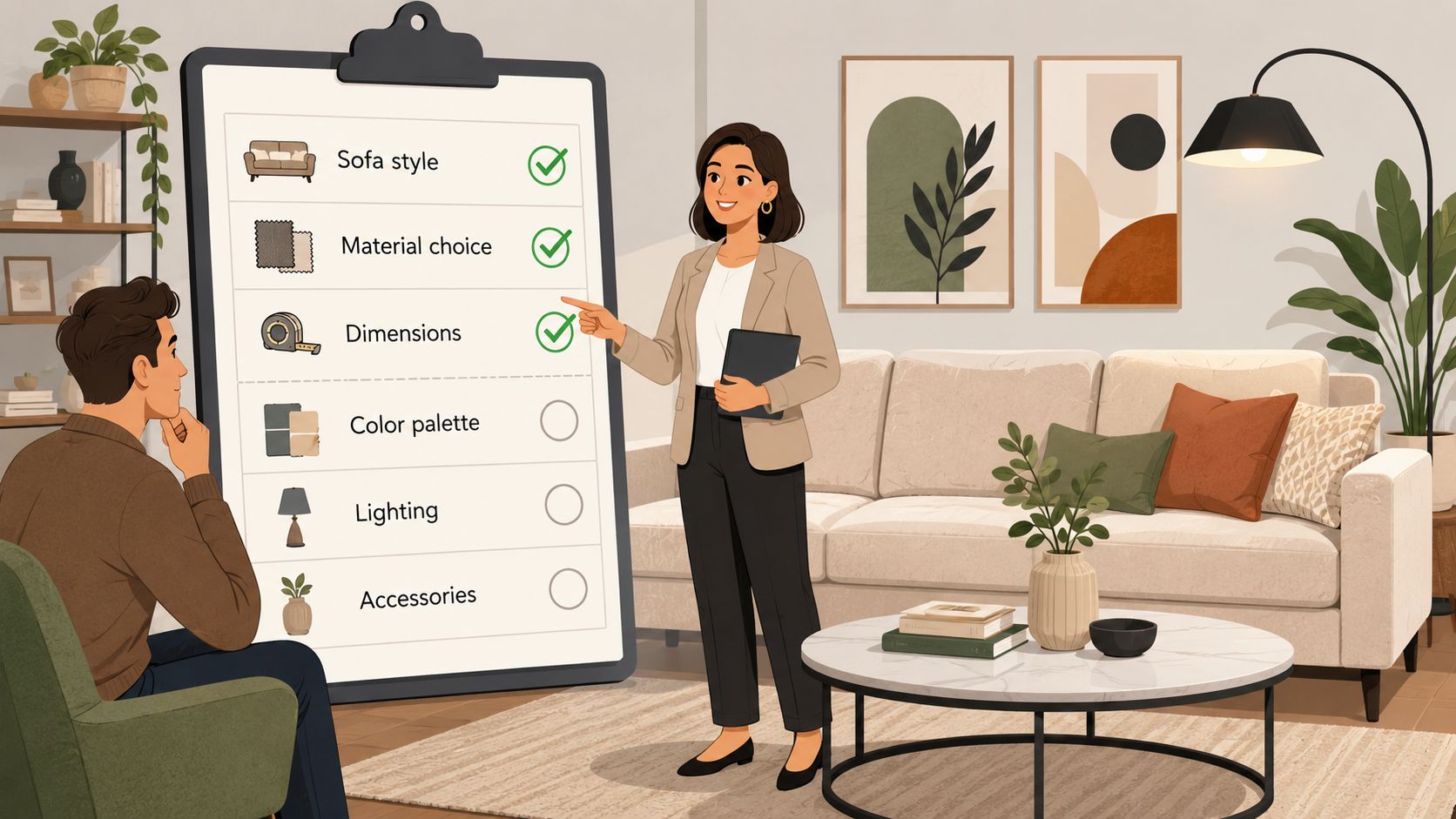
Selection is the point where a design plan becomes a buying decision. That step matters because 62.3% of global furniture searches are transactional, meaning shoppers are often ready to purchase once they find a workable solution. A clear checklist keeps that momentum from turning into rushed choices.
The decisions to make in the right order
The strongest rooms are usually built in sequence, not by impulse.
Use this checklist:
- Start with function. Decide what the room has to do every day before looking at shapes or finishes.
- Confirm scale early. Check widths, depths, heights, and walkways before falling in love with a silhouette.
- Choose the anchor piece first. In a living room, that may be the sofa. In a bedroom, it's often the bed. In a dining space, the table usually leads.
- Match materials to real use. Performance upholstery makes sense for active households. Solid wood often makes sense where longevity and repairability matter.
- Plan support pieces second. End tables, dressers, benches, lighting, and storage should reinforce the anchor, not compete with it.
- Leave room for value moves. A project doesn't have to place every dollar in one category. Many shoppers combine a long-term investment piece with well-chosen clearance finds.
For anyone comparing fabric feel, wear, and cleanability, this guide to upholstery materials is a practical reference.
How to keep the room cohesive
Cohesion doesn't mean every item has to match. It means the room shares a logic. Wood tone, fabric weight, line shape, and visual balance should feel related even when the pieces aren't from one collection.
A few finishing decisions often help more than people expect:
| Selection area | What to check |
|---|---|
| Color palette | Keep major tones connected, then add contrast in smaller touches |
| Texture mix | Balance smooth wood, soft upholstery, metal, glass, and woven materials |
| Visual weight | Don't place all the heavy-looking pieces on one side of the room |
| Accent styling | Use plants, lamps, and art to soften edges and add life without crowding |
Houseplants are one simple way to finish a room without overfilling it. These tips for decorating with plants are helpful for choosing placement and avoiding visual clutter.
When the checklist is followed in order, shopping gets easier. The room stops being a pile of options and starts acting like a complete plan.
Start Your Design Journey with Tip Top Furniture
A well-designed room rarely happens by accident. It comes from measured choices, honest guidance, and a process that respects how people live. That's especially important for homeowners across Freehold, Albany, Schenectady, Troy, Greene County, and the wider Capital Region who want their furniture, mattresses, décor, and flooring to work together instead of feeling purchased in separate chapters.
Tip Top Furniture & Mattresses is one option for shoppers who want that kind of connected process. The showroom has served the region since 1978, with professional design services available since 1984, plus access to custom ordering, Amish furniture, USA-made mattresses, flooring coordination, clearance options, delivery, and flexible financing. Homeowners who want a guided starting point can review affordable interior design services.
Some customers are ready to visit the Freehold showroom and compare pieces in person. Others are still shaping the project and want to begin with room measurements, photos, and a conversation. Either way, the goal is the same. Make the home feel finished, comfortable, and built around the people living in it.
Frequently Asked Questions About Our Design Services
Questions usually come down to flexibility. People want to know whether the process works for one room, whether custom work is worth it, and whether a local showroom can handle more than furniture alone.
Common Design Service Questions
| Question | Answer |
|---|---|
| Do furniture design services only make sense for large homes? | No. They're often most useful in rooms with tighter footprints, mixed functions, or awkward layouts because those spaces leave less room for error. |
| Can one room be done at a time? | Yes. Many homeowners begin with a living room, bedroom, dining space, or mattress replacement and build from there as needs change. |
| When is custom ordering worth it? | Custom work makes sense when standard sizes, wood finishes, fabric choices, or storage details don't suit the room or the household. |
| Is Amish furniture only for traditional homes? | No. Amish-made pieces can work in traditional, transitional, rustic, and cleaner modern farmhouse interiors, depending on profile, finish, and hardware. |
| Can flooring and furniture be planned together? | Yes. Coordinating them together often produces a more cohesive result and avoids mismatched undertones or conflicting styles. |
| What if the budget is limited? | A good plan prioritizes where to invest, where to simplify, and when clearance or financing can help make the project manageable. |
| Do shoppers need a complete style vision before booking? | No. Photos of the room, a few inspiration images, and a sense of how the space should function are usually enough to begin. |
One final point matters. The best consultation isn't about being “ready” in a polished sense. It's about showing the actual room, the actual constraints, and the actual priorities. That's what gives the design process something solid to work with.
For homeowners ready to make progress, Tip Top Furniture & Mattresses offers a practical next step from its Freehold, NY showroom for the Greater Albany Capital Region. Bring room measurements, photos, and inspiration, then explore custom ordering, Amish furniture, USA-made mattresses, flooring, clearance pieces, delivery, and flexible financing in one place.