Home Office Desk Decor: Stylish Ideas for Capital Region

A lot of home office desk decor starts the same way. A laptop lands on a spare table, cords trail down the wall, papers collect in one corner, and a lamp or plant gets added later in the hope that the whole setup will somehow feel finished.
For many households across the Albany Capital Region, that temporary arrangement has become part of daily life. The challenge isn't just making a desk look nice. It's making a workspace feel settled, focused, and appropriate for the room it now lives in.
Good home office desk decor solves practical problems first. It protects usable surface area, helps the room feel calmer, and gives the workday a clearer boundary from the rest of the house. That matters even more in homes where the office shares space with a bedroom, guest room, or living area.
Table of Contents
- Transforming Your Workspace From Chaos to Calm
- The Foundation of Great Desk Decor
- Theme 1 The Minimalist & Modern Desk
- Theme 2 The Rustic Amish Farmhouse Desk
- Theme 3 The Ergonomic & Productive Desk
- Bring Your Vision to Life with Tip Top Furniture
Transforming Your Workspace From Chaos to Calm
Homes all over Upstate New York have absorbed workstations in spaces that were never meant to hold them. In one set of home office ergonomics figures, 28.5% of work-from-home setups were in a master bedroom and 19.9% were in a living room, which helps explain why desk decor now has to work harder than simple styling alone (home office ergonomics figures).
That reality shows up in real rooms around Albany, Schenectady, Troy, and Greene County. A desk in a bedroom can't sprawl. A workstation in a living room can't look like office storage exploded across the wall. The decor has to support focus without taking over the room.
Why makeshift workspaces need more than decoration
Most cluttered desks suffer from the same problem. Too many things are being asked of too little space.
A better approach starts with editing before decorating:
- Clear the work zone: Keep the center area open for the actual task, whether that's a laptop, paperwork, or dual-monitor setup.
- Move support items outward: Printers, chargers, file boxes, and overflow supplies belong on shelves, in drawers, or inside cabinets.
- Choose decor with a job: A lamp adds light. A tray corrals loose items. A planter softens the space. Decorative pieces that do nothing should be limited.
Practical rule: If an object steals elbow room or catches the eye every few seconds, it isn't helping the desk.
A lot of homeowners also find that greenery helps a workspace feel less sterile, especially in a bedroom corner or converted guest room. For anyone adding plants, this guide to healthier office plants is a useful place to start because it focuses on desk-friendly options rather than oversized floor plants.
What calm actually looks like on a desk
Calm doesn't mean bare. It means controlled.
A calm desk usually includes only a few visible elements: lighting, one personal accent, one organizing piece, and enough negative space to make the surface feel intentional. That same principle carries into the room. Wall art should frame the desk, not crowd it. Storage should disappear visually as much as possible. Color should support concentration instead of competing with it.
For homeowners who need help seeing that balance before moving furniture, Tip Top's room design ideas that help reduce stress offer a practical starting point for planning a calmer overall environment.
The Foundation of Great Desk Decor
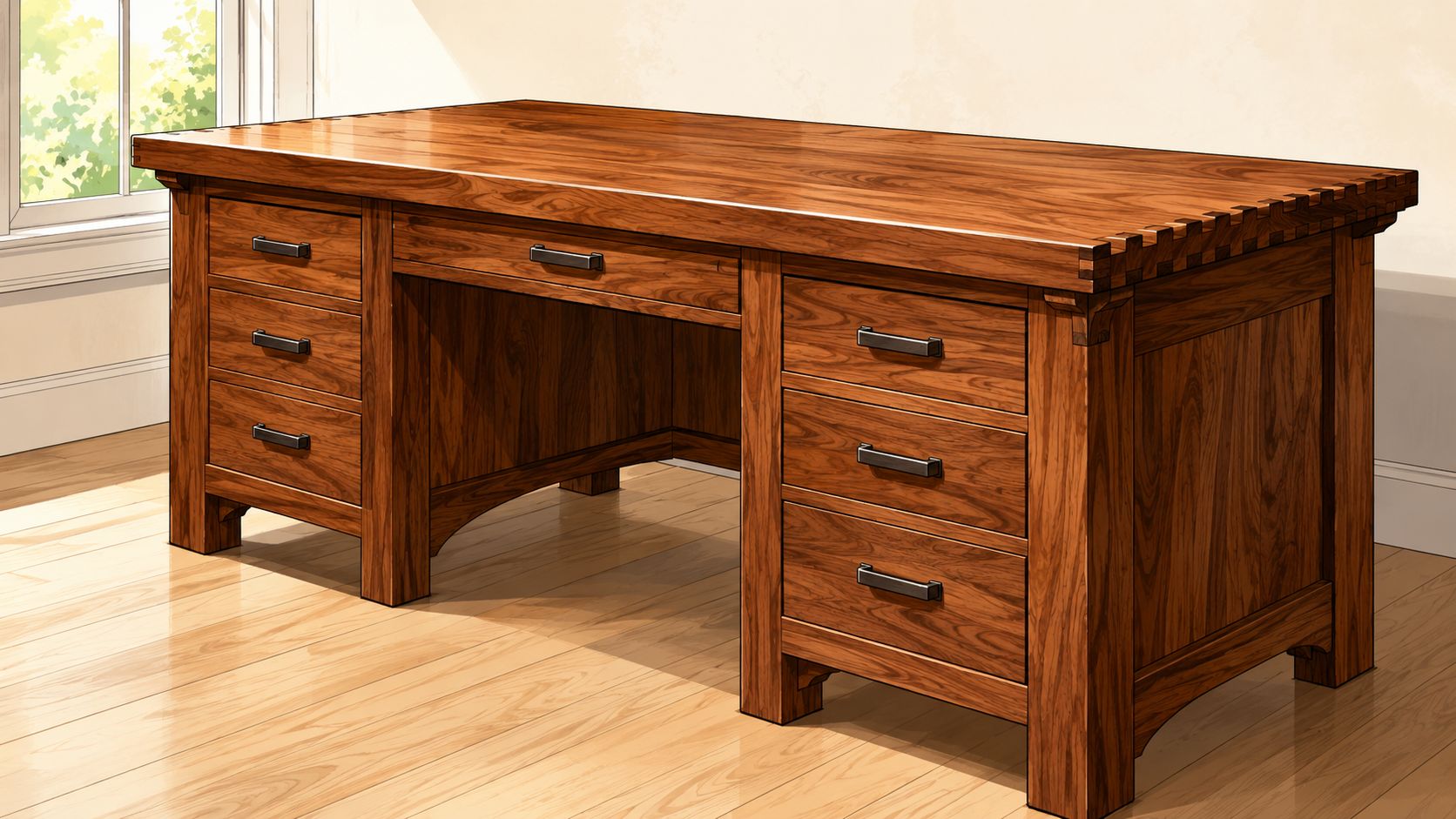
A stylish desk setup can't fix the wrong desk. If the surface is too shallow, too bulky, too flimsy, or missing storage, every decorative decision has to work around that problem.
That's why the desk deserves the first investment. In the global home office furniture market, desks account for 30.4% of product-type demand, underscoring how central they are to the way people build productive workspaces.
Start with the desk, not the accessories
A good desk does three jobs at once. It fits the room, supports the work being done, and gives decor a stable visual base.
That matters in older Capital Region homes just as much as in newer builds. Some rooms need a narrower writing desk. Some need a return for paperwork. Some need a solid wood executive desk that can carry visual weight in a den or library. The decor only looks right when the proportions underneath it are right.
A simple comparison helps:
| Desk choice | What works | What usually fails |
|---|---|---|
| Too small | Keeps a tight room open | Surface gets crowded fast |
| Too large | Adds presence in a dedicated office | Overwhelms multi-use rooms |
| Open base desk | Feels lighter and cleaner | Needs nearby storage support |
| Desk with drawers | Hides clutter quickly | Can feel bulky in narrow spaces |
What to look for in a long-term desk
The strongest home office desk decor usually sits on a desk with lasting materials and practical details.
Look for features like:
- A durable top: Solid wood and quality veneers tend to age more gracefully than lightweight surfaces that scratch easily.
- Useful drawer placement: A center drawer can help in one room and become a knee-space problem in another.
- Room for cable control: Openings, hutches, backsplashes, and side returns all affect whether cords stay hidden or visible.
- Appropriate visual weight: A desk for a farmhouse room should feel grounded. A desk for a modern corner office should feel cleaner and lighter.
For people refreshing the whole room, even wall color and surrounding furnishings affect which desk shape makes sense. Broader visual planning helps, and ideas for adding color without painting can be especially useful when the office shares space with another room.
Theme 1 The Minimalist & Modern Desk
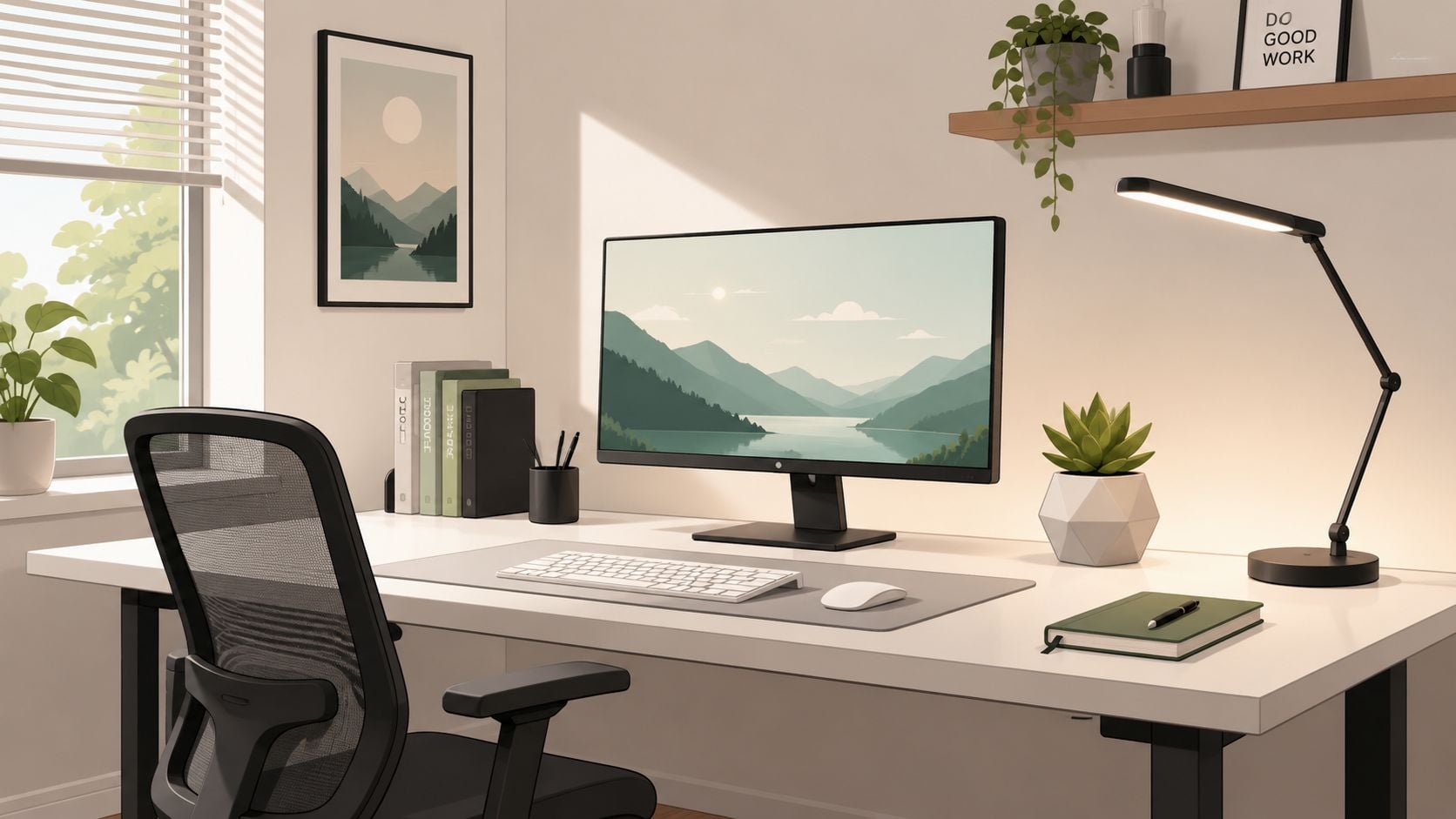
The minimalist desk is often misunderstood. People assume it means sterile, white, and nearly empty. The better version feels edited, warm, and easy to work at for a full day.
That's where low-clutter styling matters. Research-backed workspace guidance highlighted in this area suggests that keeping surfaces clear and using only a few intentional objects can support focus and reduce distraction in busy home environments (low-clutter desk styling guidance).
How to style a modern desk without making it cold
Modern home office desk decor works best when the materials do the visual heavy lifting. Instead of piling on accessories, let the desk surface, lamp finish, and storage pieces define the style.
A clean modern setup often includes:
- Light wood or matte finishes: These brighten a small room without looking flashy.
- Simple metal details: Black, brushed brass, or soft bronze can sharpen the look.
- Closed storage nearby: A small file cabinet or credenza keeps papers off the main surface.
- One sculptural accent: A bowl, object, or mineral piece can add character without introducing clutter.
For example, a single polished desk accent like this genuine malachite cube works better in a minimalist setting than several small novelty items scattered across the desktop. One intentional object reads as style. Five unrelated ones read as visual noise.
A modern desk should feel like it has room to think.
The wall behind the desk matters too. One large framed piece usually works better than a busy arrangement of small items. If shelving is needed, keep it symmetrical or deliberately spare.
The five-piece rule for a cleaner surface
A practical formula helps keep this style from slipping into clutter. On the main desktop, stay close to five visible categories:
- Task lighting that directs light where work happens.
- A tray or organizer for small daily tools.
- One personal object with meaning or sculptural value.
- A plant or natural element to soften hard lines.
- The work equipment itself, ideally with cords concealed.
Not every desk needs all five at once. Some need only three. The key is that every piece earns its place.
This style is especially effective in apartments, townhomes, and smaller offices around Albany where the desk shares visual space with the rest of the room. Minimalism also gets more comfortable when it reflects the homeowner's personality rather than a showroom template. For that balance, personalizing a minimalist space without feeling cluttered offers useful guidance.
Theme 2 The Rustic Amish Farmhouse Desk
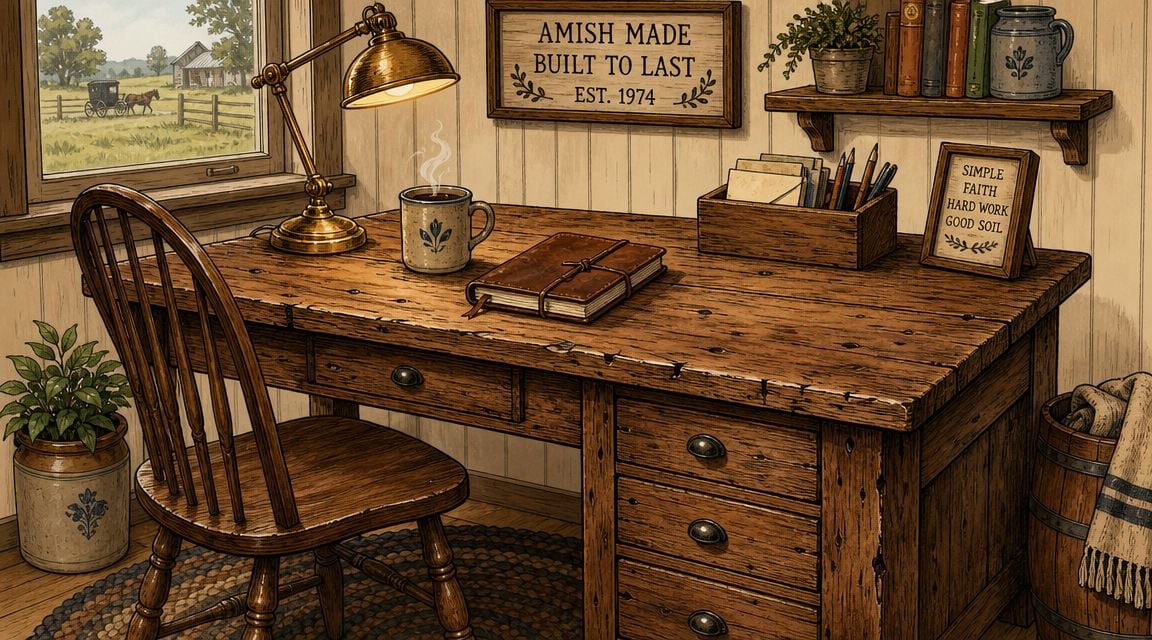
The farmhouse office works when it feels honest. Not staged. Not over-decorated. Just warm, grounded, and built from materials that improve with age.
In many Upstate homes, this look makes sense naturally because the architecture already leans traditional. Wide trim, older wood floors, painted built-ins, and deeper wall colors all pair well with a desk that has substance. A lightweight contemporary desk dropped into that setting often feels temporary. A solid wood piece feels settled.
Why solid wood changes the feel of the room
A rustic farmhouse desk should carry visual weight, but it shouldn't look bulky for the sake of it. The difference comes from craftsmanship and proportion.
An Amish-made desk in oak, cherry, or another solid wood species often brings a kind of quiet presence that veneers and thin laminates can't mimic. The grain variation adds depth. The joinery feels intentional. The finish tends to look richer in natural light and warmer at night under lamplight.
That's one reason many homeowners looking for long-term office furniture explore Amish furniture near Albany and Freehold. The appeal isn't trend-driven. It's the combination of durability, customization, and a look that doesn't age out in a few seasons.
Design note: Farmhouse style gets stronger when the desk looks handcrafted, not artificially distressed.
A room like this often benefits from contrast. A sturdy desk can pair with a softer upholstered chair, a woven rug, or linen window treatments so the office doesn't become visually heavy.
How to decorate farmhouse style without going themed
This style works best when the accessories stay restrained. Once every object starts leaning on signs, slogans, or overly rustic props, the room loses credibility.
A more polished farmhouse desk usually includes:
- A ceramic lamp base with a simple shade
- A wooden paper tray or organizer instead of plastic desktop bins
- Woven baskets on nearby shelving for hidden storage
- Framed art with scenery, botanical, or architectural subjects
- A leather blotter or desk pad to anchor the work zone
Color also matters. Farmhouse home office desk decor tends to look best in muted tones, such as warm whites, soft charcoals, aged brass, natural wood, and deep green or blue accents. Those colors feel rooted and calm.
This style is especially good for homeowners who want the office to blend into the home rather than announce itself. In a guest room, den, or upstairs landing, that restraint keeps the workspace useful without making it feel corporate.
Theme 3 The Ergonomic & Productive Desk
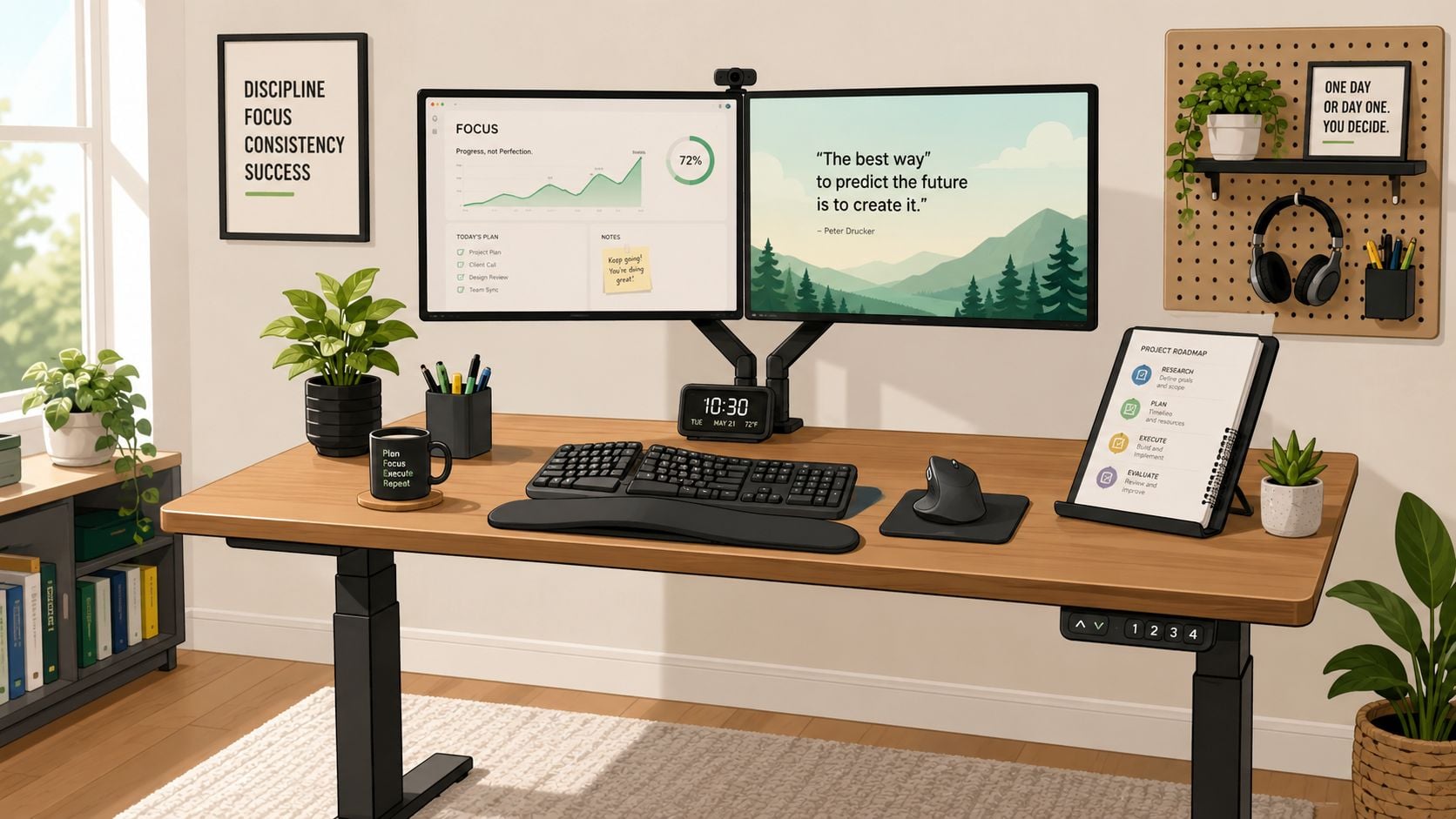
Some desks need to do more than look good. They need to support long hours, multiple screens, video calls, paperwork, and all the little movements that make a workday easier or harder.
That doesn't mean the room has to look clinical. In fact, the most successful ergonomic desks often look cleaner because every visible object has a purpose.
When function becomes the decor
An ergonomic desk setup becomes attractive when the supporting pieces are selected with the same care as the furniture. A monitor arm can reduce visual bulk on the desktop. A well-scaled task lamp can become part of the composition. A keyboard tray can preserve cleaner lines on the work surface if the desk depth is limited.
In small or multi-use rooms, space-maximizing choices often matter more than decorative add-ons. Guidance for compact work areas points toward corner-specific furniture and vertical shelving as more effective than adding more objects, especially when the goal is to make the desk feel intentional rather than improvised (small-room workspace strategies).
A productive desk often includes these hidden wins:
- A raised screen position that frees space underneath
- Vertical storage for supplies that would otherwise spread sideways
- A dedicated charging zone so cords don't cross the work area
- A single landing spot for notebooks and current papers
Smart choices for corners and compact rooms
Older homes in the Capital Region often have narrower rooms, angled ceilings, or corners that don't accept standard furniture gracefully. In those spaces, integrated choices matter more than decorative layers.
A few strong moves usually solve the problem:
- Angle the desk into the corner: This often improves circulation and makes the setup feel built in.
- Run shelving upward, not outward: Height gives storage without stealing floor area.
- Use window treatments to control glare: Anyone dealing with daylight on screens may find this London Ontario blackout shade guide helpful as a practical reference for privacy and light control principles.
- Keep the palette tight: Too many finishes make a compact workspace feel fragmented.
For homeowners planning around comfort first, ergonomic home office furniture ideas can help connect desk size, chair choice, and support pieces into one workable arrangement.
Bring Your Vision to Life with Tip Top Furniture
A well-decorated office doesn't come from buying random desk accessories and hoping they relate to each other. It comes from making a few smart decisions in the right order. Desk first. Storage second. Lighting third. Decorative accents last.
That sequence matters because home offices aren't temporary anymore. In the U.S. home decor market, home office furnishings and decor are projected to grow at an 11.87% CAGR through 2031, which signals that homeowners increasingly see these rooms as permanent spaces worth planning carefully.
A whole-room approach works better
The desk may be the center of the room, but it never works alone. Rug scale affects how grounded the area feels. Window treatments affect glare. Nearby bookcases affect clutter. Flooring affects acoustics and warmth. In shared spaces, these details decide whether the office blends in or sticks out awkwardly.
That's where a one-stop approach can save time and prevent expensive mismatches. Tip Top Furniture & Mattresses offers home office furniture, custom ordering, design help, flooring coordination, and related room pieces from one showroom in Freehold, NY for shoppers across the Capital Region. For many households, that makes it easier to build a workspace that feels coherent instead of pieced together.
Simple next steps for Capital Region homeowners
Different households need different starting points. The good news is that most desk decor problems aren't style problems at all. They're planning problems.
A practical next step usually looks like one of these:
- Measure first: Note wall width, desk depth, outlet placement, and window location before shopping.
- Decide the room's job: Is this a full-time office, a hybrid station, or a guest-room workspace?
- Choose the furniture language: Modern, farmhouse, traditional, or mixed.
- List what must be hidden: Printers, files, cords, charging blocks, and paper stacks all need a home.
- Leave breathing room: The most attractive desk usually isn't the fullest one.
For homeowners near Albany, Schenectady, Troy, and Greene County, seeing materials in person often makes the decision easier. Wood tone, scale, finish, and drawer layout all read differently in a showroom than they do on a screen.
If the workspace still feels unresolved, Tip Top Furniture & Mattresses is a practical next stop for Capital Region homeowners who want to compare desk styles, explore custom-order options, use the room planner, review financing, or visit the Freehold showroom and work through the room with a design consultant.