Custom Window Treatment Design for Albany Homes


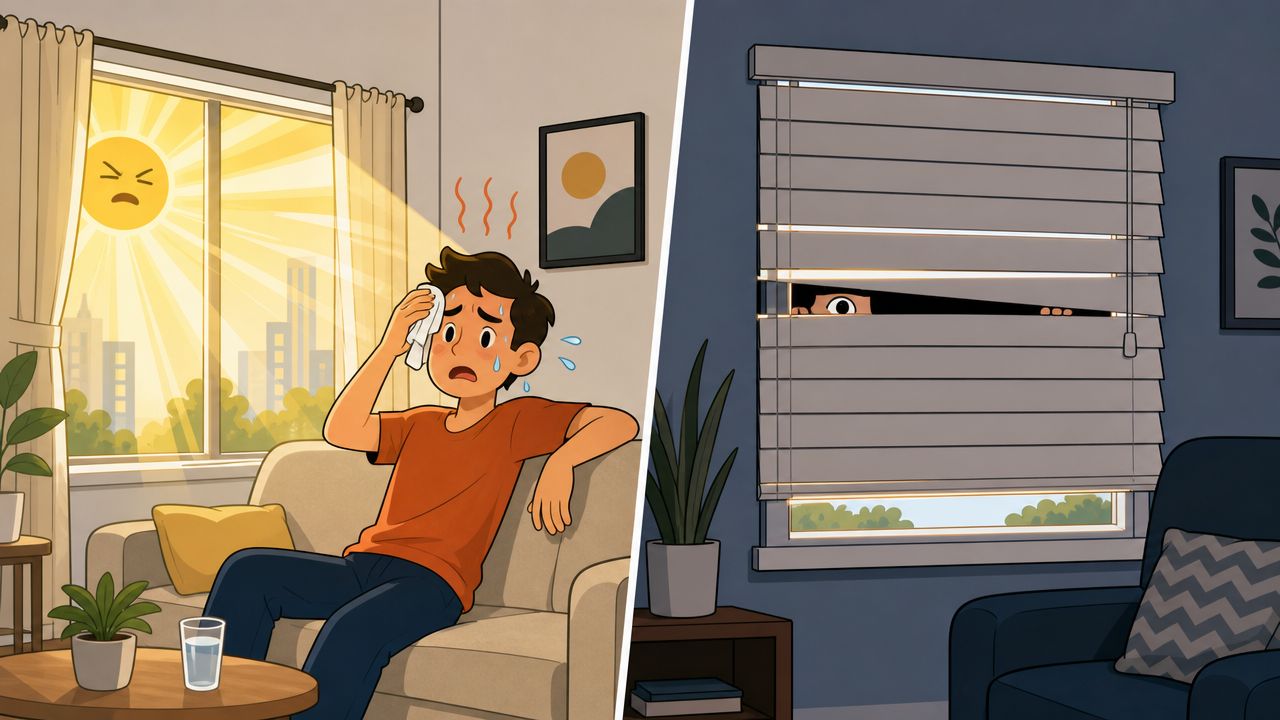
Sun glare on the television. A front room that feels exposed after dark. Bedroom blinds that never quite close the gap at the edges. Something in the room no longer working often prompts a search for window treatments.
That's why custom window treatment design matters. It solves practical problems first, then makes the room look finished. Around the Albany area, that often means handling bright afternoon sun, winter drafts, older window openings that aren't perfectly square, or newer homes with oversized glass that needs better scale than a ready-made blind can offer.
From our Freehold showroom, we've seen the same pattern for years. Homeowners often walk in thinking they need a fabric or a color. What they usually need first is a clearer plan for light control, privacy, proportion, and operation. Once those decisions are right, the style choices get much easier.
Your Guide to Perfect Custom Window Treatments
A good window treatment should make daily life easier. It should cut glare where you need it, protect privacy where it matters, and look like it belongs with the room instead of hanging there as an afterthought.
That's one reason this category keeps growing. The global window covering market was valued at USD 15.07 billion in 2025 and is projected to reach USD 21.10 billion by 2034, while North America held the largest share at 37.46% in 2025, according to Fortune Business Insights on the window covering market. Those numbers tell you something important. Homeowners don't see window treatments as a minor accessory anymore. They see them as part of comfort, efficiency, and home value.
Why off the shelf often falls short
Ready-made products can work in simple situations, but they struggle when the room has real demands.
Common trouble spots include:
- Uneven fit that leaves side gaps and weakens privacy
- Poor scale on large windows, especially in open-plan living spaces
- Limited control when one room needs daylight in the morning and glare protection in the afternoon
- Style mismatch when the treatment doesn't relate to the furniture, flooring, or architecture
In older Albany homes, trim profiles and window depths can vary from room to room. In newer homes around the Capital Region, the problem is often the opposite. The glass is large, the ceilings are higher, and standard products look undersized.
Practical rule: If the window treatment doesn't solve a daily irritation, it isn't the right design yet.
What a better process looks like
The strongest projects start with function, then move to fit, then style. That order matters. It keeps you from spending money on a treatment that looks appealing in a sample book but performs poorly in the actual room.
A helpful starting point is this guide on how to choose window treatments, especially if you're still sorting out whether you need drapery, shades, shutters, or a layered combination.
Custom work also removes a lot of the guesswork. Instead of asking, “What's popular?” the better question is, “What should this window do every day?” Once you answer that, the right treatment usually narrows itself down quickly.
Defining Your Window's Job Before You Shop
The first mistake people make is shopping by appearance. The second is trying to solve every window in the house with the same product.
Each window has a job. Some need privacy. Some need insulation. Some need to cut glare without making the room feel dark. In custom window treatment design, the room's purpose drives the choice.
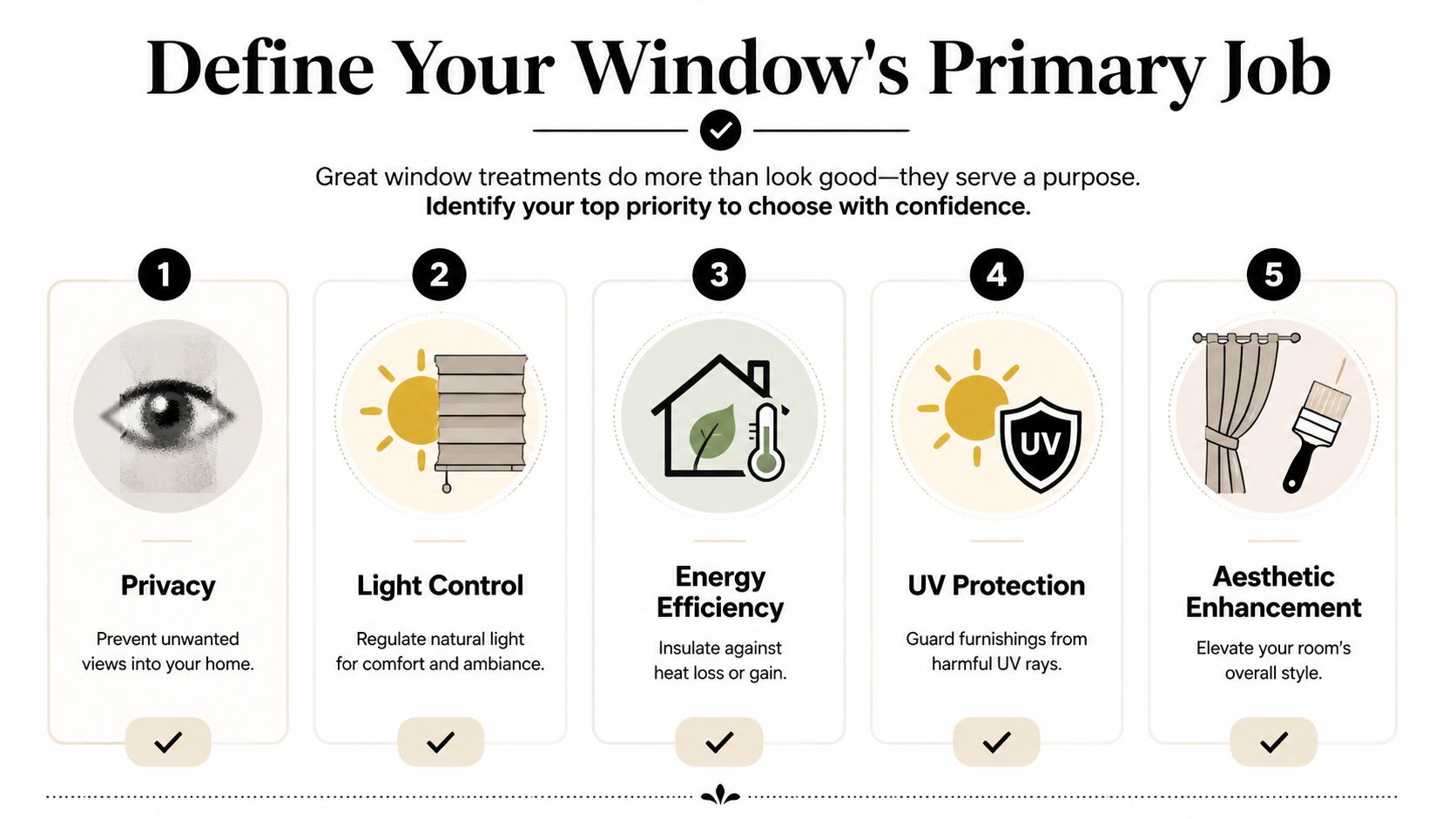
Start with room by room questions
In a living room, ask what bothers you most.
- Television glare: You may need a shade that lowers smoothly to different heights instead of a decorative panel that looks good but doesn't control direct sun.
- Evening comfort: If the room feels exposed at night, lining, opacity, and side coverage matter more than pattern.
- Street-facing windows: Privacy during the day and after dark may require layering rather than a single treatment.
Bedrooms are different. Sleep quality usually wins the argument there. If a room faces a streetlight or bright morning sun, blackout materials or a tighter-fitting shade often make more sense than a light-filtering product.
Home offices need a finer balance. You want softer daylight on screens and work surfaces, but you don't want to turn the room into a cave. That's where a custom shade with controlled filtering often performs better than heavy drapery.
Function comes before fabric
Industry guidance is clear on the workflow. An expert process starts with exact field measurement and a performance brief, not fabric selection, and planning should begin as soon as blueprints are available in new construction so framing and wiring for automation can be coordinated, as explained in this guidance on common window treatment problems and solutions.
That point gets overlooked all the time. People fall in love with a textile sample before anyone has confirmed mounting depth, stack space, or whether the window frame can support the hardware they have in mind.
The right question isn't “What color should we use?” It's “What does this opening need to do from morning to night?”
A simple way to write your performance brief
For each room, jot down the top priorities in plain language:
| Room | First priority | Second priority | Nice to have |
|---|---|---|---|
| Living room | Glare control | Soft evening privacy | Decorative side panels |
| Bedroom | Darkness for sleep | Street privacy | Easy morning operation |
| Kitchen | Daylight | Simple cleaning | Moisture-friendly material |
| Office | Screen comfort | Adjustable light | Clean, minimal look |
That quick exercise saves a lot of money and indecision.
If you're building or renovating, start even earlier. Blueprints are the moment to think about recessed pockets, outlet placement for motorization, hardware support, and whether you want an inside or outside mount. Once walls are closed, your options narrow and installation gets more complicated.
A Guide to Measuring Windows Like a Pro
Most window treatment problems start with measurement. Not style. Not fabric. Measurement.
A shade that's even slightly off can rack, bind, leave a light gap, or look crooked against the trim. That's why field measuring is one of the least glamorous parts of custom window treatment design and one of the most important.
Inside mount or outside mount
An inside mount fits within the window frame. It gives a neat, built-in look and works well when the frame has enough depth and the opening is reasonably consistent.
An outside mount installs on the wall or trim around the opening. It's often the better choice when the frame is shallow, the opening is uneven, or you want the window to appear taller and wider.
Use a steel tape measure, not a cloth sewing tape. Then follow the basic pattern:
- For width: measure top, middle, and bottom
- For height: measure left, center, and right
- For inside mounts: use the smallest width and longest height
- For outside mounts: decide how much coverage you want beyond the frame before ordering
Where homeowners get tripped up
The most common issue is assuming every window in the same room is identical. They often aren't. Trim can vary. Frames can be out of square. Plaster walls in older homes can create small but visible differences once the treatment is installed.
Another issue is making deductions too early. Professional guidance on custom work emphasizes measuring width by height precisely and avoiding guesswork or casual deductions. That discipline is what helps custom systems fit correctly, especially on complex openings.
If you're also checking related components, this practical guide on how to measure window screens is useful because it shows the same mindset: measure the actual opening carefully, don't assume, and write every dimension down immediately.
Small measuring errors don't stay small after installation.
For anyone comparing ready-made panels to custom drapery, it also helps to review curtain panel sizes and what they mean for real windows. Panel width and finished drop affect how full, skimpy, or polished the final result looks.
Choosing Your Style and Fabric for Your Albany Home
Once the window's job is clear and the measurements are solid, the design side gets interesting. From this point, the room starts to feel intentional.
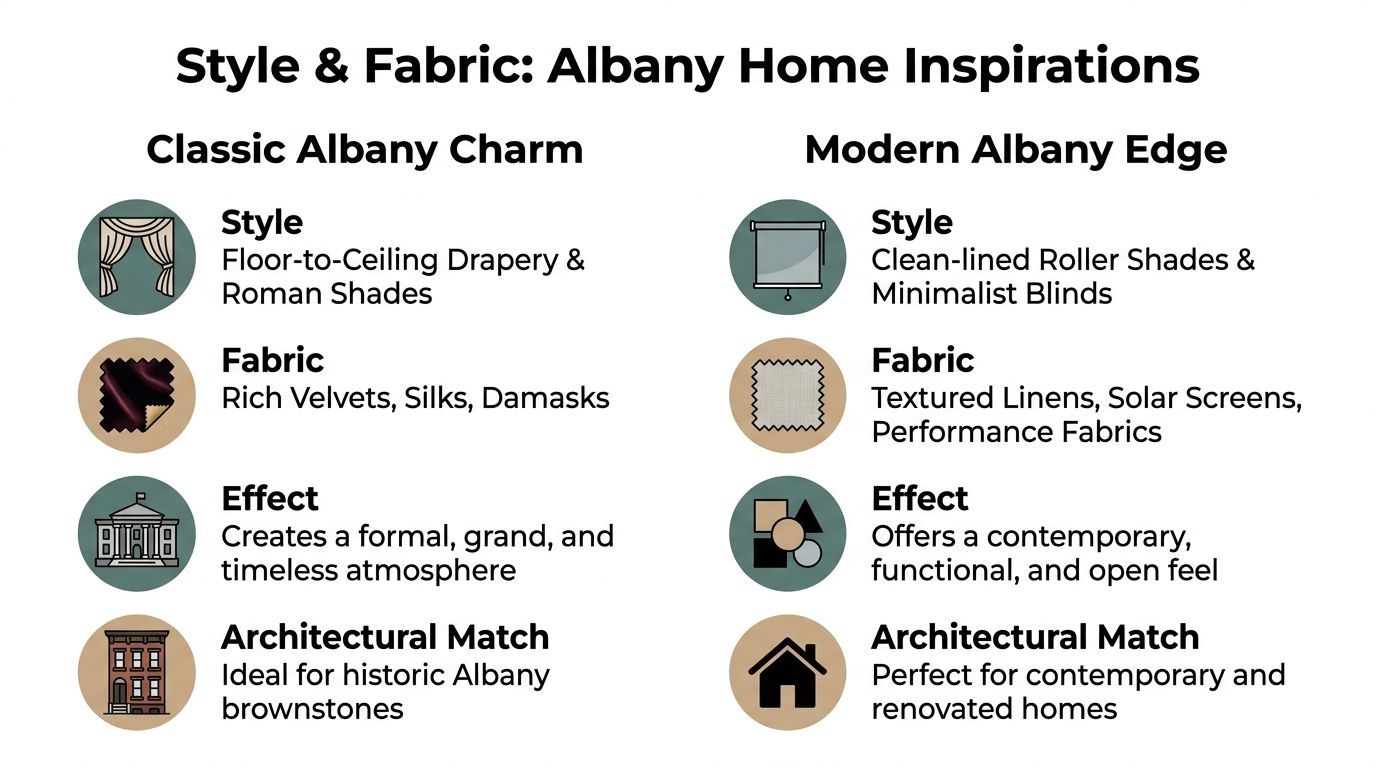
In the Albany area, homes vary widely. A historic brownstone, a mid-century ranch in Colonie, and a renovated farmhouse outside town do not want the same treatment. Good custom window treatment design respects the architecture instead of fighting it.
Matching the style to the house
A formal room with tall ceilings usually benefits from more visual presence. That might mean full drapery, a Roman shade with a precise fold, or layered treatments that add softness around the glass.
A cleaner contemporary room often works better with simpler lines:
- Roller shades for a quiet, architectural look
- Cellular shades when insulation matters as much as appearance
- Roman shades when you want softness without the full sweep of drapery
- Wood or faux wood blinds when the room needs structure and adjustable light
Shutters can look excellent in the right setting, especially where trim detail matters. But they aren't always the best answer if the top concern is maximum softness or the room already feels hard from too many rigid surfaces.
Fabric changes everything
Fabric isn't just a color decision. It changes light, mood, maintenance, and how formal the room feels.
Here's how it usually plays out:
| Material direction | What it does well | Where it can disappoint |
|---|---|---|
| Sheers | Softens daylight and adds privacy in daylight hours | Won't give strong nighttime privacy alone |
| Blackout or room-darkening fabrics | Helps bedrooms and media spaces | Can feel heavy if used where filtered light is preferred |
| Textured linens and woven looks | Adds warmth without fussiness | May wrinkle or feel too casual in formal rooms |
| Velvet or richer decorative fabrics | Brings weight, depth, and a classic look | Can overpower smaller rooms if the scale is wrong |
One of the biggest differences between custom and ready-made drapery is proportion. Professional standards have long emphasized it. Threads Magazine's window treatment guidance notes that stationary drapery panels should use a two-thirds-panel to one-third-window ratio, and midweight fabrics should be cut to a minimum fullness of 2.5 times the finished width to avoid a skimpy appearance.
That's the reason many store-bought panels look underdressed on larger windows. They may be the right color, but they don't have enough width, enough return, or enough visual weight to suit the opening.
Good drapery should look generous. If it looks stretched thin, the room notices.
A few Albany area examples that make sense
A traditional Albany home with original moldings often benefits from floor-length panels in a fabric with body. Even a subtle woven pattern can echo the age of the house and make the windows feel settled into the architecture.
A more modern home in Schenectady or a renovated townhouse may call for roller shades with side panels only where softness is needed. That keeps the lines clean while still tying the room to the furniture.
For a warm accent color approach, burnt orange curtains in the right room palette can work beautifully, especially with wood tones, neutral upholstery, and layered textiles. The point isn't to chase a bold trend. It's to choose a color that supports the room and still looks right once the seasons change.
This is also where one-stop coordination helps. If you're choosing new seating, area rugs, or flooring at the same time, the treatment should relate to those surfaces so the room feels composed rather than pieced together.
Selecting Hardware Controls and Automation
Hardware is where many otherwise good projects lose their polish. The treatment may be well chosen, but the rod is too light, the finish fights the room, or the controls feel inconvenient from the first week on.
That's why hardware and operation should be treated as part of the design, not the tail end of it.
Hardware has a visual job
Rod diameter, bracket projection, finials, return style, and finish all affect the final look. Matte black can sharpen a room. Brushed metal can blend in. A warmer metal finish can bridge traditional furniture and updated lighting.
The wrong hardware shows up fast in two situations:
- Large drapery spans where a thin rod looks flimsy
- Decorative rooms where plain hardware makes the treatment feel unfinished
For wide windows or layered treatments, support and projection matter as much as appearance. If the drapery needs to clear a shade underneath, the bracket depth has to account for that.
Controls affect daily use
People notice convenience more than they expect. If you have to tug awkwardly, reach over furniture, or wrestle with a cord every morning, the treatment starts to feel like work.
That's where cordless systems and motorization earn their keep. They're especially useful for:
- Hard-to-reach windows in stairwells, great rooms, or above tubs
- Bedrooms where you want one-touch opening in the morning
- Sun-sensitive rooms that benefit from regular adjustment during the day
- Homes with children or pets where cord-free operation is the cleaner choice
The performance side matters too. The U.S. Department of Energy states that tightly installed cellular shades can significantly reduce heat loss in winter and unwanted heat gain in summer, and motorization helps make those benefits more consistent, especially on hard-to-reach or odd-shaped windows, as noted in this discussion of custom treatments for odd-shaped windows and energy performance.
When automation makes sense
Motorization isn't necessary for every room, but it's a smart choice more often than people think. If a window gets skipped because it's inconvenient, you lose both comfort and performance.
For homeowners considering schedules, remote operation, or broader smart-home planning, this overview of expert home automation integration helps frame what to ask before selecting a system.
In practical terms, automation often makes the most sense in bay windows, grouped windows, and tall living spaces where manual operation gets old quickly. If you're weighing layouts and treatment ideas, bay window curtains for living room spaces is a useful reference because bay windows often combine several design challenges at once: angles, stack space, light control, and visual balance.
One local option for custom coordination is Tip Top Furniture & Mattresses, which offers window treatments and design consultation from its Freehold showroom as part of broader home projects.
Budgeting and Working with Our Freehold Design Team
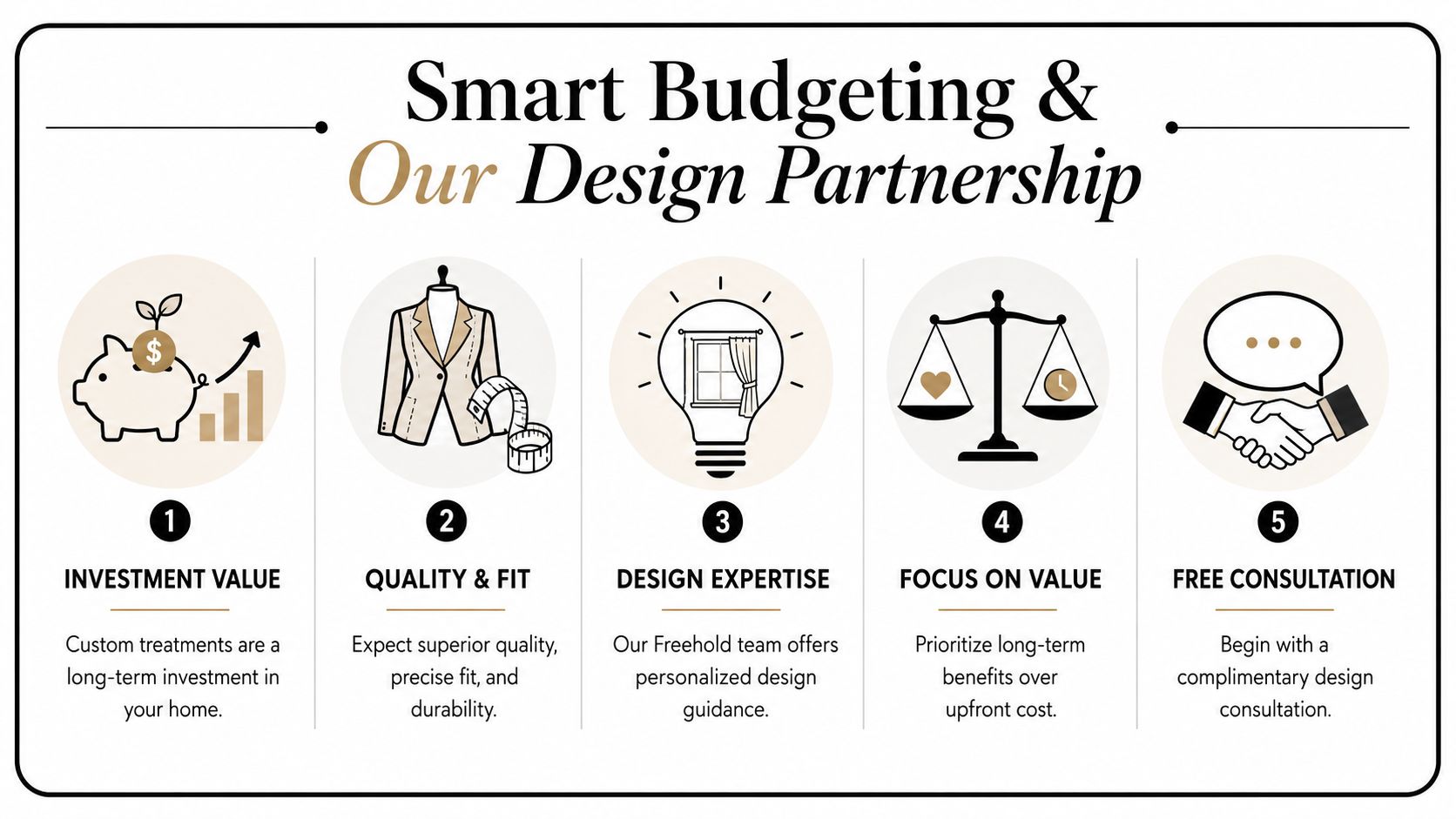
Custom work costs more than grabbing a box off a shelf. It also solves more problems, fits better, and usually lasts longer in both function and appearance.
The smart way to budget is to focus on where custom matters most. Bedrooms that need darkness, living rooms with major sun exposure, oversized front windows, and odd-shaped openings usually deserve priority. A low-stakes guest room might not need the same level of detail.
What a designer helps you avoid
The biggest savings often come from mistakes you never make.
A good design process helps prevent:
- Ordering the wrong mount for the frame depth
- Choosing fabric first and discovering later that it doesn't suit the room's needs
- Undersizing drapery so the finished treatment looks thin
- Skipping hardware planning and ending up with poor operation or weak support
That's why working with a real design team is different from clicking through options online. Someone has to look at the room, the trim, the furniture scale, the sunlight pattern, and how you live in the space.
Why the one-stop approach is easier
In real homes, window treatments rarely live in isolation. They relate to upholstery, rugs, wall color, flooring, and how the room is used.
Our Freehold design team has been offering professional design services since 1984, and that's useful because many Capital Region homeowners are making several decisions at once. If you're refreshing a living room, updating a bedroom, or coordinating flooring with furniture and window coverings, it helps to work with people who can look at the whole room rather than one piece at a time.
For homeowners who want help tying those choices together, affordable interior design services can simplify the process and keep the project moving.
A custom window treatment is easier to budget when you treat it as part of the room's function, not as an isolated accessory.
Flexible financing also matters because many households are doing phased updates. It's often better to do the key rooms correctly than to spread the budget thin across the whole house and feel dissatisfied every time you open or close the shades.
If your windows are making a room too bright, too exposed, or unfinished, Tip Top Furniture & Mattresses can help you sort out the right solution without the usual guesswork. Visit our Freehold, NY showroom to talk through your space, schedule a complimentary design consultation, and get practical guidance for your Albany area home.