How Long Should Furniture Last? A Practical Guide for Your Home

When you’re investing in new furniture for your home in the Greater Albany Capital Region, one of the biggest questions is, "How long should this actually last?" It's a fair question. The answer can range from a few years to a few generations, and as we've learned since opening our doors in 1978, it almost always comes down to the quality of the materials and the skill that went into building it.
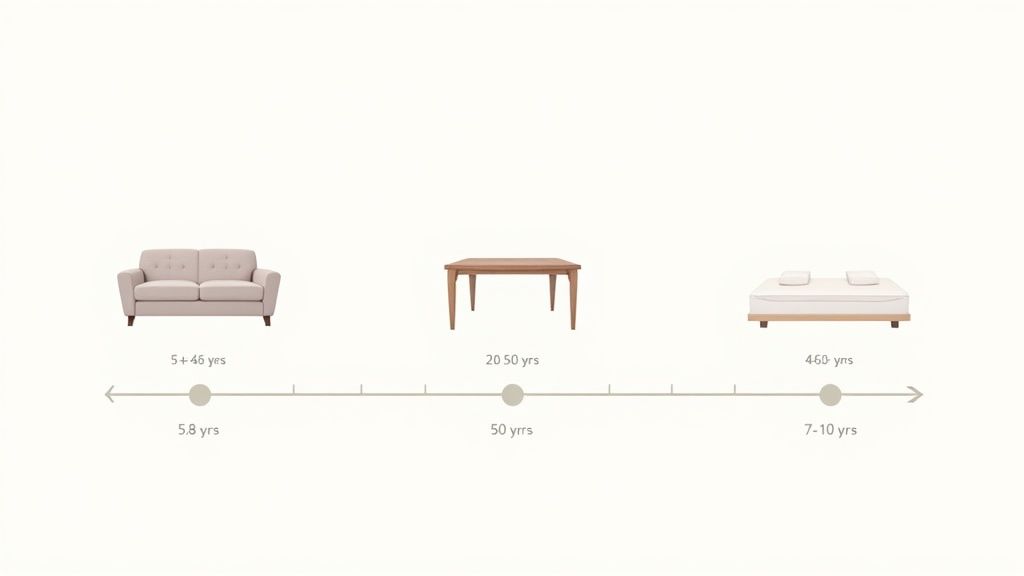
A mass-produced sofa you grab from a big-box store might look great for a while, but you'll likely be shopping for a replacement in five to eight years. On the other hand, a solid wood Amish dining table from our Freehold showroom can truly become a family heirloom, seeing decades of holiday dinners and homework sessions. The difference is craftsmanship, and it's something our family-owned business has specialized in for over 45 years.
The Real Lifespan of Your Furniture
When customers walk into our Freehold, NY showroom, this is often the first thing we talk about. We've helped families from Albany to Troy find pieces that don't just fill a space but truly last. As your local experts, we believe that longevity isn’t just a number—it’s about getting real value for your money.
Sure, a budget-friendly piece can solve an immediate need. But investing in something better built often saves you money and hassle in the long run by breaking that cycle of buying, breaking, and replacing. The real story of a piece of furniture is told by what’s on the inside.
Understanding Upholstery and Wear in the Capital Region
For sofas, sectionals, and chairs, the lifespan really depends on two things: the frame holding it all together and the fabric wrapped around it.
The average sofa sees a lot of action, and studies show it lasts about seven to eight years. Think about it—in its roughly 2,958-day life, a family sofa might see over 1,200 meals, countless movie nights, and maybe a few forts built by the kids. That's some serious wear and tear.
The fabric you choose plays a huge part in how well it holds up. Performance fabrics are fantastic for busy households because they're designed to fight off stains and fading. Natural fibers like cotton or linen have a beautiful look and feel but might need a bit more TLC. To help you navigate the options, we put together a guide on everything you need to know about upholstery materials.
At Tip Top Furniture & Mattresses, we believe you should know exactly what you're buying. As your trusted, local expert, we’ll happily show you the difference between a simple stapled frame and a sturdy, dovetailed joint so you can feel confident in your investment.
Average Furniture Lifespan at a Glance
To give you a clearer picture, here’s a quick reference guide comparing the expected lifespans of common furniture items. Think of these numbers as a starting point—good care can stretch them even further, while heavy use might shorten them.
| Furniture Type | Average Lifespan (Mass-Market) | Expected Lifespan (High-Quality/Amish) | Key Longevity Factor |
|---|---|---|---|
| Sofa/Sectional | 5-8 years | 15-25+ years | Frame construction (kiln-dried hardwood is best) |
| Dining Table | 10-15 years | 50-100+ years | Solid wood vs. veneers/particleboard |
| Dining Chairs | 5-10 years | 20-40+ years | Joint construction (mortise-and-tenon, etc.) |
| Mattress | 7-10 years | 10-15 years | Coil gauge, foam density, and regular rotation |
| Dresser/Chest | 10-20 years | 75+ years | Drawer construction (dovetail joints) and materials |
| Office Chair | 3-5 years | 10-15+ years | Mechanism quality and frame material (steel vs. plastic) |
| Outdoor Furniture | 3-10 years | 15-30+ years | Material's weather resistance (e.g., poly lumber, teak) |
As you can see, making an upfront investment in quality, especially in American-made or Amish pieces, pays off for years—often decades—to come. It's the difference between a temporary fix and a permanent solution.
Why Some Furniture Becomes an Heirloom
Ever wonder what separates a sofa that sags after five years from a dining set that hosts family dinners for fifty? The secret isn't complicated. It really just comes down to two things: what it’s made of and how it’s put together.
Think of it like building a house here in the Capital Region. You know that a foundation of solid stone and timber is going to outlast one made from cheaper, pressed materials. It's the exact same principle with your furniture. The beautiful wood grain finish you see on the surface can be deceiving; what lies underneath is what really determines its lifespan.
Materials: The Foundation of Durability
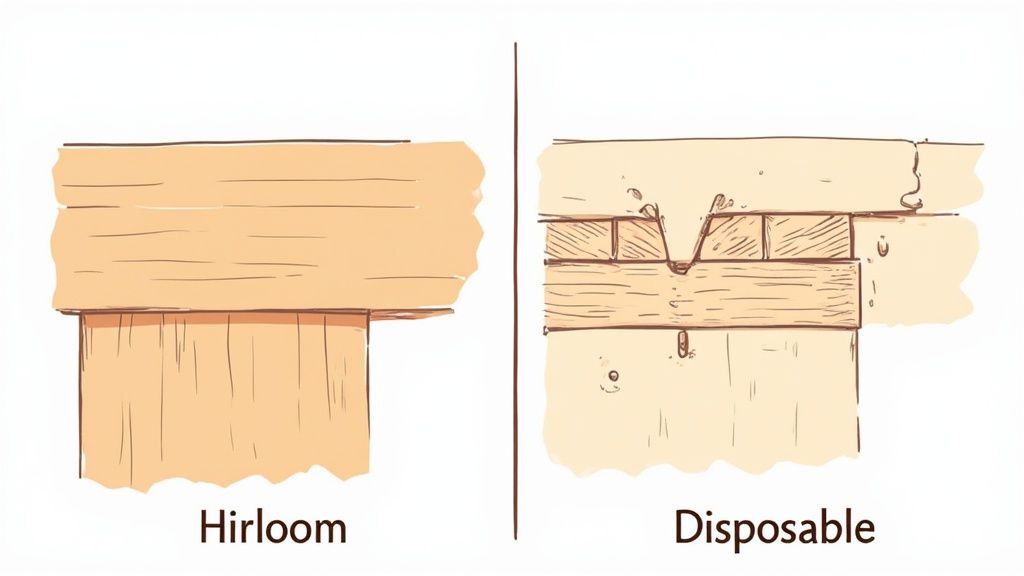
The type of wood used is probably the single most important factor in a piece's durability. The real fork in the road—the one that leads to either heirloom status or the landfill—starts with the difference between solid wood and engineered wood.
- Solid Hardwood: This is the good stuff. Woods like oak, maple, cherry, and walnut are dense, strong, and can stand up to decades of daily life. The best part? They can be sanded down and refinished over and over again, effectively erasing years of wear and tear. This is a hallmark of the Amish furniture we proudly carry.
- Engineered Wood: This broad category covers things like particleboard (basically sawdust and resin), MDF (wood fibers and wax), and plywood. While they have their place, these materials are far more vulnerable to moisture damage, chipping, and breaking under stress. Once a particleboard corner gets crushed, there's no real way to fix it.
You'll also see veneers, which are thin layers of real wood glued onto an engineered wood core. They give you the look of solid wood for less money, but they can peel or chip over time, revealing the weaker material underneath and making repairs a real headache.
Construction: How It's All Put Together
Just as important as the raw materials is the craftsmanship. How are all those pieces of wood joined together? Skilled artisans use techniques that create furniture that holds its shape under pressure, while mass-production methods often cut corners to save time and money.
The Tip Top Difference: Since 1978, we’ve made it our business to stock furniture built with integrity. Our team can physically show you the difference between a drawer held together by dovetails versus one stapled at the corners. We want to empower you to choose pieces that are truly built to last.
Here are the construction details that are dead giveaways of quality:
- Joints: Be on the lookout for traditional woodworking joints like dovetail (those interlocking pins and tails you see in high-quality drawers) and mortise-and-tenon (a post fitted snugly into a hole). These are ancient techniques that create incredible strength without screws that can loosen or fail. In contrast, many mass-market pieces are just held together with glue and staples.
- Frame: For any upholstered piece like a sofa or chair, a frame made of kiln-dried hardwood is the gold standard. The drying process stops the wood from warping or cracking as the humidity changes—a common problem for homes in the Albany area.
- Back Panels & Dust Covers: Flip a quality dresser around. You'll likely see a solid piece of wood screwed into place, which adds a ton of structural rigidity. Cheaper pieces often just have a flimsy piece of cardboard stapled on.
This commitment to great materials and construction is exactly why our showroom features a large collection of Amish furniture for Albany area homes. Each piece is a masterclass in durability, handcrafted right here in the USA with the sole purpose of becoming a treasured family heirloom.
If you're curious, learning how to value antique furniture gives you an even deeper appreciation for why these traditional methods create such lasting worth. When you choose furniture built this way, you're not just buying an object; you're investing in a legacy.
Extending the Life of Your Favorite Pieces
When your new furniture arrives at your home in the Capital Region, its story is just beginning. The real secret to making that story a long and happy one is protecting your investment with simple, consistent care. As your helpful local experts, we can tell you that a few small habits can make a huge difference, adding years—sometimes even decades—to the life of your favorite pieces.
Think of it like a car; you wouldn't skip the oil changes and expect it to run forever. Your furniture needs a little attention, too. The good news is, this doesn't mean hours of hard labor. It's all about understanding what different materials need and preventing wear and tear before it even starts.
Simple Habits for Upholstered Furniture
Your sofa and armchairs are probably the hardest-working pieces in your home. They face the daily grind of family movie nights, morning coffee, and afternoon naps, so they need the most consistent care.
- Rotate and Fluff Cushions Weekly: This is easily the most effective thing you can do. Swapping the seat and back cushions around prevents one spot from getting all the wear, which leads to sagging and compression. A quick fluff helps them bounce back and keep their comfy shape.
- Vacuum Regularly: At least once a month, use a soft brush attachment to give your upholstery a good vacuuming. This simple step removes all the dust, crumbs, and pet hair that can act like tiny bits of sandpaper, slowly wearing down the fibers.
- Address Spills Immediately: Don’t give stains a chance to set in. When a spill happens, blot it with a clean, dry cloth. Whatever you do, don't rub! Rubbing just pushes the stain deeper into the fabric. Always check the cleaning code on the tag (W, S, W/S, or X) before you reach for any kind of cleaning solution.
Caring for Wood Furniture in the Albany Climate
Wood is a gorgeous, durable material, but it's also a bit sensitive to its surroundings. Here in Upstate New York, our fluctuating humidity can be tough on it. Proper care is all about protecting both the beautiful finish and the wood itself.
The biggest thing you can do is maintain a consistent environment inside your home. Big swings in humidity cause wood to expand and contract, which can lead to cracks or warped joints down the road. Running a humidifier in the dry winter months and a dehumidifier during our muggy summers can work wonders.
Beyond that, a gentle cleaning routine is key. Dust your wood furniture every week with a soft, lint-free cloth. For a deeper clean, you can use a slightly damp cloth, but be sure to follow it immediately with a dry one. Steer clear of harsh chemical cleaners or polishes with silicone, as they can build up and damage the finish. For more tips, check out our guide on protecting wood furniture from scratches and stains.
Expert Insight from Tip Top: We've been helping folks in the Capital Region since 1984 with our Professional Design Services, and our team will tell you the number one threat to wood furniture around here is inconsistent humidity. A stable environment is just as important as the quality of the wood itself.
Extending the Life of Your Mattress
You spend about a third of your life on your mattress, so its lifespan has a direct impact on your sleep quality. Our USA-Made Mattresses are built to last, but a few simple habits will ensure you get the most supportive rest for years to come.
- Rotate It Regularly: Every three to six months, give your mattress a 180-degree spin. This simple turn helps distribute wear evenly and stops permanent body indentations from forming.
- Use a Quality Mattress Protector: A waterproof, breathable protector is an absolute must. It acts as a shield against spills, sweat, dust mites, and allergens, keeping everything inside the mattress clean and hygienic.
- Ensure Proper Support: Your mattress can't do its job without a sturdy, supportive foundation. An old or sagging box spring will cause even the best mattress to break down way too soon. Make sure your bed frame is up to the task.
The global furniture market is expected to grow significantly, a trend driven by people replacing their old pieces. According to one report, wood furniture holds a massive 39% share of the market, proving that people still value durable materials that reward a little bit of care. You can discover more insights about furniture market trends at Grand View Research. Following these simple practices ensures your high-quality pieces will live a long and useful life in your home.
When To Repair And When To Replace
We've all been there. Staring at a wobbly dining chair or a scuffed-up coffee table, wondering if it's worth fixing or if it's time to say goodbye. It's a question we hear a lot from customers across the Capital Region, from Albany to Schenectady. As your trusted local furniture experts, we can help you learn when a piece is a simple weekend project versus when it’s truly at the end of its life. This knowledge can save you a lot of headache and money.
The secret is learning to look past the surface. A deep scratch on an otherwise sturdy, solid wood table is usually just a cosmetic issue. But a wobble that keeps coming back no matter how many times you tighten the screws? That could point to a failing joint—a much bigger problem with the furniture's core structure. You have to evaluate the piece's bones, not just its skin.
Assessing Structural Integrity
Structural problems are the ultimate red flags. These are the issues that make a piece unsafe or unusable, and they're often incredibly expensive or even impossible to fix properly. If your furniture is showing these signs, investing in a replacement is almost always the smarter move.
- Creaking or Groaning Frames: Does your sofa complain with a loud creak every time you sit down? That's not just a charming quirk; it can signal a cracked or weak frame, which is the skeleton holding the whole thing together.
- Persistent Wobbling: You've tightened every screw and bolt, but that table or chair still rocks. This usually means the joints are stripped or the wood itself has lost its integrity.
- Sagging and Lack of Support: This is a big one for sofas and mattresses. If you see deep body impressions that don't bounce back or a noticeable sag in the middle, the internal support system has failed. It doesn't just look bad—it's actively bad for your posture and sleep.
When A Simple Repair Is The Answer
On the flip side, many common furniture ailments are just cosmetic. With a little DIY elbow grease or a call to a professional, you can breathe new life into an otherwise solid piece. For example, learning about repairing scratched leather can make an old sofa look years younger.
You should definitely consider a repair if the issue is:
- Surface Scratches, Dents, or Stains: Most wood finishes can be restored, and professional cleaning can work wonders on upholstery.
- Broken Hardware: A stripped screw, a broken drawer pull, or a jammed slide is typically a cheap and easy part to replace.
- Faded or Outdated Fabric: If you love the chair but hate the floral pattern from 1985, reupholstery is your best friend. When you have a solid frame, you can update its look without sacrificing quality.
Of course, the best "repair" is prevention. A little routine maintenance can stop small issues from turning into big ones.
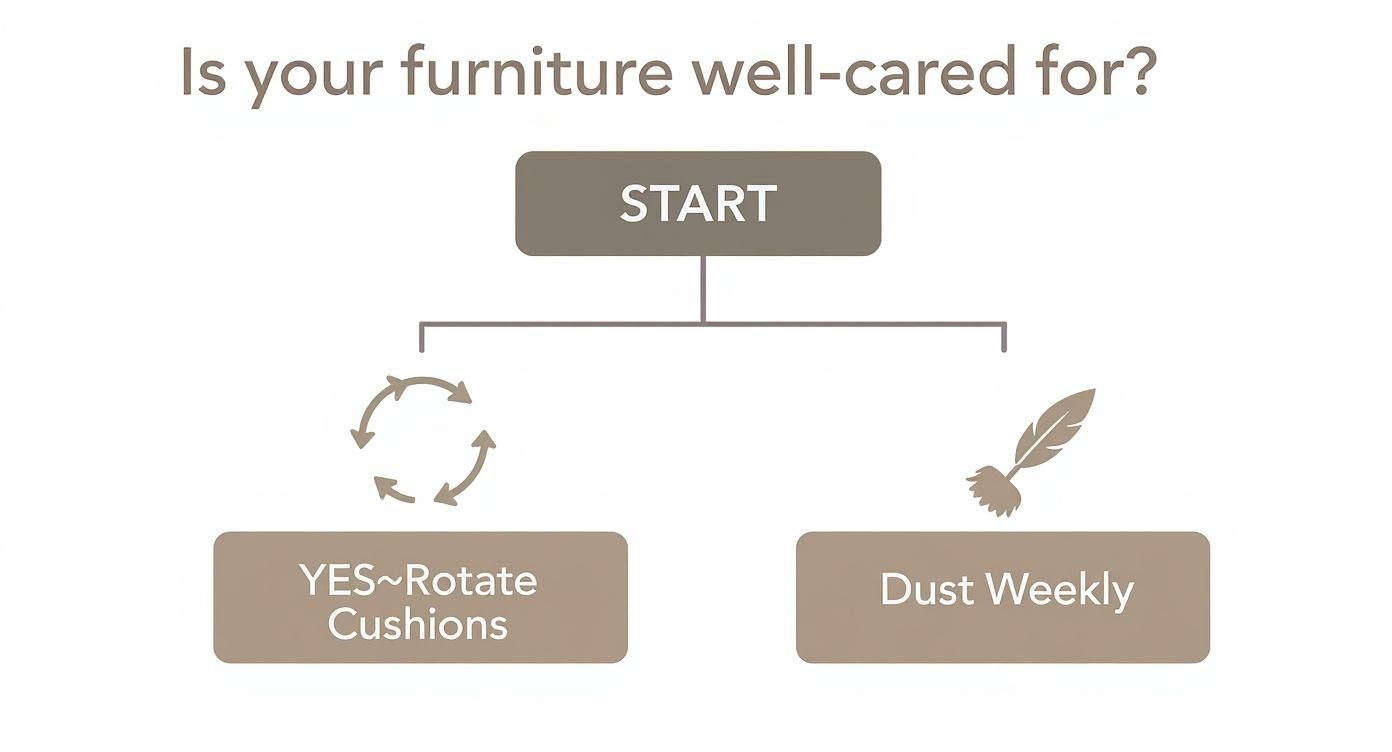
This simple chart really hits it home: small, consistent actions are the key to making your furniture last. For a more in-depth plan, check out our complete Fall Furniture Maintenance Checklist.
Repair or Replace Checklist
To make the decision even easier, we put together this quick-reference table. Use it to weigh the symptoms and figure out your best next step.
| Symptom | Consider Repairing If… | Consider Replacing If… |
|---|---|---|
| Wobbles & Instability | It's just a loose leg or screw that can be easily tightened. | The joints are stripped, the frame is cracked, or tightening doesn't help. |
| Surface Damage | You're dealing with scratches, water rings, or minor stains. | The veneer is peeling off entirely, or the damage is deep and widespread. |
| Upholstery Issues | The fabric is just stained, faded, or torn but the cushions are still supportive. | The internal foam has disintegrated, or the springs are broken and sagging. |
| Functional Problems | A drawer pull is broken, or a hinge is squeaky. | Drawers are falling apart, or doors are warped and won't close. |
| Overall Cost | The repair cost is less than 30-40% of buying a comparable new piece. | The repair is complex and costs more than half the price of a replacement. |
Ultimately, whether you repair or replace depends on the piece's structural health, its sentimental value, and your budget. By looking for the right signs, you can make a confident choice that serves your home well for years to come.
Investing in Quality for Your Capital Region Home
When you're furnishing your home, it's easy to get sticker shock and opt for the cheapest option. But choosing quality furniture isn't just another expense—it’s a genuine investment in your home’s comfort and your family's future. Think about it: instead of getting stuck in that frustrating cycle of buying flimsy, disposable pieces that fall apart every few years, you can choose something built to last for decades.
It turns out, more and more people are starting to think this way. There's a huge shift happening toward sustainability and smarter spending. By choosing well-made pieces from the start, you're not just buying furniture; you're acquiring an asset that holds its value. At Tip Top, we provide that value with the convenience of one-stop shopping—from furniture and mattresses to flooring and decor.
The Amish Furniture Advantage
When we talk about an investment that pays you back for generations, our solid wood Amish Furniture is the perfect example. Handcrafted right here in the USA, these pieces are the complete opposite of flimsy, mass-produced furniture. Every table, chair, and dresser is built by a skilled artisan using techniques that have been passed down through their families for generations.
- Heirloom-Quality Materials: Amish builders work with solid hardwoods like oak, cherry, and maple that are meant to handle decades of daily life.
- Superior Construction: They use time-tested joinery like mortise-and-tenon and dovetail joints. These methods create incredible strength without the staples and cheap glue that always fail over time.
- Timeless Appeal: These classic designs never go out of style, making sure your investment looks just as good in twenty years as it does today.
When you bring an Amish piece home from our Freehold showroom, you’re getting more than just furniture. You’re bringing home a story of true American craftsmanship that your own family can add to for years to come.
Creating Your Own Legacy with Custom Orders
Sometimes, the perfect piece isn't just sitting on a showroom floor—it’s waiting for you to dream it up. With our Custom Order options, you can design furniture that not only meets the highest quality standards but also fits your home's unique style and space perfectly. Why settle for "good enough" when you can have exactly what you've always wanted?
As a family-owned business, we believe your home should be a true reflection of you. Our complimentary Design Services, a cornerstone of our business since 1984, are here to help you personalize pieces that you'll love for a lifetime.
Custom ordering puts you in the driver's seat. You get to choose the elements that matter most, like picking a durable performance fabric for a sofa that has to stand up to kids and pets, or selecting the perfect wood finish to match your existing décor. This personal touch ensures you get a piece you’ll be proud of for decades, so you’ll never have to replace it just because it wasn't quite right. To get started, you can read our guide on how to shop for furniture smartly.
Building a Room from the Ground Up
A truly beautiful and lasting room design is about more than just the furniture you put in it. That’s why we also offer Flooring services to help you create a cohesive look from the ground up. Imagine pairing your new solid wood dining set with stunning new hardwood floors—it creates a unified, high-value look that you simply can't get with cheaper materials.
By investing in quality furniture and foundational elements like flooring at the same time, you're elevating your entire living space. It's a smart, holistic approach that ensures every part of your room is built to last. We invite you to visit us in our Freehold showroom, just a short drive from Albany, to see and feel the difference that true quality makes.
Your Furniture Questions Answered
When you've been in the furniture business for over 45 years like we have, you hear a lot of the same questions. People from all over the Capital Region walk into our Freehold showroom wanting to make a smart purchase, but they need a little guidance from a trustworthy expert. We've put together answers to some of the most common things we get asked to help you feel confident about the furniture you bring into your home.
Does Lifestyle Really Affect Furniture Lifespan?
Absolutely, and it’s probably the single biggest factor. Think about it: a sofa that sits in a formal living room used only on holidays is going to look brand new for decades. But the exact same sofa in a busy family room? With kids, pets, and daily movie nights, its lifespan will be dramatically shorter.
Constant use wears down cushion cores, spills happen, and direct sunlight can fade even the toughest fabrics. This is precisely why we always talk to our Albany-area customers about investing in durable materials like solid wood frames and performance fabrics. It’s just a smarter choice for any active household.
Is Amish Furniture Worth the Higher Price?
Without a doubt. You're not just buying a piece of furniture; Amish furniture is an investment in generational quality. This isn't the mass-produced stuff designed to be replaced in a few years. These pieces are handcrafted right here in the USA from solid hardwoods, using time-honored techniques like dovetail joinery that don't rely on flimsy staples or glue.
When you invest in an Amish piece from our showroom, you’re not just buying a table or a chair; you’re buying a story of American craftsmanship that is truly built to become a family heirloom for decades to come.
How Can I Tell If a Mattress Needs Replacing?
A mattress’s lifespan isn’t about how it looks on the outside—it's all about what's happening on the inside. After 7-10 years, the foams and springs that provide support have started to break down, even if the cover looks perfectly fine. The real warning signs are things you feel, not see.
- You're waking up with new aches and pains, especially in your back or hips.
- You can see a permanent dip or feel a lump where you usually sleep.
- You simply get a better night's sleep in another bed, like at a hotel or a friend's house.
This is why we're so proud of our selection of USA-made mattresses at Tip Top. They're designed from the start for lasting support, helping you get truly restorative sleep for years.
Can I Find Durable Furniture for My Unique Space?
Yes, you can, and that’s exactly what our Custom Order program is for. We believe you should never have to choose between getting the right style and getting something that will last. We work with over 50 trusted manufacturers, which lets us help you pick out specific fabrics, finishes, and dimensions to create a piece that’s both durable and a perfect fit for your home.
It all starts with our complimentary Design Consultation, where we make sure you find the ideal, long-lasting furniture for your needs.
Ready to invest in furniture that truly stands the test of time? The experts at Tip Top Furniture & Mattresses are here to guide you. Browse our Custom Order options online or visit our Freehold showroom to feel the quality for yourself.